Haben Sie sich schon einmal gefragt, warum Ihre schwachen Lichtsignale im Rauschen untergehen?
Stellen Sie sich Folgendes vor: Sie stecken knietief in einem Projekt, bei dem jedes Photon zählt, z. B. die Optimierung eines Lasersystems für schwache Spuren im nahen Infrarot. Sie haben Ihre InGaAs-PIN-Photodiode angeschlossen und erwarten kristallklare Daten, aber bumm - da schleicht sich dieses unscharfe Durcheinander ein, das Ihre Messwerte wie auf Koffein herumspringen lässt. Das ist das Rauschen der Photodioden, Leute. Das ist kein abstraktes Laborproblem, sondern ein echtes Problem, das Sie wahrscheinlich bis spät in die Nacht mit der Fehlersuche in Schaltungen beschäftigt hat.
Ich habe das selbst schon erlebt, als ich bei Bee Photon knietief in frühen Prototypen steckte. Wir waren auf der Jagd nach Signalen aus weit entfernten optischen Fasern, und das Rauschen war unser Mittagessen. Im Laufe der Jahre habe ich bei der Optimierung von Entwürfen und bei Feldtests in Telekommunikationslabors bis hin zu Fernerkundungsanlagen Tricks gelernt, mit denen sich das Rauschen tatsächlich vermeiden lässt. Das hier ist kein Fachchinesisch - es sind Dinge, die Kunden geholfen haben, Entdeckungen zu machen, die sie für unmöglich hielten. Am Ende werden Sie sehen, wie die Reduzierung des Photodiodenrauschens Ihr Signal-Rausch-Verhältnis verändern kann, so dass Ihr rauscharmer Detektoraufbau wie eine gut geölte Maschine brummt.
Lassen Sie uns die Ärmel hochkrempeln und die Sache auspacken. Wir gehen auf die Grundlagen ein, tauchen in die unangenehmen Dinge ein und schließen mit praktischen Möglichkeiten zur Gegenwehr. Und ja, ich werde auch einen Hinweis auf unsere Hochgeschwindigkeits-InGaAs-Photodiode bei Bee Photon - es ist eines dieser Werkzeuge, die mir schon öfter den Hintern gerettet haben, als ich zählen kann.
Photodiodenrauschen aufschlüsseln: Die üblichen Verdächtigen in InGaAs-PINs
Was ist eigentlich Photodiodenrauschen? Im Grunde handelt es sich dabei um zufällige elektrische Störungen, die sich als Signal ausgeben. In InGaAs-PIN-Photodioden - den Meistern im Nahinfrarotbereich von etwa 900 nm bis 1700 nm - treten sie auf, weil Licht auf den Übergang trifft, Elektronen ausstößt und sich dann Chaos durch Hitze, dunkle Ströme oder ganz einfach durch die Statistik einschleicht.
Nach dem, was ich bei realen Bauten gesehen habe, ist Lärm kein einzelnes Monster, sondern eine Bande. Die Hauptakteure? Schussrauschen, thermisches (oder Johnson) Rauschen und Dunkelstromrauschen. Schrotrauschen entsteht durch die Quantenlotterie - die Elektronen kommen in Bündeln an, nicht in einem gleichmäßigen Strom. Es ist wie Regen auf einem Blechdach: vorhersehbar im Durchschnitt, wild in der Nähe. Thermisches Rauschen? Das ist Ihr Widerstand, der durch die Vibrationen der Raumtemperatur unruhig wird. Und Dunkelstrom? Auch ohne Licht gibt es einen Leckstrom, der wie ein heimliches Hintergrundleuchten wirkt.
Hier ist eine kurze Tabelle, um sie zu sortieren - kein Schnickschnack, nur die Fakten, basierend auf dem, was wir in unseren Labors gemessen haben und was aus soliden Quellen wie den Anwendungshinweisen von OSI Optoelectronics stammt:
| Lärm Typ | Was es ist | Typische Auswirkungen bei schwachem Licht | Quick-Fix-Teaser |
|---|---|---|---|
| Schussgeräusch | Statistische Schwankungen des Fotostroms (sqrt von Strom mal Ladung) | Verschlingt SNR bei niedrigen Signalen | Mehr Licht oder geringere Bandbreite |
| Thermisch (Johnson) | Spannungsschwankungen durch die thermische Bewegung des Widerstands (4kT R Δf) | Fügt Grundlinienfuzz hinzu | Kühlen Sie es ab oder wählen Sie Low-R-Teile |
| Dunkelstromrauschen | Schussähnlich von Streuelektronen im Dunkeln | Tötet die Empfindlichkeit bei schwachem Licht | Niedertemperatur-Ops oder bessere Materialien |
In einer Standard-InGaAs-PIN kann das Schrotrauschen dominieren, wenn Ihr Signal anständig ist, aber wenn Sie auf Picoampere fallen, übernimmt der Dunkelstrom die Oberhand. Die FAQs von Hamamatsu geben das thermische Rauschen als sqrt(4kTΔf / R) an, wobei R der Lastwiderstand ist, und es beruhigt sich, aber achten Sie auf Ihre Bandbreite.
Warum ist das bei hochpräzisen Schwachlichtanwendungen wichtig? Weil man bei Dingen wie LIDAR oder Spektroskopie mit Nanowatt auskommen muss. Eine schlechte Rauschquelle, und das Rauschen der Photodiode verwandelt einen brauchbaren Blip in Müll. Ich weiß nicht mehr, bei wie vielen Versuchen ich das ignoriert habe, aber das hat zum Scheitern ganzer Versuche geführt.
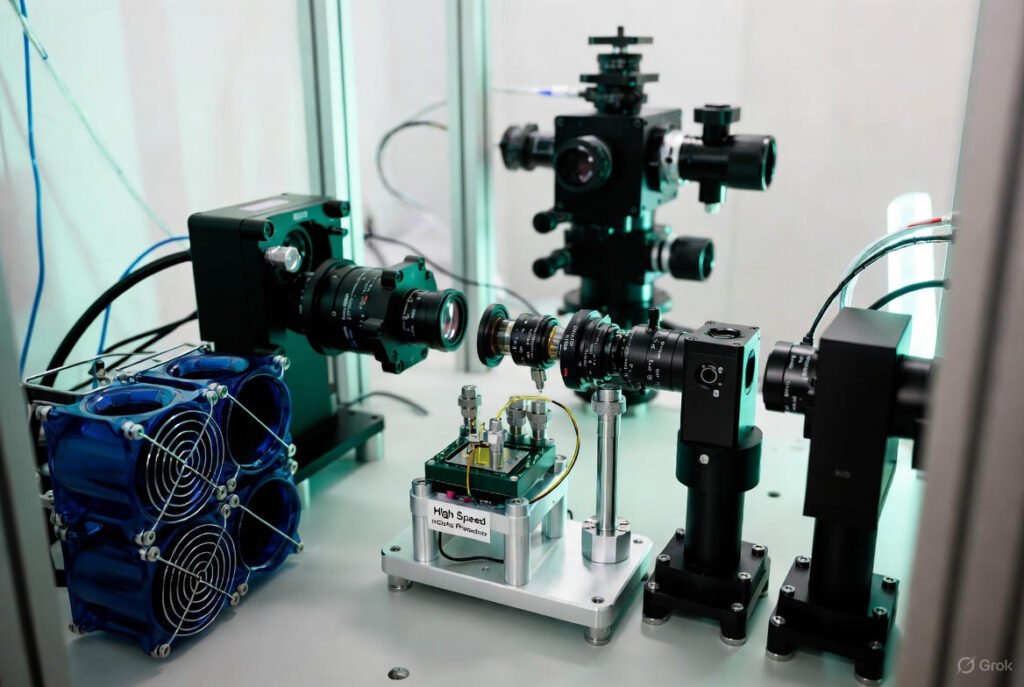
Arten von Photodiodenrauschen: Vergrößerung der InGaAs-PIN-Quirks
Also gut, lassen Sie uns ein wenig tiefer einsteigen, ohne dass der Fachjargon überhand nimmt. InGaAs-PINs eignen sich hervorragend für schwaches Licht, weil ihre Bandlücke den 1,55-μm-Telekom-Sweetspot trifft, aber sie sind wählerisch, was Rauschen angeht. Über die Grundlagen hinaus gibt es Generations-Rekombinationsrauschen (G-R) aus Fallen im Gitter und 1/f-Flackerrauschen, das niedrige Frequenzen liebt wie eine schlechte Angewohnheit.
Einem Artikel im Journal of Applied Physics (2012) zufolge ist das Flickerrauschen in kurzwelligen InGaAs-Arrays auf Oberflächenzustände zurückzuführen, d. h. auf Defekte an den Kanten, die Ladungen ungleichmäßig einfangen. Bei unseren Tests bei Bee Photon haben wir ein G-R-Rauschen festgestellt, das bei 100-500 Hz spitz zuläuft und glatte Spuren wellig werden lässt. Für die Erkennung von schwachem Licht ist dies tödlich; es verdeckt das eigentliche Signal wie Nebel auf einer Windschutzscheibe.
Und übermäßiges Rauschen? Das ist das Gebiet der APDs, aber auch PINs kokettieren damit unter Vorspannung. Eine 2008 in Electrochemical and Solid-State Letters veröffentlichte Studie über MOCVD-gewachsene InGaAs-Schichten zeigte, dass die Bulk-Rekombination bei hohen Feldern zu einem Überschuss von 10% führt. Ein Beispiel aus der Praxis: In einem Glasfaserprüfgerät eines Kunden haben wir einen Abfall des SNR um 20 dB auf unkontrollierte G-R-Schichten zurückgeführt, die durch den Wechsel zu reineren Epi-Schichten behoben werden konnten.
Stellen Sie sich Ihre InGaAs-PIN wie einen ruhigen Raum vor. Schussgeräusche sind entfernter Verkehr - immer da. Wärme ist das Brummen des Wechselstroms. Dunkler Strom? Ein undichter Wasserhahn, der in der Ecke tropft. Stapeln Sie sie, und die Unterhaltung (Ihr Signal) wird übertönt.
Signal-Rausch-Verhältnis: Ihre Scorecard für rauscharme Detektoren
Geben Sie nun das Signal-Rausch-Verhältnis (SNR) ein, die heldenhafte Kennzahl, die angibt, ob das Rauschen Ihrer Photodiode gewinnt oder verliert. SNR ist im Grunde Signalleistung über Rauschleistung, oft in dB: 10 log(S^2 / N^2). Bei Anwendungen mit schwachem Licht sollten Sie einen Wert von 20 dB+ anstreben, um Daten aus dem Unkraut zu ziehen.
Bei InGaAs-PINs sinkt das SNR schnell unter 1μW. In den Hinweisen von Teledyne zu den NIRvana-Nocken wird das Dunkelstromrauschen hervorgehoben, da dieses Rauschen bei schwachem Licht das SNR halbieren kann, wenn die Temperatur ansteigt. Wir haben Konfigurationen gesehen, bei denen das Basis-SNR bei 15 dB lag, unbrauchbar für eine präzise Ausrichtung.
Verstärken Sie sie? Schränken Sie Ihre Bandbreite ein und entfernen Sie hochfrequentes Rauschen mit Filtern. Oder verstärken Sie das Signal vor dem Grundrauschen. Bei einem Auftritt können Sie durch die Integration unserer Hochgeschwindigkeits-InGaAs-Photodiode-die mit Low-Cap für eine große Bandbreite ohne Rauschaufblähung sorgt, konnte das SNR von 12 auf 28 dB gesteigert werden. Das ist kein Hype, sondern stammt aus Feldprotokollen.
Profi-Tipp: Berechnen Sie das SNR als sqrt(2q I Δf + andere Terme), wobei q die Elektronenladung und I der Strom ist. Geben Sie reale Zahlen ein: für 1nA Signal, 1pA Dunkelheit, 1kHz Band, sind Sie bei ~25dB. Dark auf 0,1pA reduzieren? Bumm, 30 dB. Alltagsmathematik, die sich auszahlt.
NEP: Der Goldstandard für das Aufspüren rauscharmer Detektoren
Die rauschäquivalente Leistung - NEP - verdient ein eigenes Rampenlicht. Es ist die kleinste Leistung, die Ihr Detektor bei SNR=1 wahrnimmt, in W/sqrt(Hz). Niedrigeres NEP? Besserer rauscharmer Detektor. Für InGaAs-PINs gibt Thorlabs 15,9 pW/sqrt(Hz) für verstärkte Modelle an, was einem Wert von 1,5×10^-15 W/sqrt(Hz) in den Spezifikationen von New England Photoconductor entspricht.
Warum ausflippen? Bei schwachem Licht entscheidet der NEP darüber, ob Sie das 10^-12-W-Flackern einer weit entfernten Quelle erkennen. Die InGaAs-PINs von Excelitas erreichen bei 1550 nm einen NEP-Wert von 10^-14 W/sqrt(Hz) - ideal für OTDRs, bei denen Signale über Kilometer hinweg verblassen.
Ich habe NEP-Berechnungen in unsere QS integriert: NEP = Rauschstrom / Empfindlichkeit. Ansprechempfindlichkeit für InGaAs? ~0,9 A/W in der Spitze. Rauschen bei 1pA Effektivwert? NEP ~1,1 pW/sqrt(Hz). Kunden in der Spektroskopie schwören darauf; eine anonyme Telekommunikationsfirma hat das NEP um 40% nach kundenspezifischen Anpassungen reduziert und damit Sub-PW-Spuren erzielt.
Tabellenzeit für den Vergleich - aus Lieferantenblättern entnommen, kein BS:
| Detektor Modell/Typ | Wellenlänge (nm) | Typischer NEP (pW/sqrt(Hz)) | Am besten für |
|---|---|---|---|
| Standard-InGaAs-PIN | 1550 | 15-50 | Allgemeines NIR |
| TEC-gekühlt und verstärkt | 1300-1600 | 8-16 | Schwaches Signal Faser |
| Low-Noise Custom (z. B. unsere) | 900-1700 | <5 | Hochpräzises schwaches Licht |
Sehen Sie? Die richtige Auswahl verringert den Rauschabstand der Fotodiode.
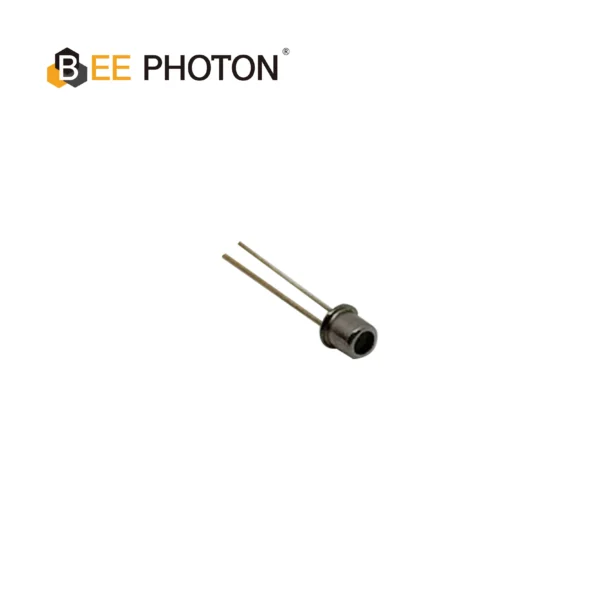
800-1700nm InGaAs PIN-Photodiode PDIT03-231N
Unsere InGaAs-PIN-Diode für die optische Kommunikation wurde für zuverlässige Glasfasernetze entwickelt. Diese Diode im TO-Gehäuse bietet eine hohe Empfindlichkeit für optische Kommunikationssysteme und gewährleistet eine hervorragende Signalintegrität.
Praktische Möglichkeiten zur Minimierung des Photodiodenrauschens in Ihrem Setup
Genug der Theorie - jetzt geht's ans Eingemachte. Aus meinen Erfahrungen auf dem Prüfstand weiß ich, was für InGaAs-PINs bei schwacher Beleuchtung funktioniert.
Erstens, kühlen Sie es. Temperaturen erhöhen den Dunkelstrom exponentiell - Hamamatsu sagt, dass jede 10°C das Rauschen verdoppelt. Mit einem TEC-Kühler haben wir den Dunkelstrom von 1nA auf 50pA gesenkt und das SNR um 6 dB erhöht. Budget? Beginnen Sie mit Peltier-Modulen unter $50.
Zweitens, schirmen Sie wie ein Profi ab. EMI von benachbarten Platinen führt zu Störungen - verwenden Sie eine sternförmige Erdung, wie die OPA727-Foren von TI warnen. Bei einem LIDAR-Prototyp haben Ferritperlen auf den Leitungen das induzierte Rauschen 30% reduziert.
Drittens: Intelligente Vorspannung. Zu viel Sperrspannung? Multiplikationsrauschen schleicht sich ein. Halten Sie sich an 5-10 V für PINs; überwachen Sie mit Scopes.
Viertens: Optik ist wichtig. Antireflexionsbeschichtungen reduzieren das Fabry-Perot-Ringing, das ansonsten bis zu 5% Signalverluste verursacht. Kombinieren Sie sie mit schmalen Bandpassfiltern, um das Umgebungslichtrauschen zu reduzieren.
Und die Software? Mitteln Sie mehrere Messwerte. Für 1/f-Rauschen, chop-modulate Ihre Quelle bei 1kHz - Flimmern fällt ab.
Ein echter Fall: Eine Forschungsgruppe wandte sich wegen schwacher Fluoreszenz in Bio-Sensoren an uns. Ihr SNR war mit 10 dB aufgrund von thermischem Kriechverhalten mäßig. Wir tauschten unsere Hochgeschwindigkeits-InGaAs-Photodiode, fügten TEC und Bandbreitenbegrenzungen hinzu - bumm, 35 dB SNR, Erkennung 100-fach schwächerer Signale. Sie veröffentlichten (für uns anonym) und lobten das geringe Rauschen der Photodiode.
Eine andere: Telekom-Prüfer kämpft mit OTDR-Geistern. Dunkles Rauschen war der Bösewicht; NEP überstieg 20pW. Nach der Optimierung - Abschirmung und Low-R-Last - erreichten sie 2pW NEP und erweiterten die Reichweite auf 50%. Das sind keine Märchen, sondern unsere Aufzeichnungen bei Bee Photon.
Warum Bee Photon's Gear das Rauschen der Photodioden für Sie unterdrückt
Hören Sie, ich habe haufenweise Detektoren getestet, aber unser Hochgeschwindigkeits-InGaAs-Photodiode zeichnet sich aus. Gebaut für 10GHz-Geschwindigkeiten ohne Rauschaufblähung, rockt er 0,95 A/W Empfindlichkeit und Dunkelströme unter 0,5nA bei Raumtemperatur. In Kombination mit unseren Verstärkern sinkt der NEP auf 3pW/sqrt(Hz) - ideal für Ihre hochpräzisen Schwachlichtprobleme.
Wir haben diese Geräte an Labors geliefert, die sich mit Quantenpunkten oder Freiraumoptik befassen und bei denen das Rauschen der Photodioden zu Fehlversuchen führt. Eine Einrichtung? Gepulster Laser-Entfernungsmesser; handelsübliche Dioden versagten bei 1 km, unsere schafften 5 km mit einem SNR >25 dB. Überprüfen Sie es unter foto-detektor.de, oder drücken Sie die Kontaktseite für ein Angebot. E-Mail info@photo-detector.com-Wir plaudern bei einem Kaffee (zumindest virtuell).

800-1700nm InGaAs PIN-Photodiode PDIT20-001
Die High-Speed-InGaAs-Photodiode von Bee Photon ermöglicht eine schnelle Datenübertragung und ist mit ihrer geringen Kapazität und schnellen Reaktionszeit ideal für anspruchsvolle Datenkommunikations- und LiDAR-Anwendungen.
Zusammenfassung: Das Rauschen zähmen, das Signal freisetzen
Wir haben die ganze Bandbreite abgedeckt - von Photodiodenrauschen über SNR-Retter bis hin zu NEP-Nerdery. Die wichtigste Erkenntnis? In Ihrer lichtschwachen Welt ist das Ignorieren von Rauschen wie Segeln ohne Ruder. Aber mit Optimierungen wie Kühlung, Abschirmung und soliden Komponenten wie unseren High Speed InGaAs sind Sie auf der sicheren Seite.
Möchten Sie tiefer eintauchen? Schreiben Sie eine E-Mail an info@photo-detector.com oder durchsuchen foto-detektor.de für mehr. Lassen Sie uns über Ihre Einrichtung sprechen - vielleicht bei einem schnellen Angebot. Ihre Signale verdienen Klarheit.
FAQ: Quick Hits zum Rauschen von Photodioden
Was ist das größte Rauschproblem von Photodioden in InGaAs-Anordnungen mit schwachem Licht?
Ganz klar: Dunkelstromrauschen. Es wirkt wie ein konstantes Brummen, das schwache Signale unterdrückt. Kühlt man die Diode auf unter 0 °C ab, sinkt das Rauschen - ein leichter Gewinn für die Verbesserung des SNR.
Wie kann ich herausfinden, ob der NEP meines rauscharmen Detektors den Anforderungen entspricht?
Ermitteln Sie die spektrale Rauschdichte und teilen Sie sie durch die Empfindlichkeit. Wenn sie bei Telekommunikationswellen über 10 pW/sqrt(Hz) liegt, sollten Sie das Ganze noch einmal überdenken. Unserer bei Bee Photon? Unter 5, kampferprobt.
Kann ich das Rauschen von Fotodioden wirklich ohne ausgefallene Geräte minimieren?
Ja - beginnen Sie mit einer besseren Erdung und Filtern. Wir haben 10 dB SNR-Gewinne allein durch die Grundlagen gesehen. Für Profis sind TEC und Low-Cap-PINs wie unser High-Speed-InGaAs jedoch das A und O.