Eisenbahnkatastrophen können katastrophale Folgen haben - man denke nur an entgleiste Züge, den Verlust von Menschenleben, massive Verspätungen und riesige Reparaturrechnungen. Ein großer Teil dieser Vorfälle ist auf unentdeckte Schienenfehler wie Risse, innere Mängel oder Oberflächenverschleiß zurückzuführen. Genau hier setzt die zerstörungsfreie Prüfung (NDT) wird zum Lebensretter für die Sicherheit der Eisenbahn. Und mittendrin in den modernen ZfP-Anlagen? Photodetektoren, insbesondere Si-PIN-Fotodioden, Der Umgang mit Lichtsignalen in laserbasierten oder optischen Systemen, die Probleme erkennen, bevor sie tödlich werden.
Ich habe mich jahrelang mit Sensortechnik für raue Umgebungen wie Eisenbahnen befasst und aus erster Hand erfahren, wie die Aufrüstung mit Hochleistungs-Photodetektoren die Erkennungsgenauigkeit erhöht. In diesem Beitrag erläutern wir, warum Photodetektoren bei der zerstörungsfreien Prüfung von Schienenfahrzeugen so wichtig sind, wie sie sich in Ultraschallprüfkomponenten und andere Verfahren einfügen und worauf Sie beim Bau oder der Aufrüstung von Prüfgeräten achten sollten.
Warum Bahndefekte so ein großes Problem sind
Schienenschäden entstehen nicht einfach über Nacht. Dinge wie Rollkontaktermüdung (RCF), Querrisse oder horizontale Risse entstehen durch wiederholte Belastung, Witterung und schwere Lasten. Wenn sie übersehen werden, führen sie zu Entgleisungen oder Schlimmerem.
Die jüngsten Zahlen zeichnen ein düsteres Bild. In den USA ist die Zahl der Zugunfälle seit dem Jahr 2000 um 27% gesunken (dank besserer Technik und Verfahren), doch laut Daten der Federal Railroad Administration (FRA) verursachen Gleisdefekte immer noch einen beträchtlichen Teil der Probleme. Weltweit verdeutlichen Vorfälle wie die Entgleisung in Ostpalästina im Jahr 2023 (die allerdings mit Gefahrgut zusammenhängt), wie sich Infrastrukturmängel in die Länge ziehen können. In Indien ereigneten sich im Jahr 2023 mehr als 24.000 Eisenbahnunfälle mit Tausenden von Todesopfern, von denen viele auf Gleisfehler oder mechanische Probleme zurückzuführen waren.
Die Lösung? Eine regelmäßige, zuverlässige Inspektion. Herkömmliche Rundgangskontrollen oder einfache Werkzeuge übersehen zu viel. Hier kommt die fortschrittliche ZfP ins Spiel: Ultraschallprüfung (UT), Laserprofilierung, visuelle/automatisierte optische Prüfung und elektromagnetische Verfahren. Photodetektoren glänzen (im wahrsten Sinne des Wortes) in Laser-Ultraschall-Hybriden oder rein optischen Anlagen.
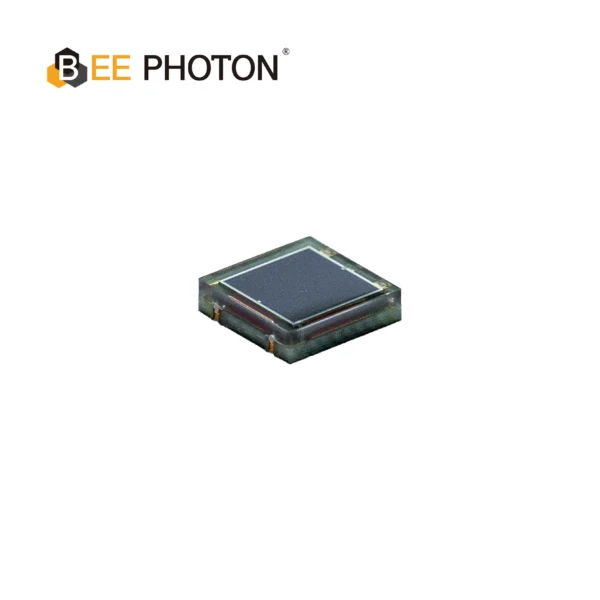
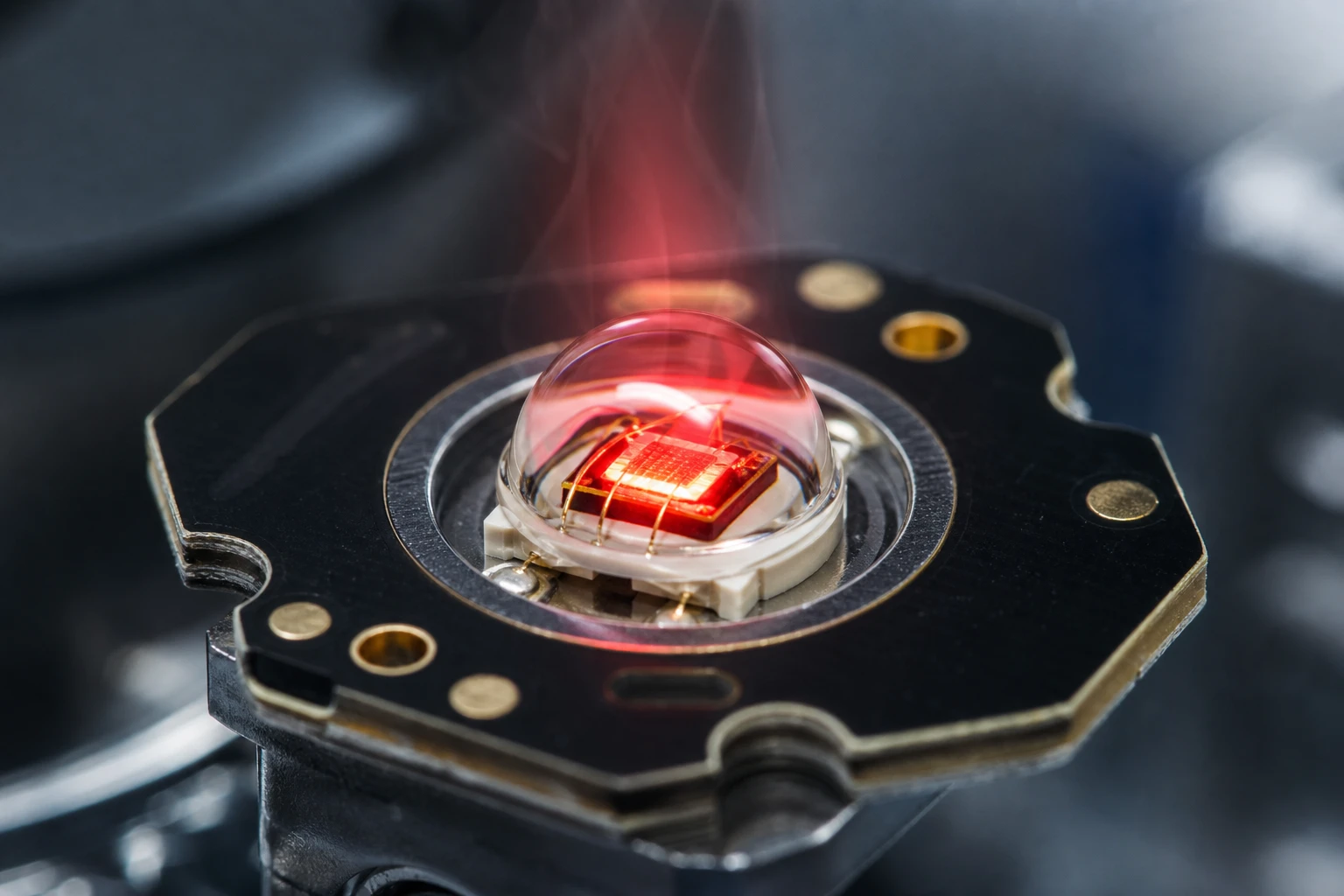
Si-PIN-Photodiode mit erhöhter NIR-Empfindlichkeit (350-1100nm) PDCC34-501
Bee Photon bietet eine hochstabile PIN-Photodiode für präzise industrielle Messungen an. Diese NIR-verstärkte Photodiode gewährleistet zuverlässige Messungen von 350-1100nm. Eine erstklassige Wahl für eine hochstabile Fotodiode.
Die wichtigsten ZfP-Methoden für die Bahninspektion und der Einsatz von Photodetektoren
Die zerstörungsfreie Prüfung von Schienenfahrzeugen ist keine Einheitslösung für alle. Hier ein kurzer Überblick über die wichtigsten Ansätze und die Rolle der Fotodetektoren.
Ultraschallprüfung (UT): Das Mittel der Wahl bei inneren Fehlern
UT sendet hochfrequente Schallwellen (normalerweise 2-10 MHz) in die Schiene. Die Echos werden von den Defekten zurückgeworfen und zeigen Ort und Größe an. Prüfköpfe (Transducer) wandeln elektrische Impulse in Schall um und zurück.
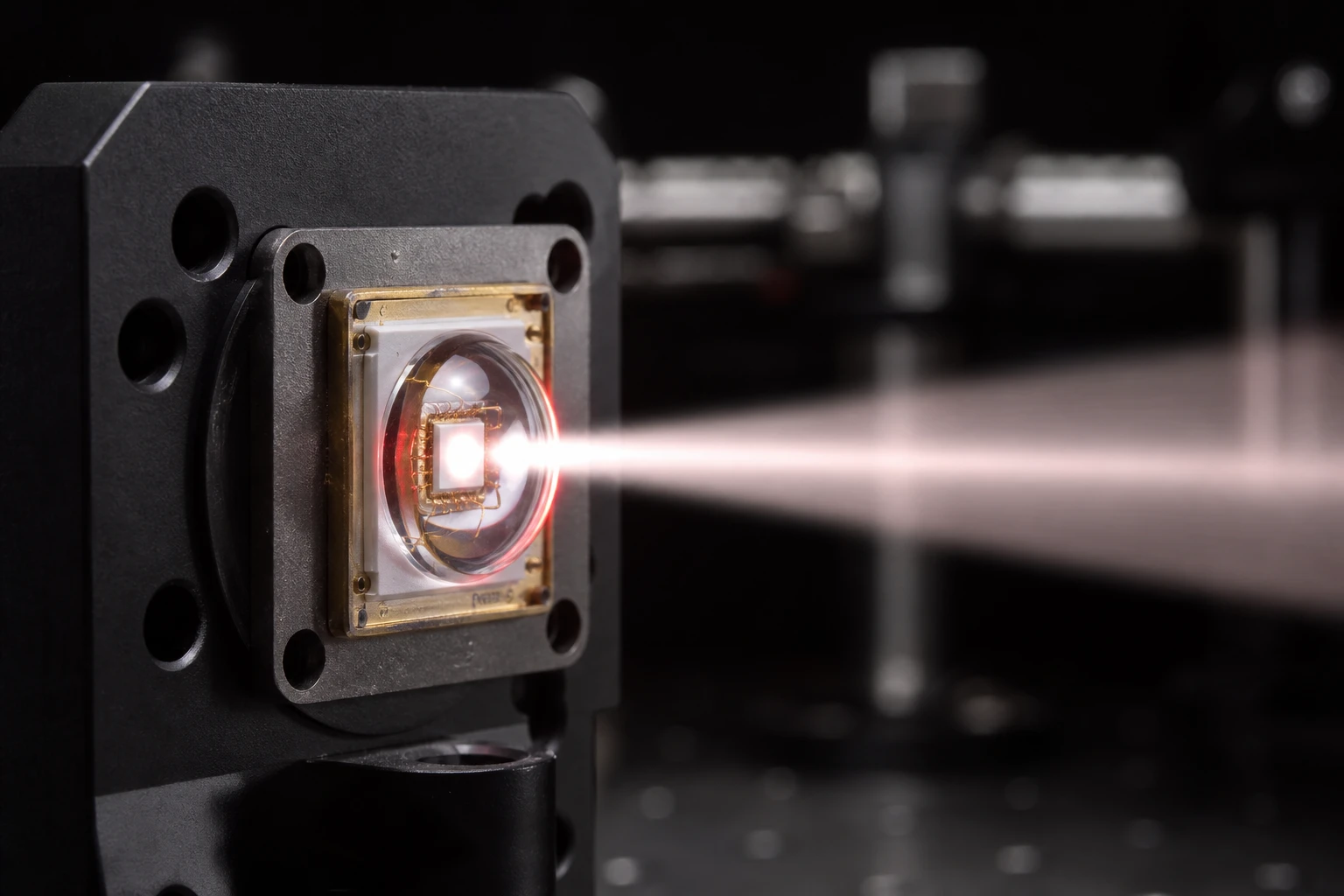
Bei fortgeschrittenen Systemen - wie dem laserinduzierten Ultraschall - trifft ein Laserpuls auf die Schiene und erzeugt durch einen thermoelastischen Effekt Ultraschall. Die daraus resultierenden Wellen werden nachgewiesen... oft mit optischen Mitteln. Hier nehmen Photodetektoren interferometrische Signale oder Streulicht von Oberflächenvibrationen auf.
Beim faseroptischen oder berührungslosen Laser UT werden Photodetektoren verwendet, um reflektierte Laserstrahlen zu erfassen, die durch Ultraschallwellen moduliert werden. Dadurch werden Kopplungsprobleme umgangen und höhere Geschwindigkeiten erreicht.
Übliche Frequenzen: 2,25 MHz für gerade Strahlen (Kopf/Steg-Trennung), 45-70°-Winkel für Risse in Schraubenlöchern oder Querfehler.
Lasergestütztes Oberflächenprofilieren und visuelle Inspektion
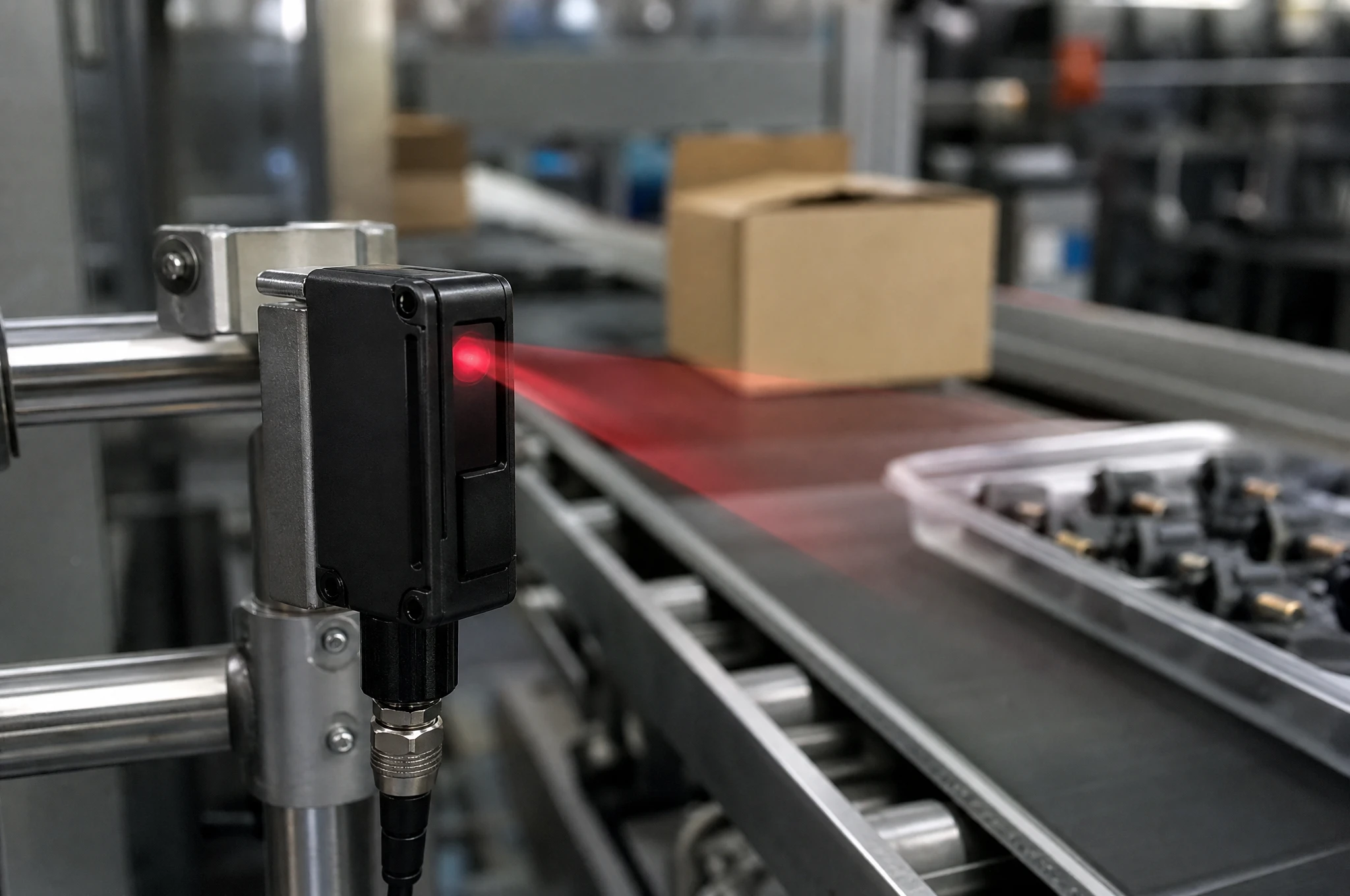
3D-Laserscanner überstreichen Schienen und erstellen Punktwolken für die Erfassung von Defekten (Risse, Riffel, Verschleiß). Eine Laserlinie projiziert, und eine Kamera-/Fotodetektoranordnung erfasst die Verformung.
Photodetektoren (häufig Si-PIN-Typen) wandeln die Lichtintensität in elektrische Signale um und zeichnen sich durch hohe Empfindlichkeit und schnelles Ansprechen aus - der Schlüssel zur Echtzeitabtastung bei Fahrzeuggeschwindigkeiten.
Diese Systeme erkennen Oberflächenfehler, die UT möglicherweise übersehen, wie z. B. frühe RCF.
Andere Methoden: Wirbelstrom, magnetischer Streufluss (MFL) und Hybride
Bei der Wirbelstromprüfung werden Spulen zur Erkennung von Oberflächen- und Oberflächenfehlern verwendet. MFL detektiert Änderungen in Magnetfeldern. Photodetektoren unterstützen manchmal das Auslesen in integrierten Sensorarrays.
Aber die wirkliche Neuerung ist die Kombination von UT mit optischen/Laser-Methoden für eine vollständige Abdeckung: innen und außen.
Die wichtigsten Vorteile des Einsatzes von Photodetektoren in ZfP-Ausrüstungen für den Schienenverkehr
Warum sollte man sich mit speziellen Photodetektoren wie NDT-Fotodetektoren oder Eisenbahnsicherheitssensoren?
- Hohe Empfindlichkeit und geringes Rauschen: Sie fangen schwache Lichtsignale in staubigen, vibrierenden Umgebungen auf.
- Schnelle Reaktionszeit: Nanosekundenbereich für Hochgeschwindigkeitsinspektionen (z.B. Züge mit 60+ km/h).
- Breiter Spektralbereich: Si-PIN-Photodioden funktionieren gut im sichtbaren bis nahen IR-Bereich und passen zu gängigen Lasern (z. B. 532nm oder 1064nm).
- Kompakt und widerstandsfähig: Einfach in Wagen, Fahrzeuge oder fest installierte Scanner zu integrieren.
Bei einem mir bekannten Projekt (anonymisiert) stellte ein Hersteller seinen Laser-Ultraschall-Prototyp auf bessere Si-PIN-Fotodioden um. Die Erkennungsrate für kleine Querrisse stieg um ~25% und verringerte die Zahl der falsch negativen Ergebnisse.
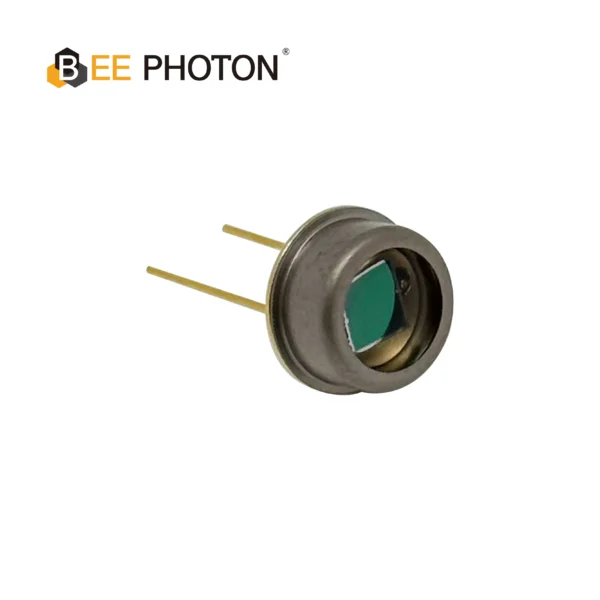
Si-PIN-Photodiode mit niedrigem Dunkelstrom (350-1060nm) PDCT14-001
Verbessern Sie Ihre optischen Messgeräte mit unserer Si-PIN-Photodiode im TO-Gehäuse. Sie zeichnet sich durch einen extrem niedrigen Dunkelstrom, hohe Konsistenz und ein Borosilikatfenster für lange Haltbarkeit aus. Diese Hochleistungs-Si-PIN-Photodiode ist für anspruchsvolle Anwendungen optimiert.
Vergleich von Photodetektortypen für die zerstörungsfreie Prüfung von Eisenbahnen
Hier ist eine einfache Tabelle zum Vergleich der Optionen:
| Typ | Material | Wellenlängenbereich | Reaktionszeit | Empfindlichkeit (A/W) | Bestens geeignet für Schienen-ZfP | Beeinträchtigungen |
|---|---|---|---|---|---|---|
| Si-PIN-Fotodiode | Silizium | 400-1100 nm | <10 ns | 0.5-0.7 | Laserprofilierung, Interferometrie | Begrenzt auf Nah-IR |
| Avalanche-Photodiode (APD) | Si oder InGaAs | 400-1700 nm | <5 ns | Höher (mit Verstärkung) | Low-Light-Ultraschall-Detektion | Höheres Rauschen, benötigt Vorspannung |
| Photomultiplier-Röhre (PMT) | Verschiedene | UV bis IR | <1 ns | Sehr hoch | Hochpräzise Forschungsaufbauten | Sperrig, zerbrechlich |
| InGaAs-PIN | InGaAs | 900-1700 nm | <20 ns | 0.8-1.0 | Laser mit längerer Wellenlänge | Teurer |
Si-PIN-Photodioden sind für die meisten praktischen Anwendungen im Bahnbereich der Gewinner - ein ausgewogenes Verhältnis von Kosten, Leistung und Haltbarkeit.
Anwendungsszenarien aus der realen Welt
Stellen Sie sich ein Hochgeschwindigkeits-Schienennetz vor, das wöchentlich gescannt werden muss, ohne den Betrieb zu unterbrechen. Ein schienengebundenes Fahrzeug mit integrierter UT- und Laserprofilerfassung verwendet Si-PIN-Photodetektoren im optischen Empfänger.
In einem Fall rüstete ein asiatischer Bahnbetreiber sein Trolley-basiertes System auf. Durch den Einbau von Fotodetektoren mit hoher Empfindlichkeit wurde das Signal-Rausch-Verhältnis unter staubigen Bedingungen verbessert, so dass frühzeitige Kopfkontrollen erkannt wurden, die das alte System übersehen hatte.
Ein weiteres Szenario: fest installierte Streckensysteme zur Überwachung von Stromabnehmerleisten oder Schienen. Laserscanner mit Fotodetektoren zeigen Verschleiß an, bevor er zu Lichtbögen oder Entgleisungen führen kann.
Wie Sie den richtigen Photodetektor für Ihre ZfP-Anlage auswählen
Sie sind ein Hersteller von Eisenbahnausrüstungen und auf der Suche nach Kernkomponenten zur Steigerung der Erkennungsgenauigkeit?
- Passen Sie die aktive Fläche an Ihre Optik an (größer für mehr Lichtsammlung).
- Prüfen Sie die Quanteneffizienz bei Ihrer Laserwellenlänge.
- Achten Sie auf den Dunkelstrom - ein niedrigerer Wert ist besser für schwache Signale.
- Bei der Verwendung im Freien ist Temperaturstabilität wichtig.
Unser Team bei BeePhoton hat an kundenspezifischen Si-PIN-Photodioden gearbeitet, die auf diese Anforderungen abgestimmt sind. Sehen Sie sich unser Angebot hier an: Si-PIN-Photodioden.
Zum Abschluss: Bessere Sensoren bedeuten sicherere Gleise
Photodetektoren sind nicht auffällig, aber sie sind für die ZfP der nächsten Generation unerlässlich. Sie verwandeln Licht in verwertbare Daten und helfen, Defekte zu erkennen, bevor es zu Katastrophen kommt. Angesichts des zunehmenden Schienenverkehrs und der zunehmenden Sicherheitsanforderungen sind Investitionen in Qualität NDT-Fotodetektoren, Eisenbahnsicherheitssensoren, und Komponenten für die Ultraschallprüfung zahlt sich immens aus.
Möchten Sie die Genauigkeit Ihrer Prüfgeräte verbessern? Rufen Sie uns bei BeePhoton an. Besuchen Sie unser Kontaktseite oder E-Mail info@photo-detector.com für ein Gespräch oder ein Angebot. Lassen Sie uns gemeinsam das Bahnfahren sicherer machen.
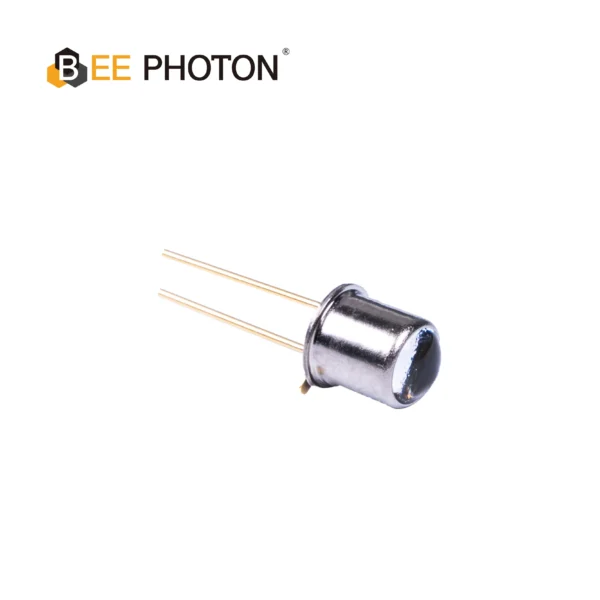
Si-PIN-Photodiode mit niedrigem Dunkelstrom (350-1060nm) PDCT01-202
Unsere hochstabile Silizium-PIN-Fotodiode bietet eine gleichbleibende und zuverlässige Leistung für analytische und optische Messgeräte. Profitieren Sie von ihrem breiten Spektralbereich (350-1060nm) und dem extrem niedrigen Dunkelstrom. Vertrauen Sie dieser Silizium-PIN-Photodiode für Ihre Präzisionsanforderungen.
FAQ
Was genau machen Photodetektoren bei der Ultraschallprüfung von Schienen?
Bei der berührungslosen Laser-UT erfassen Photodetektoren das optische Signal von Oberflächenschwingungen, die durch erzeugte Ultraschallwellen verursacht werden. Sie wandeln winzige Lichtveränderungen in elektrische Signale für die Fehleranalyse um - sehr nützlich, um Probleme bei der Kopplung auf langen Schienenabschnitten zu vermeiden.
Sind Si-PIN-Photodioden für die zerstörungsfreie Prüfung von Schienenfahrzeugen besser als andere Typen?
Für die meisten Anwendungen auf der Schiene, ja - sie bieten große Geschwindigkeit, Empfindlichkeit im sichtbaren/nahen IR-Bereich und Robustheit ohne das Rauschen oder die Kosten von APDs oder PMTs. Wir haben gesehen, dass sie sich in realen Umgebungen mit hoher Empfindlichkeit auszeichnen.
Wie können bessere Fotodetektoren tatsächliche Eisenbahnkatastrophen verhindern?
Durch die Verbesserung der Fehlererkennungsgrenzen werden kleinere Risse oder frühe Ermüdung früher erkannt. In Kombination mit UT- oder Lasermethoden werden so weniger Fehler übersehen, die zu Entgleisungen führen. Ein modernisiertes System, das wir kennen, hat die Zahl der falsch-negativen Ergebnisse erheblich reduziert und damit potenzielle Probleme in der Zukunft verhindert.