
Niemand wacht gerne um 3 Uhr morgens auf, weil ein Knoten ausgefallen ist.
Wenn Sie schon so lange in der Telekommunikationsbranche tätig sind wie ich, kennen Sie das Problem. Die Betriebszentrale ruft an, die Kunden schreien wegen der Ausfallzeiten, und Sie versuchen herauszufinden, welche Hardware Ihnen den Dienst quittiert hat.
Hier ist die harte Wahrheit: Oft ist es nicht die teure Laserquelle, die versagt. Es ist der Empfänger. Genauer gesagt, der Photodetektor.
Wir geben Millionen für Glasfaserinfrastruktur, hochentwickelte DSPs und Redundanzprotokolle aus, nur um bei den eigentlichen Augen des Systems zu sparen. Heute möchte ich darüber sprechen, warum die Umstellung auf hochzuverlässige InGaAs-PIN-Fotodiode Technologie ist nicht nur “nice to have”, sondern die wohl wichtigste Entscheidung in der Lieferkette zur Aufrechterhaltung der Zuverlässigkeit optischer Netzwerke.
Ich überspringe den Marketing-Fussel. Wir befassen uns mit der Physik, den Fehlermöglichkeiten und warum die Beschaffung von einem stabilen Partner wie BeePhoton tatsächlich für Ihr Endergebnis von Bedeutung ist.
Warum Ihre aktuellen Detektoren tickende Zeitbomben sein könnten
Seien wir doch mal ehrlich. Beschaffungsteams lieben es, $0,50 bei einer Komponente zu sparen. Aber wenn diese Komponente in einem Transponder in einem Unterwasser-Repeater oder einem abgelegenen 5G-Turm verborgen ist, können sich diese fünfzig Cent Einsparung in eine $50.000-LKW-Rolle für den Außendienst verwandeln.
Die Standard-Indium-Gallium-Arsenid (InGaAs)-Detektoren, die in Komponenten von Telekommunikationsempfängern sind Arbeitstiere. Sie beherrschen den Bereich von 1310 nm bis 1550 nm perfekt. Aber nicht alle InGaAs-Chips sind gleich.
Ich habe Chargen von “Billig”-Lieferanten gesehen, bei denen die Passivierungsschicht so dünn war, dass die Feuchtigkeit bereits nach sechs Monaten die Leistung des Chips beeinträchtigte. Wir nennen dies die Phase der “Kindersterblichkeit” in der Badewannenkurve, aber ehrlich gesagt ist es einfach nur schlechte Herstellung.
Die Wissenschaft hinter der Verlässlichkeit (ohne Jargon)
Um zu verstehen, warum diese Dinge scheitern, muss man sich den Dunkelstrom (Id) ansehen.
In einer perfekten Welt, in der kein Licht auf den Detektor trifft, sollte es keinen Strom geben. Aber die Physik ist chaotisch. Es gibt immer einen gewissen Leckstrom.
Dunkelstromformel (vereinfacht):
Id_Gesamt = Id_Fläche + Id_Masse
Wenn Ihr Lieferant keine strenge Kontrolle über das Waferwachstum (den “Bulk”-Teil) oder den Passivierungsprozess (den “Oberflächen”-Teil) hat, wird Ihr Id_Gesamt schleicht sich mit der Zeit ein.
Als Id steigt, sinkt das Signal-Rausch-Verhältnis (SNR).
SNR-Annäherung:
Das SNR ist ungefähr proportional zu: (I_photo)^2 / (2 * q * (I_photo + Id) * Bandbreite)
- I_Foto: Der von der Signalleuchte erzeugte Strom.
- q: Elektronenladung.
- Id: Dunkler Strom.
Siehe das Id im Nenner? Je größer der Nenner ist, desto kleiner wird das SNR. Schließlich erreicht die Bitfehlerrate (BER) einen Schwellenwert, die Verbindung kippt, und es kommt zu einem Ausfall.
Zuverlässig InGaAs-PIN-Fotodioden Behalten Sie das Id seit mehr als 20 Jahren stabil, nicht nur 20 Wochen.
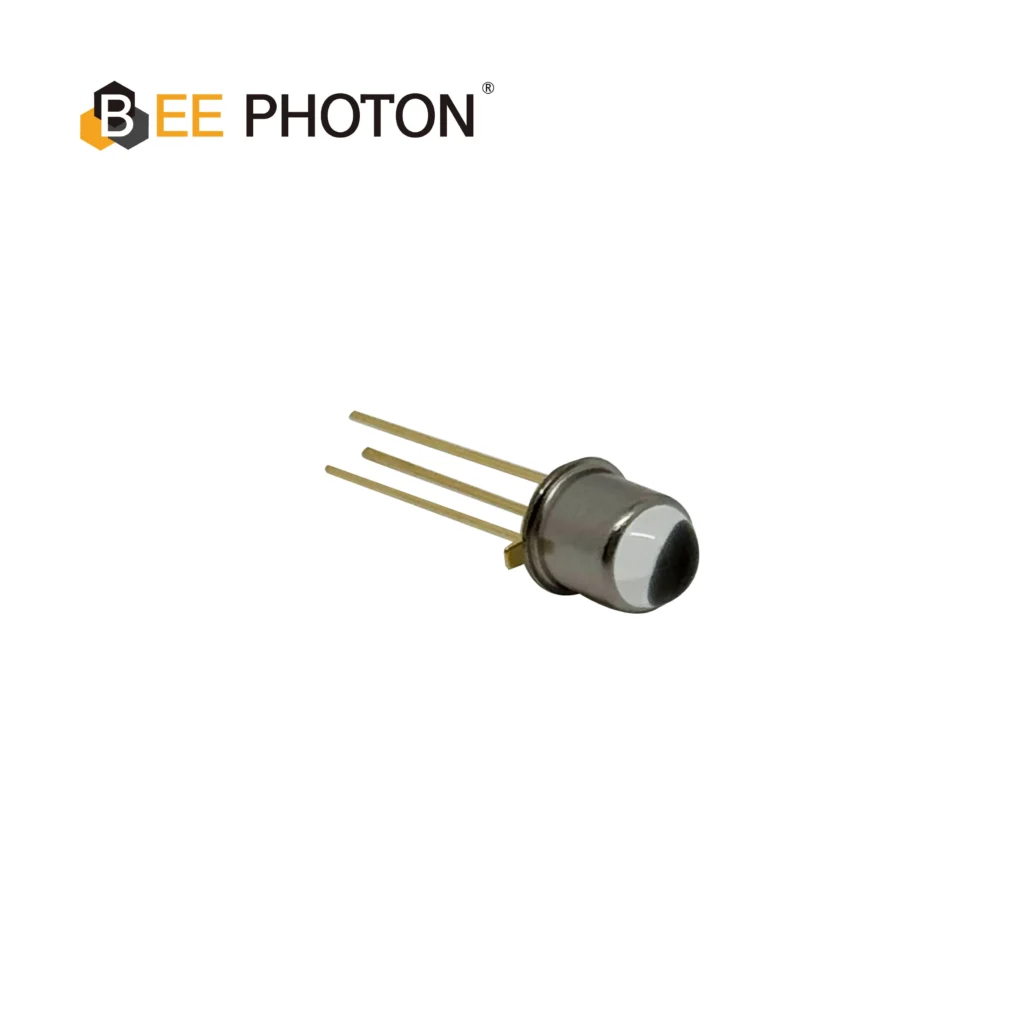
800-1700nm InGaAs PIN-Photodiode PDIT05-222N
Maximieren Sie die Signalerfassung mit unserem InGaAs-Detektor mit hoher Empfindlichkeit. Bee Photon bietet diese empfindliche Photodiode für präzise Messungen in der Spektroskopie und medizinischen Diagnostik an.
Stabilität der Lieferkette: Der Elefant im Raum
Schalten wir einen Gang zurück. Die technischen Daten sind wichtig, aber wenn man die Teile nicht bekommt, kann man die Boards nicht bauen.
Während der letzten Chip-Knappheit konnte ich beobachten, wie große Telekommunikationsausrüster ihre Produktionslinien stoppten, weil sie eine bestimmte Fotodiode nicht bekommen konnten. Sie verließen sich auf einen einzigen Anbieter, der sich nicht um “mittelgroße” Aufträge kümmerte.
Hier macht ein engagierter Partner den Unterschied. Unter BeePhoton, Wir konzentrieren uns stark auf die Ausfallsicherheit der Lieferkette. Wir schieben nicht nur Kisten vor uns her, sondern versuchen sicherzustellen, dass die für das dritte Quartal prognostizierten 50.000 Einheiten im dritten Quartal auch tatsächlich auf der Rampe stehen.
Sie brauchen einen Lieferanten, der versteht, dass ein InGaAs-PIN-Fotodiode ist nicht nur ein Gebrauchsgegenstand, sondern der Engpass Ihrer Empfangsleitung.
Technische Daten: Worauf Sie wirklich achten sollten
Achten Sie nicht nur auf die Empfindlichkeit. Heutzutage hat jeder eine gute Empfindlichkeit (normalerweise > 0,85 A/W bei 1550 nm).
Sie müssen sich die Kapazität und die Durchbruchspannung ansehen.
Der Kompromiss zwischen Geschwindigkeit und Rauschen
Die Kapazität (C) tötet Ihre Bandbreite. Wenn Sie 10G-, 25G- oder 100G-Empfänger bauen, ist die RC-Zeitkonstantengrenze Ihr Feind.
Bandbreite (f_3dB) = 1 / (2 * pi * R_load * C_junction)
Um eine hohe Geschwindigkeit zu erreichen, braucht man eine niedrige Kapazität. Um eine niedrige Kapazität zu erreichen, wird die aktive Fläche normalerweise verkleinert. Aber wenn man sie zu klein macht, wird die optische Ausrichtung zum Albtraum und die Kopplungseffizienz sinkt.
Es ist ein Balanceakt.
Hier finden Sie einen Vergleich zwischen den typischen handelsüblichen Spezifikationen und den Anforderungen, die wir an die hochzuverlässigen Telekom-Teile in unseren Kategorie InGaAs-PIN-Photodioden:
| Merkmal | “Budget”-Lieferantenspezifikation | Hochzuverlässige Spezifikation (Telecom Grade) | Warum es wichtig ist |
|---|---|---|---|
| Dunkler Strom (Id) | < 5,0 nA | < 0,5 nA | Geringeres Grundrauschen, bessere Empfindlichkeit. |
| Reaktionsfähigkeit (R) | 0,80 A/W | > 0,90 A/W | Mehr Signal für die gleiche optische Leistung. |
| Kapazität (C) | 0,7 pF | < 0,4 pF | Höhere Bandbreite, sauberere Augendiagramme. |
| Misserfolgsquote (FIT) | > 50 | < 5 | Weniger Feldausfälle und Lkw-Rollen. |
| Betriebstemperatur | 0°C bis 70°C | -40°C bis +85°C | Zuverlässigkeit der Anlage im Freien (Industrietemperatur). |
Echtes Gespräch: Eine Fallstudie (Anonym)
Ich möchte eine Geschichte über einen Kunden erzählen. Nennen wir ihn “TelcoOne”.”
TelcoOne baute optische Netzeinheiten (ONUs) für einen umfangreichen FTTH-Ausbau (Fiber to the Home) in Südostasien. Die Umgebung dort ist rau - hohe Luftfeuchtigkeit, große Hitze.
Sie besorgten sich zunächst einen billigen InGaAs-Detektor von einem allgemeinen Elektronikbasar. Im Labor funktionierte er gut.
Sechs Monate nach dem Einsatz begannen sie, überall “Loss of Signal”-Alarme (LOS) zu sehen. Das Epoxidharz auf den billigen Detektoren absorbierte Feuchtigkeit, wodurch der Dunkelstrom in die Höhe schoss.
Sie kamen zu uns bei BeePhoton. Wir haben sie gegen eine hermetisch abgedichtete InGaAs-PIN-Photodiode mit TO-Dose ausgetauscht, die für raue Umgebungen ausgelegt ist.
Das Ergebnis?
- Die Ausfallrate im Feld sank von 3,5% auf 0,02%.
- Sie sparten innerhalb von zwei Jahren schätzungsweise $2,4 Mio. an Ersatzkosten.
- Der Ruf ihrer Marke wurde gerettet.
Das ist keine Zauberei. Es geht nur darum, die richtigen Komponenten von Telekommunikationsempfängern für den Job.

900-2600nm InGaAs PIN-Photodiode PDIT05-413
Erleben Sie eine überragende Leistung mit unserer 900-2600nm InGaAs-Photodiode, die sich ideal für optische Hochgeschwindigkeitskommunikation und -sensorik eignet. Die Photodiode von Bee Photon gewährleistet hohe Zuverlässigkeit und geringes Rauschen.
Warum “gut genug” nicht mehr gut genug ist
Es gibt eine kontroverse Meinung, die ich vertrete: Die meisten Angaben in den Datenblättern sind Lügen.
Nun, vielleicht nicht liegt, sondern “best case scenarios”.”
Wenn in einem Datenblatt “Dunkelstrom: 1nA” steht, gilt das bei 25°C? Denn in einem Transponder-Rack können es 65°C sein. Der Dunkelstrom verdoppelt sich ungefähr alle 10°C Temperaturanstieg.
Id(T) = Id(T0) * 2^((T - T0) / 10)
Wenn Ihr Bauteil also bei 25°C 1nA verbraucht, haben Sie es bei 65°C bereits mit einem Wert von 1nA zu tun:
1nA * 2^4 = 16nA
Wenn Sie mit einem minderwertigen Teil beginnen, werden diese 16nA zu einem gewaltigen Rauschen. Wenn Sie mit einem hochwertigen BeePhoton-Bauteil beginnen (z. B. 0,1nA bei Raumtemperatur), sind Sie bei 65 °C nur bei 1,6nA. Das ist ein gewaltiger Unterschied in der Verbindungsspanne.
Wir testen unsere Sachen. Wir brennen es ein. Wir verschicken es nicht einfach und hoffen auf das Beste.
Gewährleistung der Zuverlässigkeit optischer Netze in einem volatilen Markt
Die Versorgungsketten sind im Moment etwas seltsam. In der einen Minute kann man keine Chips bekommen, in der nächsten Minute sind die Lager überfüllt.
Für B2B-Einkäufer ist Beständigkeit der Schlüssel. Sie wollen nicht alle sechs Monate einen neuen Anbieter auswählen, weil Ihr alter Sie abblitzen ließ.
Wenn Sie Folgendes suchen InGaAs-PIN-Fotodioden, Stellen Sie Ihrem potenziellen Lieferanten diese drei Fragen:
- Wo wird die Waffel angebaut? (Wenn sie es nicht wissen, laufen Sie weg).
- Wie sieht Ihr Einbrennprotokoll aus? (Jedes Telekommunikationsteil sollte eingebrannt werden).
- Was passiert, wenn ich nächsten Monat 10k Einheiten benötige? (Prüfung ihrer Skalierbarkeit).
Unter BeePhoton, Wir sind stolz darauf, langweilig zu sein. Ja, langweilig. Langweilig bedeutet vorhersehbar. Langweilig bedeutet, dass Ihre Teile pünktlich ankommen. Langweilig bedeutet, dass sie genau so funktionieren wie beim letzten Mal. In der Welt der Telekommunikation ist langweilig profitabel.
Wie man diese Komponenten integriert
Wenn Sie als Entwicklungsingenieur dies lesen, wissen Sie, dass die TIA-Paarung (Transimpedanzverstärker) entscheidend ist.
Unsere InGaAs-PIN-Photodioden sind so konzipiert, dass sie den Standard-TIA-Eingangsimpedanzen entsprechen. Wir bieten verschiedene Verpackungsoptionen an:
- TO-46 Dose: Hervorragend geeignet für starre Montage und hermetische Abdichtung.
- Zopf: Wenn Sie eine Faserkopplung direkt an den Chip benötigen.
- Keramischer Unterbau: Für die hybride Integration.
Vernachlässigen Sie nicht die Kopplungseffizienz. Wenn Sie eine Pigtailed-Version verwenden, achten Sie darauf, dass die Ausrichtung aktiv und nicht passiv erfolgt. Eine passive Ausrichtung ist billiger, führt aber zu einer höheren Varianz der Einfügungsdämpfung.
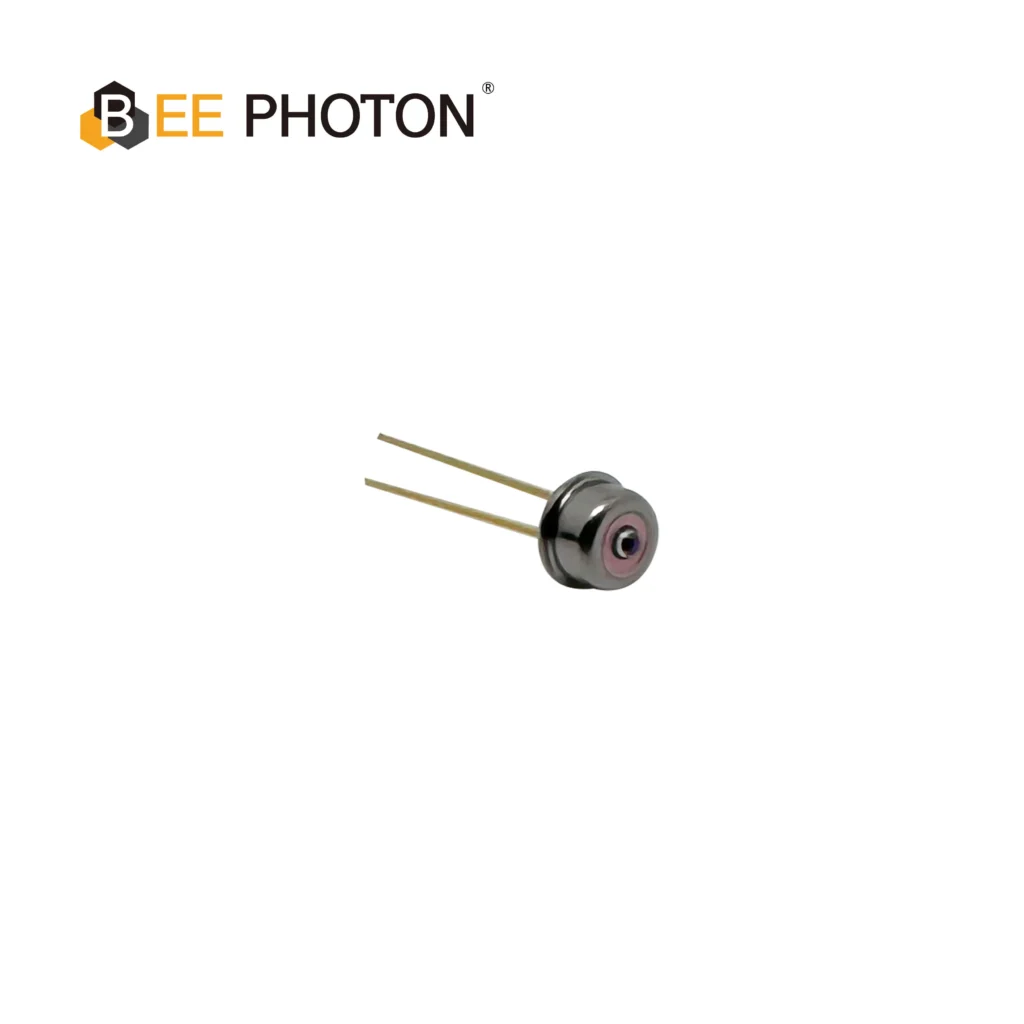
800-1700nm InGaAs PIN-Photodiode PDIT005-224A
Die TO-18 InGaAs-PIN-Photodiode von Bee Photon bietet eine außergewöhnliche Leistung für industrielle Mess- und Steuerungsanwendungen. Diese robuste Photodiode bietet hohe Zuverlässigkeit für Ihre kritischsten Anwendungen.
Häufig gestellte Fragen (FAQ)
1. Was macht InGaAs besser als Germanium (Ge) für die Telekommunikation?
Germanium war die Technik der alten Schule. Es ist billiger, sicher. Aber Germanium hat im Vergleich zu InGaAs einen viel höheren Dunkelstrom und eine geringere Empfindlichkeit bei 1550nm. Für moderne optische Hochgeschwindigkeitsnetze erzeugt Ge einfach zu viel Rauschen. Wenn Sie Wert legen auf Zuverlässigkeit optischer Netze, bleibt man bei InGaAs.
2. Kann BeePhoton kundenspezifische Größen der aktiven Fläche anbieten?
Ja, das können wir. Während Standardgrößen wie 75um oder 300um üblich sind, wissen wir, dass einige proprietäre Empfängerdesigns spezielle Kapazitätsprofile benötigen. Einfach Kontaktieren Sie uns und wir können über das kundenspezifische Würfeln von Wafern sprechen.
3. Unterstützen Sie die Telcordia GR-468-CORE Teststandards?
Ganz genau. Wir wissen, dass dies die Bibel für Zuverlässigkeit in der Telekommunikation ist. Unser Qualifizierungsprozess entspricht diesen Standards, einschließlich Hochtemperaturlagerung, Temperaturwechsel und Tests mit feuchter Hitze. Mit der Zuverlässigkeit spielen wir nicht herum.
4. Wie lange ist die Vorlaufzeit für Großaufträge?
Das ist natürlich unterschiedlich. Aber im Allgemeinen können wir Standardteile innerhalb von 2 bis 4 Wochen ausliefern, da wir unseren Bestand für unsere Partner strategisch verwalten. Bei umfangreichen Sonderbestellungen arbeiten wir mit Ihnen zusammen, um einen fortlaufenden Lieferplan aufzustellen, damit Ihre Produktionslinie nie unterbrochen wird.
Bereit, die Ausfälle zu stoppen?
Sie können weiterhin die billigsten Melder kaufen und hoffen, dass das Netz bei der nächsten Hitzewelle hält. Oder Sie können Ihre Versorgungskette mit Komponenten sichern, die tatsächlich lange halten.
Ihr Netzwerk ist nur so stark wie sein schwächstes Glied. Lassen Sie nicht zu, dass dieses Glied eine $5-Fotodiode ist.
Wenn Sie bereit sind für ein Upgrade Ihrer Komponenten von Telekommunikationsempfängern und wollen einen Anbieter, der tatsächlich ans Telefon geht:
- Sehen Sie sich unsere technischen Daten an: Durchsuchen Sie unser InGaAs-PIN-Photodioden.
- Stellen Sie eine Frage: Sie sind nicht sicher, welcher aktive Bereich zu Ihrer TIA passt? Schicken Sie uns eine E-Mail an info@photo-detector.com.
- Angebot einholen: Benötigen Sie 5.000 Einheiten für eine Markteinführung im vierten Quartal? Lassen Sie uns über Zahlen sprechen.
Kontaktieren Sie BeePhoton heute und lassen Sie uns ein Netz aufbauen, das Bestand hat.


