Wenn Sie schon einmal an Elektronikprojekten mit Lichterkennung gebastelt haben, sind Sie wahrscheinlich auf die Frage gestoßen, ob Sie eine Fotodiode oder einen Fototransistor nehmen sollen. Beide sind praktisch, um Licht in elektrische Signale umzuwandeln, aber sie sind nicht genau dasselbe. Ich habe im Laufe der Jahre in verschiedenen Setups mit beiden herumgespielt, von einfachen Umgebungslichtsensoren bis hin zu komplizierteren IR-Fernbedienungen, und ja, wenn man den falschen wählt, kann es frustrierend werden. Schauen wir uns also die Fotodiode vs. Fototransistor Debatte auf direktem Weg, ohne Floskeln.
Im Grunde genommen ist eine Fotodiode eine einfache PN-Übergangsdiode, die Strom erzeugt, wenn Licht auf sie trifft. Ein Fototransistor hingegen ist so etwas wie ein Transistor mit einer eingebauten Fotodiode als Basis - er verstärkt das durch Licht erzeugte Signal direkt im Gerät.
Was genau ist eine Photodiode?
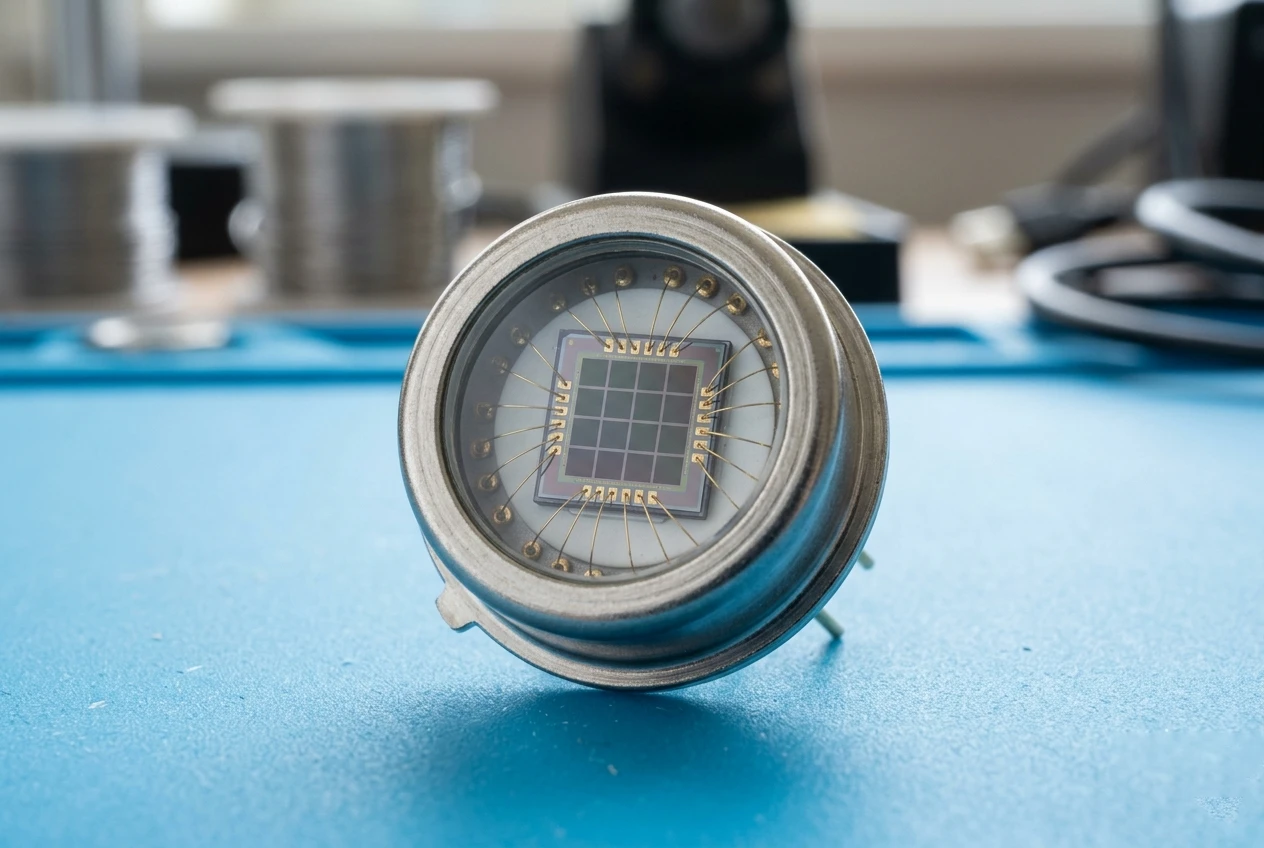
Fotodioden sind einfach, aber leistungsstark. Sie bestehen lediglich aus einem Halbleiterübergang (in der Regel Silizium), der einen winzigen Strom erzeugt, der proportional zur Lichtintensität ist, die auf ihn scheint. Es ist keine Verstärkung eingebaut, so dass die Ausgabe direkt und linear ist.
Ich habe sie häufig für Präzisionsanwendungen eingesetzt, z. B. zur Messung der Laserleistung oder in faseroptischen Empfängern. Sie sind schnell - Reaktionszeiten im Nanosekundenbereich - und superlinear, d. h. der Ausgangsstrom folgt dem Lichtpegel fast perfekt und ohne Verzerrung.
Gängige Typen sind PIN-Fotodioden, die eine Eigenschicht für bessere Geschwindigkeit und Empfindlichkeit haben, und Avalanche-Fotodioden für die Erkennung von wirklich schwachem Licht (diese benötigen allerdings eine hohe Spannung und sind lauter).
Und ein Fototransistor?
Fototransistoren basieren auf der Grundidee der Fotodiode und fügen eine Transistorverstärkung hinzu. In der Regel handelt es sich um eine NPN-Struktur, bei der Licht auf den Basis-Kollektor-Übergang trifft und einen Basisstrom erzeugt, der dann durch die Verstärkung des Transistors (oft 100-1000 oder mehr) verstärkt wird.
Das bedeutet, dass Sie bei gleicher Lichtstärke viel mehr Ausgangsstrom erhalten. Ideal für Situationen mit wenig Licht, ohne dass zusätzliche Ampere benötigt werden.
Aber es gibt einen Kompromiss: Sie sind langsamer (Reaktion im Mikrosekundenbereich) und aufgrund der Verstärkungsvariation weniger linear. Auch Temperaturschwankungen können die Verstärkung beeinträchtigen.
Bei Bee Photon führen wir einige solide Optionen wie unsere Silizium-Phototransistor abgestimmt auf einen IR-Bereich von 800-1100nm - perfekt für Fernbedienungen oder die Erkennung von Objekten.

Si-Phototransistor PTCP Serie PTCP001-202
Verbessern Sie Ihre Schaltlösungen mit diesem 800-1100nm NPN-Phototransistor. Er eignet sich perfekt für fotoelektrische Schalter und bietet eine hohe Verlustleistung von bis zu 90 mW. Dieser Silizium-Phototransistor bietet eine konstante Leistung in rauen Umgebungen von -40°C bis +85°C.
Hauptunterschiede: Photodiode vs. Phototransistor
Die Unterschied zwischen Photodiode und Phototransistor lässt sich auf ein paar wesentliche Dinge reduzieren. Hier ist eine schnelle Tabelle, um es klarer zu machen - ich habe echte Spezifikationen wie die von Hamamatsu und Thorlabs Datenblättern genommen.
| Merkmal | Fotodiode | Fototransistor |
|---|---|---|
| Struktur | PN- oder PIN-Übergang | Bipolartransistor (normalerweise NPN) mit freiliegender Basis |
| Interne Verstärkung | Keine (oder hoch bei Lawinenarten) | Ja, in der Regel 100-1000+ |
| Empfindlichkeit | Guter, aber niedriger Ausgangsstrom (nA bis μA) | Höhere effektive Empfindlichkeit aufgrund von Verstärkung |
| Reaktionszeit | Schnell (ns-Bereich) | Langsamer (μs-Bereich) |
| Linearität | Ausgezeichnet | Mäßig (Gewinn variiert) |
| Lärm | Niedrigerer Dunkelstrom | Höher aufgrund von Verstärkung |
| Spektralbereich (Silizium) | 400-1100nm typisch | Ähnlich, Peak um 800-900nm |
| Typische Anwendungen | Hochgeschwindigkeitskommunikation, präzise Messung | Schalten, Schwachlichterkennung |
Aus Erfahrung weiß ich, dass Fotodioden besonders gut sind (Wortspiel beabsichtigt), wenn es auf Genauigkeit und Geschwindigkeit ankommt. Fototransistoren sind meine erste Wahl für einfachere Schaltungen, bei denen man ohne zusätzliche Komponenten ein gutes Preis-Leistungs-Verhältnis erzielen möchte.
Wann Sie eine Photodiode für Ihr Projekt auswählen sollten
Verwenden Sie eine Fotodiode, wenn:
- Auf die Geschwindigkeit kommt es an - wie bei Glasfaserverbindungen oder der Impulserkennung. Die FDS-Serie von Thorlabs beispielsweise kann problemlos GHz-Bandbreiten verarbeiten.
- Sie benötigen präzise, lineare Messungen - denken Sie an Laborgeräte oder Leistungsmesser.
- Geringes Rauschen ist der Schlüssel, insbesondere bei schwachem Licht (in Verbindung mit einem guten Transimpedanzverstärker).
Bei einem Projekt, an dem ich mitgearbeitet habe, ging es um die Erkennung kurzer Laserpulse - Photodioden waren die einzige Wahl, weil Phototransistoren einfach nicht mithalten konnten.
Beispiele aus der Praxis: Rauchmelder (oft PIN-Dioden), Barcode-Scanner, medizinische Oximeter.
Wenn ein Fototransistor mehr Sinn macht
Wählen Sie einen Fototransistor, wenn:
- Die Lichtintensität ist gering, und Sie möchten eine integrierte Verstärkung, um einen Mikrocontroller direkt anzusteuern.
- Die Einfachheit der Schaltung hat Priorität - es werden keine Operationsverstärker benötigt.
- Sie schalten ein und aus, wie bei IR-Strahlenunterbrechungen oder Fernbedienungen.
Ich habe schon viele Objektzähler mit Fototransistoren gebaut - billig, zuverlässig und empfindlich genug für den Einsatz in Innenräumen.
Zu den Anwendungen gehören: Automatische Lichter, Encoder in Druckern, Sicherheitsbalken.
Unser Silizium-Phototransistor Die Bee Photon ist für den Nah-IR-Bereich (800-1100 nm) optimiert und eignet sich daher hervorragend für diese Art von Projekten.
Real-Life-Szenarien: Wer gewinnt?
Lassen Sie uns über einige anonyme Fälle sprechen, die ich gesehen oder gebaut habe.
In einer industriellen Einrichtung musste ein Kunde die Position eines Förderbandes erkennen - bei niedriger Geschwindigkeit und schwacher Fabrikbeleuchtung. Der Fototransistor schaffte es mit einem einfachen Widerstands-Pull-up, ohne dass ein zusätzlicher Verstärker benötigt wurde.
Ein anderes Mal war für eine Hochgeschwindigkeitsdatenverbindung über kurze Glasfasern eine Fotodiode unerlässlich - die Transitorversion verschmierte das Signal zu sehr.
Oder denken Sie an Fernbedienungen: Fast immer sind es Fototransistoren, weil sie schwache IR-Signale von der anderen Seite des Raumes ohne komplizierte Schaltungen empfangen.
In der Astronomie oder Spektroskopie sind Photodioden wegen ihrer Linearität und ihres geringen Rauschens die Regel.

Si-PIN-Fotodiode Serie PDCP08 PDCP08-511
Die PDCP08-511 ist eine leistungsstarke Schwarze Epoxid-PIN-Fotodiode entwickelt für Präzisions-Infrarotanwendungen. Dieser Sensor ist in ein spezielles schwarzes Epoxidharz gehüllt und wirkt wie ein Tageslichtfilter, der Störungen durch sichtbares Licht blockiert und gleichzeitig die Empfindlichkeit bei 940 nm maximiert. Mit einer großen aktiven Fläche von 2,9×2,9 mm und niedrigem Dunkelstrom gewährleistet er eine zuverlässige Signalerfassung für optische Schalter und Fernsteuerungssysteme, selbst in Umgebungen mit starkem Umgebungslicht.
Pro und Kontra Kurzübersicht
Fotodioden:
- Vorteile: Schnell, linear, große Bandbreite.
- Nachteile: Geringe Leistung, oft Verstärkung erforderlich.
Fototransistoren:
- Vorteile: Hohe Verstärkung, einfach zu bedienen, empfindlich.
- Nachteile: Langsam, nicht linear, temperaturempfindlich.
Wie Sie sich für Ihr spezifisches Projekt entscheiden
Fragen Sie sich selbst:
- Wie schnell muss sie reagieren?
- Geht es mir um die genaue Lichtmessung oder nur um die Erkennung?
- Wie groß sind die Wellenlänge und die Intensität des Lichts?
- Budget und Schaltungsaufwand?
Wenn Sie unsicher sind, beginnen Sie mit einem Fototransistor für das Prototyping - sie sind nachsichtig. Wechseln Sie dann zu einer Fotodiode, wenn die Leistung es erfordert.
Weitere Informationen finden Sie auf unserer Website unter https://photo-detector.com/ für Detektoren, die für verschiedene Wellenlängen geeignet sind.
FAQ
Was ist der Hauptunterschied zwischen Photodiode und Phototransistor?
Das wichtigste ist die Verstärkung: Fotodioden liefern einen direkten, kleinen Strom aus Licht. Fototransistoren verstärken den Strom intern, was zu einer höheren Leistung führt, aber langsamer und weniger präzise ist.
Was ist empfindlicher: Photodiode oder Phototransistor?
Fototransistoren sind in der Regel empfindlicher, da sie über eine eingebaute Verstärkung verfügen - man erhält mehr Strom aus demselben Licht. Aber wenn es um sehr geringes Rauschen bei schwachem Licht geht, können verstärkte Fotodioden mithalten.
Kann ich einen Fototransistor für Hochgeschwindigkeitsanwendungen verwenden?
Nicht wirklich das Beste - sie sind auf vielleicht Hunderte von kHz begrenzt. Fotodioden sind viel schneller, bis in den GHz-Bereich für die Kommunikation.
Sind Fototransistoren besser für die IR-Detektion geeignet?
Ja, viele sind auf das nahe Infrarot (800-1100 nm) abgestimmt, und die Verstärkung hilft bei schwächeren Signalen. Unser Silizium-Phototransistor ist ein gutes Beispiel.
Wenn dies zur Klärung beigetragen hat, oder wenn Sie an einem Projekt arbeiten und Ratschläge für den richtigen Sensor benötigen - vielleicht sogar ein individuelles Angebot -, schreiben Sie uns an info@photo-detector.com oder besuchen Sie unser Kontaktseite. Wir würden gerne mit Ihnen darüber sprechen, was für Sie am besten geeignet ist.