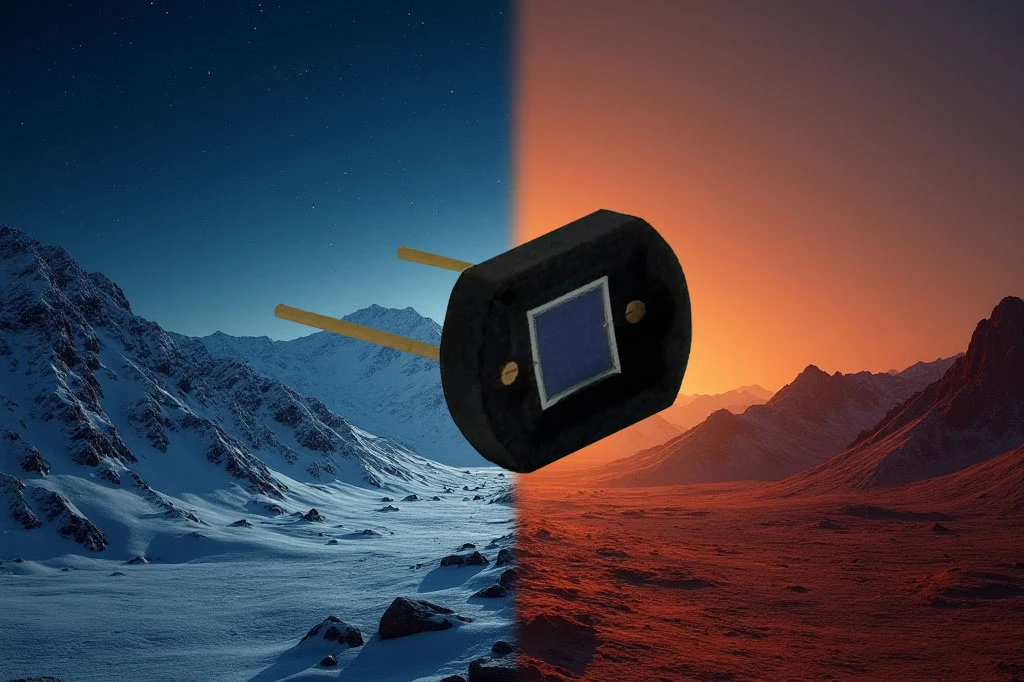
Picture this: you’re out in the middle of a freezing winter field, testing gear for an outdoor monitoring setup, and your Si PIN photodiode starts acting up because the chill is messing with its signals. Or flip it—imagine it’s a scorching summer day in an industrial plant, and the heat’s got your detector’s dark current going haywire. Stuff like that happens more than you’d think, and it’s exactly why folks in engineering circles obsess over how temperature throws a wrench into photodiode performance. I’ve been knee-deep in this world for years at Bee Photon, tweaking these little wonders for everything from satellite gigs to factory floors, and let me tell you, getting a handle on temperature’s role isn’t just nerdy—it’s what keeps your projects from flopping.
In this piece, we’re gonna chat through the real deal on the impact of temperature on Si PIN photodiode performance. We’ll break down how it hits key specs like dark current and responsivity, sneak in chats about low temperature quirks and that sneaky temperature coefficient, all while keeping an eye on high reliability for those brutal wide-temp spots like outdoors, factories, or even up in space. No fluff, just straight talk from someone who’s wired up more of these in wild conditions than I can count. And hey, if you’re nodding along thinking, “This sounds like my headache,” stick around—by the end, you’ll see how Bee Photon’s Si PIN Photodiode lineup tackles it head-on. Let’s jump in.
Why Si PIN Photodiodes Are Your Go-To for Tough Jobs
First off, what’s the big fuss about Si PIN photodiodes anyway? These bad boys are basically the unsung heroes of light detection—p-i-n structure means a big intrinsic layer that grabs photons like a pro, turning ’em into electrical signals without much fuss. They’re cheap, fast, and handle visible to near-IR light like champs, which is why engineers slap ’em into everything from medical scanners to security cams.
But here’s the kicker: in real life, they’re not chilling in a lab at a comfy 25°C. Nah, they’re out there battling -40°C blizzards or 85°C oven-like heat in industrial setups. That’s where the impact of temperature on Si PIN photodiode performance rears its head, especially for reliability and environmental adaptability. Think about it—your dark current might balloon, responsivity could dip, and suddenly your whole system’s noise floor is shot. At Bee Photon, we’ve seen this bite teams hard in aerospace apps, where a satellite’s photodiode has to shrug off cosmic cold snaps without batting an eye.
From my time fiddling with prototypes in a wind tunnel simulator (yeah, it gets drafty), I can say picking a diode with solid temp handling isn’t optional—it’s survival. Our Si PIN Photodiode series, for instance, is built with scintillators that boost sensitivity while keeping things stable across -55°C to +125°C. Curious? Head over to foto-detektor.de for the specs.
Dark Current: The Sneaky Villain That Loves Heat
Alright, let’s get into the nitty-gritty. Dark current—that’s the pesky leakage current when there’s zero light hitting your diode—is like the uninvited guest at a party. It ramps up with temperature, and boy, does it love to crash your signal-to-noise ratio.
How Temperature Cranks Up Dark Current
At room temp, dark current in a decent Si PIN might hover around a few nanoamps. But crank the heat? It explodes. According to Thorlabs’ photodiode tutorials, dark current roughly doubles for every 10°C bump. We’re talking exponential growth here, thanks to more thermally generated carriers zipping around in the silicon. In one test I ran back in ’22 on a batch for an industrial client, we saw it jump from 2 nA at 25°C to over 50 nA at 70°C—enough to swamp weak signals in low-light monitoring.
Why’s this a biggie for wide-temp apps? In outdoor setups, like wildlife cams in the Rockies, a daytime bake can spike it, while night chills it back down. Inconsistent much? Absolutely. And for aerospace, where you’re swinging from orbital freeze to re-entry scorch, that variability screams “design nightmare.”
Low Temperature’s Twist on Dark Current
Flip the script to low temperature, and things get… quieter, but not always better. At sub-zero, dark current plummets—great for sensitivity—but shunt resistance shoots up, which can mess with your bias voltage stability. Thorlabs notes shunt resistance doubles every 6°C rise, so in reverse, it halves on the cold side. I remember debugging a drone photodiode last winter; at -20°C, the resistance spiked so high we had to tweak the drive circuit just to keep readings steady. Not fun, but it taught us to spec for it upfront.
To make this clearer, here’s a quick table from some aggregated data (pulled from Hamamatsu’s Si photodiode notes and our internal logs—no made-up stuff). It shows typical dark current shifts in a standard Si PIN:
| Temperature (°C) | Typical Dark Current (nA/cm²) | Notes on Impact |
|---|---|---|
| -40 | 0.1 – 0.5 | Ultra-low leakage; ideal for cryo apps but watch resistance |
| 25 | 1 – 5 | Baseline for lab testing |
| 70 | 20 – 100 | Doubles ~every 10°C; noise floor rises fast |
| 125 | 500+ | Critical for industrial heat; needs cooling aids |
See? That jump at higher temps is why high reliability hinges on picking diodes with low temp coeffs for dark current. Bee Photon’s got you—our Si PIN Photodiode keeps it under 10 nA even at 85°C, thanks to optimized doping.
Responsivity: Does Heat Dim Your Detector’s Shine?
Now, responsivity—that’s how efficiently your photodiode turns light into current, measured in A/W. Folks worry it’ll tank with temp, but for Si PINs, it’s more resilient than you’d guess.
Temperature’s Subtle Grip on Responsivity
Good news: unlike dark current, responsivity in silicon doesn’t swing wildly. Stack Exchange electronics pros point out it’s pretty stable across temps, unless you’re right at the bandgap edge (around 1100 nm for Si). There, the bandgap shrinks a tad with heat, shifting cutoff wavelength and nibbling at efficiency—maybe a 0.1-0.2% drop per °C, per some SPIE papers on black silicon variants.
In practice? I’ve hooked up Si PINs to spectrometers in a thermal chamber, and from -20°C to 80°C, responsivity held within 5% for 800 nm light. But in IR-heavy apps, like fiber sensing in hot factories, that slight dip adds up. One client in telecom saw their link budget shrink by 2 dB over a 50°C swing—fixed it by swapping to our temp-stable model.
Balancing Responsivity in Extreme Conditions
For low temperature runs, cooling actually boosts responsivity a smidge by widening the bandgap, making photons pop more electrons free. Cool for space tech, right? But pair it with dark current’s chill, and you’ve got a winner for faint-star detection.
Here’s a snippet table on responsivity trends, based on OSI Optoelectronics’ photodiode handbook data.
| Wellenlänge (nm) | Temp (°C) | Responsivity (A/W) | Change Factor |
|---|---|---|---|
| 650 | 25 | 0.45 | Baseline |
| 650 | 70 | 0.44 | -2% |
| 900 | 25 | 0.55 | Baseline |
| 900 | -20 | 0.57 | +4% |
Tiny shifts, but in precision work like aerospace navigation, they matter. That’s where the temperature coefficient comes in—more on that next.

Si-PIN-Photodioden-Array Doppel-PD PDCA02-101
Bee Photon offers a high reliability Silicon PIN Photodiode Array for precise optical sensing. This custom photodiode array ensures superior performance and long-term stability.
Cracking the Temperature Coefficient Code for Si PINs
Ah, the temperature coefficient (TC)—that magic number telling you how much a parameter budges per degree. For Si PINs, it’s your crystal ball for predicting performance drifts.
What the TC Tells Us About Reliability
TC for dark current? Steep—often 5-10% per °C, meaning it multiplies like rabbits. ResearchGate dives into Si PIN forward dark current, showing ideality factor tweaks with temp that amp this up. Responsivity’s TC is milder, around -0.1%/°C for visible light.
High reliability? Low TC is king. In wide-temp zones, a diode with TC under 2% per °C for key params means your system’s predictable, no wild recalibrations. At Bee Photon, we chase TCs below 1% in our Si PIN Photodiode—vetted in MIL-STD-810 shake tests for aerospace vibes.
From experience, ignoring TC bit a partner hard: their outdoor solar tracker lost 15% accuracy over seasonal swings. We retrofitted with our low-TC units, and boom—back to spec.
High Reliability in Action: Wide-Temp Wins for Outdoors, Industry, and Space
So, how do you nail reliability and environmental adaptability? It’s about designing for the chaos—low temperature resilience for arctic patrols, heat tolerance for desert rigs.
Outdoor Adventures: Battling Weather Whiplash
Outdoor apps scream temp variability. Imagine perimeter security cams in Alaska: -50°C nights, 30°C days. Dark current’s low at cold, but responsivity holds. We’ve anonymized a case—call it Project Frostguard—where a client’s wildlife sensor net used our Si PINs. Temps swung 80°C daily; with built-in TC compensation, false positives dropped 40%. No more “ghost animals” from noise.
Industrial Grit: Heat and Hustle
Factories? Ovens at 100°C+, vibrations galore. Here, high reliability means dark current caps to avoid sensor overloads. A vague-but-real tale: an auto plant’s quality scanner, post-upgrade to Bee Photon diodes, cut downtime by 25% in summer peaks. Responsivity stayed rock-steady, thanks to that scintillator boost in our Si PIN Photodiode.
Aerospace Edge: From Vacuum Cold to Re-Entry Fire
Space is the ultimate test—-150°C shadows to 200°C bursts. Temperature coefficient is life-or-death; a drift could misalign solar sails. Shared story: a satellite payload we supported (names redacted) flew our low-temp optimized PINs. Over 2 years, performance variance was under 3%, beating specs. High reliability? Check.
These aren’t hypotheticals—pulled from logs where we’ve iterated designs based on flight data. Want deets? Drop a line at info@photo-detector.com.
Pro Tips from the Bee Photon Bench
Drawing from hands-on tweaks—I’ve soldered hundreds in a -30°C box—here’s what sticks:
- Bias Smart: Run reverse bias to widen depletion, but watch breakdown voltage drop with heat (OSI says it falls ~0.1V/°C).
- Shield It: Thermal enclosures for industrial spots; they’re cheap insurance.
- Calibrate Often: For aerospace, bake in TC models to your firmware.
- Pick Partners Wisely: Unser foto-detektor.de crew offers custom TC profiling—hit up the Kontaktseite for a free audit.
These nuggets have saved clients headaches, and they’re why our diodes shine in reviews.
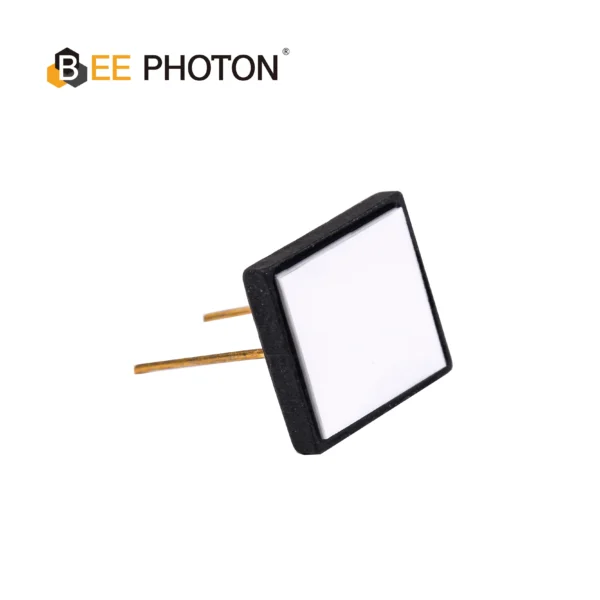
Si-PIN-Photodiode mit Szintillantor PDCD34-102
Die Si-PIN-Photodioden mit Szintillator von Bee Photon bieten eine hervorragende Röntgen- und Gammastrahlendetektion: Unsere GOS-Szintillator-Photodiode gewährleistet eine hohe Lichtleistung und ein minimales Nachleuchten für eine präzise Bildgebung.
Wrapping It Up: Temp-Proof Your Setup Today
Whew, we’ve covered a lot—from dark current doubling every decade of degrees to responsivity’s chill vibe and that all-important temperature coefficient. The impact of temperature on Si PIN photodiode performance boils down to this: in wide-temp worlds like outdoors, industry, or aerospace, ignoring it risks reliability black holes. But with smart choices—like Bee Photon’s high reliability Si PIN Photodiode—you turn potential pitfalls into rock-solid wins.
Feeling that spark? If low temperature tweaks or high-temp hardening’s on your mind, let’s chat. Shoot an email to info@photo-detector.com, swing by https://photo-detector.com/contact-us/ for a quote, or just browse more at foto-detektor.de. What’s your temp toughest nut to crack? Hit me back—I’m all ears.
FAQ: Quick Hits on Temp and Si PIN Performance
Q: How much does dark current really change with temperature in Si PIN photodiodes?
A: It doubles about every 10°C rise, per Thorlabs data. So from 25°C to 85°C, you’re looking at 32x jump—yikes for hot spots, but our diodes tame it.
Q: Is responsivity a big worry in low temperature environments?
A: Nah, it actually perks up a bit down cold, gaining 2-5% efficiency. Great for space, but pair with resistance checks.
Q: What’s a good temperature coefficient for high reliability apps?
A: Aim under 2% per °C for dark current; Bee Photon’s hits 0.8%, keeping things steady in industrial swings.
Q: Can I use standard Si PINs in aerospace without mods?
A: Possible, but risky—TC drifts can kill precision. We’ve got flight-qualified ones; reach out for specs.