Look, everyone in the smart home space is currently losing their minds over the rumored “major Siri upgrade” and what generative AI means for voice assistants. The software guys are throwing around terms like LLMs, contextual awareness, and neural processing. But honestly? Most of them are totally ignoring the physical hardware. You can give an AI the brain the size of a planet, but if it doesn’t have eyes to see its enviroment, it’s basically stumbling around in the dark.
This is exactly why ambient light sensors are the actual unsung heroes of the next generation of smart home tech. If you are an OEM building smart speakers, displays, or IoT hubs, and you are still treating your optical sensing as a two-cent afterthought, you are setting your product up to fail.
Today we’re getting into the weeds of ambient light sensors. We’ll look at why Si PIN photodiodes are crushing older tech, how to stop your devices from blinding your users at 2 AM, and what you actually need to look for when sourcing these components. No corporate fluff, just straight engineering talk from someone who has spent way too much time in optical darkrooms.
Why Your AI Voice Assistant is Functionally Stupid Without Good Light Sensing
Think about the user experience for a second. A customer buys your premium smart speaker. They put it on their nightstand. It’s 3 AM, pitch black, and they whisper a command to turn down the thermostat. The AI processes it perfectly, but because the hardware engineers cheaped out on the ambient light sensors, the device’s LED confirmation ring blasts them with the brightness of a thousand suns.
That is a garbage user experience.
True contextual intelligence requires ambient light sensing. Devices need to know if they are sitting in a sunlit kitchen, a dim living room, or a completely dark bedroom. The major Siri upgrade everyone is buzzing about relies heavily on multimodal inputs. It’s not just about audio anymore. It’s about the device understanding its surroundings. If your hardware can’t feed accurate lighting data to the processor, your AI is missing half the picture.
I’ve seen so many smart home manufacturers screw this up. They focus purely on the MEMS microphones and totally neglect the ambient light sensors. You need components that can accurately mimic the human eye’s response to light.
The Tech: Si PIN Photodiodes vs. The Cheap Stuff
Let’s talk hardware. When we talk about ambient light sensors for high-end consumer electronics, we are usually talking about photodiodes, and more specifically, Si PIN photodiodes.
If you aren’t familiar, a PIN photodiode has an intrinsic (I) layer sandwiched between the P-type and N-type semiconductor layers. This might sound like minor structural trivia, but that extra layer is what gives it a massive depletion region. This means lower capacitance, which equals screaming fast response times, and highly linear outputs across massive variations in light intensity.
Here is a controversial opinion: if you are still using cadmium sulfide (CdS) photoresistors in any modern smart home product, you need to fire your component sourcing team. Not only are they slow and wildly inaccurate, but they also contain heavy metals that make RoHS compliance a total nightmare.
Let’s break down the differences. I made a quick table to show why Si PIN photodiodes are the standard for modern ambient light sensors.
| Merkmal | Si-PIN-Photodioden | Standard Phototransistors | CdS Photoresistors (Legacy) |
|---|---|---|---|
| Reaktionsgeschwindigkeit | Nanoseconds (Super fast) | Microseconds (Moderate) | Milliseconds (Brutally slow) |
| Linearität | Excellent across wide dynamic range | Poor at high light levels | Terrible, highly non-linear |
| Dunkler Strom | Very Low (Great for pitch black) | Höher | N/A (resistance based) |
| RoHS Compliant? | Ja | Ja | NO (Contains Cadmium) |
| Bester Anwendungsfall | Precision ambient light sensors, AI devices | Cheap toys, simple switches | Belong in a museum |
If you want to see what industrial-grade specs actually look like, check out BeePhoton’s Si PIN photodiodes lineup. They are specifically engineered for the kind of tight tolerances OEMs need.
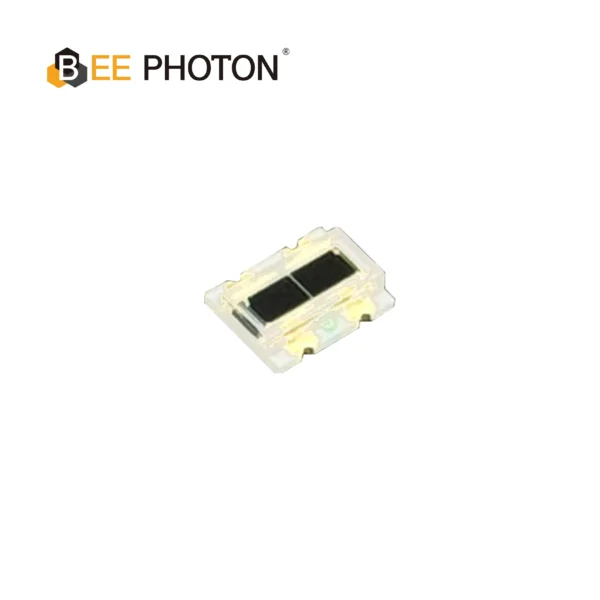
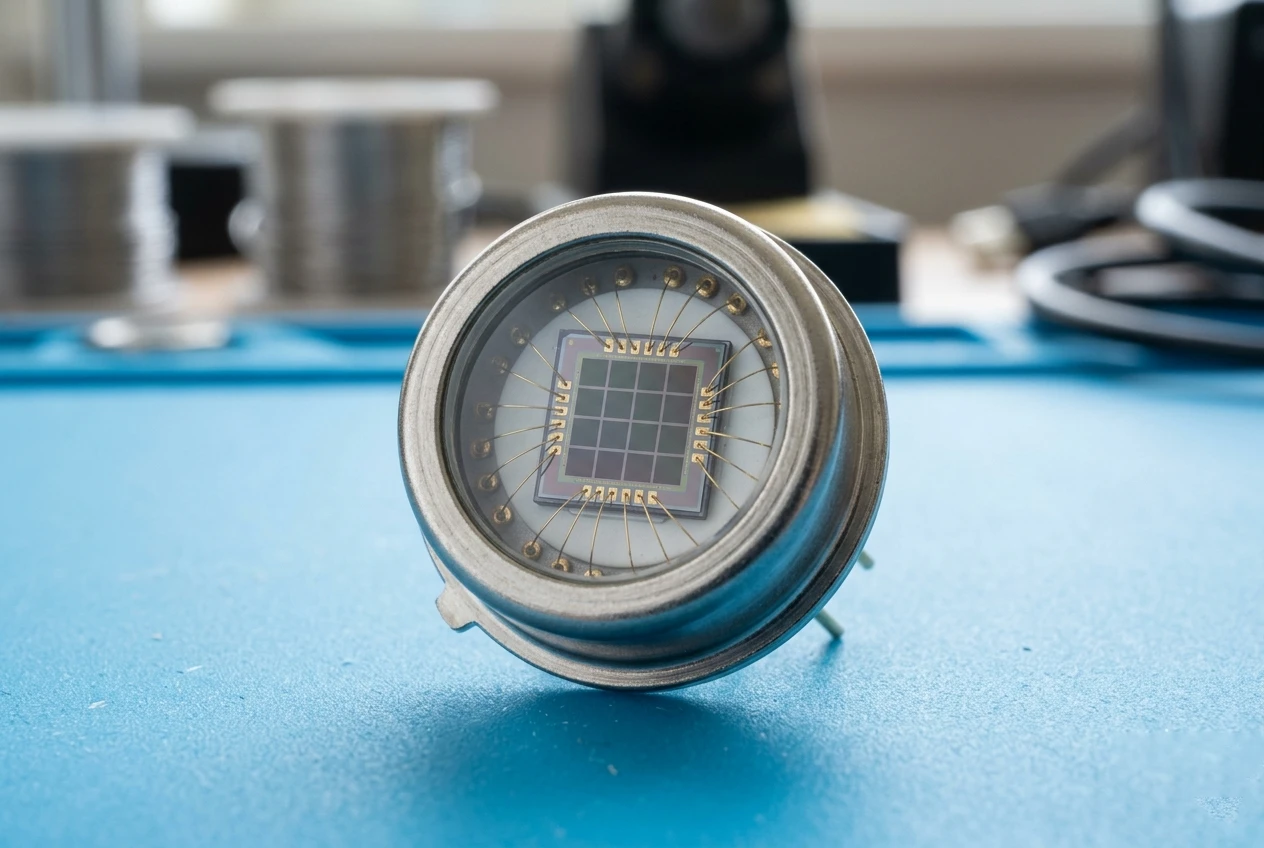
Si-PIN-Fotodioden-Array PDCA02-102
Die PDCA02-102 ist eine leistungsstarke Si-PIN-Photodioden-Array entwickelt für optische Präzisionsmess- und Ausrichtsysteme. Entwickelt von Bee Photon, ist dieses 2-Segment-Fotodiode liefert einen breiten Spektralbereich von 400nm bis 1100nm, die das gesamte Spektrum des sichtbaren Lichts bis in den Nahinfrarotbereich (NIR) abdecken.
Mit seinem kompakten COB-Gehäuse (Chip on Board) und dem Harzfenster gewährleistet der PDCA02-102 Langlebigkeit und eine einfache Integration in kompakte optische Module. Er ist speziell für industrielle Anwendungen optimiert, bei denen hohe Empfindlichkeit und schnelle Reaktionszeiten entscheidend sind.
The Physics: Calculating What You Actually Need
I promised we’d get into the engineering, so let’s look at the math behind ambient light sensors. Don’t worry, I won’t make it too painful.
When you are designing the optical window on your smart speaker, you need to know how much current your sensor is actually going to kick out based on the light hitting it. This is defined by the responsivity of the photodiode.
The basic formula you need to memorize is:
I_p = R * P_opt
Wo:
- I_p is the generated photocurrent (usually in microamps or milliamps).
- R is the Responsivity of the sensor (in Amps per Watt, A/W).
- P_opt is the incident optical power actually hitting the active area of the sensor (in Watts).
But here is where OEMs mess up. That P_opt isn’t just the light in the room. It’s the light in the room minus the transmission loss of your device’s plastic housing, minus any IR filter blocking, and minus the cosine falloff if the light is coming from an angle.
If your industrial designers insist on hiding the ambient light sensors behind a thick layer of dark tinted acoustic fabric (which they always do because they hate visible sensors), your P_opt drops to almost nothing. You then need ambient light sensors with incredibly low dark current to pick up the tiny usable signal left over. If your dark current is too high, it swallows the actual signal, and your device thinks it’s midnight at high noon.
A Real-World OEM Disaster (And How We Fixed It)
I want to share a story from a couple of years ago. I was consulting for a mid-tier smart home brand (I’ll keep them anonymous so they don’t sue me). They were launching a flagship AI voice assistant with a beautiful LCD touchscreen.
In the lab, it worked great. But when they sent out beta units, the feedback was brutal. The screen would randomly max out its brightness when people were watching TV in the dark. It was blinding them.
They thought it was a software bug in the auto-brightness algorithm. It wasn’t. It was a physical hardware failure in their ambient light sensors.
They had bought cheap off-the-shelf sensors that lacked proper infrared (IR) rejection. You see, the human eye only sees visible light (roughly 380nm to 700nm, peaking around 555nm). But standard silicon photodiodes are highly sensitive to near-infrared light (up to 1100nm).
When users were watching TV, their space heaters or even the IR blasters from their TV remotes were flooding the room with invisible infrared light. The cheap ambient light sensors picked up the IR, thought the room was incredibly bright, and cranked the LCD screen to 100%.
We had to halt production. We ripped out the cheap sensors and replaced them with custom ambient light sensors using high-grade Si PIN photodiodes with built-in optical IR-cut filters. We redesigned the light pipe to prevent internal optical crosstalk (where the screen’s own backlight bleeds into the sensor).
The problem vanished overnight. But that mistake cost them hundreds of thousands of dollars in delays. If they had partnered with a serious manufacturer like BeePhoton from day one, they would have avoided that massive headache.
Designing for the Future: What Smart Home Manufacturers Must Do
If you want your hardware to actually support the major Siri upgrade and whatever Google and Amazon release next, you need to treat ambient light sensors as mission-critical data inputs.
Here is what you need to be testing for in your engineering validation phases:
1. True Photopic Response
Your ambient light sensors must match the human eye. Period. If your sensor sees IR or UV light that humans can’t, your AI will make stupid decisions about screen brightness and LED intensity. Look for sensors that explicitly feature photopic filtering.
2. Extreme Dynamic Range
Smart home devices live in extreme lighting. Direct sunlight hitting a kitchen counter can be 100,000 lux. A dark bedroom might be 0.1 lux. Your ambient light sensors need an ADC (analog-to-digital converter) pipeline that can handle that massive range without saturating in the sun or losing the signal in the noise floor at night. This is where the linearity of Si PIN photodiodes really shines.
3. Beating Optical Crosstalk
This is a mechanical engineering issue, but it heavily impacts sensor choice. If you put your ambient light sensors on the same PCB as a glowing LED ring, light will travel through the plastic light guides and blind the sensor. You need physical isolation (baffles) and sensors with very tight viewing angles to reject internal light pollution.
4. Flickering Light Rejection
Modern LED house lights flicker at 50Hz or 60Hz. If your ambient light sensors sample rate aliases with the room lighting, your AI will think the room’s brightness is violently oscillating. The sensor hardware or the immediate firmware layer needs low-pass filtering to smooth out AC lighting flicker.
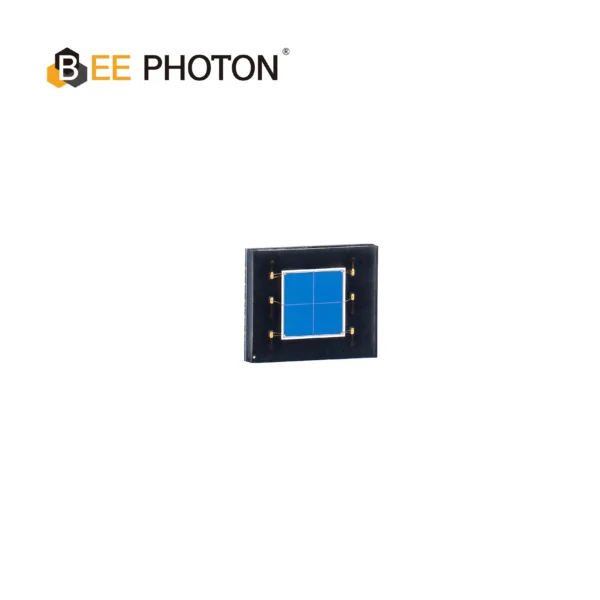
Si-PIN-Photodioden-Array Vier-Quadranten-PD PDCA04-101
Die Quadrant-PIN-Photodiode von Bee Photon gewährleistet eine hochpräzise Ausrichtung des Laserstrahls und eine Positionserfassung und bietet eine hervorragende Genauigkeit für Ihre optischen Systeme. Unsere Quadranten-Photodioden bieten eine hervorragende Gleichmäßigkeit für zuverlässige Ergebnisse.
Warum Sourcing wichtig ist
I’ve been in the photonics industry for over a decade. I’ve toured the fabs, I’ve seen the testing rigs, and I know exactly how corners get cut in semiconductor manufacturing.
When you buy cheap, unbranded ambient light sensors from a grey-market broker, you aren’t just getting lower performance; you are getting massive batch-to-batch inconsistency. One reel of sensors might have a responsivity of 0.4 A/W, and the next reel might be 0.2 A/W. Suddenly, half your production run of voice assistants is reacting completely differently to light, and your customer support lines light up with complaints.
You need authority and trust in your supply chain. You need a partner who provides detailed datasheets, dark current graphs at different temperatures, and junction capacitance specs.
This is frankly why I push OEMs towards BeePhoton’s custom solutions. They understand the physics of light detection at a fundamental level. They aren’t just a distributor; they are experts in optoelectronics. When you are trying to squeeze ambient light sensors behind a piece of acoustically transparent mesh, you need an engineering partner who can help you calculate the exact optical attenuation and customize the photodiode die to accomodate the loss.
The Cost of Ignoring This
Let’s get real about pricing. Yes, integrating premium Si PIN photodiodes and high-end ambient light sensors will add a few cents to your BOM (Bill of Materials) cost compared to bottom-of-the-barrel phototransistors.
But what is the cost of a returned product?
What is the cost of a one-star review on Amazon saying “This stupid speaker blinded me at midnight”?
The AI voice assistant market is way too competitive right now. Consumers expect magic. They expect the device to just know how bright its display should be. They expect the LED ring to be highly visible during the day, and softly glowing at night. You cannot achieve that magic without incredibly accurate data feeding the AI.
If your ambient light sensors are feeding garbage data to the processor, the world’s most advanced LLM can’t fix it. Garbage in, garbage out.
Stop Guessing, Start Sensing
Look, if you’re an OEM engineer, a product manager, or a hardware architect, you need to get your optical sensing right before the software guys push their next big AI update. The devices you are designing today are going to be on shelves when these massive AI shifts happen. Make sure they have the hardware to keep up.
Don’t let bad optical sensors ruin your flagship product. You need to talk to experts who actually understand spectral response curves, dark current, and packaging constraints.
If you are ready to stop guessing and start building seriously smart hardware, reach out to the engineering team. You can drop an email directly to info@photo-detector.com or head over to the Kontaktseite to discuss your specific OEM requirements. Stop letting your AI stumble in the dark.
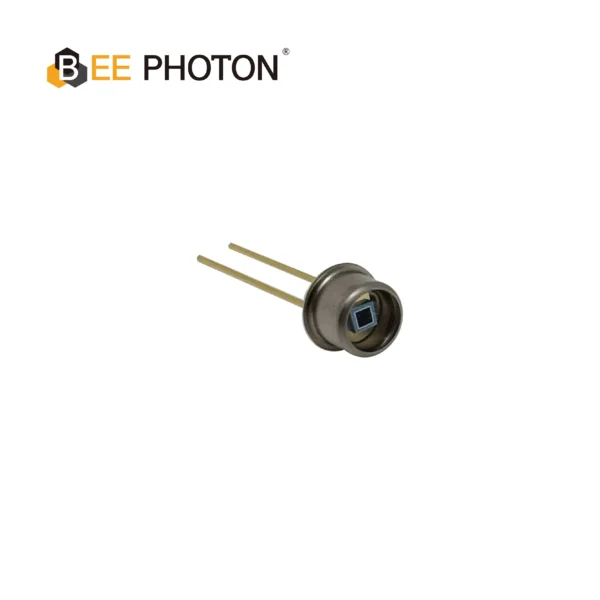
Si-PIN-Photodiode mit erhöhter UV-Empfindlichkeit (190-1100nm) PDCT01-F01
Erleben Sie präzise UV-Detektion mit unserer Quarzfenster-Si-PIN-Photodiode. Sie ist ideal für die Spektroskopie und bietet eine hohe Empfindlichkeit und ein geringes Rauschen im Bereich von 190-1100nm. Diese zuverlässige Si-PIN-Photodiode gewährleistet genaue Analyseergebnisse.
FAQ: OEM Ambient Light Sensors
F: Können wir anstelle von speziellen Umgebungslichtsensoren auch einfach die Kamera verwenden?
Ehrlich gesagt, ist dies für die meisten Smart Home-Geräte eine schreckliche Idee. Eine Kamera kann zwar theoretisch Licht messen, aber dazu muss der ISP (Image Signal Processor) aufgeweckt werden, was eine enorme Menge an Strom verbraucht. Außerdem sind die Menschen unglaublich paranoid, was den Datenschutz angeht. Wenn man einem Kunden sagt, dass sein intelligenter Lautsprecher eine aktive Kamera hat, nur um die Raumhelligkeit zu messen, wird er ihn mit Sicherheit abkleben oder sich weigern, ihn zu kaufen. Dedizierte Umgebungslichtsensoren laufen mit Mikro-Watt und sind datenschutzsicher.
F: Wie können wir den Sensor unter dunklem Plastik oder Stoff platzieren?
Dies ist der klassische Kampf zwischen Industriedesign und Technik. Dunkle Kunststoffe wirken wie starke Neutraldichtefilter und blockieren manchmal 95% des sichtbaren Lichts. Um dies zu beheben, braucht man Umgebungslichtsensoren mit sehr hoher Empfindlichkeit und unglaublich niedrigem Dunkelstrom. Außerdem muss die Software sorgfältig kalibriert werden, um die Abschwächung zu berücksichtigen. Manchmal muss man auf kundenspezifische Si-PIN-Fotodioden mit größeren aktiven Flächen umsteigen, um mehr von dem begrenzten Licht aufzufangen, das es durch das Material schafft.
F: Was ist der Unterschied zwischen einem Umgebungslichtsensor und einem Näherungssensor?
Gute Frage, die Leute verwechseln das oft. Umgebungslichtsensoren messen lediglich die Gesamtbeleuchtungsstärke (Helligkeit) des Raums, um Bildschirme oder LEDs anzupassen. Näherungssensoren senden ihr eigenes Licht aus (in der Regel unsichtbare Infrarotimpulse) und messen die Reflexion, die von einer Person oder einem Objekt zurückgeworfen wird, um festzustellen, ob sich jemand in der Nähe des Geräts befindet. Viele moderne OEM-Chips vereinen sowohl Umgebungslichtsensoren als auch IR-Näherungssensoren in einem einzigen Gehäuse, aber sie erfüllen zwei völlig unterschiedliche Aufgaben.
Q: Why does my smart speaker’s auto-brightness get confused by sunlight but works fine with lamps?
Sunlight has a massive amount of infrared energy compared to typical indoor LED lamps. If your ambient light sensors don’t have a high-quality IR blocking filter, the sensor gets overwhelmed by the invisible IR from the sun and reports an erroneously high brightness value. The fix is sourcing sensors with a photopic response curve that aggressively cuts off wavelengths above 700nm, mimicking human vision.