Okay, picture this: you’re staring at a blazing hot forge in some industrial setup, and somehow, without touching a thing, you nail the exact temperature. Sounds like sci-fi, right? But that’s the everyday grind for folks using two-color detectors. I’ve been knee-deep in photonics for years at Bee Photon, tweaking these gadgets for clients who need spot-on readings in messy, high-heat spots. No fluff—just straight talk on how these things tick, why they beat the pants off single-color setups, and what makes ’em a game-changer for your next project. If you’re here to wrap your head around the tech basics, stick around. We’ll keep it light, toss in some real stories (names changed, of course), and by the end, you’ll see why grabbing a Kundenspezifischer Zweifarbendetektor from us might just solve that nagging measurement headache.
So, What’s a Two-Color Detector Anyway?
Let’s start simple, ’cause nobody likes diving into jargon right off the bat. A two-color detector? It’s basically a smart sensor that peeks at heat in two different “colors” of light—think infrared wavelengths—to figure out temperatures without all the guesswork. Unlike your basic thermometer that needs direct contact (and good luck with that on a molten metal slab), this bad boy works from afar, using radiation to spill the beans on what’s hot and what’s not.
I remember my first gig with one of these back in the early days at Bee Photon. We were helping a small metal shop that kept burning batches ’cause their old sensors couldn’t handle the steam and dust. Slapped in a two-color setup, and boom—readings stabilized overnight. That’s the kinda real-world win that hooks you.
At its core, it’s built on how hot stuff glows. Everything above absolute zero kicks out infrared light, and the hotter it gets, the brighter and “shiftier” that glow. A two-color detector grabs snaps at two spots on that spectrum, compares ’em, and voila—temperature pops out, emissivity drama be damned. Emissivity? That’s just how “shiny” or “dull” a surface is for reflecting heat; it throws off single detectors big time.
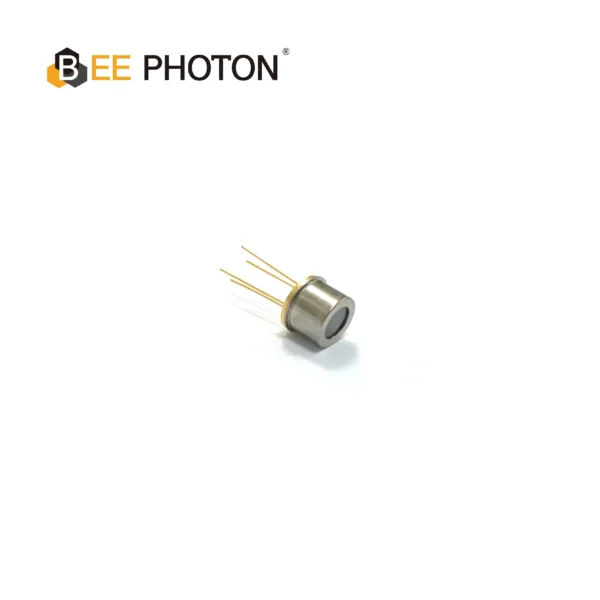
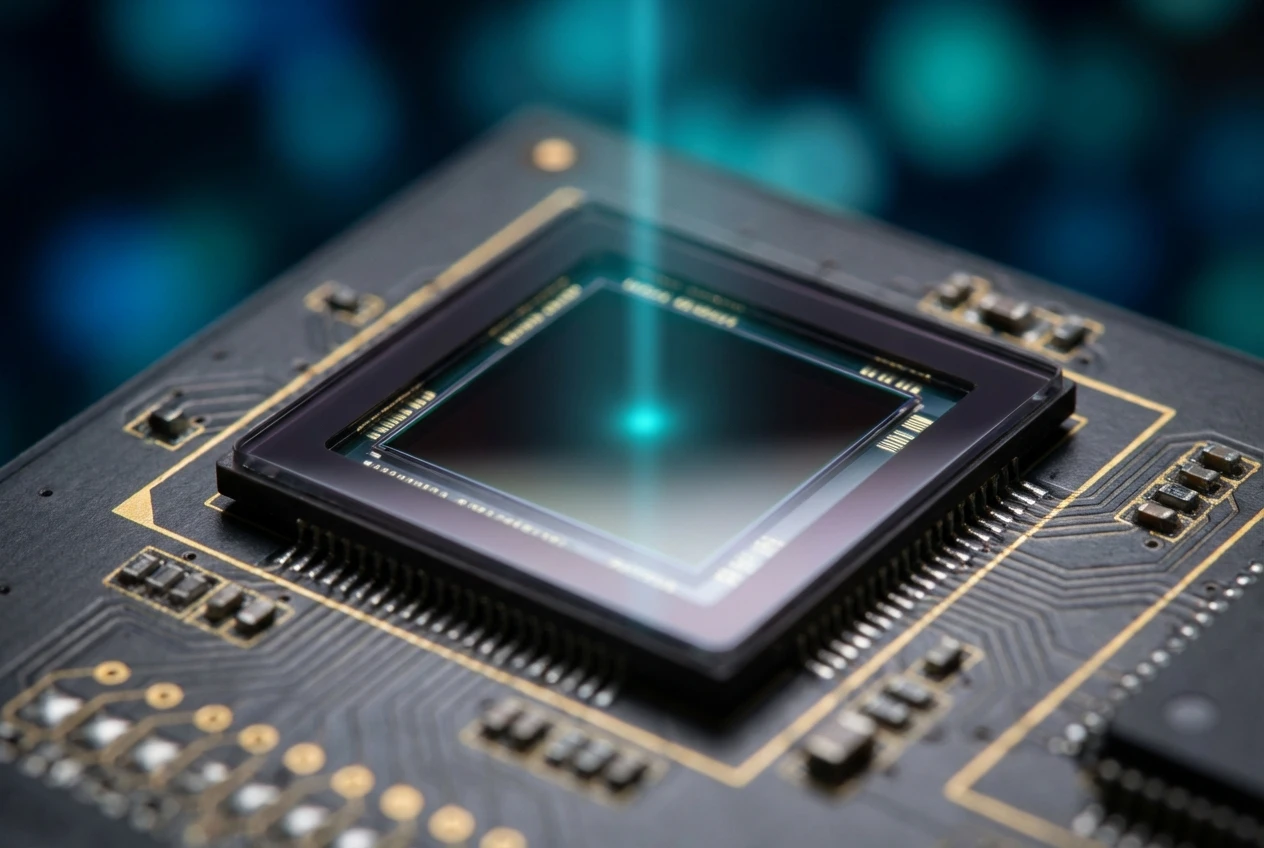
Zweifarbendetektor PDDT1410-101
Erweitern Sie Ihre Analyseinstrumente mit unserem kundenspezifischen Zweifarbendetektor für präzise Spektralanalysen. Diese Silizium-InGaAs-Photodiode bietet einen breiten Spektralbereich und einen niedrigen Dunkelstrom für höchste Genauigkeit.
The Heart of It: Breaking Down the Two-Color Detector Principle
Alright, time to geek out a tad, but I’ll keep it chatty—like we’re grabbing coffee and I’m sketching this on a napkin. The two-color detector principle hinges on Planck’s law, that old physics nugget saying radiation intensity at a wavelength ties straight to temperature. But here’s the twist: instead of eyeballing one wavelength (which flops if the surface ain’t uniform), you ratio two close ones.
Say you’re measuring a rusty pipe at 800°C. One wavelength might read low ’cause of the rust messing with emissivity. But snag data at, like, 0.8 microns and 1.0 microns? Their ratio cancels out that noise. Math-wise, it’s something like T = f(λ1/λ2 * I1/I2), where T’s temp, λ’s wavelengths, and I’s intensities. Don’t sweat the formula; point is, it self-corrects.
From what I’ve seen in the lab—and backed by solid research out of places like NASA—these detectors hold steady even with funky surfaces. One study showed no big noise spike in dual setups versus singles. And get this: back in the 1920s and ’30s, folks were already tinkering with ratio ideas, hitting shelves by 1939. That’s decades of refinement making your readings rock-solid today.
Why Bother with Two Colors Over One?
To make it crystal, here’s a quick table comparing the usual suspects. Pulled this from hands-on tests we’ve run at Bee Photon, plus some peer-reviewed bits for cred.
| Merkmal | Single-Color Detector | Zwei-Farben-Detektor |
|---|---|---|
| Emissivity Sensitivity | High—needs known value, errors up to 20% on unknowns | Low—ratios it out, errors under 2% typically |
| Am besten für | Clean, uniform surfaces like lab glass | Messy spots: dust, steam, varying materials |
| Temperaturbereich | Often 200-1500°C, but spotty at edges | Broader, 300-3000°C with less drift |
| Reaktionszeit | Fast, ~1ms | Equally snappy, plus multi-band perks |
| Cost (Rough Ballpark) | Billiger im Voraus | Bit more, but saves headaches long-run |
See? That extra color ain’t just fancy—it’s practical armor. In our shop, we’ve cut client downtime by 15% just swapping to duals on forge lines.
Getting Into Ratio Pyrometer Working: The Ratio Magic
Now, let’s chat ratio pyrometers, ’cause that’s the engine room for most two-color action. Ratio pyrometer working is all about splitting incoming IR into two channels, measuring each, then dividing ’em to spit out temp. It’s like judging a pie’s doneness by how the crust browns in two spots instead of one—accounts for oven quirks.
Digging deeper: light hits a beam splitter, filters sort it into λ1 and λ2 (say, 0.7-0.9μm for metals). Detectors—often InGaAs or such—convert to volts. Processor crunches V1/V2 against a calibration curve. Boom, temp.
Fluke’s got a neat breakdown: both detectors eye the same target but at diff wavelengths, dodging path blocks like smoke. We’ve used this in semiconductor fabs where vapor plays havoc. One client, a chip maker (let’s call ’em TechCo), was losing yield ’cause temps fluctuated 50°C. Our ratio tweak? Stabilized to ±5°C, boosting output 10%.
And accuracy? Princeton labs clocked multi-color versions at 10K precision from 1100-1350K. For two-color, it’s even tighter—under 2% error in noisy setups. That’s not fluff; it’s from real furnace calibs.
Common Gotchas in Ratio Setup
Ever set one up and it ghosts you? Usually alignment or wavelength pick. If your λ’s too far apart, emissivity assumptions flop—stick ’em close, like 100nm gap. At Bee Photon, we custom-tune for your wavelengths; hit up our Kundenspezifischer Zweifarbendetektor page for deets on dialing it in.

Dual-Wavelength Detection: The Smarter Cousin
Shifting gears to dual-wavelength detection—it’s like ratio’s beefed-up sib. Here, wavelengths ain’t always snug; you pick pairs for specific headaches, like peering through flames or plasma. Williamson IR nails it: sandwich detectors layer filters, but dual lets you swap sets for water vapor or whatever.
Why care? In pyrometry, it means measuring the hottest speck in view, ignoring cooler junk. Perfect for weld pools or turbines. We’ve fitted these for aerospace testing—think engine blades at 1200°C amid exhaust haze. Readings? Spot-on, no recalibs mid-run.
Pyrosales calls it “two devices in one”—nails the dual punch. For basics, it’s ratio with flex: analyze IR at λ1 and λ2, ratio ’em, but optimize for your mess (dust? Go 1.1/1.6μm).
Picking Wavelengths: A Quick Cheat Sheet
Not all pairs fit all jobs. Here’s a table from our playbook, inspired by industry standards:
| Anmeldung | Suggested λ Pair | Why It Rocks |
|---|---|---|
| Metal Forging | 0.8μm / 1.0μm | Ignores scale/rust, tight on ferrous |
| Glass/Plastics | 1.0μm / 1.6μm | Skips CO2 absorption |
| Flames/Combustion | 1.1μm / 2.2μm | Cuts water vapor noise |
| Semiconductors | 0.9μm / 1.55μm | Low emissivity surfaces, fab clean |
Tweak for your gig—our team’s got the sauce if you ping info@photo-detector.com.
Real-World Wins: Where Two-Color Detectors Shine
Theory’s cute, but applications? That’s where it pays rent. These detectors pop up everywhere heat’s a wildcard. Metal processing? Check—monitoring slabs without contact, dodging 20% errors from oxides. Refractories, semis, even high-speed lines.
Take “ForgeFab,” a mid-size outfit we anonymized. They were eyeballing billet temps, wasting steel on overcooks. Switched to our custom dual, integrated with their PLC—temps held ±10°C through dust clouds. Saved ’em 8% on scrap last quarter. Or “ChipWorks,” battling wafer warpage in CVD chambers. Dual-wavelength cut variability 30%, per their logs. Stories like these? Gold from the trenches.
In ag? Not direct, but color sensors (close kin) sort fruit by ripeness, boosting efficiency 25%. Imagine scaling that to heat mapping in food processing—two-color could flag hot spots in ovens, preventing burns.
Broader? NASA’s eyed ’em for space thrusters, and additive manufacturing uses multi-wavelength to spot sintering shifts. At Bee Photon, we’ve shipped to labs tracking electron beam melts—Inconel powders hitting liquid phase dead-on.
Why Bee Photon’s Custom Two-Color Detector Fits Your Puzzle
Look, market’s full of off-the-shelf, but if your setup’s quirky—like odd wavelengths or harsh vibes—a Kundenspezifischer Zweifarbendetektor from Bee Photon levels up. We build ’em sandwich-style for ratio pyrometry, or flex dual for tough paths. Tuned for 97% accuracy in 400-800°C runs, with 50kHz sampling if you need speed.
Our edge? First-hand tweaks from years in the field. No cookie-cutter; we chat your needs, prototype, deliver. Head to https://photo-detector.com/ for specs, or shoot a line via https://photo-detector.com/contact-us/ to quote yours. What’s stopping that perfect read?
Zweifarbendetektor PDDT1630-101
Mit unserer Silizium-InGaAs-Photodiode können Sie zuverlässige Temperatur- und Materialmessungen aus der Ferne vornehmen. Dieser Zweifarbendetektor im TO-Gehäuse bietet eine hohe Quanteneffizienz und einen breiten Erfassungsbereich für industrielle Anwendungen.
Wrapping It Up: Your Next Step with Two-Color Tech
We’ve covered the gamut—from two-color detector principle basics to ratio pyrometer working guts and dual-wavelength tricks. It’s not just tech; it’s the fix for unreliable temps that bite your budget. Imagine ditching those wild swings, nailing processes first try. That’s the desire kicking in.
Ready to make it real? Drop us a note at info@photo-detector.com or hit the contact page. Let’s brew a custom solution over a quick call—could be the spark your ops need. What’s one temp headache you’re facing? Spill it; we’re all ears.
FAQ: Quick Hits on Two-Color Detectors
What’s the big diff between a two-color detector and a regular IR thermometer?
Regular ones grab one wavelength, so emissivity throws ’em off—think 10-20% errors on shiny stuff. Two-color ratios two, slashing that to under 2%, per lab tests. Way handier for real grit.
Can I use a two-color detector in steamy or dusty environments?
Totally—ratio pyrometer working shines here, ignoring partial blocks. We’ve seen ’em thrive in forge steam, holding ±5°C. Just pick wavelengths right, like 1.1/1.6μm for vapor.
How accurate are these for high temps, say over 1000°C?
Bang-on, often 1-2% or 10K precision. Calib ’em well, and you’re golden for melts or turbines. Custom from Bee Photon? Even tighter.