
Si eres un ingeniero que se encuentra ante una hoja de especificaciones en blanco intentando decidir entre un emisor de infrarrojos pulsado y una fuente de infrarrojos fija, no eres el único. Me he encontrado exactamente en esa situación más veces de las que puedo contar, normalmente a las 2 de la mañana con el café frío. Dejémonos de palabrería comercial y hablemos de lo que realmente importa a la hora de elegir uno para su próximo diseño.
En primer lugar: ¿De qué estamos hablando?
A fuente IR en estado estacionario es básicamente del tipo “siempre encendido”. Piense en una bombilla incandescente para el mundo de los infrarrojos: se queda ahí brillando a una temperatura constante. Es sencilla, fiable y existe desde siempre.
A emisor IR pulsado, es más parecido a una luz estroboscópica. Parpadea con mucha intensidad durante breves instantes (de microsegundos a milisegundos) y luego se apaga. La mayoría de las modernas utilizan tecnología LED o de diodos láser, a veces con fósforo y a veces sin él.
Esa es la versión de 30 segundos. Ahora vamos a profundizar en cuándo cada una de ellas te hace la vida más fácil (o más difícil).
Consumo energético y calor: el verdadero asesino del presupuesto
Si tu sistema funciona con baterías o tienes que lidiar con la disipación de calor en una caja sellada, ésta suele ser la primera pelea.
| Aspecto | Fuente IR en estado estacionario | Emisor IR pulsado |
|---|---|---|
| Potencia media | 100% servicio = 100% potencia | A menudo <5% de pico (depende del ciclo de trabajo) |
| Potencia máxima | Igual que la media | Puede ser entre 50 y 200 veces superior a la media |
| Calor generado | Constante, alto | Sobre todo durante el pulso → mucho más fácil de manejar |
| Ejemplo típico | 500 mW continuos | 50 W pico, 1% servicio → 500 mW media |
Ejemplo de proyecto real (los detalles se han modificado un poco por razones de confidencialidad): Hace un par de años teníamos un analizador de gases portátil. El cliente empezó con una fuente de filamento en estado estacionario: 800 mW continuos. ¿Duración de la batería? Unas 3 horas. Cambiamos a un emisor pulsado basado en LED con un ciclo de trabajo de 1% → misma relación señal/ruido, la batería dura ahora más de 30 horas. Los mecánicos nos abrazaron.
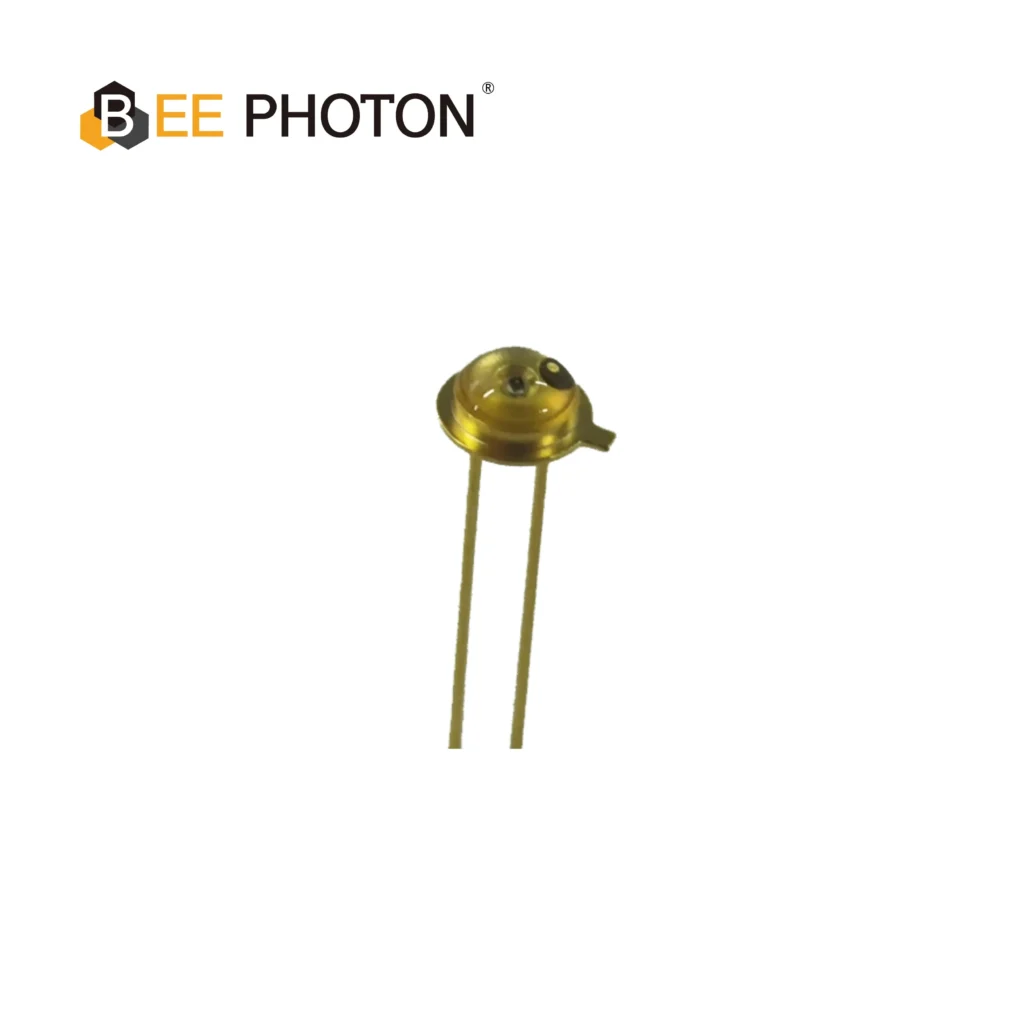
Fuente de luz LED serie E850-15-301
Como proveedor experto en fuentes de luz B2B, Bee Photon proporciona componentes TO18 de alta fiabilidad. Nuestras fuentes de luz uniformes garantizan un rendimiento estable para sus proyectos.
Vida útil y fiabilidad
Las fuentes estacionarias basadas en filamentos son resistentes, pero los ciclos térmicos son su enemigo. Si se encienden y apagan mucho, mueren rápidamente.
Los emisores pulsados (especialmente los de estado sólido) se ríen de los ciclos térmicos porque están apagados la mayor parte del tiempo.
Cifras aproximadas de fabricantes reales (Osram, Laser Components, etc.):
- Fuentes IR incandescentes: 5.000-40.000 horas a plena potencia (disminuye rápidamente si se atenúan)
- IR pulsado basado en LED: 50.000-100.000+ horas fácil
- Fósforo bombeado por diodo láser: 20.000-50.000 horas
Un cliente estaba reemplazando bombillas de estado estacionario cada 6 meses en un sensor exterior. Fue pulsado → todavía en el emisor original después de 4 años.
Relación señal/ruido y alcance de detección
Aquí es donde el pulsado suele ganar a lo grande.
Como se puede sobrecargar un emisor pulsado para ráfagas cortas, se obtienen picos de luminosidad increíbles. Eso significa una mejor señal a través del humo, el polvo, la lluvia, lo que sea.
Los amplificadores Lock-in o los detectores gated simples adoran las fuentes pulsadas: la luz de fondo se ignora por completo. ¿En estado estacionario? Estás luchando contra la luz solar, la radiación de cuerpo negro de todo lo caliente, etc.
Medición real que hice el año pasado:
- Misma óptica, mismo detector InGaAs
- Fuente en estado estacionario a 5 m: SNR ≈ 800:1
- Pulsado a 1% de servicio, 100× de potencia de pico: SNR ≈ 25.000:1 a 5 m.
- Y podríamos llevar la detección fiable hasta ~18 m frente a ~7 m antes.
Coste - Sí, tenemos que hablar de dinero
Por adelantado:
- Bombilla IR básica de estado estacionario: $10-$50
- Módulo emisor de impulsos IR + controlador: $80-$400
Pero la vida útil y los costes de energía suelen dar la vuelta a la ecuación en 6-18 meses para cualquier cosa que funcione mucho.
Entonces... ¿cuál debería elegir?
Hoja de decisiones rápidas que utilizo con mis clientes:
| Aplicación | La mejor elección | Por qué |
|---|---|---|
| Bajo coste, prototipo de laboratorio, no importa la potencia | Estado estacionario | Conductor barato y sencillo |
| Cualquier cosa a pilas | Pulsado | Nolo contendere |
| Detección de gases NDIR en exteriores / de largo alcance | Pulsado | Rechazo al sol |
| Cuerpo negro de alta temperatura de referencia | Estado estacionario | Espectro estable |
| Modulación rápida (>10 kHz) | Pulsado (láser/LED) | Tiempos de subida/bajada |
| Médico: problemas de seguridad por contacto con la piel | Normalmente en estado estacionario | Menor intensidad del pico |
Combo del mundo real Enviamos mucho
Lo curioso es que muchos de nuestros clientes acaban utilizando ambos en el mismo sistema. En estado continuo para la calibración o el canal de referencia, en pulsos para el canal de medición. Lo mejor de ambos mundos.
Hablando de productos reales, si realiza algún tipo de exploración o modulación rápida, eche un vistazo a nuestro Galvanómetro Escáner Fuente de luz. Está diseñado desde cero para funcionar en pulsos con tiempos de subida estúpidamente rápidos y se integra perfectamente con espejos galvo. La gente lo ha utilizado para todo, desde bancos de pruebas LIDAR hasta espectroscopia de alta velocidad.
Fuente de luz LED serie E850-15-202
Esta fuente de luz galvanométrica para escáneres ofrece un brillo y una precisión superiores. Diseñada para ofrecer precisión, nuestra fuente de luz TO18 garantiza una alta fiabilidad en los sistemas de escaneado.
FAQ - Cosas que nos preguntan los ingenieros
P: ¿Puedo tomar una fuente en estado estacionario y cortarla con un obturador para convertirla en pulsante?
R: Técnicamente sí, pero el choque térmico acabará con su vida útil en un abrir y cerrar de ojos. Los obturadores mecánicos también añaden ruido y desgaste. No se recomiendan a menos que sea algo de laboratorio.
P: ¿Son seguros los emisores pulsados para los cálculos de seguridad ocular?
R: En realidad, a menudo es más fácil hacer Clase 1. Porque la potencia media es baja aunque el pico sea altísimo. A la norma IEC 60825-1 le encantan los pulsos cortos: tienes mucho más margen de maniobra.
P: ¿Cuál es el truco de la pulsación?
R: La complejidad de los controladores y las posibles interferencias electromagnéticas si no se tiene cuidado. Pero hoy en día cualquier proveedor decente (como nosotros) te ofrece una solución limpia a nivel de placa.
Al fin y al cabo, no hay un “mejor” universal, sólo hay un “mejor para tu dolor específico”. Escríbenos a info@photo-detector.com o pulsa el botón página de contacto y dinos qué quieres medir, cuál es tu presupuesto energético, la distancia, el entorno... te diremos directamente qué camino tomar y te presupuestaremos algo que realmente funcione.
O simplemente eche un vistazo Fotón abeja - tenemos notas de aplicación, diagramas de espectro y muchas otras cosas que te ahorrarán algunas noches de preocupaciones.
Espero que esto haya ayudado a despejar un poco la niebla. Encantado de charlar sobre temas específicos en cualquier momento.


