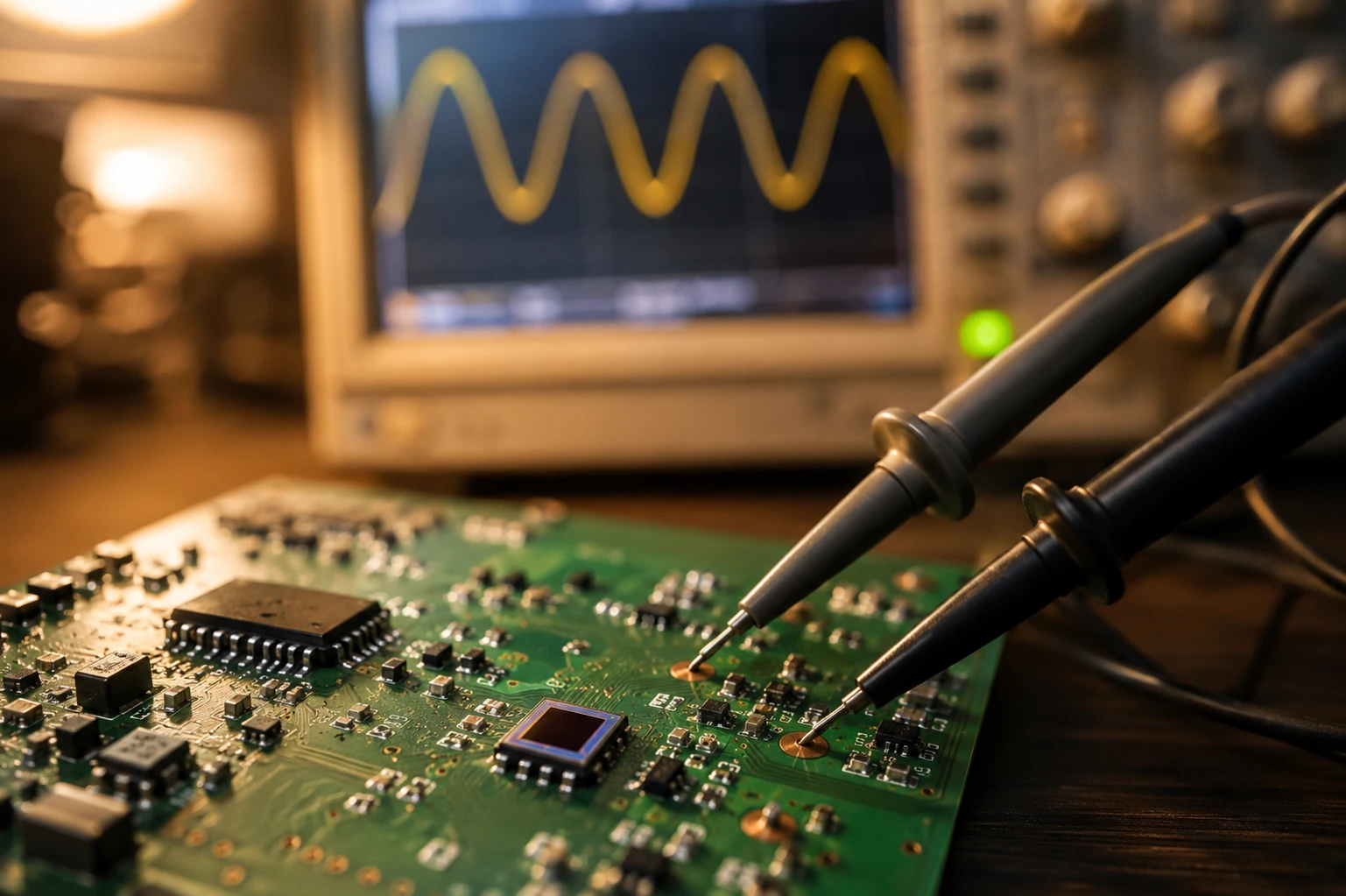
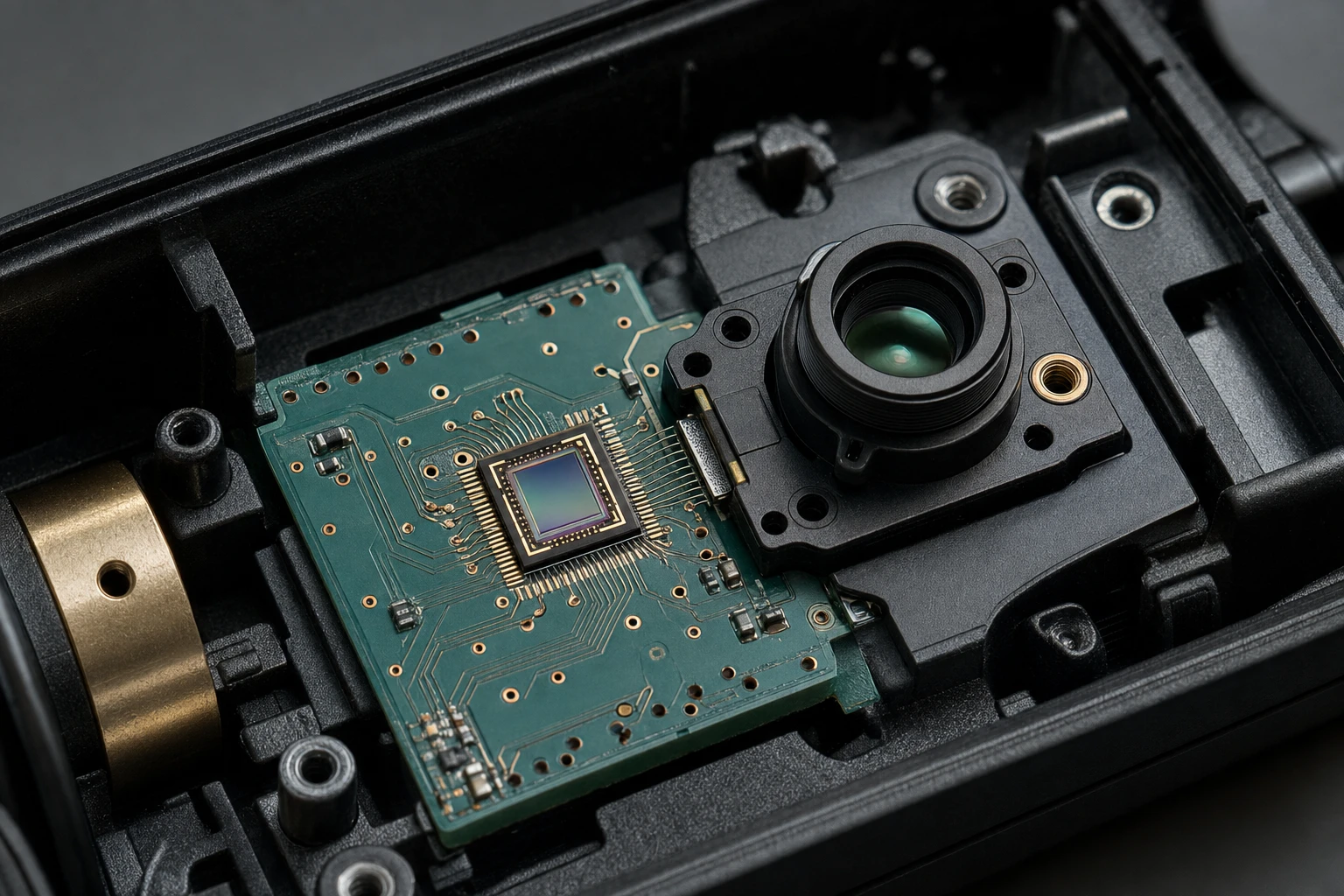
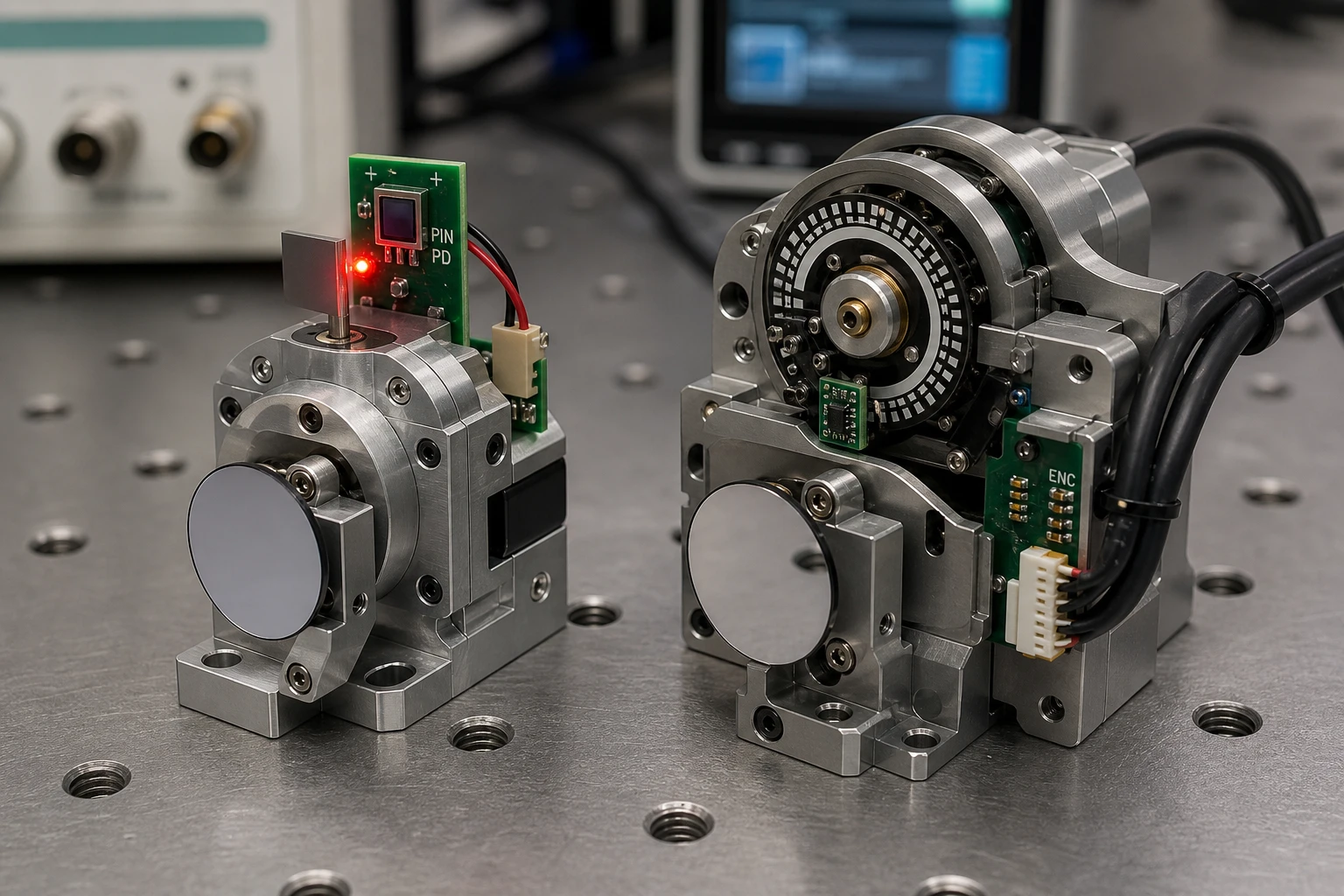
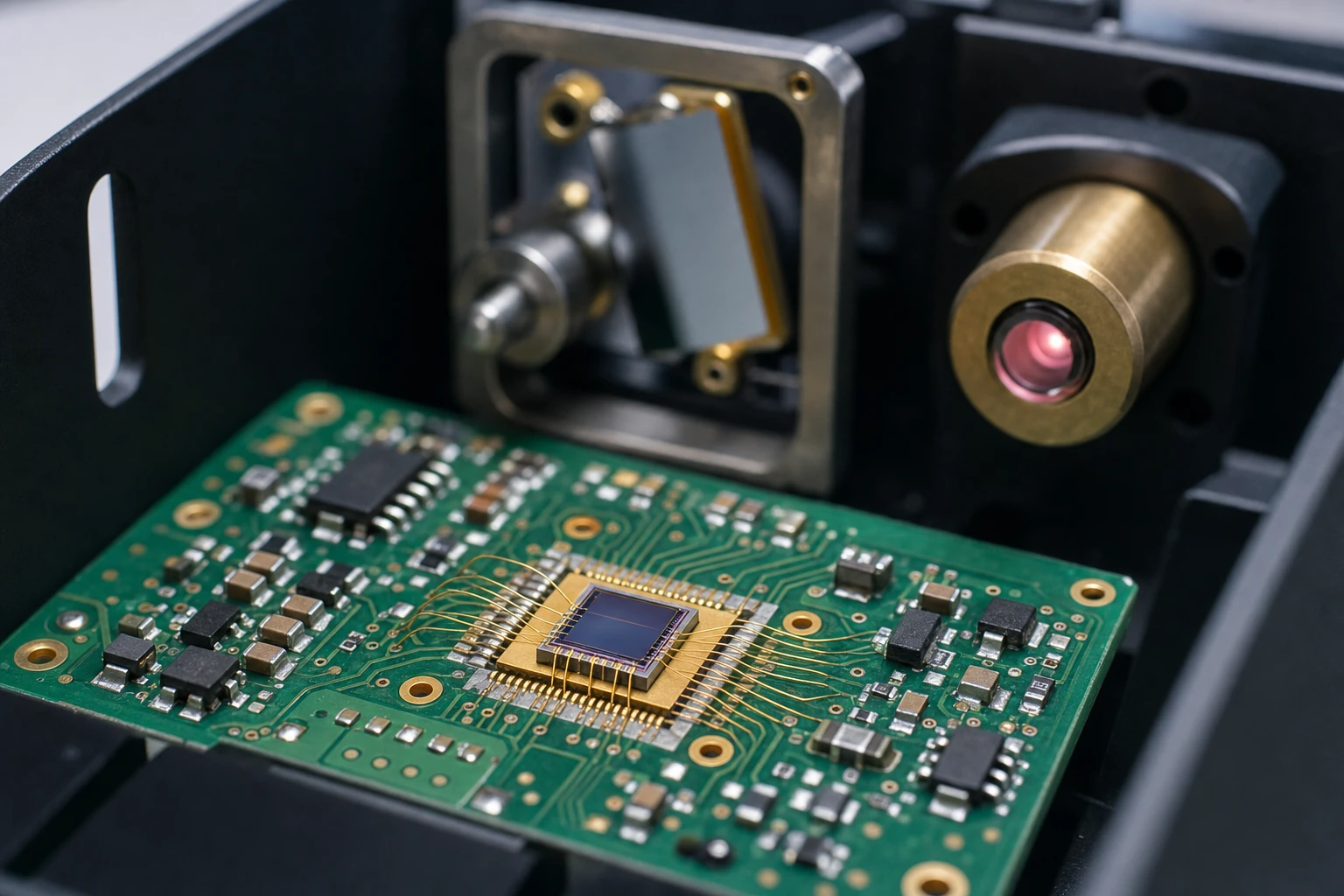
Nadie quiere ser el ingeniero responsable de un dispositivo médico que falla cuando más importa. Cuando los niveles de oxígeno de un paciente descienden, esa lectura en la pantalla tiene que ser real, y tiene que ser instantánea.
Si se dedica a la construcción componentes de monitorización médica, En el caso de los oxímetros de pulso, en concreto, ya conoce la lucha. Hay que luchar contra los artefactos de movimiento, los problemas de baja perfusión y las interferencias de la luz ambiental. Pero esto es lo que mucha gente pasa por alto: el meollo de esa lucha suele ser la calidad de la imagen. Fotodiodo de SpO2 que eligió durante la fase de diseño.
Como alguien que ha pasado años analizando cadenas de señales en dispositivos médicos, puedo decirle que cambiar un sensor genérico por un sensor de alto rendimiento es una tarea difícil. Fotodiodo de SpO2 suele ser la forma más barata de arreglar un producto “ruidoso”.
En esta guía vamos a dejar a un lado la palabrería de marketing y hablaremos de ingeniería. Veremos cómo seleccionar el sensor adecuado, las matemáticas que hay detrás de la relación señal/ruido y cómo asegurarse de que su dispositivo pasa la certificación FDA o CE sin quebraderos de cabeza.
La física: Por qué la elección del fotodetector es decisiva para el dispositivo
Todos conocemos el concepto básico. Se hacen pasar dos luces por un dedo (o lóbulo de la oreja, o pie): Rojo (normalmente 660 nm) e Infrarrojo (940 nm). La hemoglobina oxigenada absorbe más IR; la hemoglobina desoxigenada absorbe más Rojo.
En Fotodiodo de SpO2 se sienta al otro lado, captando la luz que la atraviesa.
Parece sencillo, ¿verdad? Pero aquí es donde se complica. La señal que se intenta captar es diminuta. Se trata de un pequeño componente de corriente alterna sobre un componente masivo de corriente continua (la absorción estática de los huesos, la piel y la sangre no pulsátil).
Las matemáticas que no puede ignorar
Para calcular la saturación de oxígeno, es probable que su firmware esté calculando el “Ratio of Ratios” (llamémoslo R).
R = (AC_rojo / DC_rojo) / (AC_ir / DC_ir)
Dónde:
- CA es el componente pulsátil (el latido del corazón).
- DC es el componente no pulsátil.
Si su Fotodiodo de SpO2 no es lo suficientemente sensible, o si tiene una corriente oscura alta, ese valor “AC” queda enterrado en el ruido. Cuando la señal de CA es basura, tu valor de R es erróneo. Y cuando R es erróneo, el número que aparece en la pantalla asusta a la enfermera sin motivo.
La mayoría de los fabricantes utilizan una ecuación de calibración empírica parecida a ésta:
SpO2 = A - B * R
Donde A y B son coeficientes determinados por ensayos clínicos. Si su Fotodiodo de SpO2 introduce no linealidades, esta ecuación lineal se desmorona, especialmente a niveles bajos de saturación (por debajo de 80%), que es exactamente cuando la precisión es crítica.

Fotodiodo PIN de Si con sensibilidad UV mejorada (320-1060nm) PDCC34-601
Experimente nuestro fotodiodo de alta eficiencia cuántica para una detección UV-NIR precisa. Su diseño COB y su sensibilidad UV mejorada (320-1060 nm) hacen que este fotodiodo PIN de Si sea ideal para aplicaciones compactas de alto rendimiento.
Parámetros clave para seleccionar un fotodiodo de SpO2
Cuando hojee los catálogos o mire nuestros Fotodiodos PIN de Si, No se puede elegir el que mejor se adapte al espacio disponible. Tienes que mirar las especificaciones que afectan a la sensor de pulsioximetría rendimiento.
Esta es mi lista de comprobación para un sensor de grado médico.
1. Respuesta espectral
El fotodiodo debe ser muy sensible tanto a 660 nm como a 940 nm. El silicio estándar es excelente a 940 nm, pero puede fallar a 660 nm. Un fotodiodo Fotodiodo de SpO2 está optimizado para tener una curva de respuesta más plana en este rango específico. Si la respuesta a 660 nm es demasiado baja, el LED rojo tendrá que funcionar con más intensidad, lo que reduce la duración de la batería en las unidades portátiles.
2. Corriente oscura (Id)
Este es el asesino. La corriente oscura es la corriente que produce el diodo incluso cuando no hay luz. En un sensor de pulsioximetría, Esto es puro ruido.
- Fotodiodo genérico: Corriente oscura ~1-5 nA.
- Fotodiodo de SpO2 de calidad médica: Corriente oscura < 0,1 nA.
La baja corriente oscura le proporciona un rango dinámico más amplio. Permite a su dispositivo leer con precisión en pacientes con pigmentación más oscura de la piel o dedos gruesos en los que la transmisión de la luz es muy baja.
3. Capacitancia de unión (Cj)
La capacitancia afecta a la velocidad. Aunque la pulsioximetría no es de “alta velocidad” como la fibra óptica, una menor capacitancia reduce el ruido cuando se encienden y apagan rápidamente los LED para muestrear las señales. Una menor capacitancia permite un diseño más limpio del TIA (Amplificador de Transimpedancia).
Comparación técnica: Sensores genéricos frente a los optimizados por BeePhoton
He elaborado esta tabla para mostrarle la diferencia entre comprar una pieza barata y utilizar una pieza dedicada. Fotodiodo de SpO2.
| Parámetro | Fotodiodo de consumo genérico | Fotodiodo BeePhoton Medical SpO2 | Impacto en la oximetría |
|---|---|---|---|
| Gama espectral | 400 nm - 1100 nm (no equilibrado) | 350nm - 1100nm (Optimizado para Rojo/IR) | Mejor equilibrio de la señal entre los canales rojo e IR. |
| Corriente oscura | Alto (2,0 nA típico) | Ultrabajo (< 0,05 nA) | Crítico para la lectura de baja perfusión (dedos fríos/choque). |
| Área activa | Pequeño (< 1mm^2) | Escalable (tamaños personalizables) | Un área mayor capta más luz, lo que mejora la SNR. |
| Paquete | Epoxi estándar | Epoxi médico transparente/filtrado | Biocompatible y reduce las interferencias de la luz ambiental. |
Un escenario del mundo real: El problema de la “señal a la deriva
Permítanme que les cuente una historia rápida (con los nombres cambiados, obviamente). Teníamos un cliente, un fabricante mediano de monitores portátiles de constantes vitales. Utilizaban un fotodiodo estándar de un gran distribuidor.
¿Su problema? Deriva de señal.
Cuando se encendía el dispositivo, era preciso. Pero después de 20 minutos de uso continuo, las lecturas de SpO2 bajaban 2-3%. Eso es enorme en un entorno clínico.
Pensaron que eran los LED que se calentaban y cambiaban de longitud de onda. Pasaron meses rediseñando el controlador LED.
Hablé con su ingeniero jefe y le pedí ver el Fotodiodo de SpO2 hoja de especificaciones. Resulta que el diodo genérico que utilizaron tenía un enorme coeficiente de temperatura para la corriente oscura. A medida que el dispositivo se calentaba (por la batería y la electrónica), la corriente oscura aumentaba, añadiendo una falsa línea de base de “absorción” a la señal.
La solución:
Cambiaron a un BeePhoton alta precisión Fotodiodo de SpO2 con características térmicamente estables.
- Resultado: La deriva se desvaneció.
- Coste: El coste de la lista de materiales aumentó quizá $0,15 por unidad.
- Ahorro: Se ahorraron miles de euros en una posible retirada y rediseño.
Por eso, la elección del componentes de monitorización médica importa más que ahorrar céntimos en la lista de materiales.

Fotodiodo PIN de Si con sensibilidad UV mejorada (320-1060nm) PDCT16-601
Nuestro fotodiodo con ventana de borosilicato garantiza una detección superior de UV a NIR. Este fotodiodo con ventana de borosilicato duradera destaca en espectroscopia y análisis médicos.
Consejos de diseño para integrar el fotodiodo de SpO2
Si estás preparando la placa de circuito impreso, ten en cuenta estos consejos para sacarle el máximo partido a tu proyecto. Fotodiodo de SpO2.
La interfaz TIA
Su Fotodiodo de SpO2 genera corriente, no tensión. Necesitas un Amplificador de Transimpedancia (TIA) para convertir esa corriente en un voltaje que tu ADC pueda leer.
- Mantener la traza entre el ánodo del fotodiodo y la entrada inversora de la TIA. lo más breve humanamente posible. Esta traza es una antena para el ruido (el zumbido de la red de 50/60 Hz es tu enemigo aquí).
- Utilice un anillo de protección alrededor de la entrada de la TIA si trabaja con corrientes muy bajas.
Luz ambiental
La luz del sol y los fluorescentes del hospital parpadean. Una buena Fotodiodo de SpO2 necesita blindaje óptico, pero también filtrado eléctrico.
- Asegúrese de que su Fotodiodo de SpO2 tiene un filtro de luz diurna integrado si es posible, o diseña la carcasa para bloquear la luz exterior.
- Utiliza la sustracción de fondo en tu firmware: Mida la corriente del fotodiodo cuando ambos LED están apagados, y reste ese valor de sus mediciones de Rojo e IR.
Tendencias en componentes de monitorización médica
Estamos asistiendo a un cambio. El viejo estilo de “pinza en el dedo” sigue siendo el rey de la precisión, pero los wearables están superando los límites.
Reflectancia vs. Transmitancia
Los oxímetros clásicos son Transmitancia (la luz se va a través de el tejido).
Los smartwatches y los parches son Reflectancia (la luz rebota fuera de el hueso/tejido).
La pulsioximetría de reflectancia es mucho más difícil. La señal es más pequeña. Esto hace que la calidad de la Fotodiodo de SpO2 aún más crítico. Se necesita una mayor sensibilidad (NEP - Potencia Equivalente al Ruido) porque se están captando fotones que han conseguido rebotar, no sólo pasar.
Si está diseñando un parche o un anillo para llevar puesto, no escatime en el sensor. Necesita la mayor superficie activa Fotodiodo de SpO2 que pueda caber en la carcasa para capturar esos fotones dispersos.
Por qué es importante la contratación
He visto cómo se colapsaban las cadenas de suministro porque un sensor genérico llegaba al final de su vida útil (EOL) sin previo aviso. Cuando se trabaja con un socio especializado como BeePhoton, no sólo está comprando una bobina de chips. Está asegurando una cadena de suministro para componentes de monitorización médica.
Conocemos los requisitos de documentación de la FDA/MDR. Sabemos que si cambia el sensor, es posible que tenga que volver a validar el dispositivo. Nuestro objetivo es hacerlo bien a la primera.
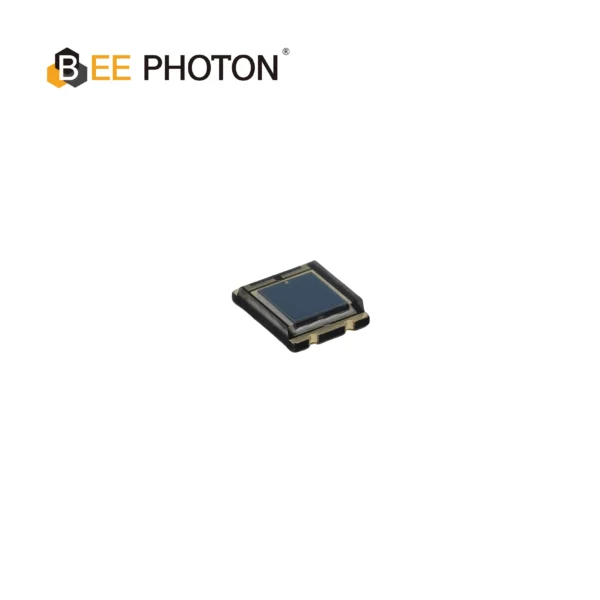
Fotodiodo PIN de Si con sensibilidad NIR mejorada (430-1100nm) PDCP08-201
En PDCP08-201 es un sistema de alto rendimiento Fotodiodo SMD Si PIN diseñado para la comunicación óptica de precisión y la detección médica[.1] Con una gran área activa de 2,9×2,9 mm, una sensibilidad NIR mejorada (0,70 A/W) y una corriente oscura ultrabaja (20 pA), este Fotodiodo SMD Si PIN garantiza una detección de señales y una fiabilidad superiores en un encapsulado compacto de montaje superficial.
PREGUNTAS FRECUENTES: Preguntas frecuentes de los fabricantes de dispositivos
P: ¿Puedo utilizar un fotodiodo estándar para la pulsioximetría?
R: Técnicamente, sí, pero tendrá problemas de precisión. Un diodo estándar suele tener una corriente oscura más alta y no está optimizado para la relación 660nm/940nm. Un diodo dedicado Fotodiodo de SpO2 garantiza el cumplimiento de las normas médicas (ISO 80601-2-61).
P: ¿Cómo afecta el tamaño del área activa al rendimiento del fotodiodo de SpO2?
R: Un área activa mayor capta más luz, lo que mejora la relación señal/ruido (SNR). Sin embargo, también aumenta la capacitancia. Para una pinza de dedo, suele ser mejor un área mayor (de 5 a 7 mm cuadrados). En el caso de los wearables, hay que equilibrar el tamaño con el consumo de energía.
P: ¿Cuál es el plazo de entrega de los fotodiodos PIN de Si personalizados?
R: Esto varía, pero en BeePhoton, nos especializamos en ayudar a los fabricantes OEM. A menudo podemos proporcionar muestras rápidamente para la creación de prototipos. Desde componentes de monitorización médica exigen un estricto control de calidad, damos prioridad a la estabilidad en nuestra línea de fabricación.
P: ¿Por qué mi lectura de SpO2 es inestable en pacientes con baja perfusión?
R: Normalmente se trata de un problema de ruido. Cuando la perfusión es baja, la señal pulsátil (AC) es diminuta. Si su Fotodiodo de SpO2 tiene un ruido oscuro alto o ruido térmico, ahoga la señal. El cambio a un sensor con menor corriente oscura (Id) es la solución de hardware más eficaz.
¿Está listo para actualizar su tecnología de sensores?
El mercado de los dispositivos médicos está abarrotado. La única forma de destacar es tener un dispositivo que funcione al instante y con precisión, siempre. No querrá que su equipo de ventas ponga excusas por “señales ruidosas” durante una demostración.
En BeePhoton, diseñamos el Fotodiodo de SpO2 que alimentan dispositivos médicos de primer nivel. Tanto si necesita un fotodiodo PIN de Si estándar como una matriz personalizada para un nuevo wearable, tenemos la experiencia necesaria para ayudarle a optimizar su cadena de señal óptica.
No deje que un sensor barato ponga en peligro su caro dispositivo.
- ¿Necesita una muestra? Podemos enviar unidades de prueba para su equipo de ingenieros.
- ¿Tiene un factor de forma extraño? Hacemos embalajes a medida.
- ¿Quieres hablar de especificaciones? A nuestros ingenieros les gusta hablar de resistencia en derivación.
Póngase en contacto con nosotros o envíe un correo electrónico directamente a info@photo-detector.com. Asegurémonos de que el lanzamiento de su próximo producto sea impecable.
O consulte nuestra gama completa de sensores aquí: Fotodiodos PIN de Si Categoría de producto.