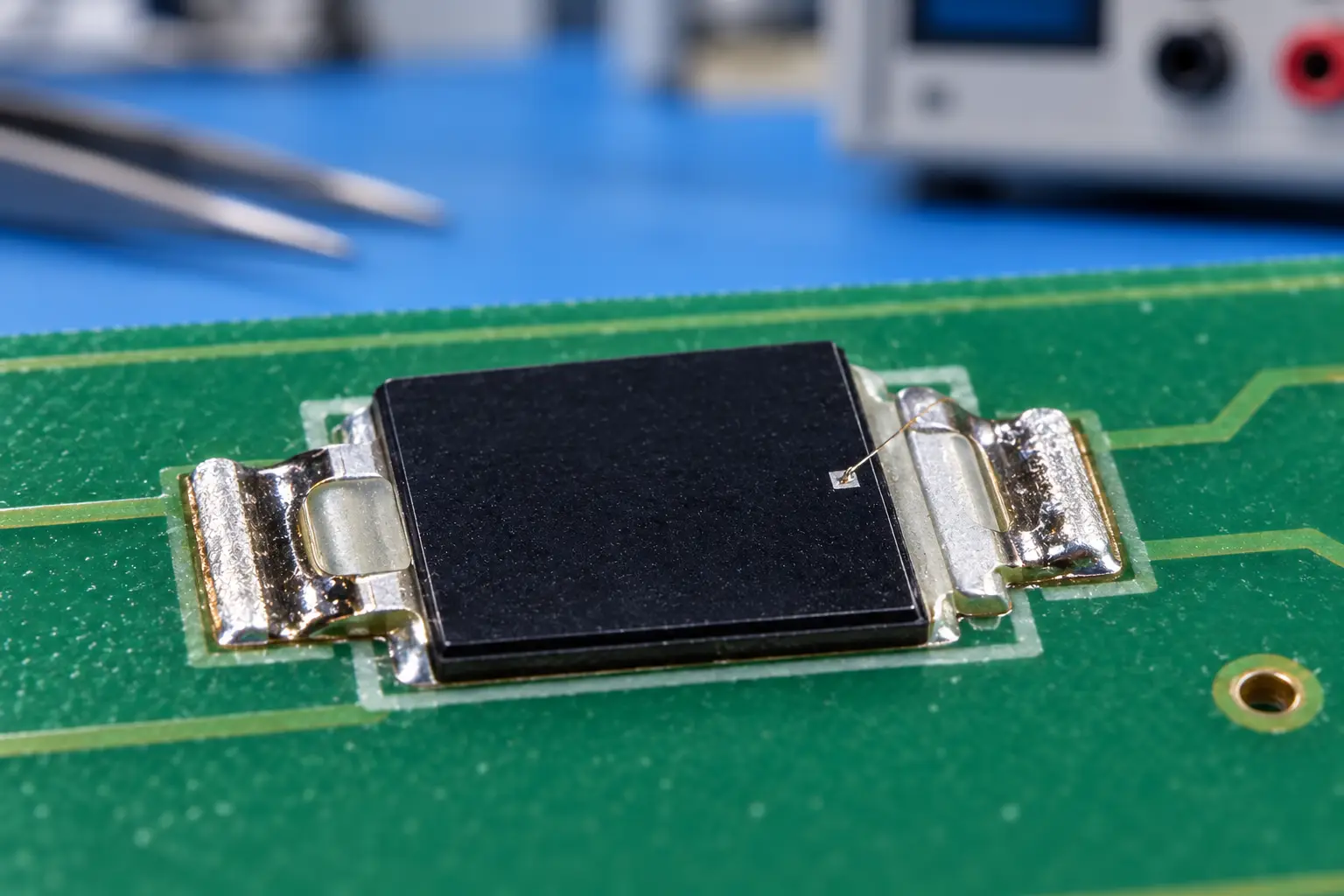
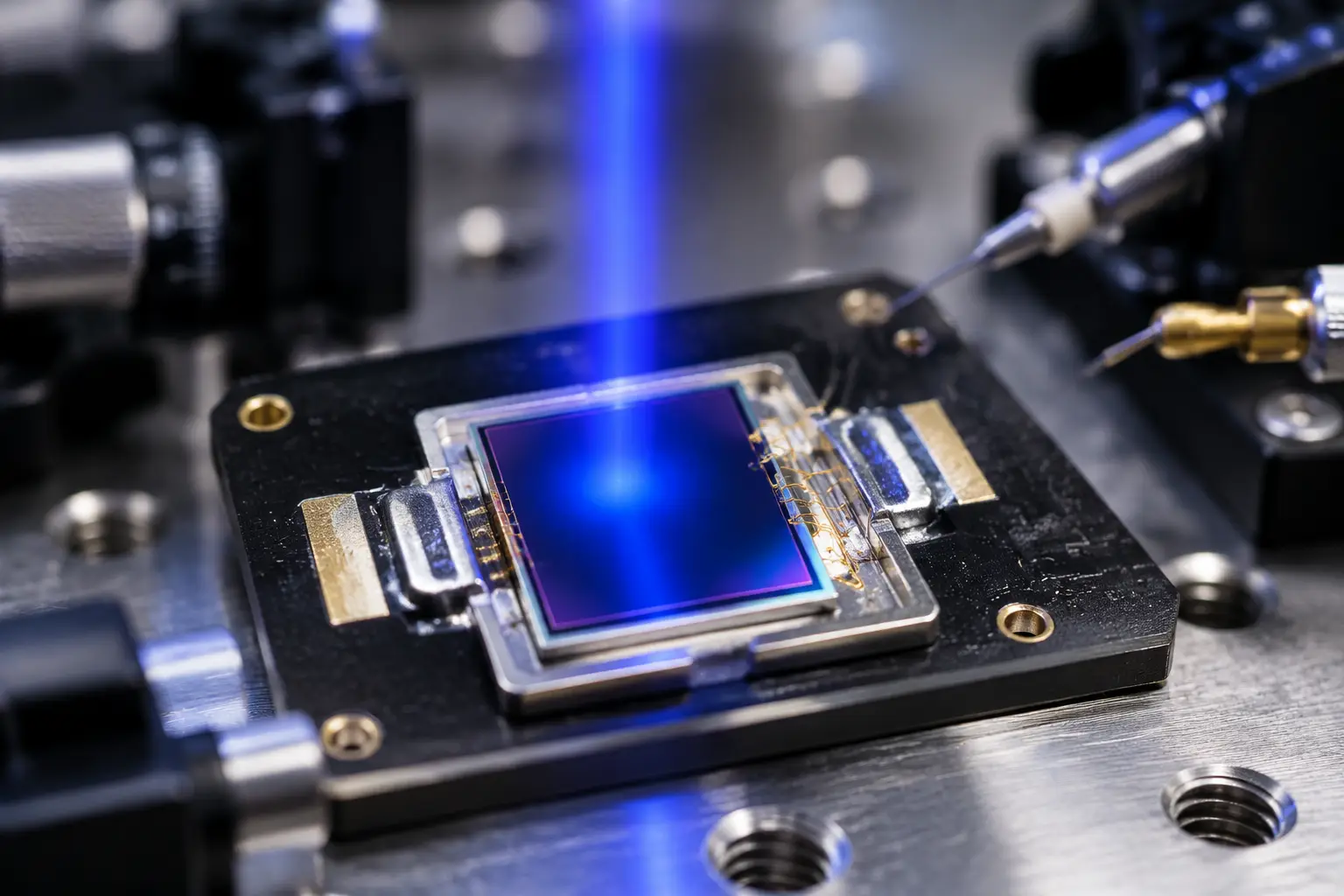
Si alguna vez has pasado una tarde frustrante en una planta de producción tratando de averiguar por qué tus sensores fotoeléctricos se activan incorrectamente, sabes cuán molesta puede ser la interferencia mutua. Configuras una fila de interruptores ópticos para detectar piezas en una cinta transportadora, los separas unas pulgadas, los enciendes y de repente todos están hablando entre sí. Un sensor se activa cuando no debería, simplemente porque la luz de su vecino rebota en una superficie metálica o se extiende demasiado.
Es un problema clásico en el diseño de sensores fotoeléctricos. Llamamos a este problema crosstalk óptico, o simplemente crosstalk, y puede arruinar completamente la fiabilidad de tu sistema automatizado. Muchos ingenieros intentan solucionar esto con filtros de software sofisticados, filtros de polarización o pulsando secuencialmente los emisores. Pero seamos honestos: esas soluciones añaden costo, complejidad y latencia.
¿Qué tal si pudieras resolver el problema físicamente en la fuente?
La forma más sencilla y fiable de abordar esto es mejorando tu fuente de luz. Al reemplazar tus LED de ángulo amplio genéricos por uno de alta calidad emisor de haz estrecho, puedes enfocar tu camino óptico, eliminar el crosstalk y mejorar drásticamente las capacidades de anti-interferencia de tu sistema.
En esta guía, veremos cómo un emisor de haz estrecho funciona, haremos un poco de matemáticas simples para mostrarte la diferencia física, y te mostraremos cómo optimizar los sistemas de interruptores ópticos sin arrancarte el cabello.
¿Qué es el crosstalk y por qué importa tu elección de emisor de haz estrecho?
Antes de hablar de soluciones, necesitamos entender por qué fallan los interruptores ópticos en proximidad. Cuando diseñas un arreglo de múltiples sensores, usualmente alineas un emisor con un receptor. Pero los diodos emisoras de luz estándar (LED) no emiten la luz en una línea recta y similar a un láser. Emiten la luz en forma de cono.
Un LED indicador típico o un LED IR estándar puede tener un ángulo de visión (o ángulo de haz) de 30 grados, 60 grados o incluso más. En una configuración de un solo sensor, este ángulo amplio es genial porque hace que la alineación sea increíblemente fácil. No tienes que ser preciso; simplemente apuntas el emisor aproximadamente hacia el fotodetector y funciona.
Pero cuando empaquetas múltiples sensojos juntos, ese cono amplio de luz se convierte en una pesadilla. Cuando diseñas un interruptor óptico, elegir un emisor de haz estrecho puede ahorrarte horas de resolución de problemas.
El problema engañoso de los LED de ángulo amplio
Cuando la luz sale de un emisor de ángulo amplio, se expande rápidamente. Esto causa dos problemas principales:
- Superposición Directa (Crosstalk): El cono de luz del Emisor A se extiende tan ancho que se derrama y golpea al Receptor B, que está al lado del Receptor A. El Receptor B no puede distinguir entre la luz de su propio transmisor y la luz dispersa del Emisor A. Registra una señal falsa.
- Dispersión Reflectante: La luz de gran ángulo incide en la maquinaria circundante, soportes metálicos o componentes brillantes de la cinta transportadora. Esta luz dispersa rebota y finalmente llega a los receptores adyacentes.
Si intenta construir sensores de alta densidad —como los utilizados en clasificación de paquetes, inspección de PCB o detección de posición precisa—, no puede permitirse esta luz parásita. Por eso elegir un emisor de haz estrecho es tan crítico. En lugar de desperdiciar energía emitiendo luz en todas direcciones, un emisor de haz estrecho mantiene el haz fuertemente confinado, asegurando que solo el receptor previsto capture la señal.
Emisor de haz estrecho de 4 grados para optimización de interruptores ópticos
Cuando hablamos de un emisor de haz estrecho, no solo hablamos de una ligera reducción del ángulo. Para eliminar realmente la interferencia en espacios reducidos, debe ser mucho más estrecho. Un LED con ángulo de visión de 4 grados suele ser el punto ideal para estas configuraciones industriales.
Al reducir el ángulo del haz a solo 4 grados, obtiene un LED IR altamente enfocado que se comporta casi como un láser de semiconductores, pero a una fracción del costo y sin los riesgos de seguridad asociados con las regulaciones de seguridad ocular láser.
¿Por qué 4 grados es el número mágico para los LED IR enfocados?
¿Por qué no ir aún más estrecho, como 1 o 2 grados? Bueno, si se va demasiado estrecho, el alineamiento físico se vuelve increíblemente difícil. Una pequeña vibración en el marco de la máquina podría desplazar el sensor y causar una falsa interrupción. Un 4 grados emisor de haz estrecho ofrece el equilibrio perfecto: lo suficientemente estrecho como para prevenir interferencias a distancias de trabajo prácticas (hasta unos pocos metros), pero lo suficientemente tolerante como para que un técnico pueda alinearlo a mano sin necesidad de instrumentos ópticos especializados.
Usar un de alto rendimiento emisor de haz estrecho cambia por completo el comportamiento de su sistema:
- Aumento masivo en la densidad de potencia óptica: Dado que toda la energía de la luz se concentra en un área pequeña, la intensidad (irradiance) en el receptor es drásticamente mayor. Esto le da a su sensor un margen de “ganancia excesiva” enorme, permitiéndole atravesar polvo, vapor y suciedad.
- Excelente anti-interferencia: Dado que la luz no se propaga a canales adyacentes, no debe preocuparse por que sensores adyacentes se confundan.
- Eficiencia energética: Puede operar el LED con una corriente mucho más baja aún obteniendo una señal fuerte y confiable en el receptor. Esto extiende la vida útil de sus componentes y mantiene el consumo de energía bajo.
Si busca componentes de alta calidad para implementar esto en su próximo proyecto, puede explorar una amplia gama de especializados productos de fuente de luz que ofrecen estos ángulos de visión estrechos.

LED NIR E850-25-001-L20
El E850-25-001-L20 es un equipo de alto rendimiento LED NIR de 855 nm diseñado para aplicaciones industriales exigentes. Fabricado por Bee Photon, este emisor de infrarrojos presenta un estrecho ángulo de emisión de 20 grados, que proporciona una alta intensidad radiante de 25 mW/sr adaptada a la detección de precisión. Su robusto diseño garantiza una alta fiabilidad y un rendimiento constante en un amplio rango de temperaturas de funcionamiento.
La Física Simple: Cálculo de Tamaños de Manchas de Haz con un Emisor de Haz Estrecho
Hagamos un cálculo rápido y práctico para ver por qué un emisor de haz estrecho es tan superior. No necesitas un grado en física óptica o simulación de software complejo para entender esto. Usando un emisor de haz estrecho cambia por completo el cálculo.
Para averiguar cuán ancho será tu haz de luz a una cierta distancia, puedes usar una fórmula geométrica simple:
Diámetro del Tamaño de la Mancha = 2 * d * tan(theta / 2)
Dónde:
des la distancia entre el emisor y el receptor (en milímetros o pulgadas).thetaes el ángulo de visión de tu fuente de luz (en grados).
Comparemos un LED estándar de 30 grados contra uno de 4 grados emisor de haz estrecho a una distancia de trabajo típica de 1000 mm (1 metro).
Hagamos el Cálculo
Caso 1: LED Estándar de 30 Grados
Distancia (d) = 1000 mmÁngulo de Visión (theta) = 30 gradostheta / 2 = 15 gradostan(15 grados) = 0,2679
Diámetro del Tamaño de la Mancha = 2 * 1000 * 0.2679 = 535.8 mm
A 1 metro de distancia, el haz de luz de un LED estándar se ha expandido a un enorme 53.6 centímetros (más de 21 pulgadas) de ancho! Si tiene sensores adyacentes separados 100 mm (10 cm), este haz cubrirá fácilmente cinco o seis receptores vecinos. ¡No es de extrañar que sus sensores estén constantemente hablando entre sí!
Caso 2: Emisor de haz estrecho de 4 grados
Distancia (d) = 1000 mmÁngulo de visión (theta) = 4 gradostheta / 2 = 2 gradostan(2 grados) = 0,0349
Diámetro del tamaño del punto = 2 * 1000 * 0.0349 = 69,8 mm
Con un ángulo de 4 grados emisor de haz estrecho, el diámetro del punto es significativamente menor. A la misma distancia exacta de 1 metro, el haz de su emisor de haz estrecho solo mide 7 centímetros (menos de 2,8 pulgadas) de ancho. Si sus sensores adyacentes están separados 100 mm, no hay solapamiento alguno. Esto significa que puede colocar sus sensores adyacentes mucho más cerca sin preocuparse por la luz de uno emisor de haz estrecho filtrándose en el área de otro sensor.
Bonus de densidad de potencia
Aún mejor. Como la luz se concentra en un área mucho menor, la irradiancia (intensidad de luz por unidad de área) aumenta exponencialmente.
El área de un círculo se calcula como:
Área = pi * (Diámetro / 2)^2
Veamos las áreas del punto para ambos casos:
- Área del punto LED estándar de 30 grados:
pi * (267,9)^2 = 225,456 milímetros cuadrados - Área del punto emisor de haz estrecho de 4 grados:
pi * (34,9)^2 = 3,826 milímetros cuadrados
Ahora, dividamos el área amplia por el área estrecha:
225,456 / 3,826 = 58.9
Esto significa que para la misma cantidad exacta de potencia óptica emitida por el chip, emisor de haz estrecho entrega casi 59 veces más intensidad de luz al centro del receptor en comparación con un LED de 30 grados!
Este aumento masivo en la densidad de potencia significa que su sensor puede operar de manera confiable en entornos duros y polvorientos donde fallarían los sensores estándar. También significa que puede reducir la corriente de conducción del LED. Funcionar con su LED a 10 mA en lugar de 50 mA mantiene su funcionamiento fresco, lo que previene la degradación térmica que mata lentamente a los emisores de infrarrojos con el tiempo.
Cómo mejorar su diseño de sensor fotoeléctrico usando un emisor de haz estrecho
Para optimizar con éxito los sistemas de interruptores ópticos, no puede simplemente colocar un emisor de haz estrecho en su circuito existente y considerar el asunto resuelto. Aunque integrar un emisor de haz estrecho en su diseño de sensor fotoeléctrico es sencillo, debe prestar atención a algunos detalles físicos. Dado que el haz es mucho más estrecho, los errores menores en el montaje o la alineación de la lente pueden causar problemas.
Selección del par adecuado de emisor y receptor de haz estrecho
En emisor de haz estrecho debe emparejarse con un fotodiodo o fototransistor apropiado. Aquí hay algunas decisiones de diseño prácticas que deberá enfrentar:
- Coincidencia de longitud de onda: Asegúrese de que su emisor de haz estrecho coincida con la sensibilidad máxima de su fotodiodo. La mayoría de los interruptores ópticos industriales funcionan a 850 nm o 940 nm (infrarrojo) para evitar interferencias de la luz ambiental visible. 850 nm es ligeramente visible como un tenue brillo rojo, lo que puede ayudar con la alineación manual. 940 nm es completamente invisible.
- Control de apertura: A veces, un emisor estrecho no es suficiente porque las superficies altamente reflectantes aún pueden dispersar la luz de vuelta al receptor. Agregar una apertura física o una pequeña ranura frente a su fotodiodo puede ayudar a reducir el campo de visión del receptor para que coincida con su emisor de haz estrecho.
- Rigidez de montaje: Dado que su haz es estrecho, necesita un soporte de montaje rígido. Si su sensor está montado en una lámina de metal delgada que vibra cuando la máquina funciona, su haz de luz se moverá por todas partes, provocando caídas de señal intermitentes. Use soletes de aluminio sólido o plástico grueso para mantener todo en su lugar.
Si utiliza un de alta calidad emisor de haz estrecho, a menudo puede omitir el filtrado electrónico complejo, lo que mantiene sus costos de hardware bajos y las velocidades de respuesta de su sistema relámpago. Al buscar piezas, busque especializado emisor de haz estrecho opciones y consulte con especialistas a través del principal BeePhoton sitio web, donde puede ver diferentes paquetes y especificaciones que se adaptan a sus restricciones mecánicas específicas.
Comparación: LED de ángulo amplio estándar vs. Emisor de haz estrecho
To help you visualize the trade-offs, let’s put these two technologies side-by-side. While a wide-angle light source has its place in simple, single-channel devices, a emisor de haz estrecho es casi siempre la opción superior para aplicaciones industriales de alta densidad y multi-sensor. Mirando la tabla, es fácil ver por qué un emisor de haz estrecho gana en configuraciones industriales concurridas.
| Parámetro | LED de ángulo amplio estándar (30 grados) | Emisor de haz estrecho (4 grados) |
|---|---|---|
| Difusión del haz a 1 metro | ~536 mm (Muy ancho) | ~70 mm (Muy enfocado) |
| Riesgo de crosstalk / interferencia | Extremadamente alto en matrices de múltiples sensores | Virtualmente inexistente |
| Intensidad de luz relativa en el receptor | 1x (Linea base) | ~59x (Altamente concentrado) |
| Dificultad de alineación | Muy baja (Conectar y usar) | Moderado (requiere montaje sólido) |
| Sensibilidad al polvo / suciedad | Moderado a alto | Bajo (ganancia excesiva alta supera la suciedad) |
| Consumo de energía | Alto (requiere alta corriente de transmisión para distancia) | Bajo (haz concentrado ahorra energía) |
| Ideal para | Sensores e indicadores individuales y aislados | Densas redes de sensores, líneas de transporte, interruptores de largo alcance |
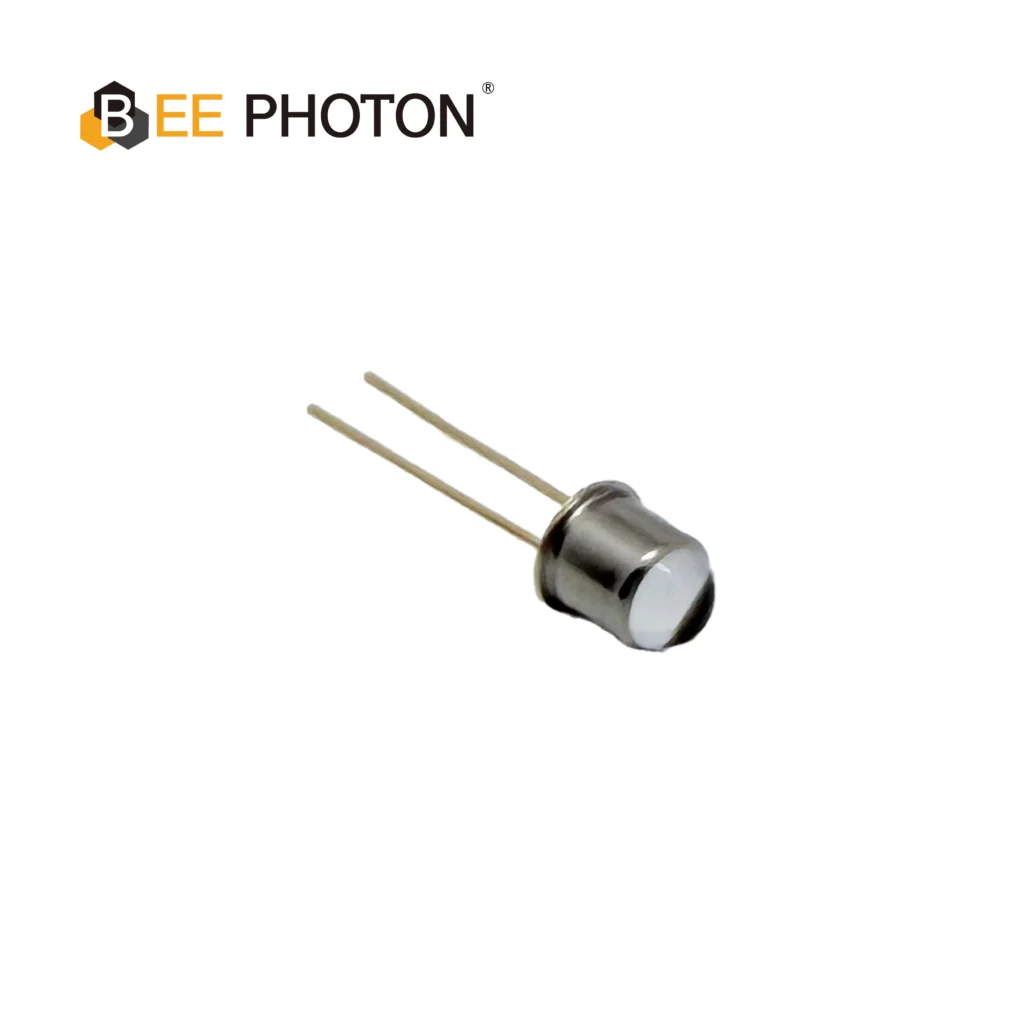
LED NIR E850-180-201L4
En E850-180-201L4 es un sistema de alto rendimiento LED NIR de 850 nm diseñados para la detección industrial de precisión. Fabricado por Fotón abeja, este emisor de infrarrojos está diseñado para ofrecer una gran luminosidad y una estabilidad excepcional, lo que lo convierte en la fuente de luz ideal para entornos de automatización exigentes.
Estudio de caso: Corrección de una línea de empaquetado de alta velocidad con un emisor de haz estrecho
Veamos un ejemplo del mundo real de cómo un emisor de haz estrecho puede salvar un proyecto del desastre, que es donde un emisor de haz estrecho acudió en rescate.
Una instalación logística automatizada estaba operando una línea de clasificación de alta velocidad. Tenían una serie de sensores fotoeléctricos montados sobre un riel metálico, separados solo 80 mm. Estos sensores debían detectar la posición exacta de las cajas de cartón que pasaban para que un empujador neumático las deslizara en los compartimentos correctos.
El problema
El sistema fue originalmente construido usando LED de IR de 30 grados como transmisores. Tan pronto que la línea entró en funcionamiento, los operadores notaron un gran número de errores de clasificación. Los empujadores neumáticos se activaban en momentos incorrectos, aplastando las cajas y atascando la línea.
Después de realizar pruebas diagnósticas con un osciloscopio, el equipo de ingeniería se dio cuenta de que la luz del Emisor 1 se reflejaba en la superficie brillante de la cinta de empaquetado de las cajas y rebasaba directamente hacia el Receptor 2. Esta interferencia óptica hizo que el controlador pensara que la Caja 2 había llegado antes, activando el empujador prematuramente.
Intentaron resolver esto agregando barreras de cartón entre los sensores, pero las vibraciones del transportador mantenían desprendiendo las barreras, y rápidamente se acumulaba polvo, bloqueando completamente los sensores.
La solución
El equipo decidió resolver el problema a nivel de hardware. Reemplazaron los transmisores estándar de gran ángulo por uno personalizado de 4 grados emisor de haz estrecho del catálogo de BeePhoton.
Como el nuevo emisor de haz estrecho mantuvo la luz concentrada en un pequeño punto de 70 mm sobre el ancho de 1 metro del transportador, la luz dispersa que golpeaba la cinta de empaquetado brillante se redujo drásticamente. Cualquier reflejo menor que ocurrió fue demasiado débil para activar los receptores adyacentes porque la luz no se extendía hacia afuera.
El proyecto demostró que emisor de haz estrecho no solo detiene el crosstalk, sino que también mejora la relación señal-ruido. Con el nuevo emisor de haz estrecho instalado, el sistema funcionó sin un solo disparo falso.
Los resultados
La actualización fue un éxito instantáneo:
- Crosstalk Cero: La interferencia óptica entre canales adyacentes cayó en más de 98%.
- Aumento de Velocidad de Línea: Debido a que los sensores ya no fallaban, la planta pudo aumentar la velocidad de la cinta transportadora en 15%, aumentando el volumen diario de paquetes.
- Disminución en Mantenimiento: La alta densidad óptica del emisor de haz estrecho significaba que los sensores podían tolerar una gruesa capa de polvo de cartón sin perder su señal, reduciendo el programa de limpieza de una vez al día a una vez al mes.
Este proyecto demostró que gastar un poco más en un alto-quality emisor de haz estrecho inicial puede ahorrar decenas de miles de dólares en tiempo de inactividad y productos arruinados en el futuro.
Guía paso a paso: Integración de un Emisor de Haz Estrecho en tu Próxima Construcción
Si estás listo para integrar un emisor de haz estrecho en tu próximo diseño, aquí tienes una guía simple y directa para poner tu sistema en funcionamiento.
Paso 1: Elige tus Ópticas y Longitud de Onda
Elige un emisor de haz estrecho con un ángulo de visión de 4 o 5 grados. Si trabajas sobre distancias muy largas (por ejemplo, más de 5 metros), podrías considerar una opción ultra estrecha de 2 grados. Elige 850nm si quieres un poco de luz roja visible para ayudarte a alinear el sistema, o 940nm si necesitas que sea completamente invisible.
Paso 2: Diseña un Soporte Rígido
Alinee su emisor de haz estrecho con el receptor. No monte su transmisor en soportes frágiles. Un haz estrecho significa que incluso una inclinación de 1 grado en su soporte puede desviar la luz del objetivo. Use soportes de aluminio mecanizado, montes robustos impresos en 3D o chapa metálica asegurada con doble punto de sujeción para asegurar que su eje óptico permanezca bloqueado.
Paso 3: Ejecute los cálculos de espaciado
Use la fórmula que discutimos anteriormente para calcular el tamaño del punto en su distancia específica. Asegúrese de que el paso de su sensor (la distancia entre sensores adyacentes) sea mayor que el diámetro del punto del haz. Esto garantiza que su emisor de haz estrecho nunca derrame luz en el receptor vecino.
Paso 4: Ajuste la corriente de conducción
Pruebe su emisor de haz estrecho bajo condiciones de luz ambiental. Porque un emisor de haz estrecho concentra la luz tan eficientemente, probablemente no necesite hacerlo funcionar a su corriente máxima nominal. Comience configurando su controlador LED a una corriente baja (por ejemplo, 5mA a 10mA) y verifique si el receptor se activa de manera confiable. Si lo haga, ¡manténgalo así! Funcionar el LED a una corriente menor reduce el calor, previene la degradación y asegura que su sistema funcione suavemente durante años.
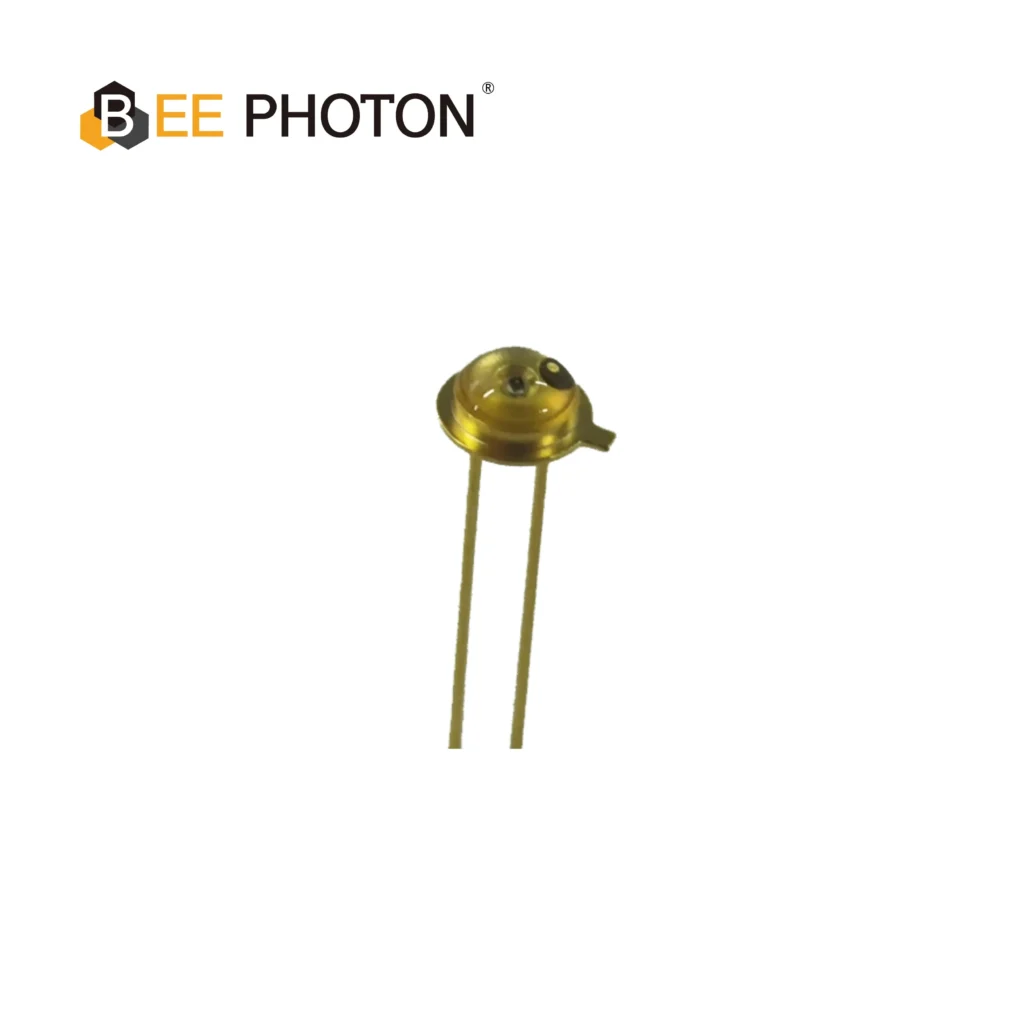
Fuente de luz LED serie E850-30-101
El E850-30-101 es un emisor de infrarrojos de 850 nm de alta estabilidad diseñado en un robusto formato de LED de paquete doble en línea de 3 mm para facilitar el montaje en PCB y ofrecer una durabilidad superior. Con un ángulo de haz estrecho de 20° y una intensidad radiante de 30 mW, este LED de paquete doble en línea ofrece una salida precisa y de alto brillo, lo que lo convierte en la fuente de luz ideal para interruptores ópticos, detección industrial y aplicaciones de automatización exigentes.
Preguntas frecuentes sobre emisores de haz estrecho y conmutadores ópticos
P1: ¿Cómo se alinea un emisor de haz estrecho de 4 grados?
Alinear un emisor de haz estrecho es definitivamente más difícil que alinear una fuente de luz de gran angular. El truco más sencillo consiste en aplicar temporalmente una corriente mayor a través de un emisor de 850 nm emisor de haz estrecho so you can see the faint red dot on a piece of paper placed in front of your receiver. If you are using an invisible 940nm wavelength, you can use a cheap smartphone camera (most of them don’t have strong IR filters on the front-facing camera) or an infrared detector card to see exactly where the beam is pointing.
P2: ¿Puede un emisor de haz estrecho eliminar por completo la necesidad de multiplexación?
Sí, en muchos casos un emisor de haz estrecho is enough to solve the problem physically. Multiplexing (turning your sensors on and off one by one so they don’t interfere) is a great software trick, but it slows down your sampling rate and increases response time. If you use a 4-degree emisor de haz estrecho y mantiene el espaciado de sus sensores por encima del tamaño del punto del haz, eliminará físicamente el solapamiento de luz. Esto significa que todos sus sensores pueden funcionar de forma continua a la máxima velocidad, ofreciendo el tiempo de respuesta más rápido posible.
P3: ¿Funcionará un emisor de haz estrecho con fotodetectores estándar?
Absolutamente. Un emisor de haz estrecho funciona con cualquier fotodetector, fototransistor o chip receptor estándar que sea sensible a su longitud de onda específica (normalmente 850 nm o 940 nm). Se trata simplemente de un chip LED infrarrojo estándar alojado en un paquete de lente moldeada altamente optimizado.
P4: ¿Cuál es la distancia máxima que puedo alcanzar con un emisor de haz estrecho?
Porque un emisor de haz estrecho concentra la luz, permitiendo alcanzar distancias mucho mayores que con los LED estándar. Con la misma corriente de funcionamiento, uno de 4 grados emisor de haz estrecho puede alcanzar fácilmente distancias de 5 a 10 metros en configuraciones de barrera, mientras que un LED estándar de 30 grados tendría dificultades para mantener una señal fiable más allá de 1,5 metros debido a la divergencia del haz y la pérdida de potencia.
Conclusión: Comience hoy con un emisor de haz estrecho
Let’s face it: struggling with optical crosstalk and sensor interference is a massive waste of time. While software filters and complex electronic modulation can help, they are ultimately just band-aids on a physical problem.
Invertir en un emisor de haz estrecho es la forma más simple y confiable de optimizar el rendimiento del conmutador óptico. Al adoptar un alto rendimiento emisor de haz estrecho, obtiene un haz más estrecho, cero interferencias vecinas, gran ganancia de exceso y fiabilidad sólida, incluso en los entornos industriales más polvorientos.
If you are tired of dealing with false triggers and want to build a truly robust photoelectric sensor array, we’ve got you covered. At BeePhoton, diseñamos y fabricamos alto rendimiento productos de fuente de luz específicamente adaptadas para aplicaciones ópticas exigentes. Ya sea que necesite un LED enfocado estándar de 4 grados o una solución óptica personalizada, nuestro equipo de expertos está listo para ayudarlo a encontrar el ajuste perfecto.
No deje que el crosstalk óptico ralentice su línea de producción. Diríjanos a nuestra página de contacto o envíenos un correo electrónico a info@photo-detector.com para solicitar una cotización rápida, obtener muestras de productos o hablar sobre su diseño de sensor específico.