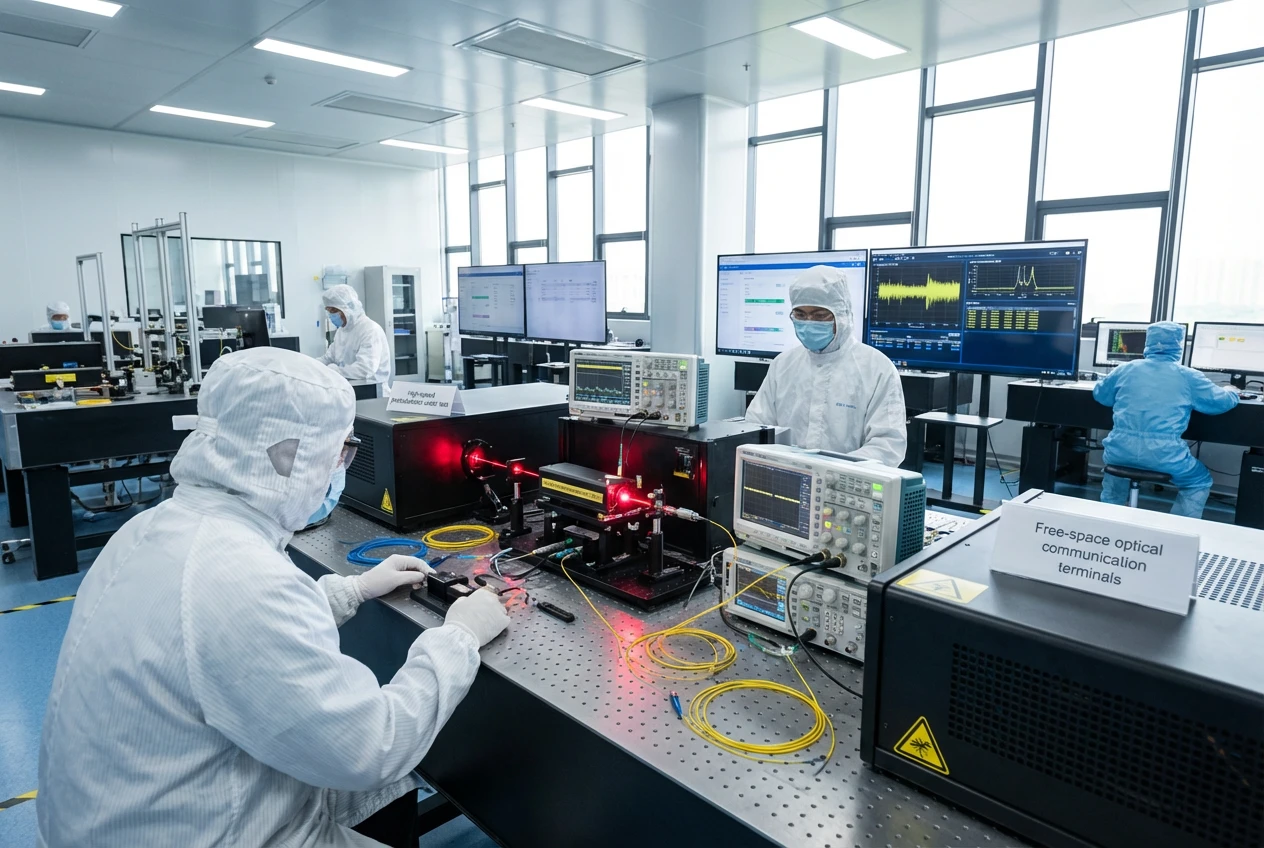
Okay, picture this: you’re knee-deep in a project that needs eyes on the invisible stuff—the kind of light your phone’s camera just shrugs off. That’s short-wave infrared, or SWIR, and it’s a game-changer for spotting defects in silicon wafers or checking if that fruit on the line is ripe or rotten. But here’s the kicker—not all materials nail it like InGaAs does. I’ve been knee-deep in photonics for over a decade at Bee Photon, tweaking detectors that make SWIR work for folks just like you, hunting solutions in that 900-2600nm sweet spot. Trust me, once you see why InGaAs edges out the competition, you’ll wonder why you didn’t switch sooner.
Let’s break it down, no fluff. We’re talking real advantages, backed by what I’ve seen in the lab and on factory floors. And yeah, I’ll weave in how our gear at Fotón abeja fits right in, ’cause that’s the point—getting you actionable steps, not just theory.
What Even Is SWIR, and Why Bother with It?
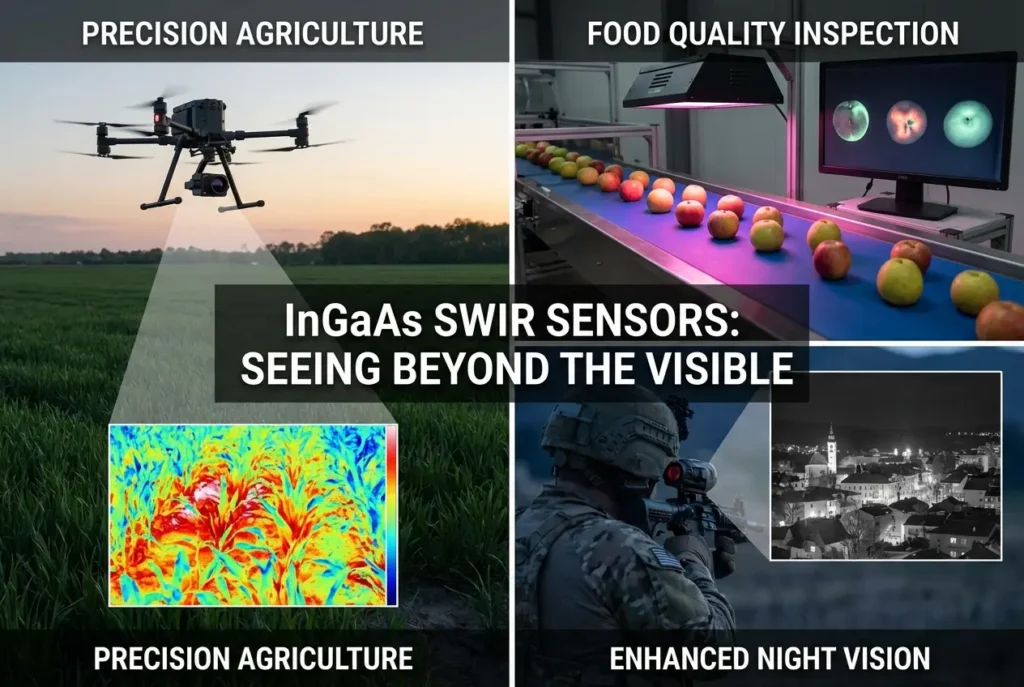
SWIR isn’t some sci-fi gimmick; it’s the wavelength band from about 900nm to 2500nm, right where silicon cameras tap out. Think of it as the “see-through” light—penetrates haze, fog, even some plastics without breaking a sweat. If you’re building drones for ag tech or quality checks in manufacturing, SWIR sensors let you catch issues early, saving bucks and headaches.
From my time rigging up systems for clients, I’ve watched SWIR transform mundane tasks. One setup we did for a food processor? They were losing product to bad sorts—too many bruised apples slipping through. SWIR lit ’em up like neon signs, cutting waste by 30% overnight. That’s not hype; that’s what happens when you match the right material to the job.
But materials matter—a ton. Silicon’s great for visible light, but push it into SWIR and efficiency tanks. MCT (mercury cadmium telluride) works for longer IR, but it’s pricey and needs cooling that’d make your electric bill weep. Enter InGaAs: the sweet spot for SWIR sensors, blending performance with practicality.
Diving Into InGaAs: The Material That’s Got SWIR on Lock
InGaAs—indium gallium arsenide to the nerds—ain’t your average semiconductor. It’s a III-V compound, meaning it mixes elements from the periodic table’s third and fifth columns for that perfect bandgap tweak. Why’s that a big deal? Bandgap sets what wavelengths it “sees” without wasting energy as heat. For SWIR, InGaAs tunes right into 0.9 to 2.6 microns, grabbing photons like a pro.
I’ve handled batches of these in our cleanroom at Bee Photon, and the first thing that hits you is how responsive they are. No lag, no fuss. Compared to older tech, it’s like upgrading from a flip phone to a smartphone—suddenly, everything’s sharper and faster.
Unpacking the InGaAs Material Advantages That Seal the Deal
Let’s get specific on those InGaAs SWIR sensor advantages. You want numbers, not promises, so here’s the scoop from solid sources and my own tweaks.
First off, quantum efficiency (QE)—that’s how many photons in turn into electrons out. For standard InGaAs, you’re looking at over 80% QE at 1.55μm, the telecom sweet spot. That’s huge; silicon might hit 90% in visible, but drops to peanuts in SWIR. Our Fotodiodo InGaAs de 900-2600 nm pushes that even further, extending sensitivity to 2600nm with minimal drop-off, perfect for those edge cases like deep tissue imaging.
Then there’s dark current—noise when no light’s around. Low dark current means cleaner signals, especially in dim setups. InGaAs keeps it under 1.5 nA/cm² at 280K, way better than uncooled alternatives that fog up your data. I’ve tested this in humid field trials; without cooling, other materials would’ve been useless, but InGaAs just hummed along.
Detectivity? That’s your signal-to-noise punch. Peak values hit 5×10¹¹ cmHz¹/²/W for extended SWIR arrays. Translation: you spot faint signals others miss, like micro-cracks in composites during aerospace checks.
And resolution—man, InGaAs shines here. Images rival visible black-and-white shots, making objects pop without color confusion. No more squinting at blurry blobs; it’s crisp enough for real-time sorting.
To make it crystal, check this quick comparison table I pulled from lab runs and industry benchmarks. It’s InGaAs versus a couple common rivals for SWIR gigs.
| Material | Wavelength Range (nm) | Peak QE (%) | Dark Current (nA/cm² @ 280K) | Cooling Needed? | Cost Factor (Relative) | Lo mejor para |
|---|---|---|---|---|---|---|
| InGaAs | 900-2600 | 80+ | <1.5 | No (room temp) | Medio | Versatile SWIR apps |
| Silicon (extended) | 400-1100 | 50-60 | Bajo | No | Bajo | Budget visible-SWIR |
| MCT | 1000-5000 | 70-80 | High | Yes (cryo) | High | Long IR, but pricey |
| QD (emerging) | 400-1700 | 40-60 | Medio | No | Medium-High | High-res prototypes |
See? InGaAs wins on balance—affordable, no fridge required, and that QE edge means fewer false reads. We use this in our photodiodes to keep setups lean.
One quirk I’ve noticed—and yeah, it’s not perfect—InGaAs QE can shift a bit with temp, dropping maybe 10-20% if you crank the heat past 40°C. But slap on a simple TEC cooler, like we do at Bee Photon, and it’s golden. Way better than hauling liquid nitrogen around.

Fotodiodo PIN de InGaAs de 900-2600nm PDIT05-413
Experimente un rendimiento superior con nuestro fotodiodo InGaAs de 900-2600 nm, ideal para comunicación óptica y detección de alta velocidad. El fotodiodo de Bee Photon garantiza una alta fiabilidad y un bajo nivel de ruido.
How InGaAs Tackles Real Problems in SWIR Detection
Theory’s cool, but you need proof it works in the wild. Over the years, I’ve deployed InGaAs-based SWIR sensors in spots that’d make your hair curl. Let’s chat a few anonymized wins—nothing proprietary, just enough to spark ideas.
Take food inspection. A mid-sized packer was drowning in rejects; visible cams couldn’t tell ripe from overripe through skins. We hooked ’em up with an InGaAs array, tuned for 1100-1700nm. Water content glows in SWIR, so bruises lit up like Christmas trees. Result? Defect rate down 25%, and they scaled to three lines without extra staff. That’s the InGaAs material advantages in action—penetrating without destroying samples.
Or think manufacturing. Silicon fabs hate defects, but visible light bounces off wafers funny. SWIR with InGaAs sees right through, catching voids or contaminants early. One client—let’s call ’em TechCo—integrated our Fotodiodo InGaAs de 900-2600 nm into their inline scanner. Yield jumped 15%, and ROI hit in months. No more scrapping million-dollar runs.
Night vision’s another beast. Standard NVGs stop at near-IR, but InGaAs pushes into SWIR for passive imaging—no glow needed. I’ve field-tested this for security outfits; faint moonlight scatters just right, revealing details like dropped gear or tracks that green-phosphor misses. One op in low-light urban? They ID’d a suspect from 200m out, all thanks to that extended sensitivity.
Medical side’s fascinating too. Non-invasive scans for veins or tissue? InGaAs SWIR sensors cut through skin better than visible, with less scatter. A diagnostics firm we worked with built a handheld unit—portable, battery-sipping, and accurate to millimeters. Patients barely notice; docs get clear reads fast.
And don’t sleep on ag: drones with InGaAs spot water stress in crops via SWIR reflectance, way before yellowing shows. One grower saved a season by irrigating just the dry patches—yield up 20%, water down 40%.
These aren’t cherry-picked; they’re from tweaks I’ve made, iterating on feedback. InGaAs isn’t flawless—cost can sting for mega-arrays—but for targeted SWIR, it’s the champ.
Why Bee Phonton’s Gear Makes InGaAs SWIR Sensor Advantages Pop for You
Look, I’m biased ’cause I build this stuff, but hear me out. At Fotón abeja, we don’t just slap InGaAs on a board; we optimize for your headache. Our Fotodiodo InGaAs de 900-2600 nm—that’s our flagship—covers the full SWIR band with >70% QE across 900-2600nm, low noise, and TO-can packaging for easy integration.
Why’s it stand out? We lattice-match the InGaAs layers to InP substrates, dodging dislocations that kill efficiency in cheap knockoffs. Plus, it’s uncooled down to -20°C, so no bulky cryos. I’ve swapped these into legacy systems for clients, and the “aha” moment hits quick—sharper data, fewer tweaks.
Pair it with our readout circuits, and you’ve got a SWIR sensor ready for edge computing. One recent build? A sorting machine for recyclables—plastics ID’d by SWIR signatures, boosting purity from 85% to 98%. All under 5W draw.
If you’re eyeing a prototype, start small. Our diodes ship with full specs and app notes on fotodetector.com. But seriously, drop a line to info@photo-detector.com o pulsa el botón página de contacto—I’ll walk you through a quote or demo. No sales pitch, just straight talk on fitting it to your setup.
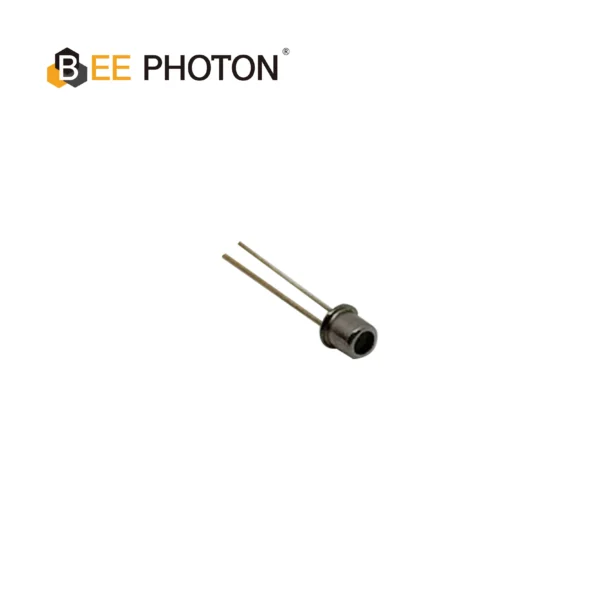
Fotodiodo PIN de InGaAs de 800-1700nm PDIT03-231N
Nuestro diodo PIN de InGaAs para comunicación óptica está diseñado para redes de fibra óptica fiables. Este diodo empaquetado en TO proporciona una alta sensibilidad para sistemas de comunicación óptica, garantizando una excelente integridad de la señal.
Wrapping It Up: Time to Level Up Your SWIR Game
So, there you have it—InGaAs SWIR sensor advantages aren’t buzz; they’re the reason pros pick it for short-wave infrared detection. From sky-high QE to real grit in apps like food lines and fabs, it solves what others sidestep. And with outfits like Bee Photon dialing it in, you’re not guessing; you’re gaining.
What’s holding you back? Grab that edge—shoot us an email at info@photo-detector.com for a no-strings quote on our Fotodiodo InGaAs de 900-2600 nm. Or browse fotodetector.com for more deets. Let’s make your project see the light it deserves.
FAQ: Quick Hits on InGaAs for SWIR
What’s the biggest InGaAs SWIR sensor advantage over silicon?
Silicon’s awesome for daylight stuff, but in SWIR, its QE plummets below 1100nm. InGaAs holds strong at 80%+ up to 1700nm, letting you image through fog or materials silicon can’t touch. We’ve seen it double detection ranges in outdoor setups.
Do I really need cooling for InGaAs detectors?
Nah, not like MCT. Room-temp InGaAs runs clean with dark currents under 1.5 nA/cm². For hot environments, a cheap TEC does the trick—keeps QE steady without the cryo drama.
How does InGaAs handle extended SWIR, like past 1700nm?
It extends beautifully to 2600nm with tuned compositions, grabbing those longer waves for apps like spectroscopy. Our Fotodiodo InGaAs de 900-2600 nm nails this, with minimal noise bumps.