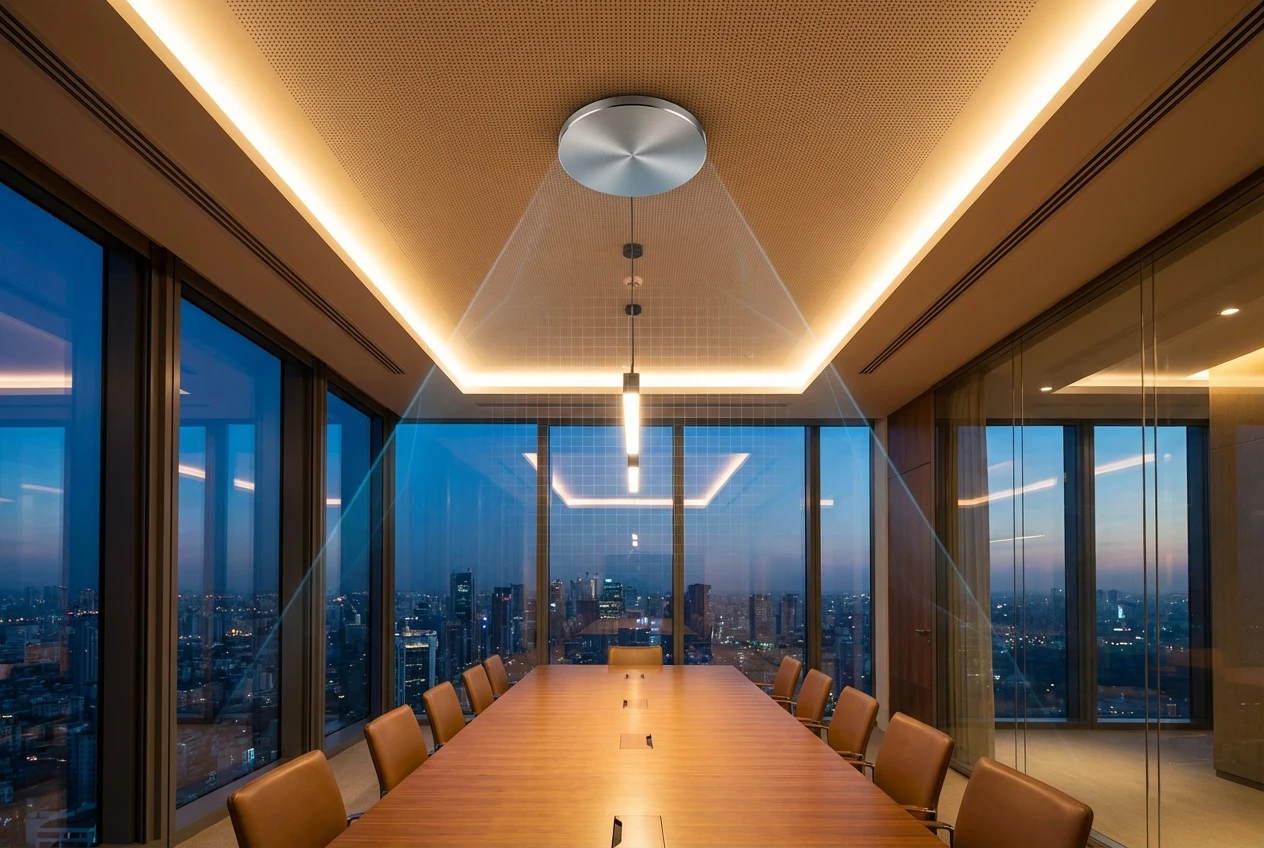
You’re sitting in a conference room, deep in thought or typing away on a laptop, and suddenly—click. The lights go out. You have to wave your arms like a lunatic to get the sensor to acknowledge you exist.
If you are a system integrator for smart buildings or handling HVAC automation, this is the bane of your existence. It’s the complaint you get constantly from facility managers. The problem isn’t the programming; it’s the hardware. specifically, reliance on old-school PIR (Passive Infrared) sensors for things they were never meant to do.
Today, we gotta talk about the shift from basic motion sensing to true occupancy detection using Optical Arrays (specifically Si PIN Photodiode Arrays). If you’re still speccing PIR for stationary zones, you’re leaving energy savings (and client patience) on the table.
The Truth About PIR: It’s Not an Occupancy Sensor
Let’s be real for a second. PIR sensors are cheap. That’s why we love them. But calling a PIR sensor an “occupancy sensor” is a bit of a lie we tell ourselves in the industry.
PIR detects changes in infrared radiation. It needs motion across the Fresnel lens zones to trigger a voltage change.
The basic principle looks like this in text-math:
Delta_V = R * P * (dT/dt)
Dónde Delta_V is the voltage change, and dT/dt is the change in temperature over time across the sensor’s field of view.
Si dT/dt is zero (because the guy in the meeting room hasn’t moved for 5 mins), the output is zero. The system thinks the room is empty. The lights cut. The HVAC ramps down. The tenant complains.
Para smart building sensors, relying on PIR means you are relying on probability, not actual data. You are betting that someone will move enough to reset the timer. That’s not smart; that’s just guessing.
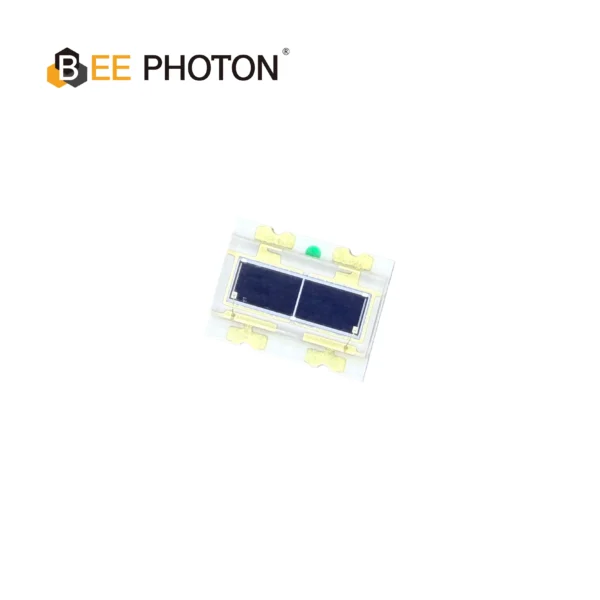
Matriz de fotodiodos PIN de Si PDCA02-602
La serie Bee Photon PDCA se ha diseñado específicamente como un Fotodiodo de supresión de fondo para resolver complejos retos de detección en entornos industriales. Al utilizar una arquitectura de dos segmentos de alta precisión (PD A y PD B), este dispositivo permite el procesamiento diferencial de señales, filtrando eficazmente las interferencias de fondo. Es la principal elección para los fabricantes que diseñan interruptores ópticos y sensores de proximidad con supresión de fondo fiables.
Enter the Challenger: Optical Arrays (PD Arrays)
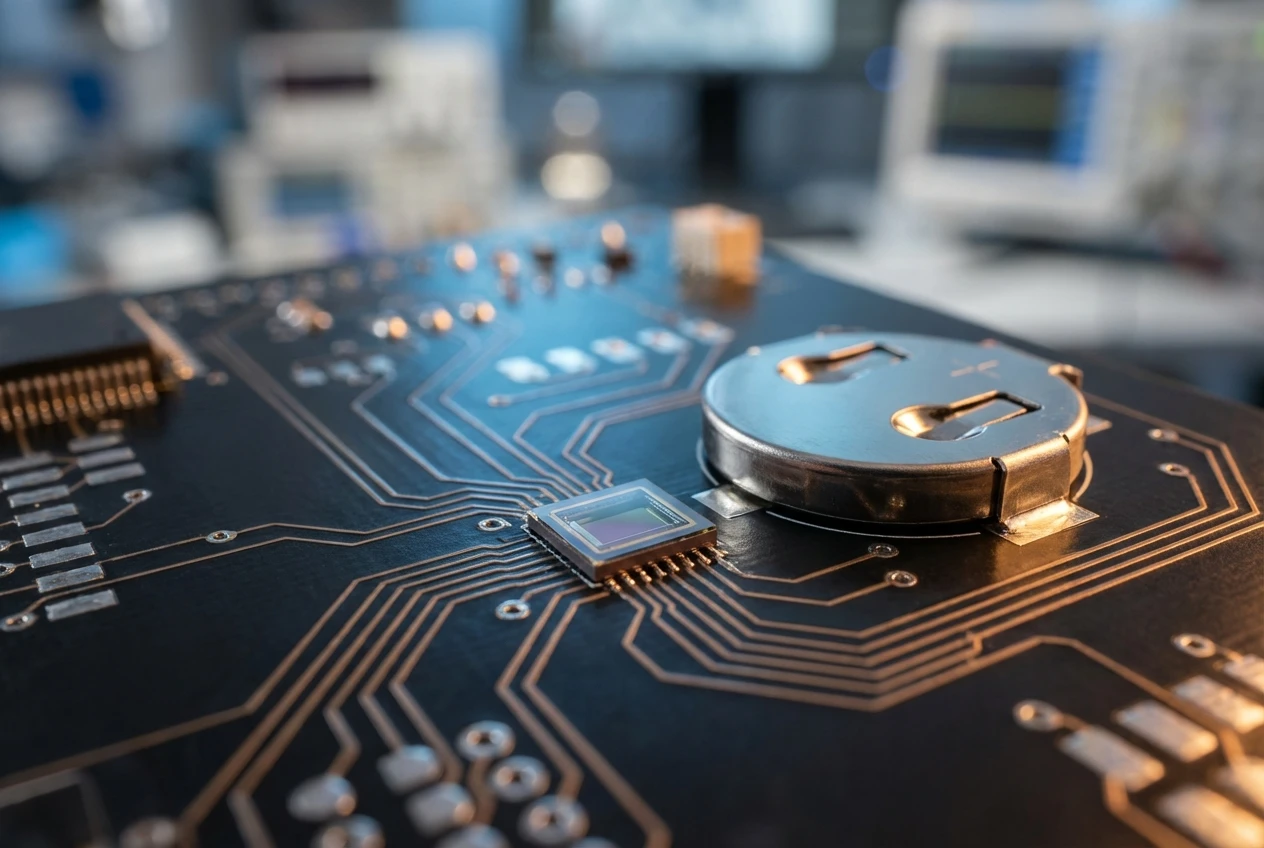
This is where the tech gets interesting. Instead of looking for heat motion, we use optical arrays. Specifically, Fotodiodos PIN de Si arranged in a matrix (like a 4×4 or 8×8 grid, or even linear arrays).
Unlike a full-blown camera (which brings up huge privacy screaming matches with HR), a Conjunto PD (Photodiode Array) gives you a low-resolution spatial representation of the room. It’s enough to distinguish a human shape or count people, but not enough to see who it is.
How It Works (The Geeky Stuff)
An optical array measures the intensity of light falling on specific pixels. When used for occupancy detection, we typically pair these with an IR emitter or use ambient light differentiation.
The photocurrent (Ip) generated by each element in the array follows this relationship:
Ip = R_lambda * P_in
- Ip: Photocurrent (Amps)
- R_lambda: Responsivity of the sensor at a specific wavelength (A/W)
- P_in: Incident Optical Power (Watts)
By reading the Ip across a 16-element array, you get a “heat map” of light obstruction or reflection.
If you use a Conjunto PD from BeePhoton, you aren’t just getting a binary “movement/no movement” signal. You get vector data. You can see donde the person is.
Why does this matter?
- Stationary Detection: Even if I sit stone still, I am still blocking light or reflecting an IR signal differently than the empty chair next to me. The array sees “presence,” not just “motion.”
- People Counting: This is the holy grail for HVAC. A PIR sensor tells you the room is “occupied.” An optical array can tell you “there are 5 people in here.”
Case Study: The “Sweaty Boardroom” Fix
I want to share a quick story (names changed, obviously) about a project in Chicago. A generic office building, LEED Silver aspirations.
El problema: They had a massive conference room facing South. The HVAC was controlled by a single PIR sensor in the corner. When the room was full (20 people), the body heat load was massive. But if they watched a presentation for 30 mins without moving much, the system went into “Economy Mode,” reducing airflow. The room got stuffy, CO2 levels spiked, people fell asleep.
La solución: We ripped out the PIR and installed a sensor module based on a 16-element Conjunto PD.
El resultado:
- The system now knew exactly how many people were in the room (give or take 1 person).
- We tied the people counting sensors data directly to the VAV (Variable Air Volume) box.
- If 20 people walked in, the AC ramped up before the temperature spiked.
- Occupancy detection remained active even when everyone was freezing like statues watching a PowerPoint.
Energy waste dropped by about 12% because the system didn’t overshoot cooling after false-offs, and comfort complaints dropped to zero.
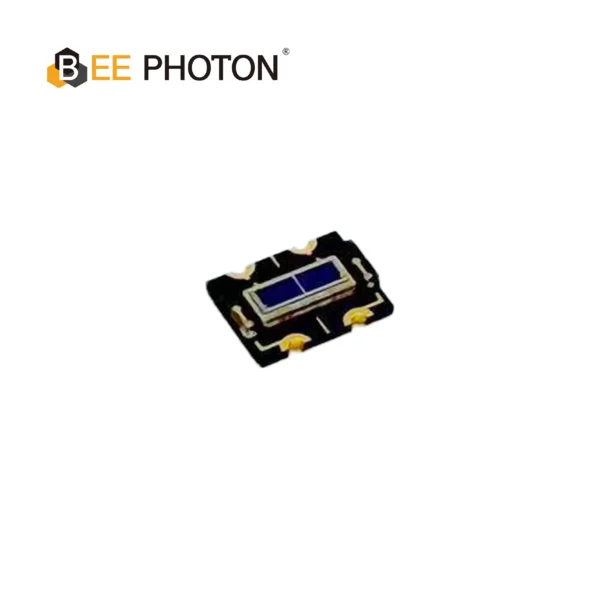
Matriz de fotodiodos PIN de Si PDCA02-601
La serie PDCA de Bee Photon es un producto de ingeniería de precisión Fotodiodo PIN doble diseñado para la detección industrial de gama alta. A diferencia de los detectores estándar de un solo elemento, este dispositivo basado en silicio presenta una estructura de matriz segmentada (PD A y PD B), lo que lo convierte en la solución perfecta para la detección diferencial y interruptores ópticos con supresión de fondo. Con una amplia respuesta espectral de 350 nm a 1060 nm, garantiza un rendimiento versátil en las longitudes de onda del visible y el infrarrojo cercano.
Comparison: PIR vs. Optical Arrays
Let’s break this down so you can show your boss or client why the BOM cost is higher for the arrays.
| Característica | Passive Infrared (PIR) | Optical Arrays (PD Array) |
|---|---|---|
| Detection Type | Motion (Heat differential) | Presence (Spatial/Optical) |
| Stationary Detection | Terrible (Requires timers) | Excellent (Real-time) |
| Data Output | Binary (On/Off) | Spatial / Count / Direction |
| Privacidad | Alta | High (Low res, no facial rec) |
| Coste | Low ($) | Medium ($$) |
| HVAC Value | Basic (On/Off) | Advanced (Demand Control Ventilation) |
| False Triggers | High (Thermal drift/HVAC vents) | Low (Optical verification) |
Integrating PD Arrays into Building Automation
If you are integrating these into a KNX, BACnet, or proprietary IoT system, you need to handle the data differently. A PIR is a dry contact closure or a simple logic high. Easy.
With occupancy detection based on arrays, you are dealing with analog signals that need conversion.
Usually, the signal chain looks like this:
PD Array -> Transimpedance Amplifier (TIA) -> ADC -> MCU (Algorithm) -> Output to Building System
The critical part is the TIA. Since photodiodes produce current (Ip), you need to convert it to voltage (V_out).
The simplified text formula is:
V_out = -Ip * Rf
- Rf: Feedback Resistor value.
You need a clean signal. At BeePhoton, we often see integrators messing up the grounding on the analog front end, introducing noise that looks like “ghosts” moving in the room. Don’t cheap out on the PCB layout for the sensor node.
The Controversy: “Cameras” vs. “Sensors”
Here is a hot take: Privacy advocates are killing smart buildings because they don’t understand the tech.
When you say “Optical Sensor,” they hear “Surveillance Camera.”
You need to educate the client. A 4×4 or 8×8 Conjunto PD cannot see a face. It cannot read a document on a desk. It essentially sees blobs. It is arguably más secure than a camera because the hardware literally lacks the resolution to spy.
However, it provides the granularity needed for people counting sensors. This distinction is vital when selling to corporate clients with strict union rules or privacy concerns.
Real Talk on Implementation
I’ve seen too many “smart” buildings that are actually just dumb buildings with expensive wiring.
To get occupancy detection right, placement is everything.
- PIR: You hide it in the corner.
- Optical Arrays: You need a ceiling mount, usually looking down (Nadir view).
- Coverage: A single 16-element array might cover a 4m x 4m area at typical ceiling heights. You might need to tile them for large open offices.
If you are sourcing components, check out our Fotodiodos PIN de Si page. We have generic arrays that fit most custom housing designs.
Why Data Granularity Wins Contracts
In 2024 and beyond, building owners don’t just want to save power; they want datos. They want to know space utilization rates.
- “Are we using Conference Room B?”
- “Do we need to clean the bathrooms on the 3rd floor if no one used them today?”
You can’t answer that with PIR. You puede answer that with occupancy detection using optical arrays. You are selling business intelligence, not just light switches. That allows you to charge a premium for your integration services.
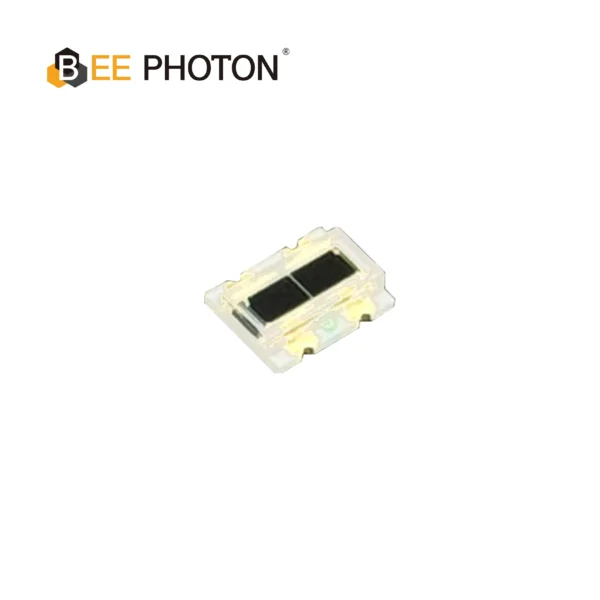
Matriz de fotodiodos PIN de Si PDCA02-102
En PDCA02-102 es un sistema de alto rendimiento Fotodiodo PIN de Si diseñado para sistemas ópticos de medición y alineación de precisión. Diseñado por Bee Photon, este Fotodiodo de 2 segmentos ofrece una amplia gama de respuesta espectral 400nm a 1100nm, que cubre todo el espectro de luz visible hasta la región del infrarrojo cercano (NIR).
Con su compacto encapsulado COB (Chip on Board) y su ventana de resina, la PDCA02-102 garantiza durabilidad y fácil integración en módulos ópticos compactos. Está optimizado específicamente para aplicaciones industriales en las que la alta sensibilidad y los tiempos de respuesta rápidos son fundamentales.
Errores comunes que hay que evitar
- Reflections: Optical arrays can be fooled by mirrors or highly polished floors if the algo isn’t tuned right.
- Sunlight: Direct sunlight hitting a photodiode can saturate it. Ensure your smart building sensors have optical filters blocking ambient UV/IR that matches the sun’s peak, or use modulation.
- Over-complicating: You don’t always need an array. For a closet? Use a door switch or PIR. Don’t over-engineer. Use arrays for high-value spaces (Meeting rooms, open offices, lobbies).
FAQ: Occupancy Detection & Optical Sensors
Q1: Can Optical Arrays for occupancy detection work in total darkness?
Yes and no. The photodiode itself needs photons to work. However, most occupancy detection systems using PD arrays are “active” systems. They include an IR (Infrared) LED emitter that floods the room with invisible light. The array sees the reflection of this IR light. So, to the human eye, it works in the dark, but technically it’s seeing IR illumination.
Q2: How accurate are these as people counting sensors compared to video cameras?
Video analytics (AI cameras) are generally 98-99% accurate but expensive and privacy-invasive. Optical PD arrays usually hit the 90-95% accuracy range for counting. For HVAC demand control, 90% is more than enough. You don’t need to know if there are exactly 21 people; knowing there are “about 20” vs “3” is enough to adjust the airflow efficiently.
Q3: Is upgrading from PIR to Optical Arrays difficult for retrofits?
It depends on the wiring. If your old PIR sensors are simple 2-wire or 3-wire dry contact devices, you can’t just swap them for a data-heavy array without changing the backend controller (or adding a gateway). However, many modern smart building sensors using arrays now come with wireless backhaul (LoRaWAN, Zigbee) or standard 0-10V outputs that mimic legacy sensors while providing better internal logic.
Ready to Upgrade Your Sensing Game?
Stop letting false-offs ruin your reputation as an integrator. The technology for true presence sensing is here, and it’s scalable.
Whether you need raw Conjunto PD components for your own hardware design or advice on selecting the right photodiode for your application, BeePhoton is here to help. We understand the physics so you don’t have to guess.
- Consulte nuestro Fotodiodos PIN de Si for your next PCB design.
- Need specific array specs? Visit our PD Array Category.
Got a tricky floorplan or a custom sensor requirement? Drop us a line. We love solving the problems that make other engineers quit.
Póngase en contacto con BeePhoton hoy mismo or email us at info@photo-detector.com for a quote or technical consultation. Let’s make your buildings actually smart.