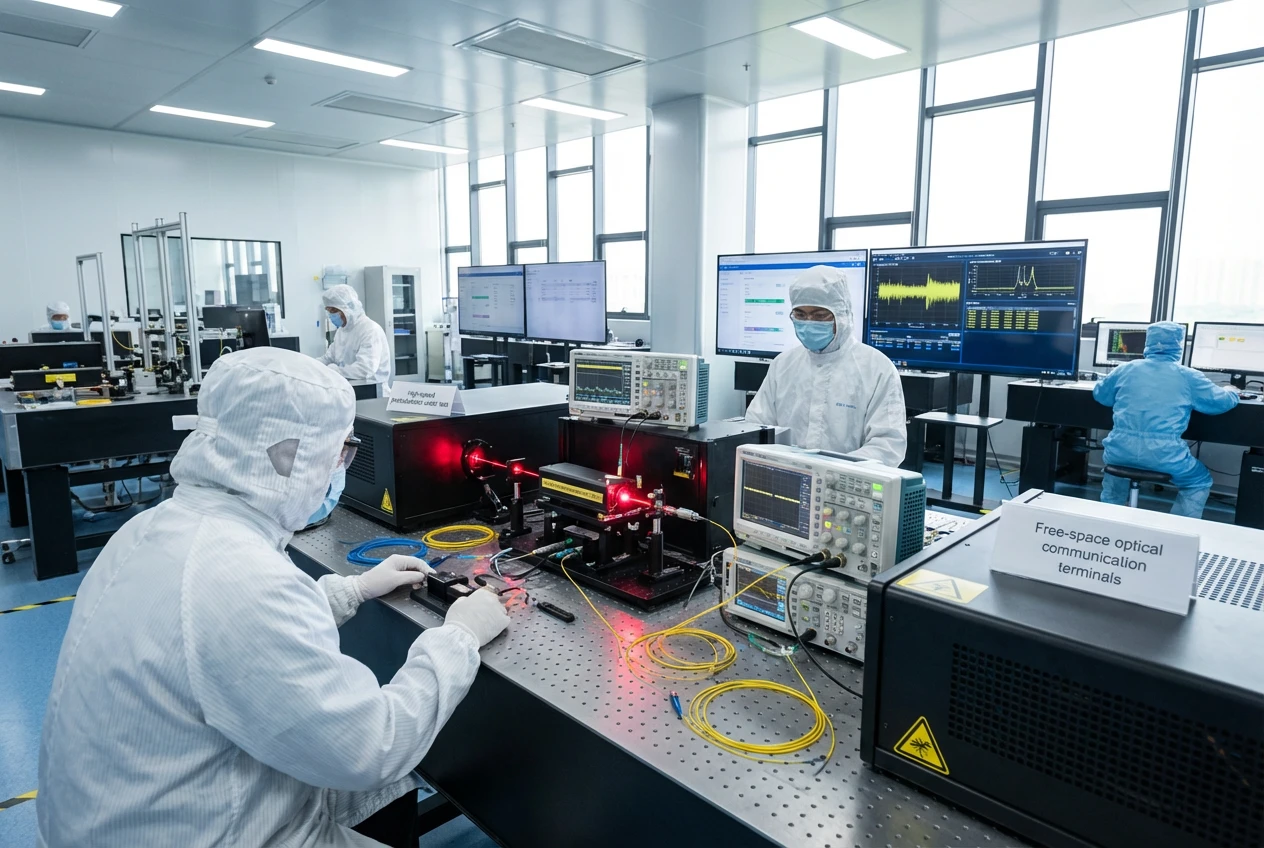
If you’re building laser comms gear or upgrading systems for crazy-fast data, you’ve probably spent some time thinking about what really makes the receiver tick. The photo detector – yeah, that little guy converting laser light back into electrical signals – is kinda the unsung hero in the whole setup.
I’ve been around these things for years, tweaking designs, testing in labs that feel more like saunas sometimes, and seeing what actually works when you push data rates way up. Today we’re diving into the role of photo detectors in laser communication systems, especially in free-space optical communication, where the stakes are high and the margins can be tiny.
Why Laser Communication Is Getting So Much Buzz
Laser comms, or free-space optical (FSO) as many call it, uses light beams instead of radio waves to send data. Think satellite-to-ground links, drone comms, or even point-to-point in cities where laying fiber costs a fortune.
The big wins? Insane bandwidth – we’re talking 10-100x more than traditional RF systems according to NASA reports. In one NASA demo (TBIRD mission), they hit 200 Gbps downlinks from a tiny CubeSat, blasting 4.8 terabytes in just five minutes. That’s nuts compared to old-school RF.
But here’s the catch: all that speed means the receiver has to grab super-weak light signals after traveling through atmosphere (or space vacuum), convert them fast, and not add too much noise. Enter the high speed photodetector.
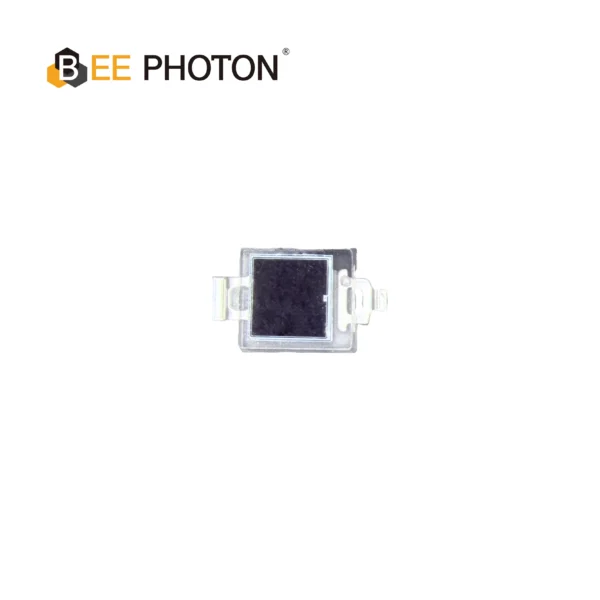
Fotodiodo Si PIN Serie PDCP08 PDCPO8-502
Detección de precisión: El PDCP08-502 es un fotodiodo PIN de silicio compacto diseñado con un área de detección específica de 2,9×2,8 mm.
Fiabilidad: Con una baja capacitancia de unión, este fotodiodo PIN garantiza tiempos de respuesta rápidos. Es el componente perfecto para aplicaciones fotoeléctricas con limitaciones de espacio que requieren una salida de señal estable.
How Photo Detectors Actually Work in These Systems
Picture this: a laser beam modulated with your data zips across space or air. At the receiver end, the light hits the photo detector, which knocks electrons loose and creates current you can amplify and read as bits.
Most FSO setups use direct detection – simple on-off keying or pulse position modulation (PPM) – so the photodetector needs:
- High bandwidth for multi-Gbps (or even 200 Gbps) rates
- Good sensitivity (low noise, high responsivity)
- Quick response time
- Tolerance for background light, turbulence, etc.
Common types you’ll see:
- PIN photodiodes – solid all-rounders, decent speed and low noise
- Avalanche photodiodes (APDs) – add internal gain, super useful for weak signals like long-distance links
- InGaAs APDs for near-IR (1550 nm window, better atmospheric penetration)
- Sometimes exotic stuff like superconducting nanowire detectors for photon-counting in deep space
From real projects, APDs dominate because they boost signal without killing bandwidth too much.
Key Requirements for High Speed Photodetectors in FSO
If you’re a comms equipment maker hunting for detectors that can handle laser comms, here are the must-haves I’ve seen make or break designs:
- Bandwidth – gotta hit at least 10-20 GHz for 10+ Gbps, way higher for 100+ Gbps demos
- Low dark current – noise kills weak signals
- High responsivity (A/W) – more current per photon
- Large-ish active area – helps catch misaligned beams or turbulence-spread light
- Fast rise/fall times
Trade-off alert: bigger area often means lower bandwidth due to capacitance. Recent papers talk about optimizing size for max channel capacity.
Here’s a quick comparison table of typical photodetector types used in laser comms:
| Tipo | Bandwidth Range | Sensitivity Advantage | Typical Use Case | Inconvenientes |
|---|---|---|---|---|
| PIN Photodiode | Up to ~40 GHz | Good noise performance | Short/medium range FSO | No internal gain |
| APD (InGaAs) | 10-50 GHz+ | High gain (10-100x) | Long distance, weak signal links | Excess noise factor |
| Superconducting Nanowire | Photon-counting | Near-perfect detection | Deep space (NASA DSOC) | Needs cryo cooling |
| Array-based APD | Variable | Turbulence mitigation | Terrestrial high-data-rate | Complex readout |
In practice, for high speed photodetector needs in 5G infrastructure backhaul or satellite links, APDs at 1550 nm are gold – low atmospheric loss, eye-safe, and mature tech.

Photo Detectors and 5G Infrastructure
5G rollout needs massive backhaul capacity, especially in dense areas or remote spots where fiber’s a pain. FSO links with high speed photodetectors bridge that gap.
I’ve seen setups where laser links carry 10-100 Gbps over a few km, feeding 5G base stations without digging trenches. The photodetector here has to handle turbulence (scintillation makes signal fade), so large-area or array detectors help average it out.
Market’s exploding too – reports say FSO market could hit billions by 2030 with 20-30% CAGR, driven by 5G and satellite broadband.
Real-World Wins and Lessons from the Field
One project I remember: a ground-to-air laser link pushing 10 Gbps. We used an InGaAs APD with ~30 GHz bandwidth. Key was adding optical filters to kill sun background and adaptive optics for beam steering. Link stayed solid even in light fog.
Another case – satellite downlink demo style. Weak signal (~few photons/bit), needed high-gain APD and forward error correction. Got error-free at high rates once tuned.
These aren’t just lab toys. Companies building LEO constellations or urban 5G mesh are snapping up reliable high speed photodetectors because RF just can’t keep up with data hunger.
Challenges You Still Run Into
Atmospheric stuff is the biggie – turbulence, fog, rain scatter light. Good photodetectors help, but pair them with adaptive optics or hybrid RF backup.
Pointing/acquisition/tracking (PAT) – beam’s narrow, so receiver needs to grab it quick. Larger active area detectors forgive small misalignments.
Cost – high-end APDs aren’t cheap, but prices drop as volume rises.

Fuente de luz LED serie E940-15-301
Nuestra fuente de luz para conmutadores ópticos de alto rendimiento se presenta en un compacto encapsulado TO18. Esta fuente de luz para interruptores ópticos garantiza una uniformidad y fiabilidad excelentes para las telecomunicaciones.
PREGUNTAS FRECUENTES
What makes a photodetector “high speed” for laser comms?
Usually means bandwidth >10 GHz, so it can handle Gbps+ data without distorting pulses. For 100 Gbps+, you’re looking at 50 GHz+ sometimes.
PIN or APD – which is better for free-space optical communication?
APD wins for long distances or weak signals because of the gain. PIN is simpler and quieter for shorter, stronger links.
How do photo detectors help with 5G infrastructure?
They enable ultra-high capacity FSO backhaul links that feed 5G towers, especially where fiber deployment is too slow or expensive. Speeds match or beat fiber without the digging.
If you’re knee-deep in designing laser communication gear and need a high speed photodetector that actually delivers in real free-space optical communication setups (or ties into 5G infrastructure), we’ve got you at Bee Photon.
Check out our lineup at https://photo-detector.com/ – we focus on detectors tuned for these exact challenges.
Wanna chat specs, get a quote, or see samples? Hit up our contact page: https://photo-detector.com/contact-us/ or just email info@photo-detector.com. Let’s talk about making your system scream.