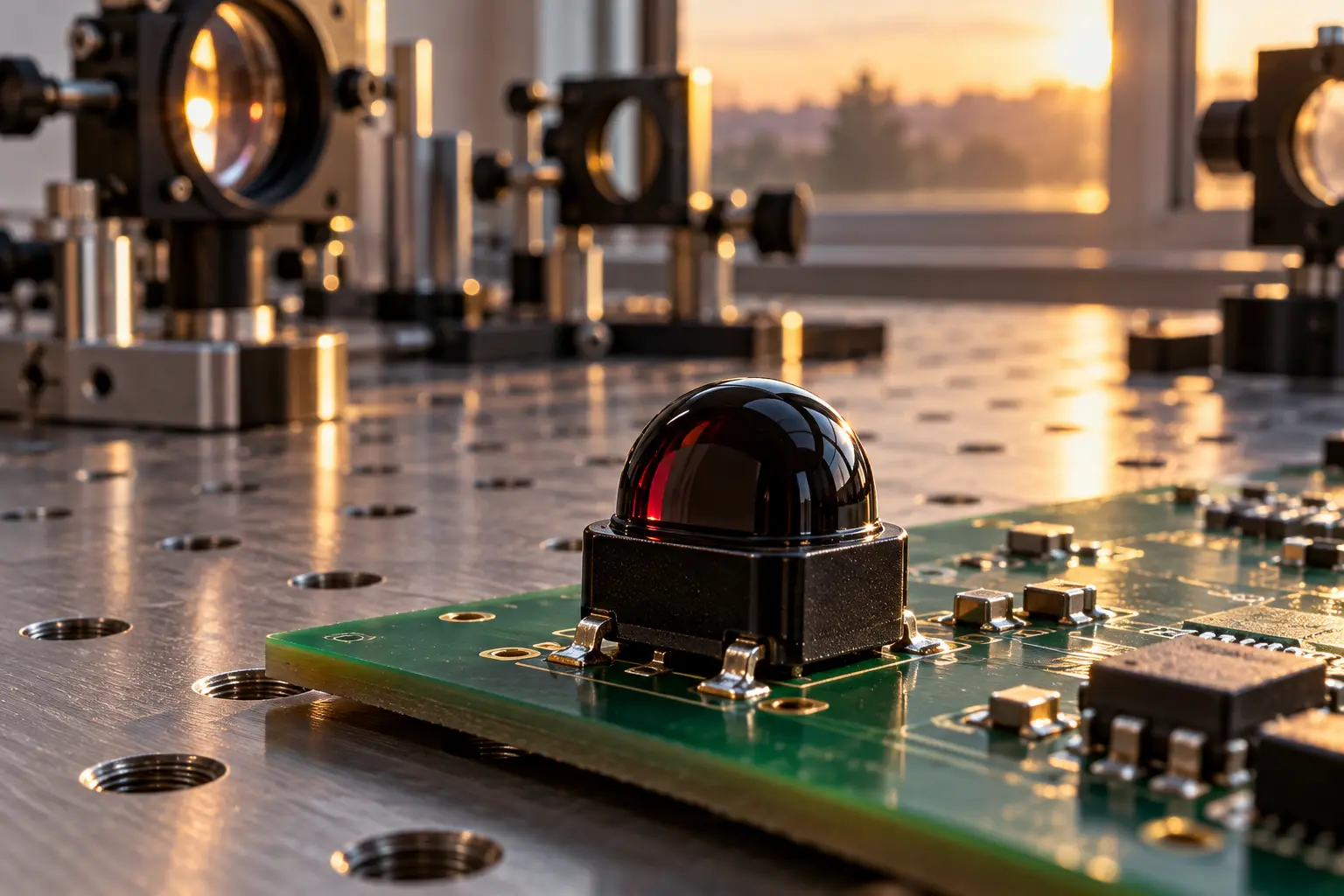
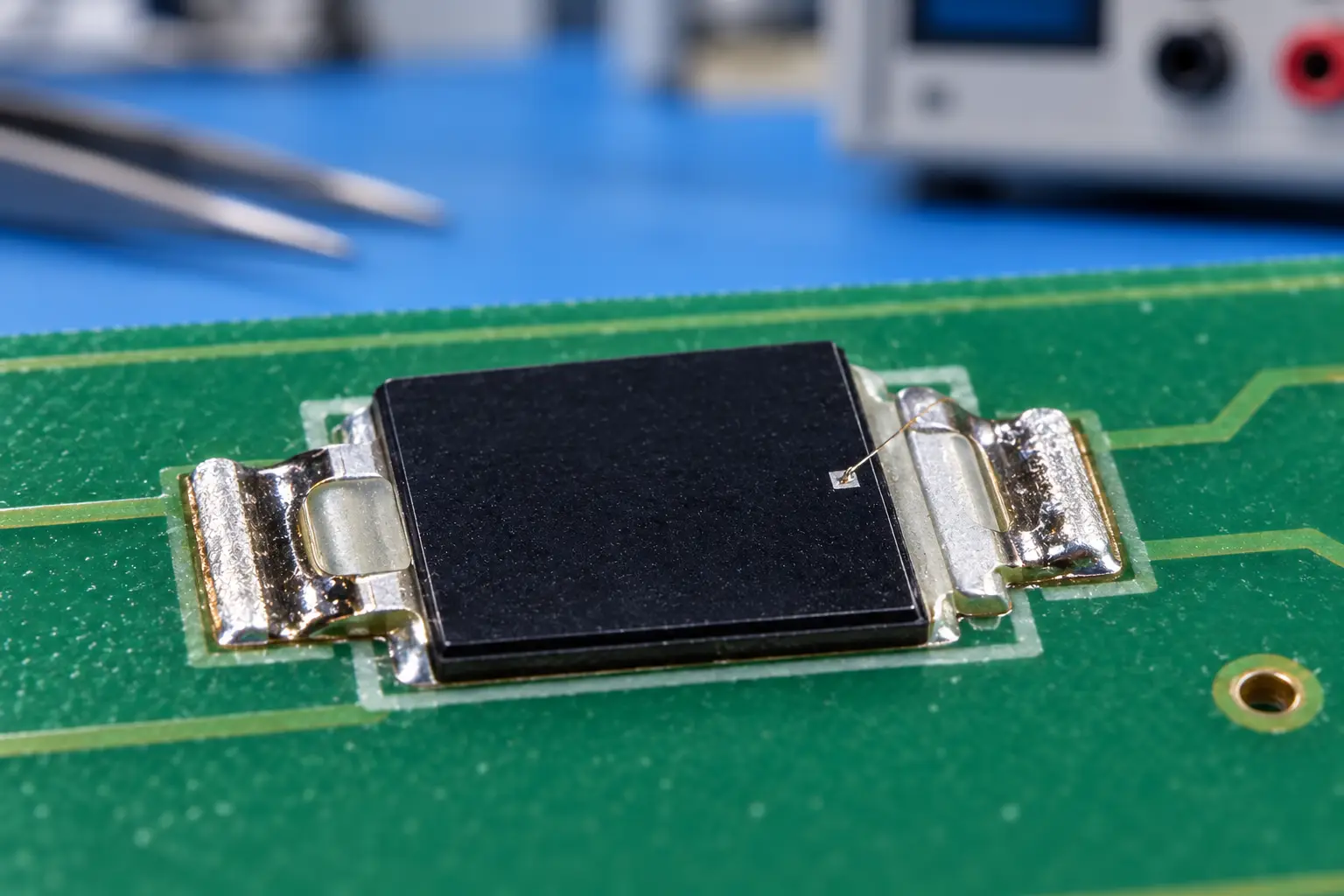
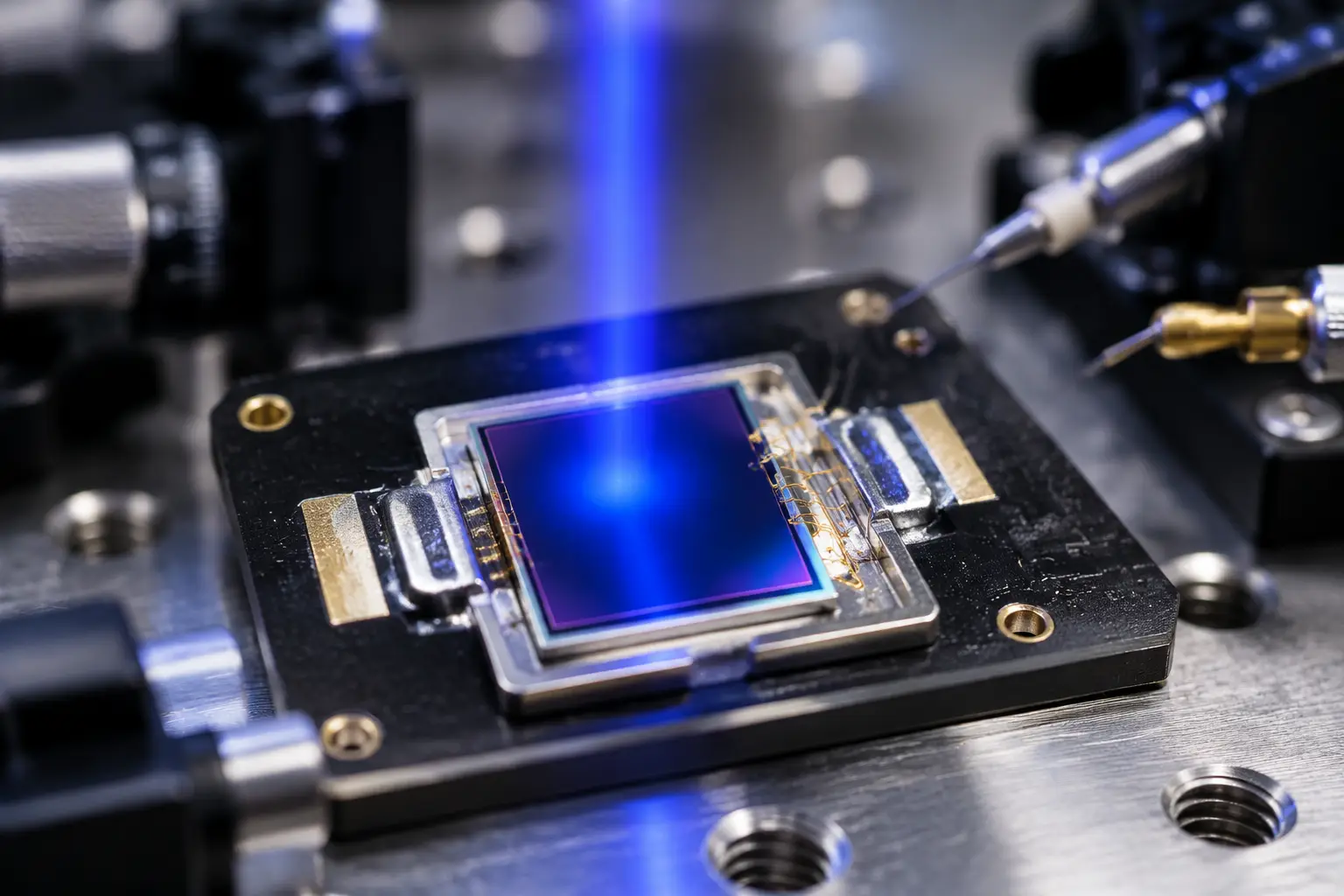
If you’re knee-deep in designing a new optical switch or some kinda sensor setup, you’ve probably hit that moment where you stare at the specs and think, man, do I stick with the old-school through-hole parts or jump to surface mount? I’ve been there plenty of times working on projects, and honestly, more often than not, going with a surface mount photodiode just makes way more sense these days.
Optical switches are everywhere now – think industrial automation lines detecting parts, security systems spotting movement, or even fiber optic networks flipping signals super fast. At the heart of a lot of these is a photodiode acting as the optical switch sensor, picking up light changes and turning them into electrical signals. And when you’re trying to cram all that into a smaller, sleeker product, the packaging really matters.
Let’s break this down like we’re chatting over coffee, no fancy jargon overload. I’ll walk you through why SMD is winning out, toss in some real numbers from the industry, compare it head-to-head with through-hole, and even share a couple anonymized stories from projects we’ve seen at Bee Photon.
What Even Are Optical Switches and Why Do Photodiodes Matter?
Okay, quick recap for context. An optical switch basically uses light to detect stuff without physical contact – no wearing out like mechanical switches. You shine a beam, something interrupts it (or reflects it), and boom, the system knows something’s there.
The photodiode is the eyes of the operation. It catches that light (or lack of it) and spits out a current. Silicon PIN photodiodes are super common here because they’re sensitive, fast, and reliable across visible and near-IR wavelengths.
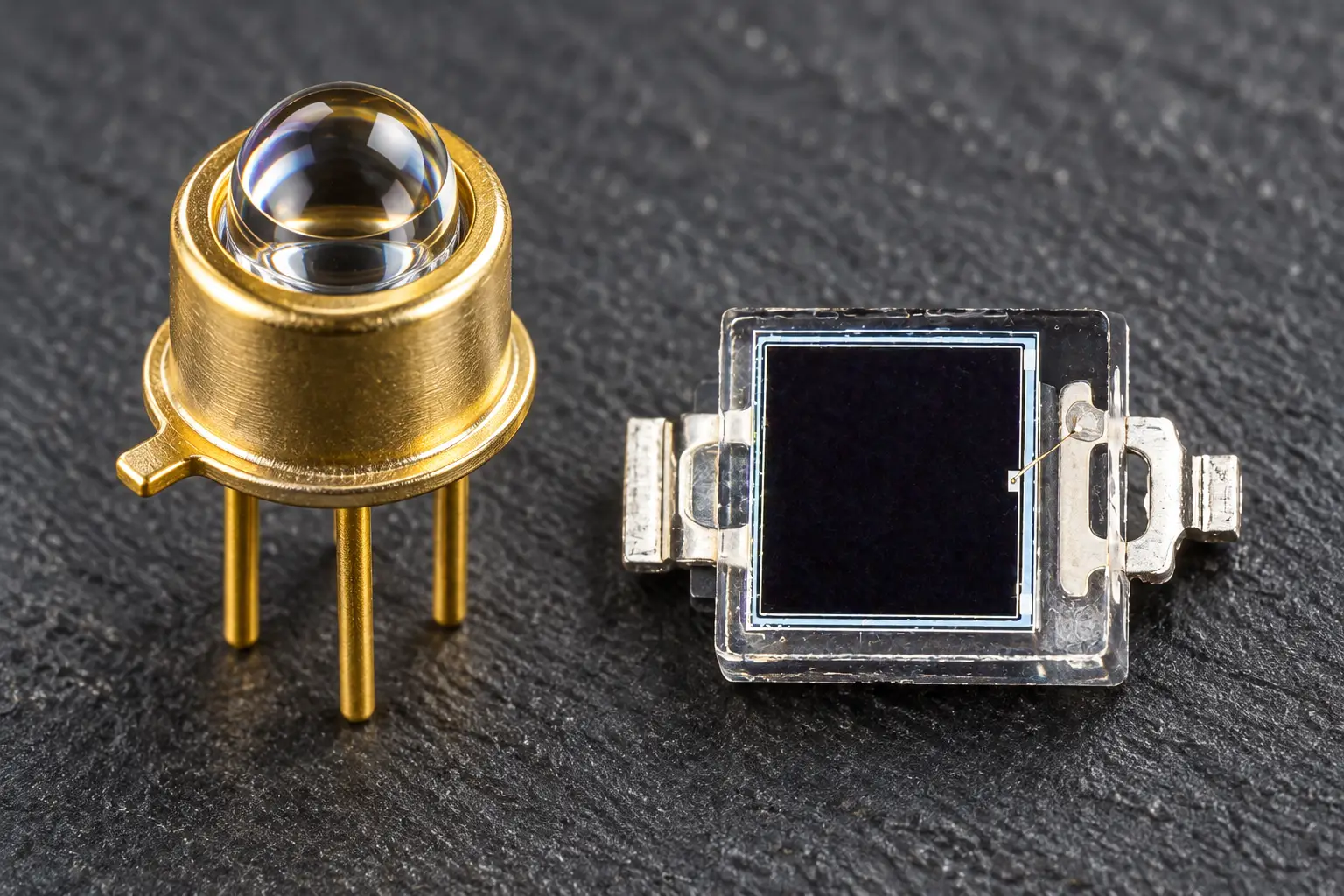
In modern designs, though? Space is tight. Devices are getting tinier – wearables, IoT gadgets, automated machinery. That’s where surface mount photodiodes shine (pun kinda intended). They’re flat, solder right onto the board surface, no drilling holes needed.
SMD vs Through-Hole: Let’s Put Them Side by Side
Engineers love a good comparison table, right? Here’s one I threw together based on what we’ve seen in real builds and industry reports. It’s not exhaustive, but it hits the big points when you’re weighing options for an optical switch sensor.
| Aspect | Surface Mount (SMD) Photodiodes | Through-Hole Photodiodes |
|---|---|---|
| Size | Way smaller – think millimeters vs centimeters. Higher component density on the PCB. | Bulkier, needs leads poking through the board. Limits how compact you can go. |
| Assembly Process | Automated pick-and-place, reflow soldering. Faster and cheaper for volume runs. | Mostly manual or wave soldering. More labor, slower for big batches. |
| Cost (High Volume) | Generally lower – components can be 30-50% cheaper, plus automation savings. | Higher due to manual work and larger parts. |
| Electrical Performance | Lower parasitics, better high-frequency response. Great for fast optical switching. | More inductance from leads, can introduce noise in sensitive setups. |
| Thermal Management | Better heat dissipation in some cases – shorter path to board traces. | Good in high-power, but leads can act as heat sinks or bottlenecks. |
| Reliability | Excellent for consumer/industrial – vibration-resistant once soldered. | Stronger mechanical bonds in extreme environments (aerospace, heavy vibration). |
| Repairability | Trickier to hand-solder fixes, but rare in production. | Easier to replace individually if needed. |
This isn’t saying through-hole is bad – it’s still solid for prototypes or super rugged stuff. But for most new products aiming for scale? SMD wins hands down. Sources like MacroFab and Epectec back this up – SMT allows higher densities and better performance in modern electronics.
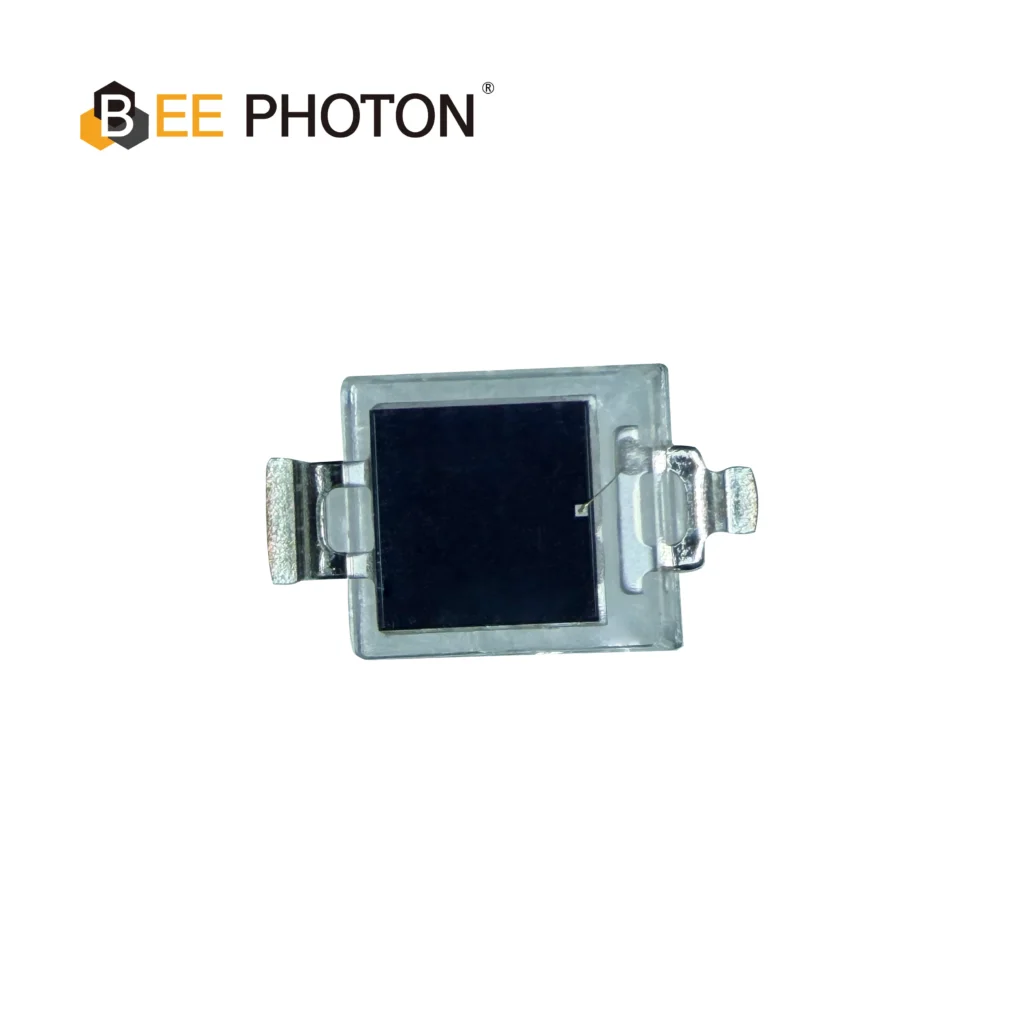
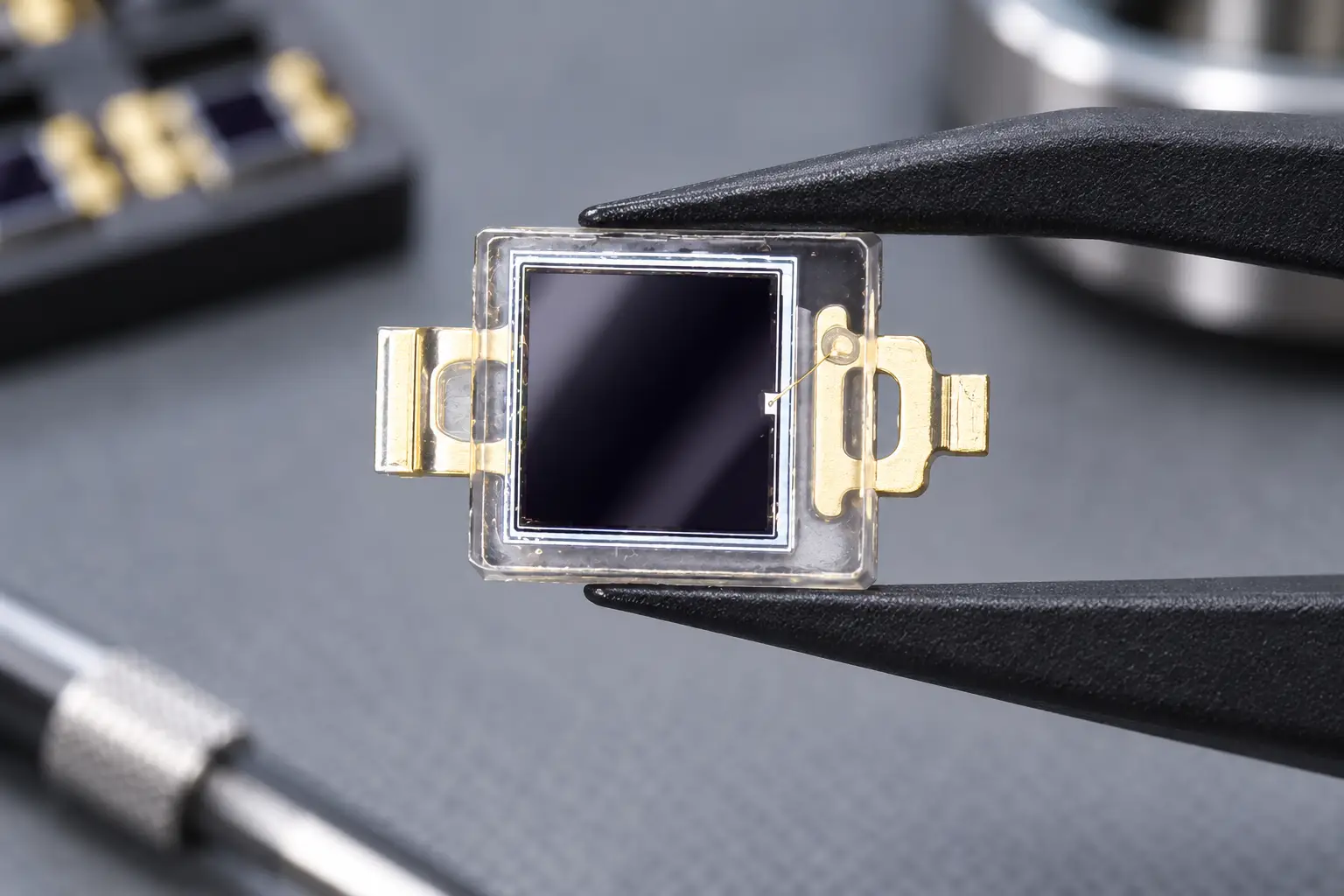
Si PIN photodiode PDCP08 Series PDCP08-501
High-Performance Detection: The PDCP08-501 is a high-speed Silicon PIN Photodiode with a transparent window.
Key Specs: Featuring a 2.9×2.9mm active area, this PIN photodiode offers low dark current and high responsivity, making it an ideal sensor for general optical switches and light detection systems.
The Big Wins with Surface Mount Photodiodes in Optical Switches
So why bother switching to SMD? A few standouts from hands-on experience:
First off, size and weight. Modern gear has to be compact. A surface mount photodiode lets you pack more into less space. We’ve seen designs where swapping to SMD shrunk the overall sensor module by 40-50%, making it fit into tight enclosures.
Second, speed and performance. These things have lower capacitance and inductance because no long leads. That means quicker response times – crucial when your optical switch needs to detect fast-moving objects on a conveyor belt or high-speed data in telecom.
Third, manufacturing ease. If you’re ramping up production, automated SMT lines crank out boards way faster. Less human error, lower costs. One report from Global Market Insights pegs the photodiode sensors market growing at about 8.4% CAGR through 2034, hitting around $1.7 billion – a big chunk driven by SMD adoption in consumer and industrial optics.
And heat? SMD photodiodes often dissipate better in dense boards since they’re closer to ground planes. Not always, but in many optical switch setups, it helps keep things stable.
Oh, and reliability isn’t the compromise it used to be. Modern SMD soldering is tough – survives vibration, thermal cycling pretty well for most apps.
Market Trends Pushing Toward SMD Photodiodes
The numbers don’t lie. The whole photodiode space is booming. Consegic Business Intelligence estimates it jumping from ~$738 million in 2022 to over $1.3 billion by 2030, around 8% yearly growth. Silicon ones dominate, especially PIN types for their balance of speed and sensitivity.
Why the surge? Miniaturization everywhere – 5G gear, EVs, smart factories. All need compact, efficient sensors. SMD fits perfectly. MarketsandMarkets notes optoelectronics overall growing steadily, with sensors like photodiodes leading because of IoT and automation demand.
In optical switching specifically, Hamamatsu and others highlight how photodiodes pair with LEDs for non-contact detection – and SMD makes integrating them into tiny modules dead simple.

Real-Life Examples (No Names, Just Stories)
We’ve worked with a few teams at Bee Photon on this stuff. One was a company building automated warehouse sorters. They started with through-hole photodiodes in their optical switch sensors, but as they miniaturized for denser arrays, switching to our SMD silicon PIN options cut board space by half and improved detection speed. Ended up with faster throughput on their lines.
Another was telecom-related – fiber optic switches needing high-density arrays. SMD let them pack more channels without ballooning size, and the lower parasitics meant cleaner signals at higher speeds.
Then there was an industrial safety sensor project. Vibration was a concern, so they worried about SMD reliability. But after testing, the reflow-soldered joints held up better than expected, and the smaller footprint allowed redundant sensors for failover. Worked out great.
These aren’t rare – pretty common when folks move from prototypes (easy with through-hole) to production (SMD all the way).
Picking the Right Surface Mount Photodiode for Your Project
Not all SMD photodiodes are equal. Look at sensitivity (responsivity in A/W), wavelength range, response time, and package size.
For optical switches, silicon PIN types are often ideal – good visible to near-IR coverage, low dark current.
At Bee Photon, we’ve got some solid options like our silicon PIN photodiodes that come in compact SMD packages. They’re designed for exactly these kinda applications – reliable detection, easy integration.
If you’re weighing SMD vs through-hole right now, drop us a line. We’ve helped tons of engineers spec the right part.

Si phototransistor PTCP Series PTCP001-102
High-sensitivity Silicon Phototransistor designed for precision detection in the 800-1100nm spectral range. This black plastic IR sensor ensures minimal noise and high reliability. Ideal for industrial applications requiring a robust silicon phototransistor with excellent response speed.
Wrapping It Up: Time to Go SMD?
Look, if you’re designing something new and space, cost, or scale matters – which it usually does – a surface mount photodiode is probably your best bet for modern optical switches. The advantages stack up: smaller, faster assembly, better performance in most cases.
The industry’s heading that direction for a reason. Don’t get stuck with bulky old tech when you can make sleeker, cheaper products.
Curious how this fits your design? Head over to our site or shoot an email to info@photo-detector.com. Or fill out the contact form for a quick quote on samples. We’d love to chat through your setup and see if our SMD photodiodes could help.
Frequently Asked Questions
What’s the main difference between SMD and through-hole photodiodes for optical switches?
SMD sits flat on the board, no holes needed – makes things smaller and easier to automate. Through-hole has leads going through, better for hand assembly or super tough environments, but bulkier.
Are surface mount photodiodes reliable enough for industrial optical switch sensors?
Yeah, absolutely for most stuff. Modern soldering tech makes them tough against vibration and heat. We’ve seen them hold up great in factory settings.
How do I know if SMD is cheaper for my project?
For anything over a few hundred units, usually yes – lower part costs, faster assembly. Prototypes might lean through-hole for ease, but production flips to SMD.
Can I use a surface mount photodiode in high-speed optical switching?
Totally. Lower parasitics mean faster response – perfect for quick detection or data apps.
Where can I get good SMD photodiodes for testing?
Check out Bee Photon’s lineup – we’ve got silicon PIN options ready for optical switch designs. Hit up the product page linked above or contact us for samples.