
Just wrapped up CES 2026 in Vegas a couple days ago, and man, the energy around autonomous driving tech was off the charts. Walking the floors, you couldn’t swing a badge without bumping into some new lidar setup or sensor demo promising to make self-driving cars smarter and safer. As someone who’s been deep in this world at Bee Photon for years – yeah, we make those critical photo-detectors that catch the light pulses in high-end systems – I figured I’d share what really stood out, especially for folks like you in Tier 1 automotive supply chains hunting for reliable autonomous vehicle sensors.
The big vibe this year? Optical sensors in autonomous driving are hitting that sweet spot where performance is skyrocketing but prices are finally dropping. Companies were showing off lidars under $500 a unit in some cases, with solid-state designs ready for mass production. And the chatter everywhere was about longer ranges, better weather handling, and integrating AI to make sense of all that data. If you’re sourcing core receivers for Automotive LiDAR, this stuff directly impacts your next-gen designs.
What Caught My Eye at CES 2026 for Autonomous Vehicle Sensors
Nvidia kicked things off big with their Alpamayo platform – full-stack self-driving tech leaning heavy on vision and AI models. But the real hardware stars were the lidar players. Seyond rolled out their full-spectrum lineup, pushing 1550nm ultra-long-range models that are already in L3+ vehicles. Hesai had next-gen stuff tailored for “physical AI” in robots and cars, and Innoviz demoed the InnovizThree, a compact beast for behind-the-windshield installs.
Microvision stole some thunder too with their solid-state lidar heading to production at around $200 per unit, aiming even lower. That’s huge – remember when these things cost thousands? Now we’re talking volume deployment. And yeah, a lot of these advancements tie back to better detectors, like InGaAs APDs handling those 1550nm wavelengths without breaking a sweat.
It’s not just flashy demos either. The market backing this up is exploding. According to MarketsandMarkets, the automotive LiDAR market is projected to jump from about $1.25 billion in 2025 to nearly $10 billion by 2032. Yole Group calls out China leading the charge, with the sector already topping $1 billion this year and heading to $3.5 billion by 2030. For Tier 1 suppliers, that means opportunity – but only if your receiver tech can keep up with demands for 300m+ ranges and reliability in rain or fog.
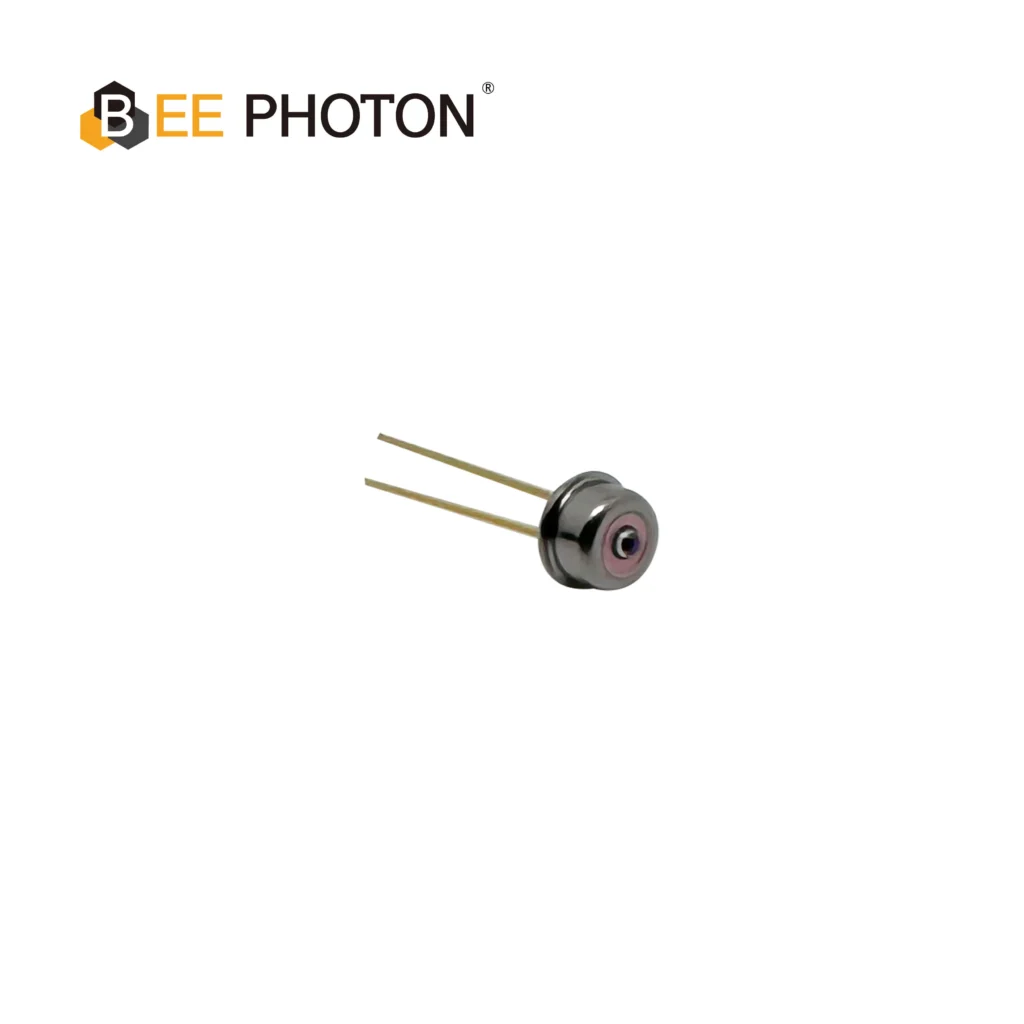
800-1700nm InGaAs PIN Photodiode PDIT005-224A
Bee Photon’s TO-18 InGaAs PIN Photodiode delivers exceptional performance for industrial sensing and control. This robust photodiode offers high reliability for your most critical applications.
Why Optical Sensors in Autonomous Driving Are Shifting to 1550nm and InGaAs APD
Let’s talk nuts and bolts. Most early Automotive LiDAR ran at 905nm with silicon detectors – cheap, mature, gets the job done for shorter ranges. But push for highway speeds and real-world safety? That’s where 1550nm shines, and InGaAs APD steps in as the go-to receiver.
Why the switch? Eye safety first – at 1550nm, you can pump way more laser power without risking anyone’s retinas, translating to detection out past 300 meters. InGaAs APDs are tuned for that near-infrared sweet spot, offering higher sensitivity and lower noise in those wavelengths compared to silicon alternatives. We’ve seen systems using them cut through adverse weather better too, since longer wavelengths scatter less on water droplets.
Here’s a quick comparison table I threw together based on what we’ve tested and industry benchmarks:
| Feature | 905nm Systems (Si-based) | 1550nm Systems (InGaAs APD) |
|---|---|---|
| Typical Range | 150-200 meters | 300+ meters |
| Eye Safety Power Limit | Lower (class 1 limits quicker) | Much higher – safer for longer pulses |
| Weather Performance | Decent, but struggles in heavy fog/rain | Better penetration through aerosols |
| Detector Sensitivity | Good in visible/near-IR | Optimized for SWIR, higher gain |
| Cost Trend | Already low | Dropping fast with volume (thanks to new fabs) |
| Common Use Cases | Urban ADAS, shorter-range | Highway autonomy, long-range mapping |
Data pulled from sources like Yole reports and real-world tests – InGaAs isn’t always cheaper yet, but the performance edge makes it worth it for premium L3/L4 setups.
At Bee Photon, we’ve supplied InGaAs APD modules to partners hitting those extended ranges reliably. One project I can think of (keeping it anonymous, you know how it is) involved a major European Tier 1 integrating our detectors into a forward-facing lidar. They went from inconsistent 200m reads in bad weather to solid 350m, which unlocked highway pilot features for their OEM customer. Stuff like that doesn’t make headlines at CES, but it’s what gets vehicles on the road.
The Bigger Picture: How These Advances Help Tier 1 Suppliers Like You
You’re probably knee-deep in specs for next-year models, right? Balancing cost, performance, and scalability. CES made it clear – autonomous vehicle sensors aren’t a nice-to-have anymore. With regulations pushing for better perception and OEMs like Tesla, Waymo, and now more Chinese players demanding robust stacks, the pressure’s on receivers to deliver low-noise, high-gain detection without huge power draws.
InGaAs APD tech addresses that head-on. Newer generations have faster recovery times and better temperature stability, meaning fewer false positives in hot under-hood environments. And with companies like Seyond and Hesai scaling 1550nm production, the supply chain is catching up.
We’ve been in this game a while at Bee Photon, focusing on custom InGaAs solutions that slot right into Automotive LiDAR designs. Our detectors have helped cut system noise floors in ways that let lasers run more efficiently – think longer battery life for EVs or fewer units needed per vehicle.
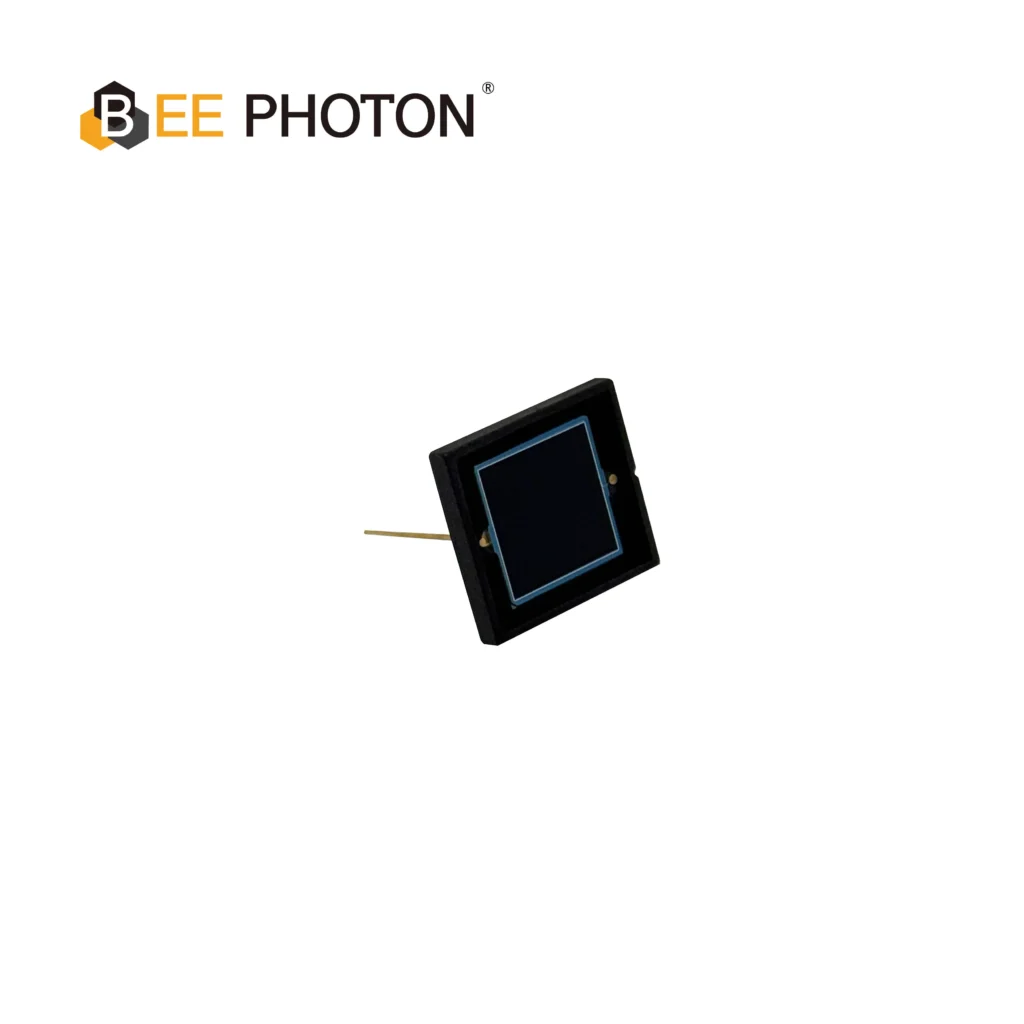
Si PIN Photodiode with UV sensitivity enchanced (190-1100nm) PDCD100-F01
Experience superior UV detection with Bee Photon’s Ultraviolet (UV) Sensitive Photodiode.Our Si PIN photodiode ensures high sensitivity and reliability for analytical instruments.This Ultraviolet (UV) Sensitive Photodiode with a quartz window offers precise measurements from 190nm to 1100nm.
Looking Ahead: Trends Shaping Optical Sensors in Autonomous Driving
Post-CES, a few things feel certain. Costs keep falling – that $200 lidar from Microvision? Game-changer for multi-sensor setups. AI integration means sensors need to feed cleaner data faster, favoring high-sensitivity options like InGaAs APD.
Fusion is huge too – lidars pairing with cameras and radar, but optical still leads for precise 3D mapping. And don’t sleep on solid-state shifts ditching mechanical parts for reliability.
If you’re prototyping L4 systems or upgrading ADAS, now’s the time to evaluate receiver upgrades. We’ve got case studies (again, anonymized) where switching to our InGaAs lineup shaved 15-20% off total system cost through better efficiency.
Ready to chat specifics? Drop us a line at Bee Photon – we’d love to talk quotes or samples tailored to your Automotive LiDAR needs.
FAQ: Common Questions on Optical Sensors in Autonomous Driving Post-CES 2026
What’s the deal with InGaAs APD in modern Automotive LiDAR?
Basically, it’s the detector that catches those faint returning laser pulses. InGaAs handles 1550nm light way better than silicon, giving you longer range and safer operation. Perfect for when you need to spot a deer at 300 meters on a rainy night.
Why are so many new lidars at CES going 1550nm instead of 905nm?
Longer wavelength means you can use more power safely, pushing detection further. Plus, it handles fog and rain a bit better. Trade-off was cost, but that’s changing fast now.
How can Tier 1 suppliers get ahead with these autonomous vehicle sensors?
Focus on scalable, high-performance receivers early. Partnering with specialists like us at Bee Photon can speed integration – we’ve got proven InGaAs APDs ready for automotive qual. Reach out via our contact page or email info@photo-detector.com for details.
Is the hype around cheaper lidars real, or just show floor talk?
Pretty real this year. Units dipping under $200 in volume, backed by actual production announcements. Means more vehicles can afford multiple high-end sensors without blowing budgets.
Any tips for evaluating InGaAs APD for my next project?
Look at noise figures, gain stability over temp, and recovery time. We’ve seen huge differences between off-the-shelf and optimized ones. Happy to share specs or run comparisons – just hit us up.


