
Hey folks, if you’re working on the next generation of 8K TVs or high-end displays, you’ve probably thought about how to make the picture look just right no matter if its bright sunshine pouring in or cozy evening lights. That’s where the ambient light sensor really shines – it automatically tweaks display brightness control so your screen doesn’t blind you in the dark or wash out in daylight.
We’ve been helping TV and display makers for years at Bee Photon with our precise smart TV components, and honestly, adding a good ambient light sensor isn’t just a nice-to-have anymore – its becoming pretty much essential for premium 8K products. Lets chat about why it matters, how it works in real life, and what to watch out for when integrating one.
Why Ambient Light Sensors Are a Game Changer for 8K TVs
8K displays pack in four times the pixels of 4K, so every little detail pops – but that also means brightness and contrast have to be spot-on, or you lose all those fine details. Modern 8K TVs often hit peak brightness over 1000 nits for HDR, but without adjustment, bright room light can kill the contrast and make blacks look gray.
A solid ambient light sensor measures the room’s light (in lux) and tells the TV’s processor to ramp up or down the backlight, sometimes even shift color temperature a bit. In dark rooms, it keeps things cinematic and saves power; in bright rooms, it boosts output so HDR still delivers punchy highlights.
From what we’ve seen working with manufacturers, this simple addition can boost user satisfaction big time – people hate fiddling with settings, and an auto-adjusting screen feels premium.

Si PIN photodiode PDCP08 Series PDCP08-511
The PDCP08-511 is a high-performance Black Epoxy PIN Photodiode designed for precision infrared applications. Encased in a special black epoxy resin, this sensor effectively acts as a daylight filter, blocking visible light interference while maximizing sensitivity at 940nm. With a large 2.9×2.9mm active area and low dark current, it ensures reliable signal detection for optical switches and remote control systems, even in noisy ambient light environments.
How Ambient Light Sensors Actually Work in Modern Displays
At its core, an ambient light sensor is a tiny photodetector (usually a photodiode or phototransistor) that mimics how human eyes see light. It sits near the bezel or sometimes integrated into the panel, constantly sampling ambient illuminance.
The sensor outputs a signal – analog or digital – that the TV’s SoC reads. Then the firmware applies algorithms to map that lux value to brightness levels. For example:
- Under 50 lux (dim room or night): drops backlight to 20-40% for eye comfort and energy savings.
- 500-2000 lux (living room with lamps): moderate boost.
- Over 5000 lux (sunny day): cranks it up to maintain visibility.
Newer ones go beyond basic brightness – they detect color temp too (warm vs cool light) and adjust white balance so skin tones don’t look off when the room has incandescent bulbs.
In 8K sets, this is extra important because higher resolution means more processing power, and running at max brightness all the time eats energy and generates heat. We’ve had clients report 15-25% power reduction just by enabling smart display brightness control – that’s real savings on energy labels and for eco-conscious buyers.
Key Benefits for TV Manufacturers and End Users
Integrating a reliable ambient light sensor brings a bunch of wins. Here’s a quick comparison table of TVs with vs without good ambient adjustment (based on real-world testing patterns from high-end models):
| Feature | Without Advanced ALS | With Good Ambient Light Sensor Integration |
|---|---|---|
| Picture Quality in Bright Rooms | Washed out colors, lost details | Maintains contrast, vivid HDR |
| Eye Comfort | Glare & strain during day/night shifts | Smooth, automatic adaptation |
| Energy Consumption | Higher constant power draw | 15-30% savings (depending on usage) |
| User Experience | Manual tweaks needed often | Set-it-and-forget-it premium feel |
| Heat Generation | More panel stress | Reduced thermal load |
One manufacturer we worked with (anonymized, of course) switched to our high-sensitivity sensor for their 8K flagship. They saw better reviews on picture consistency across lighting conditions – customers noticed the TV “just looks better” without knowing why.
Another perk: energy efficiency. With global push for greener electronics, auto-dimming helps meet regulations and improves ratings. Some reports show modern TVs with ambient sensing can cut usage by 20-30% in mixed lighting homes.
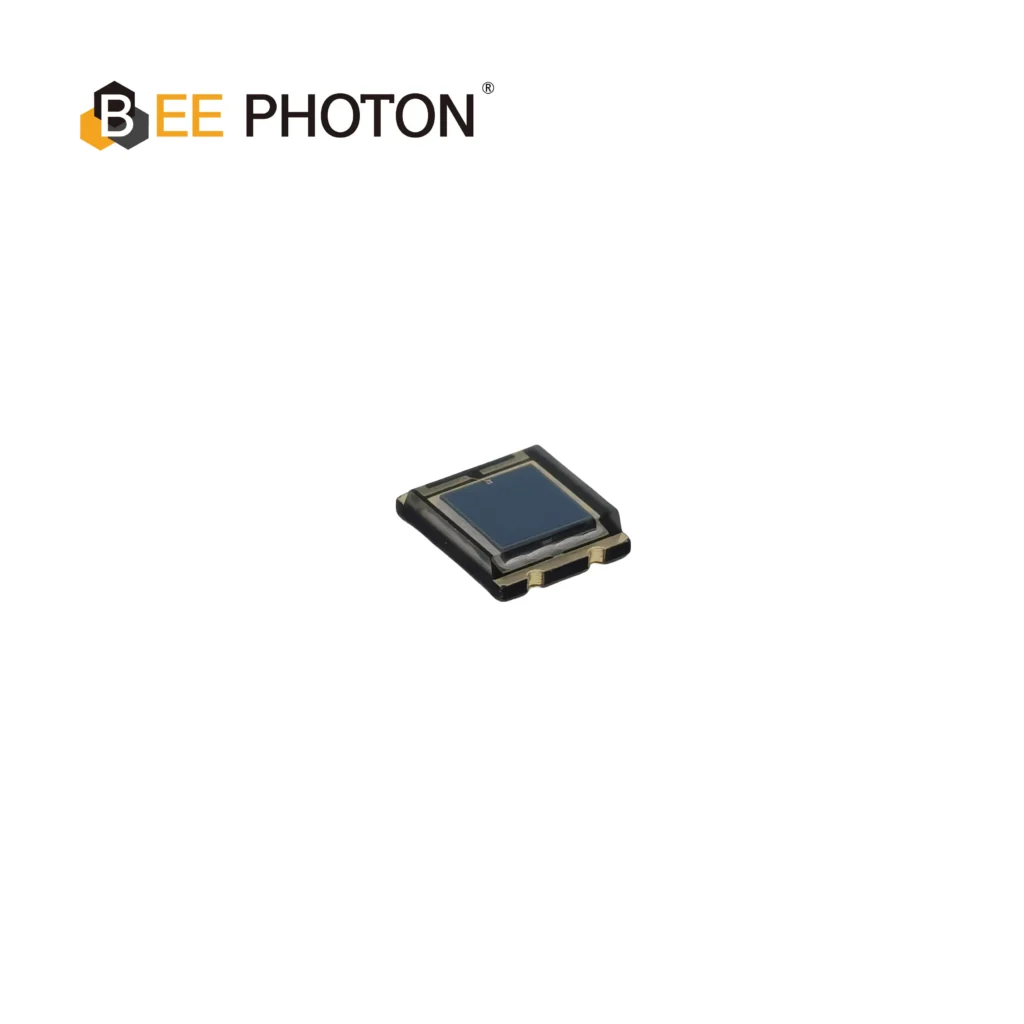
Si PIN Photodiode with NIR sensitivity enchanced (430-1100nm) PDCP08-201
The PDCP08-201 is a high-performance SMD Si PIN Photodiode designed for precision optical communication and medical sensing.[1] Featuring a large 2.9×2.9 mm active area with enhanced NIR sensitivity (0.70 A/W) and ultra-low dark current (20 pA), this SMD Si PIN Photodiode ensures superior signal detection and reliability in a compact surface-mount package.
Challenges and Best Practices When Integrating into 8K Designs
Its not always plug-and-play. Placement matters – if the sensor gets shadowed by the bezel or mount, readings go wonky. We’ve seen issues where rear-mounted sensors fooled by wall reflections.
Calibration is key too. Good sensors need tuning for different panel types (OLED vs Mini-LED vs LCD). For 8K, where pixel density is insane, even small over-brightening can cause blooming or unevenness.
Tips from our experience:
- Choose digital output sensors for faster, noise-free readings.
- Pair with AI picture processing for scene-by-scene tweaks.
- Test in real rooms – lab dark room tests don’t cut it.
- Go for sensors with wide dynamic range (0.01 to 100,000 lux).
At Bee Photon, our ambient light sensors are built specifically for these high-end applications – high accuracy, low power, and easy I2C integration. Check out our full range at https://photo-detector.com/ if you’re curious.
Real-World Application Scenarios
Think about a high-end home theater – during movie night with lights dimmed, the sensor keeps deep blacks and doesn’t pump unnecessary brightness. Switch to sports in daylight, and boom – screen brightens up so you catch every play.
We’ve seen it in commercial displays too, like 8K video walls in lobbies. Ambient adjustment keeps content visible all day without staff tweaking.
One case: a premium TV brand integrated our component into their 85-inch 8K model. Post-launch, user feedback highlighted “no more glare issues in our sunny living room” – exactly the kind of win that drives repeat business.

Si PIN Photodiode with low dark current (350-1060nm) PDCC34-001
Bee Photon offers a compact COB Si PIN Photodiode with wide spectral response (350-1060nm). This Chip-on-Board photodiode features low dark current, ideal for integrated and space-constrained applications.
FAQ
Do all 8K TVs need an ambient light sensor?
Not technically, but for premium models aiming at top picture quality and energy ratings, yes – its almost standard now. Without it, users complain about inconsistent viewing.
How much power can ambient light sensors really save?
Depends on usage, but 15-30% reduction is common in mixed lighting. In bright rooms, the TV doesn’t stay maxed out; in dark, it dials way back.
Whats the difference between basic and advanced ambient light sensors?
Basic ones just handle brightness. Advanced (like ours at Bee Photon) detect spectrum for better color adjustment, have higher resolution, and integrate faster with display processors.
If you’re a TV or display manufacturer looking to add smart display brightness control to your 8K lineup with reliable ambient light sensor tech, we’d love to chat. Our team has hands-on experience making these integrations smooth and effective.
Head over to our contact page at https://photo-detector.com/contact-us/ or drop us a line at info@photo-detector.com. Lets talk about getting your displays to adapt perfectly to any room light – your customers will thank you.


