Look, I’ve been in enough engineering design reviews to know exactly how the conversation goes. You’re working on the schematic for a new line of safety light curtain sensors (or maybe you’re trying to figure out why the old legacy model keeps failing in the field), and the purchasing manager slides a spreadsheet across the table.
They point at the component cost. They point at the phototransistor (PT) price, which is practically dirt cheap. Then they point at the Si PIN photodiode (PD) price, which is higher.
“Why,” they ask, tapping the paper, “are we spending the extra budget on these diodes? They both detect light, don’t they? Just use the transistor.”
It is tempting to just say yes. I get it. Budget constraints are real. But when we are talking about industrial safety barriers—specifically Type 4 light curtains where a human operator’s hand might be milliseconds away from a 10-ton hydraulic press—”good enough” isn’t just lazy, it’s dangerous.
I’m going to walk you through exactly why Si PIN photodiode application is the only real choice for modern safety standards, and why sticking with phototransistors might actually cost you way more in downtime and liability than you save on the BOM. No fancy academic jargon, just the engineering reality from someone who’s seen these things fail in the wild.
The Speed Trap: Why “Fast Enough” Isn’t Enough
Let’s start with the physics, because this is usually where the phototransistor loses the battle before it even starts.
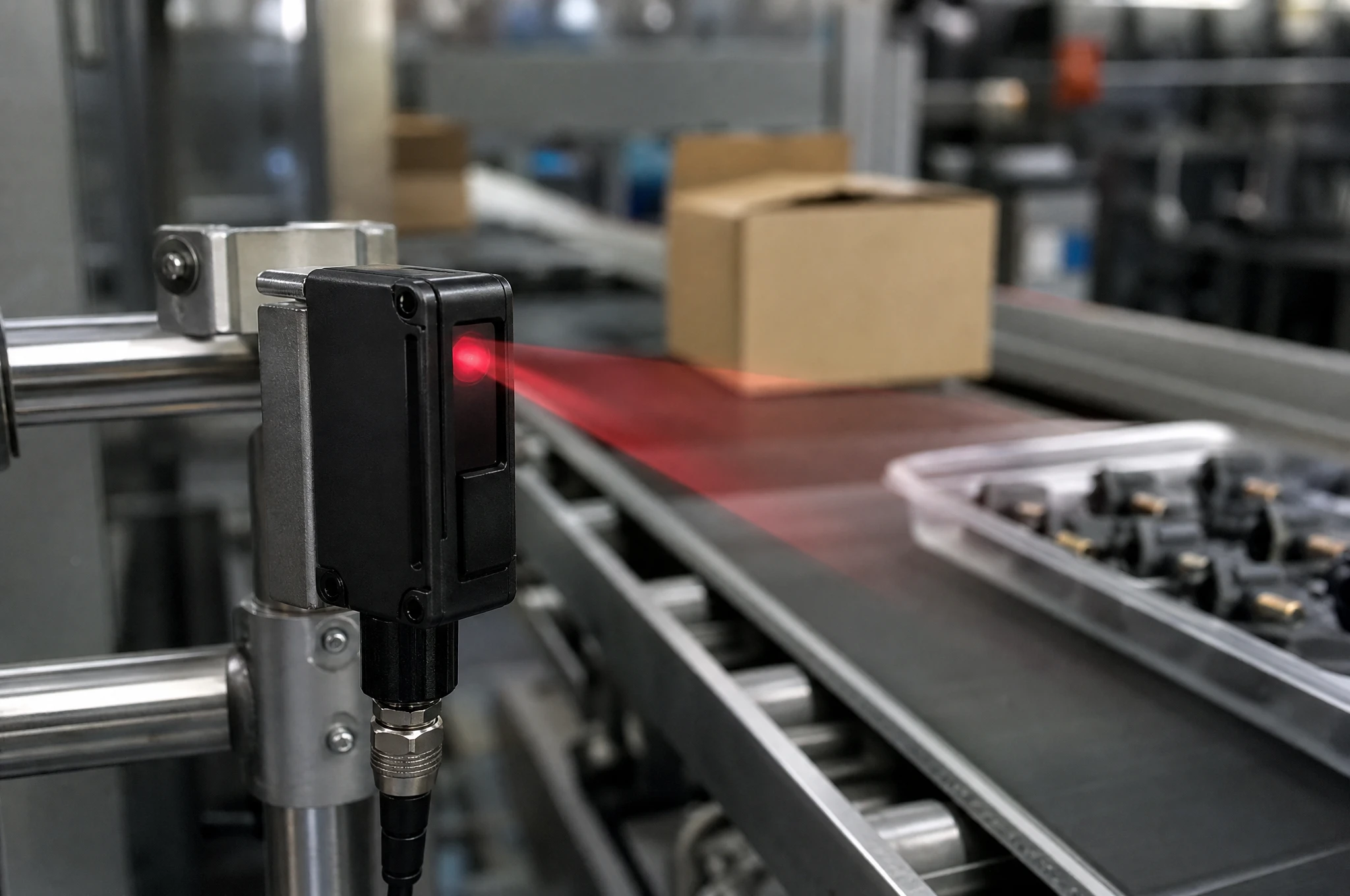
In a safety curtain, you aren’t just looking for a light signal. You are continuously scanning dozens, sometimes hundreds of beams. You need to detect the absence of light (a blockage) instantaneously.
The Mechanism Lag
A phototransistor is basically a photodiode with a built-in bipolar junction transistor for amplification. Sounds efficient, right? Free gain? The problem is something called the Miller Effect. The internal capacitance inside that transistor gets multiplied by the gain, which absolutely kills your bandwidth.
I’ve tested standard industrial phototransistors that struggle to get rise times (tr) faster than 5 to 10 microseconds (μs). That sounds fast to a human, but for a safety controller? That is an eternity.
Contrast that with a BeePhoton Si PIN photodiode. Because we don’t rely on internal gain, we are talking about rise times in the nanosecond range.
Here is the rule of thumb for bandwidth (BW) and rise time (tr) that you can actually type into your design notes:
BW ≈ 0.35 / tr
If your safety light curtain sensors need to scan 50 beams in under 5 milliseconds to meet safety ratings, a sluggish phototransistor with a long “tail” in its signal decay will introduce latency. In safety engineering, latency is liability. You cannot afford to wait for the sensor to “wake up.”
Why Si PIN Wins the Speed Race
The Si PIN structure is built differently. It includes an intrinsic (I) layer between the P and N regions. This acts like a widen buffer zone.
The formula for junction capacitance (Cj) is roughly:
Cj = (ε × A) / W
Where:
- ε is the permittivity of silicon.
- A is the active area of the chip.
- W is the depletion width.
Because the PIN diode has a much wider W (depletion width), the capacitance Cj drops significantly. Lower capacitance means you can switch that signal on and off incredibly fast. If you are building high-speed logic for a muting sensor or a complex blanking function, you simply cannot rely on the slow, lazy response of a phototransistor.
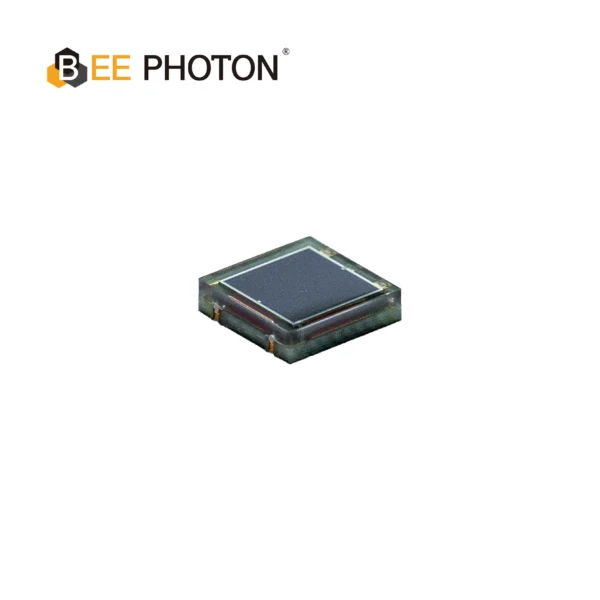
Si PIN Photodiode with NIR sensitivity enchanced (350-1100nm) PDCC34-501
Bee Photon offers a High Stability PIN Photodiode for precise industrial sensing. This NIR enhanced photodiode ensures reliable measurements from 350-1100nm. A top choice for a high stability photodiode.
Linearity: The “Welding Arc” Problem
Factory floors are chaotic places. You have ambient sunlight streaming through skylights, strobe lights from forklifts, and the absolute worst enemy of optical sensors: welding arcs.
Phototransistors are notoriously non-linear. Their gain (hFE) fluctuates wildly depending on how much light hits them. At high light levels, they saturate.
Imagine a welding robot flashes nearby. A phototransistor receiver might get “blinded” or saturated. Even after the flash is gone, it takes time to desaturate and recover. During that blind spot, your safety curtain is effectively offline.
Si PIN photodiodes, on the other hand, offer excellent linearity over 6 to 7 decades of light intensity.
The relationship is simple and linear:
Iph = Rλ × Popt
- Iph is the photocurrent.
- Rλ is the responsivity (how sensitive it is at a specific wavelength, like 850nm).
- Popt is the optical power hitting the sensor.
Because this is a straight line, it is much easier to design a frontend circuit (Transimpedance Amplifier) that can filter out the DC component (like sunlight or welding glare) and only amplify the high-frequency pulse from your transmitter. You can’t filter saturation out of a phototransistor because the signal is already clipped and distorted.
The Temperature Nightmare
I once consulted on a retrofit project for a steel mill in Pennsylvania. They had installed some budget-friendly safety barriers. They worked perfectly at 8:00 AM. But every day around 2:00 PM, the line would trip. No obstruction, just a phantom stop.
The culprit? Dark Current drift.
Phototransistors amplify everything—including their own thermal noise (Dark Current). As the temperature in the factory rose, the leakage current in the base-collector junction increased. Since the transistor applies gain to this leakage, the noise floor shot up massively.
Roughly speaking:
I(collector_dark) ≈ Gain × I(leakage)
Every 10°C rise in temperature roughly doubles the leakage current. In a phototransistor, that doubled leakage gets multiplied by a gain of 100 or more. Suddenly, your sensor thinks it sees light when it doesn’t, or the noise floor gets so high it masks the real signal.
With a BeePhoton Si PIN diode, you still have dark current, of course. Physics is physics. But it is not internally amplified. It remains in the pico-amp or nano-amp range, even when things get toasty. This gives your comparator circuit a stable baseline to work from, preventing those annoying false trips that make plant managers scream at you.
Circuit Design: The “Ease of Use” Myth
Engineers often tell me they love phototransistors because “you don’t need an Op-Amp.” You just slap a resistor on the emitter, and boom, you have a voltage. Easy, right?
But is it really easier? Let’s break it down.
The Phototransistor Headache:
You save fifty cents on an Op-Amp, sure. But now you have to calibrate every single unit. Why? Because the gain (hFE) of a phototransistor varies wildly from batch to batch. One might have a gain of 100, the next from the same reel might be 150. You end up adding potentiometers or writing complex calibration software to balance the beams in your industrial safety barriers. That sounds like a lot of work to me.
The Si PIN Solution:
Yes, you need a TIA (Transimpedance Amplifier). It’s one extra, cheap chip. But the photodiode characteristics are consistent. You design the gain with a feedback resistor (Rf), and it stays rock solid.
Vout = -Iph × Rf
Control is in your hands via the resistor choice, not at the mercy of the silicon doping tolerance. It makes manufacturing repeatable and reliable.
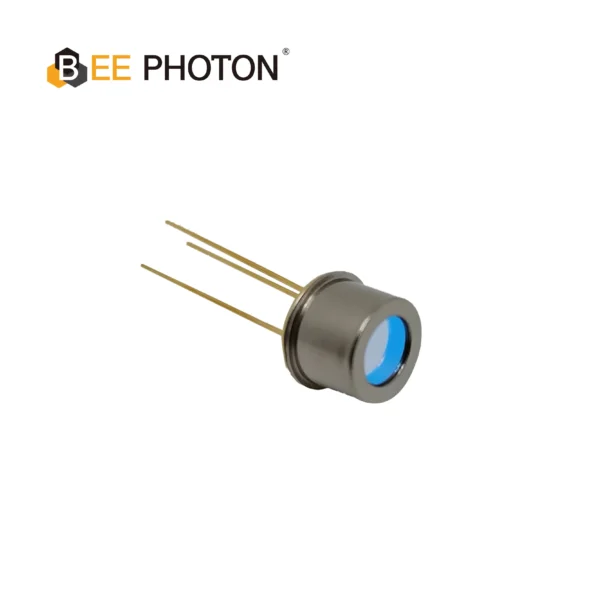
Si PIN Photodiode with low dark current (350-1060nm) PDCT07-001
Achieve high-precision results with our wide spectral range Si PIN photodiode, ideal for spectrometry and analytical instruments. Its ultra-low dark current and high linearity ensure accurate light detection. This photodiode offers a wide spectral response for diverse applications.
Comparative Data: Si PIN vs. Phototransistor
Let’s lay it out side-by-side. I pulled these general specs from standard industrial components to give you a clear picture.
| Feature | Si PIN Photodiode (BeePhoton) | Standard Phototransistor | Impact on Safety Curtains |
|---|---|---|---|
| Response Time | Nanoseconds (< 10 ns) | Microseconds (5 – 15 μs) | Si PIN allows for tighter beam spacing and faster scanning cycles. |
| Linearity | Excellent (7 decades) | Poor (Saturates easily) | Si PIN resists blinding from ambient light and welding flashes. |
| Temperature Stability | High (Low drift) | Low (Gain shifts with Temp) | Phototransistors are prone to false trips in hot environments. |
| Gain | 1 (Unity) | Variable (100 – 1000+) | PD requires external amp, but offers precision control. |
| Active Area | Variable (customizable) | Usually small | Larger PD areas make optical alignment much easier during install. |
Real-World Scenario: The Packaging Line Retrofit
I want to share a quick story about a client (let’s call them “PackCo”) running a high-speed bottling line.
They were using legacy safety sensors based on phototransistors to protect the palletizer zone. The environment was dusty—cardboard dust is everywhere in these places.
The Problem:
Dust accumulation on the lens reduced the signal intensity. Because the phototransistors relied on the light level to drive their gain, as the signal dropped, their response time got sluggish. Less photon drive meant slower switching. The safety controller started detecting “synchronization errors” because the sensors weren’t replying fast enough during the scan cycle.
The Result:
The line stopped randomly 4-5 times a day. Maintenance would wipe the lenses, it would work for an hour, and fail again.
The Fix:
We retrofitted the receiver array with Si PIN photodiodes paired with a decent TIA chip.
Because the Si PINs were linear, we could implement an Automatic Gain Control (AGC) in the circuit. When dust built up, the amp simply bumped up the gain electronically without sacrificing speed.
The line hasn’t had a false stop in six months. The ROI on the slightly more expensive sensors was paid off in about two days of saved downtime.
A Note on Integration
If you are switching from PT to PD, don’t forget about the mechanics. Si PIN photodiode application often allows for more flexible packaging. At BeePhoton, we can customize the active area shape. If you have a long, thin aperture for your light curtain, we can match the die shape to maximize signal collection. You don’t get that flexibility with off-the-shelf transistors.
Also, consider the reverse bias. Applying a reverse bias voltage (VR) to the PIN diode widens that depletion region I mentioned earlier. This drops the capacitance even further, making the sensor faster. For safety gear, running with a bit of reverse bias is a pro move to ensure you meet those IEC 61496 Type 4 requirements comfortably.
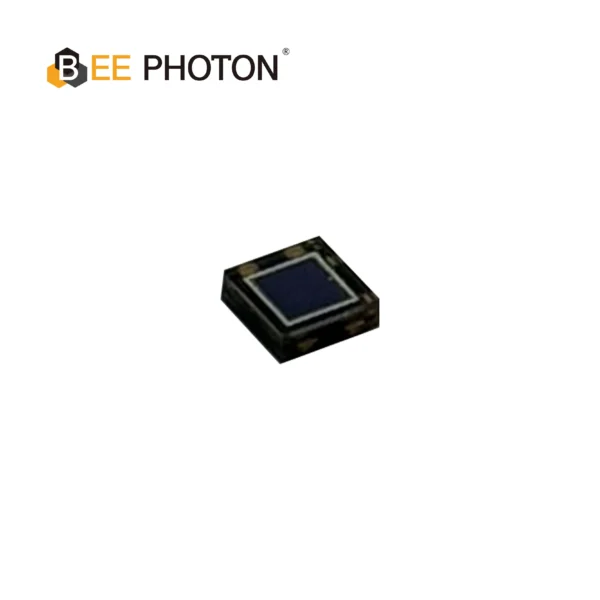
Si PIN Photodiode with low dark current (350-1060nm) PDCC07-003
Enhance your industrial automation systems with our low dark current Si PIN photodiode. This industrial automation photodiode (350-1060nm) offers superior precision and reliability.
FAQ: Questions We Hear from Engineers
Q: Can I just swap a phototransistor for a photodiode in my existing PCB?
A: No, usually not. A photodiode produces a current, not a voltage, and typically requires a Transimpedance Amplifier (TIA) to get a usable signal level. A phototransistor works more like a switch. The PCB layout needs to change, but the performance boost is totally worth the respin.
Q: Do Si PIN diodes degrade over time?
A: All semiconductors have a lifespan, but Si PIN diodes are incredibly robust. They don’t suffer from the same “gain degradation” that can sometimes plague transistors under high thermal stress. If you keep them within their rated voltage, they will likely outlast the mechanical parts of your machine.
Q: Why does BeePhoton recommend PIN diodes for long-range barriers?
A: It comes down to Signal-to-Noise Ratio (SNR). At long ranges (like 10 or 20 meters), the signal is weak. A phototransistor adds noise to that weak signal. A PIN diode gives you a clean, albeit small, signal that you can amplify cleanly with a low-noise amplifier. It results in a much more stable detection range.
Q: Is the cost difference really that big?
A: In raw component cost? Maybe a few cents to a dollar per channel. But calculate the cost of a single safety recall or a lawsuit from a malfunction. The “savings” on a phototransistor vanish pretty fast when you look at the big picture.
Final Thoughts: Don’t Compromise on Safety
When you are designing systems that protect human life, the component choice isn’t just about the datasheet—it’s about the worst-case scenario.
Phototransistors have their place—smoke detectors, simple object counting on a vending machine—but for safety light curtain sensors, they are a relic of the past. The speed, temperature stability, and linearity of Si PIN photodiodes make them the only logical choice for compliance with modern safety standards.
You want a sensor that reacts faster than a hand can move. You want reliable tech.
Ready to upgrade your sensor arrays?
If you are stuck on a design or trying to figure out the right active area for your specific beam pattern, reach out to us. We’ve solved this for hundreds of clients and we actually enjoy the tricky problems.
- Browse our Tech: Check out our Si PIN Photodiode Catalog.
- Get Custom Advice: Drop a line to our engineering team at info@photo-detector.com.
- Talk to a Human: Visit our Contact Page to request a quote or design consultation.
Don’t let a 50-cent component be the reason your million-dollar machine stops working. Let’s build something safer together.