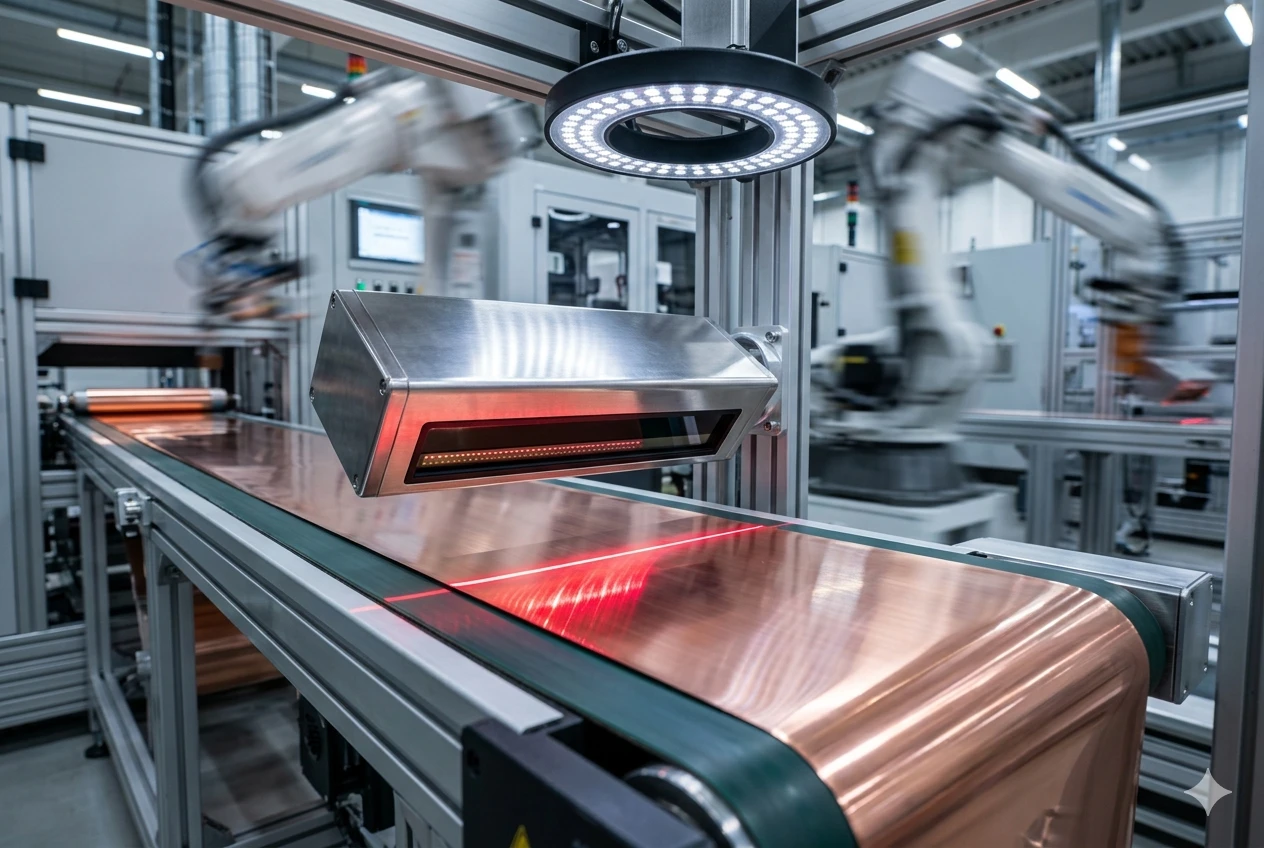
Look, we need to be honest about something right off the bat. If you are a civil engineer or a project manager overseeing a massive infrastructure project—like a bridge spanning a saltwater bay or a high-speed railway tunnel—you don’t care about the sensor. You care about the data.
You care that when your screen says the strain on the north pillar is within limits, it’s actually within limits.
But here is the kicker: the reliability of that data depends entirely on the component that converts the physical signal into the electrical one. In optical SHM systems (which are rapidly replacing old-school electrical strain gauges), that component is the custom photodiode module.
I’ve been in the optoelectronics game long enough to see brilliant engineering projects fail because someone decided to save fifty bucks by buying an off-the-shelf, generic photodetector instead of a customized solution. It drives me nuts.
Today, we are going to dive deep—and I mean technical deep—into why customization matters, how the physics works (without needing a math degree), and how to build a system that actually lasts.
The Real Problem with Generic Civil Engineering Sensors
Most people think a sensor is just a sensor. You buy it, glue it, wire it, and forget it.
If only it were that simple.
In the world of structural health monitoring sensors, particularly those based on Fiber Bragg Grating (FBG) or Brillouin scattering, the environment is brutal. We are talking about temperature swings from -20°C to +50°C, electromagnetic interference (EMI) from power lines, and mechanical vibrations that would rattle a standard PCB to dust.
I recall a project in the Midwest a few years back. A company used standard photodiodes in their FBG interrogators for a bridge project. Winter hit. The temperature dropped. The “dark current” in their sensors shifted just enough to look like a strain change. They thought the bridge was contracting dangerously. It wasn’t. It was just a cold sensor. That false alarm cost them thousands in inspection fees.
A custom photodiode module isn’t just about fitting in a weirdly shaped box. It’s about matching the electro-optical characteristics to the specific “health” you are monitoring.
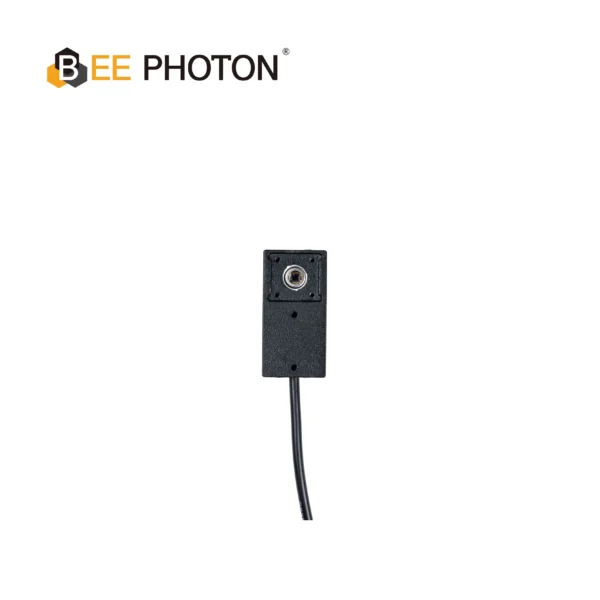
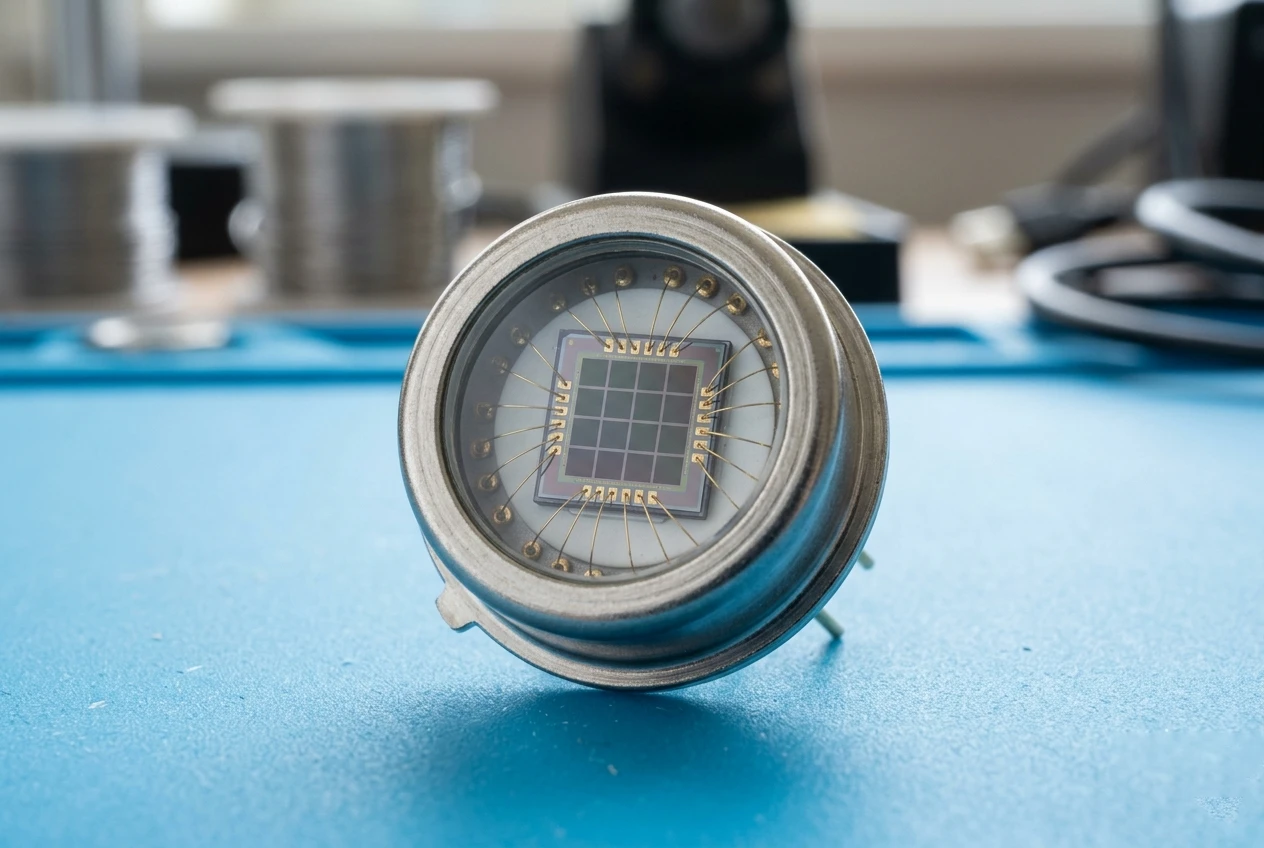
Photodiode module(Analog output)PDTM-A
Bee Photon is a top OEM Photodiode Module Supplier for custom needs. Trust an experienced OEM photodiode module supplier for your precision optical instruments.
Why Optical? (The 30-Second Pitch)
Before we get into the nitty-gritty of the diode, let’s establish why you’re likely looking at optical solutions.
- EMI Immunity: Light doesn’t care about the high-voltage cables running alongside your railway track.
- Distance: You can run optical fiber for kilometers without significant signal loss.
- Multiplexing: You can put dozens of sensors on a single fiber.
But, the optical signal returning from the bridge is weak. Extremely weak. That is where our hero, the photodiode, steps in.
The Technical Core: Designing the Custom Module
When we design a module at BeePhoton, we aren’t just picking a chip from a catalog. We are looking at the Signal-to-Noise Ratio (SNR).
In SHM, you are usually measuring a shift in wavelength (for FBG) or intensity. The precision of this measurement is defined by the SNR.
Here is the basic relationship you need to know. It’s not complex, but it’s vital:
SNR = (I_p) / (I_shot + I_thermal + I_dark)
Where:
- I_p is your Photocurrent (the signal).
- I_shot is the Shot Noise (unavoidable quantum noise).
- I_thermal is the Thermal Noise (caused by heat in the resistor).
- I_dark is the Dark Current (current that flows even when there is no light).
1. The Battle Against Dark Current
For civil engineering applications, I_dark is your enemy. As temperature rises, dark current doubles roughly every 10°C. If your custom photodiode module isn’t optimized for low dark current or doesn’t have built-in temperature compensation, your baseline drifts.
We often utilize high-grade Si PIN photodiodes for shorter wavelengths or specific InGaAs variants for telecom wavelengths, specifically selected for low leakage current. You can check out some of the base specs we use here: Si PIN photodiodes.
2. Responsivity and Linearity
You want a high responsivity (R), measured in Amps per Watt (A/W).
I_p = P_opt * R
- P_opt is the optical power hitting the sensor.
- R is the responsivity.
If we customize the anti-reflective coating on the photodiode surface to match exactly the laser wavelength used in your interrogator (say, 1550nm or 850nm), we can squeeze out an extra 10-15% efficiency. That might not sound like much, but when your signal has traveled 10km through a dusty fiber connector, that 15% is the difference between data and static.
Integrating the Transimpedance Amplifier (TIA)
Here is a controversial opinion: Never buy a raw photodiode for an SHM field application. Always buy a module with an integrated TIA.
Why? Because a high-impedance signal coming out of a raw photodiode is a magnet for noise. It acts like an antenna. You want to convert that current to a low-impedance voltage immediately, right at the source.
The output voltage ($V_out$) is determined by:
V_out = I_p * R_f
- R_f is the feedback resistance.
In a custom photodiode module, we can tune R_f to give you exactly the gain you need. Too much gain, and you saturate the sensor on sunny days. Too little, and you miss the micro-cracks.
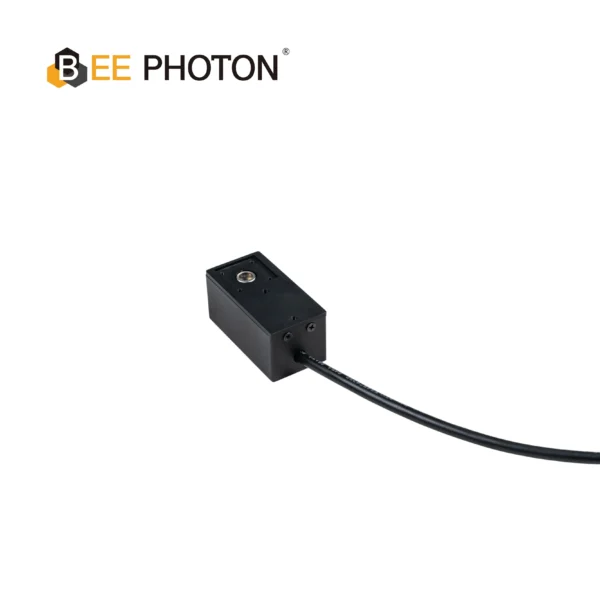
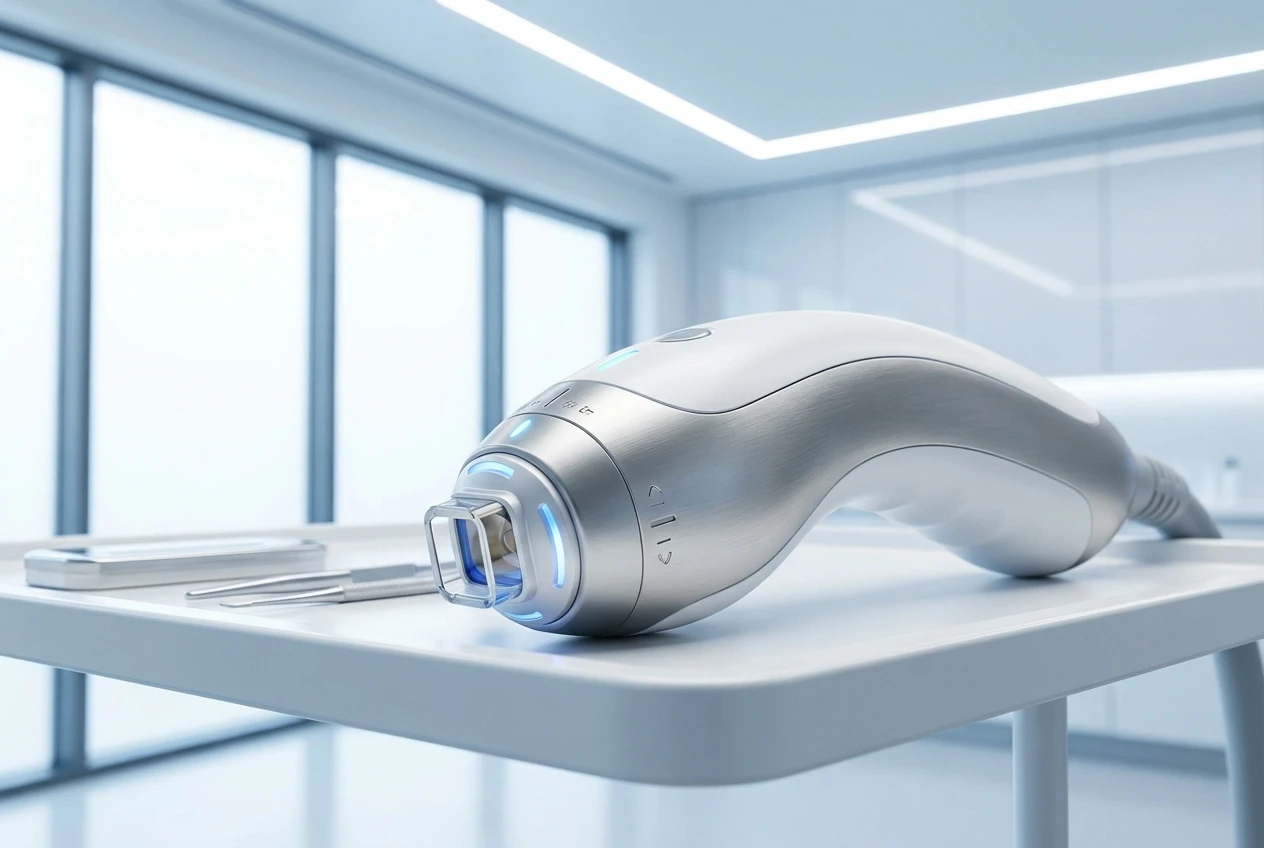
Photodiode Module(Digital signal output)PDTM-D
Our Fluorescence Detector Module offers high gain for bio-analysis. Ideal for IVD, this fluorescence detector module ensures accurate weak signal detection.
A Real-World Case: The “Ghost” Train
Let me share a story (names anonymized, obviously) about a railway monitoring project in Europe.
The client was monitoring track deformation. They used a generic optical sensor. Every time a specific model of high-speed train passed, the data went haywire—spikes everywhere. They thought the track was vibrating loose.
We analyzed their setup. It turned out the bandwidth of their generic detector was too high. It was picking up high-frequency modulation from the train’s signaling system that was leaking into the environment.
The Fix:
We built a custom module for them.
- Bandwidth Limiting: We added a capacitor in the feedback loop to create a low-pass filter, killing frequencies above 10 kHz.
- Formula for cut-off frequency: f_c = 1 / (2 * pi * R_f * C_f)
- Shielding: We packaged it in a hermetically sealed, nickel-plated brass housing grounded to the common rail.
Result? Clean data. The “ghost” vibrations disappeared. That is the power of customization.
Photodiodes vs. The Alternatives
I get asked this a lot: “Why not just use piezos?” Here is a quick breakdown of why optical/photodiode systems are winning in heavy civil engineering.
| Feature | Custom Photodiode (Optical) | Electrical Strain Gauge | Piezoelectric Sensor |
|---|---|---|---|
| EMI Immunity | Total (It uses light) | Poor (Needs heavy shielding) | Moderate |
| Lifespan | 20+ Years (No moving parts) | 5-10 Years (Corrosion risk) | 10-15 Years |
| Cabling | Fiber (Lightweight, long run) | Copper (Heavy, resistance loss) | Copper (Signal degradation) |
| Drift | Low (With custom compensation) | High (Drifts with temp) | Medium (Charge leakage) |
| Cost | High Initial / Low Maintenance | Low Initial / High Maintenance | Medium |
Installation Matters: Don’t mess it up
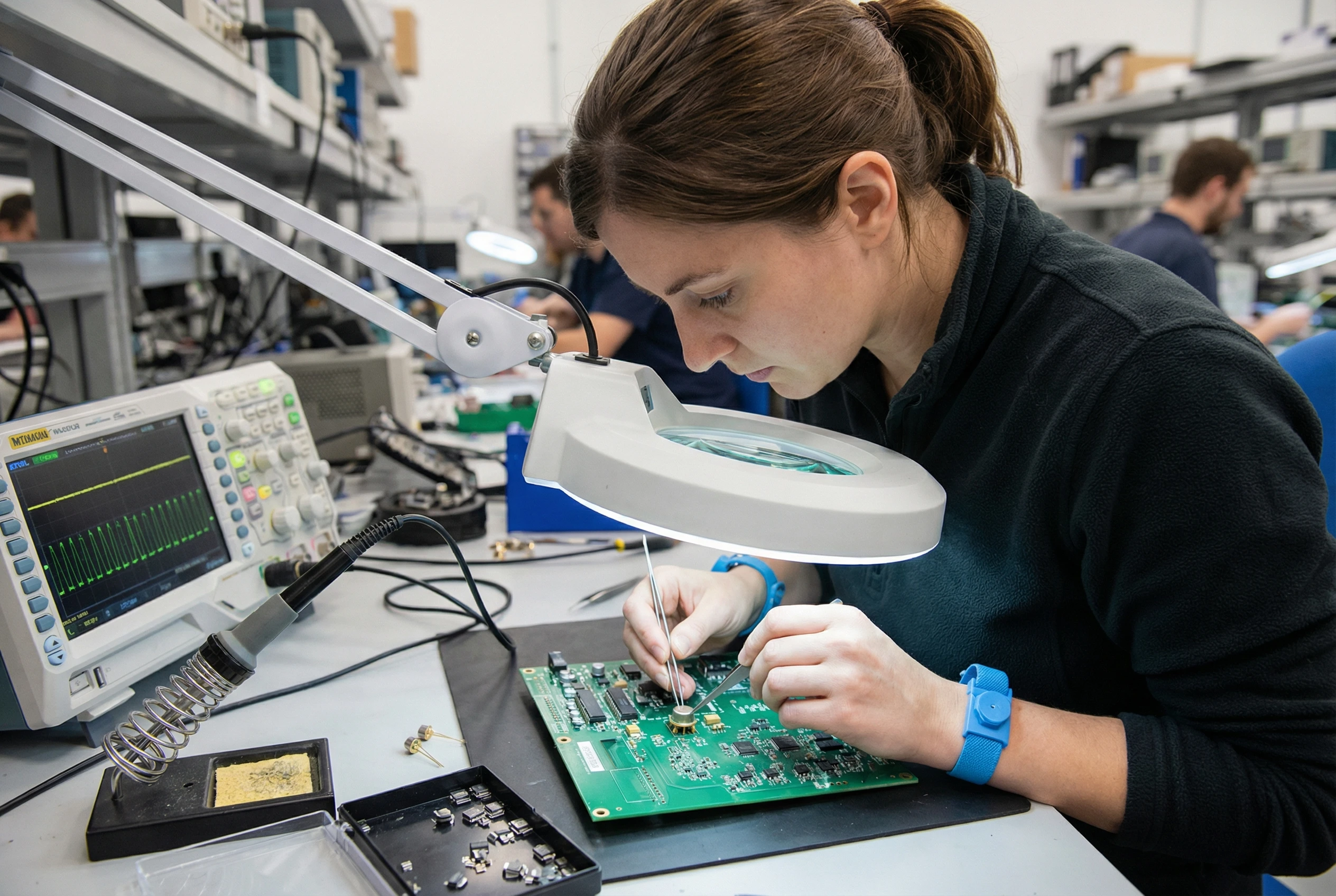
You can have the best BeePhoton sensor in the world, but if you install it wrong, it’s a paperweight.
When integrating these modules into your interrogator box:
- Thermal Isolation: Keep the photodiode module away from the power supply heat sinks. Remember the dark current rule? Heat = Noise.
- Angle of Incidence: If you are coupling free-space light (rare in SHM, but happens), ensure the angle prevents back-reflection into the laser.
- Connectors: Use APC (Angled Physical Contact) connectors. They reduce return loss significantly compared to PC connectors.
What Specs Should You Ask For?
If you are writing an RFP (Request for Proposal) for civil engineering sensors, don’t just write “optical sensor.” Be specific.
Ask for:
- NEP (Noise Equivalent Power): Ideally < $10^{-14}$ W/sqrt(Hz). This tells you the minimum signal you can detect.
- Saturation Power: Ensure the sensor doesn’t go blind when the signal is strong.
- Active Area: A larger area captures more light but increases capacitance (slower speed). For SHM, we usually prefer slightly larger areas because we don’t need GHz speeds, we need light capture.
Future Trends: IoT and Smart Infrastructure
We are seeing a shift. The sensors are getting smarter. We are now prototyping modules with on-board ADCs (Analog-to-Digital Converters) right inside the shielded housing. This means the signal leaving the sensor is already digital, making it practically immune to noise during transmission to the central processor.
It’s an exciting time. Bridges that “talk” are no longer sci-fi.

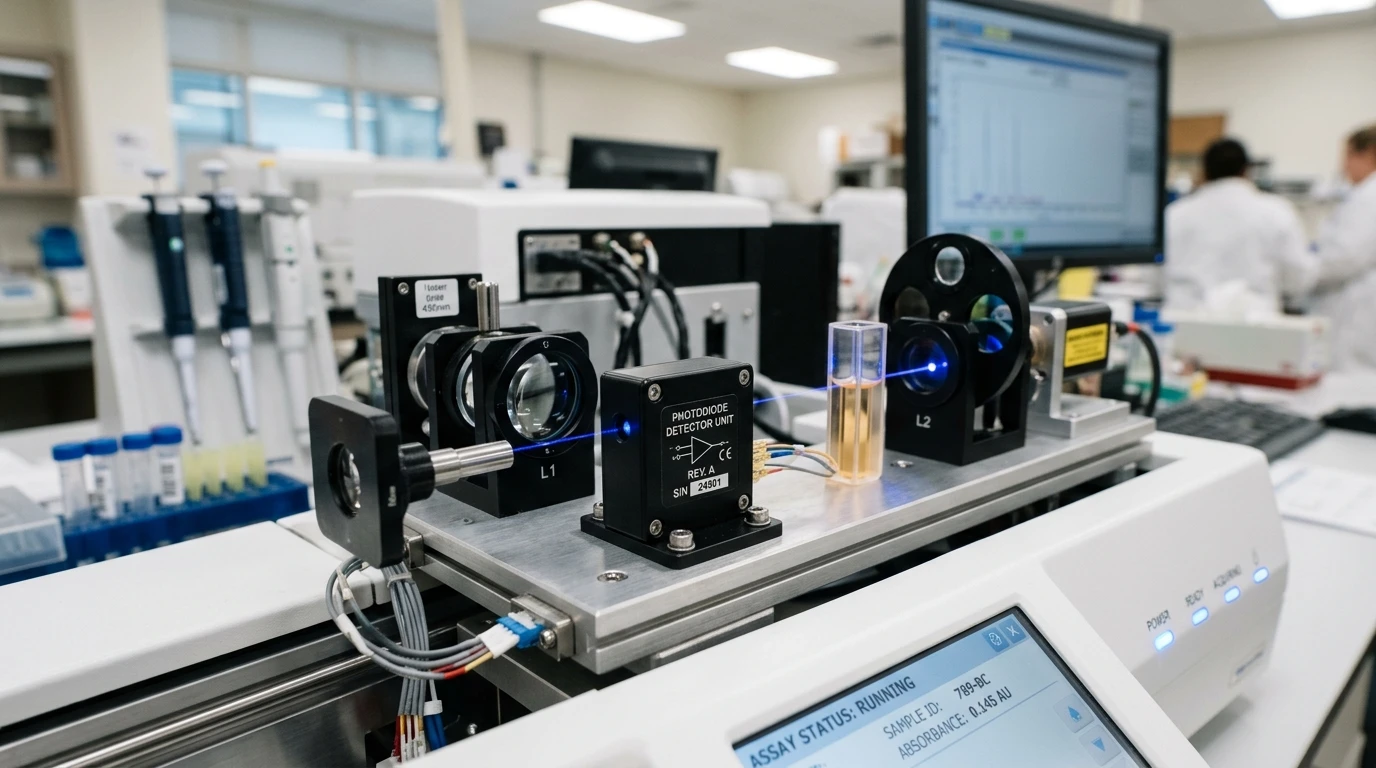
Photodiode Module(Digital signal output)PDMM
Our Low Noise Photodetector Module ensures high sensitivity for precision tasks. Use this low noise photodetector module for superior spectroscopy results.
Conclusion… sort of
There is no “one size fits all” in structural health monitoring. Every bridge vibrates differently. Every tunnel has a different moisture profile.
Using a custom photodiode module allows you to tailor the eyes of your system to the specific darkness it needs to see through. It ensures that when you tell the city council the bridge is safe, you aren’t crossing your fingers. You know.
If you are struggling with noisy data or sensors that die after one winter, maybe it’s time to stop buying off the shelf.
Check out our Si PIN photodiodes to see the base technology we work with, or if you are ready to talk specs, hit us up at BeePhoton.
FAQ: Common Questions on Optical SHM Sensors
Q1: Can custom photodiode modules really survive a concrete embedment?
A: Directly? No. The photodiode module usually sits in the “Interrogator” unit (the safe box), while the fiber optic cable is what gets embedded in the concrete. However, if the interrogator is in a harsh environment (like under a bridge deck), the module inside needs to be ruggedized against humidity and temp swings, which is exactly what we do.
Q2: What represents the biggest cost driver in a custom module?
A: Surprisingly, it’s not the chip—it’s the testing and packaging. Ensuring a module remains hermetic for 20 years requires specialized sealing processes and rigorous thermal cycling tests. You pay for the reliability, not just silicon.
Q3: How often do these optical sensors need calibration?
A: Unlike electrical sensors that drift mechanically, the photodiode itself is extremely stable. Usually, the system needs calibration every 1-2 years, but this is often due to the laser source aging, not the detector. A high-quality custom detector module can remain stable for a decade.
Need to secure your infrastructure?
Don’t let faulty data compromise your project’s safety.
- Identify your specific monitoring challenges.
- Consult with our engineers to design a module that fits your SNR requirements.
- Deploy a solution that lasts as long as your structure.
Drop us an email at info@photo-detector.com or visit our Contact Page to start the conversation. Let’s build something safe.