Wenn Sie schon länger rotatorische oder lineare optische Drehgeber entwerfen oder Fehler an ihnen beheben, erinnern Sie sich wahrscheinlich daran, als Infrarot (IR) der unangefochtene König der Lichtquellen war. Jahrzehntelang verrichteten Standard-IR-Emitter mit 850 nm oder 880 nm ihre Arbeit tadellos. Sie waren kostengünstig, Siliziumdetektoren arbeiteten hervorragend mit ihren Wellenlängen, und niemand benötigte wirklich Genauigkeiten im Submikrometerbereich für die einfache industrielle Motorsteuerung.
Doch die Zeiten haben sich geändert. Heute verlangen die industrielle Automatisierung, die Robotik und die Halbleiterfertigung extreme Präzision. Wir sprechen von Auflösungen, die über 20 Bit hinausgehen oder lineare Messungen im Submikrometerbereich erfordern. Wenn man versucht, dieses Leistungsniveau aus einem herkömmlichen Infrarot-Emitter herauszuholen, stößt man an eine physikalische Grenze.
Diese Grenze wird als Beugung bezeichnet.
Um diese Einschränkung zu überwinden, haben führende Hersteller von Drehgebern ihre High-End-Designs stillschweigend auf kürzere Wellenlängen umgestellt, insbesondere unter Verwendung einer blaue LED für Encoder. Unter den verschiedenen Optionen hat sich die Wellenlänge von 465 nm als der ideale Bereich für fortschrittliche optische Drehgeber herausgestellt. Lassen Sie uns untersuchen, warum dieser Wandel stattfindet, welche physikalischen Grundlagen dahinterstecken und warum eine 465-nm-Blaulichtquelle nicht mehr nur ein optionales Upgrade, sondern eine absolute Notwendigkeit für die moderne Antriebstechnik ist.
Die Physik der Präzision: Wellenlänge und Beugungsgrenze
Um zu verstehen, warum eine blaue LED für Encoder so entscheidend ist, müssen wir darüber sprechen, wie ein optischer Drehgeber tatsächlich die Position liest.
Ganz gleich, ob Sie ein transmissives oder ein reflektives System entwerfen, Sie projizieren im Wesentlichen Licht durch oder von einem fein abgestuften Gitter (der Codescheibe) auf ein Fotodetektor-Array. Der Fotodetektor misst das resultierende Lichtmuster und wandelt es in sinusförmige elektrische Signale um, die dann interpoliert werden, um die Position zu berechnen.
Das Problem? Licht breitet sich nicht in vollkommen geraden Linien aus, wenn es durch winzige Spalte tritt. Es beugt sich. Diese Ablenkung ist als Beugung bekannt.
Die Winkelausbreitung dieses gebeugten Lichts kann durch eine einfache physikalische Beziehung abgeschätzt werden:
theta = lambda / w
Wo:
thetaist der Beugungswinkel (die Ausbreitung des Lichtstrahls)lambdaist die Wellenlänge der Lichtquellewist die Spaltbreite des Gitters auf Ihrer Drehgeberscheibe
Wenn man sich diese Formel genau ansieht, stellt man fest, dass der Beugungswinkel theta direkt proportional zur Wellenlänge ist lambda.
Wenn man eine Infrarot-Lichtquelle mit einer Wellenlänge von 850 nm verwendet, breitet sich das Licht beim Durchgang durch die schmalen Schlitze eines hochauflösenden Gitters erheblich aus. Dies führt dazu, dass die hellen und dunklen Muster auf dem Sensor verschwimmen. Das resultierende elektrische Signal verliert an Kontrast, Rauschen schleicht sich ein, und die Interpolationsgenauigkeit geht verloren.
Sehen Sie nun, was passiert, wenn wir dies gegen eine 465-nm-Quelle austauschen blaue LED für Encoder:
- Infrarot-Wellenlänge:
lambda= 850nm - Blaue LED-Wellenlänge:
lambda= 465nm - Beugungsreduzierung: Ungefähr 45%
Durch die Verringerung der Wellenlänge von 850nm auf 465nm wird der Beugungswinkel fast halbiert! Der Lichtstrahl bleibt beim Übergang von der Codescheibe zum Sensor deutlich gebündelter und schärfer. Dies bedeutet, dass Ihr Sensor ein hochdefiniertes, kontrastreiches optisches Muster empfängt.
Hier ist ein kurzer Vergleich, wie sich die Wellenlänge auf verschiedene Lichtquellen auswirkt, die in Encodern verwendet werden:
| Parameter | Traditionelles Infrarot (IR) | Standardmäßige rote LED | 465nm Blaue LED |
|---|---|---|---|
| Typische Wellenlänge | 850 nm | 640 nm | 465 nm |
| Relative Beugungsausbreitung | 100% (Baseline) | ~75% | ~55% (45% Reduzierung) |
| Signalkontrast (Modulation) | Niedrig bei feinen Teilungen | Mäßig | Sehr hoch |
| Maximale physikalische Auflösung | Eingeschränkt (erfordert große Scheiben) | Mittel | Hervorragend (ermöglicht ultrafeine Teilungen) |
| Gängige Anwendung | Veraltete Industrie-Encoder | Kostengünstige Consumer-Encoder | Ultrapräzise, kompakte Encoder |
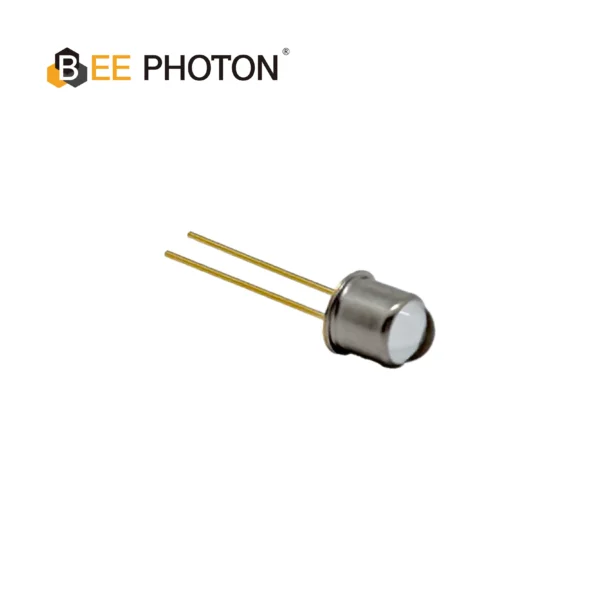
Blaue LED E465-4-201L4
Die E465-4-201L4 ist eine leistungsstarke 465nm Blaue LED wurde speziell für industrielle Präzisionsanwendungen entwickelt, die eine fokussierte Lichtleistung erfordern. Mit einer hohen Leuchtkraft und einem streng kontrollierten Wellenlängenbereich von 460-470nm bietet diese 465nm Blaue LED ist ein wichtiger Bestandteil von optischen Schaltern und Drehgebern.
Warum eine blaue 465-nm-LED für Encoder die Auflösung revolutioniert
Wenn wir über das Upgrade auf eine blaue LED für Encoder, ist der unmittelbare praktische Nutzen ein enormer Sprung in Auflösung und Genauigkeit, ohne den Encoder physisch zu vergrößern.
Wenn Sie auf Infrarotlicht angewiesen sind, besteht die einzige Möglichkeit zur Erhöhung der Auflösung darin, entweder die Codescheibe zu vergrößern (wodurch die Schlitzbreite w im Verhältnis zur Wellenlänge zunimmt) oder stark auf softwarebasierte Signalinterpolation zu setzen. Keine der beiden Optionen ist ideal. Große Scheiben passen nicht in kompakte Motorgehäuse, und eine übermäßige Softwareinterpolation reagiert äußerst empfindlich auf elektrisches Rauschen, Signaloffset und mechanischen Jitter.
Durch die Integration einer 465-nm- blaue LED für Encoder, lösen Sie dieses Problem auf Hardware-Ebene.
Da die Beugung wesentlich geringer ist, können Codescheiben mit extrem schmalen Gitterlinien entworfen werden. Es ist nicht ungewöhnlich, dass moderne Absolut- und Inkrementalgeber mit blauem Licht Teilungsperioden von unter 20 Mikrometern erreichen. Die resultierenden Sinus- und Kosinussignale sind bemerkenswert sauber, sodass nachgeschaltete Interpolations-ICs Positionen problemlos mit 20 Bit oder mehr auflösen können.
Traditionelles IR (850 nm): [Licht] ---> \\ Beugungsunschärfe \/ ---> Verschwommenes Sensormuster\nBlaue 465-nm-LED: [Licht] ---> | Scharfer Strahl | ---> Gestochen scharfes SensormusterEin weiterer entscheidender Vorteil einer blaue LED für Encoder ist die Reduzierung des Signaljitters. Jitter ist im Grunde das Phasenrauschen in Ihrem Encoderausgang. In Hochgeschwindigkeits-Servosystemen führt Jitter direkt zu Drehzahlschwankungen und Hitzeentwicklung im Motor. Da das blaue Lichtmuster auf dem Photodetektorfeld wesentlich schärfere Kanten aufweist, sind die Übergänge extrem sauber. Dies minimiert den Signaljitter und liefert Ihrer Motorsteuerung ein stabiles, hochzuverlässiges Rückmeldesignal, selbst bei hohen Drehzahlen.
Praxiserfahrung: Wenn Softwareinterpolation versagt, rettet die Hardware die Situation
Vor einigen Jahren arbeiteten wir mit einem Team von Ingenieuren zusammen, die ein kompaktes Robotergelenk entwarfen. Sie verwendeten eine Standard-IR-Lichtquelle mit 850 nm und versuchten, eine absolute Auflösung von 18 Bit auf einer Codescheibe mit 30 mm Durchmesser zu erreichen.
Auf dem Papier stimmten die Berechnungen. Sie planten, einen 8-Bit-Analog-Digital-Wandler (ADC) zu verwenden, um ihre analogen Sinus/Kosinus-Signale zu interpolieren. Doch in der Realität war der Encoder ein Fiasko. Das Signal-Rausch-Verhältnis (SNR) war katastrophal, da das 850-nm-Licht an den winzigen Gitterlinien so stark gebeugt wurde, dass der Sensor kaum zwischen Spitzen und Tälern unterscheiden konnte. Egal wie viel Filterung sie in der Firmware vornahmen, sie konnten keinen stabilen Messwert erhalten. Der Roboterarm zuckte im Ruhezustand ständig.
Die Behebung war einfach: Sie tauschten den IR-Emitter gegen einen hochwertigen blaue LED für Encoder. Genauer gesagt verwendeten sie ein 465-nm-Diode 4 mW Gehäuse in Kombination mit einer kleinen Kollimationslinse.
Die Ergebnisse stellten sich sofort ein. Der Signalkontrast stieg um über 60 %, der Grundrauschpegel sank und die rohen Analogsignale wurden zu schönen, sauberen Sinuskurven. Sie mussten ihren komplexen DSP-Filtercode nicht ändern, da die Hardware endlich ein sauberes Signal lieferte. Der Arm hörte auf zu zucken, und das System erreichte problemlos die angestrebte 18-Bit-Auflösung.
Aus diesem Grund wenden sich B2B-Einkäufer und Systemdesigner aktiv von Infrarot ab. Wenn Sie am Sensor keine sauberen physikalischen Signale haben, kann auch die ausgeklügeltste Software Ihr Design nicht mehr retten.
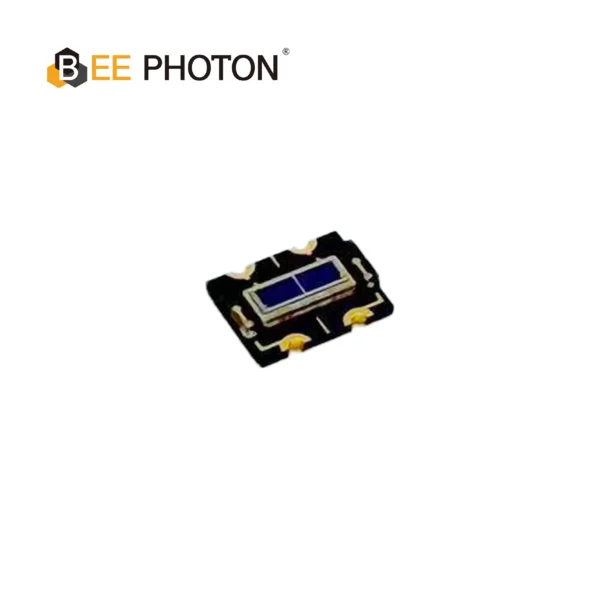
Si-PIN-Photodioden-Array PDCA02-601
Die Bee Photon PDCA-Serie ist ein präzisionsgefertigtes Doppel-PIN-Fotodiode entwickelt für die industrielle High-End-Sensorik. Im Gegensatz zu herkömmlichen Einzelelement-Detektoren verfügt dieses auf Silizium basierende Gerät über eine segmentierte Array-Struktur (PD A und PD B), was es zur perfekten Lösung für differentielle Messungen und optische Schalter mit Hintergrundausblendung. Mit einem breiten Spektralbereich von 350nm bis 1060nm gewährleistet es eine vielseitige Leistung im sichtbaren und nahen infraroten Wellenlängenbereich.
Wichtige Designparameter: Leistung, Ausrichtung und Lebensdauer
Die Wahl des richtigen blaue LED für Encoder bedeutet mehr, als nur irgendeine beliebige blaue Diode von der Stange zu wählen. Wenn Sie einen optisches Encoder-Lichtemitter-, entwerfen, müssen Sie drei kritische Faktoren sorgfältig abwägen: Ausgangsleistung, optische Ausrichtung und thermische Lebensdauer.
1. Optische Leistung und der optimale Bereich (Sweet Spot)
Obwohl eine höhere Leistung als einfacher Weg erscheint, um mehr Signal zu erhalten, ist das Übersteuern Ihres Emitters ein Rezept für eine Katastrophe. Es erzeugt überschüssige Wärme und verkürzt die Lebensdauer der Diode drastisch.
Für die meisten fortschrittlichen Dreh- und Linearencoder ist ein 465-nm-Diode 4 mW Ausgang gilt als der industrielle Sweet Spot. Eine optische Ausgangsleistung von 4 mW bietet mehr als genug Photonendichte, um moderne CMOS-Phased-Array-Sensoren zu sättigen, ohne übermäßigen Strom zu ziehen oder thermische Hotspots zu erzeugen.
2. Strahlkollimation und Divergenz
Eine LED emittiert Licht von Natur aus in einem breiten, kuppelförmigen Muster. Wenn Sie dieses nicht kollimierte Licht auf Ihre Codescheibe treffen lassen, erhalten Sie massive räumliche Verzerrungen.
Um dies zu verhindern, integrieren Hochleistungs- optisches Encoder-Lichtemitter- Baugruppen eine Mikrokollimationslinse. Diese Linse formt den Ausgang in einen nahezu parallelen Strahl mit einem Divergenzwinkel von weniger als 1,5 bis 2 Grad. Je gebündelter und paralleler der Strahl ist, desto geringer ist die Ausrichtungsempfindlichkeit Ihres Systems, was die Montage in der Fertigung erheblich erleichtert.
3. Thermisches Management und Lebensdauer
Seien wir ehrlich: Von industriellen Encodern wird erwartet, dass sie über ein Jahrzehnt oder länger rund um die Uhr ausfallfrei laufen. LEDs bauen mit der Zeit ab, und ihre Lichtleistung sinkt (ein Prozess, der als Alterung bezeichnet wird). Diese Alterung wird durch Temperatur stark beschleunigt.
Bei der Implementierung eines blaue LED für Encoder, müssen Sie sicherstellen, dass die Treiberschaltung für niedrige Ströme (oft etwa 10 mA bis 20 mA) optimiert ist und das PCB-Layout über eine ausreichende Wärmeableitung verfügt. Der Betrieb einer hochwertigen industrielle Blaulichtquelle bei einem konservativen Strom gewährleistet eine Lebensdauer von über 100.000 Stunden, was herkömmlichen IR-Emittern entspricht oder diese sogar übertrifft.
Vergleich von Lichtquellen: 465 nm Blau gegenüber 405 nm Violett
Einige Entwickler fragen: “Wenn kürzere Wellenlängen besser sind, warum gehen wir dann nicht ganz auf eine violette oder UV-Lichtquelle mit 405 nm herunter?”
Das ist eine berechtigte Frage. Mathematisch gesehen würde 405 nm die Beugung noch stärker reduzieren als 465 nm. In der realen Welt der Industrietechnik bringt 405 nm jedoch eine Reihe unangenehmer Probleme mit sich, die es für langfristige Encoder-Designs höchst unpraktisch machen.
Hier erfahren Sie, warum 465 nm der absolute Standard für eine hochzuverlässige blaue LED für Encoder:
- Empfindlichkeit des Photodetektors: Standardmäßige siliziumbasierte Phototransistoren und Photodioden-Arrays verfügen über eine spektrale Empfindlichkeit, die stark abfällt, wenn man sich in den Violett- und UV-Bereich begibt. Bei 465 nm behalten Siliziumdetektoren immer noch eine beachtliche Quanteneffizienz bei, was es ermöglicht, den Emitter mit geringerer Leistung zu betreiben. Bei 405 nm müssen Sie deutlich mehr Strom in die LED einspeisen, um den gleichen Signalpegel vom Detektor zu erhalten.
- Optische Degradation: Violettes und UV-Licht sind hochenergetisch. Mit der Zeit führt die ständige Bestrahlung mit 405-nm-Licht zur Alterung und Vergilbung der Kunststoff-Kollimationslinsen, Klebstoffe sowie der in Ihrem Encoder verwendeten transmissiven Glas- oder Kunststoff-Codescheiben. Dies führt zu einer dauerhaften Signalverschlechterung. Die Wellenlänge von 465 nm ist schonend genug, um diese optische Alterung zu vermeiden.
- Komponentenkosten und Verfügbarkeit: Die Wellenlänge von 465 nm wird von führenden Herstellern optoelektronischer Komponenten weitgehend unterstützt, was eine stabile und kosteneffiziente Lieferkette für kritische optisches Encoder-Lichtemitter- Komponenten gewährleistet.
Erfolgreicher Übergang von IR- zu blauen LEDs
Wenn Sie derzeit eine Infrarot-Lichtquelle verwenden und prüfen, ob Sie auf eine blaue LED für Encoder, umsteigen sollten, finden Sie hier eine Schritt-für-Schritt-Checkliste, um Ihr Entwicklungsteam auf dem richtigen Weg zu halten:
- Bewerten Sie Ihren Photodetektor: Prüfen Sie die spektrale Empfindlichkeitskurve Ihres Empfänger-ICs oder Photodioden-Arrays. Stellen Sie sicher, dass eine ausreichende Reaktion im Bereich von 460 nm bis 470 nm vorliegt. Die meisten modernen Phased-Array-Sensoren sind hierfür vollständig optimiert, ältere Detektoren benötigen jedoch möglicherweise ein Upgrade.
- Überprüfung des Gitterdesigns: Wenn Sie Ihr altes Gitter mit weitem Teilungsabstand beibehalten, wird ein blaue LED für Encoder wird Ihnen dennoch eine leichte Steigerung des Signalkontrasts bieten und die Ausrichtungsempfindlichkeit verringern. Um die Vorteile jedoch voll auszuschöpfen, sollten Sie in Betracht ziehen, den Gitterabstand zu verkleinern, um die physikalische Auflösung zu maximieren.
- Überprüfen Sie die Optik: Setzen Sie nicht einfach eine blanke blaue LED in ein Gehäuse ein, das für einen IR-Emitter mit Linse konzipiert ist. Stellen Sie sicher, dass Ihr optisches Encoder-Lichtemitter- eine Kollimationslinse verwendet, die für sichtbare blaue Wellenlängen optimiert ist, um chromatische Aberration zu vermeiden.
- Arbeiten Sie mit einem spezialisierten Lieferanten zusammen: Das Entwerfen kundenspezifischer optischer Baugruppen ist schwierig. Die Zusammenarbeit mit einem erfahrenen Spezialisten für Optoelektronik wie BeePhoton kann Ihnen Monate des Ausprobierens ersparen. Diese können vollständig integrierte, vorjustierte und getestete Blaulicht-Quellmodule liefern, die auf Ihre spezifischen mechanischen Anforderungen zugeschnitten sind.
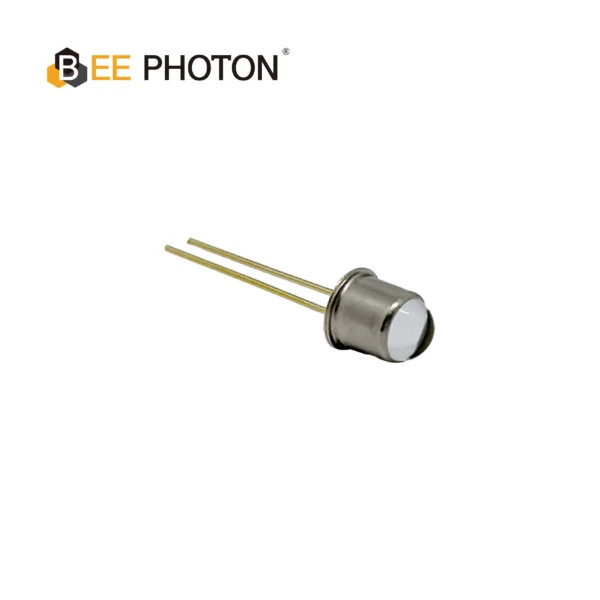
Rote LED E628-10-201L4
Leistungsstarke rote 625nm-LED für optische Präzisionsanwendungen
Die E628-10-201L4 von Bee Photon ist ein Premium 625nm Rote LED entwickelt, um hohe Leuchtkraft und außergewöhnliche Zuverlässigkeit für anspruchsvolle industrielle Anwendungen zu bieten. Entwickelt mit einem engen Abstrahlwinkel von 4 Grad, ist diese roter Hochleistungs-LED-Strahler bietet eine fokussierte Lichtleistung und ist damit die perfekte Lösung für optische Präzisionsmess- und Signalisierungsaufgaben, bei denen es auf Genauigkeit ankommt.
Häufig gestellte Fragen (FAQ)
Kann ich eine blaue LED in mein bestehendes Design für einen optischen IR-Encoder integrieren?
Im Allgemeinen können Sie keinen direkten Austausch vornehmen, ohne zwei Dinge zu prüfen: die spektrale Empfindlichkeit Ihres Sensors und Ihre Linsenoptik. Während die meisten modernen Silizium-Fotodetektoren problemlos ein blaue LED für Encoder, erkennen können, könnten ältere Detektoren so gefiltert worden sein, dass sie nur auf Infrarot reagieren. Zudem fokussieren Standard-Kollimatorlinsen, die für IR ausgelegt sind, blaues Licht aufgrund chromatischer Aberration möglicherweise nicht korrekt, weshalb eine leichte Linsenanpassung oder ein Upgrade auf ein dediziertes optisches Encoder-Lichtemitter- Modul dringend empfohlen wird.
Warum wurde 465 nm anstelle von 405 nm oder 525 nm (Grün) gewählt?
Die Wellenlänge von 465 nm ist der ideale physikalische Kompromiss. Eine Reduzierung auf 405 nm (Violett/Nah-UV) verringert die Beugung etwas stärker, beschleunigt jedoch die optische Degradation von Linsen und Codescheiben und leidet zudem unter einer geringen Empfindlichkeit der Siliziumdetektoren. Andererseits hat grünes Licht mit 525 nm eine längere Wellenlänge, die nicht die gleichen Vorteile zur Beugungsverringerung bietet wie 465 nm. blaue LED für Encoder.
Wie hoch ist die typische Lebensdauer einer 465-nm-Diodenlichtquelle mit 4 mW?
Beim Betrieb mit konservativen, branchenüblichen Strömen (üblicherweise zwischen 10 mA und 20 mA) erreicht eine hochwertige 465-nm-Diode 4 mW Lichtquelle mühelos eine Betriebsdauer von mehr als 100.000 Stunden. Dies entspricht mehr als 11 Jahren kontinuierlichem industriellen Betrieb rund um die Uhr. Ein korrektes thermisches Design der Leiterplatte ist entscheidend, um vorzeitige Alterung zu verhindern.
Hilft blaues Licht bei reflexiven Encodern oder ist es nur für transmissive Encoder geeignet?
A blaue LED für Encoder ist sowohl für transmissive als auch für reflektive Technologien äußerst vorteilhaft. Bei reflektiven Encodern muss das Licht von einem reflektierenden Muster auf einer Stahl- oder Glasscheibe reflektiert werden. Kürzere Wellenlängen reduzieren das optische Übersprechen und die Streuung während dieser Reflexion, was zu einem wesentlich klareren Signalkontrast und einem stabileren Ausgangssignal führt, selbst wenn der Abstand zwischen Sensor und Scheibe geringfügig variiert.
Heben Sie Ihre Motion-Control-Designs auf die nächste Stufe
Sind Sie bereit, Ihr Encoder-Design der nächsten Generation zu aktualisieren? Unser Ingenieurteam bei BeePhoton ist spezialisiert auf das Design und die Herstellung von Hochleistungs- industrielle Blaulichtquelle Optionen, Fotodioden-Arrays und kundenspezifischen optoelektronischen Gehäusen.
Ob Sie einen Standard- 465-nm-Diode 4 mW kollimierten Emitter oder eine vollständig kundenspezifische Mehrkanal-Optikbaugruppe benötigen, wir sind hier, um Ihnen bei der Lösung Ihrer schwierigsten Design-Herausforderungen zu helfen.
Kontaktieren Sie uns noch heute! Sie können unser gesamtes Sortiment an spezialisierten Emittern in unserem Industrielichtquellen- Katalog durchsuchen oder kontaktieren Sie bitte unser Engineering-Team direkt unter info@photo-detector.com technische Datenblätter anfordern, Muster anfragen oder ein individuelles Angebot für Ihr Projekt erhalten. Lassen Sie uns gemeinsam daran arbeiten, Ihr nächstes Design unglaublich präzise zu machen.