I’ve spent the last twelve years helping factories and automation companies pick the right light source for their photoelectric sensors. Some choices work beautifully, others become expensive headaches six months later. If you’re a procurement manager or engineer trying to nail down the Beste LED für optische Schalter Dieser Leitfaden wurde speziell für Ihr nächstes Projekt verfasst.
No fluff. Just the stuff that actually matters when you’re spending someone else’s money.
Warum die richtige LED für optische Schalter wichtiger ist, als Sie denken
A cheap LED might save you 30 cents per unit on paper, but if it drifts in wavelength or dies early under industrial heat, you’ll pay way more in field failures and warranty claims. I’ve seen this happen too many times.
The truth is, optical switch LEDs aren’t just “lights.” They’re the emitter half of a photoelectric sensor system. Whether you’re building conveyor sensors, door safety systems, or high-speed counting machines, your choice between infrared, red, or blue directly affects detection range, noise immunity, power consumption, and long-term reliability.
Infrarot- vs. sichtbare Licht-LEDs: Die wirklichen Kompromisse
Let’s cut through the marketing talk.
Infrarot-LEDs (850 nm–950 nm)
These are still the workhorses of the industry for good reason. They’re invisible to the human eye, which is usually what you want in industrial environments. They offer excellent penetration through dust, smoke, and certain plastics. Most importantly, they have the highest output power at the lowest cost.
From what I’ve seen in real production environments, 850nm tends to give better performance in dirty conditions than 940nm, though 940nm is better at avoiding ambient light interference from sunlight.
Sichtbare rote LEDs (620–660 nm)
Red is great when your operators need to see the light spot for alignment. That’s not marketing nonsense — I’ve been on factory floors where maintenance teams refused to use invisible IR because they literally couldn’t tell if the sensor was aligned. Red LEDs also tend to have tighter beam angles, which can be useful in precise positioning applications.
The downside? They’re more affected by ambient visible light and usually cost 15-40% more than comparable IR LEDs.
Blaue LEDs (450–470 nm)
Blau ist in den letzten Jahren in speziellen B2B-Anwendungen überraschend populär geworden. Warum? Einige Materialien (insbesondere weiße Kunststoffe und bestimmte Folien) reflektieren blaues Licht viel besser als rotes oder infrarotes Licht. Blau bietet zudem einen besseren Kontrast bei bestimmten Zielobjekten.
However, blue LEDs typically have lower output power and higher cost. They’re not usually my first recommendation unless your application specifically needs the shorter wavelength.
Here’s a quick comparison table I wish someone had given me years ago:
| Parameter | Infrarot (850 nm) | Rot (630 nm) | Blau (470 nm) |
|---|---|---|---|
| Typische Kosten (Volumen) | Niedrigste | +25% | +60–90% |
| Immunität gegen Umgebungslicht | Ausgezeichnet | Messe | Gut |
| Durchdringung (Staub/Rauch) | Best | Mäßig | Schlecht |
| Sichtbarkeit für den Bediener | Keine | Ausgezeichnet | Gut |
| Typischer Erfassungsbereich | Longest | Gut | Shorter |
| Stromverbrauch | Niedrigste | Mäßig | Highest |
| Am besten für | Industrielle Automatisierung, verschmutzte Umgebungen | Ausrichtungskritische Anwendungen | Hochkontrastmaterialien, Medizintechnik |
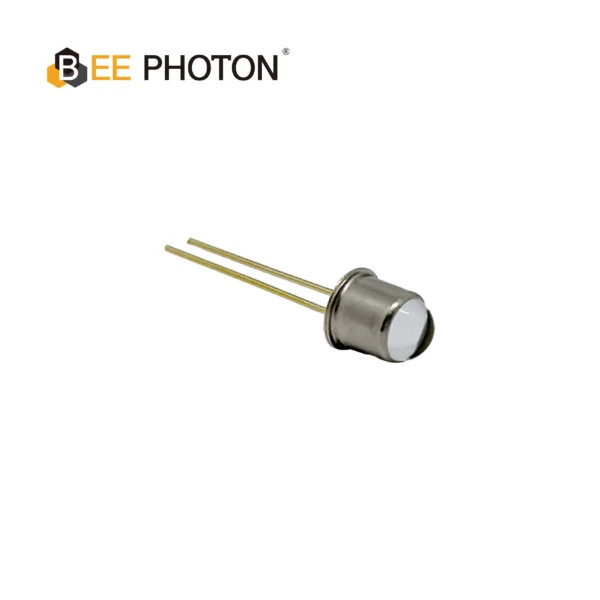
Rote LED E628-10-201L4
Leistungsstarke rote 625nm-LED für optische Präzisionsanwendungen
Die E628-10-201L4 von Bee Photon ist ein Premium 625nm Rote LED entwickelt, um hohe Leuchtkraft und außergewöhnliche Zuverlässigkeit für anspruchsvolle industrielle Anwendungen zu bieten. Entwickelt mit einem engen Abstrahlwinkel von 4 Grad, ist diese roter Hochleistungs-LED-Strahler bietet eine fokussierte Lichtleistung und ist damit die perfekte Lösung für optische Präzisionsmess- und Signalisierungsaufgaben, bei denen es auf Genauigkeit ankommt.
Wichtige technische Parameter, die Sie berücksichtigen müssen
Bei der Beschaffung Optische Schalter-LEDs für optoelektronische Sensoren sind dies die Spezifikationen, die bei Nichtbeachtung zum Verhängnis werden können:
Wellenlängentoleranz
Don’t accept ±50nm. For serious B2B applications, you want ±10nm or better. Tighter tolerance means more consistent performance across batches.
Durchlassspannung (Vf)
Dies wirkt sich direkt auf das Design Ihrer Treiberschaltung aus. Die meisten IR-LEDs arbeiten im Bereich von 1,2–1,6 V, während sichtbare LEDs normalerweise 1,8–3,0 V benötigen. Stellen Sie sicher, dass Ihre Ingenieure hierüber informiert sind.
Strahlstärke (mW/sr)
Dies ist wichtiger als die reine Ausgangsleistung. Eine gut fokussierte 10-mW/sr-LED wird eine schlecht kollimierte 50-mW-LED in den meisten Sensoranwendungen übertreffen.
Betrachtungswinkel
Narrower angles (15–30°) give you longer range but require more precise alignment. Wider angles (60–120°) are more forgiving but reduce maximum distance. I’ve found 30° to be the sweet spot for most general-purpose optical switches.
Aufgangs-/Fallzeit
If you’re doing high-speed counting above 5kHz, this becomes critical. Most cheap LEDs are fine up to a few kHz, but beyond that you need to be selective.
B2B-LED-Beschaffung: Was Einkaufsleiter wissen sollten
Nachdem ich mehreren Unternehmen bei der Reorganisation ihrer Lieferkette geholfen habe, sind hier die praktischen Lektionen, auf die es wirklich ankommt:
- Don’t buy the absolute cheapest option. There’s usually a reason it’s $0.008 cheaper.
- Fordern Sie ein ordnungsgemäßes Binning. Gute Lieferanten garantieren sowohl Wellenlängen- als auch Intensitäts-Bins. Dies ist besonders wichtig für LEDs im sichtbaren Bereich.
- Berücksichtigen Sie die langfristige Verfügbarkeit. Some popular LEDs get discontinued every year. I’ve had customers stuck with 18-month redesign cycles because their “cheap” supplier suddenly stopped making the exact part.
- Prüfen Sie auf Temperaturdrift. Ein guter Lichtschranken-Sender should maintain stable wavelength from -20°C to +70°C. Many don’t.
Ein Kunde, mit dem ich zusammengearbeitet habe (ein Automobilzulieferer), wechselte von einem No-Name-Anbieter zu einem renommierteren Lieferanten. Die Ausfallrate im Feld sank von 2,8% auf 0,3%. Die LED kostete 22% mehr, aber die Gesamtkosten (Total Cost of Ownership) sanken drastisch.
So wählen Sie die passende LED für Ihre spezifische Sensoranwendung aus
There’s no universal “best LED for optical sensors.” It depends on your environment.
Für staubige oder verrauchte Umgebungen: Verwenden Sie 850nm-IR mit einer Strahlstärke von mindestens 40 mW/sr. Kombinieren Sie dies mit einem Sensor, der über eine gute IR-Filterung verfügt.
Für präzise Positionierung mit Bediener-Feedback: Rotes Licht mit 630 nm und engem Abstrahlwinkel. Die Sichtbarkeit unterstützt Wartungsteams bei der Einrichtung und Fehlersuche.
Zur Erkennung von transparenten oder hochreflektierenden Materialien: Hier kann blaues Licht glänzen (Wortspiel beabsichtigt). Viele Lebensmittelverpackungsfolien und klare Kunststoffe weisen unter blauem Licht deutlich unterschiedliche Reflexionseigenschaften auf.
Für batteriebetriebene Geräte: Infrarot gewinnt hier erneut aufgrund des geringeren Stromverbrauchs.
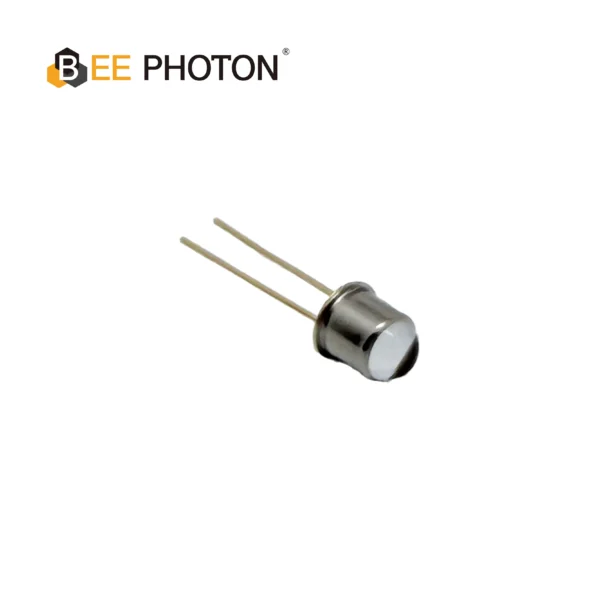
NIR-LED E850-180-201L4
Die E850-180-201L4 ist eine leistungsstarke 850nm NIR-LED für die industrielle Präzisionsmessung entwickelt. Hergestellt von Bienen-Photon, Dieser Infrarot-Strahler ist auf hohe Leuchtkraft und außergewöhnliche Stabilität ausgelegt und damit die ideale Lichtquelle für anspruchsvolle Automatisierungsumgebungen.
Anforderungen an Sender von Lichtschranken verstehen
Sender und Empfänger müssen als abgestimmtes Paar zusammenarbeiten. Das ist ein Punkt, den viele Unternehmen falsch machen.
Ihr Optische Schalter-LED should have its peak wavelength matched to your photodiode or phototransistor’s peak sensitivity. A mismatch of even 50nm can reduce your detection range by 30-40%.
Achten Sie auch auf die Modulationsfrequenz. Die meisten modernen Lichtschranken modulieren die LED mit 10–40 kHz, um Störungen durch Umgebungslicht zu vermeiden. Ihre LED muss diese Schaltgeschwindigkeit sauber verarbeiten können.
Aktuelle Markttrends bei LEDs für optische Schalter (2026)
From what I’m seeing across the industry:
- 850nm remains dominant but we’re seeing more demand for 940nm in outdoor applications
- There’s growing interest in high-power 660nm red for longer-range visible applications
- Die Miniaturisierung schreitet voran – 0603- und sogar 0402-Gehäuse werden für beengte Platzverhältnisse rentabel
- Immer mehr Kunden fragen nach LEDs mit integriertem ESD-Schutz und besserer Feuchtigkeitsbeständigkeit
Die endgültige Entscheidung treffen
Here’s my practical recommendation after years of real-world testing:
Start with 850nm infrared unless you have a specific reason not to. It’s cheaper, more reliable in industrial settings, and has the best performance-to-cost ratio.
Only move to red if operator alignment is genuinely important. Only consider blue if you’ve tested and confirmed it gives you better contrast on your specific target material.
Und was auch immer Sie tun: Arbeiten Sie mit Lieferanten zusammen, die Sensoranwendungen wirklich verstehen – nicht nur allgemeine Beleuchtungs-LEDs.
Unter BeePhoton, wir sind spezialisiert auf Lichtquellen, die speziell für optische Schalter und Lichtschranken entwickelt wurden. Sie können unser gesamtes Sortiment an Lichtquellenprodukten durchsuchen oder wenden Sie sich direkt an unser Team über unser Kontaktseite.
Benötigen Sie Hilfe bei der Auswahl des passenden Optische Schalter-LED für Ihre spezifische Anwendung? Kontaktieren Sie uns unter info@photo-detector.com. We’ve helped dozens of companies get this right the first time.
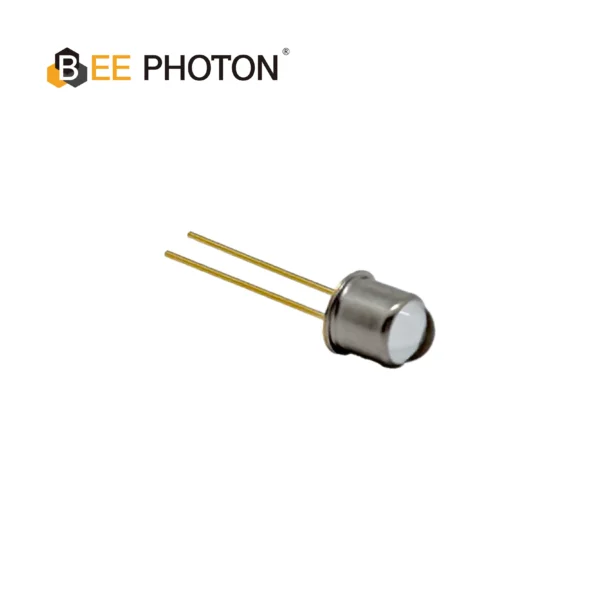
Blaue LED E465-4-201L4
Die E465-4-201L4 ist eine leistungsstarke 465nm Blaue LED wurde speziell für industrielle Präzisionsanwendungen entwickelt, die eine fokussierte Lichtleistung erfordern. Mit einer hohen Leuchtkraft und einem streng kontrollierten Wellenlängenbereich von 460-470nm bietet diese 465nm Blaue LED ist ein wichtiger Bestandteil von optischen Schaltern und Drehgebern.
FAQ
F: Ist Infrarot oder Rot besser für LED-Anwendungen in optischen Schaltern?
It depends on your priorities. Infrared usually offers better range, lower cost, and superior performance in dirty environments. Red is better when you need operators to see the light spot for alignment. Most industrial applications I’ve worked with end up choosing infrared.
F: Wie stark beeinflusst die Wellenlänge tatsächlich die Leistung von optoelektronischen Sensoren?
A lot. A mismatch between your LED peak wavelength and your detector’s sensitivity curve can easily cut your effective range by 30-50%. This is why we always recommend matching emitter and receiver specifications carefully.
F: Sollte ich die günstigste LED mit optischem Schalter kaufen, die ich finden kann?
Usually no. While you don’t need to buy the most expensive option either, the cheapest LEDs often have wide wavelength tolerance, poor temperature stability, and higher early failure rates. The difference in total cost of ownership is typically much higher than the initial price difference.