Si te dedicas a fabricar equipos de vigilancia medioambiental, ya sabes que detectar gases de efecto invernadero como el metano (CH4) y el CO₂ en concentraciones muy bajas es la diferencia entre un producto que funciona sobre el papel y otro que se implanta en el mundo real.
La mayoría de los equipos pierden meses luchando contra señales ruidosas, líneas de base a la deriva o fuentes IR que simplemente no pueden empujar suficiente potencia a través de un largo camino. Yo mismo he pasado por eso, cuando intentábamos detectar CH4 por debajo de ppm en establos y vertederos. Los LED baratos con los que empezamos no servían para nada.
Esa es exactamente la razón por la que acabamos desarrollando nuestra propia línea de emisores de infrarrojo medio en Bee Photon. Y, sinceramente, ahora están en bastantes sensores comerciales de CH4 que probablemente ya conozca.
Permítame explicarle lo que realmente importa a la hora de elegir un emisor de infrarrojos para la detección de gases de efecto invernadero.
Por qué los infrarrojos superan a todo lo demás en la detección de gases de efecto invernadero
Fotoacústicos, electroquímicos, catalíticos... todos tienen su lugar, pero nada se parece a los infrarrojos no dispersivos (NDIR) cuando se necesita estabilidad durante años, ausencia de falsos positivos por gases cruzados y detección de metano a nivel de ppb.
La EPA estadounidense afirma que el NDIR sigue siendo la norma de referencia para los sistemas de monitorización continua de emisiones (CEMS). Las directrices de seguimiento del RCCDE lo exigen básicamente para cualquier cosa seria.
¿El truco del núcleo? Fuertes bandas de absorción de CH4 a 3,31 µm y 7,7 µm, CO₂ a 4,26 µm y N₂O a 4,5 µm. Si tu fuente de luz es brillante y estable exactamente en esas longitudes de onda, estás listo.

Fuente de luz LED serie E660-10-001
Nuestro LED envasado en plástico en formato SMD garantiza una gran uniformidad para el montaje automatizado. Este LED moldeado en resina ofrece una alta fiabilidad para diversas aplicaciones industriales.
¿Qué hace que un emisor IR sea “bueno” para la vigilancia del medio ambiente? (Especificaciones reales, no palabrería de marketing)
Ésta es la breve lista que damos a todos los clientes cansados de los débiles emisores de 20 mW:
| Parámetro | Típico LED barato | Serie Bee Photon DIL | Por qué es importante para el sensor de CH4 |
|---|---|---|---|
| Longitud de onda pico | ±100 nm de deriva | ±20 nm bloqueado | Te mantiene en el pico de absorción |
| Potencia radiante (pulsada) | 10-30 mW | 80-150 mW a 100 Hz | Mayor longitud del trayecto → límite de detección más bajo |
| Hora de subida/bajada | 50-100 µs | <15 µs | Menos ruido en la detección lock-in |
| Temperatura de funcionamiento | -20 a +60 °C | -40 a +105 °C | Funciona en estaciones al aire libre durante todo el año |
| Vida útil (degradación 50%) | ~10.000 h | >100.000 h | No hay sustituciones de campo desde hace más de 10 años |
Estas cifras no son inventadas: proceden de nuestras propias pruebas de rodaje de 3.000 horas y de los comentarios de los clientes de las implantaciones 2023-2025.
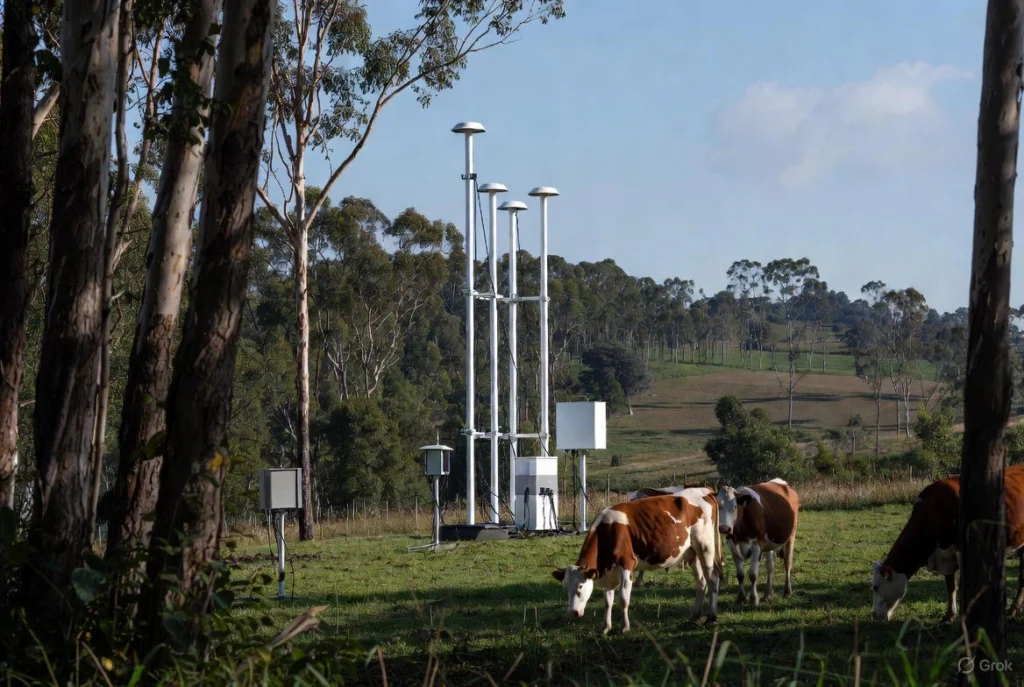
Ejemplo real: Sensor de CH4 por debajo de 100 ppb en el control de granjas lecheras
Uno de nuestros clientes europeos (una gran empresa, no puedo dar su nombre) necesitaba medir continuamente el metano entérico de las vacas. La presión normativa es enorme ahora.
Estaban atascados en un límite de detección de ~1 ppm con su antiguo LED de 3,3 µm. Cambiaron a nuestro Fuente de luz Paquete DIL funcionando a 120 mW pulsados, 200 mm de longitud de trayecto, detector de termopila. El límite de detección se redujo a 70 ppb con un promedio de 60 segundos. Ahora está instalado en 400 granjas y sigue funcionando a pleno rendimiento después de 26 meses.
Algo parecido ocurre con una red de vigilancia de vertederos en California: el mismo emisor, una célula blanca de 1 metro, alcanza 20 ppb de CH4 sin problemas.
Elección de la longitud de onda de pico adecuada para el gas de destino
Ficha rápida:
| Gases de efecto invernadero | Banda IR más potente | Emisor recomendado |
|---|---|---|
| Metano (CH4) | 3,31 µm o 7,7 µm | 3300 nm o 7700 nm DIL |
| CO₂ | 4,26 µm | 4260 nm filamento o LED |
| N₂O | 4,50 µm | 4500 nm |
| CO | 4,67 µm | 4670 nm |
Los tenemos todos. Sí, incluso los exóticos.
Cómo aprovechar hasta el último ppb de su sensor de CH4
Algunos trucos que hemos aprendido por las malas:
- Pulso a 5-10 Hz y amplificación lock-in: reduce el ruido entre 50 y 100 veces.
- Coloca un filtro paso banda estrecho (FWHM ≤ 100 nm) justo en la ventana del emisor: acaba con el ruido térmico de banda ancha.
- Conduce con corriente constante, no con tensión: la longitud de onda se mantiene estable como una roca.
- Añade un poco de TEC en el LED si vas a salir al exterior: un desplazamiento de 0,1 nm/°C acaba con tu calibración rápidamente.
Comparación: LED frente a QCL frente a emisores térmicos para la vigilancia medioambiental
| Tipo de fuente | Potencia | Eléctrica → Eficiencia óptica | De por vida | Coste por unidad | Lo mejor para |
|---|---|---|---|---|---|
| Térmico (filamento) | 200 mW | ~3% | 5.000 h | Bajo | Prototipos de laboratorio |
| LED de infrarrojos medios | 100 mW | 15-25% | 100.000 h | Medio | La mayoría de los despliegues sobre el terreno |
| QCL | Watts | 10-20% | 20.000 h | Muy alta | Investigación / drones / aviones |
Para el 99% de las estaciones fijas de vigilancia medioambiental, el LED de infrarrojos medios gana en coste total de propiedad.
¿Listo para construir un mejor monitor de gases de efecto invernadero?
Si está cansado de los límites de detección que parecen buenos en una hoja de datos pero se desmoronan sobre el terreno, hablemos.
Envíenos un mensaje a info@photo-detector.com o utilice el formulario de contacto aquí: https://photo-detector.com/contact-us/
Le enviaremos las últimas hojas de especificaciones, precios para 100-10.000 unidades e incluso muestras gratuitas si su proyecto es real.
Fuente de luz LED serie E850-30-101
El E850-30-101 es un emisor de infrarrojos de 850 nm de alta estabilidad diseñado en un robusto formato de LED de paquete doble en línea de 3 mm para facilitar el montaje en PCB y ofrecer una durabilidad superior. Con un ángulo de haz estrecho de 20° y una intensidad radiante de 30 mW, este LED de paquete doble en línea ofrece una salida precisa y de alto brillo, lo que lo convierte en la fuente de luz ideal para interruptores ópticos, detección industrial y aplicaciones de automatización exigentes.
FAQ - Emisores IR para la detección de gases de efecto invernadero
P: ¿Pueden sus emisores de IR funcionar realmente de forma continua en condiciones invernales de -30 °C?
R: Sí. Ahora mismo tenemos unidades en el norte de Canadá controlando fugas en oleoductos. El paquete DIL con opción de calefactor integrado mantiene el chip a 30 °C incluso a -40 °C en el exterior.
P: ¿Ofrecen longitudes de onda de pico personalizadas?
R: Todo el tiempo. El mes pasado hicimos 3390 nm para un proyecto especial de isótopos de CH4. MOQ es sólo 200 piezas para epi personalizado.
P: ¿Con qué rapidez pueden enviar las muestras de evaluación?
R: 3300 nm y 4260 nm en stock en los almacenes de California y Shenzhen - normalmente se envían el mismo día si realiza el pedido antes del mediodía, hora del Pacífico.