Si estás aquí, lo más probable es que hayas estado trabajando con el BPW34S de Vishay durante un tiempo. Es ese pequeño y fiable fotodiodo PIN que ha existido siempre, apareciendo en todo, desde sensores de luz hasta contadores ópticos. Pero puede que tenga problemas de stock, o que los costes estén subiendo, o que simplemente quiera algo nuevo sin tener que replantearse todo el diseño. Ahí es donde entra en juego la búsqueda de un equivalente al BPW34S, y hoy lo ponemos frente a frente con nuestro propio BPW34S. PDCP08-501 fotodiodo PIN de silicio de Bee Photon.
He pasado años jugando con estos componentes en todo tipo de configuraciones, desde simples detectores de luz hasta proyectos más complicados de interruptores ópticos. He visto a un montón de gente intercambiar piezas y, o bien dar en el clavo, o encontrarse con problemas porque las especificaciones no coincidían del todo. Así que vamos a romper esto correctamente, sin pelusa, sólo las cosas que realmente importa cuando usted está tratando de encontrar un reemplazo BPW34S fiable.
De todos modos, ¿por qué la gente busca equivalentes BPW34S?
El Vishay BPW34S (y su primo cercano el BPW34) ha sido un caballo de batalla desde, bueno, mucho tiempo. Es popular porque es barato, sensible a la luz visible e infrarroja cercana y bastante rápido. Pero nada dura para siempre en el mundo de la cadena de suministro. A veces los lotes se descatalogan, los precios suben o se necesita algo más potente en determinadas áreas.
Así es el juego de las referencias cruzadas de fotodiodos: encontrar algo que encaje en el zócalo, maneje el voltaje y responda a la luz de forma similar sin reescribir el circuito. Nuestro PDCP08-501 surgió porque los clientes nos seguían preguntando por alternativas que pudieran sustituir a piezas populares como el BPW34S, especialmente en conmutación óptica o detección general, donde la fiabilidad cuenta más que la ultravelocidad.
Especificaciones lado a lado: Tabla comparativa
Bien, vayamos al grano. Aquí está una tabla rápida tirando de los números clave directamente de las hojas de datos oficiales. Los datos de Vishay proceden de su documento BPW34/BPW34S (puede obtenerlo en aquí si quiere volver a comprobarlo), y el nuestro es de la página del producto PDCP08-501 de nuestro sitio.
| Parámetro | Vishay BPW34S | Fotón de abeja PDCP08-501 | Notas / Qué significa para usted |
|---|---|---|---|
| Tamaño del área activa | 7,5 mm² (aprox. 2,75 x 2,75 mm) | 8,41 mm² (2,9 x 2,9 mm) | Una mayor superficie en el nuestro significa potencialmente más colección de luz - útil en configuraciones de poca luz |
| Sensibilidad máxima Longitud de onda | 900 nm | 940 nm | Suficientemente cerca para la mayoría de los trabajos visibles/cerca del IR |
| Gama espectral | 430 - 1100 nm | 450 - 1100 nm | Ambas cubren bien desde el visible hasta el infrarrojo cercano |
| Capacidad de respuesta (en el pico) | ~0,62 A/W (calculado a partir de la corriente de cortocircuito) | 0,7 A/W | La nuestra es un poco más sensible |
| Respuesta a 520 nm | No especificado directamente, pero inferior en verde | 0,2 A/W | Comportamiento similar en luz visible |
| Corriente oscura (típica, polarización baja) | 2 nA (a VR=10V) | 1 nA (1000 pA a VR=10 mV) | El nuestro funciona más frío en la oscuridad - menos ruido |
| Tensión inversa máxima | 60 V | 20 V | Hay una gran diferencia: con los nuestros, sólo se utilizan voltajes más bajos. |
| Capacitancia de unión (a 0 V) | 70 pF | 70 pF | Un partido perfecto |
| Hora de subida/bajada | 100 ns | 120 µs | Vishay gana en velocidad; el nuestro es mejor para una detección más lenta y constante |
| Ángulo de media sensibilidad | ±65° | ±65° | Ángulo de visión idéntico |
| Temperatura de funcionamiento | -40 a +100 °C | -40 a +100 °C | La misma gama dura |
| Estilo del paquete | Plástico con plomo de vista superior (5,4 x 4,3 mm) | Resina epoxi de 2 polos | Huella similar, fácil intercambio en muchos tableros |
Como puede ver, son muy parecidos en muchos aspectos, pero no son gemelos idénticos. Si su proyecto exige a gritos una alta tensión inversa o una respuesta superrápida (como la detección de impulsos), el BPW34S original podría seguir siendo el rey. Pero para un montón de cosas cotidianas, como interruptores ópticos, barreras de luz o sensores ambientales, el PDCP08-501 se desliza sin problemas y a veces incluso funciona mejor.
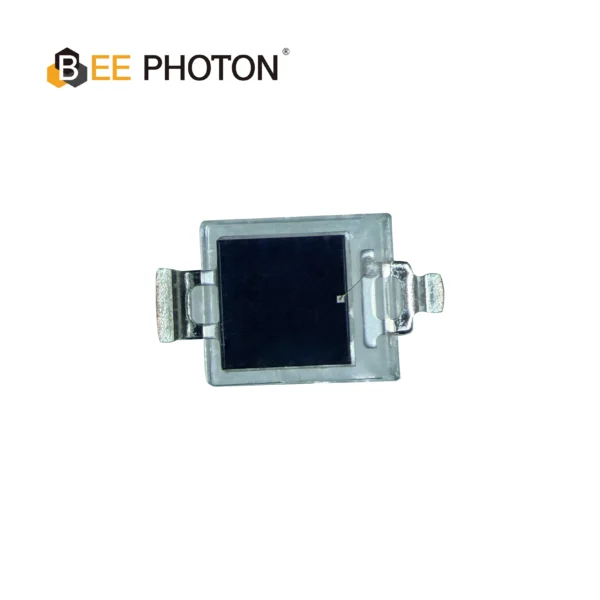
Fotodiodo Si PIN Serie PDCP08 PDCP08-501
Detección de alto rendimiento: El PDCP08-501 es un fotodiodo PIN de silicio de alta velocidad con ventana transparente.
Especificaciones: Con un área activa de 2,9×2,9 mm, este fotodiodo PIN ofrece una baja corriente oscura y una alta capacidad de respuesta, lo que lo convierte en un sensor ideal para interruptores ópticos generales y sistemas de detección de luz.
Profundizar en las principales diferencias
Sensibilidad y capacidad de respuesta
La respuesta es básicamente la cantidad de corriente que se obtiene por vatio de luz que incide. La pieza de Vishay alcanza alrededor de 0,62 A/W cerca de su pico, mientras que nuestro PDCP08-501 llega a 0,7 A/W. Ese aumento adicional significa que en las mismas condiciones de luz, verá una señal más fuerte. Hemos tenido clientes que lo han cambiado y han notado lecturas más limpias de inmediato, especialmente en condiciones de iluminación mixta.
Además, esa área activa ligeramente mayor ayuda a captar más fotones sin necesidad de una alineación perfecta. En un proyecto que recuerdo (no puedo dar nombres, pero era una configuración de contador industrial), el cambio a la nuestra les dio alrededor de 15% mejor intensidad de la señal sin tocar el circuito de amplificación.
Compromisos de velocidad
Aquí es donde las cosas se dividen. El BPW34S está diseñado para la velocidad: esos tiempos de subida/caída de 100 ns lo hacen ideal para cosas de alta frecuencia o pulsos rápidos. Nuestro PDCP08-501 es más relajado, con 120 µs, lo que es bastante rápido para detectar cambios de luz constantes, como en codificadores o sensores de proximidad, pero no si estás persiguiendo pulsos láser.
Si la velocidad es su cuello de botella, es posible que tenga que buscar en otra parte. Pero honestamente, la mayoría de la gente que utiliza BPW34S no está empujando esos límites - que lo están utilizando para la detección de encendido / apagado fiable.
Tensión y ruido
60V máx. en Vishay frente a nuestros 20V, eso es digno de mención. No aumente la polarización del PDCP08-501 o lo estropeará. Por otro lado, nuestra corriente oscura es normalmente más baja, lo que significa menos ruido de fuga cuando no hay luz alrededor. Esto es una ventaja para los aparatos que funcionan con batería o las aplicaciones de baja señal.
Embalaje y montaje
Ambos son through-hole, 2-pin deals con un tamaño total similar. El de Vishay es de plástico transparente, el nuestro tiene una ventana de resina epoxi. Se pueden sustituir sin problemas en la mayoría de placas de circuito impreso o prototipos, aunque siempre hay que comprobar primero la separación entre patillas.
Aplicaciones reales y algunas historias desde las trincheras
A lo largo de los años, en Bee Photon hemos visto cómo el PDCP08-501 sustituía al BPW34S en todo tipo de lugares. Un tipo estaba construyendo líneas de clasificación automatizadas: haces de luz que activan contadores. Las piezas originales eran cada vez más difíciles de conseguir, así que probó con las nuestras. Funcionó a las mil maravillas y, gracias a la sensibilidad adicional, se produjeron menos fallos falsos, incluso con lentes polvorientas.
Otro caso fue el de un aficionado que fabricaba monitores ambientales. Necesitaba algo barato pero fiable para registrar la luz diurna. El área más grande y la mayor capacidad de respuesta le proporcionaron un mejor rango dinámico, y acabó obteniendo curvas de datos más suaves.
También hemos suministrado lotes para kits educativos en los que los alumnos construyen optointerruptores básicos. A los niños (y a los profesores) les encantó que funcionara sin necesidad de ajustes complicados.
No se trata de lujosas historias de laboratorio, sino de proyectos normales en los que una BPW34S sólida equivalente ahorró tiempo y dolores de cabeza.
¿Es el PDCP08-501 el recambio BPW34S adecuado para usted?
Si buscas un fotodiodo de referencia cruzada que se acerque en sensibilidad, respuesta espectral y ángulo, sí, éste es un fuerte contendiente. Brilla (juego de palabras intencionado) cuando se desea una mayor corriente de salida, menor ruido o una alineación un poco más indulgente. Y como somos Bee Photon, mantenemos el stock constante e incluso podemos ajustar las cosas si necesita variantes personalizadas.
No es perfecto para todos y cada uno de los circuitos BPW34S que existen, especialmente los de alto voltaje o ultra alta velocidad. ¿Pero para la mayoría? Merece la pena probarlo.
Nos hemos forjado una reputación gracias a fotodetectores sólidos y sencillos que los ingenieros utilizan a diario. Más información en fotodiodo PIN de silicio página o consulte el programa completo en fotodetector.com.

Fuente de luz LED serie E660-10-001
Nuestro LED envasado en plástico en formato SMD garantiza una gran uniformidad para el montaje automatizado. Este LED moldeado en resina ofrece una alta fiabilidad para diversas aplicaciones industriales.
Preguntas frecuentes
¿Es el Bee Photon PDCP08-501 un equivalente directo del BPW34S?
Principalmente sí para el pinout y la función básica, pero compruebe el voltaje inverso (20V max vs 60V) y el tiempo de respuesta. Funciona muy bien en muchas configuraciones, pero prueba en tu circuito para estar seguro.
¿Cuál tiene mejor sensibilidad, BPW34S o PDCP08-501?
Nuestra PDCP08-501 la supera con 0,7 A/W de pico frente a unos 0,62 A/W, además de un área activa ligeramente mayor para captar más luz.
¿Puedo utilizar el PDCP08-501 en aplicaciones de alta velocidad como el BPW34S?
En realidad, no. El tiempo de subida es más lento (120 µs frente a 100 ns). Es mejor para la detección en estado estacionario, como los interruptores ópticos, que para pulsos rápidos.
¿Dónde puedo obtener muestras o presupuestos del PDCP08-501?
Visite nuestro página de contacto o envíenos un correo electrónico a info@photo-detector.com. Estaremos encantados de enviarle muestras o de hablar con usted sobre sus necesidades.
¿Ofrece Bee Photon otros fotodiodos si éste no es una combinación perfecta?
Sí, montones: desde versiones filtradas hasta otras de mayor velocidad. Póngase en contacto con nosotros y encontraremos la solución adecuada.
¿Está listo para probar el PDCP08-501 como su próximo sustituto del BPW34S? Póngase en contacto con nosotros hoy mismo para solicitar un presupuesto o más información. Nos encantaría ayudarle a poner en marcha su proyecto. Póngase en contacto con nosotros info@photo-detector.com o visítenos en https://photo-detector.com/.