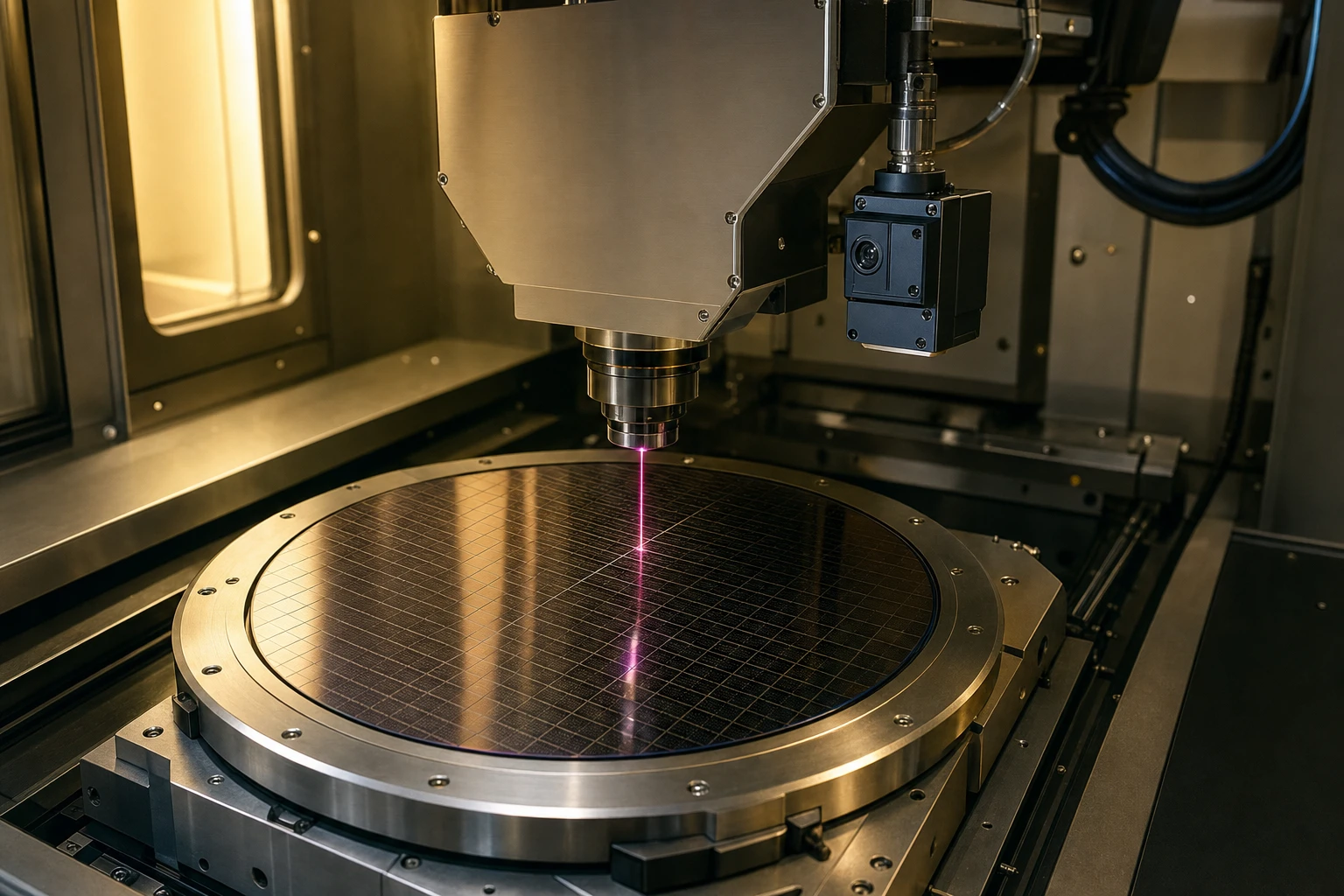
Has construido este precioso sensor de proximidad en tu mesa de trabajo. El emisor pulsa a la perfección, el receptor capta ondas cuadradas nítidas y el amplificador de transimpedancia funciona a la perfección. Funciona a la perfección en el oscuro laboratorio.
Cuando sacas el prototipo al mundo real, todo el sistema se viene abajo. El alcance cae de diez metros a diez centímetros. El microcontrolador empieza a escupir falsos disparos. Conectas un osciloscopio y tus bonitos pulsos cuadrados desaparecen, sustituidos por una señal plana pegada al carril de tensión.
¿Te suena? Bienvenido a la pesadilla del ruido óptico.
Cuando se trata de comunicación o detección por infrarrojos fuera de un cuarto oscuro controlado, el sol es el mayor enemigo. Si no diseñas tu hardware para manejar la potencia bruta del espectro solar, vas a fracasar. Y voy a decirlo ahora mismo porque alguien tiene que hacerlo: los sensores ópticos estándar de epoxi transparente son directamente basura para la mayoría de las aplicaciones en exteriores del mundo real. No se puede arreglar un problema óptico de hardware con un firmware inteligente. Lo que realmente necesitas es un fotodiodo que bloquee la luz diurna.
Hablemos de por qué los sensores transparentes fallan tan estrepitosamente, de la física de la inmunidad a la luz ambiental y de cómo cambiar al diodo receptor de infrarrojos adecuado puede salvar la línea de tiempo de tu proyecto.
La física de por qué el Sol lo estropea todo
Así que, si quieres entender por qué tu sensor está actuando mal, tenemos que mirar lo que el sol nos está lanzando.
Según los datos atmosféricos, aproximadamente 43% de la energía radiante que llega a la Tierra procedente del sol es luz visible. Es decir, todo lo que se encuentra entre 400 nm y 700 nm de longitud de onda. Alrededor de 51% es radiación infrarroja (700 nm y más), y el resto es UV.
Un trozo estándar de silicio bruto (el chip que contiene el sensor) tiene una respuesta espectral enorme. Naturalmente, alcanza su máximo en torno a los 900 nm, lo que es ideal para aplicaciones de infrarrojos, pero su curva de sensibilidad se extiende por debajo de los 400 nm. Es muy reactivo a la luz azul, verde y roja.
Cuando utilizas un sensor con un envoltorio de plástico transparente, dejas que 100% de esa energía de luz visible de 43% impacte directamente en tu troquel de silicio. El silicio no sabe que sólo te interesa el minúsculo pulso de 850 nm de tu mando a distancia. Simplemente absorbe cada fotón y lo convierte en corriente.
Esto crea una enorme corriente continua de fondo. Y ahí es donde el circuito comienza a romperse.
El lío de la saturación del hardware
Esto es lo que ocurre en tu PCB. Normalmente tomas tu diodo receptor de IR y lo alimentas a un amplificador de transimpedancia (TIA) para convertir la microscópica fotocorriente en un voltaje utilizable. La fórmula es básica: V_out = I_ph * R_f.
En una habitación oscura, tu señal pulsada genera quizás 10 microamperios. Si tu resistencia de realimentación es de 100 k ohmios, obtienes un bonito pulso de 1 voltio. ¿Pero al aire libre? El sol vierte tantos fotones visibles en el sensor transparente que genera 1 miliamperio completo de fotocorriente continua.
1mA a través de una resistencia de 100k quiere crear 100 voltios. Pero tu op-amp funciona con una alimentación de 3,3V. ¿Qué ocurre entonces? La salida choca contra el carril de 3,3 V y se aplana. El amplificador está completamente saturado. Tu pequeño pulso IR de 10uA sigue ahí, cabalgando sobre la luz solar, pero el amplificador óptico ya no puede procesarlo. Es recortado a la muerte. Estás oficialmente ciego.
Si hubieras utilizado un fotodiodo de bloqueo de luz diurna, el filtro óptico negro habría absorbido todos esos fotones visibles antes de que tocaran el silicio, manteniendo la fotocorriente baja y manteniendo tu amplificador en su región de funcionamiento lineal.

Fotodiodo Si PIN Serie PDCP08 PDCP08-511
En PDCP08-511 es un sistema de alto rendimiento Fotodiodo PIN de epoxi negro diseñado para aplicaciones de infrarrojos de precisión. Envuelto en una resina epoxi negra especial, este sensor actúa eficazmente como un filtro de luz diurna, bloqueando las interferencias de la luz visible y maximizando la sensibilidad a 940 nm. Con una gran área activa de 2,9×2,9 mm y una baja corriente oscura, garantiza una detección fiable de señales para interruptores ópticos y sistemas de control remoto, incluso en entornos con luz ambiental ruidosa.
No se puede arreglar el ruido de disparo con software
Veo a ingenieros junior luchar contra esto todo el tiempo. Creen que pueden ser más listos que la física. Dicen: “Añadiré un condensador de acoplamiento de CA para bloquear la corriente continua de la luz solar”. O intentan escribir intensos algoritmos DSP para separar la señal del ruido.
Es una completa pérdida de tiempo.
Sí, un filtro RC de paso alto (donde fc = 1 / (2 * pi * R * C)) bloqueará el desplazamiento de CC para que no llegue a la siguiente etapa del amplificador. Evita la saturación. Pero no hace absolutamente nada sobre el ruido de disparo.
La física dicta que la corriente continua que fluye a través de un diodo genera ruido estadístico cuántico, conocido como ruido de disparo. Es inevitable. La fórmula de texto plano para esto es brutalmente simple:
i_ruido = sqrt(2 * q * I_dc * B)
Dónde:
- q = 1,602e-19 (la carga de un electrón)
- I_dc = la corriente continua de fondo total procedente del sol
- B = el ancho de banda de tu sistema
Cuando tu I_dc se multiplica por 10.000 porque has sacado el sensor al exterior, tu ruido de fondo se multiplica por 100. Y el ruido de disparo es ruido blanco: existe en todas las frecuencias. Y el ruido de disparo es ruido blanco, existe en todas las frecuencias. Existe a 10 Hz y existe a su frecuencia de modulación de 38 kHz. Su filtro de software no puede eliminarlo porque el ruido ocupa exactamente la misma banda de frecuencia que su señal. Su relación señal/ruido (SNR) se destruye.
La única forma de obtener una señal limpia es impedir que la luz solar genere esa corriente continua. Necesitas una barrera óptica. Necesitas un fotodiodo que bloquee la luz del día.
Caso práctico: La pesadilla de la puerta corredera
Permítanme que les cuente un lío que tuvimos hace unos años. Estábamos asesorando a una empresa que fabrica puertas correderas automatizadas de alta resistencia para instalaciones industriales. Utilizaban un sensor de seguridad para evitar que la puerta aplastara a los vehículos. Algo bastante normal.
Diseñaron la placa con un diodo receptor de IR barato y claro. Dentro de la fábrica, definitivamente pensaron que era perfecto. Funcionaba perfectamente. Pero una vez que instalaron estas cosas en el campo, empezamos a recibir llamadas de enojo. Todos los días de noviembre, exactamente a las 5:30 de la tarde, un montón de puertas orientadas al oeste se congelaban y se abrían.
¿Por qué? Porque el sol poniente caía en un ángulo bajo, atravesando sus pequeños escudos solares mecánicos de plástico e incidiendo directamente en el sensor. La inmunidad a la luz ambiente de su sensor transparente era prácticamente nula. El TIA se saturó, el microcontrolador pensó que el haz se había roto permanentemente y la puerta se negó a cerrarse.
Les arrancamos los sensores transparentes y les pusimos un fotodiodo bloqueador de la luz diurna. No cambiamos el PCB. No tocamos ni una sola línea de su firmware. Sólo cambiamos el hardware. Debido a que el paquete de epoxi negro actúa como un filtro de paso largo (cortando todo por debajo de 700 nm), redujimos instantáneamente la fotocorriente de la luz solar de fondo en alrededor de 70%.
La TIA dejó de saturarse. La SNR se recuperó inmediatamente. Las compuertas volvieron a funcionar con normalidad y los ingenieros por fin pudieron volver a casa a tiempo.
La construcción física: Magia Epoxi Negra
¿Cómo funcionan estas cosas? ¿Cómo actúa un trozo de plástico como filtro óptico de alta gama?
Cuando un fabricante construye un chip de silicio estándar, lo pega a un marco de plomo y lo une con alambres microscópicos. Para un sensor barato, lo encapsulan en una resina epoxi transparente. Lo deja pasar todo.
Pero para un fotodiodo de bloqueo de la luz diurna, mezclan tintes o pigmentos orgánicos muy específicos en el epoxi antes de que se cure. Esto convierte todo el paquete físico en un filtro de paso largo. La física de estos tintes es impresionante. Absorben fotones de alta energía (como la luz azul y verde del espectro visible) y convierten esa energía en una pequeña cantidad de calor. Los fotones nunca alcanzan el silicio, por lo que nunca generan un par electrón-hueco.
Mientras tanto, los fotones del infrarrojo cercano, de menor energía, atraviesan las moléculas de colorante como si no existieran. La longitud de onda de corte suele oscilar entre 700 y 730 nm. Esto encaja perfectamente con los LED de 850 nm y 940 nm, que son los estándares de la industria para cualquier diodo receptor de infrarrojos serio. El propio paquete físico se convierte en su primera y más fuerte línea de defensa.
He aquí un rápido desglose de cómo se comparan en el mundo real:
| Característica | Fotodiodo de epoxi transparente | Fotodiodo de bloqueo de la luz diurna |
|---|---|---|
| Paso de luz visible | ~100% | ~0% |
| Fotocorriente CC en exteriores | Extremadamente alto (rango mA) | Bajo (rango uA) |
| Riesgo de saturación de AIT | Garantizado bajo el sol directo | Muy bajo |
| Nivel de ruido de disparo | Horrendo | Manejable |
| Mejor aplicación | Entornos interiores oscuros | Exteriores, industria pesada |
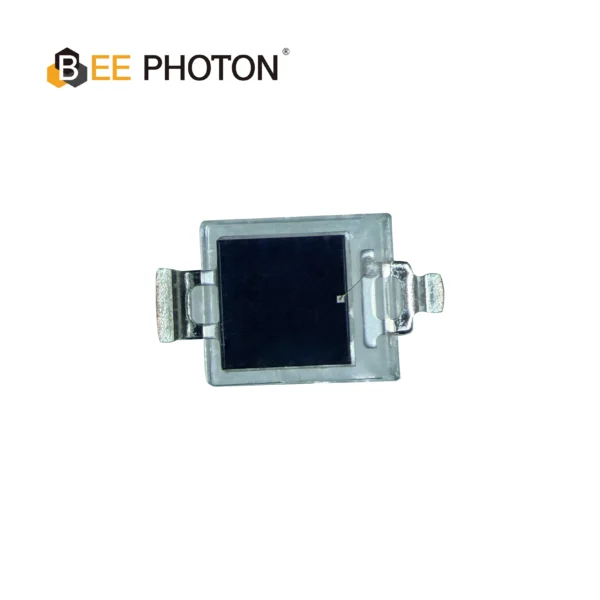
Fotodiodo Si PIN Serie PDCP08 PDCP08-501
Detección de alto rendimiento: El PDCP08-501 es un fotodiodo PIN de silicio de alta velocidad con ventana transparente.
Especificaciones: Con un área activa de 2,9×2,9 mm, este fotodiodo PIN ofrece una baja corriente oscura y una alta capacidad de respuesta, lo que lo convierte en un sensor ideal para interruptores ópticos generales y sistemas de detección de luz.
Ruido en interiores: Fluorescentes y LED PWM
Mucha gente cree que la inmunidad a la luz ambiental sólo tiene que ver con el sol. Pero no es así. La iluminación interior puede ser igual de destructiva para tu SNR.
Los tubos fluorescentes antiguos de los almacenes parpadean a 100 Hz o 120 Hz, según la red eléctrica local. Si utilizas un sensor claro, esa onda sinusoidal de 120 Hz se capta y amplifica de forma masiva.
La iluminación LED moderna es en realidad peor. Para atenuar los LED, los controladores de potencia baratos utilizan PWM (modulación por ancho de pulsos). Literalmente, encienden y apagan las luces a varios kilohercios. Si tu diodo receptor de infrarrojos capta una señal PWM de 5 kHz procedente de una luz cenital, tu microcontrolador podría pensar que está recibiendo un paquete de datos válido.
Dado que los LED blancos visibles emiten casi cero luz infrarroja, un fotodiodo de bloqueo de luz diurna los ignora por completo. El epoxi negro detiene por completo los fotones LED visibles, lo que significa que su amplificador ni siquiera ve el parpadeo PWM. Es el filtro anti-aliasing más barato y efectivo que puedes comprar.
Trucos de ingeniería mecánica para ayudar a su sensor
Ahora bien, aunque un fotodiodo de bloqueo de la luz diurna es un salvavidas, no es magia. Usted todavía tiene que ser inteligente acerca de su diseño mecánico.
Nunca debe montar el sensor completamente a ras en el exterior de la caja del producto. Es mejor empotrarlo. Colócalo en la parte posterior de un tubo pequeño y oscuro. En óptica, esto se llama deflector de luz.
Un deflector limita el campo de visión (FOV) del sensor. Si su transmisor IR está en línea recta, su receptor sólo necesita ver en línea recta. No necesita ver el resplandor de una pared blanca 45 grados a la izquierda. Al empotrar el fotodiodo de bloqueo de la luz diurna, se bloquea físicamente la luz fuera del eje para que nunca llegue a la lente. Cuando se combina un FOV mecánico estrecho con el filtro óptico de epoxi negro químico, la inmunidad a la luz ambiental se convierte en algo absolutamente a prueba de balas.
Además, asegúrate de que tu emisor coincide correctamente. Si intentas utilizar un LED rojo de 650 nm como emisor, el epoxi negro bloqueará tu propia señal. Debes utilizar un emisor de 850nm o 940nm para que el sensor pueda recibir realmente los impulsos.
Por qué debería interesarle BeePhoton
Encontrar las piezas adecuadas es la mitad de la batalla en el diseño de hardware. Cuando lucho contra el ruido óptico en un entorno difícil, suelo evitar los distribuidores genéricos por catálogo y busco en empresas especializadas en fotodetectores.
Aquí en BeePhoton, vemos exactamente estos modos de fallo todos los días. Sabemos lo que se necesita para que una señal sobreviva a la intemperie. Por eso fabricamos piezas diseñadas específicamente para ello.
Debe fijarse específicamente en el PDCP08-511. Se trata de un fotodiodo PIN de epoxi negro de alto rendimiento. La estructura “PIN” es realmente importante aquí. A diferencia de una unión PN estándar, un fotodiodo PIN tiene una capa intrínseca que reduce enormemente la capacitancia de la unión y aumenta la velocidad de respuesta.
Así, con una pieza como el PDCP08-511, se obtiene el ancho de banda de alta velocidad de una estructura PIN, mezclado con la extrema inmunidad a la luz ambiente de un filtro epoxi negro personalizado. Básicamente, se trata de una solución de hardware para los problemas de ruido exterior. Puede consultar la hoja de datos y nuestra gama completa de soluciones ópticas en BeePhoton.
Deja de intentar escribir código para arreglar tu hardware saturado. Utiliza el silicio adecuado para el trabajo.
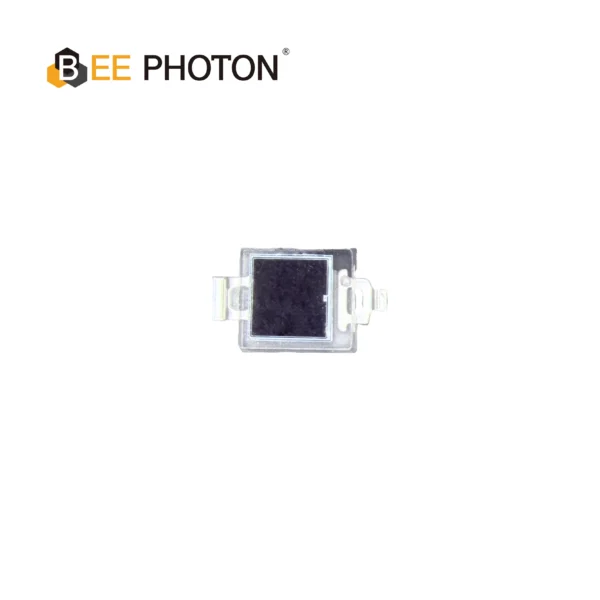
Fotodiodo Si PIN Serie PDCP08 PDCP08-502
El PDCP08-502 es un fotodiodo PIN de silicio de 2,9×2,8 mm de alta respuesta diseñado para aplicaciones fotoeléctricas de precisión. Con baja capacitancia de unión, baja corriente oscura y un amplio rango espectral (340-1100 nm), es el componente ideal para interruptores ópticos y módulos de detección compactos que requieren una salida de señal estable y rápida.
Preguntas frecuentes sobre la luz ambiental
1. ¿Un fotodiodo bloqueador de luz diurna bloquea toda la luz solar?
No, no bloquea todos del sol. Recuerde que aproximadamente 51% de la energía radiante del sol se encuentra en realidad en la banda infrarroja. Un fotodiodo de bloqueo de la luz diurna corta la luz visible (400-700 nm), lo que elimina una gran parte de las interferencias. La parte infrarroja de la luz solar sigue entrando, pero eliminar el espectro visible suele ser más que suficiente para evitar que el amplificador se sature y mantener el ruido de disparo a un nivel que el circuito pueda soportar.
2. ¿Puedo utilizar un diodo receptor de infrarrojos transparente si lo coloco detrás de un plástico oscuro en la caja de mi producto?
Técnicamente, sí. Si la carcasa de su producto está fabricada con un plástico negro transmisivo de IR, la propia carcasa actúa como un filtro mecánico de bloqueo de la luz diurna. Sin embargo, controlar la transmisividad óptica exacta de los plásticos moldeados por inyección producidos en serie es increíblemente difícil. Casi siempre es más barato y mucho más fiable comprar un fotodiodo de bloqueo de la luz diurna prefiltrado, ya que las longitudes de onda de corte óptico están estrictamente garantizadas por el fabricante del semiconductor.
3. ¿Cómo puedo saber si mi sistema es inmune a la luz ambiente?
La forma más rápida de comprobarlo es la prueba de tortura halógena. Coge una luz de trabajo halógena de gran potencia (no un LED, porque los LED carecen de energía IR) y apúntala directamente a tu sensor desde unos metros de distancia. Si el alcance del sensor disminuye repentinamente, la señal del osciloscopio se estabiliza o el sistema se bloquea, significa que la inmunidad a la luz ambiental está fallando.
4. Necesito una solución de filtro óptico a medida para un proyecto extraño, ¿quién puede ayudarme a resolverlo?
Si tiene dificultades para encontrar el componente exacto que se ajuste a sus limitaciones mecánicas específicas o a unos requisitos de longitud de onda inusuales, podemos ayudarle. BeePhoton se especializa en detectores ópticos personalizados y de alto rendimiento, incluidos diodos receptores de IR altamente especializados. En lugar de perder otro mes luchando contra falsos disparos en el laboratorio, consiga hardware que realmente funcione. Usted puede visite nuestra página de contacto o envíe un correo electrónico directamente a info@photo-detector.com para obtener un presupuesto y hablar con ingenieros que viven y respiran estas cosas.