
Si alguna vez has mirado una hoja de especificaciones preguntándote por qué algunos LEDs azules se listan con 3mW, 4mW o incluso 6mW de flujo radiante, no estás solo. Después de años ayudando a clientes industriales a elegir la fuente de luz adecuada para sus sensores y sistemas de detección, he llegado a una verdad: un emisor LED azul de 465nm con 4mW de flujo radiante es a menudo el punto ideal. No demasiado débil, no excesivo, y sorprendentemente eficiente.
Déjame explicarte exactamente por qué esta combinación específica funciona tan bien en aplicaciones B2B del mundo real.
Qué significa realmente el flujo radiante (y por qué la mayoría de la gente se equivoca)
El flujo radiante, medido en milivatios (mW), te indica cuánta potencia óptica real está emitiendo el LED. No es lo mismo que el flujo luminoso (que es lo que ven tus ojos). Para un LED azul de 465nm, nos importa la potencia radiante porque la mayoría de los sensores y detectores industriales responden a la energía de fotones crudos, no a lo “brillante” que parece para nosotros.
Un emisor LED azul típico de 465nm con 4mW de flujo radiante entrega suficientes fotones para generar señales fuertes en fotodetectores mientras mantiene baja la corriente de conducción y el calor. Eso es exactamente lo que la mayoría de los compradores en automatización, diagnóstico médico y detección por fluorescencia están buscando.
¿Por qué específicamente 465nm?
La longitud de onda de 465nm se encuentra justo en el punto ideal para muchos usos industriales y científicos. Es lo suficientemente profunda en el azul para excitar fluoróforos comunes y materiales fluorescentes, pero no tan corta que la dispersión atmosférica o la absorción de materiales se convierta en un problema.
Desde mi experiencia, cuando los clientes cambian de 450nm a Especificaciones ópticas de 465nm, a menudo ven mejores relaciones señal-ruido en sus sistemas. El ligero cambio reduce la excitación no deseada de materiales de fondo mientras mantiene una excelente eficiencia cuántica en detectores de silicio.
La magia de 4mW de flujo radiante
Aquí está la parte que la mayoría de las hojas de especificaciones no te dirá: 4mW es el punto ideal práctico para una gran variedad de aplicaciones.
He visto demasiados ingenieros comenzar con LEDs de 1–2mW solo para descubrir que su señal es demasiado débil una vez que agregan filtros, distancia o ruido ambiental. Luego saltan a 8–10mW y de repente están luchando contra problemas térmicos y mayor consumo de energía.
4mW de flujo radiante te ofrece:
- Señal lo suficientemente fuerte para la mayoría de los sensores industriales
- Corriente lo suficientemente baja para funcionar fresco y durar más
- Excelente eficiencia energética (más fotones por vatio)
Déjame mostrarte algunos números reales.
| Parámetro | LED típico de 2mW | LED azul de 4mW | LED azul de 8mW |
|---|---|---|---|
| Flujo radiante @ 20mA | 0–2.5mW | 8–4.2mW | 5–8.5mW |
| Voltaje directo | 3.1V | 3.2V | 3.3V |
| Consumo de energía | 62mW | 64mW | 99mW |
| Aumento de temperatura de unión | +12°C | +15°C | +28°C |
| Vida útil típica (L70) | >60,000 horas | >55,000 horas | ~38,000 horas |
Como puedes ver, saltar de 4mW a 8mW casi duplica tu consumo de energía y reduce significativamente la vida útil. Por eso generalmente recomiendo mantenerse en 4mW de flujo radiante a menos que tengas una razón muy específica para ir más alto.

LED azul E465-4-201L4
En E465-4-201L4 es un sistema de alto rendimiento LED azul de 465 nm diseñada específicamente para aplicaciones industriales de precisión que requieren una salida de luz focalizada. Proporciona una alta luminosidad con un rango de longitud de onda de 460-470 nm estrictamente controlado. LED azul de 465 nm es un componente esencial para los interruptores ópticos y los codificadores rotatorios.
Eficiencia de LED industrial: obtener más fotones por vatio
Una cosa que he aprendido después de probar cientos de LEDs azules es que la eficiencia radiante (mW por vatio eléctrico) alcanza su punto máximo alrededor del rango de 3,5–5 mW para la mayoría de los chips de 465 nm. Si los empujas más fuerte, la curva de eficiencia cae rápidamente debido al droop.
En BeePhoton, hemos optimizado nuestros emisores LED azules de 465 nm con flujo radiante de 4 mW para funcionar con la máxima eficiencia de enchufe (wall-plug). La mayoría de nuestros clientes obtienen una eficiencia de 18–22 % a 20 mA, lo cual es excelente para esta longitud de onda.
Esto es muy importante cuando diseñas sensores industriales alimentados por batería o sistemas que deben funcionar 24/7 con mínima refrigeración.
Aplicaciones en el mundo real donde destaca el de 4mW
Recientemente trabajé con un cliente en detección de partículas basada en fluorescencia. Estaban usando LEDs de 450nm a 6mW pero seguían quemando filtros y lidiando con ruido de fondo. Después de cambiar a nuestro LED de 465nm con flujo radiante de 4mW, redujeron la fluorescencia de fondo en un 40% y de hecho mejoraron su límite de detección. También redujeron su consumo de energía en un 35%.
Otro cliente en sistemas industriales de clasificación necesitaba una iluminación uniforme en una distancia de trabajo de 120mm. La versión de 4mW les dio una fuerza de señal perfecta sin necesidad de refrigeración activa en la placa, algo que les ahorró espacio y costo.
Elegir el emisor LED azul adecuado: qué es lo que realmente importa
Cuando estás adquiriendo un Emisor LED azul, no te limites a mirar el número de flujo radiante principal. Aquí está mi lista de verificación práctica:
- Flujo radiante medido a tu corriente de conducción prevista (no el máximo absoluto)
- Tolerancia de la longitud de onda dominante — normalmente mantenemos ±5nm para 465nm
- Ángulo de visión — más estrecho para mayor distancia, más amplio para iluminación uniforme
- Resistencia térmica — crítica si operas en entornos industriales calurosos
- Datos de estabilidad a largo plazo — solicita resultados de pruebas de 1000 horas
En Categoría de fuentes de luz de BeePhoton, publicamos todos estos detalles porque sabemos que los compradores B2B realmente los leen.
Comprendiendo las especificaciones ópticas que importan
Cuando hablo de Especificaciones ópticas de 465nm, generalmente estoy observando tres curvas:
- Distribución espectral de potencia (qué tan limpio es el pico)
- Intensidad radiante vs. ángulo
- Flujo radiante vs. corriente directa
Un buen LED de 4mW de flujo radiante debe mantener un pico limpio en 465nm con FWHM alrededor de 18–22nm. Cualquier cosa mucho más ancha y estás desperdiciando energía en longitudes de onda que tu sensor no considera importantes.

LED rojo E628-10-201L4
LED rojo de 625 nm de alto rendimiento para aplicaciones ópticas de precisión
En E628-10-201L4 de Bee Photon es una LED rojo de 625 nm diseñada para ofrecer una gran luminosidad y una fiabilidad excepcional en aplicaciones industriales exigentes. Diseñada con un ángulo de emisión estrecho de 4 grados, esta Emisor LED rojo de alta potencia proporciona una salida de luz focalizada, lo que la convierte en la solución perfecta para tareas de detección y señalización óptica de precisión en las que la exactitud es primordial.
Consumo de energía vs. fuerza de señal: la verdadera compensación
Aquí hay algo que muchos materiales de marketing no admiten: más potencia no siempre es mejor.
He probado sistemas donde aumentar de 4mW a 6mW solo mejoró la señal en un 12% pero aumentó el calor en un 60%. En compartimentos industriales ajustados, ese calor adicional puede causar deriva de longitud de onda y reducir el rendimiento del detector.
En 4mW de flujo radiante La versión usualmente te da entre 85–90% de la señal máxima posible mientras se mantiene en la zona de “fácil refrigeración”. Esa es la parte que desearía que más ingenieros entendieran antes de sobre-especificar sus LEDs.
Cómo integrar estos LEDs en tu diseño
Si estás diseñando un nuevo sensor, aquí tienes algunos consejos prácticos que he adquirido:
- Conduce a 15–20mA para mejor eficiencia
- Usa un buen controlador de corriente constante en lugar de solo una resistencia
- Mantén la ruta térmica limpia — incluso 4mW genera calor cuando está empacado densamente
- Considera agregar un filtro de paso de banda estrecho coincidente con 465nm si estás luchando contra la luz ambiental
Y si no estás seguro de qué configuración funciona mejor para tu aplicación, simplemente contáctanos. Hemos ayudado a docenas de empresas a ajustar esto.
¿Listo para obtener el LED azul adecuado para tu sistema?
Mira, después de probar innumerables LEDs azules en diferentes niveles de potencia, estoy convencido de que un bien fabricado emisor LED azul de 465nm con flujo radiante de 4mW es la opción práctica para la mayoría de las aplicaciones industriales y de detección.
Te ofrece una señal fuerte y confiable sin los problemas térmicos y la vida útil reducida que vienen con LEDs de mayor potencia.
Si actualmente estás evaluando fuentes de luz azul para tu próximo proyecto, me complace compartir nuestros últimos datos de prueba y ayudarte a elegir el emisor correcto.
¿Listo para hablar de especificaciones? Visite nuestro página de contacto o escríbanos a info@photo-detector.com. Respondemos a consultas técnicas rápidamente porque sabemos lo doloroso que puede ser demorar las decisiones de componentes.
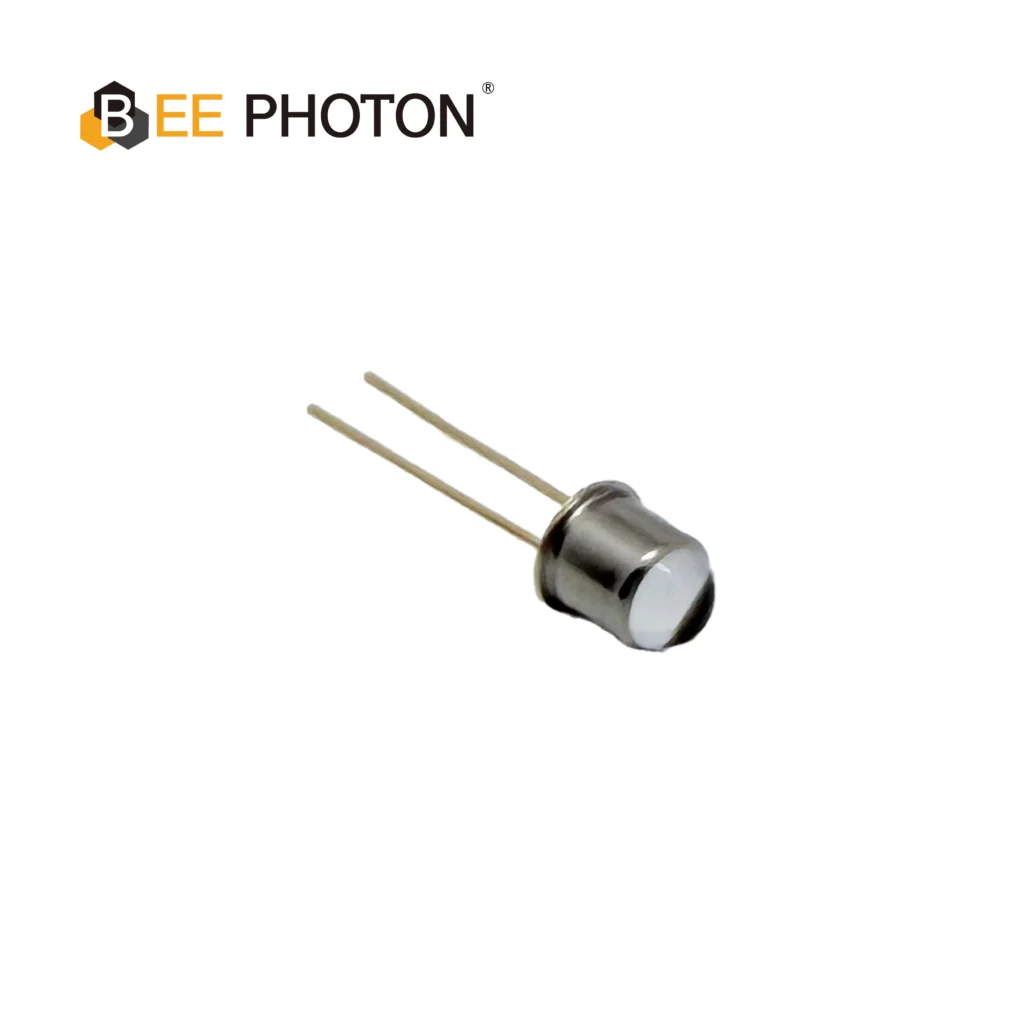
LED NIR E850-180-201L4
En E850-180-201L4 es un sistema de alto rendimiento LED NIR de 850 nm diseñados para la detección industrial de precisión. Fabricado por Fotón abeja, este emisor de infrarrojos está diseñado para ofrecer una gran luminosidad y una estabilidad excepcional, lo que lo convierte en la fuente de luz ideal para entornos de automatización exigentes.
PREGUNTAS FRECUENTES
¿Es suficiente una potencia radiante de 4 mW para la mayoría de los sensores industriales?
A: En la gran mayoría de los casos, sí. Hemos encontrado que 4mW a 465nm proporciona una excelente relación señal-ruido en sensores de fluorescencia, reflexión y transmisión, manteniendo la potencia y el calor bajo control.
P: ¿Cuál es la diferencia entre los LED azules de 450nm y 465nm para aplicaciones de sensores?
A: 465nm típicamente crea menos fluorescencia de fondo en muchos materiales y se adapta mejor a las curvas de respuesta de los detectores de silicio comunes. Muchos clientes ven un mejor contraste después de cambiar de 450nm a 465nm.
P: ¿Duradero son estos emisores de LED azules de 4mW típicamente?
R: Cuando se maneja correctamente a 20 mA o menos, nuestros clientes regularmente ven más de 50,000 horas de operación estable. La clave es un buen diseño térmico y no sobrecargar el LED.


