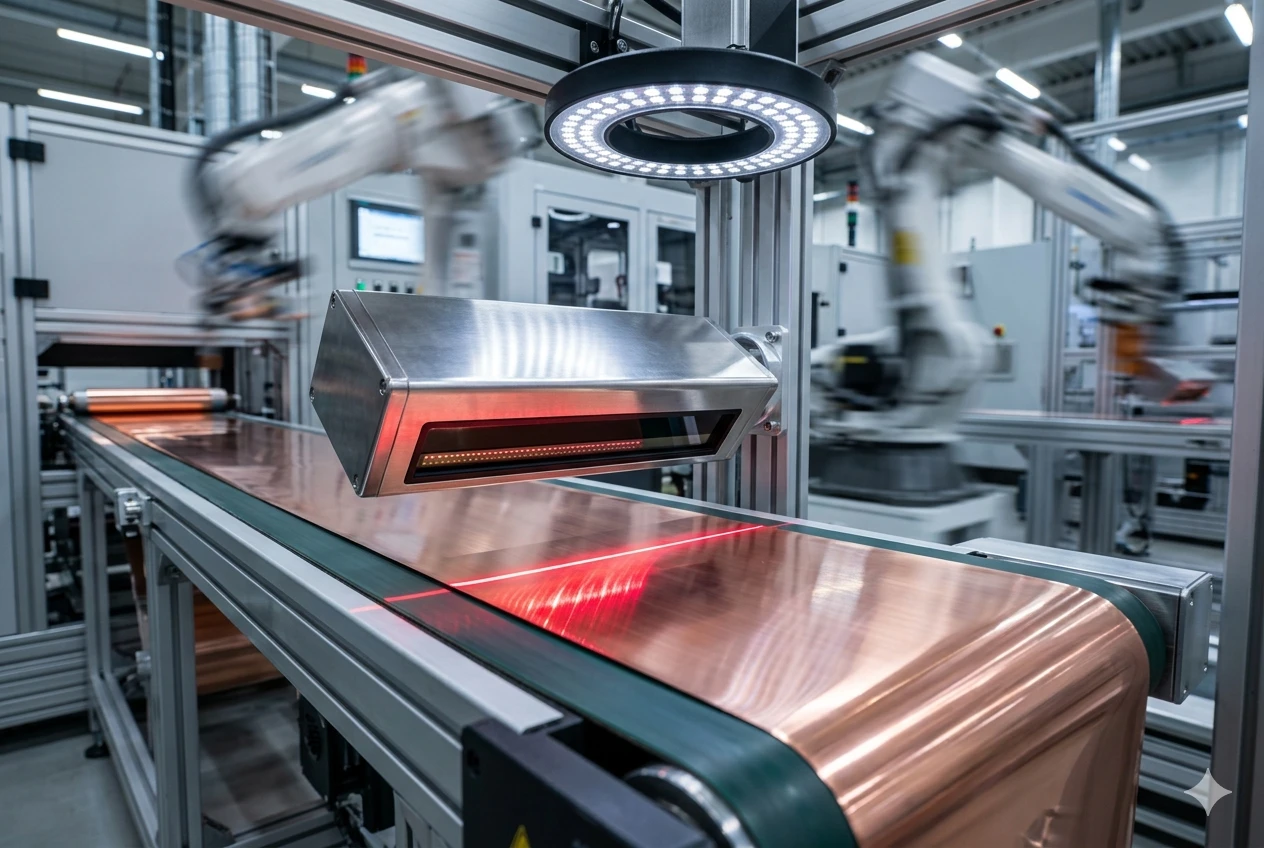
¿Alguna vez te has parado en la cola de una caja, mirando esa lucecita roja que cruza la etiqueta de un producto, y te has preguntado qué está pasando realmente? Es una de esas cosas que damos por sentadas: un pitido y ya está. Pero detrás de ese simple pitido hay una tecnología muy ingeniosa, sobre todo un fotodetector que es el protagonista. Hoy voy a explicarte, como si estuviéramos tomando un café, cómo funcionan los lectores de códigos de barras. Nos centraremos en el fotodetector, porque es el héroe anónimo que detecta las rayas blancas y negras al captar la luz rebotada.
Piénselo: cada vez que hace la compra o envía un paquete, los escáneres de códigos de barras se aseguran silenciosamente de que todo vaya sobre ruedas. No son sólo artilugios de las tiendas; son sensores industriales que aparecen en almacenes, fábricas e incluso hospitales. Y en el centro de todo está la detección de luz: ahí es donde brilla, literalmente, el fotodetector. Te explicaré los conceptos básicos, te daré algunos ejemplos reales de mi experiencia con este material y puede que incluso comparta un par de historias de personas que han utilizado una tecnología similar para solucionar sus dolores de cabeza.
¿Qué es exactamente un escáner de códigos de barras?
Empecemos por el principio. Un escáner de códigos de barras es básicamente un dispositivo que lee los códigos rayados de las cosas, esos que parecen una pelea entre una cebra y una impresora. Estos códigos contienen información como precios, detalles del producto o números de seguimiento. El escáner emite una luz, normalmente láser o LED, y capta lo que rebota. Así es como calcula el patrón de barras oscuras y espacios claros.
La primera vez que tuve uno en mis manos en un taller, me sorprendió que algo tan sencillo pudiera manejar tantos datos. Hay códigos de barras de distintos tipos: los clásicos 1D, con líneas rectas, y los 2D, como los códigos QR, que son más potentes. Pero para esta charla, nos ceñiremos sobre todo a los de tipo 1D, ya que son el pan de cada día para explicar la función del fotodetector.
En términos sencillos, el escáner ilumina el código de barras y el fotodetector -piense en él como en un ojo supersensible- capta la luz reflejada. Las barras oscuras absorben más luz, por lo que reciben menos; los espacios blancos reflejan mucha, por lo que reciben señales más brillantes. El dispositivo convierte esos cambios de luz en impulsos eléctricos, que se descodifican en números o letras que el ordenador entiende.
Y fíjese en esto: según los informes de mercado, el mercado mundial de escáneres de códigos de barras tenía un valor de unos 1.400 millones de euros en 2023, y se espera que alcance los 1.000 millones de euros en 2030. Son muchos pitidos en todo el mundo. Esto demuestra que estas herramientas no se van a ir a ninguna parte; están evolucionando con una mejor tecnología de detección de luz para realizar trabajos más duros en lugares como líneas de montaje o salas de inventario.

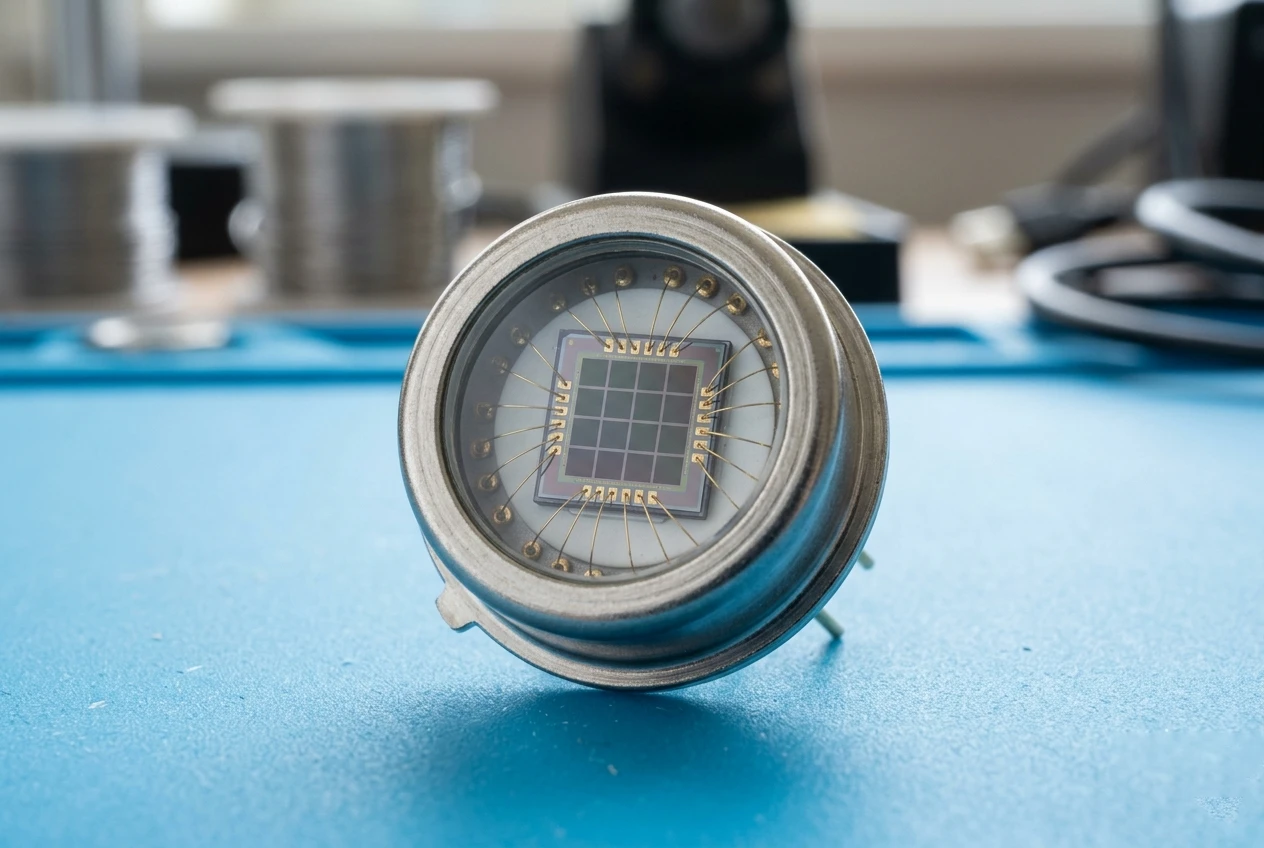
Fotodiodo PIN de Si con sensibilidad UV mejorada (190-1100 nm) PDCD100-F01
Experimente una detección UV superior con el fotodiodo sensible al ultravioleta (UV) de Bee Photon.Nuestro fotodiodo PIN de Si garantiza una alta sensibilidad y fiabilidad para instrumentos analíticos.Este fotodiodo sensible al ultravioleta (UV) con ventana de cuarzo ofrece mediciones precisas de 190nm a 1100nm.
Los componentes básicos: El interior de un escáner de códigos de barras típico
Veamos cómo funciona uno de estos escáneres. La mayoría tienen unas pocas piezas clave: una fuente de luz, algunos elementos ópticos para enfocar el haz, el fotodetector, que es lo más importante, y los circuitos para procesar las señales. La fuente de luz puede ser un láser de precisión o LED en los modelos más baratos. Cuando la luz incide en el código de barras, es como jugar al ping-pong con fotones: unos son absorbidos y otros rebotan.
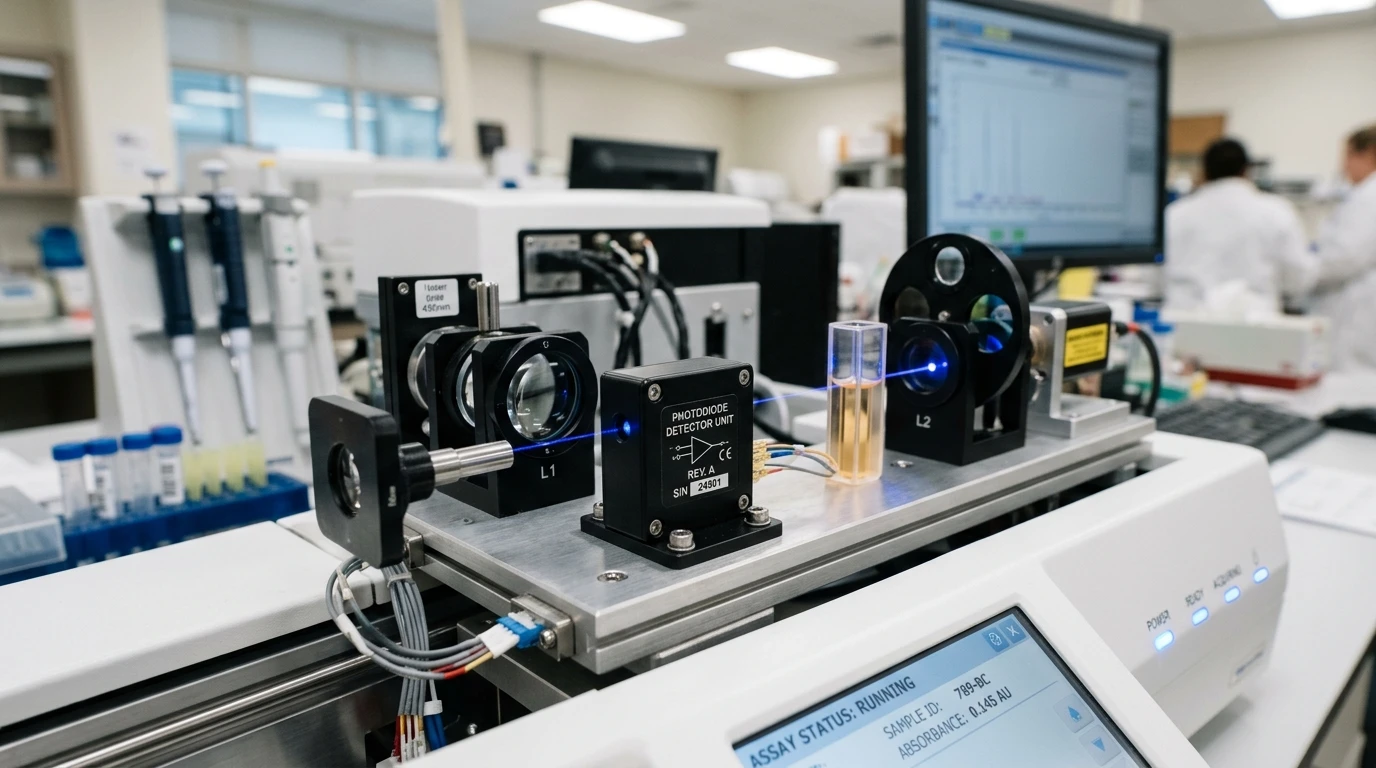
El fotodetector, que suele ser un fotodiodo, es el que capta los fotones devueltos y los convierte en corriente eléctrica. Es lo bastante sensible para detectar pequeñas diferencias de intensidad. Por ejemplo, en los escáneres láser, el haz barre de un lado a otro gracias a un espejo, cubriendo todo el código. La luz reflejada se canaliza hasta el fotodetector, que emite una forma de onda que coincide con la anchura de las barras.
Recuerdo un prototipo en el que cambiamos los fotodetectores para ver cómo afectaba a la velocidad de lectura. Uno mejor significaba menos errores, sobre todo en etiquetas manchadas. Ese es el tipo de cosas prácticas que demuestran por qué la calidad es importante en los sensores industriales.
Aquí tiene una tabla rápida para comparar los tipos más comunes de lectores de códigos de barras, para que pueda ver dónde encaja el fotodetector:
| Tipo de escáner | Fuente de luz | Función del fotodetector | Lo mejor para |
|---|---|---|---|
| Escáner láser | Rayo láser | Detecta la luz láser reflejada para medir con precisión la anchura de las barras | Cajas comerciales de alta velocidad, donde la precisión lo es todo |
| Escáner CCD | Conjunto de LED | Capta la luz de todo el código de barras a la vez, como una minicámara | Escaneado a corta distancia, como en pequeñas tiendas o laboratorios |
| Escáner de imágenes | Cámara con LED | Utiliza una matriz de fotodetectores para tomar imágenes y descodificar códigos 2D | Usos versátiles, incluidos los códigos de barras dañados en almacenes |
| Varita tipo bolígrafo | LED | Un fotodetector sencillo arrastra el código para lecturas manuales | Opciones presupuestarias o demostraciones educativas |
Esta tabla es muy sencilla. Como puedes ver, no importa el tipo, la detección de luz es clave, y el fotodetector siempre está ahí, haciendo tranquilamente el trabajo pesado.
Profundizando: El giro estelar del fotodetector en la detección de la luz
Muy bien, vamos a centrarnos en el fotodetector en sí. En un escáner de códigos de barras, suele ser un fotodiodo, un semiconductor que genera corriente cuando incide sobre él la luz. Cuando el haz de luz del lector escanea el código de barras, las barras oscuras absorben la luz (baja reflexión) y las blancas la devuelven (alta reflexión). El fotodetector capta estos altibajos, creando una señal que parece una carretera llena de baches en un gráfico.
Esta señal es amplificada y limpiada por el cerebro del escáner, convirtiéndose en datos binarios: encendido para la luz, apagado para la oscuridad, o algo así. Todo es cuestión de contraste en la detección de luz. Los fotodiodos son perfectos para esto porque son rápidos y baratos, pero en las configuraciones más sofisticadas, puede que veas CCD, que son como matrices de pequeños fotodetectores trabajando juntos.
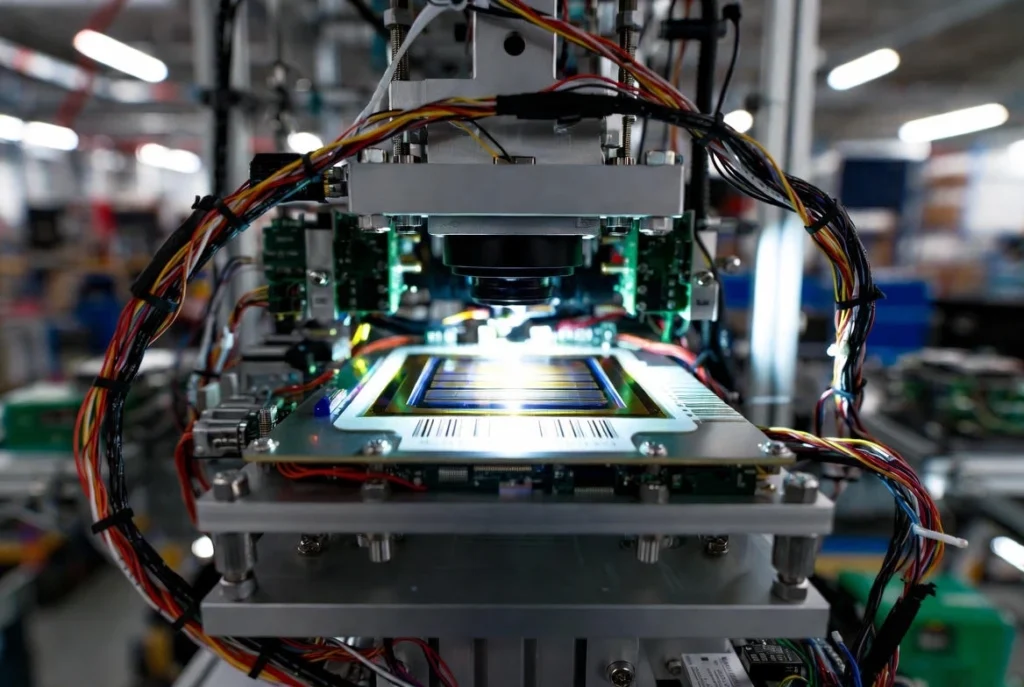
Por mi experiencia en Bee Photon, donde nos especializamos en este tipo de tecnología, he visto cómo el ajuste de la sensibilidad de un fotodetector puede hacer o deshacer un sistema. Por ejemplo, en entornos industriales difíciles, se necesitan fotodetectores que ignoren el polvo o la luz ambiental. Por eso nuestros productos Photo IC están diseñados con funciones como interruptores de ganancia para gestionar los distintos niveles de luz. Si tiene curiosidad, consulte nuestra Foto IC - está construido exactamente para este tipo de aplicaciones.
Los fotodetectores no son sólo para códigos de barras; son sensores industriales en todo tipo de aplicaciones, desde detectores de humo hasta puertas automatizadas. De hecho, están transformando campos como el escaneado 3D para la construcción o incluso los vehículos autónomos. Pero volvamos a los códigos de barras: imagine un almacén en el que los escáneres leen las etiquetas desde lejos. Un fotodetector sólido implica menos errores de lectura, lo que ahorra tiempo y dinero.
Aplicaciones reales: Los escáneres de códigos de barras ante los retos cotidianos
Entonces, ¿por qué preocuparse por todo esto? Porque los escáneres de códigos de barras resuelven problemas reales. Por ejemplo, en un supermercado: sin una detección fiable de la luz, las colas serían interminables. O en la industria manufacturera, donde los sensores industriales rastrean las piezas: un fotodetector defectuoso podría detener la producción.
Tengo una historia de un cliente con el que trabajamos en Bee Photon (sin mencionar nombres, por supuesto). Dirigían un gran centro de distribución y estaban hartos de que los escáneres fallaran en etiquetas brillantes bajo luces intensas. Les instalamos fotodetectores personalizados y, ¡bum!, los porcentajes de error bajaron como 40%. Nos dijeron que era como la noche y el día; las comprobaciones de inventario que tardaban horas ahora se hacían en minutos.
Otra aplicación interesante: los hospitales utilizan escáneres de códigos de barras para las pulseras de los pacientes y los medicamentos. El fotodetector garantiza que la dosis correcta va a la persona adecuada, sin confusiones. Los datos demuestran que la implantación de sistemas de códigos de barras en la sanidad puede reducir los errores de medicación hasta en un 41%, según estudios de la FDA y organismos similares. En realidad, he vuelto a comprobarlo: en algunos informes se habla más bien de 50%, pero el caso es que es una cifra enorme.
En entornos industriales, estos escáneres se integran en sistemas más grandes. Imagine una línea de producción en la que los sensores detectan las piezas mediante códigos de barras. La función del fotodetector en la detección de luz mantiene todo sincronizado, evitando atascos. En Bee Photon, hemos visto cómo nuestra tecnología ayudaba en estos casos, facilitando las operaciones. Si se enfrenta a algo similar, envíenos un mensaje a info@photo-detector.com o visite https://photo-detector.com/ para saber más.
Errores comunes y cómo evitarlos con Better Tech
Pero no todo es perfecto. A veces, los escáneres tienen problemas con códigos dañados o ángulos extraños. Ahí es donde entran en juego los fotodetectores avanzados, con un mejor rechazo del ruido o rangos dinámicos más amplios. Por ejemplo, si la luz es demasiado tenue o demasiado brillante, un fotodiodo básico podría fallar, pero algo como nuestro interruptor de ganancia de dos niveles en el Photo IC se ajusta sobre la marcha.
Una vez ayudé a solucionar un problema en el que la luz ambiental interfería con las lecturas. Resultó que el fotodetector no estaba bien filtrado. Un cambio rápido, y estaba como nuevo. Lecciones como esa vienen de años de jugar con estos dispositivos.
Desde el punto de vista del mercado, sólo el segmento de los escáneres de códigos de barras industriales crecerá en 1.000 millones de euros entre 2023 y 2027. Este crecimiento está impulsado por la necesidad de sensores más resistentes e inteligentes. Las empresas están sustituyendo los modelos antiguos por otros con detección de luz mejorada, lo que se traduce en menos problemas de inactividad.
¿Por qué elegir fotodetectores de calidad? Crear confianza en su instalación
Elegir el fotodetector adecuado no es sólo una cuestión de tecnología; es una cuestión de fiabilidad. En Bee Photon, nos enorgullecemos de ofrecer componentes duraderos. Nuestro Photo IC, por ejemplo, ofrece un conmutador de ganancia de dos niveles para iluminaciones complicadas, lo que lo hace ideal para escáneres de códigos de barras u otros proyectos de sensores industriales.
Nos hemos forjado una reputación por nuestra experiencia: piense en nosotros como los expertos en soluciones de detección de luz. Tanto si está creando un prototipo de un nuevo escáner como actualizando uno antiguo, la calidad merece la pena. He visto imitaciones baratas que fallan al cabo de un mes, mientras que nuestros productos funcionan durante años.
Para terminar, entender el papel del fotodetector te hace ver todo lo que hay detrás de un simple escaneado. No es magia; es ingeniería inteligente que capta los rebotes de luz para leer esas rayas.
Conclusión: Es hora de tomar medidas para sus necesidades de digitalización
A estas alturas, probablemente ya sepa por qué el fotodetector es el MVP silencioso de los escáneres de códigos de barras. La detección de luz hace que todo funcione, desde los sensores básicos para comercios hasta los de uso industrial intensivo. Si esto ha despertado algunas ideas para su propia configuración, tal vez para racionalizar su almacén o ajustar un dispositivo personalizado, ¿por qué no se pone en contacto con nosotros? En Bee Photon, estamos siempre dispuestos a ayudarle.
Visite https://photo-detector.com/contact-us/ para chatear, solicitar un presupuesto o saber más sobre nuestros Foto IC. O envíe un correo electrónico a info@photo-detector.com. Nos encantaría escuchar su historia y ver cómo podemos hacer que su juego de detección de luz sea más fuerte.

Foto IC serie PDTC
Nuestro Photo IC con interruptor de ganancia de dos niveles proporciona una detección óptica precisa para la automatización industrial. Este avanzado foto IC cuenta con un interruptor de ganancia ajustable, asegurando un rendimiento fiable
PREGUNTAS FRECUENTES
¿Qué diferencia hay entre un fotodiodo y un CCD en los lectores de códigos de barras?
Un fotodiodo es más sencillo y rápido para las exploraciones láser básicas, ya que capta los rebotes de luz de uno en uno. Los CCD son como minicámaras que captan toda la imagen a la vez, lo que resulta ideal para códigos 2D o cuando se necesitan más detalles. Ambos se basan en la detección de luz, pero elija en función de sus necesidades de velocidad y versatilidad.
¿Pueden funcionar los lectores de códigos de barras en la más absoluta oscuridad?
Sí, la mayoría pueden, ya que proporcionan su propia fuente de luz. Al fotodetector sólo le interesa la luz reflejada del haz del escáner, no las luces de la habitación. Pero las superficies muy oscuras o brillantes pueden necesitar un modelo más robusto con mejor sensibilidad.
¿Cómo sé si mi sensor industrial necesita un fotodetector mejor?
Si se producen errores de lectura con frecuencia, especialmente con luces variables o en etiquetas rugosas, puede que haya llegado el momento. Busque señales como escaneos lentos o errores; la actualización a algo con ganancia ajustable, como nuestro Photo IC en Bee Photon, a menudo lo soluciona rápidamente.