If you’re a project manager juggling tight deadlines, shrinking budgets, and a team that’s already stretched thin, the last thing you want is to spend six months just getting the optical detection part of your product working right. I’ve seen it happen way too many times — and honestly, it’s painful.
That’s where something like a ready-to-go módulo amplificador fotodiodo o sensor óptico integrado changes the game. These aren’t just fancy components; they’re basically shortcuts that let you skip a ton of the painful prototyping, noise-fighting, and PCB redesign headaches. At Bee Photon, we’ve helped dozens of OEMs shave serious time off their time-to-market (or TTM as most folks call it) by switching to these integrated solutions instead of building everything from scratch.
Let’s break it down in a real way — no fluff.
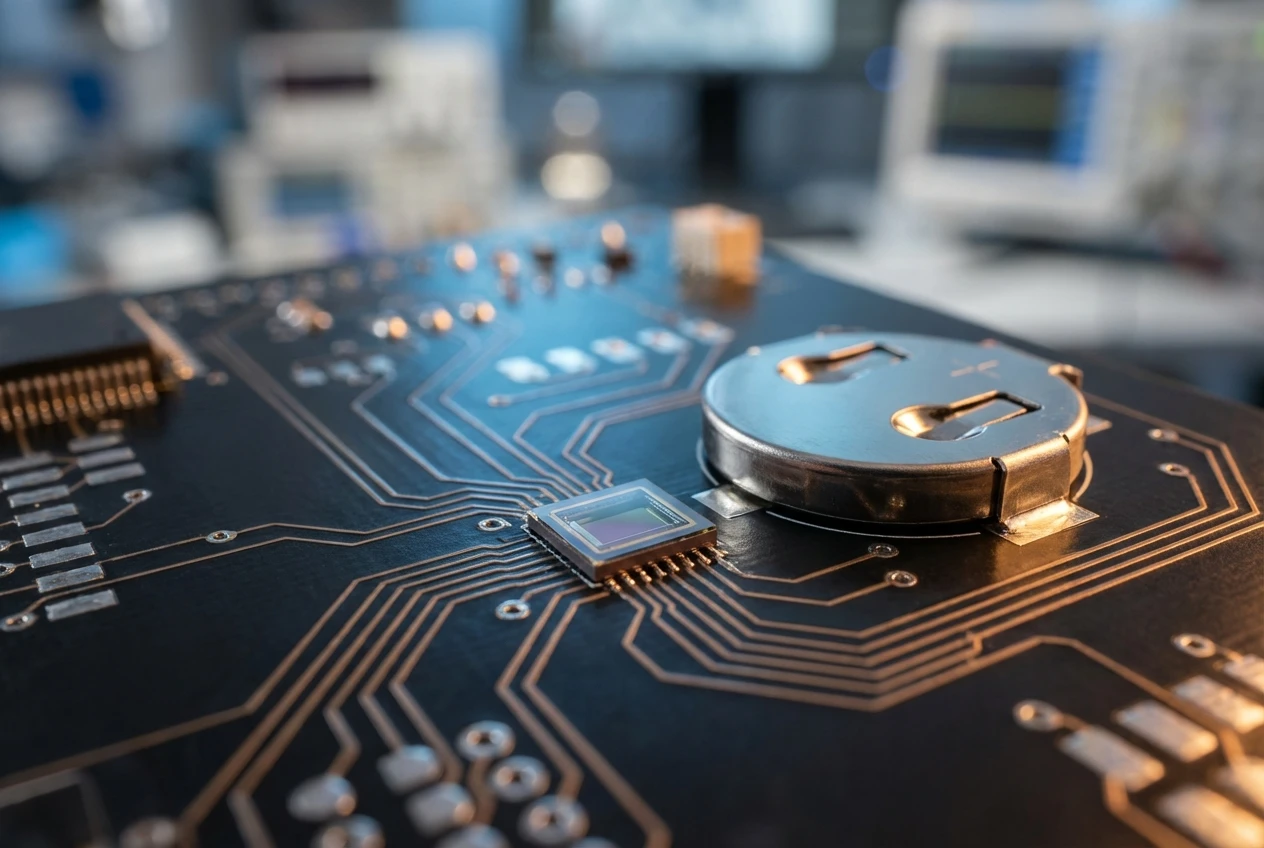
The Classic Headache: Building Your Own Photodiode Circuit from Scratch
Most teams start the same way. You pick a bare photodiode (maybe a decent silicon one), then you need to:
- Design a transimpedance amplifier that doesn’t oscillate
- Fight with stray capacitance and cable noise
- Add shielding, filtering, maybe a second stage for gain
- Test different op-amps because the first one has too much offset
- Layout the PCB again… and again… because EMI or thermal drift killed your signal
- Qualify the whole mess for production
Sound familiar? This phase can easily eat 4–9 months depending on your team’s experience and the application complexity. I’ve talked to project managers who said they lost almost a whole quarter just debugging noise in a medical device prototype.
And the worst part? When you finally get it stable, your BOM cost might look okay, but the hidden cost is the time — and time is usually way more expensive than a few extra dollars per unit.
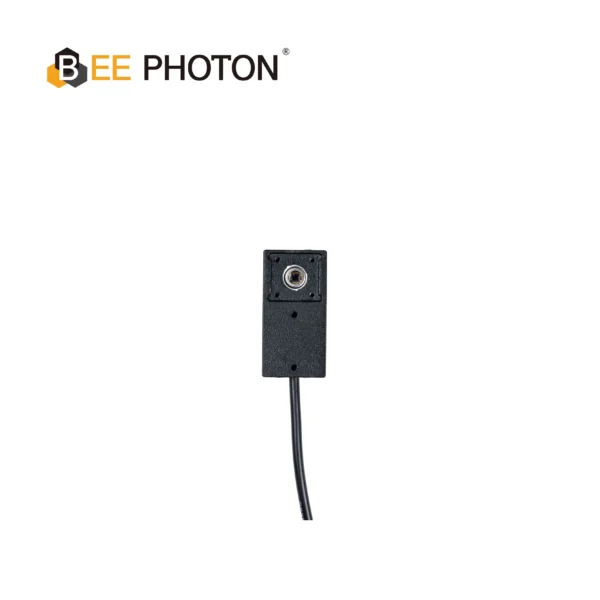
Módulo fotodiodo(Salida analógica)PDTM-A
Bee Photon es uno de los principales proveedores de módulos de fotodiodos OEM para necesidades personalizadas. Confíe en un proveedor de módulos de fotodiodo OEM con experiencia para sus instrumentos ópticos de precisión.
How Integrated Photodiode Amplifier Modules Flip the Script
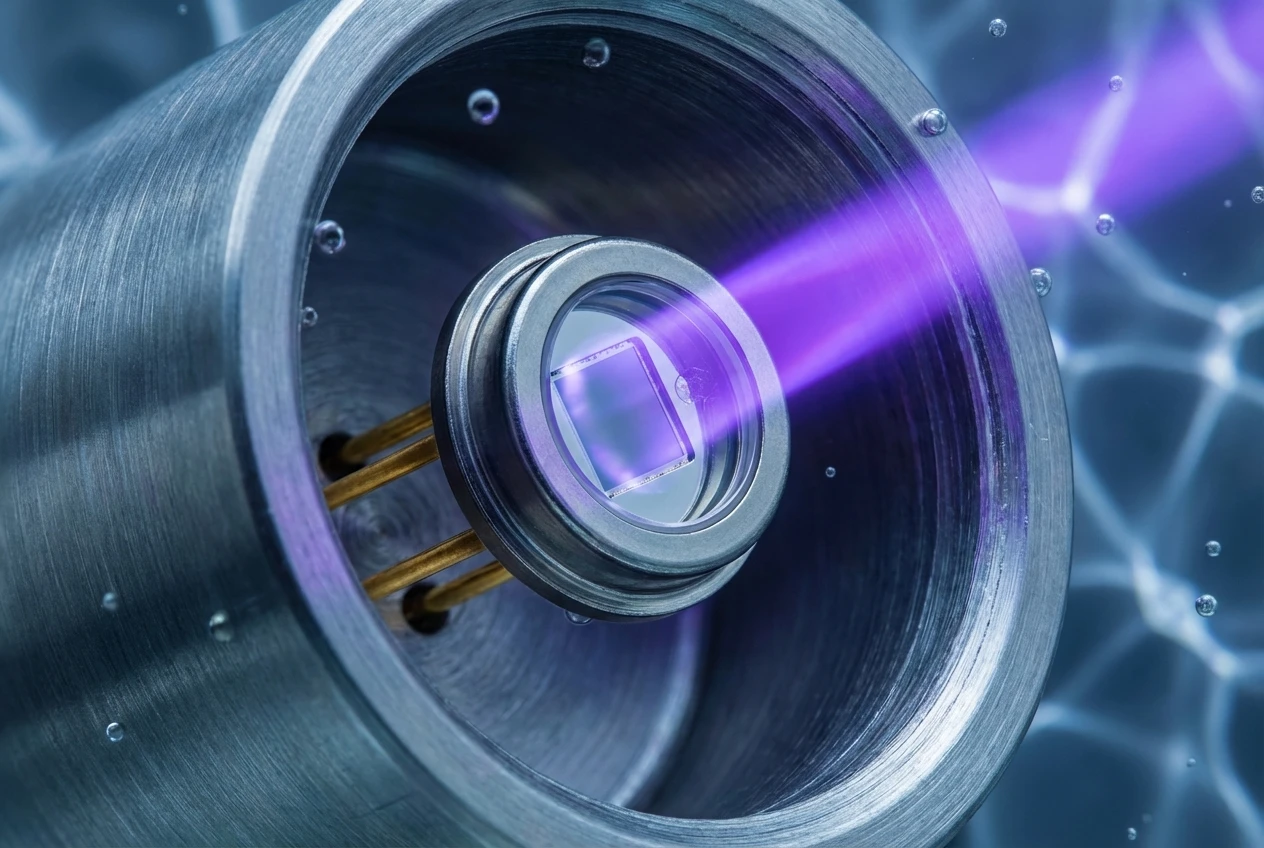
En integrated photodiode amplifier module (sometimes called a Photops-style module or hybrid detector) puts the photodiode and a matched transimpedance amp (or even more circuitry) in one tiny sealed package.
Here’s what you actually get out of the box:
- The photodiode + low-noise op-amp already bonded close together (minimizes parasitics)
- Optimized feedback network for stability
- Often built-in filtering or compensation
- Shielding against external interference
- Much lower input capacitance issues
Because the sensitive analog front-end is handled internally, you just feed it power and read a clean voltage output. No more fighting femtoamp currents over long traces.
From real projects we’ve seen (and helped with) at Bee Photon, teams typically cut their optical front-end development time by 60-80%. Some aggressive ones went from 7 months of breadboarding to under 6 weeks of integration and validation.
Quick Comparison Table: DIY vs Integrated Module
| Aspecto | DIY Discrete Approach | Integrated Photodiode Amplifier Module |
|---|---|---|
| Development Time | 4–9 months | 3–10 weeks |
| Noise Performance | Variable (needs tuning) | Optimized & consistent |
| PCB Space | Larger (multiple components) | Tiny footprint |
| EMI Susceptibility | High (long traces) | Muy bajo |
| Risk of Oscillation/Instability | Alta | Muy bajo |
| Engineering Hours | 300–800+ | 40–150 |
| Typical Cost Trade-off | Lower per unit… maybe | Higher unit cost, but massive TTM savings |
(These numbers come from actual customer feedback and industry patterns we’ve observed — not made-up stats.)
Real-World Examples (Names Changed for Privacy)
One medical diagnostics company we worked with was building a portable fluorescence reader. Their in-house team spent almost 5 months getting acceptable SNR from a discrete PIN photodiode + op-amp combo. EMI from the pump motor kept messing things up.
They switched to one of Bee Photon’s sensor óptico integrado modules (with built-in photodiode amplifier). Integration took 3 weeks, including mechanical fit and software tweaks. They launched 4 months earlier than planned, beating a competitor to market by two quarters. That early revenue more than covered the slightly higher module price.
Another case: industrial automation OEM doing laser-based position sensing. They used to redesign the detector board for every new model. After adopting pre-integrated photodiode amplifier modules, they now just swap modules when specs change — new product variants in months instead of years.
These aren’t fairy tales. When the analog part is already solved, your engineers can focus on what actually makes your product unique: the application logic, software, enclosure, etc.

Módulo fotodiodo(Salida de señal digital)PDMM
Nuestro módulo fotodetector de bajo ruido garantiza una alta sensibilidad para tareas de precisión. Utilice este módulo fotodetector de bajo ruido para obtener resultados espectroscópicos superiores.
Why This Matters So Much in 2025–2026
The optical sensors market is booming. Recent industry reports show the global photodiode sensors market hit about $783 million in 2024 and is expected to grow at around 8.4% CAGR toward $1.7 billion by 2034 (source: Global Market Insights). Optical sensors overall are even bigger — some forecasts put them over $50 billion by early 2030s.
Everyone wants faster, smarter, smaller devices. Automotive LiDAR, medical wearables, industrial automation, environmental monitoring — all racing to market. If you’re late, you lose share.
Utilizando integrated optical sensors isn’t about being lazy; it’s about being smart with your resources. Project managers who choose this route usually sleep better and hit their milestones.
Key Benefits Summary for Busy PMs
- Reduce TTM — often by months, sometimes half a year
- Lower project risk (less debugging hell)
- More predictable validation & certification
- Easier scaling to production (modules are pre-qualified)
- Your team stays motivated instead of burnt out on analog gremlins
En Bee Photon, nuestros photodiode amplifier modules are designed exactly for this: helping OEMs like you get to market faster without sacrificing performance. Check out our lineup at https://photo-detector.com/ — we have standard and semi-custom options.

Foto IC serie PDTC
Nuestro Photo IC con interruptor de ganancia de dos niveles proporciona una detección óptica precisa para la automatización industrial. Este avanzado foto IC cuenta con un interruptor de ganancia ajustable, asegurando un rendimiento fiable
PREGUNTAS FRECUENTES
What exactly is a photodiode amplifier module and why is it better than separate parts?
It’s a single package with a photodiode plus a matched amplifier circuit (usually transimpedance type). The big win is the photodiode and amp are super close together, so you dodge most noise and capacitance problems that kill DIY designs. You get cleaner signals with way less effort.
How much time can I realistically save on development using an integrated optical sensor?
Depends on your project, but most teams we talk to save 3–7 months on the optical detection portion. If your product is heavily reliant on precise light measurement, the savings are usually at the higher end.
Is there a downside — like higher cost per unit?
Yes, modules usually cost more than discrete parts (maybe 2–5x depending on volume). But when you factor in engineering time, prototype spins, and delayed revenue, the math almost always favors the integrated route — especially for medium-volume OEM products. We can run the numbers with you if you want.
Ready to stop wasting months on optical front-end headaches? Drop us a line at info@photo-detector.com or head straight to our página de contacto. Let’s chat about your project — no pressure, just real talk about how we can help you launch faster.