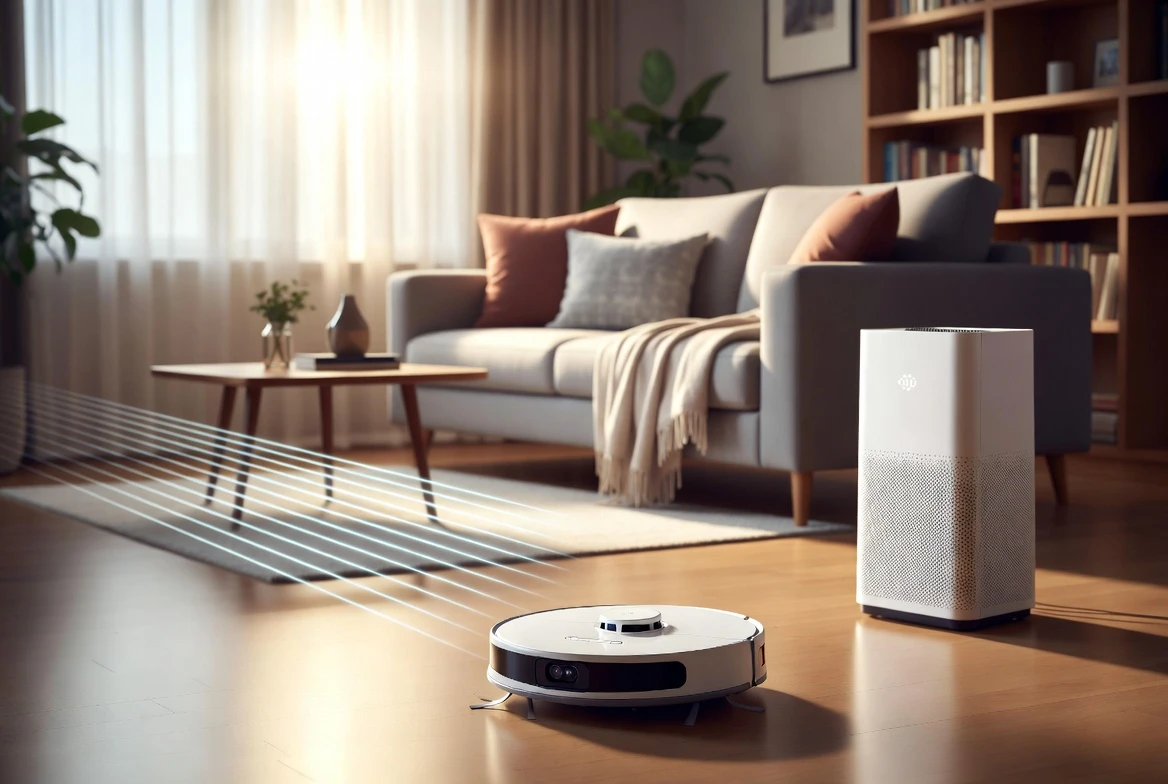
Hey folks, if you’re building smart home gadgets like robot vacuums or air purifiers, you probably already know how crucial good dust or particle detection is. But picking the right light source and detector pairing can make or break your product’s performance – especially when you’re trying to keep costs down without sacrificing reliability.
I’ve spent years working with IoT light detection setups, testing tons of LED photodiode pair combos for real-world smart home sensors. Today I wanna walk you through what actually works best for low-cost designs, share some practical tips from hands-on projects, and show why certain pairings beat others for your air-flow based applications.
Why Light Source and Detector Pairing Matters So Much in Smart Appliances
Look, in robot vacuums and air purifiers, the sensor needs to spot tiny dust particles floating around – sometimes as small as 1µm. The way most folks do this is with optical detection: shine light into the air path, and when particles scatter that light, the detector picks it up. Simple in theory, but the devil’s in the details.
A bad pairing means weak signals, lots of false triggers from ambient light, or eating too much battery. A good one? Reliable readings, low power, and cheap enough to scale for mass production. From what I’ve seen in the field, the classic LED photodiode pair still rules for cost-sensitive designs – way cheaper than fancy laser setups.
Take the famous Sharp GP2Y1010AU0F dust sensor – it’s been around forever and uses an infrared LED paired with a phototransistor (close cousin to photodiode). That thing detects fine particles like smoke and house dust, drawing only about 20mA when pulsing. Super popular in air quality monitors and vacuums.
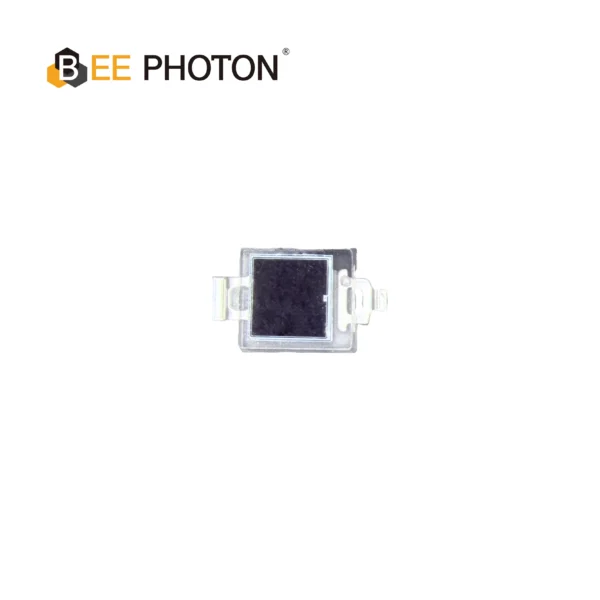
Si PIN photodiode PDCP08 Series PDCPO8-502
Precision Sensing: The PDCP08-502 is a compact Silicon PIN Photodiode designed with a specific 2.9×2.8mm sensing area.
Reliability: With low junction capacitance, this PIN photodiode ensures fast response times. It is the perfect component for space-constrained photoelectric applications requiring stable signal output.
Breaking Down the Most Common Pairings
Let’s get practical. Here’s what I’ve found works well (and what doesn’t) after trying different combos in prototypes.
Most common setup for dust detection:
- Infrared LED (peak wavelength around 940nm)
- Silicon photodiode or phototransistor (sensitive in 800-1100nm range)
Why IR? Ambient visible light doesn’t mess with it much, so less noise. And silicon photodiodes are dirt cheap.
For even tighter budgets, some folks pair a standard red LED (~660nm) with a matching photodiode, but IR wins for particle scattering because longer wavelengths handle bigger particles better without too much absorption.
Here’s a quick comparison table of popular pairings I’ve tested or seen in production:
| Pairing Type | Wavelength (Peak) | Typical Cost (per unit, bulk) | Power Draw | Dust Sensitivity | Best For | Drawbacks |
|---|---|---|---|---|---|---|
| IR LED + Silicon Photodiode | 940nm | $0.08-0.15 | Low (pulsed 10-20mA) | Good (1-10µm) | Robot vacuums, air purifiers | Needs good shielding from ambient |
| IR LED + Phototransistor | 940nm | $0.10-0.20 | Very Low | Excellent | Battery-powered IoT | Slightly slower response |
| Red LED + Matching Photodiode | 660nm | $0.05-0.12 | Low | Moderate | Very low-cost designs | More ambient light interference |
| Laser Diode + Photodiode | 650-780nm | $1.00+ | Higher | Superior (PM2.5) | Premium air quality | Cost & power too high for basic |
From real projects, the IR LED + silicon photodiode combo hits the sweet spot for most smart home sensors. It’s what powers many of those affordable robot vacuums you see on the market.
Key Factors to Consider When Choosing Your Pair
- Wavelength Matching
The LED peak should line up with the photodiode’s highest sensitivity. Mismatch it, and you lose 30-50% of your signal strength. For dust scattering, 850-950nm IR works great because particles scatter IR nicely without much absorption in air. - Optical Design
Angle matters. In dust sensors, place the emitter and detector at 90 degrees or diagonal – that way, only scattered light hits the detector, not direct beam. Add lenses or slits to focus – Sharp does this in their modules, and it cuts noise big time. - Pulse Driving
Don’t run the LED constant-on. Pulse it (like 280µs on, then read). Saves power and lets you subtract ambient light. I always add a capacitor (220µF) across the LED supply – stabilizes the pulse. - Cost vs Performance Trade-offs
Want ultra-low cost? Go with generic 940nm IR LED + basic silicon photodiode. In bulk, you’re under $0.15 total. We’ve helped clients drop sensor costs 40% by switching from pre-made modules to custom pairs.

Light source LED series E850-15-202
This galvanometer scanner light source delivers superior brightness and precision. Engineered for accuracy, our TO18 light source ensures high reliability in scanning systems.
Real-World Success Stories (Anonymous but True)
One client – a mid-size air purifier maker – was using expensive imported modules. They kept failing EMC tests and cost too much. We switched them to a custom LED photodiode pair with 940nm IR emitter and filtered photodiode. Result? Passed certification, cut BOM by 35%, and detection stayed accurate for PM2.5 levels. Their devices now sell in big box stores.
Another robot vacuum brand struggled with false “full dustbin” alerts in bright rooms. Simple fix: better wavelength matching + black housing to block stray light. Detection reliability jumped, returns dropped.
These aren’t magic – just smart pairing and basic optical tricks.
Common Mistakes to Avoid
- Ignoring ambient light rejection – always test in real rooms with windows open
- Using continuous LED drive – kills battery life fast
- Poor alignment – even 5 degrees off kills signal
- No filtering – add IR-pass filter on detector to block visible light
Do these wrong, and your smart home sensor becomes unreliable junk.
Ready to Upgrade Your Smart Home Device?
If you’re a manufacturer looking for reliable, low-cost light source and detector pairing solutions tailored for robot vacuums or air purifiers, we’ve got you covered at Bee Photon. We specialize in custom LED photodiode pair setups for smart home sensors and IoT light detection – optimized for performance and your budget.
Head over to our site at https://photo-detector.com/ to see our range of photodetectors and emitters. Or jump straight to the contact page https://photo-detector.com/contact-us/ and drop us a line. Email works too: info@photo-detector.com. Tell us about your project – happy to share quotes or samples fast.
Don’t settle for off-the-shelf junk that breaks the bank or your product’s reputation. Let’s build something that actually works great and costs less.

Si PIN photodiode PDCP08 Series PDCPO8-511
Noise Reduction: The PDCP08-511 is a Silicon PIN Photodiode encased in black epoxy to filter visible light interference.
IR Application: Designed for robust optical switches, this PIN photodiode minimizes ambient noise. It delivers superior performance in infrared signaling environments with its 2.9×2.9mm active area.
FAQ
Q: What’s the best wavelength for dust detection in air purifiers?
A: Most reliable is around 940nm IR. It scatters well off particles without much ambient interference, and cheap components are everywhere.
Q: Can I use a photodiode instead of phototransistor for lower cost?
A: Yep, definitely. Photodiodes are often cheaper and give cleaner signals, but you might need a bit more amplification circuitry. We’ve done many designs this way with great results.
Q: How do I reduce power consumption in battery-powered IoT devices?
A: Pulse the LED only when sampling (like every few seconds), use sleep modes on your MCU, and pick low-current LEDs. Easy wins that cut draw by 80%+ in standby.