Ten, maybe fifteen years ago, if you told a procurement manager in Germany or the US that you were sourcing high-precision optical sensors from China, they’d look at you like you just set the budget on fire. The stigma was real. “Cheap stuff,” “unreliable,” “IP theft.” We’ve all heard the stories.
But here we are in 2024, and the script has flipped. If you aren’t looking at a photodetector manufacturer china for your supply chain, you are probably leaving a massive amount of margin on the table. And I don’t mean just saving a few cents. I’m talking about the kind of efficiency that makes or breaks a fiscal quarter.
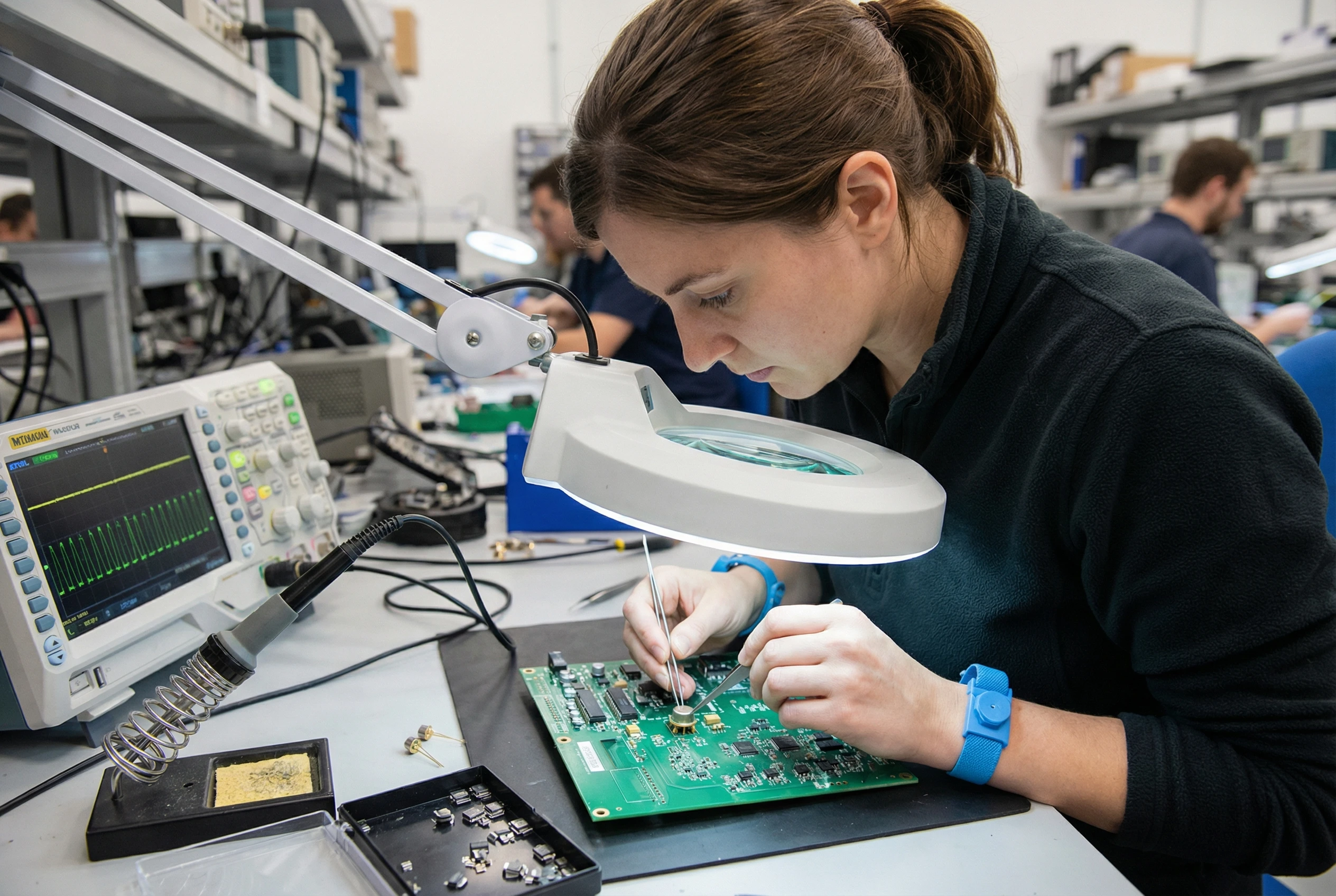
As someone deeply embedded in the Bee Photon factory operations, I see what happens on the ground every day. I see the cleanrooms, the automated wire bonders, and the testing rigs that are frankly, sometimes newer than what I’ve seen in some “prestigious” Western facilities.
So, why are so many Tier-1 companies quietly shifting their sourcing to us? Let’s cut the fluff and look at the engineering, the economics, and the hard truth about sourcing optical sensors today.
The Reality Check: It’s Not Just About “Cheap” Anymore
If you think the only reason to choose a photodetector manufacturer china is low labor cost, you’re operating on outdated firmware. Sure, labor is cheaper than in Silicon Valley or Munich, but that’s not the main driver anymore. The real advantage is the cluster effect.
In China, particularly where we operate, the supply chain is insanely integrated. You need a custom PCB for a photodiode array? It’s down the street. You need a specific lens coating? The vendor is an hour away, not a 6-week shipping delay from another continent.
When we build products at BeePhoton, we aren’t waiting on parts. This speed allows us to iterate prototypes fast. I remember a client from the UK needed a custom InGaAs detector. Their local supplier quoted 12 weeks just for the prototype. We did it in 3 weeks. That’s not magic; that’s just supply chain density.
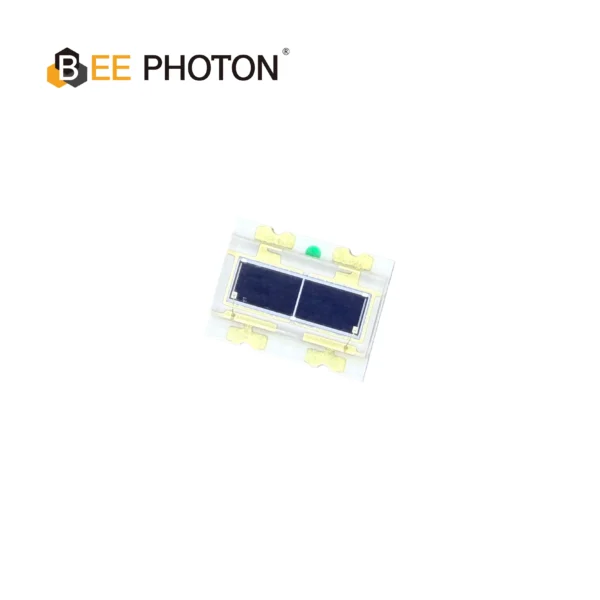
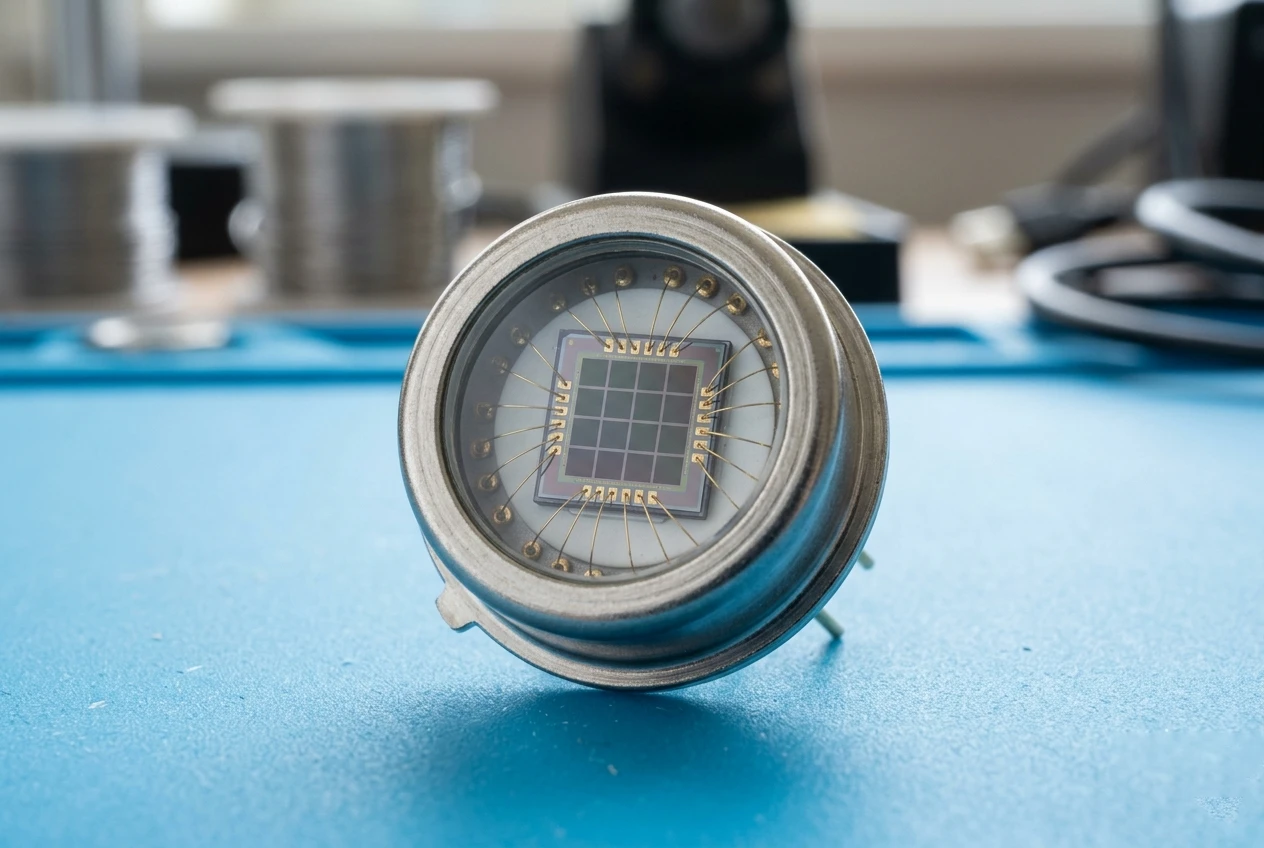
Si PIN Photodiode Array PDCA02-602
The Bee Photon PDCA Series is engineered specifically as a Background Suppression Photodiode to solve complex detection challenges in industrial environments. By utilizing a high-precision two-segment architecture (PD A and PD B), this device allows for differential signal processing, effectively filtering out background interference. It is the premier choice for manufacturers designing reliable background suppression optical switches and proximity sensors.
The Math Behind the Margin: Quality vs. Cost
Let’s get technical with the money. Most people look at the Unit Price and stop there. But as a supply chain pro, you know that’s rookie thinking. You care about Total Cost of Ownership (TCO).
Here is the basic way to look at it, without needing a fancy LaTeX plugin:
TCO = Unit Price + Logistics Costs + (Failure Rate x Replacement Cost) + Lead Time Opportunity Cost
A typical Western supplier might have a higher Unit Price ($50), low Logistics ($2), but a surprisingly high Lead Time Opportunity Cost because they are slower to scale.
Now, look at a photodetector manufacturer china like us:
- Unit Price: Often 30-40% lower.
- Logistics: Higher (air freight), but negligible per unit on bulk orders.
- Failure Rate: This is where the controversy is.
The “Quality Fade” Myth
There’s a concept called “Quality Fade,” where a supplier sends a Golden Sample and then slowly degrades quality to save money. Does it happen in China? Yes. Does it happen at BeePhoton? No.
Why? Because we know that one bad batch kills a relationship forever. We use automated optical inspection (AOI) and rigorous burn-in testing. When you look at the signal-to-noise ratio (SNR) of our detectors, they match or exceed the big global brands.
Here is a simplified calculation we use for verifying detector performance, specifically Responsivity (R), which is crucial when sourcing optical sensors:
R = Ip / Popt
Where:
- R is Responsivity (Amps/Watt)
- Ip is the Photocurrent generated
- Popt is the Incident Optical Power
If a photodetector manufacturer china cannot provide you with a consistent R value across 10,000 units, run away. We track this metric like hawks. Our data shows a variance of less than 2% across batches, which rivals any German competitor.
Comparative Breakdown: West vs. China
To make this super clear, I threw together a comparison based on what our clients tell us after they switch to us.
| Feature | Typical Western Manufacturer | BeePhoton (China) |
|---|---|---|
| Initial Tooling Cost | High ($5k – $20k+) | Low ($1k – $5k) |
| Prototype Lead Time | 6 – 12 Weeks | 2 – 4 Weeks |
| MOQ (Min Order Qty) | High (Often 1000+) | Flexible (Can do 50+) |
| Communication | 9-5 Local Time | 24/7 (We don’t sleep much) |
| Customization | Reluctant (“Take our standard catalog”) | Aggressive (“Let’s build what you need”) |
When you look at this, the choice to use a photodetector manufacturer china becomes less about “risk” and more about “agility.”

Si PIN Photodiode with UV sensitivity enchanced (190-1100nm) PDCT25-F01
Our Si PIN Diode with Wide Dynamic Range ensures precise measurement of varying light intensities. Ideal for power meters, it offers excellent linearity across the 190-1100nm spectrum. A reliable Si PIN diode for consistent performance.
Inside the Bee Photon Factory
I want to invite you—virtually—onto our floor. When you walk into the Bee Photon factory, the first thing you notice isn’t the noise; it’s the silence. It’s the sound of cleanroom air filters.
We specialize in PRODUCTS, ranging from standard Silicon photodiodes to complex multi-element arrays. We don’t just assemble; we do wafer dicing, wire bonding, and hermetic sealing in-house.
A lot of buyers worry about “Fake Specs.” I get it. You see a datasheet claiming a Dark Current (Id) of 0.1 nA, but you get 5 nA. That’s annoying.
We measure Dark Current strictly. For those techies reading, you know that Dark Current is the limiting factor for low-light detection.
Noise Equivalent Power (NEP) = (Noise Current) / Responsivity
We aim for the lowest possible NEP. By controlling the passivation layers on our chips, we keep that noise current down. When you buy from a reputable photodetector manufacturer china, you should demand to see the raw test data, not just the marketing PDF. We provide that.
Addressing the Elephant: IP Protection
“If I send you my design, will you sell it to my competitor?”
This is the most common question I get when folks are sourcing optical sensors. It’s a valid fear. Ten years ago, the Wild West mentality was prevalent in China.
But things have changed. At BeePhoton, we sign NDAs (Non-Disclosure Agreements) that are enforceable. But more importantly, our business model relies on repeat business from B2B clients, not selling knock-offs on AliExpress. If we leaked a client’s design, we’d lose our reputation overnight. In the niche world of precision optics, reputation is currency.
We segregate production lines. The team working on Client A’s aerospace sensor doesn’t see the drawings for Client B’s medical device. It’s compartmentalized.
Case Study: Project “Blue Ray” (Anonymous)
Let me share a quick story. We had a client in France, let’s call them “Project Blue Ray.” They make industrial laser levels. They were using a US-based supplier for their receivers.
The Problem: The US supplier discontinued the specific chip size they needed. They were forced to redesign their entire PCB to accomodate a new sensor size. That’s a nightmare.
The Solution: They contacted us. They asked, “Can you make a photodetector manufacturer china drop-in replacement?”
The Result: Not only did we match the physical footprint, but we also tweaked the spectral response to better match their red laser source (635nm).
- Cost saving: 45% per unit.
- Time to market: They avoided a 6-month PCB redesign cycle.
This is why sourcing optical sensors from a partner who is willing to customize is vital. Big catalog distributors won’t tweak a wafer for you. We will.

Si PIN Photodiode with NIR sensitivity enchanced (350-1100nm) PDCC100-501
Achieve uniform results with our High Consistency Si PIN Diode for medical devices. This COB photodiode provides dependable NIR sensitivity for health monitoring. Trust our High Consistency Si PIN Diode.
How to Verify a Chinese Supplier (Don’t Get Burned)
If you decide to go with a photodetector manufacturer china, don’t just trust a website. Here is my checklist for you.
- Ask for the “Uncomfortable” Photos: Don’t ask for marketing pics. Ask the sales guy to take a selfie in the lab holding a piece of paper with today’s date. It sounds silly, but trading companies can’t do this. Factories can.
- Sample Testing: Buy samples first. Test them to destruction. Push the reverse voltage until it breaks down. See if it matches the datasheet.
- Video Call Audit: If you can’t fly to China, do a live Zoom walk-through. If they refuse, that’s a red flag.
- Check the Email Domain: Are they emailing from a
@gmail.comor@163.comaddress? Professional manufacturers use corporate domains. (We are at info@photo-detector.com, by the way).
The Future is Collaborative
The narrative of “Us vs. Them” in manufacturing is dying. It’s a global ecosystem now. By partnering with a photodetector manufacturer china, you aren’t “outsourcing” in the bad sense; you are expanding your factory floor. You are gaining access to engineers who work while you sleep, effectively giving you a 24-hour development cycle.
We are seeing a massive surge in demand for LiDAR sensors and medical monitoring devices. The volume required for these applications simply cannot be met by boutique Western fabs at a reasonable price point. You need scale. And scale is what China does best.
So, if you are sitting on the fence, wondering if the quality is there, or if the hassle is worth it, look at the data. Look at the TCO.
At BeePhoton, we aren’t just pushing silicon; we are building trust. We want to be the boring, reliable part of your supply chain that you never have to worry about.
Ready to Upgrade Your Supply Chain?
Don’t let outdated misconceptions drain your budget. Whether you need standard photodiodes or custom arrays, we have the capacity and the expertise.
Contact Us today. Let’s discuss your specs.
- Visit our site: https://photo-detector.com/
- Drop a line: https://photo-detector.com/contact-us/
Let’s see if we can shave 30% off your BOM cost while keeping your engineers happy.
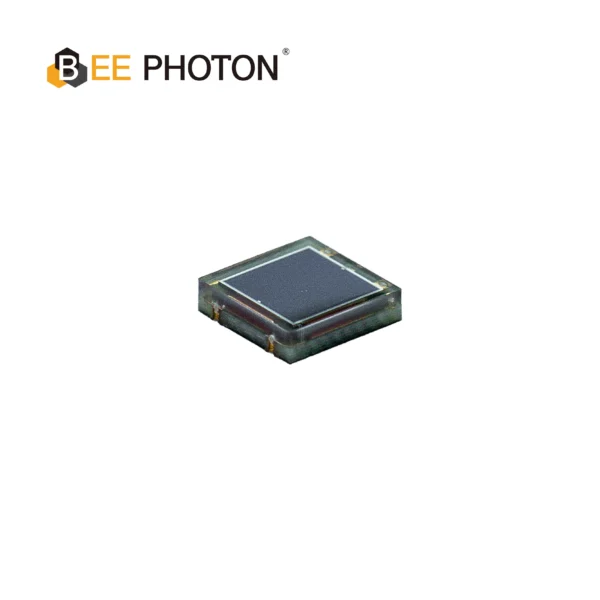
Si PIN Photodiode with low dark current (350-1060nm) PDCC34-001
Bee Photon offers a compact COB Si PIN Photodiode with wide spectral response (350-1060nm). This Chip-on-Board photodiode features low dark current, ideal for integrated and space-constrained applications.
FAQ: Frequently Asked Questions
Q1: How does a photodetector manufacturer china ensure IP security?
We take this seriously. Aside from standard NDAs, reliable manufacturers like BeePhoton use compartmentalized manufacturing. Your drawings are only accessible to the specific engineers working on your project, and digital files are stored on secure, local servers with restricted access, not on open clouds.
Q2: What is the typical lead time when sourcing optical sensors from China?
It varies, but it’s faster than you think. For standard products, it can be as short as 1 week. For custom designs, a photodetector manufacturer china can typically produce prototypes in 2-4 weeks, whereas Western counterparts might take 8-12 weeks. Air freight adds about 3-5 days to delivery.
Q3: Can BeePhoton customize a photodetector if I don’t see it in the catalog?
Absolutely. This is our biggest strength. Unlike catalog distributors who only sell what they have, we are a factory. We can modify active area size, spectral response range, package type (TO-can, ceramic, etc.), and pigtail configurations. Just send us your requirements.
Q4: Do you have a minimum order quantity (MOQ)?
We try to be flexible. While mass production offers the best pricing, we understand that R&D projects start small. We support low-volume sample orders for testing. We want to grow with you, not just sell you a million units on day one.