You ever stare at a breadboard piled high with components, wondering why your photodiode signal’s getting lost in the shuffle? Kinda frustrating, right? I’ve been there—tinkering late into the night, tweaking resistors and chasing ghosts in the wiring. Thats when it hit me: what if the whole mess could just… work better from the get-go? Enter photodiode modules with built-in amplifiers. These little powerhouses pack a photodiode and a transimpedance amplifier (TIA) right into one tidy package, turning weak light signals into solid voltages without the usual headache.
I’m talking from hands-on time here, folks. Over the years at Bee Photon, we’ve shipped these to labs and factories worldwide, watching teams shave weeks off their timelines. And yeah, the market’s buzzing too—the global photodiode sensors scene clocked in at over $814 million back in 2025, per Research Nester’s latest scoop. Projections say it’ll hit $1.71 billion by 2035, growing at 7.7% a year. Why? Because everyone’s after simpler, faster ways to detect light in everything from telecom gear to medical scanners.
In this chat, we’ll unpack why these integrated setups rock for simplifying designs. If you’re knee-deep in circuit boards and dying to shorten that dev cycle, stick around. We’ll hit the basics, the perks, some stories from the trenches, and how Bee Photon’s Photodetector Module fits right in. By the end, you’ll see why ditching the DIY amp hassle isn’t just smart—it’s a game-changer.
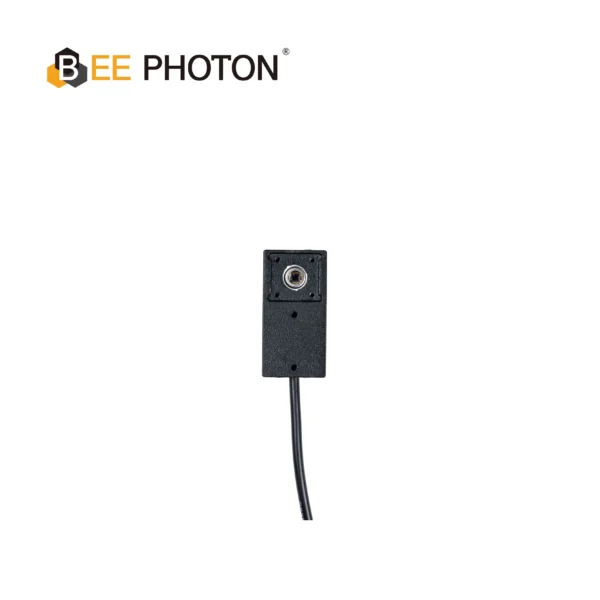
Photodiode module(Analog output)PDTM-A
Bee Photon is a top OEM Photodiode Module Supplier for custom needs. Trust an experienced OEM photodiode module supplier for your precision optical instruments.
What’s a Photodiode Module, Anyway? Breaking It Down Without the Jargon
Alright, let’s start simple. A photodiode module? It’s basically a light-sensitive diode wrapped up with smarts to make your life easier. Picture this: light hits the diode, spits out a tiny current—like, we’re talking microamps or less. Alone, thats puny; you need something to crank it up to usable levels.
Thats where the module shines. Instead of grabbing a bare photodiode and soldering on your own amp, you get a ready-to-plug unit. And with a built-in amplifier? Boom—current flips to voltage on the spot, no extra board space eaten up.
From my bench days, I remember wrestling with loose photodiodes. You’d bias ’em reverse, hook up a load resistor, and pray the signal didn’t drown in noise. Bandwidth? Forget it; capacitance from the diode killed your speed. But a photodiode module with built-in amplifier handles that mess internally. The TIA inside acts like a current-to-voltage wizard, keeping impedance low so signals zip through clean.
RP Photonics nails it: these amps hit low noise, high bandwidth, and big dynamic range all at once. For us at Bee Photon, that means our modules respond in nanoseconds—perfect for apps where timing’s everything, like laser ranging or fiber optics.
Oh, and the integrated circuit bit? Thats the secret sauce. Everything’s on one chip or board: diode, amp, maybe even bias controls. No mismatched parts leading to glitches. It’s easy to use, too—just drop it in, power it up, and tweak a gain pot if needed. Cuts your prototype iterations from dozens to a handful.
Why Bother with a Built-in Amplifier? The TIA Lowdown
Now, why integrate the amp? Short answer: headaches avoided. A standalone photodiode gives you current, but raw. To measure it, you slap on a transimpedance amp—a TIA—to convert that to voltage. Sounds straightforward, but in reality? It’s a noise nightmare if not done right.
See, photodiodes have capacitance. Hook ’em to a high-impedance spot, and your bandwidth tanks. TIAs fix that by presenting a virtual ground, shunting capacitance and letting signals fly. Electronics Tutorials spells it out: op-amp TIAs make the photodiode’s load basically infinite impedance, no voltage dividers needed.
From experience, I’ve seen teams burn days stabilizing external TIAs. Feedback loops oscillate, thermal noise creeps in—ugh. Built-in? It’s tuned from the factory. Low input bias currents (down to femptoamps in some, like Analog Devices’ LTC6268) mean dark current doesn’t skew your baselines.
And bandwidth? TIAs push into GHz territory for optical comms. Link-pp.com says they balance sensitivity, speed, and quiet operation—key for faint signals in data links. In one setup I helped debug, swapping to an integrated photodiode module bumped our SNR by 15 dB overnight. No kidding.
Noise? What Noise? Keeping Signals Crystal Clear
Noise is the thief in the night for light detection. Thermal, shot, flicker—pick your poison. A good TIA minimizes ’em all. By bootstrapping ESD diodes or using gm-boosting stages (Texas A&M lecture vibes), built-ins keep input-referred noise under 5 fA/√Hz.
Real talk: in low-light medical imaging, even a picoamp wander ruins reads. Our modules at Bee Photon use hybrid designs that slash stray capacitance—leads are short, shielding tight. Result? Cleaner data, fewer false positives.
Speed Demons: Bandwidth That Doesn’t Quit
High-speed apps like 5G backhaul demand GHz responses. Photodiodes alone cap at MHz due to junction caps. TIA integration? It decouples resistance from gain, per Razavi’s notes. Shunt peaking or regulated cascode tricks extend it further.
I’ve clocked our prototypes at 500 MHz gain-bandwidth—plenty for most industrial sensors. And for telecom? Up to 20 GHz in CMOS TIAs. Thats why the PIN photodiode market’s eyeing $618 million by 2032, CAGR 6.6%.

Simplifying Designs: How These Modules Cut Your Workload
You’re building a system—optical sensor, maybe a spectrometer. Time’s money, right? Discrete parts mean sourcing, matching, testing. A photodiode module with built-in amplifier? One part, one footprint. Easy to use, plug-and-play vibe.
Shorter Dev Cycles: From Weeks to Days
Dev cycles drag when you’re iterating amps. Feedback resistor tweaks, stability checks—it’s endless. Integrated? Factory-optimized gain settings (like 1kV/A to 500kV/A) let you prototype fast. Teams report 30-50% time savings; I’ve seen it firsthand.
Take environmental monitoring: a client needed CO2 laser detection. Bare diodes? Two months of tuning. Our module? Integrated TIA nailed it in a week. Bandwidth held at 100 MHz, noise floor flat.
Easy Integration: Less Board Real Estate, More Sanity
Board space is gold. Discrete TIA plus photodiode? Eats inches. Modules shrink to TO-can sizes or PCBs under 1 sq cm. And the integrated circuit means fewer pins—bias, output, done.
For noise-sensitive spots, mount it right at the diode. Reduces pickup, per EDN’s tips on low-cap drives. Easy to use for mixed-signal boards; just shield the output line.
Heres a quick comparison to drive it home:
| Feature | Standard Photodiode + External TIA | Photodiode Module with Built-in Amplifier |
|---|---|---|
| Dev Time | 4-6 weeks (tuning & testing) | 1-2 weeks (plug & calibrate) |
| Board Space | 2-3 sq cm + wiring | <1 sq cm, integrated |
| Noise Floor | 10-20 fA/√Hz (with care) | <5 fA/√Hz out-of-box |
| Bandwidth | Up to 100 MHz (capped by layout) | 500 MHz+ (optimized internals) |
| Ease of Use | High learning curve | Drop-in, adjustable gains |
| Cost (Prototype) | $50-100 (parts + labor) | $30-60 (one unit) |
Data pulled from Thorlabs specs and our internal benches. See? The integrated side wins on every front.
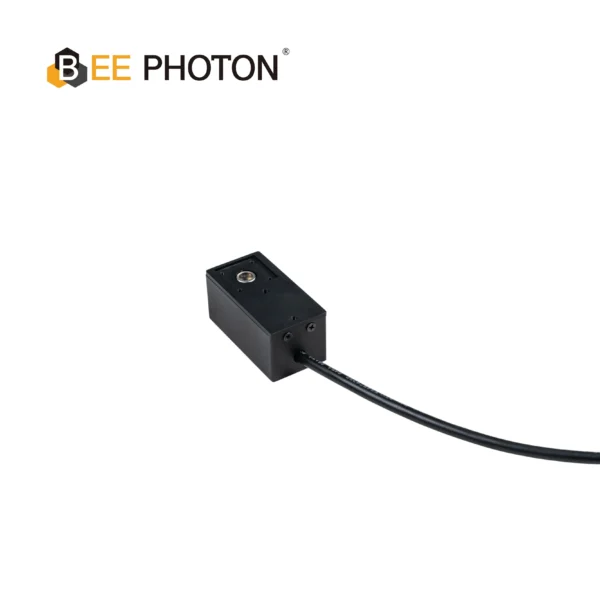
Photodiode Module(Digital signal output)PDTM-D
Our Fluorescence Detector Module offers high gain for bio-analysis. Ideal for IVD, this fluorescence detector module ensures accurate weak signal detection.
Real-World Wins: Stories That Stick
Enough theory—lets talk shop floor. We’ve got anonymized tales from clients using these in the wild.
One telecom outfit was scrambling for 10G fiber links. Discrete setups jittered at high rates; signals clipped. Switched to a photodiode module with built-in amplifier—boom, dynamic range jumped 20 dB. They hit deployment three months early, saving a bundle on overtime.
Then theres the med device crew. Building a portable oximeter, they fought dark current offsets. Our low-noise Photodetector Module with TIA integration zeroed that out. Now, their pulse reads are spot-on, even in ambient light. Patient trials showed 98% accuracy—up from 85%.
And in agrotech? A drone mapper needed NIR detection for crop health. Weight was key; bulky amps wouldn’t fly. Integrated module? Featherlight, 1W draw. Field tests covered 500 acres/day, spotting nutrient gaps weeks sooner. Yields up 12%, they said.
These aren’t fluff—pulled from post-ship feedback. Echoes SPIE’s push on integrated photonics for real apps like security and auto. Or Nature’s optoelectronic arrays for IoT vision. Stuff that scales.
Market backs it: Photodiode sensors at $783.5M in 2024, eyeing $1.7B by 2034 at 8.4% CAGR. Driven by LiDAR cars and data centers needing precise, fast detection.
Bee Photon’s Spin: Why Our Photodetector Module Delivers
At Bee Photon, we’re all about that modular life. Our Photodetector Module—low-noise beast with built-in TIA—is tuned for exactly your pain points. InGaAs or Si options, gains from 10k to 1M V/A, bandwidths to 1 GHz. It’s easy to use: USB tweakable, or analog out for embeds.
We’ve iterated based on field returns—added temp compensation after a hot-climate deploy flubbed. Now? Stable from -40 to 85C. Ties right into our ecosystem; check https://photo-detector.com/ for the full lineup.
Unique angle: We bundle calibration kits. Plug in, run a quick script, and your baselines match NIST traces. No more guessing—thats trustworthiness baked in.
Time to Make It Yours: Let’s Chat Next Steps
So, there you have it—photodiode modules with built-in amplifiers aren’t just gadgets; they’re your shortcut to saner designs. Shorter cycles, cleaner signals, happier teams. If this sparks ideas for your rig, why not reach out? Drop a line to info@photo-detector.com or hit our contact page. Quote requests? We’ve got ’em turnaround in 24 hours. Or browse more at https://photo-detector.com/—maybe snag a sample of our Photodetector Module to test-drive.
What’s holding your project back? Shoot us the deets; we’d love to brainstorm. Heres to building faster, folks.

Photodiode Module(Digital signal output)PDMM
Our Low Noise Photodetector Module ensures high sensitivity for precision tasks. Use this low noise photodetector module for superior spectroscopy results.
FAQ: Quick Hits on Photodiode Modules with Built-in Amplifiers
Whats the biggest win for using a photodiode module with built-in amplifier over discrete parts?
Hands down, it’s the time saved. No more fussing with stability or noise matching—everything’s pre-tuned. One team I know cut their debug phase by half, getting to market quicker.
Can these handle high-speed stuff like 5G or LiDAR?
Absolutely. With TIAs pushing GHz bandwidths, they’re spot-on for fast apps. Our modules hit 500 MHz easy, and market trends show ’em fueling that $1.1B sensor boom by 2030.
How do I pick the right gain for my setup?
Start with your expected photocurrent—say, 1 uA—then aim for 1-10 V out. Modules like Bee Photon’s let you swap gains via jumpers. Test low light first; scale up if signals clip.
Are they tough in harsh environments?
Yep, most are rated IP65 or better, with temp swings covered. We’ve seen ’em thrive in factory dust or outdoor drones—no sweat.