So you’re trying to detect light in your project, and now you’re stuck staring at two parts that look almost the same on Digi-Key: a photodiode and a phototransistor. Both turn light into electricity, both come in little plastic or metal cans, and both have only two or three legs. But pick the wrong one and your circuit either screams noise or barely whispers. Been there way too many times with customers.
Let me save you a couple of weeks of frustration.
What Even Are These Things? (In Plain English)
A photodiode is basically a super-fast light-sensitive diode. Light hits it → tiny current flows. Done. It’s honest, predictable, and lightning quick.
A phototransistor is a photodiode that got married to a regular transistor inside the same package. Light hits the base (the photodiode part) → the transistor says “cool, I’ll amplify that for you” and spits out a much bigger current. It’s like the photodiode’s louder cousin who had too much coffee.
That built-in amplification is the whole reason people fight about photodiode vs phototransistor.
The Big Deal Nobody Talks About Upfront: Gain
Photodiodes usually give you currents in the nanoamp to microamp range under normal light. That’s tiny. You almost always need an external amplifier (op-amp, transimpedance amp, whatever) to do anything useful.
Phototransistors? They come with gain already baked in – typically 100–1000+ (that’s the transistor’s hFE). Suddenly your microamp becomes a milliamp. You can sometimes drive an LED or even trigger a microcontroller pin directly. No extra amp needed.
Here’s a quick real-world comparison I measured last month on the bench with a cheap white LED shining from 10 cm away:
| Light Source | Photodiode Current (typical Si PIN) | Phototransistor Current (same light) | Gain you’d need externally for photodiode |
|---|---|---|---|
| Bright sunlight | ~60 µA | ~25 mA | ~400x |
| Office lighting | ~2–5 µA | ~0.5–3 mA | ~300–600x |
| Dim room | < 100 nA | ~50–200 µA | ~1000x+ |
(These are ballpark numbers from a random Si PIN Photodiode we keep on the shelf and a common Vishay BPW77NB phototransistor – your mileage will vary, but the ratio stays roughly the same.)
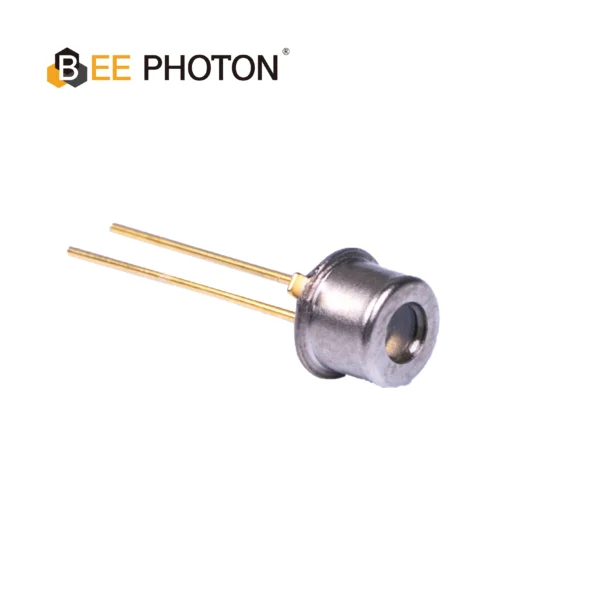
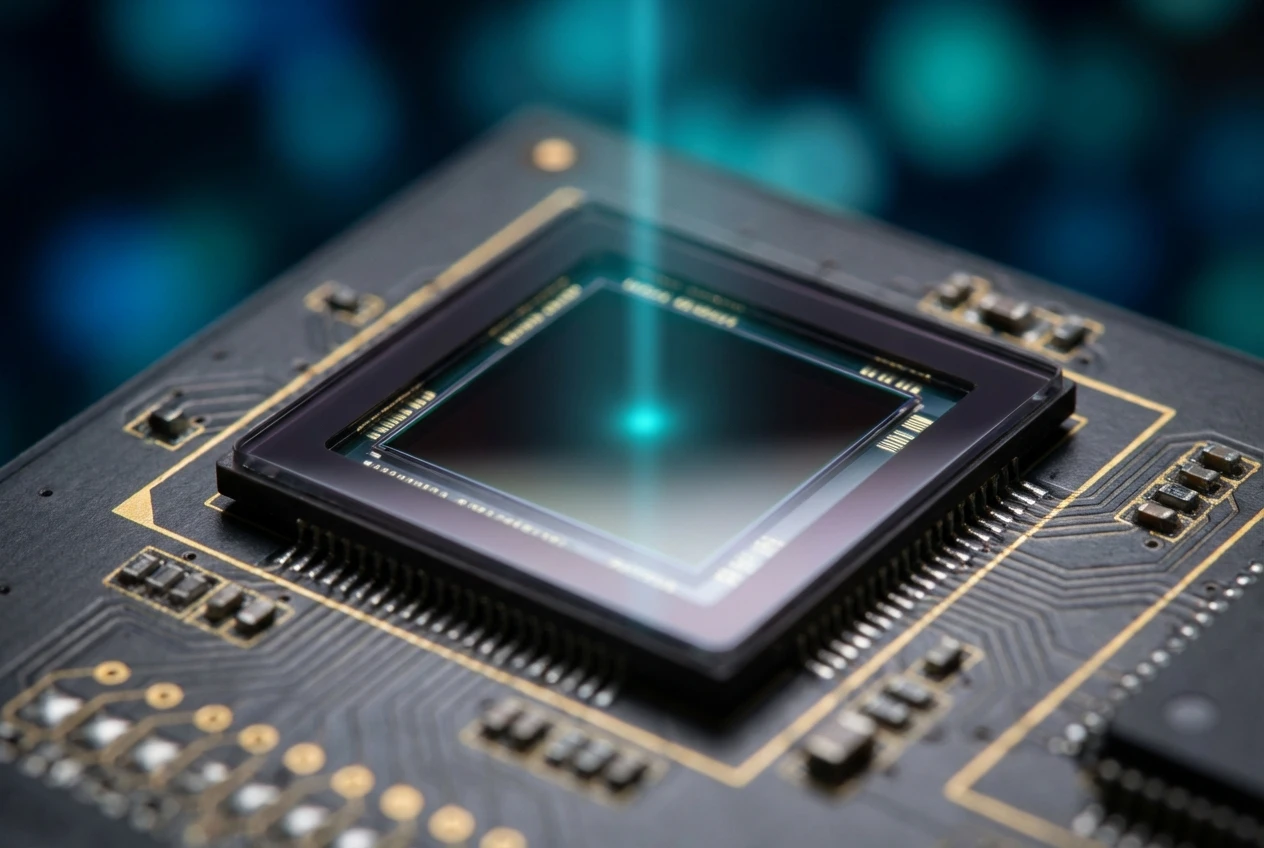
Si PIN Photodiode with low dark current (350-1060nm) PDCT01-201
Experience superior signal clarity with our Si PIN photodiode, engineered for ultra-low dark current and high stability. This photodiode ensures precise laser detection and optical measurements. Our low dark current Si PIN photodiode offers exceptional performance.
Speed: Where Photodiodes Win Every Time
Phototransistors are slowpokes because of something called storage time in the base. Typical rise/fall times:
- Good photodiode: 1–50 ns
- Phototransistor: 1–50 µs (sometimes worse)
That’s a thousand times slower. If you’re doing anything faster than a few kilohertz – think optical encoders, LIDAR, fiber receivers, high-speed comms – just walk away from phototransistors.
Noise and Linearity
Photodiodes are beautifully linear. Double the light → double the current. Almost perfect over 6–8 decades.
Phototransistors? The transistor part adds its own quirks. Linearity is decent but nowhere near a photodiode + good transimpedance amp. Also, gain drifts a lot with temperature – sometimes 1% per °C. That’s why you rarely see phototransistors in anything that needs real accuracy (scientific instruments, colorimeters, etc.).
Power Consumption & Dark Current
Photodiodes in reverse bias sip just nanoamps of dark current – some of our low-dark-current Si PIN photodiodes are under 10 pA at room temp. Phototransistors usually leak a few microamps even in total darkness. Not the end of the world for battery stuff, but worth knowing.
When I Tell Customers “Just Use a Phototransistor”
Over the years at Bee Photon these are the projects where phototransistor wins 9 times out of 10:
- Simple light barriers / object detection
- Remote control receivers (the classic 38 kHz TV remote thing)
- Coin counters, vending machines
- Automatic doors, toilet flushers (yes really)
- Low-cost flame detectors
- Anything battery-powered where you want to skip the op-amp to save a few cents and a bunch of board space
I had one guy building a laser tag system for kids. He started with photodiodes + LM358 amps. Worked okay on the bench, but once the kids started running around in bright backyards everything went haywire – too much sunlight saturating the amps. Switched to phototransistors with a simple high-pass filter and boom, rock-solid triggers even outdoors.
When I Say “No, Seriously, You Need a Photodiode”
- You care about speed > 10 kHz
- You need linearity for measurement (lux meters, spectrometers)
- You’re working with very weak signals (astronomy, fiber optics)
- Temperature stability actually matters
- You want the lowest possible noise floor
One of our customers makes medical devices that measure oxygen saturation through skin. They tried phototransistors first because “hey free gain”. Ended up with huge temperature drift and regulatory headaches. Switched to a proper Si PIN photodiode + low-noise TIA and passed FDA testing first try.
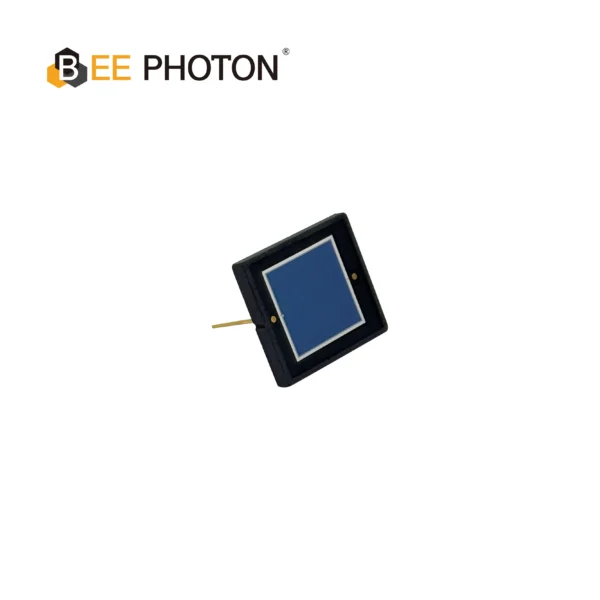
Si PIN Photodiode with low dark current (350-1060nm) PDCD100-101
Upgrade your devices with our Si PIN Photodiode for Optical Measurement. It delivers high accuracy across a 350-1060nm range with minimal dark current. Ideal for various industrial sensing and measurement applications, this high-performance sensor guarantees precision and repeatability.
Quick Decision Cheat Sheet (Copy-Paste This)
| Your Need | Pick This | Why |
|---|---|---|
| Dirt-cheap, < 5 kHz, decent light | Phototransistor | Built-in gain, fewer parts |
| Battery life is king | Phototransistor | No op-amp sucking power |
| Speed > 50 kHz | Photodiode | Phototransistors just can’t keep up |
| Accurate light measurement | Photodiode | Linear, stable, low drift |
| Super low light (starlight, etc.) | Photodiode + good amp | Phototransistor noise floor is higher |
| You already have an op-amp anyway | Photodiode | You’re paying for gain you don’t use |
My Personal Default Stack These Days
Honestly? 80% of hobby and small-commercial jobs I just slap a phototransistor in there. The time saved on layout and debugging usually outweighs the downsides. When it doesn’t work I reach for one of our Si PIN Photodiodes and a single OPA2320. Takes an extra hour on the board but sleeps better at night.
FAQ – Stuff People Always Ask Me
Q: Can I just replace a photodiode with a phototransistor in an existing circuit?
A: Sometimes yes, sometimes no. The base is floating on most phototransistors so they behave like a photodiode with huge gain. But pinouts are different (phototransistor usually has collector + emitter, photodiode is anode + cathode). Also the voltage drop and saturation behavior is totally different. Test it first.
Q: Why do some phototransistors have three legs?
A: The third leg is the base. 99% of the time you leave it unconnected – it makes the part more sensitive. Connecting a resistor from base to emitter lets you tweak gain vs speed. Cool trick, rarely needed.
Q: Are there “fast” phototransistors?
A: Yes, but they’re still 10–100× slower than a decent photodiode. If someone says “high-speed phototransistor” they usually mean a few microseconds rise time – still slow for data comms.
Wrapping This Up
Look, nobody writes 2500 words because the difference is tiny. The difference is huge once you’re past the datasheet stage and actually trying to make something work in the real world with temperature swings, dirt, and kids waving flashlights.
So:
Need simple, cheap, forgiving light detection? Phototransistor all the way.
Need precision, speed, or low noise? Grab a proper photodiode (and yes we’ve got some really nice low-dark-current ones over at Bee Photon).
Still not sure which one fits your project? Drop us a mail at info@photo-detector.com or hit the contact page here: https://photo-detector.com/contact-us/
We literally do this every day – happy to look at your schematic and tell you in plain English which one won’t bite you later.

Si PIN Photodiode with NIR sensitivity enchanced (350-1100nm) PDCC100-501
Achieve uniform results with our High Consistency Si PIN Diode for medical devices. This COB photodiode provides dependable NIR sensitivity for health monitoring. Trust our High Consistency Si PIN Diode.