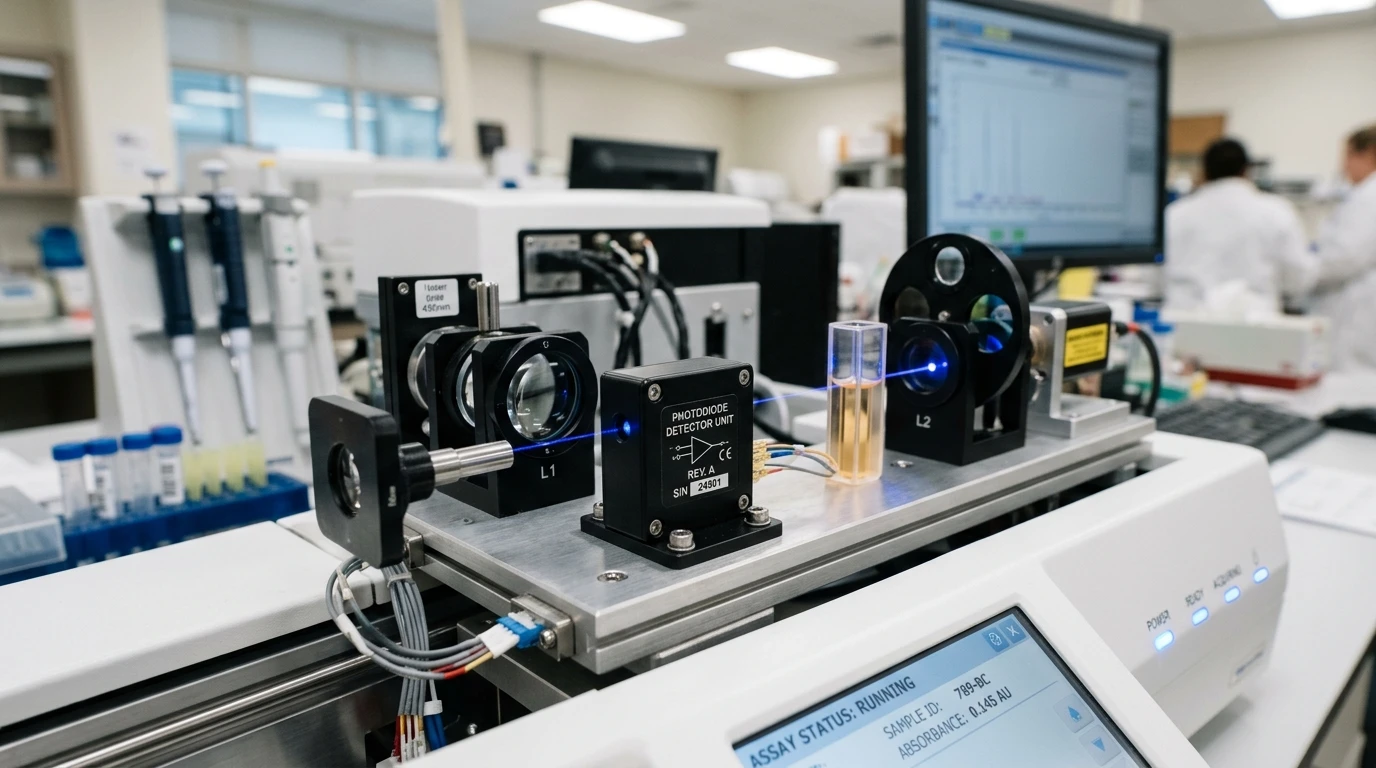
Ever stared at a datasheet for photodiodes and felt like your brain’s about to short-circuit? Yeah, me too. Back when I first dove into this world at Bee Photon, I was knee-deep in a fiber optic project, trying to figure out if a basic PIN would cut it or if we needed the fancy avalanche photodiode kick. It’s that moment in the project’s kickoff where you’re sketching out the tech roadmap, weighing stuff like how faint a signal you can catch without breaking the bank. That’s the crux of PIN diode vs APD—it’s not just specs on paper; it’s about making your prototype hum without turning into a headache later.
If you’re an engineer sketching out optical sensing or comms gear, you’ve probably hit this fork: go simple with a PIN for straightforward detection, or amp it up with an APD for those whisper-quiet signals? We’ll break it down casual-like, pulling from years of tweaking these in real rigs. No fluff, just the nuts and bolts to help you decide. And hey, if it clicks, swing by Bee Photon—we’ve got solid options like our Si PIN photodiodes, tuned for everything from lab tests to field deploys.
What’s a PIN Photodiode, Anyway? The Reliable Workhorse
Picture this: a photodiode’s like the eyes of your circuit, turning light into electrical zaps. A PIN one’s the no-drama version—P for positive layer, I for that intrinsic zone that’s mostly empty (fewer carriers messing things up), and N for negative. It’s built wide and flat, so light hits and electrons zip across fast, no big multipliers needed.
From what I’ve seen in builds, PINs shine in setups where you got decent light levels. They’re quick on the draw—response times dipping into picoseconds—and don’t guzzle power like some divas. Dark current? Super low, meaning less noise when the room’s dim but not pitch black. Cost-wise, they’re the budget buddy; you can snag quality ones without refinancing your startup.
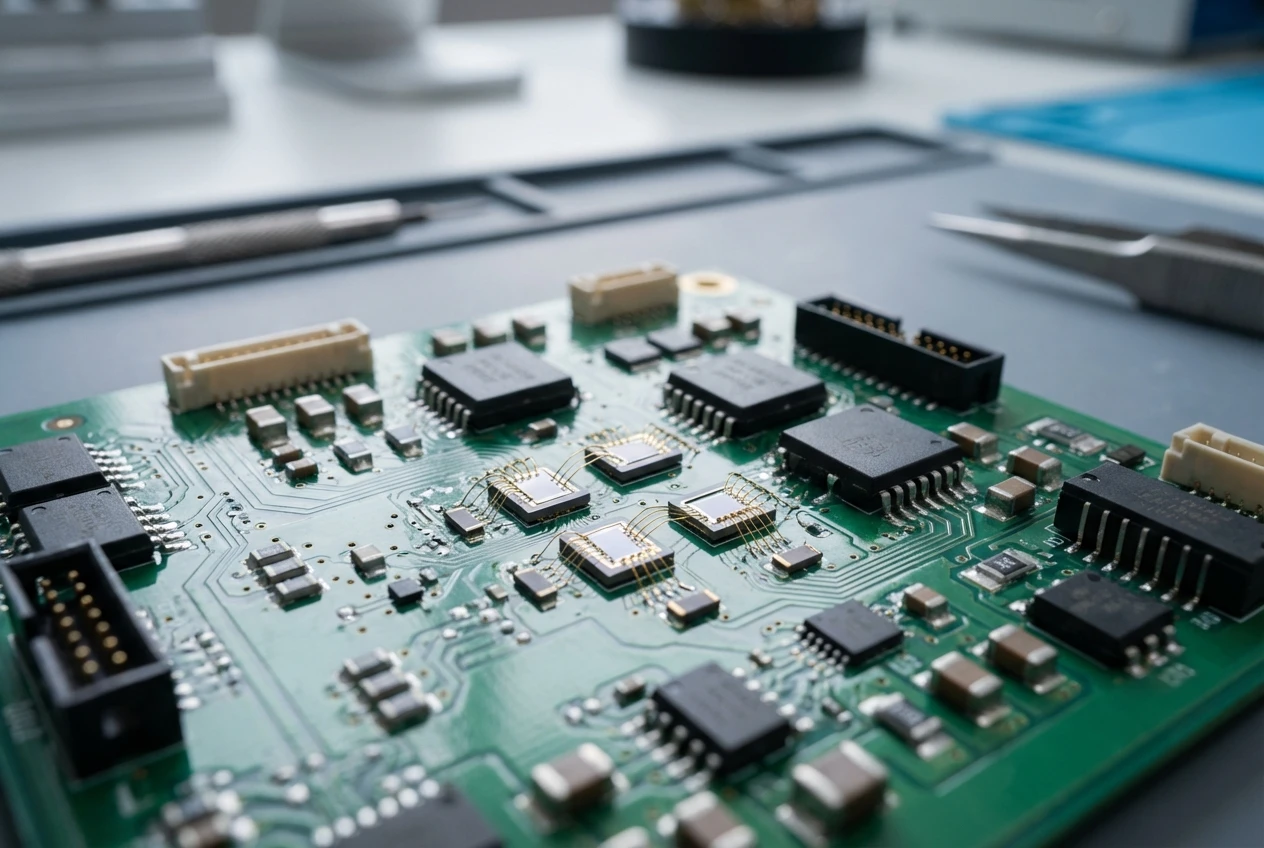
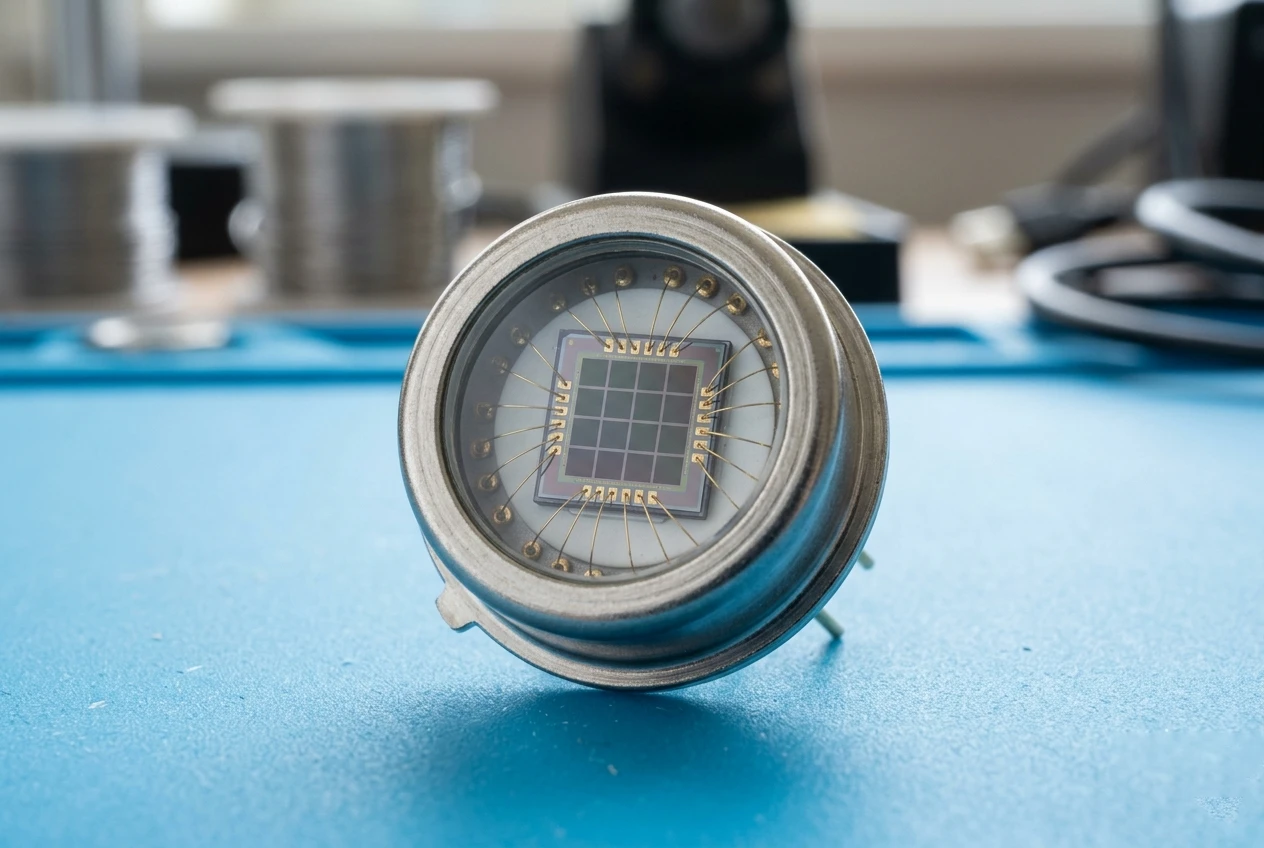
Take our Si PIN photodiodes at Bee Photon—they’re silicon-based beasts with active areas up to 10mm diameter, handling wavelengths from UV to near-IR. We’ve shipped these to folks doing barcode scanners and basic telecom links. Simple integration, too; slap ’em on a PCB with a transimpedance amp, and you’re golden. No exotic cooling or bias voltages to babysit.
But let’s not kid ourselves—PINs got limits. If your signal’s fainter than a moth’s whisper, sensitivity might leave you squinting at the scope.
Enter the Avalanche Photodiode: The Sensitivity Superstar
Now, flip to APD—avalanche photodiode. This bad boy’s got an internal party trick: ionization avalanche. Light sparks a few carriers, they snowball through a high-field zone, multiplying like rabbits. Boom—gain up to 100x or more, without cranking external amps.
I’ve wired these into low-light lidar prototypes, and man, the difference hits you. Where a PIN might tap out at -25 dBm, an APD pulls in -40 dBm easy, thanks to that internal boost. It’s a game-changer for apps like long-haul fiber or fluorescence microscopy, where every photon counts.
Downsides? Noise ramps up—excess noise factor can chew into your SNR, especially at high gains. And they’re pricier, often 5-10x a PIN’s tag, plus you need precise temp control to keep the gain steady. Circuit-wise, it’s more fiddly: high-voltage bias (50-200V), and watch for breakdown if you push too hard.
At Bee Photon, we don’t stock APDs off-the-shelf (yet—stay tuned), but we’ve consulted on integrations where they pair sweet with our PIN lineup for hybrid sensing. Think automotive ADAS, where APD handles the dark-road gloom.
Head-to-Head: PIN Diode vs APD Breakdown
Alright, time to stack ’em up. I’ve pulled together a quick table from specs we’ve tested and cross-checked with industry benchmarks. This ain’t theory; it’s from oscilloscope traces and BER plots in actual loops.
| Aspect | PIN Photodiode | Avalanche Photodiode (APD) |
|---|---|---|
| Sensitivity | Moderate (e.g., -20 to -30 dBm typical) | High ( -35 to -45 dBm w/ 10-100x gain) |
| Speed/Response | Fast (10-100 ps rise time) | Comparable or faster, but noise limits effective BW |
| Cost | Low ($5-50 per unit) | Higher ($50-500+) |
| Circuit Complexity | Basic (low bias, simple amp) | Advanced (high-voltage supply, temp stabilization) |
| Noise Profile | Mostly thermal, low dark current | Excess avalanche noise, higher overall |
| Power Draw | Minimal | Higher due to bias and cooling |
See? PIN’s your chill pick for balanced runs; APD’s the overachiever for edge cases. In one gig I consulted on, swapping to APD bumped detection range by 30% in a 10Gbps link, but we burned an extra $2k on the board revs.
Sensitivity: The Make-or-Break Factor in PIN vs APD
Sensitivity’s where the rubber meets the road—or photons hit the junction. For PIN, it’s straight-up quantum efficiency: maybe 0.7-0.9 electrons per photon, no free lunch. Solid for solar monitoring or position sensing, where light’s plentiful.
APD flips the script with multiplication. Studies show gains pushing responsivity from 0.5 A/W to 50 A/W at 1550nm. I’ve chased faint returns in oceanographic sensors; a PIN setup drowned in shot noise, but APD lit it up like daylight. Just remember, that boost ain’t free—noise equivalent power (NEP) can spike if gain’s mismatched.
Pro tip from the field: Match your wavelength. Our Si PIN photodiodes peak at 400-1100nm, perfect for visible apps. For IR-heavy stuff, APDs in InGaAs steal the show, but that’s another budget chat.
Speed Demons: How Quick Do They React?
Nobody wants a sluggish detector in a high-speed data stream. PINs clock in with bandwidths over 10 GHz easy, thanks to that drift layer keeping carriers in line.
APDs match that pace, sometimes edging ahead in low-signal regimes ’cause the gain offsets capacitance. But here’s the rub: at high speeds, avalanche noise muddies the eye diagram, forcing lower bit rates unless you dial gain just right. In a 40G fiber testbed I helped debug, PIN held steady; APD needed cryogenic tweaks to not flake.
Bottom line? If your app’s screaming for 100G+, start with PIN and scale if sensitivity bites.
Cost Realities: Budget vs Bang in Avalanche Photodiode Land
Money talks, especially in prototypes. PINs are the thrift shop find—bulk buys dip under $10 for TO-can packages. We’ve quoted Si PIN photodiodes to startups at volumes that keep R&D lean.
APDs? They’re the luxury ride. Fabrication’s trickier—guard rings, precise doping—and yields tank on defects. Expect $100+ for a basic InP unit, ballooning with hermetics or arrays. Total system cost? Factor in the HV supply (another $50-200) and shielding.
I’ve advised teams to mock up with PIN first, validate, then APD-ify only critical channels. Saved one client 40% on a multi-node sensor net.
Circuit Headaches: Keeping It Simple or Going Full Tinkerer?
Integration’s where dreams die or thrive. PIN’s a breeze: 5-10V reverse bias, TIA frontend, done. Low cap means wide BW without heroics.
APD demands respect—bias circuits hit 100V, feedback loops for gain stability, and thermistors to fight temp drift (gain varies 5-10%/°C). I’ve spent nights chasing oscillations in APD boards; one glitchy cap, and your BER shoots to the moon.
For noobs, stick PIN. Seasoned? APD unlocks magic, but prototype with sims first. Bee Photon’s got resources on our site—contact us for wiring tips.
Real Stories from the Bench: Where PIN and APD Shined (or Stumbled)
Let’s get personal. Early in my Bee Photon days, we had this anonymous telecom outfit building a 100km repeaterless link. PINs handled the sunny-day tests fine, but night sims? Signal vanished. Switched to APDs—sensitivity jumped, link budget closed by 15 dB. Cost? Ouch, but ROI hit in months via fewer nodes.
Flip side: A medical imaging startup went APD for fluorescence depth, only to wrestle noise in vivo. Dialed back to hybrid—PIN for bright fields, APD selective. Cut complexity 25%, sped FDA path.
Or take environmental monitoring: One team I chatted with deployed PIN arrays in drone-based gas sniffers. Cheap, rugged, caught plumes at 500m. APD would’ve overkilled for daylight ops.
These aren’t hypotheticals; they’re war stories from scopes and spreadsheets. Your app might echo one—low-light defense? APD. Cost-crunched IoT? PIN all day.
Your Call: When to Go PIN Diode vs APD in Tech Roadmapping
So, project’s alpha stage: Map your needs. Got ample light, tight budget, simple stack? PIN’s your steed. Faint signals demand super-sensitivity? APD, but brace for the extras.
Run the math: Sensitivity needs = min power / (responsivity * gain). If PIN’s eta falls short by >10 dB, avalanche time. Factor speed via RC limits, cost via BOM tools, complexity by headcount.
I’ve guided dozens through this—most land PIN for 80% of cases, APD for the clutch 20%. Whichever, Bee Photon’s Si PIN photodiodes are vetted for quick wins. Curious how it’d fit your schematic? Drop a line.
FAQ: Quick Hits on PIN vs APD
Q: Can I mix PIN and APD in one system for better trade-offs?
A: Totally—hybrids rock for zoned sensing. Like, PIN for high-flux channels, APD for dim ones. We’ve seen it slash power 15% in multi-spectral cams.
Q: What’s the real-world sensitivity edge of APD over PIN?
A: Ballpark, APDs pull 10-50x better in low light, per Hamamatsu data. But test your wavelengths; Si PINs crush APDs in blue light.
Q: How do I spec cost for APD circuits without surprises?
A: Budget 2-3x the diode for support gear—HV, feedback. Start with eval kits; Bee Photon can quote bundles via contact us.
Q: Are there apps where APD’s noise kills the deal?
A: Yeah, high-speed DC-free links. Excess noise floors SNR; stick PIN there for cleaner eyes.
Wrapping this up, picking between PIN diode vs APD boils down to your signal’s story—faint and fast, or steady and cheap? You’ve got the tools now to roadmap smart. If it’s nagging at you, why not chat? Hit info@photo-detector.com or reach out on our contact page for a no-BS quote or deeper dive. We’ve turned fuzzy ideas into shipping products more times than I can count. What’s your project’s light level looking like?