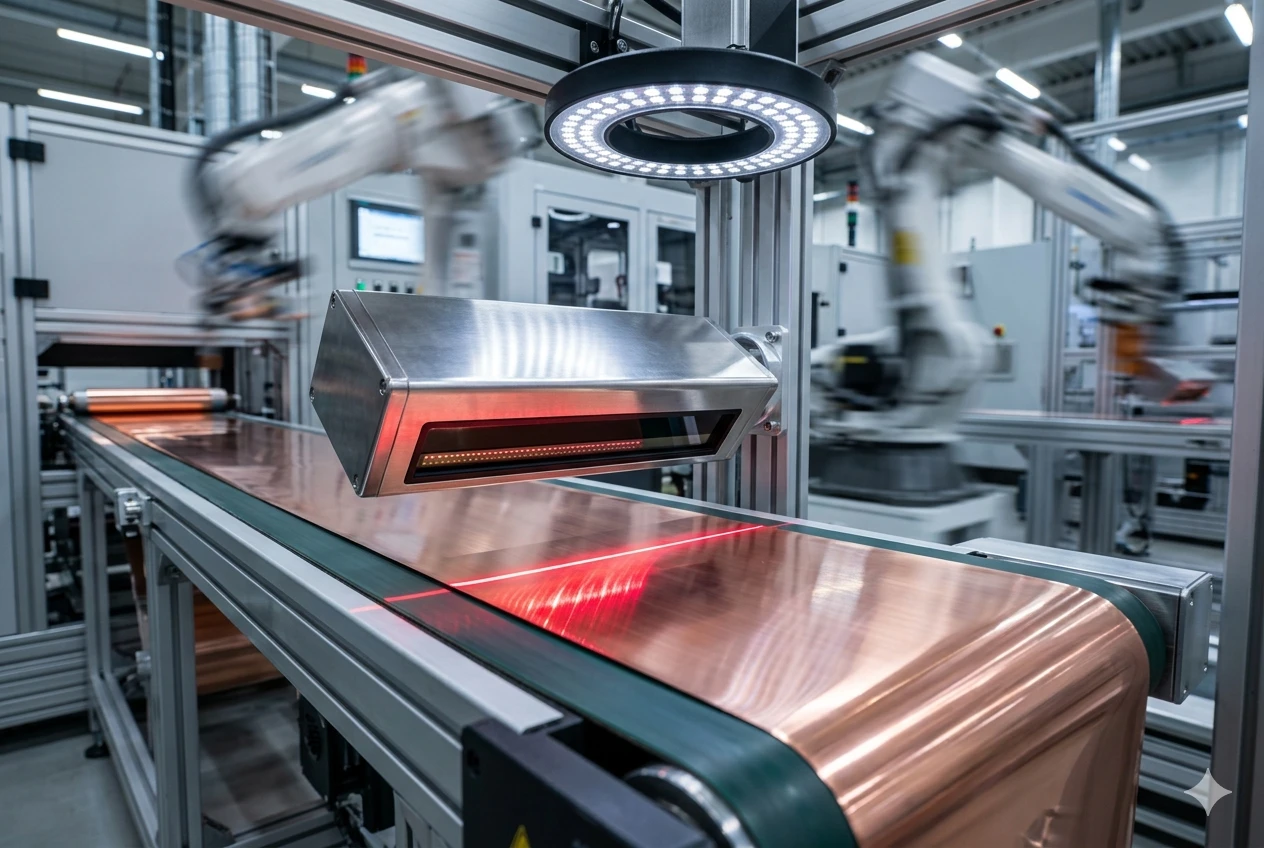
Hey folks working on calibration systems for precision machinery or semiconductor gear – if you’re tired of dealing with finicky alignment tools that just don’t cut it for sub-micron work, let’s chat about position sensitive detectors (or PSDs as most call ’em). These little guys have been game-changers in setups where laser alignment has to be spot-on, especially in industrial automation environments.
I’ve spent years tinkering with optical sensors in real factory floors and cleanrooms, and honestly, when it comes to getting that perfect beam position for calibrating a CNC spindle or aligning wafer stages, a good position sensitive detector often beats out other options. No pixel noise like CCDs, no dead zones messing up your readings – just smooth, fast position data from a laser spot.
In this piece, I’ll walk you through why PSDs shine in these high-stakes apps, how they actually work without getting too textbook-y, real-world perks over alternatives, and some practical tips we’ve picked up along the way at Bee Photon. If you’re building or upgrading a calibration rig, stick around – might save you some headaches.
What Exactly Is a Position Sensitive Detector?
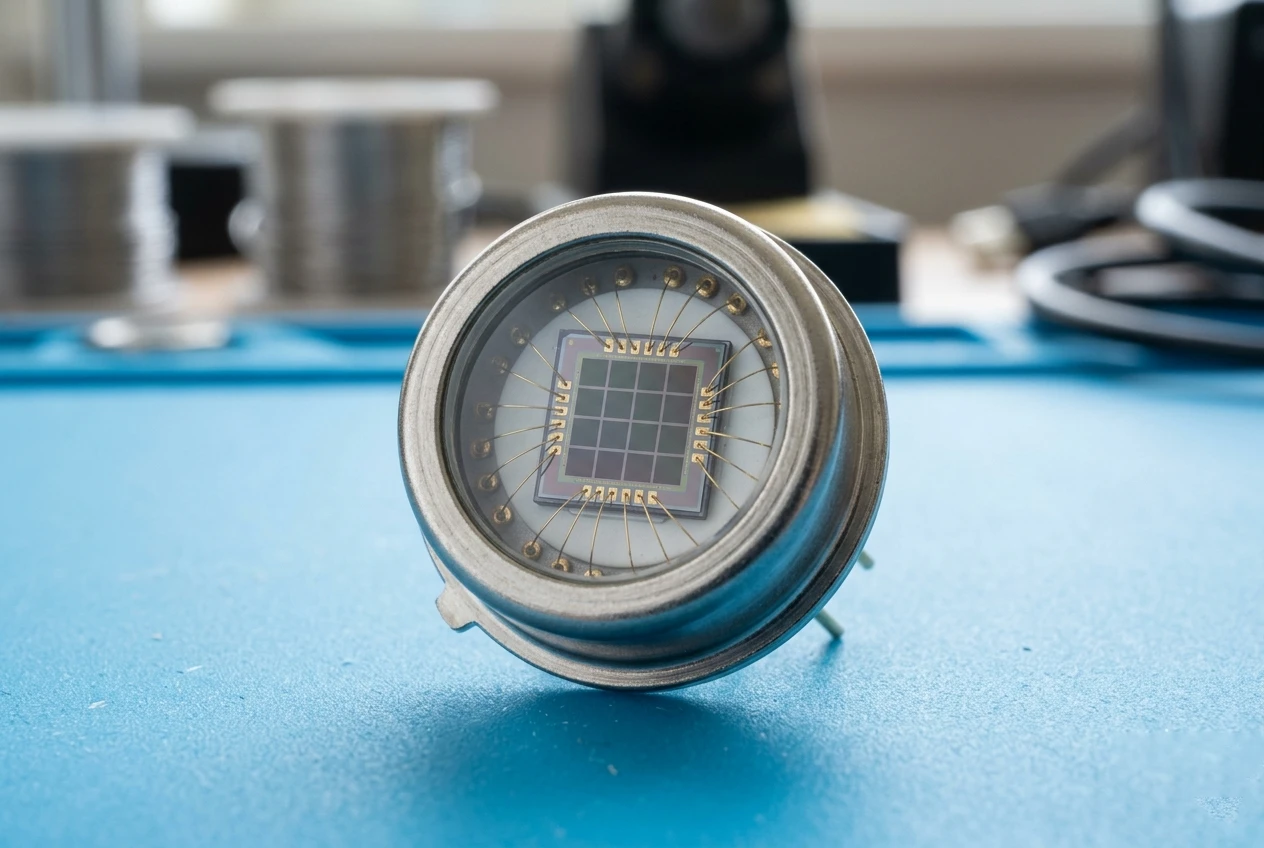
Picture this: a laser beam hits a sensor surface, and instead of just telling you “yep, light’s there,” the sensor spits out exactly where on its face that beam landed. That’s the magic of a position sensitive detector.
Most PSDs use a lateral effect photodiode setup – basically a big PIN photodiode with resistive layers on top. When light hits, photocurrent spreads out to electrodes at the edges. The position comes from comparing currents from opposite sides. Simple math like x = (I_right – I_left) / (I_right + I_left) * some scaling factor gives you the spot location. For 2D versions, you get X and Y coords the same way.
Unlike quadrant photodiodes (those four-segment ones), true PSDs have no gaps between “pixels” – it’s continuous. That means better linearity across a bigger area, and they don’t freak out if the beam wanders a bit off-center.
From what we’ve seen in the field, typical silicon PSDs handle 400-1100 nm wavelengths nicely, while InGaAs versions push into near-IR (up to ~1700 nm) for those longer-wavelength lasers common in semiconductor tools.

800-1700nm InGaAs PIN Photodiode PDIT05-222N
Maximize signal detection with our High Responsivity InGaAs Detector.Bee Photon offers this sensitive photodiode for precise measurement in spectroscopy and medical diagnostics.
Why PSDs Win for Laser Alignment in Precision Machinery
When you’re aligning a precision lathe or calibrating a lithography stage, every micron counts. We’ve had clients come to us frustrated with quadrant detectors because once the beam shifts more than half its diameter, the signal saturates or gets nonlinear. PSDs? They keep giving monotonic output over almost the full active area.
Key perks we’ve noticed:
- High resolution: Sub-micron, often down to 0.1-1 µm depending on setup and beam quality. Some lab tests hit nanometer levels with low-noise amps.
- Fast response: Bandwidths in the kHz to MHz range – perfect for real-time feedback loops in automated systems.
- Wide dynamic range: Handles beams from microwatts to milliwatts without much fuss.
- Independent of spot shape: As long as you can find the centroid, irregular beams (say from multimode fibers) still work okay.
In industrial automation, where vibration or thermal drift can throw things off, PSDs provide that continuous analog feedback needed for closed-loop control. We’ve used them to stabilize laser paths in multi-axis stages, cutting alignment time from hours to minutes.
How PSDs Stack Up Against Other Position Sensors
Let’s get real – no sensor is perfect for everything. Here’s a quick comparison table based on stuff we’ve tested and seen in actual deployments:
| Feature | Position Sensitive Detector (PSD) | Quadrant Photodiode | CCD/CMOS Array | Laser Interferometer |
|---|---|---|---|---|
| Position Resolution | 0.1–1 µm typical | ~0.01–0.1 µm (center) | Pixel-limited (~µm) | Sub-nm possible |
| Active Area Coverage | Large, continuous | Limited, saturates off-center | Full frame | Point measurement |
| Speed | Very fast (analog, ns-µs) | Fast | Frame-rate limited | Moderate |
| Cost | Medium | Low-Medium | Medium-High | High |
| Best For | Real-time beam tracking, wide range alignment | Precise centering | Imaging/multiple spots | Ultra-precision distance |
| Drawbacks | Needs good electronics for noise | Nonlinear at edges | Slower, complex processing | Expensive, sensitive to env |
For most laser alignment jobs in machine tools or semiconductor calibration, PSDs hit the sweet spot – accurate enough without the overkill (and price) of interferometers.
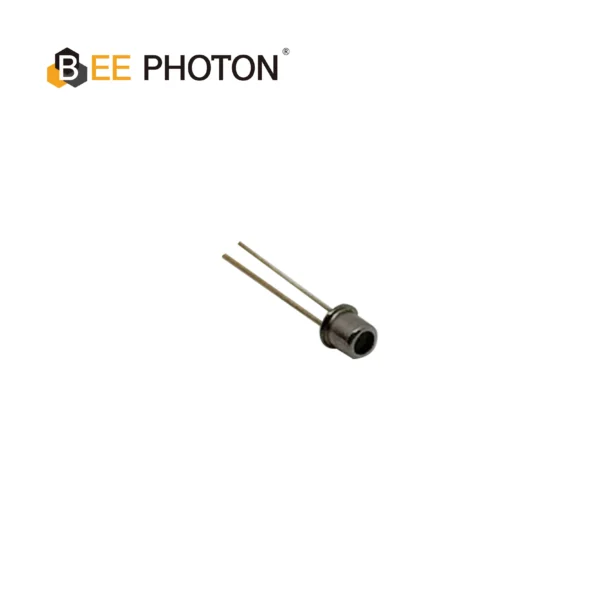
800-1700nm InGaAs PIN Photodiode PDIT03-231N
Our InGaAs PIN Diode for Optical Communication is engineered for reliable fiber optic networks.This TO-packaged diode provides high sensitivity for optical communication systems, ensuring excellent signal integrity.
Real-World Applications in Precision Machining and Semiconductor Calibration
We’ve shipped quite a few PSD-based systems over the years, and here are some anonymized examples that show where they really pay off.
One client was tweaking a 5-axis CNC for aerospace parts. They needed to align the tool spindle to the laser reference line within 2 µm over 1 meter travel. Using a duo-lateral PSD (two axes), they closed the loop on piezo stages – alignment repeatability dropped to under 0.5 µm. Downtime for recalibration went way down.
In semiconductor land, a fab tool maker integrated our PSD modules into wafer probers. The position sensitive detector tracked laser spots for stage calibration, catching thermal expansions that would’ve thrown off nanometer overlays. Combined with InGaAs PIN photodiodes for IR lasers, they handled both visible setup beams and process wavelengths.
Another case: automated optical inspection rigs. PSDs fed back position data to keep inspection lasers dead-on, improving defect detection in high-throughput lines.
These aren’t lab toys – they’re surviving 24/7 in dusty or cleanroom settings with proper housing.
Key Specs to Look For in a PSD for Your Setup
When picking a position sensitive detector, don’t just grab the first one. Here’s what matters for industrial use:
- Active area size – Bigger (10-20 mm) gives more forgiveness in initial setup.
- Wavelength range – Match your laser (Si for VIS, InGaAs for NIR/SWIR).
- Position resolution & linearity – Look for <1% nonlinearity; some hit 0.1%.
- Rise time – Faster is better for dynamic alignment.
- Noise floor – Critical for low-light conditions.
We at Bee Photon focus on rugged designs with good temp stability – check our offerings if you’re shopping.
For related detectors, see our InGaAs PIN photodiodes – great companions in multi-wavelength systems.
Tips and Tricks from the Field
After messing with dozens of setups, a few things stand out:
- Use a clean, collimated laser – spot size around 0.5-2 mm works best.
- Mount the PSD on a stable base; vibration kills resolution.
- Amplify signals close to the detector to beat noise.
- Calibrate against known positions – lookup tables fix any residual nonlinearity.
- For closed-loop, pair with fast actuators like piezos.
We’ve seen folks overlook ambient light – modulate the laser and lock-in detect to kill stray light issues.
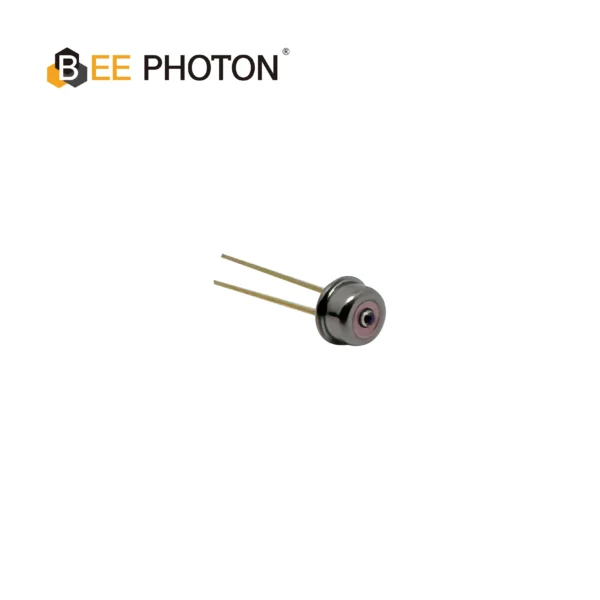
800-1700nm InGaAs PIN Photodiode PDIT005-224A
Bee Photon’s TO-18 InGaAs PIN Photodiode delivers exceptional performance for industrial sensing and control. This robust photodiode offers high reliability for your most critical applications.
Wrapping It Up – Ready to Level Up Your Alignment Game?
If you’re knee-deep in developing calibration systems for precision machines or semiconductor equipment, a solid position sensitive detector can make your life easier. Better accuracy, faster feedback, less rework – it all adds up.
At Bee Photon, we’ve built our rep on delivering PSDs (and supporting optics) that actually work in tough industrial spots. Whether you need off-the-shelf or custom tweaks, we’re here.
Drop us a line for a chat, quote, or just to bounce ideas. Visit our contact page or shoot an email to info@photo-detector.com. Let’s see how we can help dial in your laser alignment setup.
FAQ
What makes a position sensitive detector better than a quadrant photodiode for long-range alignment?
Quadrants are awesome for super-precise centering, but they lose steam when the beam drifts far – signal flattens or inverts. PSDs give smooth output over a much wider range, so for initial coarse alignment or tracking over distance in industrial setups, they’re usually the smarter pick.
Can PSDs handle vibration in a factory environment?
Yeah, with proper mounting and maybe some damping, they do fine. We’ve had systems running on machine tools where vibrations are constant – the key is short cables, shielded amps, and sometimes averaging signals. Resolution might dip a tad, but still way better than many alternatives.
How do I integrate a PSD into my existing laser alignment system?
Start with the datasheet for pinout and bias needs. Most need simple transimpedance amps to convert currents to voltage. For feedback, feed X/Y positions into your controller – many PLCs or motion cards handle analog inputs. If you’re new to it, we can walk you through basics or supply eval kits.