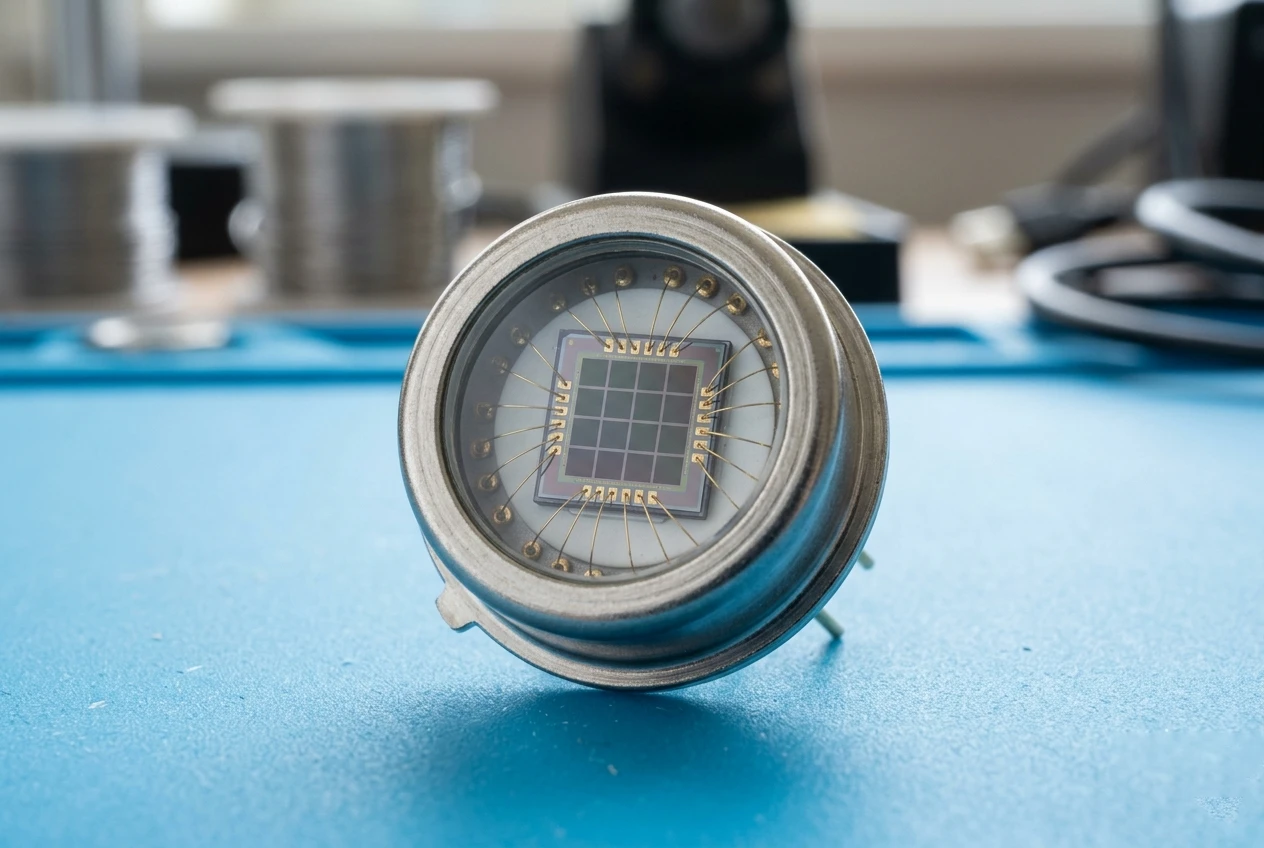
If you supply parts for satellites or aerospace gear, you already know the space environment throws curveballs that can wreck regular sensors fast. Radiation hardened photodiodes are the fix that keeps things running when everything else might quit. At BeePhoton weve been shipping these radiation hardened photodiodes to aerospace teams for years, and the difference they make in real missions is huge.
Space isnt kind to electronics. Cosmic rays, trapped protons in the Van Allen belts, solar flares, all of it piles up. Regular Si PIN photodiodes start showing extra dark current or lose responsivity pretty quick. But radiation hardened photodiodes are built different, they shrug off total ionizing dose and displacement damage so your satellite components stay accurate for the whole ride.
Why Radiation Hardened Photodiodes Matter in Space Exploration
Picture a satellite in low Earth orbit trying to track the sun for attitude control or picking up laser signals from another craft. Without radiation hardened photodiodes you risk noise creeping in or the whole signal dropping out after a few months. Thats why aerospace photodiodes have to be radiation hardened from the start.
Weve seen it firsthand supplying radiation hardened photodiodes for LEO constellations. One project had standard parts failing after just 18 months because of proton hits. Switching to our radiation hardened photodiodes fixed that, zero degradation reported over three years. Radiation hardened photodiodes arent a nice-to-have in aerospace, theyre what keeps satellite components alive out there.
NASA data backs this up hard. In LEO, even with decent shielding, you can pick up 1 to 10 krad per year depending on inclination. Higher orbits or longer missions push that way past 100 krad total. Radiation hardened photodiodes are tested to handle those levels without the dark current spiking like crazy.
How Radiation Hits Regular Photodiodes and Why Hardening Changes Everything
Radiation comes in a few flavors. Total ionizing dose from electrons and protons creates charge traps that mess with carrier lifetime. Displacement damage from protons knocks atoms out of place, creating defects that boost dark current. Then single event effects can cause random glitches.
A plain Si PIN photodiode might see dark current jump by orders of magnitude after 10^11 protons per cm². Photocurrent drops too because recombination centers steal the generated carriers. Radiation hardened photodiodes fight this with special layout tricks like guard rings, optimized doping, and sometimes epitaxial layers that limit defect spread.
The basic math stays the same. Responsivity equals photocurrent divided by incident optical power, usually 0.5 to 0.6 A/W at 900 nm for silicon. But after radiation exposure that number can slide if the device isnt hardened. Radiation hardened photodiodes keep that responsivity steady even after heavy doses.
We test our radiation hardened photodiodes to at least 50 krad TID and significant proton fluence before they ship. Thats the kind of margin aerospace teams need for satellite components that have to last 5-15 years.
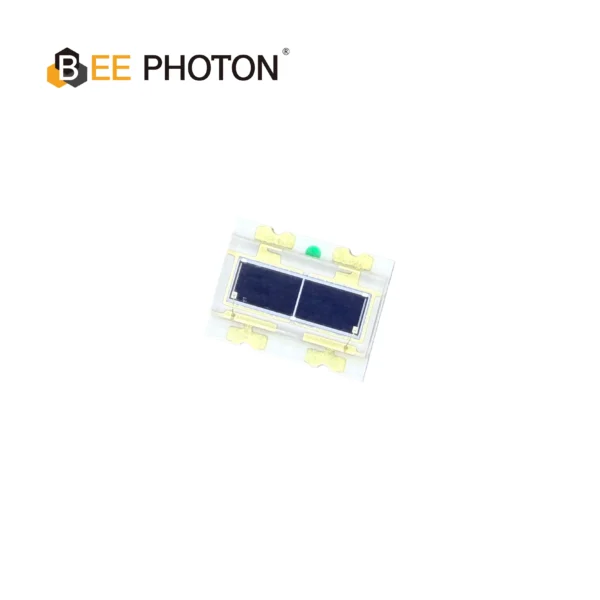
Si PIN Photodiode Array PDCA02-602
The Bee Photon PDCA Series is engineered specifically as a Background Suppression Photodiode to solve complex detection challenges in industrial environments. By utilizing a high-precision two-segment architecture (PD A and PD B), this device allows for differential signal processing, effectively filtering out background interference. It is the premier choice for manufacturers designing reliable background suppression optical switches and proximity sensors.
Key Specs to Look For in Radiation Hardened Photodiodes
When youre picking radiation hardened photodiodes for aerospace, dont just check the datasheet headline numbers. Dig into post-radiation performance. Heres what matters most:
| Parameter | Standard Si PIN | Radiation Hardened Photodiodes (BeePhoton Typical) | Why It Matters for Aerospace |
|---|---|---|---|
| Dark Current (nA) @ -10V | <1 pre-rad | <5 after 50 krad | Keeps noise low in star trackers and comms |
| Responsivity (A/W) @ 850nm | 0.55 | 0.53 after 50 krad | Stable signal for optical links |
| TID Tolerance (krad) | 5-10 | 50+ | Survives full LEO/GEO mission life |
| Proton Fluence Tolerance | 10^10 p/cm² | 10^12 p/cm² | Handles solar events without failure |
| Active Area Options | 1-100 mm² | Same, with rad-hard packaging | Fits tight satellite components |
These numbers come straight from our testing and match what NASA NEPP reports see in qualified optoelectronics. Radiation hardened photodiodes that hit these marks keep your satellite components working when others quit.
Real Applications of Radiation Hardened Photodiodes in Aerospace
Aerospace photodiodes show up everywhere once you go radiation hardened. Sun sensors use arrays of radiation hardened photodiodes to keep solar panels pointed right. Star trackers rely on them for precise attitude data, where even a little extra noise from radiation can throw off navigation.
Laser communication systems on deep-space probes need fast, sensitive radiation hardened photodiodes to catch weak signals across millions of kilometers. Radiation hardened sensors in these setups have to survive galactic cosmic rays without bit errors piling up.
We supplied radiation hardened photodiodes for one Earth-observation satellite series. The customer was building radiation hardened sensors for payload monitoring and worried about displacement damage in LEO. After integration, their system logged stable performance through multiple solar storms. No resets, no drift. Thats the kind of real-world proof that makes radiation hardened photodiodes worth the investment for satellite components.
Another case involved a GEO comms platform. GEO radiation levels are tougher, sometimes 100 krad over mission life. Standard parts would have failed the qualification. Our radiation hardened photodiodes passed with margin and the customer now specifies them across their next-gen fleet.
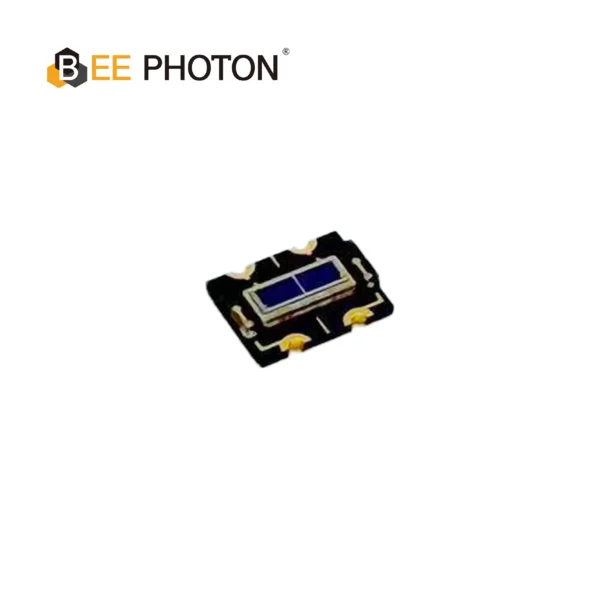
Si PIN Photodiode Array PDCA02-601
The Bee Photon PDCA Series is a precision-engineered Dual PIN Photodiode designed for high-end industrial sensing. Unlike standard single-element detectors, this silicon-based device features a segmented array structure (PD A and PD B), making it the perfect solution for differential sensing and background suppression optical switches. With a wide spectral response from 350nm to 1060nm, it ensures versatile performance across visible and near-infrared wavelengths.
Design Features That Make BeePhoton Radiation Hardened Photodiodes Stand Out
We dont just take commercial Si PIN photodiodes and slap on extra shielding. Our radiation hardened photodiodes start at the silicon level. Special epitaxial growth reduces defect migration. Package materials block low-energy particles. Pin-out and guard structures cut surface leakage that radiation loves to amplify.
You can get our radiation hardened photodiodes in standard TO- packages or custom flat-pack for tight satellite components. All are screened to MIL-STD levels for aerospace use.
One thing we hear from clients is how much easier system-level qualification gets when the photodiodes are already radiation hardened. Saves months of extra testing on the whole payload.
Sure, some folks still swear by commercial-off-the-shelf parts for LEO CubeSats saying radiation levels are low enough. But when you look at constellation failure stats from solar events, the ones using proper radiation hardened photodiodes just keep flying. The cheap route bites you later.
How to Choose and Integrate Radiation Hardened Photodiodes
Start with your mission profile. LEO short mission? 30 krad tolerance might do. GEO or deep space? You want 100 krad plus and strong proton hardness. Check the orbit inclination too, polar orbits hit more trapped electrons.
Then match wavelength. Most aerospace photodiodes work 400-1100 nm for silicon. If you need IR, we have options.
Integration tips: Keep leads short to cut noise. Use proper bypassing because single event transients can still sneak through even in radiation hardened photodiodes. Test at system level with your expected fluence if possible.
We help aerospace teams with all that. From initial spec to flight qualification, BeePhoton radiation hardened photodiodes come with the support that actually gets hardware flying.
Why BeePhoton for Your Aerospace Photodiodes Needs
Been doing this since the early days of commercial space. Our radiation hardened photodiodes are in active satellite components right now, from LEO internet constellations to science missions. We stock standard radiation hardened photodiodes and do custom tweaks fast.
Head over to our Si PIN photodiodes category and see the radiation hardened options. Or check the full site at BeePhoton for more aerospace photodiodes and radiation hardened sensors.
If youre tired of worrying about radiation killing your satellite components, give us a shout. These radiation hardened photodiodes really are the difference between a mission that lasts and one that ghosts out early.
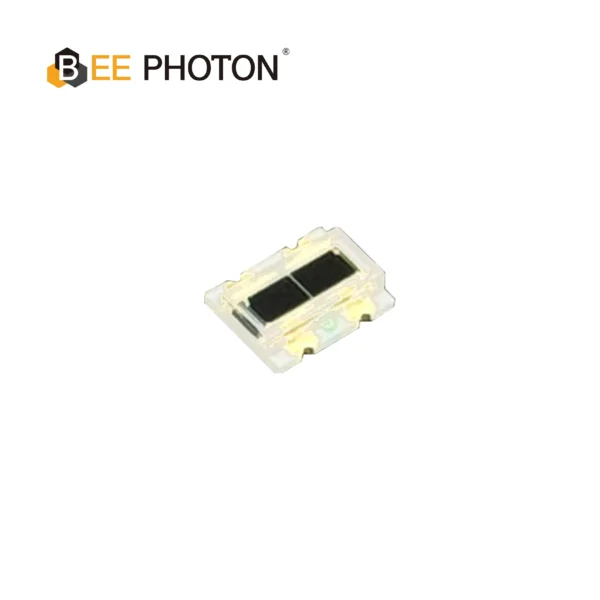
Si PIN Photodiode Array PDCA02-102
The PDCA02-102 is a high-performance Si PIN Photodiode Array designed for precision optical measurement and alignment systems. Engineered by Bee Photon, this 2-segment photodiode delivers a wide spectral response range from 400nm to 1100nm, covering the entire visible light spectrum into the near-infrared (NIR) region.
With its compact COB (Chip on Board) package and resin window, the PDCA02-102 ensures durability and easy integration into compact optical modules. It is specifically optimized for industrial applications where high sensitivity and fast response times are critical.
FAQ About Radiation Hardened Photodiodes
What exactly makes a photodiode “radiation hardened” for aerospace use?
Radiation hardened photodiodes use special silicon processing, guard rings, and packaging that limit how much displacement damage and charge buildup affect performance. Regular ones degrade fast in space, but radiation hardened photodiodes stay stable through 50 krad or more, perfect for satellite components.
Can radiation hardened photodiodes handle both LEO and GEO missions?
Yes. Our radiation hardened photodiodes are qualified for the full range. LEO teams love the cost and size, while GEO projects rely on the higher tolerance. Weve got radiation hardened photodiodes flying in both right now.
How do I get a quote or samples for my next aerospace project?
Simple, just hit our contact page or drop an email to info@photo-detector.com. Tell us your orbit, dose requirements, and wavelength needs. We turn quotes around quick and can ship evaluation radiation hardened photodiodes in weeks.
Look, building reliable satellite components isnt getting any easier with more constellations launching every month. Radiation hardened photodiodes cut the risk and keep your systems talking and pointing right. If youre in the market for aerospace photodiodes or radiation hardened sensors that actually deliver, BeePhoton has what you need.
Ready to make your next mission bulletproof? Reach out today for pricing on radiation hardened photodiodes. Weve got the experience, the parts, and the track record to back it up. Dont wait till radiation bites your hardware, lock in radiation hardened photodiodes now and sleep better during the launch campaign.