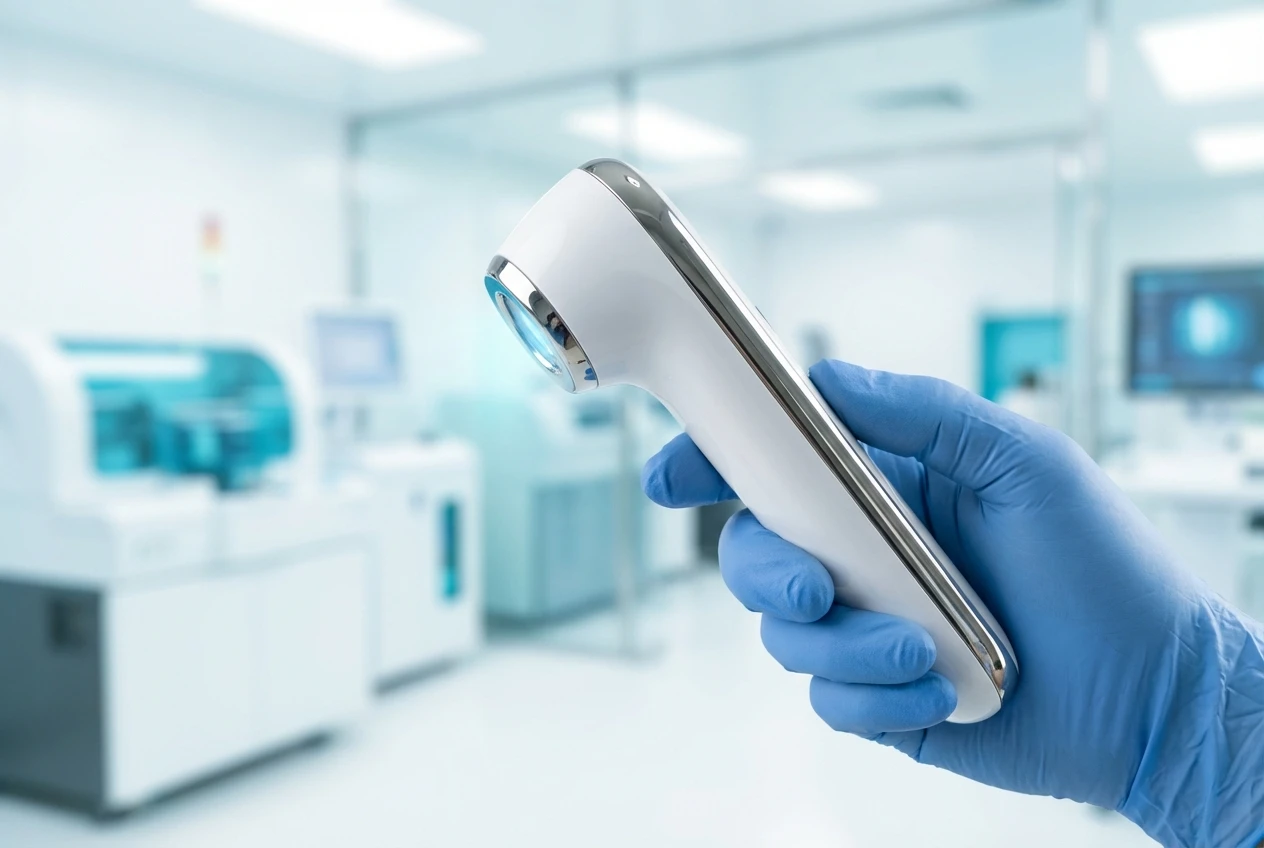
Remember that scene in Minority Report where Tom Cruise is waving his hands around, controlling screens without touching anything? We all saw that and thought, “Yeah, that’s the future.” Well, the future is here, but honestly? It’s been a bit bumpy.
If you are a manufacturer in the gaming or smart home space, you know exactly what I’m talking about. You want that slick, futuristic feel, but often you end up with systems that are laggy, expensive, or just plain confused by sunlight.
Here’s the thing: everyone rushes to use complex cameras for this stuff. But sometimes, the smartest solution isn’t a camera. It’s light. Specifically, ToF gesture control powered by Si PIN photodiodes.
At BeePhoton, we’ve spent years knee-deep in photonics, and I want to walk you through why Time-of-Flight (ToF) sensing using photodiodes is the actual game-changer you’ve been looking for. No fluff, just the engineering reality.
What is Time-of-Flight (ToF) Anyway?
Let’s strip this back to basics. You don’t need a PhD to get this, but you do need to understand the physics if you’re going to implement it into a PCB design.
Time-of-Flight is basically a fancy way of saying “radar with light.” You shoot a pulse of light (usually Infrared) out, it hits a hand (or a face, or a wall), and it bounces back. You measure how long that trip took.
Since we know the speed of light is constant, we can calculate the distance.
Here is the general text formula you can use:
Distance = (Speed of Light × Time) / 2
Simple, right? But here is where it gets tricky for ToF gesture control. Light is fast. Like, really fast. If you are trying to measure a hand waving 10 centimeters away from a console, that time difference is measured in picoseconds.
Standard cameras struggle to catch that without massive processing power. This is where Si PIN photodiodes come in and steal the show. They are built for speed.
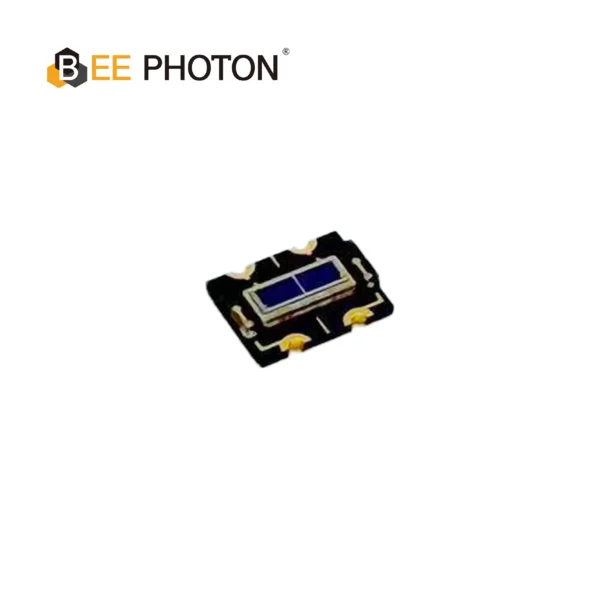
Si PIN Photodiode Array PDCA02-601
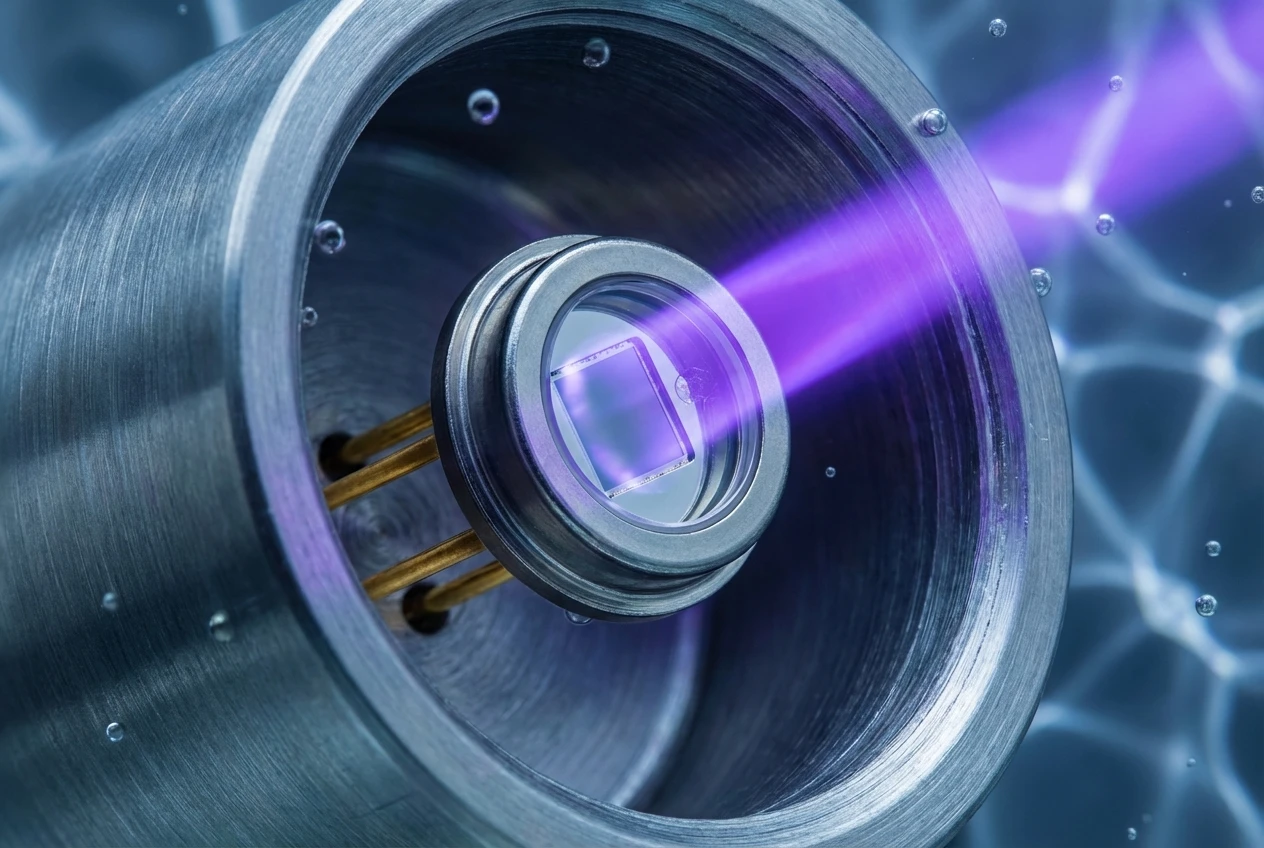
The Bee Photon PDCA Series is a precision-engineered Dual PIN Photodiode designed for high-end industrial sensing. Unlike standard single-element detectors, this silicon-based device features a segmented array structure (PD A and PD B), making it the perfect solution for differential sensing and background suppression optical switches. With a wide spectral response from 350nm to 1060nm, it ensures versatile performance across visible and near-infrared wavelengths.
Why Photodiodes Beat Cameras for Gesture Control
I’ve had arguments with product designers who insist on using RGB cameras for gesture recognition. I always ask them: “Do you need to see the color of the user’s shirt, or do you just need to know if they swiped left?”
If it’s the latter, a camera is overkill. It consumes too much power, requires a heavy GPU to process the image, and fails miserably in the dark.
ToF gesture control using photodiodes is different. It’s lean. It doesn’t “see” an image; it senses depth and movement changes instantly.
The Speed Advantage
When we talk about gaming or controlling a smart thermostat, latency is the enemy. A Si PIN photodiode has a response time in the nanosecond range.
- Cameras: Capture frame -> Buffer -> Process Image -> Detect Hand -> Calculate Vector. (Result: ~50-100ms lag).
- ToF Photodiodes: Emit Pulse -> Detect Return Signal -> Analog Output. (Result: <10ms lag).
That difference is why a gamer feels “connected” to the game versus feeling like they are fighting the controls.
The Technical Stuff: How We Make It Work
Okay, let’s get into the weeds a bit. How do we actually build a ToF gesture control system using Si PIN photodiodes?
It’s not just about slapping a sensor on a board. You need to look at Direct ToF (dToF) vs. Indirect ToF (iToF).
For most close-range gesture applications (like waving at a kitchen hood or a gaming console), we often lean toward phase-shift measurements (iToF) because it’s robust.
The text formula for Phase Shift Distance looks like this:
Distance = (Speed of Light / (4 × Modulation Frequency)) × (Phase Shift / Pi)
Don’t worry if that looks like high school math homework. The point is, by modulating the LED or Laser source and measuring the phase shift on the return signal using our high-speed Si PIN photodiodes, you get incredibly precise depth data without needing a super-computer to crunch the numbers.
The Spectrum Matters
We usually recommend operating in the Near-Infrared (NIR) range, typically 850nm or 940nm. Why? Because Si PIN photodiodes have excellent sensitivity peaks there, and it’s invisible to the human eye. You don’t want your smart speaker flashing red lights at you every time you change the volume.
Here is a quick comparison table to visualize why you might choose our sensors over others:
| Feature | Si PIN Photodiodes (BeePhoton) | Standard CMOS Camera | Ultrasonic Sensors |
|---|---|---|---|
| Response Time | Nanoseconds | Milliseconds | Milliseconds |
| Cost | Low | High | Low |
| Resolution | Low (Depth/Motion only) | High (Image) | Very Low |
| Privacy | 100% (No images captured) | Risk of spying | 100% |
| Data Load | Low (Analog/Simple Digital) | High (Video Stream) | Low |
| Best For | ToF gesture control, Proximity | Face ID, Video | Parking sensors |
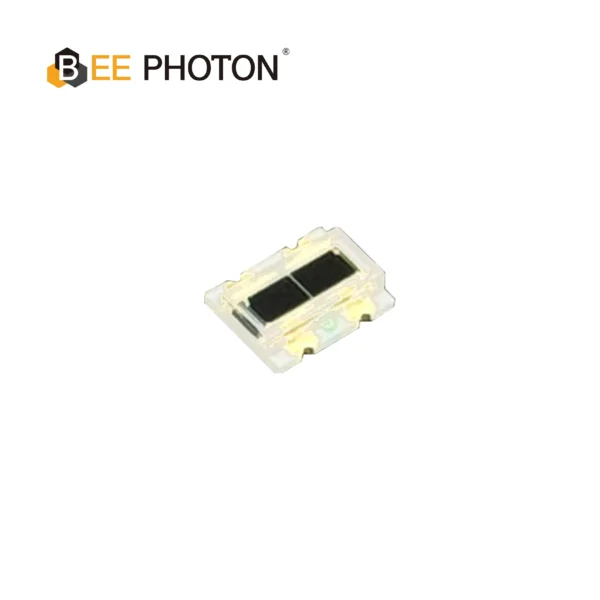
Si PIN Photodiode Array PDCA02-102
The PDCA02-102 is a high-performance Si PIN Photodiode Array designed for precision optical measurement and alignment systems. Engineered by Bee Photon, this 2-segment photodiode delivers a wide spectral response range from 400nm to 1100nm, covering the entire visible light spectrum into the near-infrared (NIR) region.
With its compact COB (Chip on Board) package and resin window, the PDCA02-102 ensures durability and easy integration into compact optical modules. It is specifically optimized for industrial applications where high sensitivity and fast response times are critical.
Application Scenarios: Where This Tech Shines
We aren’t just selling components; we are solving interaction problems. Here are two areas where ToF gesture control is exploding right now.
1. Infrared Sensing Gaming
Gamers are the harshest critics. If there is lag, they hate it. Nintendo and others pioneered motion, but the next generation is touchless. Imagine casting a spell in an RPG just by flicking your wrist in the air.
Using ToF sensors based on photodiodes allows for “spatial awareness.” The sensor knows the hand is moving away or towards the screen, not just left or right. This adds a Z-axis to the gameplay that touchscreens simply can’t offer.
2. The “Greasy Hand” Smart Home Problem
My wife hates touching the recipe tablet when her hands are covered in dough. It’s a real problem.
Smart home manufacturers are integrating ToF gesture control into range hoods, thermostats, and lighting systems.
A simple swipe in the air (read by the photodiode array) turns the fan up. No grease on the glass. No cleaning required. It’s practical magic.
Real Talk: Solving the “Sunlight” Problem
I’m going to be honest with you—infrared sensing has a nemesis: The Sun.
The sun blasts out IR radiation like crazy. Early ToF gesture control systems would fail the moment you opened a window because the sensor would get blinded.
At BeePhoton, we tackle this with specific optical filters and “background subtraction” circuitry.
Background Subtraction Logic:
- Measure Ambient Light (Sun).
- Fire Short Pulse (Signal + Sun).
- Subtract Step 1 from Step 2.
Our Si PIN photodiodes are linear enough to handle high background current without saturating, which is critical. If your sensor saturates (maxes out) from sunlight, no amount of math will save you.
Case Study: Project “Ghost Swipe” (Anonymized)
We had a client—let’s call them “Client X”—who manufactures high-end kiosks for airports. They tried using capacitive touchscreens, but people didn’t want to touch public screens (especially post-2020).
They switched to a cheap camera-based gesture system. Disaster. The shifting lighting in the airport terminal caused “ghost swipes.” The kiosk would change pages when nobody was there.
The Fix:
They consulted us. We replaced the camera module with a 4-quadrant Si PIN photodiode setup.
- Result: The system stopped looking for “images” and started looking for “reflected energy patterns.”
- Outcome: “Ghost swipes” dropped to zero. The cost of the sensor unit dropped by 40%. The processing unit ran cooler because it wasn’t decoding video streams 24/7.
It wasn’t about using more tech; it was about using the right tech.
Designing for Success: A Few Tips
If you are an engineer reading this and thinking about integrating ToF gesture control, keep these points in mind:
- Angle of Half Sensitivity: Make sure your emitter and your photodiode have matching angles. If your LED shoots narrow and your detector is wide, you’re wasting efficiency.
- Crosstalk: This is the killer. Make sure light from your emitter doesn’t leak directly through the PCB or cover glass into the sensor. You need optical isolation barriers.
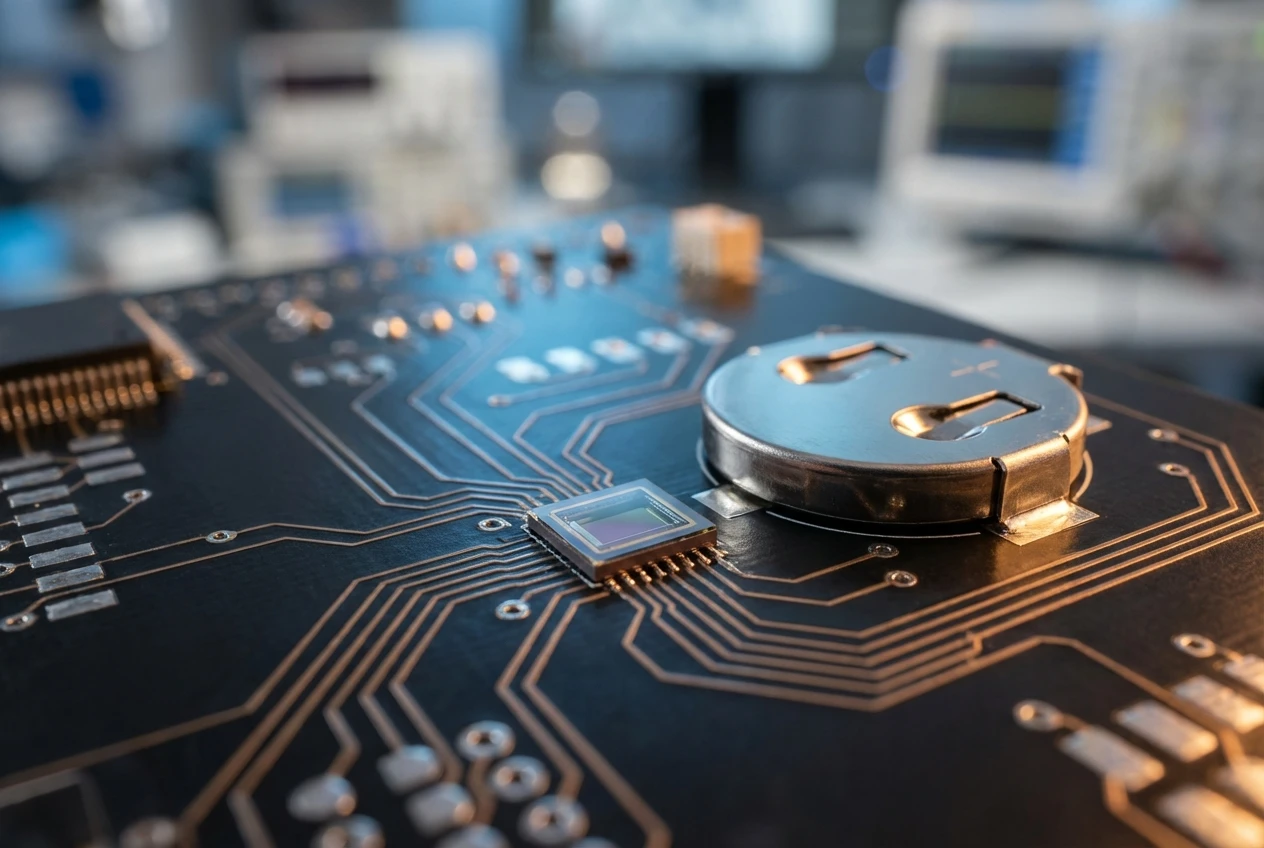
- Black PCBs: Use black solder mask. It absorbs stray IR reflections that can mess up your ToF sensing calculations.
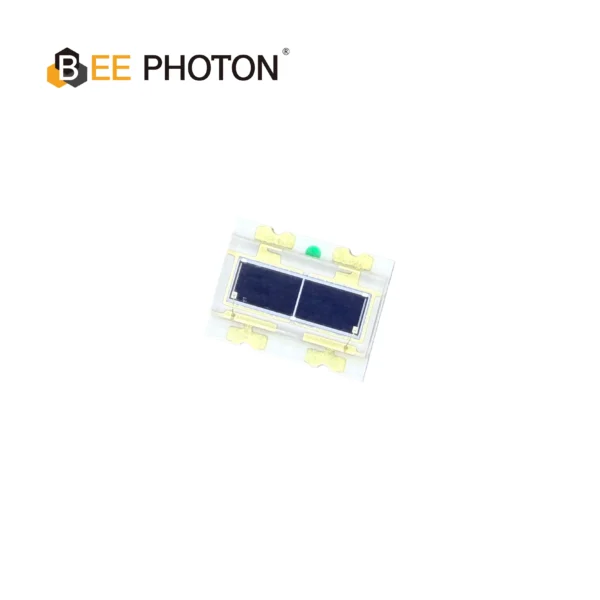
Si PIN Photodiode Array PDCA02-602
The Bee Photon PDCA Series is engineered specifically as a Background Suppression Photodiode to solve complex detection challenges in industrial environments. By utilizing a high-precision two-segment architecture (PD A and PD B), this device allows for differential signal processing, effectively filtering out background interference. It is the premier choice for manufacturers designing reliable background suppression optical switches and proximity sensors.
The Future of HMI
I genuinely believe we are moving away from screens. Screens are passive. ToF gesture control creates an active environment.
We are seeing requests now for automotive interiors where buttons are disappearing. You point at the sunroof, and it opens. You gesture at the radio, and it mutes. This is all powered by robust, simple, effective ToF sensors.
It’s not science fiction anymore. It’s just good engineering using silicon that has been perfected over decades.
FAQ: Questions We Get All The Time
Q1: Can ToF gesture control work through glass?
A: Yes, absolutely. However, the glass must be IR-transmissive. Standard glass is usually fine, but some coatings (like Low-E coatings on windows) block Infrared. For product covers, we usually recommend specific IR-pass black plastics or acrylics that look opaque to the eye but are transparent to the sensor.
Q2: How much power does a Si PIN photodiode system consume compared to a camera?
A: It’s night and day. A camera system might pull hundreds of milliamps or more depending on the DSP. A pulsed ToF gesture control system using our photodiodes can operate in the low milliamps range, or even microamps if duty-cycled correctly. It’s ideal for battery-powered devices.
Q3: Is ToF sensing affected by the color of the user’s skin or gloves?
A: To an extent, yes. Darker objects reflect less IR light. However, because we are measuring Time (or phase shift) rather than just Intensity, ToF is much more reliable across different surface reflectivities than simple proximity sensors. We can calibrate for gain automatically.
Ready to Ditch the Lag?
Look, building a reliable gesture interface is hard, but you don’t have to guess your way through it. Whether you are building the next big gaming console or a sterile medical control panel, the sensor is the heart of the system.
At BeePhoton, we don’t just ship parts; we help you figure out the physics.
If you are curious about which Si PIN photodiodes fit your specific ToF gesture control project, or if you just want to nerd out about signal-to-noise ratios, reach out to us.
Contact BeePhoton Today or drop us a line at info@photo-detector.com. Let’s make something that feels like the future.