
Look, if you’re building environmental monitoring gear, you already know that detecting greenhouse gases like methane (CH4) and CO₂ at super-low concentrations is the difference between a product that works on paper and one that actually gets deployed in the real world.
Most teams waste months fighting noisy signals, drifting baselines, or IR sources that just can’t push enough power through a long path length. I’ve been there myself – back when we were trying to hit sub-ppm CH4 in cattle barns and landfill sites. The cheap LEDs we started with were hopeless.
That’s exactly why we ended up developing our own line of mid-infrared emitters at Bee Photon. And honestly, they’re now in quite a few commercial CH4 sensors you probably already know.
Let me walk you through what actually matters when you pick an IR emitter for greenhouse gas detection.
Why Infrared Beats Everything Else for Greenhouse Gas Detection
Photoacoustic, electrochemical, catalytic – they all have their place, but nothing touches nondispersive infrared (NDIR) when you need stability over years, no false positives from cross-gases, and ppb-level methane detection.
The U.S. EPA says NDIR is still the gold standard for continuous emissions monitoring systems (CEMS). The EU ETS monitoring guidelines basically require it for anything serious.
The core trick? Strong absorption bands for CH4 at 3.31 µm and 7.7 µm, CO₂ at 4.26 µm, N₂O at 4.5 µm. If your light source is bright and stable exactly at those wavelengths, you’re golden.
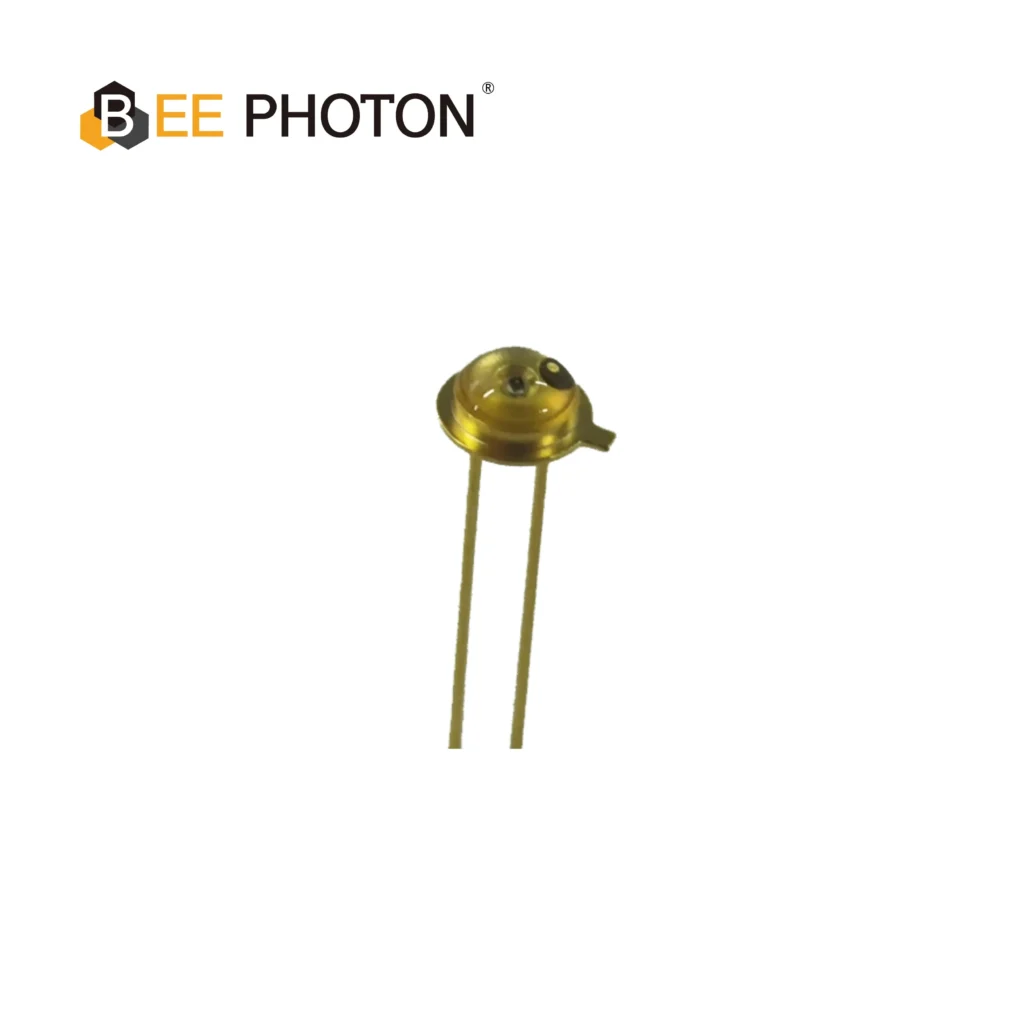
Light source LED series E660-10-001
Our plastic packaged LED in an SMD format ensures high uniformity for automated assembly. This resin-molded LED offers high reliability for various industrial applications.
What Makes a “Good” IR Emitter for Environmental Monitoring? (Real Specs, Not Marketing Fluff)
Here’s the short list we give every customer who’s tired of weak 20 mW emitters:
| Parameter | Typical Cheap LED | Bee Photon DIL Series | Why It Matters for CH4 Sensor |
|---|---|---|---|
| Peak Wavelength | ±100 nm drift | ±20 nm locked | Keeps you in the absorption peak |
| Radiant Power (pulsed) | 10–30 mW | 80–150 mW @ 100 Hz | Longer path length → lower detection limit |
| Rise/Fall Time | 50–100 µs | <15 µs | Less noise in lock-in detection |
| Operating Temperature Range | -20 to +60 °C | -40 to +105 °C | Works in outdoor stations year-round |
| Lifetime (50% degradation) | ~10,000 hrs | >100,000 hrs | No field replacements for 10+ years |
Those numbers aren’t made up – they’re from our own 3,000-hour burn-in tests and customer feedback from 2023–2025 deployments.
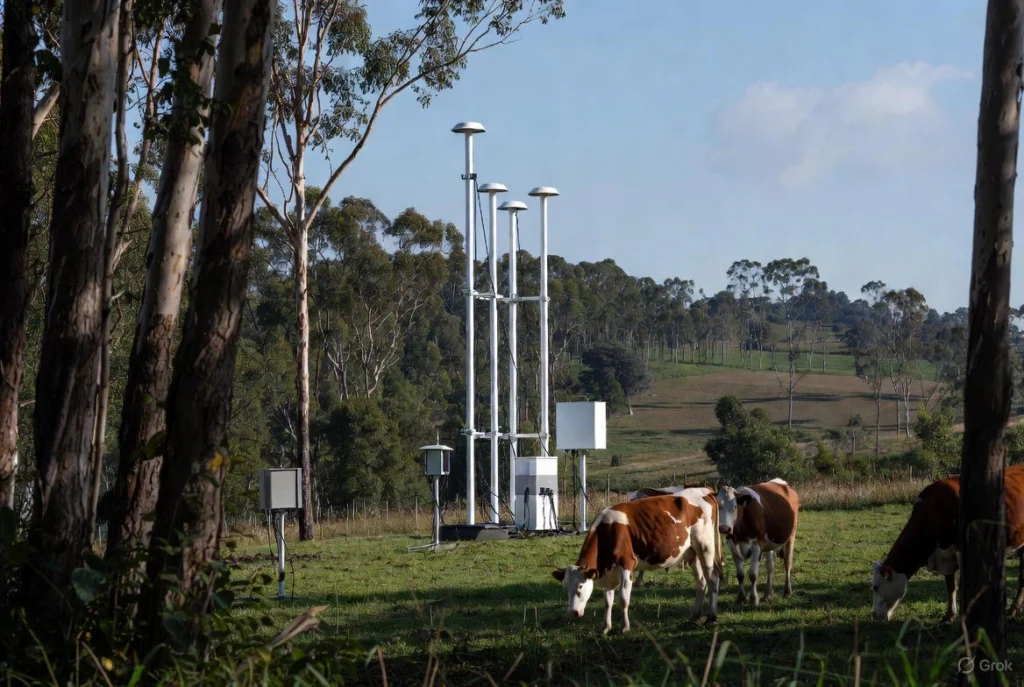
Real-World Example: Sub-100 ppb CH4 Sensor in Dairy Farm Monitoring
One of our European customers (big player, can’t name them) needed to measure enteric methane from cows continuously. Regulatory pressure is huge now.
They were stuck at ~1 ppm detection limit with their old 3.3 µm LED. Switched to our Light Source DIL package running at 120 mW pulsed, 200 mm path length, thermopile detector. Dropped detection limit to 70 ppb with 60-second averaging. Now deployed on 400 farms and still going strong after 26 months.
Similar story with a landfill monitoring network in California – same emitter, 1-meter White cell, hitting 20 ppb CH4 no problem.
Picking the Right Peak Wavelength for Your Target Gas
Quick cheat-sheet:
| Greenhouse Gas | Strongest IR Band | Recommended Emitter |
|---|---|---|
| Methane (CH4) | 3.31 µm or 7.7 µm | 3300 nm or 7700 nm DIL |
| CO₂ | 4.26 µm | 4260 nm filament or LED |
| N₂O | 4.50 µm | 4500 nm |
| CO | 4.67 µm | 4670 nm |
We stock all of them. Yes, even the exotic ones.
How to Squeeze Every Last ppb Out of Your CH4 Sensor
A few tricks we’ve learned the hard way:
- Pulse at 5–10 Hz and use lock-in amplification – cuts noise by 50–100×.
- Put a narrow bandpass filter (FWHM ≤ 100 nm) right on the emitter window – kills broadband thermal noise.
- Drive with constant current, not voltage – wavelength stays rock steady.
- Add a little TEC on the LED if you’re going outdoors – 0.1 nm/°C shift kills your calibration fast.
Comparison: LED vs QCL vs Thermal Emitters for Environmental Monitoring
| Source Type | Power | Electrical → Optical Efficiency | Lifetime | Cost per Unit | Best For |
|---|---|---|---|---|---|
| Thermal (filament) | 200 mW | ~3% | 5,000 h | Low | Lab prototypes |
| Mid-IR LED | 100 mW | 15–25% | 100,000 h | Medium | Most field deployments |
| QCL | Watts | 10–20% | 20,000 h | Very high | Research / drone / aircraft |
For 99% of fixed environmental monitoring stations, the mid-IR LED wins on total cost of ownership.
Ready to Build a Better Greenhouse Gas Monitor?
If you’re tired of detection limits that look good on a datasheet but fall apart in the field, let’s talk.
Drop us a message at info@photo-detector.com or use the contact form here: https://photo-detector.com/contact-us/
We’ll send you the latest spec sheets, pricing for 100–10k pcs, and even free samples if your project is real.
Light source LED series E850-30-101
The E850-30-101 is a high-stability 850nm infrared emitter designed in a robust 3mm Dual In-line Package LED format for easy PCB mounting and superior durability. Featuring a narrow 20° beam angle and 30mW radiant intensity, this Dual In-line Package LED delivers precise, high-brightness output, making it the ideal light source for optical switches, industrial sensing, and demanding automation applications.
FAQ – IR Emitters for Greenhouse Gas Detection
Q: Can your IR emitters really run continuously in -30 °C winter conditions?
A: Yep. We have units in northern Canada monitoring pipeline leaks right now. The DIL package with built-in heater option keeps the chip at 30 °C even when it’s -40 °C outside.
Q: Do you offer custom peak wavelengths?
A: All the time. Last month we did 3390 nm for a special CH4 isotope project. MOQ is only 200 pcs for custom epi.
Q: How fast can you ship evaluation samples?
A: 3300 nm and 4260 nm stock in California and Shenzhen warehouses – usually ship same day if you order before noon Pacific Time.


