
If you are in the water treatment game, you know that “trust” is a heavy word. When a client buys your sterilization equipment, they aren’t just buying a steel tube with a lamp inside; they’re buying the assurance that E. coli or Cryptosporidium isn’t going to slip through the cracks.
But here’s the problem I’ve seen time and time again in the field: Blind Faith.
Too many manufacturers install a UV lamp, slap a sticker on the casing that says “99.99% Effective,” and call it a day. But UV lamps age. Quartz sleeves get fouled. The water turbidity changes. Without a reliable eye inside that reactor, you are flying blind.
That “eye” is the UV photodiode.
I’m going to walk you through why upgrading your sensor tech to a proper UV photodiode isn’t just a spec-sheet upgrade—it’s a survival strategy for your brand in a competitive market. We’ll talk E-E-A-T, we’ll talk physics (the simple kind), and I’ll share some messy truths about what happens when sensors fail.
Why You Can’t Just “Set and Forget” UV Sterilization
I remember consulting for a mid-sized municipal plant a few years back. They had a massive contamination scare. The logs showed the UV system was “On” 24/7. But when we actually measured the output? The lamps were running at 40% intensity because of solarization (aging of the glass).
A standard UV photodiode monitoring system would have caught this weeks before it became a crisis.
In water quality monitoring, stability is everything. You need a sensor that can withstand high-energy photons without degrading itself. This is where UV-C detection becomes tricky. High-energy UV light destroys organic bonds—that’s why it kills bacteria—but it also destroys cheap sensors.
If you are building equipment, you need a UV photodiode that handles the harsh environment of a reactor chamber while giving you precise feedback on the 254 nm germicidal wavelength.
The Science: How a UV Photodiodes Works in Water (Without the Jargon)
Okay, let’s strip away the marketing fluff. How does this actually work?
When we talk about UV sterilization, we are mostly concerned with the Beer-Lambert Law. This law explains how light gets absorbed as it travels through water. If you want to integrate a UV photodiode for transmission monitoring, you need to understand this relationship.
In plain text (so you can copy-paste this right into WordPress), the intensity drop looks like this:
I = I_0 * 10^(-εlc)
Where:
- I is the intensity measured by your UV photodiode.
- I_0 is the initial intensity of the UV lamp.
- ε (epsilon) is the molar absorptivity (how much the stuff in the water blocks light).
- l is the path length (distance from lamp to sensor).
- c is the concentration of the contaminant.
Why does this matter? Because your UV photodiode isn’t just checking if the light is on. It’s measuring I. If I drops but I_0 (lamp power) stays the same, you know your water quality (turbidity or transmittance) has dropped. If the water is clean but I drops, your lamp is dying.
A standard silicon sensor might struggle here because standard silicon isn’t naturally great at seeing UV. It prefers visible or IR light. That is why at BeePhoton, we emphasize the use of a Si PIN Photodiode with UV sensitivity enhanced. These are modified to stop ignoring the UV spectrum and start giving you accurate data in that critical 200nm to 400nm range.

Si PIN Photodiode with UV sensitivity enchanced (320-1060nm) PDCT16-601
Our Borosilicate Window Photodiode ensures superior UV to NIR detection. This photodiode with a durable borosilicate window excels in spectroscopy & medical analysis.
Selecting the Right Wavelength: The 254 nm Sweet Spot
You’ll hear people talk about “broadband” sensors. Honestly? I hate them for sterilization.
If you use a sensor that sees everything, sunlight or ambient room light leaking in during maintenance can throw off your readings. For sterilization, you care about 254 nm (low pressure lamps) or roughly 260-280 nm (UV-LEDs).
A high-quality UV photodiode for water treatment needs to be blind to visible light or paired with a filter that blocks it out.
Comparison: Why Enhanced Si PIN Wins
I’ve put together a quick comparison based on the tear-downs we’ve done of competitor units. This shows why we lean towards enhanced Silicon for most standard B2B water applications.
| Feature | Standard Silicon Photodiode | GaN (Gallium Nitride) | BeePhoton Enhanced Si PIN UV Photodiode |
|---|---|---|---|
| UV Sensitivity | Poor (needs heavy amplification) | Excellent (Native) | High (Enhanced) |
| Cost | Low | High | Moderate |
| Stability (Drift) | Moderate | High | High |
| Visible Blindness | No (Needs Filter) | Yes | Dependent on Filter/Design |
| Durability | High | Medium (Brittle) | Very High |
You see, while GaN is cool tech, it’s often overkill and overpriced for a standard water treatment skid. A Si PIN Photodiode with UV sensitivity enhanced gives you that sweet spot of durability and precision without destroying your BOM (Bill of Materials) cost.
Real-World Application: The “Project Blue” Case Study
Let me tell you about a project we worked on (I’ll call it “Project Blue” to keep the client anonymous). They were manufacturing ballast water treatment systems for ships.
The Problem: Their systems were failing compliance checks at ports. Their old sensors were drifting. After 1,000 hours, the sensors were reading 10% lower than reality, causing the system to ramp up power unnecessarily, burning out lamps, and wasting fuel.
The Fix: We swapped their generic sensors for a robust UV photodiode assembly specifically tuned for UV-C detection.
The Result:
- Drift reduced to less than 1% over 2000 hours.
- Lamp life extended by 15% because they weren’t being over-driven.
- Compliance passed on the first try.
This isn’t magic. It’s just using the right UV photodiode for the job.
Integration: How to Handle the Signal
So you bought a UV photodiode. Now what? You can’t just stick a multimeter on it and hope for the best.
The current output from a UV photodiode when hitting water is small. We are talking micro-amps or even nano-amps.
Transimpedance Amplifier (TIA) Formula:
To convert that tiny current (Is) into a readable voltage (Vout), you need a TIA.
The basic math is:
Vout = -Is * Rf
- Is: The current from your UV photodiode.
- Rf: The feedback resistor.
Tip from the trenches: Keep your Rf close to the sensor. I’ve seen guys run a wire across the whole cabinet before amplifying. That wire basically becomes an antenna for noise. If you do that, your UV photodiode reading will jump around every time a pump turns on. Don’t be that guy.
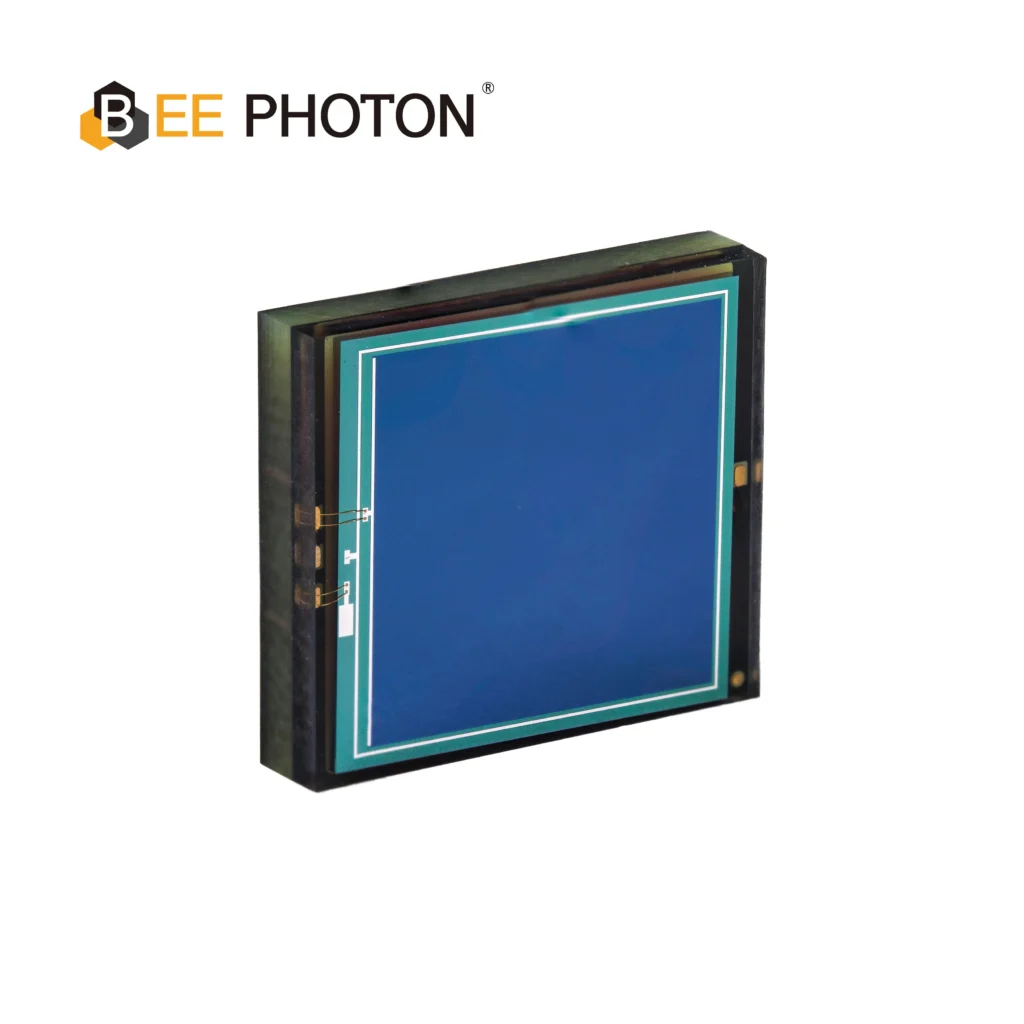
Si PIN Photodiode with UV sensitivity enchanced (320-1060nm) PDCC100-701
Our High Responsivity Si PIN Photodiode offers a superior signal for demanding applications. It excels in low-light UV detection from 320-1060nm.
TOC Monitoring: The Next Level
For those of you in ultra-pure water (UPW) or pharma, you aren’t just killing bugs; you are breaking down chemicals. This is Total Organic Carbon (TOC) reduction.
Here, you use 185 nm light. This is harder to detect. A standard UV photodiode might not cut it because the window material absorbs 185 nm. You need fused silica windows.
At BeePhoton, we supply solutions that can handle both the 185 nm (oxidation) and 254 nm (sterilization) lines. Using a dual-channel UV photodiode setup allows you to measure the degradation of organics in real-time.
Common Pitfalls When Installing Water Quality Sensors
I want to save you some headaches. Here are the stupid mistakes I’ve made so you don’t have to.
- Ignoring Temperature: A UV photodiode is a semiconductor. Its output changes with heat. If your water gets hot, the signal shifts. Ensure your circuit has temperature compensation.
- The “Good Enough” Window: Using cheap glass instead of quartz for the sensor window. Glass blocks UV. Your UV photodiode will see nothing. Use Quartz or UV-fused Silica.
- Moisture Ingress: Water treatment plants are wet (shocking, I know). If humidity gets into the photodiode can, it corrodes the pins. Potting the backside of the UV photodiode assembly is mandatory.
The BeePhoton Difference: Precision Meets Durability
Look, there are a hundred places to buy a UV photodiode. You can probably find them on random electronic distributor sites. But those are component sellers; they don’t know water physics.
At BeePhoton, we focus on the application. We know that a UV photodiode in a sterilized environment faces different challenges than one in a spectroscope.
Our Si PIN Photodiode with UV sensitivity enhanced is designed to be the workhorse of your system. We test them. We stress them. We make sure that when you tell your customer “this water is safe,” you aren’t lying.
When you choose a UV photodiode from us, you get technical support that actually understands what “molar absorptivity” means.
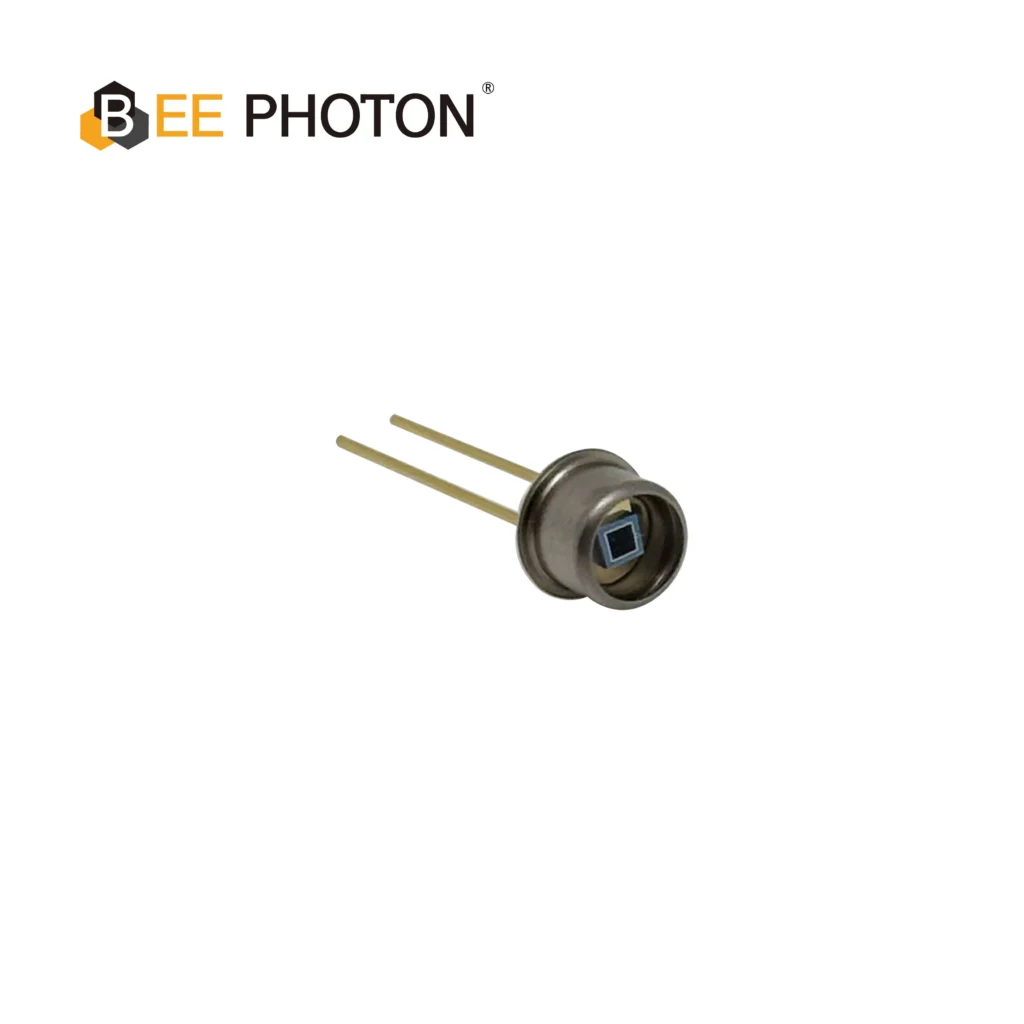
Si PIN Photodiode with UV sensitivity enchanced (190-1100nm) PDCT01-F01
Experience precise UV detection with our Quartz Window Si PIN Photodiode. Ideal for spectroscopy, it offers high sensitivity and low noise across 190-1100nm. This reliable Si PIN photodiode ensures accurate analytical results.
FAQ: Questions We Get All The Time
Q: Can I use a standard photodiode for UV detection?
A: Generally, no. Standard silicon photodiodes have very low responsivity in the UV range (200-400nm). They are optimized for visible or IR light. For accurate water monitoring, you need a specialized UV photodiode, specifically a silicon PIN diode with UV enhancement or a wide-bandgap material like SiC or GaN.
Q: How often does a UV photodiode need calibration?
A: It depends on the application, but for critical water sterilization (like municipal or pharma), we recommend checking calibration every 6 to 12 months. The UV photodiode itself is usually stable, but the optical window can foul (get dirty), which mimics a sensor drift.
Q: What is the lifespan of a BeePhoton UV photodiode?
A: Our UV photodiode components are solid-state and extremely durable. Unlike the UV lamps which burn out after 9,000-12,000 hours, a well-protected UV photodiode can last for years (often 10+ years) provided it isn’t exposed to moisture ingress or extreme voltage spikes.
Q: Does the UV photodiode measure the lamp or the water?
A: It measures the light reaching it. If you place the UV photodiode right next to the lamp, it measures lamp health. If you place it across the water flow chamber, it measures the transmission, which is a combination of lamp health AND water quality (turbidity/absorption). Best practice? Use two.
Q: Why is my UV photodiode reading fluctuating?
A: This is usually electrical noise or turbulence (bubbles) in the water. Ensure your UV photodiode cabling is shielded and the TIA (amplifier) is close to the sensor. Bubbles block light, causing rapid drops in the signal.
Ready to Stop Guessing About Your Water Quality?
You can’t manage what you don’t measure. If your equipment is running on blind faith, it’s only a matter of time before a sensor failure becomes a liability.
Don’t let a cheap sensor ruin your reputation. Upgrade to a precision UV photodiode designed for the rigors of the water industry.
Check out our featured sensors:
👉 Si PIN Photodiode with UV sensitivity enhanced
Need help designing your circuit or choosing the right window material?
Contact us today. We love solving the hard problems.
📧 Email: info@photo-detector.com
🌍 Visit: https://photo-detector.com/contact-us/


