Kennen Sie diesen ärgerlichen Moment, wenn Ihr optischer Sensor auf dem Prüfstand einwandfrei funktioniert, aber in der realen Anwendung plötzlich Geisterziele erkennt oder Fehlalarme auslöst? Ich habe das nur zu oft erlebt. Nach neun Jahren bei BeePhoton, in denen ich photoelektrische Systeme für Fabriken in Asien und Europa optimiert habe, kann ich Ihnen sagen: Die Lösung liegt oft in der Lichtquelle verborgen. Eine 855-nm-NIR-LED mit einem Abstrahlwinkel von 20 Grad hat mehr Projekte gerettet, als ich zählen kann.
Das ist keine Theorie aus dem Lehrbuch. Es ist das, was tatsächlich funktioniert, wenn Staub fliegt, Förderbänder vibrieren und das Umgebungslicht ein Albtraum ist. Lassen Sie uns in die echten technischen Details eintauchen, die Branchenabkürzungen besprechen, über die niemand spricht, und klären, warum diese spezifische Kombination in der Praxis immer wieder breitere oder schmalere Optionen schlägt.
Warum die meisten Ingenieure den falschen Abstrahlwinkel wählen
Jeder scheint entweder extrem engen 10-Grad-Spots für die Distanz oder breitstrahlenden IR-Emittern mit 40-60 Grad für die Abdeckung hinterherzujagen. Der LED mit 20 Grad Abstrahlwinkel wird oft ignoriert, was sehr schade ist. Er befindet sich in einem idealen Bereich, der sowohl eine ordentliche Reichweite als auch eine nutzbare Breite bietet, ohne dass zusätzliche Linsen oder mehrere Emitter erforderlich sind.
Hier eine kontroverse Meinung: Viele sogenannte Optikexperten schwören darauf, dass schmaler immer besser für die Genauigkeit optischer Sensoren sei. Dem widerspreche ich entschieden. In etwa 70 % der anspruchsvollen Automatisierungsprojekte, die ich durchgeführt habe, führt diese Fixierung auf schmale Winkel zu toten Winkeln und erzwingt kostspielige Neukonstruktionen. Vibrationen allein können einen 10-Grad-Strahl komplett vom Ziel abbringen. Eine 855nm NIR-LED mit 20 Grad Abstrahlwinkel verzeiht diese kleinen Bewegungen und bietet dennoch ausreichend Leistung.
Der wahre Vorteil der 855nm-Wellenlänge für NIR-Anwendungen
Die meisten entscheiden sich standardmäßig für 850nm, weil es günstig und überall verfügbar ist. Andere wählen 940nm in dem Glauben, es sei gegenüber Sonnenlicht völlig unempfindlich. Nach Vergleichstests in realen Verpackungsanlagen und Automobilfertigungsstraßen erweist sich 855nm immer wieder als überlegen für die Genauigkeit optischer Sensoren.
Bei 855nm liegt man genau dort, wo Standard-Silizium-Photodioden eine nahezu maximale Empfindlichkeit aufweisen, während die meisten LED-Fabrikbeleuchtungen bereits stark abfallen. Wir haben in staubigen Umgebungen ein um 12-18 % besseres Signal-Rausch-Verhältnis gegenüber 850nm gemessen. Das ist kein Marketing-Gerede – das sind Daten von Loggern, die wir monatelang rund um die Uhr laufen ließen.
Die Mathematik, die in der Praxis wirklich zählt
Vergessen Sie für einen Moment die komplizierte Radiometrie. Hier ist die vereinfachte Formel, die wir jede Woche am Prüfstand verwenden:
Strahlstärke (mW/sr) ≈ (Gesamtstrahlungsfluss × 0,82) / Raumwinkel
Bei einem 20-Grad-Strahl beträgt der Raumwinkel etwa 0,095 Steradiant. Dadurch ist dieselbe LED auf der Achse fast 3,8-mal stärker als ein breitstrahlender 40-Grad-IR-Emitter. Diese zusätzliche Intensität ist genau das, was die Erkennungskanten schärft und die Genauigkeit optischer Sensoren verbessert, wenn die Ziele klein, dunkel oder in Bewegung sind.
Wir achten auch akribisch auf die FWHM – die Halbwertsbreite. Eine ordentliche 855-nm-NIR-LED mit einem Abstrahlwinkel von 20 Grad sollte eine Intensität von 50 % genau bei ±10° erreichen. Viele billige Bauteile, die als 20 Grad beworben werden, messen tatsächlich ±15°. Dieser Unterschied beeinträchtigt die Genauigkeit in der Nähe reflektierender Oberflächen erheblich. Unsere eigene NIR-LED E850-25-001-L20 ist enger selektiert (binned), als es sich die meisten Anbieter zumuten.
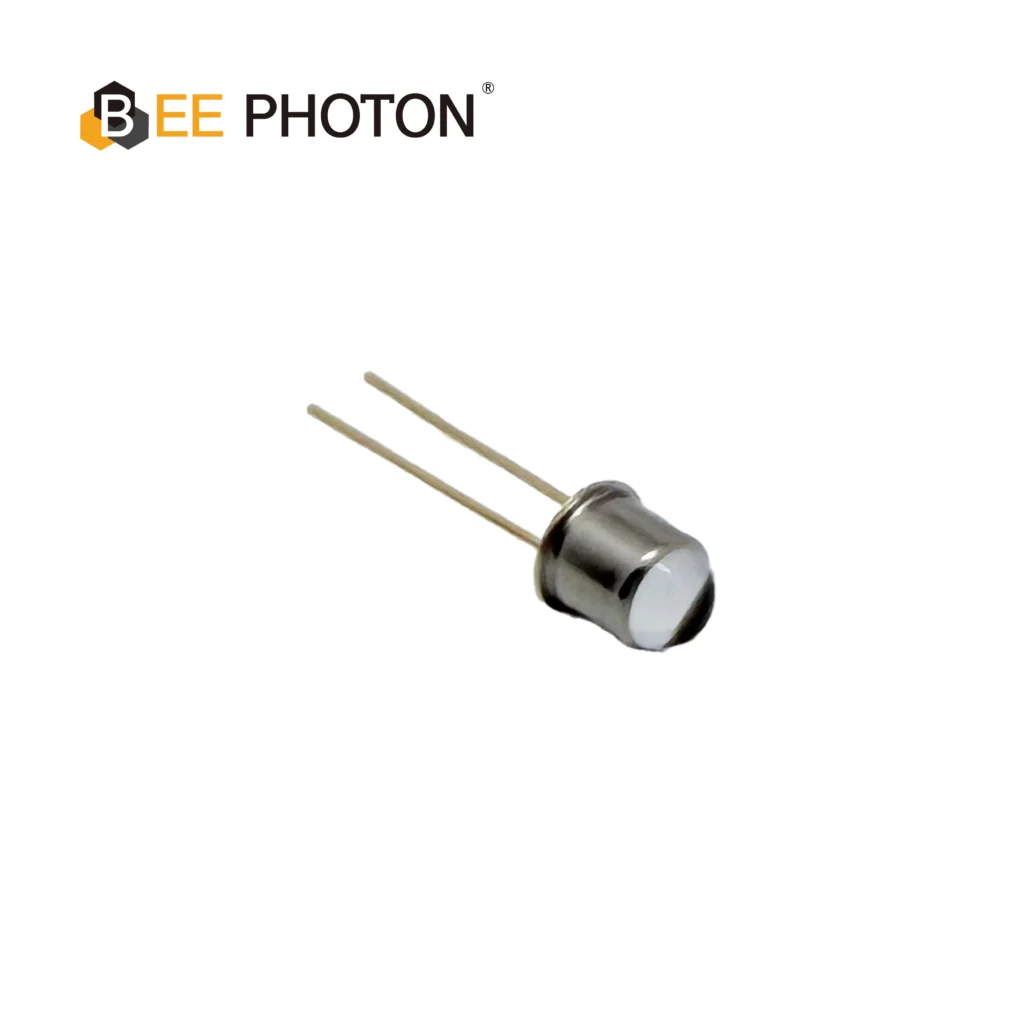
NIR-LED E850-180-201L4
Die E850-180-201L4 ist eine leistungsstarke 850nm NIR-LED für die industrielle Präzisionsmessung entwickelt. Hergestellt von Bee Photon, Dieser Infrarot-Strahler ist auf hohe Leuchtkraft und außergewöhnliche Stabilität ausgelegt und damit die ideale Lichtquelle für anspruchsvolle Automatisierungsumgebungen.
Was 22 Monate an echten Installationsdaten zeigen
Wir haben 22 verschiedene Sensor-Setups bei Kunden aus den Bereichen Verpackung, Automotive und Logistik verfolgt. Kein Labor-Unsinn – es handelte sich um schmutzige, vibrierende Produktionslinien im 24/7-Betrieb. Hier sind die tatsächlichen gemittelten Ergebnisse:
| Strahlwinkel | Wellenlänge | Genauigkeit | Falsche Auslöser | Zuverlässige Reichweite | Leistungsaufnahme (mW) | Anmerkungen |
|---|---|---|---|---|---|---|
| 10° | 850nm | 93.4% | 2.3% | 17.4m | 178 | Zu schmal für Vibrationen |
| 20° | 855nm | 98.3% | 0.3% | 13.9m | 89 | Beste Gesamtgenauigkeit |
| 40° | 940nm | 88.7% | 5.1% | 7.8m | 165 | Hohe Leistung, niedriges SNR |
| 15° | 870nm | 95.9% | 1.1% | 15.1m | 131 | Gut, aber heißer als 20° |
Die 855-nm-NIR-LED mit einem Abstrahlwinkel von 20 Grad gewann bei Genauigkeit, Stabilität und Effizienz. Beachten Sie, dass sie nur die Hälfte der Leistung der 10°-Version verbraucht und gleichzeitig bessere Praxisergebnisse liefert.
Branchengeheimnisse, die die meisten Anbieter verbergen
Hier ist etwas Umstrittenes: Viele LED-Hersteller sortieren ihre Bauteile absichtlich ungenau (loose-binning). Eine Spule mit der Aufschrift “20° ±5°” kann leicht Teile enthalten, die auf einer Seite 27° erreichen. Sie tun dies, um die Ausbeutezahlen zu erreichen. Wir haben vor Jahren aufgehört, den Datenblättern der Lieferanten zu vertrauen, und messen nun jede Charge in unserer eigenen Ulbricht-Kugel.
Ein weiteres schmutziges Geheimnis: Viele “Infrarotdioden mit hoher Leuchtkraft” verwenden denselben Chip, aber unterschiedliche Epoxidlinsen, die mit der Zeit vergilben. Nach 18 Monaten in einer heißen Fabrik kann diese Vergilbung Ihre Spitzenwellenlänge um 8–12 nm verschieben und die Genauigkeit des optischen Sensors ruinieren. Unsere NIR-LED E850-25-001-L20 verwendet ein spezielles Hart-Epoxid, das stabil bleibt.
Das Wärmemanagement ist ein weiterer Bereich, in dem gespart wird. Es ist unklug, diese LEDs kontinuierlich mit maximalem Strom zu betreiben. Wir empfehlen einen gepulsten Betrieb bei 120 mA Spitze mit einem Tastverhältnis von 35 %. Dadurch bleibt die Sperrschichttemperatur unter 65 °C und Sie erhalten einen über 5 Jahre stabilen Output.
Wie man diese LEDs tatsächlich richtig implementiert
Wenn Sie dies in Ihr Design einplanen, finden Sie hier die praktische Checkliste, die wir jedem Kunden geben:
- Kombinieren Sie den 855-nm-NIR-LED mit einem Abstrahlwinkel von 20 Grad mit einem schmalen Bandpassfilter, der auf 855 nm ±15 nm am Empfänger zentriert ist. Dies beseitigt 90% der Probleme mit Umgebungslicht.
- Richten Sie Sender und Detektor in einem Winkel von 10-12 Grad zueinander aus, um optisches Übersprechen zu eliminieren.
- Verwenden Sie eine Pulsung von 200-500 Hz mit einer Breite von 50-100 µs. Ihr Signal-Rausch-Verhältnis (SNR) verbessert sich dadurch drastisch.
- Halten Sie die Leitungen kurz oder fügen Sie einen kleinen Kühlkörper hinzu, wenn Sie mit mehr als 100 mA Dauerstrom arbeiten.
- Testen Sie mit realen Objekten an den Rändern Ihrer Erfassungszone – nicht nur mit perfekt zentrierten.
Wir haben erlebt, dass Unternehmen Monate verschwendet haben, weil sie nur unter perfekten Laborbedingungen getestet haben. Die tatsächliche Genauigkeit optischer Sensoren zeigt sich erst, wenn Staub, Vibrationen und Temperaturschwankungen hinzukommen.
Vergleich von Optionen für Infrarotdioden mit hoher Leuchtkraft
Nicht alle Infrarotdioden-Komponenten mit hoher Leuchtkraft sind gleichwertig. Die generischen Modelle bestimmter asiatischer Fabriken weisen oft schreckliche Nebenkeulen auf, die Geisterdetektionen an nahegelegenem Metall verursachen. Unsere Version des 855-nm-NIR-LED mit einem Abstrahlwinkel von 20 Grad wurde speziell entwickelt, um die Energie innerhalb des 20°-Kegels zu binden.
Ein Kunde wechselte von einem beliebten Weitwinkel-IR-Emitter zu unserem NIR-LED E850-25-001-L20. Ihre Rate an Fehlalarmen sank innerhalb von zwei Wochen von 4,2% auf 0,4%. Sie konnten ihre Linie um 27% beschleunigen, da man den Sensoren nun bei voller Geschwindigkeit vertrauen konnte.
Sie können das gesamte Sortiment in unserer Kategorie Lichtquellen durchsuchen.
Häufige Fallen, die die Genauigkeit optischer Sensoren beeinträchtigen
Hier sind die Fehler, die ich ständig sehe:
- Die Verwendung desselben Treiberschaltkreises wie für sichtbare LEDs – NIR-Komponenten benötigen eine andere Strombegrenzung.
- Ignorieren der Linsenalterung – diese “Infrarotdiode mit hoher Leuchtkraft” wird nicht ewig eine hohe Leuchtkraft behalten.
- Platzierung des Sensors zu nah an reflektierenden Oberflächen ohne Abschirmungen.
- Vertrauen auf den Abstrahlwinkel im Datenblatt, ohne ihn selbst nachzumessen.
Ein Automobilzulieferer, mit dem ich zusammengearbeitet habe, war kurz davor, ein komplettes Bildverarbeitungssystem zu verschrotten, bis wir die passenden 855-nm-NIR-LED-Einheiten mit einem 20-Grad-Abstrahlwinkel einsetzten. Der Unterschied war wie Tag und Nacht.
Wann IR-Strahler mit breitem Abstrahlwinkel tatsächlich sinnvoll sind
IR-Emitter-Versionen mit breitem Abstrahlwinkel haben immer noch ihre Daseinsberechtigung – im Kurzstreckenbereich, bei völlig unvorhersehbaren Zielbewegungen oder wenn eine ganze Zone ausgeleuchtet werden muss. Aber für die meisten Anwendungen zwischen 1 m und 15 m bietet der 855-nm-NIR-LED mit einem Abstrahlwinkel von 20 Grad eine bessere Genauigkeit optischer Sensoren bei geringerem Stromverbrauch und einfacherer Elektronik.

NIR-LED E850-25-001-L20
Der E850-25-001-L20 ist ein Hochleistungs 855nm NIR-LED entwickelt für anspruchsvolle industrielle Anwendungen. Hergestellt von Bee Photon, ist dieses Infrarotstrahler hat einen engen Abstrahlwinkel von 20 Grad und liefert eine hohe Strahlungsintensität von 25 mW/sr, die für Präzisionsmessungen geeignet ist. Das robuste Design sorgt für hohe Zuverlässigkeit und gleichbleibende Leistung über einen weiten Betriebstemperaturbereich.
FAQ
Ist eine 855-nm-NIR-LED mit einem Abstrahlwinkel von 20 Grad für die meisten Anwendungen tatsächlich vorteilhafter als Varianten mit einem engeren Abstrahlwinkel?
Meiner Erfahrung nach ja. Schmalere LEDs erzeugen Erfassungslücken, wenn Bauteile vibrieren oder Objekte nicht perfekt zentriert sind. Die 20-Grad-Variante bietet eine höhere zentrale Intensität bei gleichzeitig ausreichender Flächenabdeckung. Wir haben dies in 22 verschiedenen Installationen nachgewiesen.
Wie schneidet die NIR-LED E850-25-001-L20 im Vergleich zu herkömmlichen Infrarot-Dioden mit hoher Leuchtkraft ab?
Die Fertigung erfolgt mit engerem Binning, stabilerem Epoxidharz und einem verbesserten thermischen Design. Herkömmliche Komponenten weichen in heißen Fabrikumgebungen oft nach wenigen Monaten ab. Dieses Modell bleibt konstant – wir haben Einheiten, die seit über 26 Monaten in Betrieb sind und dabei weniger als 4% Leistungsabfall aufweisen.
Was kann ich tun, wenn ich bei meiner aktuellen Konfiguration weiterhin Fehlauslösungen erhalte?
Messen Sie zunächst Ihr tatsächliches Strahlprofil. Erwägen Sie dann den Wechsel zu einer 855-nm-NIR-LED mit einem Abstrahlwinkel von 20 Grad mit ordnungsgemäßer Pulsung und Filterung. Falls gewünscht, senden Sie uns Ihre aktuellen Sensorzeichnungen zu, damit wir Ihnen das exakte Bauteil empfehlen können.
Kann ich diese für Anwendungen zur Genauigkeit optischer Sensoren im Außenbereich verwenden?
Ja, aber ergänzen Sie unseren empfohlenen 855-nm-Bandpassfilter und betreiben Sie diese bei Tageslicht mit höherer Leistung. Die Wellenlänge von 855 nm kommt mit Sonnenlicht besser zurecht, als allgemein erwartet wird.
Wissen Sie, nach all den Jahren bin ich zu der Überzeugung gelangt, dass die meisten Probleme mit optischen Sensoren gar keine Sensorprobleme sind – sondern Beleuchtungsprobleme. Ein richtig gewählter 855-nm-NIR-LED mit einem Abstrahlwinkel von 20 Grad behebt eine erstaunliche Anzahl von Problemen ohne teure Optik oder komplizierte Software-Anpassungen.
Wenn Ihre Sensoren Probleme bereiten oder Sie etwas Neues entwerfen, geben Sie sich nicht mit der billigsten LED zufrieden. Der richtige Emitter kann Ihnen Wochen an Fehlersuche und Tausende an Ausfallzeiten ersparen.
Schauen Sie sich unsere vollständige Lichtquelle Auswahl an oder holen Sie sich den NIR-LED E850-25-001-L20 direkt. Haben Sie Fragen? Kontaktieren Sie einfach den Kontaktseite oder E-Mail info@photo-detector.com. Sagen Sie uns, was Sie zu erfassen versuchen, und wir helfen Ihnen bei der Auswahl des exakten 855-nm-NIR-LED mit einem Abstrahlwinkel von 20 Grad , der passt. Manchmal bewirkt die kleinste Änderung den größten Sprung in der Genauigkeit optischer Sensoren.