
Wenn Sie jemals einen frustrierenden Nachmittag in einer Fabrikhalle verbracht haben, um herauszufinden, warum Ihre optoelektronischen Sensoren Fehlfunktionen aufweisen, wissen Sie, wie lästig gegenseitige Beeinflussungen sein können. Sie installieren eine Reihe von Lichtschranken, um Teile auf einem Förderband zu erfassen, platzieren sie in einem Abstand von wenigen Zentimetern, schalten sie ein und plötzlich interferieren sie alle miteinander. Ein Sensor löst aus, wenn er es nicht sollte, nur weil das Licht seines Nachbarn von einer metallischen Oberfläche reflektiert wird oder sich zu weit ausbreitet.
Es ist ein klassisches Problem im Design optoelektronischer Sensoren. Wir bezeichnen dieses Problem als optisches Übersprechen oder einfach Cross-Talk, und es kann die Zuverlässigkeit Ihres automatisierten Systems vollständig ruinieren. Viele Ingenieure versuchen, dies mit aufwendiger Softwarefilterung, Polarisationsfiltern oder durch sequentielles Pulsen der Emitter zu beheben. Aber seien wir ehrlich: Diese Lösungen erhöhen Kosten, Komplexität und Latenz.
Was wäre, wenn Sie das Problem physikalisch an der Quelle lösen könnten?
Der einfachste und zuverlässigste Weg, dies anzugehen, besteht darin, Ihre Lichtquelle aufzurüsten. Durch den Austausch Ihrer herkömmlichen Weitwinkel-LEDs gegen eine hochwertige Schmalstrahl-Emitter, können Sie Ihren optischen Pfad fokussieren, Übersprechen eliminieren und die Störfestigkeit Ihres Systems erheblich verbessern.
In diesem Leitfaden werden wir uns ansehen, wie ein Schmalstrahl-Emitter funktioniert, einige einfache Berechnungen anstellen, um Ihnen den physikalischen Unterschied zu zeigen, und Ihnen erklären, wie Sie Lichtschrankensysteme optimieren können, ohne dabei die Nerven zu verlieren.
Was ist Übersprechen und warum ist die Wahl Ihres Schmalstrahl-Emitters wichtig?
Bevor wir über Lösungen sprechen, müssen wir verstehen, warum Lichtschranken in unmittelbarer Nähe versagen. Wenn Sie ein Multi-Sensor-Array entwerfen, richten Sie normalerweise einen Emitter auf einen Empfänger aus. Standard-Leuchtdioden (LEDs) strahlen das Licht jedoch nicht in einer geraden, laserähnlichen Linie aus. Sie geben das Licht in einem Kegel ab.
Eine typische Anzeige-LED oder eine Standard-IR-LED kann einen Abstrahlwinkel (oder Bündelungswinkel) von 30 Grad, 60 Grad oder sogar mehr aufweisen. In einer Einzel-Sensor-Konfiguration ist dieser weite Winkel von Vorteil, da er die Ausrichtung unglaublich einfach macht. Sie müssen nicht präzise sein; Sie richten den Emitter einfach grob auf den Photodetektor, und es funktioniert.
Wenn man jedoch mehrere Sensoren dicht beieinander platziert, wird dieser weite Lichtkegel zum Albtraum. Wenn Sie eine Lichtschranke entwerfen, kann die Wahl eines Schmalstrahl-Emitter Ihnen stundenlange Fehlersuche ersparen.
Das tückische Problem von Weitwinkel-LEDs
Wenn Licht einen Weitwinkel-Emitter verlässt, breitet es sich schnell aus. Dies führt zu zwei Hauptproblemen:
- Direkte Überlappung (Übersprechen): Der Lichtkegel von Emitter A breitet sich so weit aus, dass er auf Empfänger B trifft, der sich neben Empfänger A befindet. Empfänger B kann den Unterschied zwischen dem Licht seines eigenen Senders und dem Streulicht von Emitter A nicht erkennen. Er registriert ein Fehlsignal.
- Reflektive Streuung: Weitwinkeliges Licht trifft auf umliegende Maschinen, Metallhalterungen oder glänzende Förderkomponenten. Dieses Streulicht wird reflektiert und gelangt schließlich in benachbarte Empfänger.
Wenn Sie versuchen, hochdichte Sensor-Arrays zu bauen – wie sie in der Paket-Sortierung, PCB-Inspektion oder präzisen Positionserkennung eingesetzt werden – können Sie sich dieses Streulicht schlichtweg nicht leisten. Deshalb ist die Wahl eines spezialisierten Schmalstrahl-Emitter so entscheidend. Anstatt Energie zu verschwenden, indem Licht in alle Richtungen gestrahlt wird, hält ein Schmalstrahl-Emitter den Lichtstrahl eng gebündelt und stellt sicher, dass nur der vorgesehene Empfänger das Signal erfasst.
Einführung des 4-Grad-Engstrahl-Emitters zur Optimierung optischer Schalter
Wenn wir über einen Schmalstrahl-Emitter, sprechen, meinen wir nicht nur eine leichte Reduzierung des Winkels. Um das Übersprechen in engen Räumen wirklich zu eliminieren, müssen Sie den Winkel deutlich verringern. Eine LED mit einem Abstrahlwinkel von 4 Grad ist im Allgemeinen der optimale Bereich für diese industriellen Anwendungen.
Durch die Verengung des Abstrahlwinkels auf nur 4 Grad erhalten Sie eine hochfokussierte IR-LED, die sich fast wie ein Halbleiterlaser verhält, jedoch zu einem Bruchteil der Kosten und ohne die Sicherheitsrisiken im Zusammenhang mit Lasersicherheitsvorschriften für die Augen.
Warum 4 Grad die magische Zahl für fokussierte IR-LEDs ist
Warum nicht noch enger, etwa 1 oder 2 Grad? Nun, wenn der Winkel zu eng wird, wird die physische Ausrichtung unglaublich schwierig. Eine winzige Vibration im Maschinenrahmen könnte den Sensor dejustieren und zu einem Fehlalarm führen. Ein 4-Grad- Schmalstrahl-Emitter bietet Ihnen die perfekte Balance: Er ist schmal genug, um Übersprechen bei praktischen Arbeitsabständen (bis zu einigen Metern) zu verhindern, und dennoch tolerant genug, dass ein Techniker ihn von Hand ausrichten kann, ohne spezialisierte optische Instrumente zu benötigen.
Die Verwendung einer leistungsstarken Schmalstrahl-Emitter verändert das Verhalten Ihres Systems grundlegend:
- Massive Steigerung der optischen Leistungsdichte: Da die gesamte Lichtenergie auf eine kleine Fläche konzentriert wird, ist die Intensität (Bestrahlungsstärke) am Empfänger drastisch höher. Dies verleiht Ihrem Sensor eine enorme Funktionsreserve (“Excess Gain”), wodurch er Staub, Dampf und Schmutz durchdringen kann.
- Hervorragende Störfestigkeit: Da sich das Licht nicht auf benachbarte Kanäle ausbreitet, müssen Sie sich keine Sorgen machen, dass benachbarte Sensoren gestört werden.
- Energieeffizienz: Sie können die LED mit einem viel geringeren Strom betreiben und dennoch ein starkes, zuverlässiges Signal am Empfänger erhalten. Dies verlängert die Lebensdauer Ihrer Komponenten und hält den Stromverbrauch niedrig.
Wenn Sie nach hochwertigen Komponenten suchen, um dies in Ihrem nächsten Projekt umzusetzen, können Sie ein breites Sortiment an spezialisierten Lichtquellenprodukte die diese engen Abstrahlwinkel bieten.

NIR-LED E850-25-001-L20
Der E850-25-001-L20 ist ein Hochleistungs 855nm NIR-LED entwickelt für anspruchsvolle industrielle Anwendungen. Hergestellt von Bee Photon, ist dieses Infrarotstrahler hat einen engen Abstrahlwinkel von 20 Grad und liefert eine hohe Strahlungsintensität von 25 mW/sr, die für Präzisionsmessungen geeignet ist. Das robuste Design sorgt für hohe Zuverlässigkeit und gleichbleibende Leistung über einen weiten Betriebstemperaturbereich.
Einfache Physik: Berechnung von Lichtfleckgrößen mit einem schmalstrahlenden Emitter
Lassen Sie uns eine kurze, praktische Berechnung durchführen, um zu sehen, warum ein Schmalstrahl-Emitter so überlegen ist. Sie benötigen keinen Abschluss in optischer Physik oder komplexe Software-Simulationen, um dies zu verstehen. Die Verwendung eines Schmalstrahl-Emitter verändert die mathematischen Gegebenheiten vollständig.
Um herauszufinden, wie breit Ihr Lichtstrahl in einer bestimmten Entfernung sein wird, können Sie eine einfache geometrische Formel verwenden:
Lichtfleckdurchmesser = 2 * d * tan(theta / 2)
Wo:
dist der Abstand zwischen dem Emitter und dem Empfänger (in Millimetern oder Zoll).thetaist der Abstrahlwinkel Ihrer Lichtquelle (in Grad).
Vergleichen wir eine Standard-30-Grad-LED mit einer 4-Grad- Schmalstrahl-Emitter bei einem typischen Arbeitsabstand von 1000 mm (1 Meter).
Rechnen wir es nach
Fall 1: Standard-30-Grad-LED
Abstand (d) = 1000 mmAbstrahlwinkel (theta) = 30 Gradtheta / 2 = 15 Gradtan(15 Grad) = 0,2679
Lichtfleckdurchmesser = 2 * 1000 * 0,2679 = 535,8 mm
In einer Entfernung von 1 Meter hat sich der Lichtstrahl einer Standard-LED auf gewaltige 53,6 Zentimeter (über 21 Zoll) breit! Wenn Sie benachbarte Sensoren im Abstand von 100 mm (10 cm) haben, deckt dieser Lichtstrahl problemlos fünf oder sechs benachbarte Empfänger ab. Kein Wunder, dass Ihre Sensoren ständig Übersprechstörungen aufweisen!
Fall 2: 4-Grad-Schmalstrahl-Sender
Abstand (d) = 1000 mmBetrachtungswinkel (Theta) = 4 GradTheta / 2 = 2 Gradtan(2 Grad) = 0,0349
Lichtfleckdurchmesser = 2 * 1000 * 0,0349 = 69,8 mm
Mit einem 4-Grad- Schmalstrahl-Emitter, ist der Lichtfleckdurchmesser deutlich kleiner. Bei exakt demselben Abstand von 1 Meter beträgt der Strahl Ihres Schmalstrahl-Emitter nur 7 Zentimeter (unter 2,8 Zoll) breit. Wenn Ihre benachbarten Sensoren 100 mm voneinander entfernt sind, gibt es absolut keine Überschneidung. Das bedeutet, dass Sie Ihre benachbarten Sensoren viel näher beieinander platzieren können, ohne sich Sorgen machen zu müssen, dass das Licht eines Sensors Schmalstrahl-Emitter in den Bereich eines anderen Sensors einstrahlt.
Der Leistungsdichte-Bonus
Es wird sogar noch besser. Da das Licht auf eine viel kleinere Fläche fokussiert wird, steigt die Bestrahlungsstärke (Lichtintensität pro Flächeneinheit) exponentiell an.
Die Fläche eines Kreises berechnet sich wie folgt:
Fläche = Pi * (Durchmesser / 2)^2
Schauen wir uns die Lichtfleckflächen für beide Fälle an:
- Standard-30-Grad-LED-Lichtfleckfläche:
Pi * (267,9)^2 = 225.456 Quadratmillimeter - 4-Grad-Schmalstrahl-Sender-Lichtfleckfläche:
Pi * (34,9)^2 = 3.826 Quadratmillimeter
Dividieren wir nun die große Fläche durch die kleine Fläche:
225,456 / 3,826 = 58.9
Das bedeutet, dass bei exakt gleicher optischer Leistung, die vom Chip emittiert wird, die Schmalstrahl-Emitter fast eine 59-mal höhere Lichtintensität an das Zentrum des Empfängers liefert, verglichen mit einer 30-Grad-LED!
Diese massive Steigerung der Leistungsdichte bedeutet, dass Ihr Sensor in rauen, staubigen Umgebungen zuverlässig arbeiten kann, in denen Standard-Sensoren versagen würden. Es bedeutet auch, dass Sie den LED-Treiberstrom reduzieren können. Der Betrieb Ihrer LED mit 10 mA anstelle von 50 mA hält sie kühl, was die thermische Degradation verhindert, die Infrarot-Emitter im Laufe der Zeit langsam zerstört.
So optimieren Sie Ihr Design für Lichtschranken durch den Einsatz eines Schmalwinkel-Emitters
Um optische Schaltsysteme erfolgreich zu optimieren, reicht es nicht aus, einfach ein Schmalstrahl-Emitter in Ihren vorhandenen Schaltkreis zu integrieren und es dabei zu belassen. Während die Integration eines Schmalstrahl-Emitter in Ihr Lichtschranken-Design unkompliziert ist, müssen Sie auf einige physikalische Details achten. Da der Strahl viel enger ist, können geringfügige Fehler bei der Montage oder der Linsenausrichtung Probleme verursachen.
Auswahl des richtigen Paares aus Schmalwinkel-Emitter und Empfänger
Die Schmalstrahl-Emitter muss mit einer geeigneten Fotodiode oder einem Fototransistor kombiniert werden. Hier sind einige der praktischen Designentscheidungen, die auf Sie zukommen:
- Wellenlängenanpassung: Stellen Sie sicher, dass Ihr Schmalstrahl-Emitter der maximalen Empfindlichkeit Ihrer Fotodiode entspricht. Die meisten industriellen optischen Schalter arbeiten bei 850 nm oder 940 nm (Infrarot), um Störungen durch sichtbares Umgebungslicht zu vermeiden. 850 nm ist als schwaches rotes Leuchten leicht sichtbar, was bei der manuellen Ausrichtung helfen kann. 940 nm ist völlig unsichtbar.
- Blendensteuerung: Manchmal reicht ein enger Emitter nicht aus, da hochreflektierende Oberflächen dennoch Licht zurück in den Empfänger streuen können. Das Hinzufügen einer physischen Blende oder eines schmalen Schlitzes vor Ihrer Fotodiode kann helfen, das Sichtfeld des Empfängers einzugrenzen, um es an Ihren Schmalstrahl-Emitter.
- Steifigkeit der Montage: Da Ihr Strahl schmal ist, benötigen Sie eine starre Halterung. Wenn Ihr Sensor auf einem dünnen Stück Blech montiert ist, das vibriert, wenn die Maschine läuft, tanzt Ihr Lichtstrahl umher, was zu periodischen Signalausfällen führt. Verwenden Sie Halterungen aus massivem Aluminium oder dickem Kunststoff, um alles sicher zu fixieren.
Wenn Sie einen hochwertigen Schmalstrahl-Emitter, können Sie oft auf komplexe elektronische Filter verzichten, was Ihre Hardwarekosten niedrig hält und die Reaktionszeiten Ihres Systems blitzschnell macht. Achten Sie bei der Beschaffung von Teilen auf spezialisierte Schmalstrahl-Emitter Optionen und lassen Sie sich von Fachleuten über die Haupt- BeePhoton Website beraten, auf der Sie verschiedene Pakete und Spezifikationen einsehen können, die Ihren spezifischen mechanischen Anforderungen entsprechen.
Vergleich: Standard-Weitwinkel-LED vs. Schmalstrahl-Emitter
Um die Kompromisse zu veranschaulichen, stellen wir diese beiden Technologien direkt gegenüber. Während eine Weitwinkel-Lichtquelle in einfachen Einkanal-Geräten ihre Berechtigung hat, ist ein Schmalstrahl-Emitter fast immer die bessere Wahl für industrielle Anwendungen mit hoher Dichte und mehreren Sensoren. Ein Blick auf die Tabelle macht deutlich, warum ein Schmalstrahl-Emitter in engen industriellen Umgebungen überzeugt.
| Parameter | Standard-Weitwinkel-LED (30 Grad) | Schmalstrahl-Emitter (4 Grad) |
|---|---|---|
| Strahlausbreitung bei 1 Meter | ~536 mm (Sehr weit) | ~70 mm (Stark fokussiert) |
| Übersprech- / Interferenzrisiko | Extrem hoch in Multi-Sensor-Arrays | Praktisch nicht vorhanden |
| Relative Lichtintensität am Empfänger | 1x (Basiswert) | ~59x (Hochkonzentriert) |
| Schwierigkeit der Ausrichtung | Sehr gering (Plug-and-Play) | Mittel (erfordert eine stabile Montage) |
| Empfindlichkeit gegenüber Staub / Schmutz | Mäßig bis hoch | Gering (hohe Funktionsreserve durchdringt Verschmutzungen) |
| Stromverbrauch | Hoch (benötigt hohen Betriebsstrom für große Entfernungen) | Gering (fokussierter Strahl spart Energie) |
| Am besten geeignet für | Einzelne, isolierte Sensoren, Anzeigeleuchten | Dichte Sensorgitter, Förderlinien, Weitbereichsschalter |
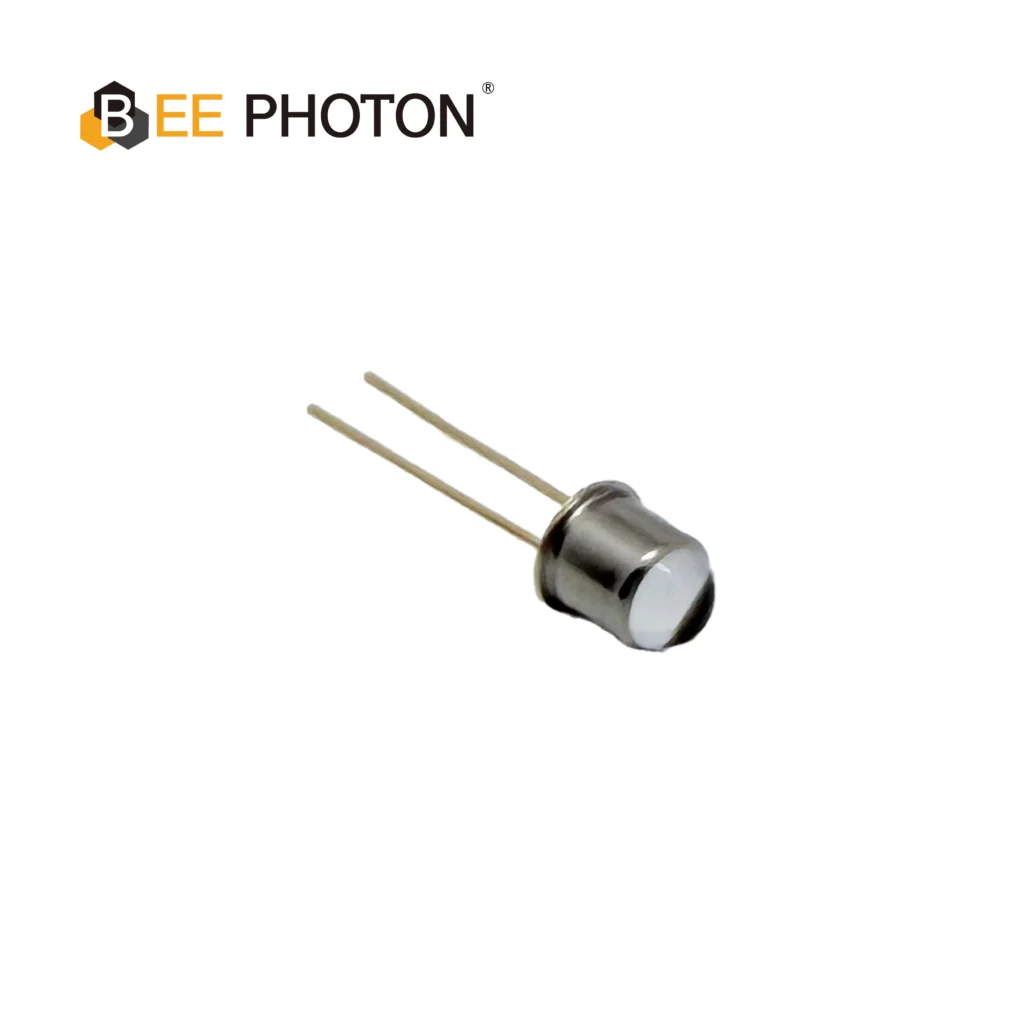
NIR-LED E850-180-201L4
Die E850-180-201L4 ist eine leistungsstarke 850nm NIR-LED für die industrielle Präzisionsmessung entwickelt. Hergestellt von Bienen-Photon, Dieser Infrarot-Strahler ist auf hohe Leuchtkraft und außergewöhnliche Stabilität ausgelegt und damit die ideale Lichtquelle für anspruchsvolle Automatisierungsumgebungen.
Fallstudie: Behebung von Problemen an einer Hochgeschwindigkeits-Verpackungslinie mit einem Schmalstrahl-Emitter
Betrachten wir ein Praxisbeispiel dafür, wie ein Schmalstrahl-Emitter ein Projekt vor dem Scheitern bewahren kann, und an welcher Stelle ein Schmalstrahl-Emitter zur Rettung kam.
In einer automatisierten Logistikanlage war eine Hochgeschwindigkeits-Sortierlinie in Betrieb. Entlang einer Metallschiene war eine Reihe von Lichtschranken in einem Abstand von nur 80 mm montiert. Diese Sensoren sollten die exakte Position der vorbeifahrenden Kartons erfassen, damit ein pneumatischer Schieber sie in die richtigen Behälter befördern konnte.
Das Problem
Das System wurde ursprünglich mit standardmäßigen 30-Grad-Infrarot-LEDs als Sendern gebaut. Sobald die Linie in Betrieb ging, bemerkten die Bediener eine massive Anzahl von Sortierfehlern. Die pneumatischen Schieber lösten zu den falschen Zeiten aus, zerquetschten Kartons und blockierten die Anlage.
Nach diagnostischen Tests mit einem Oszilloskop stellte das Ingenieurteam fest, dass Licht von Emitter 1 an der glänzenden Oberfläche des Verpackungsklebebands auf den Kartons gestreut wurde und direkt in den Empfänger 2 reflektierte. Dieses optische Übersprechen ließ die Steuerung glauben, dass Karton 2 vorzeitig eingetroffen war, was den Schieber vorzeitig auslöste.
Es wurde versucht, dies durch das Hinzufügen von Trennwänden aus Karton zwischen den Sensoren zu lösen, aber die Vibrationen des Förderbands lockerten die Barrieren ständig, und sie sammelten schnell Staub an, was die Sensoren schließlich vollständig blockierte.
Die Lösung
Das Team entschied sich, das Problem auf Hardware-Ebene zu lösen. Sie ersetzten die Standard-Weitwinkel-Sender durch einen kundenspezifischen 4-Grad-Emitter Schmalstrahl-Emitter aus dem BeePhoton-Katalog.
Da der neue Schmalstrahl-Emitter das Licht auf einen winzigen 70-mm-Punkt über die 1-Meter-Breite des Förderbands fokussiert hielt, wurde das Streulicht, das auf das glänzende Klebeband traf, drastisch reduziert. Jede geringfügige Reflexion, die dennoch auftrat, war viel zu schwach, um die benachbarten Empfänger auszulösen, da das Licht nicht nach außen streute.
Das Projekt zeigte, dass ein Schmalstrahl-Emitter nicht nur das Übersprechen unterbindet, sondern auch den Rauschabstand verbessert. Mit dem neu Schmalstrahl-Emitter installierten System arbeitete die Anlage ohne eine einzige Fehlauslösung.
Die Ergebnisse
Das Upgrade war ein sofortiger Erfolg:
- Kein Übersprechen: Die optische Interferenz zwischen benachbarten Kanälen sank um mehr als 98%.
- Erhöhte Bandgeschwindigkeit: Da die Sensoren keine Fehlauslösungen mehr verursachten, konnte das Werk die Geschwindigkeit des Förderbandes um 15% erhöhen, was den täglichen Paketdurchsatz steigerte.
- Wartungsrückgang: Die hohe optische Dichte des Schmalstrahl-Emitter bedeutete, dass die Sensoren eine dicke Schicht Kartonstaub tolerieren konnten, ohne ihr Signal zu verlieren, wodurch das Reinigungsintervall von einmal täglich auf einmal monatlich reduziert wurde.
Dieses Projekt hat bewiesen, dass eine geringfügig höhere Investition in ein hochwertiges Schmalstrahl-Emitter Produkt im Vorfeld zehntausende Dollar an Ausfallzeiten und zerstörtem Inventar im weiteren Verlauf einsparen kann.
Schritt-für-Schritt-Anleitung: Integration eines schmalstrahlenden Emitters in Ihr nächstes Projekt
Wenn Sie bereit sind, einen Schmalstrahl-Emitter in Ihr nächstes Design zu integrieren, finden Sie hier eine einfache, sachliche Anleitung zur Inbetriebnahme Ihres Systems.
Schritt 1: Wählen Sie Ihre Optik und Wellenlänge
Wählen Sie einen Schmalstrahl-Emitter mit einem Abstrahlwinkel von 4 oder 5 Grad. Wenn Sie über sehr große Entfernungen arbeiten (z. B. über 5 Meter), sollten Sie eine ultraschmale 2-Grad-Option in Betracht ziehen. Wählen Sie 850 nm, wenn Sie ein wenig sichtbares rotes Licht zur Ausrichtung des Systems wünschen, oder 940 nm, wenn es vollständig unsichtbar sein soll.
Schritt 2: Entwurf einer stabilen Halterung
Richten Sie Ihr Schmalstrahl-Emitter präzise auf den Empfänger aus. Montieren Sie Ihren Sender nicht an instabilen Halterungen. Ein enger Lichtstrahl bedeutet, dass schon eine Neigung der Halterung um nur 1 Grad das Licht vom Ziel abbringen kann. Verwenden Sie gefräste Aluminiumhalterungen, robuste 3D-gedruckte Halterungen oder sichere Bleche mit Zweipunktbefestigung, um sicherzustellen, dass Ihre optische Achse fixiert bleibt.
Schritt 3: Berechnungen für den Abstand durchführen
Verwenden Sie die zuvor besprochene Formel, um die Spotgröße bei Ihrer spezifischen Entfernung zu berechnen. Stellen Sie sicher, dass Ihr Sensorabstand (der Abstand zwischen benachbarten Sensoren) größer ist als der Durchmesser des Strahlflecks. Dies garantiert, dass Ihr Schmalstrahl-Emitter niemals Streulicht in den benachbarten Empfänger abgibt.
Schritt 4: Den Betriebsstrom anpassen
Testen Sie Ihren Schmalstrahl-Emitter unter Umgebungslichtbedingungen. Da ein Schmalstrahl-Emitter Licht so effizient konzentriert, müssen Sie ihn wahrscheinlich nicht mit seinem maximalen Nennstrom betreiben. Beginnen Sie damit, Ihren LED-Treiber auf einen niedrigen Strom (z. B. 5 mA bis 10 mA) einzustellen, und prüfen Sie, ob der Empfänger zuverlässig auslöst. Wenn ja, behalten Sie diese Einstellung bei! Der Betrieb der LED bei einem niedrigeren Strom reduziert die Hitzeentwicklung, verhindert Verschleiß und stellt sicher, dass Ihr System über Jahre hinweg reibungslos läuft.
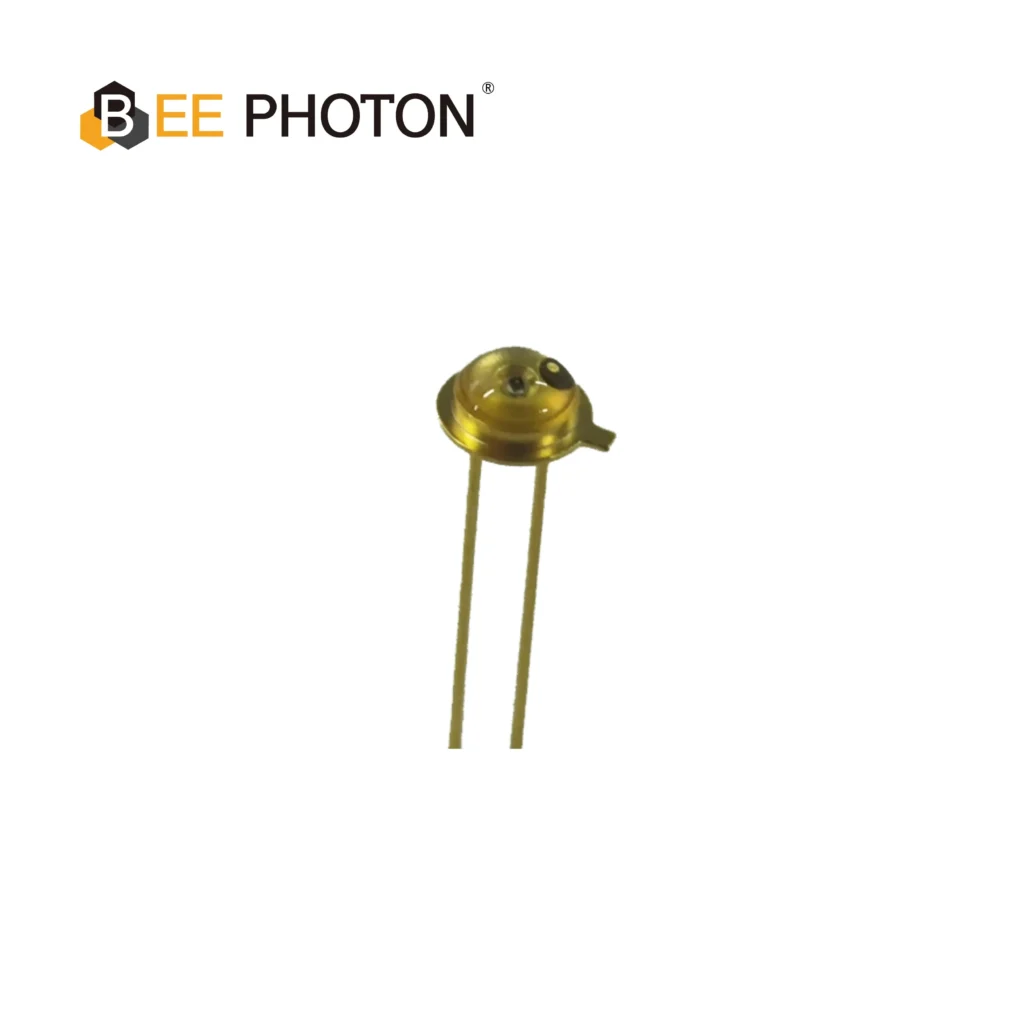
Lichtquelle LED-Serie E850-30-101
Die E850-30-101 ist ein hochstabiler 850nm-Infrarotstrahler im robusten 3mm-Dual-Inline-Package-LED-Format für einfache Leiterplattenmontage und überragende Haltbarkeit. Mit einem schmalen Abstrahlwinkel von 20° und einer Strahlungsintensität von 30 mW liefert diese Dual In-line Package LED eine präzise und helle Leistung und ist damit die ideale Lichtquelle für optische Schalter, industrielle Sensorik und anspruchsvolle Automatisierungsanwendungen.
Häufig gestellte Fragen zu Schmalstrahl-Emittern und optischen Schaltern
Q1: Wie richte ich einen 4-Grad-Schmalstrahl-Emitter aus?
Das Ausrichten eines Schmalstrahl-Emitter ist definitiv anspruchsvoller als das Ausrichten einer Weitwinkel-Lichtquelle. Der einfachste Trick besteht darin, vorübergehend einen höheren Strom durch einen 850-nm-Emitter fließen zu lassen, Schmalstrahl-Emitter damit Sie den schwachen roten Punkt auf einem Stück Papier sehen können, das vor Ihrem Empfänger platziert ist. Wenn Sie eine unsichtbare Wellenlänge von 940 nm verwenden, können Sie eine günstige Smartphone-Kamera (die meisten haben keine starken IR-Filter in der Frontkamera) oder eine Infrarot-Detektorkarte verwenden, um genau zu sehen, wohin der Strahl gerichtet ist.
Q2: Kann ein Schmalstrahlemitter die Notwendigkeit von Multiplexing vollständig erübrigen?
Ja, in vielen Fällen ist ein Schmalstrahl-Emitter ausreicht, um das Problem physikalisch zu lösen. Multiplexing (das nacheinander Ein- und Ausschalten Ihrer Sensoren, damit sie sich nicht gegenseitig stören) ist ein hervorragender Software-Trick, verringert jedoch Ihre Abtastrate und erhöht die Reaktionszeit. Wenn Sie einen 4-Grad- Schmalstrahl-Emitter verwenden und den Sensorabstand größer als die Größe Ihres Strahlflecks halten, eliminieren Sie physikalisch die Lichtüberlappung. Dies bedeutet, dass alle Ihre Sensoren kontinuierlich mit maximaler Geschwindigkeit arbeiten können, was Ihnen die schnellstmögliche Reaktionszeit ermöglicht.
Q3: Funktioniert ein Emitter mit schmalem Abstrahlwinkel mit Standard-Fotodetektoren?
Absolut. A Schmalstrahl-Emitter funktioniert mit jedem Standard-Photodetektor, Phototransistor oder Empfänger-Chip, der für seine spezifische Wellenlänge empfindlich ist (üblicherweise 850 nm oder 940 nm). Es handelt sich lediglich um einen Standard-Infrarot-LED-Chip, der in einem hoch optimierten, geformten Linsengehäuse untergebracht ist.
F4: Was ist die maximale Reichweite, die ich mit einem Schmalstrahl-Emitter erzielen kann?
Weil ein Schmalstrahl-Emitter konzentriert das Licht, wodurch deutlich größere Entfernungen als mit Standard-LEDs erzielt werden können. Bei gleichem Betriebsstrom erreicht eine 4-Grad- Schmalstrahl-Emitter in Einweg-Lichtschranken-Konfigurationen problemlos Entfernungen von 5 bis 10 Metern, während eine standardmäßige 30-Grad-LED aufgrund von Strahldivergenz und Leistungsverlust Schwierigkeiten hätte, ein zuverlässiges Signal über 1,5 Meter hinaus aufrechtzuerhalten.
Fazit: Beginnen Sie noch heute mit einem Schmalstrahl-Emitter
Seien wir ehrlich: Der Kampf mit optischem Übersprechen und Sensorinterferenzen ist eine enorme Zeitverschwendung. Während Softwarefilter und komplexe elektronische Modulation helfen können, sind sie letztendlich nur Notlösungen für ein physikalisches Problem.
Die Investition in einen Schmalstrahl-Emitter ist der einfachste und zuverlässigste Weg, die Leistung optischer Schalter zu optimieren. Durch den Einsatz eines Hochleistungs- Schmalstrahl-Emitter, erhalten Sie einen engeren Strahl, null Interferenzen mit Nachbargeräten, massive Funktionsreserven und absolute Zuverlässigkeit – selbst in staubigsten Industrieumgebungen.
Wenn Sie genug von Fehlauslösungen haben und ein wirklich robustes Lichtschranken-Array aufbauen möchten, sind wir für Sie da. Bei BeePhoton, entwickeln und fertigen wir Hochleistungs- Lichtquellenprodukte die speziell auf anspruchsvolle optische Anwendungen zugeschnitten sind. Ganz gleich, ob Sie eine standardmäßige fokussierte 4-Grad-LED oder eine kundenspezifische optische Lösung benötigen, unser Expertenteam steht Ihnen zur Verfügung, um die perfekte Lösung für Sie zu finden.
Lassen Sie nicht zu, dass optisches Übersprechen Ihre Produktionslinie verlangsamt. Besuchen Sie unsere Kontaktseite oder schreiben Sie uns eine E-Mail an info@photo-detector.com um ein schnelles Angebot anzufordern, Produktmuster zu erhalten oder über Ihr spezifisches Sensordesign zu sprechen.


