
Si está construyendo sistemas LiDAR para vehículos autónomos o ampliando los límites del hardware de computación espacial, ya conoce los problemas. Señales de retorno débiles, entornos ruidosos y la necesidad constante de aumentar el alcance sin aumentar la potencia del láser. Ahí es exactamente donde entran en juego los fotodetectores de alta sensibilidad para LiDAR y cambian las reglas del juego.
Llevo años investigando lo que realmente aparece en Google sobre estos temas, y los mejores artículos siempre ofrecen información real sobre especificaciones, ventajas y desventajas en el mundo real, y cosas que realmente se pueden utilizar. Así que aquí está mi opinión, directamente desde las trincheras, sobre por qué los fotodetectores de alta sensibilidad para LiDAR son los héroes olvidados de la cartografía espacial 3D en la actualidad. Nada de palabrería, sólo los detalles que importan a los compradores B2B como usted que compran componentes para el hardware de última generación.
Por qué los fotodetectores de alta sensibilidad para LiDAR son más importantes que nunca
Tanto la conducción autónoma como la computación espacial viven o mueren en función de lo bien que su sistema vea el mundo en 3D. LiDAR envía pulsos láser y mide el tiempo que tardan en rebotar. Parece sencillo, ¿verdad? Pero en la vida real esos ecos son diminutos, sobre todo a más de 200 metros o con lluvia, niebla o al chocar con superficies poco reflectantes, como coches negros o pavimento oscuro.
Los fotodetectores de alta sensibilidad para LiDAR captan los fotones débiles sin ahogarse en el ruido. Proporcionan nubes de puntos más limpias, tiempos de reacción más rápidos y mejor detección de objetos. El mercado de LiDAR está en plena expansión: se prevé que alcance los 12.790 millones de dólares en 2030, con una tasa de crecimiento interanual del 31,3% desde los niveles de 2025, impulsado en gran medida por los sistemas ADAS de automoción y la cartografía 3D. Los mercados de la informática espacial y la detección 3D son aún mayores, con 214.000 millones de dólares de aquí a 2036.
Si su hardware no puede manejar señales débiles, está dejando sobre la mesa el alcance y la seguridad. He visto a equipos de prototipos desechar diseños completos de receptores porque sus fotodetectores no eran capaces de superar las pruebas dinámicas del mundo real. Los fotodetectores de alta sensibilidad para LiDAR solucionan este problema.

Fotodiodo PIN de Si con baja corriente oscura (350-1060nm) PDCC100-001
¿Busca un fotodiodo PIN de Si personalizado? Bee Photon ofrece soluciones OEM con baja corriente oscura y un rango de 350-1060 nm. Colaboramos con clientes B2B para desarrollar fotodiodos adaptados a sus necesidades específicas.
Desglose de los fotodiodos PIN de Si: el caballo de batalla de los fotodetectores de alta sensibilidad para LiDAR
La mayoría de la gente piensa en “detector LiDAR” y salta directamente a diodos de avalancha monofotónicos (SPAD) o nanocables superconductores. Tienen su lugar para trabajos de laboratorio con luz ultrabaja. Pero para la producción de hardware informático espacial y de automoción, los fotodiodos PIN de silicio siguen dominando en muchos casos. Son rápidos, rentables y ofrecen la alta sensibilidad que se necesita en el rango visible a infrarrojo cercano (800-1100 nm, donde se sitúan la mayoría de los láseres LiDAR seguros para los ojos).
Esto es lo que ocurre con los fotodiodos PIN de Si. La capa “intrínseca” entre las regiones P y N amplía la zona de agotamiento, por lo que se absorben más fotones y se convierten en corriente. De este modo, se obtiene una gran capacidad de respuesta (a menudo 0,5-0,6 A/W en el infrarrojo cercano), además de una baja corriente oscura y tiempos de subida rápidos, inferiores a 1 ns en los encapsulados adecuados. Hamamatsu y otros fabricantes ofrecen versiones para automóviles diseñadas específicamente para receptores LiDAR.
En comparación con los diodos PN normales, las versiones PIN reducen la capacitancia y aumentan la velocidad. En comparación con los APD, omiten el ruido adicional de la ganancia de avalancha, lo que es importante cuando se trabaja con grandes volúmenes de producción y se necesita un rendimiento predecible a lo largo de las oscilaciones de temperatura.
He elaborado una rápida tabla comparativa basada en las especificaciones típicas del mundo real que he extraído de hojas de datos y pruebas de campo.
| Tipo de detector | Respuesta máxima (A/W) | Tiempo de subida (típico) | Corriente oscura (máx.) | Potencia equivalente de ruido | Coste por unidad (gran volumen) | Lo mejor para el caso de uso de LiDAR |
|---|---|---|---|---|---|---|
| Fotodiodo PIN de Si | 0,55-0,64 @ 920 nm | <1 ns | 1-10 nA | Bajo | Bajo | Automoción de alta velocidad y cartografía espacial |
| APD lineal | 10-50 (con ganancia) | ~0,5 ns | Más alto | Medio | Medio | Alcance medio con necesidad de cierta ganancia |
| Matriz SPAD | Nivel monofotónico | <100 ps | Muy bajo por píxel | Más bajo | Más alto | LiDAR de alcance ultra largo o flash |
Estos fotodetectores de alta sensibilidad para LiDAR brillan cuando se necesita un ancho de banda superior a 100 MHz y un funcionamiento fiable hasta 85 °C o más.
Especificaciones clave que realmente mueven la aguja de la cartografía espacial 3D
Si está evaluando fotodetectores de alta sensibilidad para LiDAR, no se pierda en las diapositivas de marketing. Céntrese en estas cuatro cifras:
- Capacidad de respuesta - Cuántos amperios de corriente se obtienen por vatio de luz. A 1064 nm (habitual en algunos sistemas), se obtienen entre 0,4 y 0,58 A/W con buenos diseños que atrapen la luz. Cada 0,1 A/W extra puede significar detectar señales 20 % más lejos.
- Tiempo de subida/bajada y ancho de banda - Los subnanosegundos son una apuesta segura para la cartografía 3D en tiempo real a la velocidad de los vehículos.
- Potencia equivalente de ruido (NEP) - Cuanto más bajo, mejor. Los buenos fotodetectores PIN de Si para LiDAR alcanzan niveles de fW/√Hz de un solo dígito, lo que permite utilizar una potencia láser más baja y seguir cumpliendo la normativa de seguridad ocular.
- Estabilidad térmica - Los componentes de automoción deben mantener su rendimiento entre -40 °C y +105 °C. Los detectores baratos derivan; los fotodetectores de alta sensibilidad adecuados para LiDAR no.
Otra cosa: los formatos de las matrices. Muchas configuraciones de computación espacial quieren ahora matrices de 4-16 elementos o incluso matrices lineales para poder escanear más rápido o construir LiDAR de estado sólido sin piezas móviles.
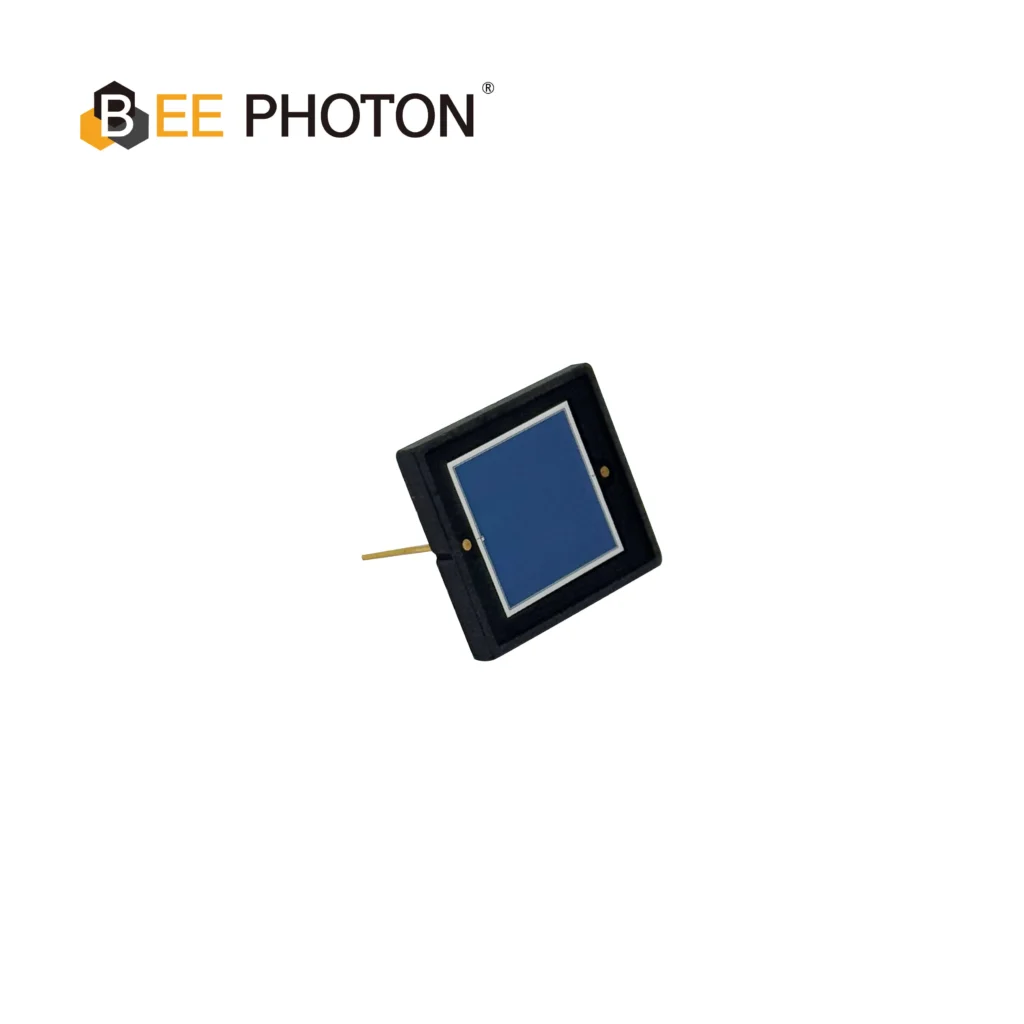
Fotodiodo PIN de Si con baja corriente oscura (350-1060nm) PDCD100-101
Actualice sus dispositivos con nuestro fotodiodo PIN de Si para mediciones ópticas. Ofrece una gran precisión en un rango de 350-1060 nm con una corriente oscura mínima. Ideal para diversas aplicaciones industriales de detección y medición, este sensor de alto rendimiento garantiza precisión y repetibilidad.
Ventajas en el mundo real: cómo los fotodetectores de alta sensibilidad para LiDAR resuelven los problemas de hardware
Permítanme compartir un par de historias anónimas de proyectos en los que he sido consultor.
Una empresa de transporte autónomo de tamaño medio se topaba con un muro a 150 m de distancia con niebla ligera. Su receptor utilizaba fotodiodos comerciales que no podían captar suficiente señal. En BeePhoton cambiamos los fotodetectores PIN de Si para LiDAR por fotodetectores personalizados. ¿El resultado? Obtuvieron 40 m de detección fiable y redujeron los falsos negativos a la mitad, todo ello sin cambiar el láser ni aumentar el consumo de energía. El equipo de hardware me dijo que la integración les llevó menos de dos semanas porque la disposición de las patillas y la capacitancia se ajustaban al circuito de amplificación existente.
Otro cliente de computación espacial que fabrica gafas de realidad aumentada para uso industrial necesitaba mapas 3D compactos y de bajo consumo. La duración de la batería era el problema. Los fotodetectores de alta sensibilidad para LiDAR con corriente oscura ultrabaja les permitieron reducir la energía de los impulsos láser en 30 %, manteniendo una precisión de profundidad milimétrica. Su producto funciona ahora más frío y dura más con una sola carga.
No son casos de unicornios elegidos a dedo. Son típicos cuando se elige el detector adecuado.
Los fotodetectores de alta sensibilidad de BeePhoton para LiDAR
En BeePhoton estamos especializados precisamente en esto: fotodiodos PIN de Si optimizados como fotodetectores de alta sensibilidad para LiDAR. Nuestro Categoría de fotodiodos PIN de Si incluye piezas calificadas para automoción con respuesta NIR mejorada, conjuntos de baja capacitancia y tamaños/espacios de elementos personalizados que los ingenieros de hardware realmente solicitan.
Enviamos desde paquetes TO-can de un solo elemento hasta conjuntos multielemento listos para su integración directa en su placa receptora. Y como nos centramos en el B2B, obtendrá un servicio de ingeniería que realmente entiende su esquema, no solo un representante de ventas leyendo una hoja de datos.
Tendencias futuras: Hacia dónde se dirigen los fotodetectores de alta sensibilidad para LiDAR
Se avecinan enfoques híbridos: matrices de PIN combinadas con un procesamiento inteligente de la señal para imitar algunas de las ventajas de los SPAD a menor coste. Las estructuras que atrapan la luz en la parte posterior de la matriz ya están acercando la capacidad de respuesta a los límites teóricos a 1064 nm. Y con la explosión de la informática espacial en la robótica y el hardware metaverso, cabe esperar una mayor integración entre el fotodetector y el ASIC en el mismo paquete.
Sinceramente, las empresas que den en el clavo con el equilibrio entre sensibilidad, velocidad y precio serán las dueñas de la próxima oleada de hardware autónomo y espacial.
Consejos rápidos para especificar fotodetectores de alta sensibilidad para LiDAR
- Adapte la longitud de onda exactamente a su láser.
- Calcule su presupuesto de enlaces con antelación: el NEP es más importante que la capacidad de respuesta máxima.
- Pruebe a temperaturas extremas antes de comprometerse con el volumen.
- Solicite a los proveedores los datos de cualificación AEC-Q de automoción.
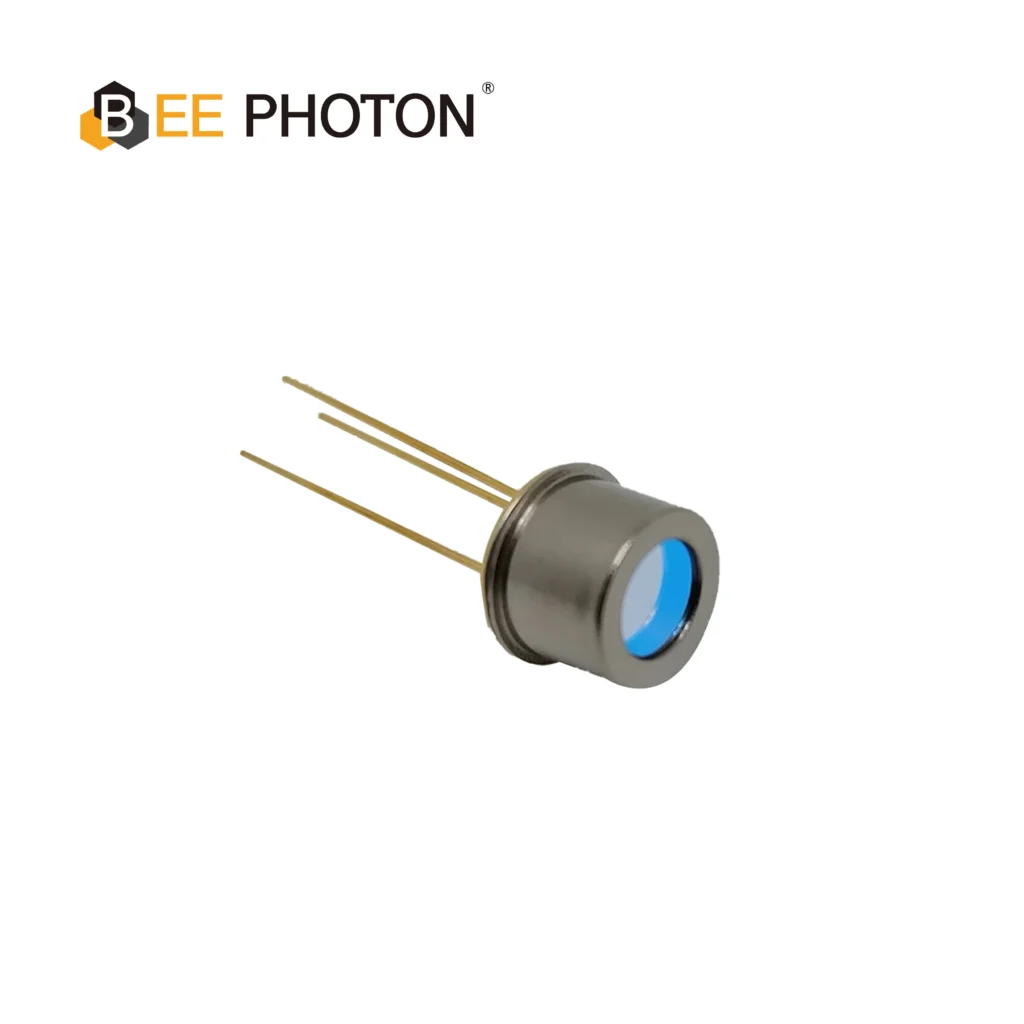
Fotodiodo PIN de Si con baja corriente oscura (350-1060nm) PDCT07-001
Consiga resultados de alta precisión con nuestro fotodiodo Si PIN de amplio rango espectral, ideal para espectrometría e instrumentos analíticos. Su corriente oscura ultrabaja y su alta linealidad garantizan una detección precisa de la luz. Este fotodiodo ofrece una amplia respuesta espectral para diversas aplicaciones.
FAQ - Respuestas directas sobre fotodetectores de alta sensibilidad para LiDAR
¿Qué hace que un fotodetector sea lo suficientemente “sensible” para un LiDAR real y una cartografía espacial en 3D?
Se trata de captar señales de retorno débiles con poco ruido. Busque una respuesta superior a 0,5 A/W en el infrarrojo cercano, un NEP en el rango de fW y tiempos de subida inferiores a ns. Los fotodetectores de alta sensibilidad para LiDAR convierten los ecos débiles en datos limpios y utilizables sin necesidad de láseres masivos.
¿Por qué elegir fotodiodos PIN de Si en lugar de matrices SPAD o APD?
Coste, fiabilidad y sencillez. Los fotodiodos PIN de Si ofrecen la alta sensibilidad necesaria para la mayoría de las aplicaciones de automoción e informática espacial sin el ruido de avalancha ni los requisitos de refrigeración adicionales. Están probados en sistemas LiDAR de producción actual.
¿Con qué rapidez puedo obtener fotodetectores personalizados de alta sensibilidad para LiDAR de BeePhoton?
Disponemos de piezas estándar y podemos entregar conjuntos personalizados en 4-6 semanas para proyectos cualificados. Póngase en contacto con nosotros y le ayudaremos.
¿Sus detectores cumplen la normativa de seguridad ocular para uso en automoción?
Sí: nuestros diseños admiten potencias láser más bajas manteniendo el alcance, lo que le ayuda a mantenerse dentro de los límites de la norma IEC 60825-1.
¿Cuál es la forma más fácil de obtener un presupuesto o muestras?
Vaya directamente a nuestro página de contacto o envíenos un correo electrónico a info@photo-detector.com. Díganos su longitud de onda, el ancho de banda que necesita y el alcance deseado: le responderemos con opciones el mismo día.
Construir un mejor hardware LiDAR no es tarea fácil. Pero los fotodetectores de alta sensibilidad adecuados para LiDAR pueden reducir en meses el ciclo de desarrollo y dar a su sistema una ventaja real en alcance, resolución y eficiencia energética.
Si es ingeniero de hardware o jefe de compras en busca de receptores fiables para proyectos de conducción autónoma o informática espacial, hablemos. BeePhoton existe para que esta parte de su diseño resulte sencilla. Obtenga muestras, solicite una hoja de especificaciones personalizada o envíenos sus requisitos.
Hemos ayudado a equipos a pasar del prototipo a la producción más rápido de lo que esperaban. Su sistema de cartografía 3D de última generación podría ser el siguiente.


