If you’ve ever spent a frustrating afternoon in a dusty, dimly lit manufacturing plant trying to align an infrared sensor, you know exactly how painful invisible light can be. You’re essentially waving a receiver in the air, hoping to catch a beam you can’t even see, while dust from the conveyor line settles on your lenses. This is where a high-quality LED rojo de 625 nm de alta potencia entra en escena.
For a long time, engineers defaulted to infrared emitters because they matched the peak sensitivity of silicon photodetectors. But today’s industrial environments demand faster speeds, longer detection ranges, and, above all, easier maintenance. A high-power LED rojo de 625 nm de alta potencia cambia las reglas del juego. Al combinar una luz brillante y visible con una potencia óptica considerable, un robusto LED rojo de 625 nm de alta potencia facilita enormemente la instalación y mantiene sus líneas en funcionamiento incluso cuando el aire se satura de polvo y suciedad.
If you’re looking to design or upgrade a sensor system, understanding how to harness a LED rojo de 625 nm de alta potencia is crucial. In this guide, we’ll look at why a LED rojo de 625 nm de alta potencia se ha convertido en la opción predilecta fuente de luz para interruptor fotoeléctrico for demanding B2B applications. We’ll also dive into the technical details, the math behind the optical power budget, and how to keep these emitters running cool for years to come.
¿Por qué un LED rojo de 625 nm de alta potencia es la fuente de luz definitiva para interruptores fotoeléctricos
Para entender por qué un LED rojo de 625 nm de alta potencia funciona tan bien, debemos hablar de la disposición física de la automatización industrial moderna. Los interruptores fotoeléctricos están en todas partes. Cuentan botellas en líneas de bebidas de alta velocidad, detectan piezas metálicas en plantas de ensamblaje automotriz y monitorean la madera mientras se corta en los aserraderos.
En estas configuraciones, existen tres modos de detección principales: barrera, retrorreflectante y reflexión difusa. Independientemente del modo que utilice, necesita un fuente de luz para interruptor fotoeléctrico fiable para cubrir el espacio entre el transmisor y el receptor.
Durante años, se utilizaron LEDs rojos estándar de unos 650 nm o 660 nm. Aunque son visibles, a menudo carecen de la potencia necesaria para la detección a larga distancia. Un LED rojo de 625 nm de alta potencia de alta potencia es diferente. Proporciona una alta intensidad radiante en una longitud de onda que es muy visible para el ojo humano. Cuando utiliza un LED rojo de 625 nm de alta potencia, obtiene un punto nítido, brillante y altamente concentrado. Esto significa que un técnico puede alinear un sensor desde 10 metros de distancia sin necesidad de gafas láser especiales ni herramientas de alineación.
Sin un haz LED rojo de 625 nm de alta potencia visible, básicamente está adivinando y esperando lo mejor durante la configuración. Además, un LED rojo de 625 nm de alta potencia de alta calidad actúa como un excepcional emisor LED rojo industrial. La longitud de onda más corta de 625 nm (en comparación con la de 650 nm) ofrece en realidad un ligero aumento en el brillo percibido por el ojo humano, lo que hace que el haz parezca significativamente más nítido. Este punto nítido y de alta intensidad es lo que hace que un LED rojo de 625 nm de alta potencia sea perfecto para aplicaciones de luz puntual, lo que permite detectar piezas increíblemente pequeñas en una cinta transportadora de movimiento rápido.
La física: Emparejar un LED rojo de 625 nm de alta potencia con fotodetectores de silicio
Let’s look at some of the technical details. When we design an optical sensor, we have to match our light emitter with our photodetector. A common mistake is assuming you should only use infrared because silicon photodiodes peak in the near-infrared range (usually around 850nm to 900nm).
Sí, un fotodiodo de silicio es altamente sensible al infrarrojo. Sin embargo, los sensores de silicio de alta calidad, como los fabricados por el proveedor de fotodetectores industriales, BeePhoton, aún mantienen una excelente eficiencia cuántica en el espectro rojo visible.
Let’s look at how the math plays out. The voltage output (V_out) of a standard transimpedance amplifier receiver circuit is determined by this formula:
V_out = P_opt * R_lambda * R_f
En esta ecuación:
- V_sal es el voltaje de salida (en voltios) que lee su microcontrolador o comparador.
- P_opt es la potencia óptica recibida (en vatios) que incide en el fotodiodo desde nuestro LED rojo de 625 nm de alta potencia.
- R_lambda es la responsividad espectral del fotodiodo (en amperios por vatio, A/W).
- Resistencia de realimentación es la resistencia de retroalimentación de su amplificador (en ohmios), que establece la ganancia.
Si observa la hoja de datos de un fotodiodo PIN de silicio típico, la responsividad (R_lambda) a 850 nm podría ser de alrededor de 0,6 A/W. A la longitud de onda de un LED rojo de 625 nm de alta potencia, la responsividad cae ligeramente a unos 0,45 A/W.
Aquí es donde muchos ingenieros toman una mala decisión. Suponen que, debido a que la responsividad es menor a 625 nm, deberían optar por el infrarrojo. Pero olvidan la otra variable: la potencia óptica recibida (P_opt).
Al utilizar un de alta potencia LED rojo de 625 nm de alta potencia, puede inyectar significativamente más potencia óptica en el entorno de la que puede proporcionar un emisor infrarrojo estándar de baja potencia. Debido a que P_opt es mucho mayor, el V_out resultante es en realidad más grande y más limpio. Se obtiene una relación señal-ruido masiva, superando por completo la pequeña caída en la responsividad del fotodiodo.
Let’s look at how that optical power travels through space. For a through-beam photoelectric switch using a LED rojo de 625 nm de alta potencia, la potencia óptica recibida a una distancia (d) puede estimarse utilizando un modelo básico de propagación en el espacio libre:
P_opt = P_emit * (A_rx / (3.1416 * (d * tan(theta))^2))
En esta fórmula:
- P_emit es la potencia de salida óptica total del LED rojo de 625 nm de alta potencia (en vatios).
- A_rx es el área fotosensible activa de su receptor de fotodiodo (en metros cuadrados).
- d es la distancia entre el emisor y el receptor (en metros).
- theta es la divergencia de medio ángulo de la lente emisora (en radianes).
Si desea maximizar P_opt a largas distancias, debe mantener la divergencia del haz (theta) lo más pequeña posible. Al combinar una alta luminosidad LED rojo de 625 nm de alta potencia con una lente colimadora de alta precisión, puede crear un haz estrecho similar al de un láser. Esto garantiza que más fotones de su LED rojo de 625 nm de alta potencia lleguen al área activa del receptor en lugar de dispersarse en el espacio.
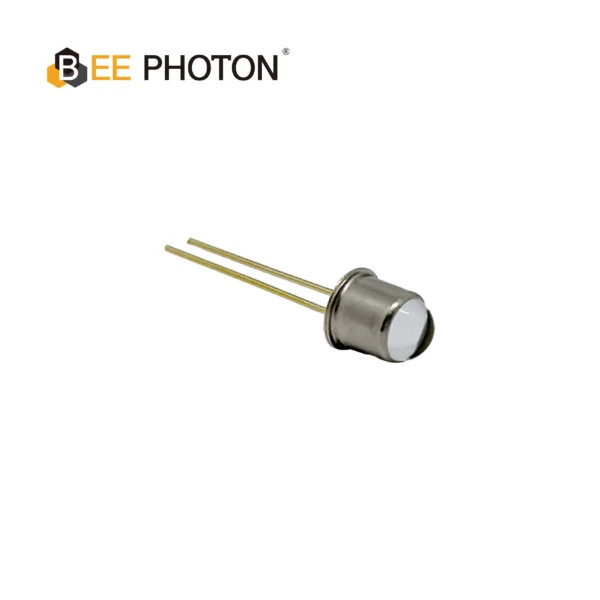
LED rojo E628-10-201L4
LED rojo de 625 nm de alto rendimiento para aplicaciones ópticas de precisión
En E628-10-201L4 de Bee Photon es una LED rojo de 625 nm diseñada para ofrecer una gran luminosidad y una fiabilidad excepcional en aplicaciones industriales exigentes. Diseñada con un ángulo de emisión estrecho de 4 grados, esta Emisor LED rojo de alta potencia proporciona una salida de luz focalizada, lo que la convierte en la solución perfecta para tareas de detección y señalización óptica de precisión en las que la exactitud es primordial.
Comparativa de longitudes de onda de emisores para interruptores industriales
To help you visualize the trade-offs, let’s put these light sources head-to-head. Here is how a high-power LED rojo de 625 nm de alta potencia se compara con los LED rojos estándar de 650 nm y los emisores de infrarrojo cercano (NIR):
| Métrica de rendimiento | LED de infrarrojo cercano (850 nm) | LED rojo estándar (650 nm) | Alta potencia LED rojo de 625 nm de alta potencia |
|---|---|---|---|
| Visibilidad humana | Invisible (difícil de alinear) | Moderada (punto rojo tenue) | Excelente (Punto rojo brillante y nítido) |
| Responsividad del fotodiodo de silicio | Pico (~0,6 A/W) | Bueno (~0,48 A/W) | Muy sólido (~0,45 A/W) |
| Intensidad radiante típica | Alta | Bajo a medio | Extremadamente alto |
| Penetración de polvo y suciedad | Moderado | Pobre | Excepcional (Atraviesa el polvo espeso) |
| Capacidad de haz puntual | Deficiente (Los haces tienden a dispersarse) | Moderado | Sobresaliente (Excelente para un enfoque nítido) |
Como puede ver, la de alta potencia LED rojo de 625 nm de alta potencia proporciona el mejor equilibrio entre visibilidad y potencia bruta. Aunque el infrarrojo tiene una ligera ventaja en la sensibilidad bruta del silicio, el rendimiento práctico total de una LED rojo de 625 nm de alta potencia en entornos de fábrica del mundo real es difícil de superar.
Si está adquiriendo componentes, siempre es prudente elegir un producto de fuente de luz de alta calidad que esté diseñado específicamente para estas condiciones adversas. Escatimar gastos con LEDs baratos de grado indicador solo provocará fallos en el campo y clientes insatisfechos.
Superar la degradación de la señal en entornos polvorientos y hostiles con una LED rojo de 625 nm de alta potencia
Let’s get real for a minute. Industrial plants are dirty. Whether it is a cement packaging facility, a flour mill, or an automotive welding line, there is always stuff floating in the air. Over time, a thin layer of dust, oil, or water droplets will coat the lenses of both your emitter and receiver.
Con una fuente de luz estándar de baja potencia, este recubrimiento es una sentencia de muerte. La potencia óptica cae, la relación señal-ruido se desploma y el sensor comienza a emitir disparos falsos. Esto se denomina atenuación de la señal y es la causa principal de fallos en los interruptores fotoeléctricos en el campo.
Una de alta potencia LED rojo de 625 nm de alta potencia resuelve esto mediante pura fuerza bruta. Al ejecutar una alta intensidad LED rojo de 625 nm de alta potencia, you build a massive “optical power budget” into your system.
Piénselo de esta manera: si su sensor solo necesita 10 microvatios de potencia óptica para activarse, pero su LED rojo de 625 nm de alta potencia is delivering 1000 microwatts of power to the receiver, you have an optical safety margin of 100x. Even if dust blocks 90% of the light, the receiver still sees 100 microwatts of power—well above the trigger threshold. Your machine keeps running, your conveyor belt doesn’t stop, and your maintenance team doesn’t have to clean the lenses every shift.
Esto es particularmente crítico para los sensores de reflexión difusa. En la detección difusa, la luz rebota directamente en el objeto objetivo, que puede estar oscuro, mate o sucio. Un emisor estándar tiene dificultades para devolver suficiente luz al receptor. Pero cuando se ilumina el objetivo con un emisor de alta potencia LED rojo de 625 nm de alta potencia, la señal reflejada es lo suficientemente fuerte como para que el fotodiodo la detecte de manera confiable, incluso a distancia.
Estudio de caso práctico: Cómo una instalación de embalaje ahorró miles con un LED rojo de 625 nm de alta potencia
Hemos visto cómo esto se desarrolla en el campo muchas veces. Permítanme compartir una historia de éxito anónima que resalta la diferencia práctica que un emisor de alta potencia LED rojo de 625 nm de alta potencia puede marcar.
Un importante centro de logística y embalaje operaba una serie de cintas transportadoras de clasificación de alta velocidad. Utilizaban interruptores fotoeléctricos retrorreflectantes para contar contenedores de plástico oscuros mientras avanzaban a gran velocidad por la línea. El problema era doble. Primero, la planta estaba increíblemente polvorienta, lo que hacía que los sensores perdieran la señal cada pocas horas. Segundo, cada vez que un sensor recibía un golpe o era reemplazado, los técnicos pasaban hasta 30 minutos tratando de realinear el haz infrarrojo invisible con el reflector.
El gerente de la planta estaba desesperado por el tiempo de inactividad. Se pusieron en contacto con nosotros para encontrar una solución mejor.
Sugerimos que reemplazaran sus emisores antiguos por un robusto LED rojo de 625 nm de alta potencia módulo. Específicamente, les suministramos el emisor especializado de BeePhoton, LED rojo de 625 nm de alta potencia el cual está diseñado para resistir el duro abuso industrial.
Los resultados fueron inmediatos:
- Cero tiempo adicional de alineación: Porque el LED rojo de 625 nm de alta potencia producía un punto rojo altamente visible y nítido en el reflector, los técnicos podían alinear un sensor de repuesto en menos de 30 segundos. Se acabaron las conjeturas.
- Inmunidad al polvo: La alta intensidad radiante del LED rojo de 625 nm de alta potencia emisor atravesó las fibras de cartón y el polvo en el aire. Los intervalos de mantenimiento para limpiar las lentes pasaron de dos veces al día a una vez al mes.
- Precisión a alta velocidad: Los rápidos tiempos de subida y bajada del LED rojo de 625 nm de alta potencia permitieron al receptor detectar contenedores moviéndose a altas velocidades sin perder ni un solo conteo.
Al sustituir sus fuentes de luz débiles por una robusta LED rojo de 625 nm de alta potencia, the facility completely eliminated their sensor-related downtime. They didn’t have to clean the lenses for weeks. It showed us that sometimes, simply upgrading to a high power LED rojo de 625 nm de alta potencia es todo lo que se necesita para resolver un problema crónico de automatización industrial.

Fuente de luz LED serie E940-15-301
Nuestra fuente de luz para conmutadores ópticos de alto rendimiento se presenta en un compacto encapsulado TO18. Esta fuente de luz para interruptores ópticos garantiza una uniformidad y fiabilidad excelentes para las telecomunicaciones.
Consejos de diseño profesional: Alimentación de su LED rojo de 625 nm de alta potencia para una vida útil máxima
Si usted es un ingeniero electrónico que diseña un interruptor fotoeléctrico, no puede tratar un componente de alta potencia LED rojo de 625 nm de alta potencia like a simple indicator light. High-power LEDs draw more current and generate significant heat. If you don’t manage this, your emitter’s lifetime will drop from 100,000 hours to a few hundred.
Aquí presentamos algunas lecciones aprendidas por nuestro equipo de ingeniería sobre cómo diseñar un sistema confiable en torno a un LED rojo de 625 nm de alta potencia:
1. Alimente siempre con corriente constante
Nunca alimente un componente de alta potencia LED rojo de 625 nm de alta potencia utilizando una fuente de voltaje simple y una resistencia limitadora de corriente. Los LED tienen un coeficiente de temperatura negativo. A medida que la temperatura de unión del LED rojo de 625 nm de alta potencia aumenta, su voltaje directo (V_f) disminuye. Si el voltaje de alimentación permanece constante, la corriente aumentará. Esta corriente adicional genera aún más calor, reduciendo aún más el voltaje directo. Esta es la fórmula para el embalamiento térmico, que destruirá rápidamente su LED rojo de 625 nm de alta potencia.
En su lugar, utilice un circuito controlador de corriente constante dedicado. Esto garantiza que, independientemente de cuánto se caliente el LED rojo de 625 nm de alta potencia , la corriente permanezca fija en su nivel objetivo, manteniendo la salida óptica estable y segura.
2. Gestione la deriva térmica de la longitud de onda
Here is a secret that LED manufacturers don’t advertise in big bold letters: wavelengths drift with temperature. For a typical LED rojo de 625 nm de alta potencia, la longitud de onda pico se desplazará hacia el rojo aproximadamente de 0,2 nm a 0,3 nm por cada grado Celsius de aumento en la temperatura de unión.
If your sensor is operating in a hot environment, a 40-degree temperature rise can shift your peak wavelength significantly. Always make sure your receiver’s optical filter is wide enough to accommodate this thermal wavelength drift without losing the signal from your LED rojo de 625 nm de alta potencia.
3. Modulación por pulsos para inmunidad al ruido
Para solucionar la interferencia de la luz ambiental, siempre debe modular la corriente de su LED rojo de 625 nm de alta potencia. El uso de pulsos le permite alimentar el emisor a una corriente de pico mucho mayor que su límite continuo, lo que le proporciona un pulso de luz increíblemente brillante capaz de atravesar las peores condiciones ambientales sin sobrecalentar el chip.
Elección de los componentes ópticos adecuados para un LED rojo de 625 nm de alta potencia
Su dispositivo de alta potencia LED rojo de 625 nm de alta potencia es tan bueno como el vidrio o el plástico que tiene delante. Sin la óptica adecuada, la luz se dispersará y perderá la ventaja de potencia por la que pagó.
Para un sensor de barrera, se requiere una lente colimadora. Esta lente desvía los rayos de luz divergentes de la LED rojo de 625 nm de alta potencia en un haz paralelo, lo que le permite recorrer largas distancias con una dispersión mínima.
Para sensores de reflexión difusa o de supresión de fondo, se necesita una lente de enfoque. Esta toma la luz de la LED rojo de 625 nm de alta potencia y la enfoca en un punto nítido y diminuto a una distancia específica. Un punto más pequeño significa una mayor resolución espacial, lo que permite al interruptor detectar huecos pequeños u objetos diminutos con alta precisión.
Al seleccionar una lente óptica, asegúrese de que el material esté clasificado para la longitud de onda de un LED rojo de 625 nm de alta potencia. Si bien la mayoría de los plásticos ópticos tienen una excelente transmisión a 625 nm, los materiales económicos pueden degradarse y amarillear con el tiempo cuando se exponen a la luz ultravioleta o al calor intenso, reduciendo el rendimiento general de su sensor.
Fuente de luz LED serie E850-30-101
El E850-30-101 es un emisor de infrarrojos de 850 nm de alta estabilidad diseñado en un robusto formato de LED de paquete doble en línea de 3 mm para facilitar el montaje en PCB y ofrecer una durabilidad superior. Con un ángulo de haz estrecho de 20° y una intensidad radiante de 30 mW, este LED de paquete doble en línea ofrece una salida precisa y de alto brillo, lo que lo convierte en la fuente de luz ideal para interruptores ópticos, detección industrial y aplicaciones de automatización exigentes.
Preguntas frecuentes: Preguntas comunes sobre LED rojo de 625 nm de alta potencia Emitters
P1: ¿Por qué se prefiere un LED rojo de 625 nm de alta potencia frente a los emisores infrarrojos estándar para la alineación?
Un emisor de infrarrojos es completamente invisible para el ojo humano, lo que significa que los técnicos deben depender de conjeturas o de costosos detectores láser durante la configuración. Un LED rojo de 625 nm de alta potencia crea un punto rojo nítido y altamente visible que permite una alineación manual rápida y precisa a través de largas distancias físicas, reduciendo drásticamente el tiempo de inactividad por mantenimiento.
P2: ¿Cuál es la responsividad óptica típica de un fotodiodo a esta longitud de onda?
Si bien los fotodiodos de silicio alcanzan su pico en el rango del infrarrojo cercano (850 nm – 900 nm), mantienen una responsividad muy respetable de aproximadamente 0,45 A/W cuando se combinan con una LED rojo de 625 nm de alta potencia fuente de luz. Al utilizar un emisor de alta potencia, el gran volumen de potencia óptica compensa fácilmente la ligera disminución en la sensibilidad espectral del fotodiodo.
P3: ¿Cómo se protege un LED rojo de 625 nm de alta potencia del sobrecalentamiento en entornos calurosos?
Alimente siempre su emisor con un circuito de control de corriente constante en lugar de una configuración de tensión constante. Dado que los LED tienen un coeficiente de temperatura negativo, un control de tensión constante puede provocar un embalamiento térmico. Además, el pulsado del emisor a una frecuencia alta con un ciclo de trabajo bajo reduce la carga térmica media a la vez que permite una salida óptica de pico elevada. Mantener su LED rojo de 625 nm de alta potencia refrigeración es fundamental para su vida útil general.
Lleve el rendimiento de sus sensores al siguiente nivel
¿Está cansado de las fallas de los sensores, los falsos disparos y las constantes paradas de la línea de transporte? Ahora sabe cómo un componente de alta potencia LED rojo de 625 nm de alta potencia puede hacer que sus interruptores fotoeléctricos sean prácticamente infalibles, incluso en los entornos industriales más polvorientos.
Si busca diseñar el sensor óptico definitivo o necesita adquirir emisores robustos de alta luminosidad, BeePhoton lo tiene cubierto. Nuestro LED rojo de 625 nm E628-10-201L4 está diseñado específicamente para cumplir con los requisitos térmicos y ópticos extremos de la industria pesada.
Don’t let poor light quality drag your system down. Póngase en contacto con nuestro equipo de soporte de ingeniería hoy mismo para una consulta técnica gratuita, o envíe un correo electrónico directamente a info@photo-detector.com to get detailed datasheets and high-volume pricing. Let’s make your optical switches faster, stronger, and completely hassle-free!