
Si está buscando fotodiodos para una nueva línea de productos o para actualizar un sistema ya existente, sabrá que el embalaje puede ser decisivo. El coste, su resistencia al calor o la humedad y la cantidad de luz que realmente pasa a través de él son aspectos importantes cuando se compran grandes cantidades y los clientes esperan que no se produzcan fallos en el futuro. En BeePhoton llevamos años distribuyendo fotodiodos PIN de Si, y la pregunta que más escuchamos de los compradores B2B es exactamente ésta: ¿fotodiodo de resina epoxi o fotodiodo de ventana de cristal? ¿Cuál se ajusta realmente a sus especificaciones sin disparar el presupuesto o los objetivos de fiabilidad?
He asistido a suficientes revisiones de diseño y reuniones sobre fallos de campo para decirle que no se trata sólo de “más barato frente a más elegante”. El fotodiodo de resina epoxi adecuado puede ahorrarle mucho dinero en tiradas de gran volumen, mientras que un fotodiodo de ventana de cristal a menudo se convierte en la única opción una vez que el estrés ambiental entra en juego. Esta guía analiza las diferencias reales, con el tipo de detalles que realmente le ayudan a decidir en lugar de limitarse a enumerar las especificaciones. Analizaremos el coste, la transmisión de la luz, la durabilidad y un par de casos anónimos de clientes que han pasado por lo mismo. Al final sabrá exactamente cuándo especificar un fotodiodo de resina epoxi y cuándo merece la pena el fotodiodo de ventana de cristal.
Si ya está navegando por nuestra Categoría de fotodiodos PIN de Si, Allí verá los dos estilos de embalaje. Quédate y te ayudaremos a combinarlos con tu proyecto.
¿Qué es exactamente un fotodiodo de resina epoxi?
Un fotodiodo de resina epoxi es básicamente un chip fotodiodo de silicio encerrado en un paquete de epoxi moldeado. El epoxi cumple una doble función: protege el chip y actúa como ventana óptica. La fabricación es sencilla: el chip se une con alambre y, a continuación, se moldea por transferencia o se cubre con resina epoxi de calidad óptica. Por eso los fotodiodos de resina epoxi suelen tener un precio unitario más bajo, sobre todo a partir de unos pocos miles de unidades.
El fotodiodo de resina epoxi brilla en aplicaciones en las que se necesita una transmisión de luz decente, pero no temperaturas extremas ni humedad constante. Los rangos de funcionamiento típicos se sitúan entre -20 °C y +60 °C para muchas construcciones de cerámica más epoxi, y el propio material tiene un índice de refracción de alrededor de 1,53 (datos de Hamamatsu). Esto proporciona una eficacia de acoplamiento sólida para la luz visible e infrarroja cercana sin necesidad de revestimientos extravagantes.
Una cosa que hemos notado en el laboratorio aquí en BeePhoton es que los fotodiodos de resina epoxi se pueden hacer súper compactos. La menor constante dieléctrica del compuesto de moldeo epoxi (aproximadamente 3,5-4,5) se traduce en una menor capacitancia parásita en comparación con configuraciones más grandes de cerámica o vidrio-metal. ¿El resultado? Tiempos de respuesta más rápidos en algunos circuitos sensores. Algunos clientes de sensores industriales portátiles confían en su fotodiodo de resina epoxi porque el conjunto es lo bastante pequeño y barato para un equipo portátil.
Pero aquí está el truco que hemos visto más de una vez: el epoxi no es hermético. Puede absorber humedad con el tiempo, lo que provoca problemas durante la soldadura por reflujo o en entornos húmedos. Los fabricantes suelen recomendar hornear las piezas antes del montaje precisamente por eso. Así que si su línea de producción se salta ese paso, un fotodiodo de resina epoxi puede sorprenderle con un popcorning o delaminación posterior.
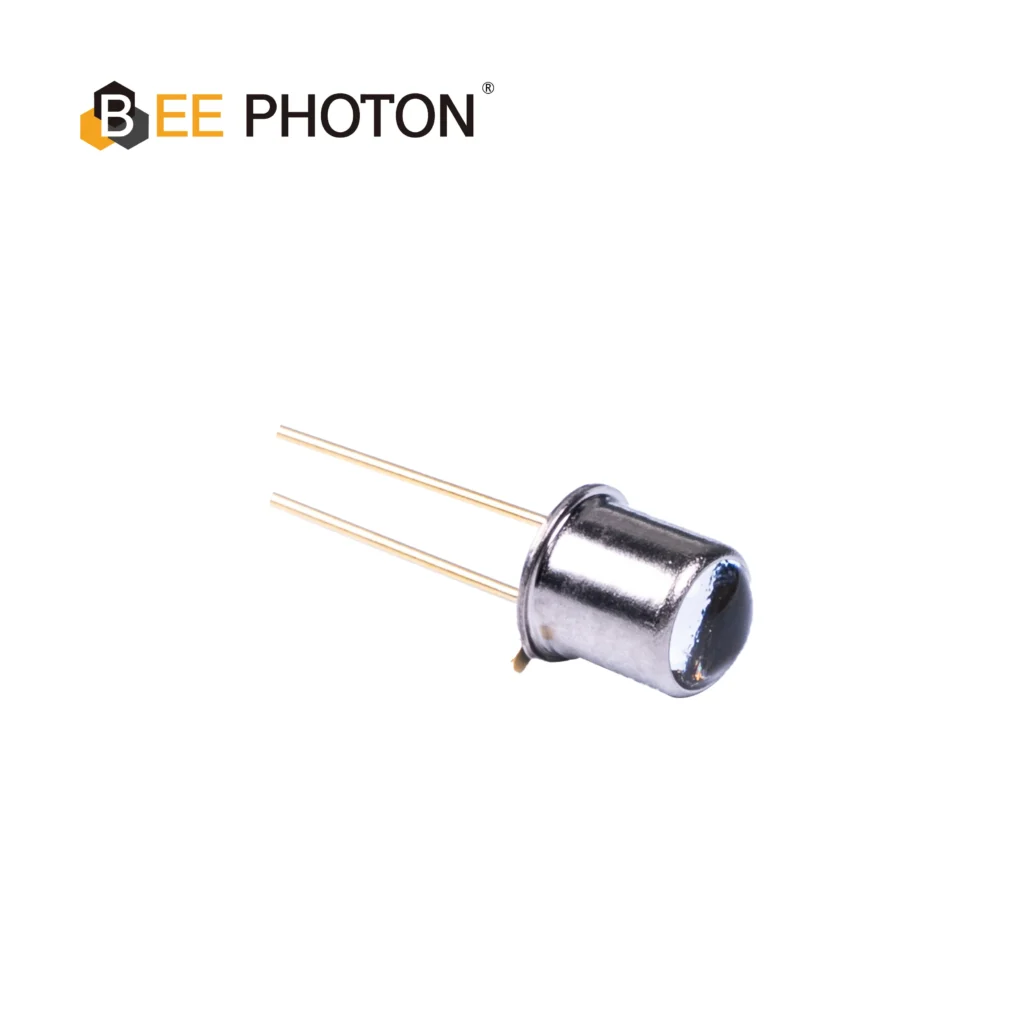
Fotodiodo PIN de Si con baja corriente oscura (350-1060nm) PDCT01-202
Nuestro fotodiodo PIN de silicio de alta estabilidad ofrece un rendimiento constante y fiable para equipos de medición analítica y óptica. Benefíciese de su amplio rango espectral (350-1060 nm) y de su corriente oscura ultrabaja. Confíe en este fotodiodo PIN de silicio para sus necesidades de precisión.
Fotodiodos con ventana de cristal: Construidos para las condiciones más duras
La otra cara es el fotodiodo con ventana de cristal. Por lo general, se trata de un envase metálico TO-can o cerámico con una ventana de cristal hermética sellada en su lugar. El cristal deja pasar la luz al tiempo que impide la entrada de humedad, gases y contaminantes. Estos encapsulados soportan oscilaciones de temperatura más amplias -a menudo de -40 °C a +85 °C o más- y se ríen de la humedad que acabaría empañando o degradando un fotodiodo de resina epoxi.
El propio cristal puede elegirse para bandas específicas. El borosilicato estándar corta el material por debajo de unos 300 nm, mientras que las ventanas de cuarzo (ofrecemos algunas en nuestra gama) impulsan la respuesta UV profunda. Dado que el sellado es hermético, los fotodiodos con ventana de cristal resultan más resistentes mecánicamente en configuraciones con muchas vibraciones o en exteriores. Los hemos probado codo con codo con fotodiodos de resina epoxi en cámaras de vida útil acelerada, y los de cristal muestran sistemáticamente una menor deriva de corriente oscura después de la inmersión en humedad.
¿El inconveniente? El coste. El procesamiento adicional para el cierre hermético y la ventana de cristal de precisión aumenta el precio. También suele ocupar un espacio ligeramente mayor, y los efectos parásitos pueden ser mayores si no se tiene cuidado con el tamaño de la lata. Aun así, para cualquier comprador B2B cuyo producto final tenga que sobrevivir a los abusos del mundo real, esa prima inicial suele compensarse con menos reclamaciones de garantía.
Cara a cara: lo que realmente importa cuando se compra por volumen
Concretemos. Los compradores B2B nos dicen que les importan tres cosas: el coste por unidad a escala, cuánta luz llega al troquel y si el aparato seguirá funcionando después de seis meses en una fábrica o en un tejado.
Desglose de costes
Un fotodiodo de resina epoxi gana casi siempre en precio bruto. En nuestras propias series de producción, la versión de resina epoxi moldeada puede resultar entre 30 y 50 % más barata que un fotodiodo de ventana de cristal comparable una vez que los volúmenes alcanzan los miles. El utillaje es más sencillo y el proceso de moldeo se adapta perfectamente. Si su proyecto es sensible a los costes y se desarrolla en interiores, el fotodiodo de resina epoxi suele ser la mejor opción.
Los fotodiodos con ventana de cristal cuestan más debido a los pasos de sellado hermético y los controles de calidad más estrictos. Pero esa cifra se reduce cuando se tienen en cuenta los menores índices de fallos de campo. Un cliente nos dijo que su coste total de propiedad se redujo tras el cambio porque dejaron de sustituir los sensores cada dos trimestres.
Transmitancia luminosa y rendimiento óptico
Ambos paquetes transmiten bien la luz visible e infrarroja cercana, pero los detalles difieren. La resina epoxi suele proporcionar una transmisión de 80-90 % en el rango de 400-1100 nm que nos interesa para los fotodiodos PIN de Si, dependiendo del grosor y de los aditivos de filtrado. La superficie plana o ligeramente abovedada de la resina epoxi también ayuda con el acoplamiento del centelleador en algunos diseños.
Las ventanas de cristal pueden revestirse con AR para obtener una eficacia aún mayor y son más estables con el paso del tiempo; el epoxi puede amarillear ligeramente con la exposición a los rayos UV o al calor. En nuestras pruebas internas, un fotodiodo con ventana de cristal mantuvo su capacidad de respuesta más estable después de 1.000 horas de estrés a 85 °C / 85 % HR. Para aplicaciones que requieren una eficiencia cuántica constante, el fotodiodo con ventana de cristal tiene ventaja.
Tolerancia ambiental y durabilidad
Aquí es donde el debate sobre el fotodiodo de resina epoxi frente al fotodiodo de ventana de cristal se hace fuerte. La resina epoxi absorbe la humedad. Los documentos técnicos de varios proveedores (incluido Hamamatsu) señalan que los paquetes de plástico/epoxi tienen menor resistencia al calor y la humedad que las resinas de sellado utilizadas en los circuitos integrados normales. El reflujo puede provocar grietas si no se elimina antes la humedad.
Los fotodiodos con ventana de cristal, especialmente los de tipo TO-can hermético, se libran de ello. Manejan rangos de temperatura más amplios y mantienen la matriz seca en su interior. Hemos visto fotodiodos de resina epoxi que empezaban a mostrar un aumento de la corriente oscura tras una exposición prolongada a la humedad, mientras que los de cristal se mantenían sólidos como una roca.
La resistencia mecánica es otra división. El epoxi moldeado puede parecer resistente, pero la lata hermética es mejor frente a la vibración y los ciclos térmicos en equipos de automoción o exteriores.
| Factor | Fotodiodo de resina epoxi | Fotodiodo con ventana de cristal | Típico ganador B2B |
|---|---|---|---|
| Coste unitario (volumen medio) | Más bajo (a menudo 30-50% más barato) | Más alto | Fotodiodo de resina epoxi |
| Transmitancia luminosa | 80-90% en visible/NIR, puede amarillo | Alta + estable con revestimiento AR | Fotodiodo de ventana de cristal (de larga duración) |
| Rango de temperatura | -20 °C a +60 °C típico | -40 °C a +85 °C+ (hermético) | Fotodiodo con ventana de cristal |
| Resistencia a la humedad | Moderado; se absorbe con el tiempo | Excelente (cierre hermético) | Fotodiodo con ventana de cristal |
| Capacitancia parásita | Más bajo (respuesta más rápida posible) | Más alto en latas grandes | Fotodiodo de resina epoxi |
| Lo mejor para | Interior, sensible a los costes, de gran volumen | Ambiente agresivo, exterior, médico, automóvil | Depende de las especificaciones |
(Datos recopilados de hojas de datos de fabricantes como Hamamatsu, Marktech y nuestras propias pruebas de BeePhoton).
Fiabilidad sobre el terreno
Hemos enviado ambos tipos, y el patrón es claro. Los fotodiodos de resina epoxi funcionan muy bien cuando el entorno está controlado. Los fotodiodos de ventana de cristal se convierten en los predeterminados una vez que se sale al exterior o se entra en una fábrica con vapor o productos químicos.
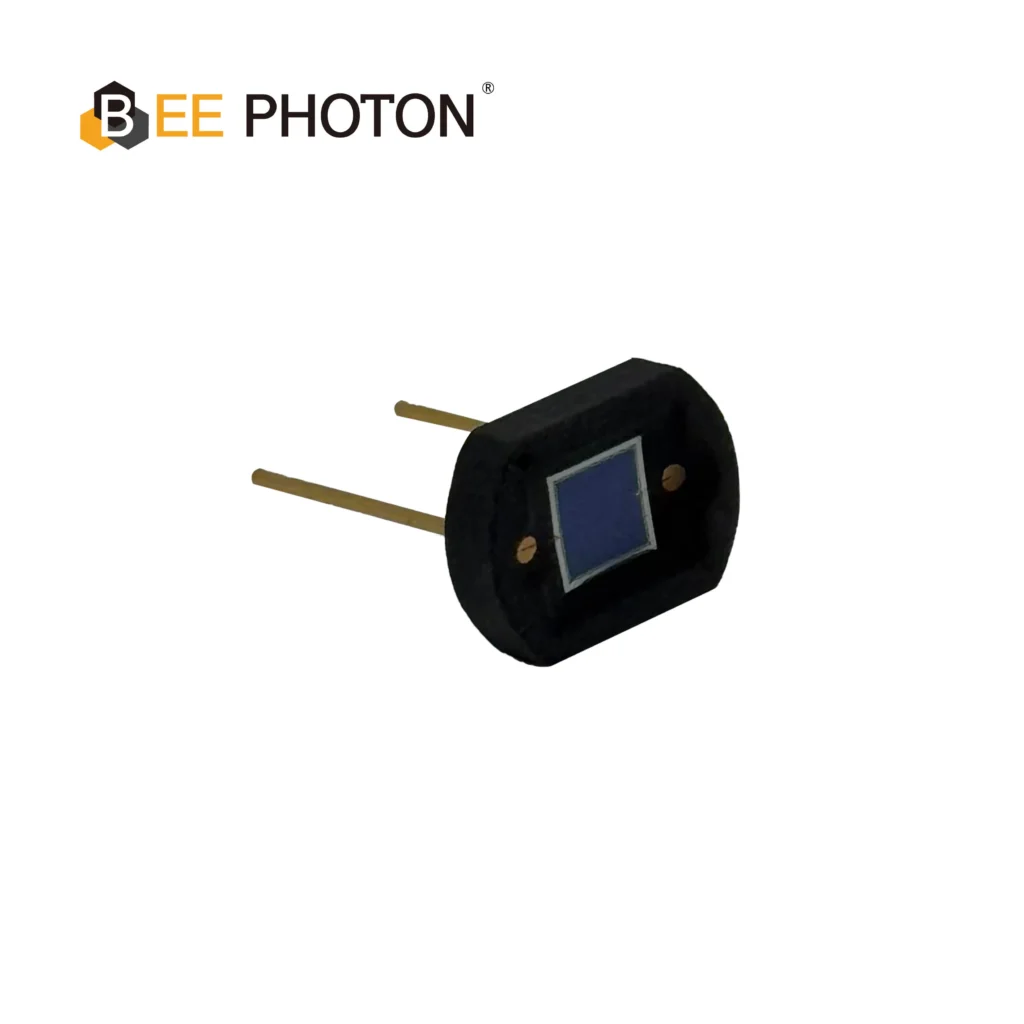
Fotodiodo PIN de Si con baja corriente oscura (350-1060nm) PDCD07-001
Experimente un rendimiento superior con nuestro fotodiodo PIN de Si de alta velocidad. Con una baja corriente oscura y un amplio rango espectral de 350-1060 nm, garantiza una transmisión de datos rápida y fiable. Este fotodiodo PIN de Si de alta velocidad empaquetado en DIP es la opción ideal para sistemas de comunicación óptica de gran ancho de banda.
Historias de aplicaciones reales (sin nombres, lecciones reales)
Por ejemplo, el cliente de automatización industrial que empezó con un fotodiodo de resina epoxi en sus sensores de posición. Funcionaba bien en el banco. Seis meses después de su instalación en una fábrica húmeda, observaron una deriva intermitente. Cambiaron a nuestro fotodiodo de ventana de cristal equivalente y el problema desapareció. Pagaron un poco más por unidad, pero redujeron las devoluciones sobre el terreno en más de 70 %: mereció la pena por su reputación.
Otro equipo de dispositivos médicos necesitaba un tamaño compacto para una herramienta de diagnóstico portátil. El fotodiodo de resina epoxi se ajustaba perfectamente a su presupuesto de energía y espacio. Sin temperaturas extremas, uso limpio en interiores. Se quedaron con el fotodiodo de resina epoxi y alcanzaron su objetivo de coste sin sacrificar el rendimiento.
También hemos tenido proyectos relacionados con el sector aeroespacial en los que sólo el fotodiodo con ventana de cristal superó las pruebas de vibración y choque térmico. El fotodiodo de resina epoxi no pudo mantener el chip protegido durante toda la calificación.
Consejos técnicos para la especificación de fotodiodos PIN de Si
A la hora de comparar hojas de datos, hay que ir más allá de la capacidad de respuesta del titular. Compruebe en el plano del envase el material de la ventana y el método de sellado. Si se trata de un fotodiodo de resina epoxi, pregunte por el nivel de sensibilidad a la humedad (MSL) y los tiempos de horneado recomendados. En el caso de los fotodiodos con ventana de cristal, confirme que la curva de transmisión de la ventana coincide con su longitud de onda.
La integración también importa. Los fotodiodos de resina epoxi suelen colocarse directamente en líneas SMD estándar. Los de ventana de cristal pueden requerir un poco más de cuidado con la formación del plomo o la orientación de la lata, pero recompensan con consistencia.
Si utiliza nuestro Fotodiodos PIN de Si, envíenos una nota a la dirección página de contacto y le enviaremos pares emparejados para que pueda probarlos uno al lado del otro en su circuito real.
Una decisión inteligente para su próxima compra
En resumidas cuentas: un fotodiodo de resina epoxi suele ser el ganador cuando el coste y el tamaño mandan y el medio ambiente sigue siendo respetuoso. Un fotodiodo con ventana de cristal gana cuando la fiabilidad frente al calor, la humedad o las vibraciones se convierte en algo innegociable.
Hemos ayudado a suficientes fabricantes de equipos originales a tomar esta misma decisión para saber que no existe una respuesta universal correcta, sino la respuesta correcta para su volumen, su entorno y su tolerancia a la garantía. Si todavía no lo tiene claro, tome unas cuantas muestras de cada uno y sométalas a su protocolo de estrés. Los datos no mienten.
¿Listo para avanzar? Visite nuestra página de inicio en https://photo-detector.com/ para ver la lista completa, o vaya directamente a la sección página de contacto para un presupuesto personalizado. Díganos su longitud de onda, volumen y condiciones de funcionamiento y le recomendaremos la mejor opción de fotodiodo de resina epoxi o fotodiodo de ventana de cristal para su proyecto. O envíenos un correo electrónico a info@photo-detector.com - y hablaremos de las ventajas y desventajas.

Fotodiodo PIN de Si con sensibilidad UV mejorada (320-1060nm) PDCT16-601
Nuestro fotodiodo con ventana de borosilicato garantiza una detección superior de UV a NIR. Este fotodiodo con ventana de borosilicato duradera destaca en espectroscopia y análisis médicos.
PREGUNTAS FRECUENTES
¿Cuál es la mayor diferencia práctica entre un fotodiodo de resina epoxi y un fotodiodo de ventana de cristal?
El fotodiodo de resina epoxi es más barato y compacto, pero no puede igualar la protección hermética del cristal. Si su equipo vive en un espacio controlado, el fotodiodo de resina epoxi ahorra dinero. En cualquier cosa más dura, el fotodiodo de ventana de cristal sigue funcionando más tiempo.
¿Puede un fotodiodo de resina epoxi soportar el uso en exteriores o en condiciones de alta humedad?
A veces, con un revestimiento de conformación o carcasas adicionales. Pero hemos visto suficientes devoluciones de campo para decir que la mayoría de los compradores B2B están mejor con un fotodiodo de ventana de vidrio una vez que la humedad o los cambios de temperatura entran en escena.
¿Cómo decido cuál especificar para mi próximo pedido de fotodiodos PIN de Si?
Empiece por su entorno y volumen. Calcule el coste total de propiedad, no sólo el precio de compra. Si quiere que le ayudemos a sopesar las opciones, nuestro equipo está literalmente a un clic de distancia en la página página de contacto.
¿Cambiar a un fotodiodo de ventana de cristal ralentizará mi tiempo de respuesta?
No necesariamente. La ventana de cristal en sí no añade mucha capacitancia, pero la lata más grande a veces sí. Podemos ayudarle a elegir un fotodiodo con ventana de cristal poco parásito si la velocidad es crítica.
¿Ofrecen ustedes versiones de fotodiodo de resina epoxídica y de fotodiodo de ventana de cristal con los mismos tamaños de área activa?
Sí, muchos de nuestros fotodiodos PIN de Si están disponibles en ambos paquetes. Háganos saber lo que necesita.


