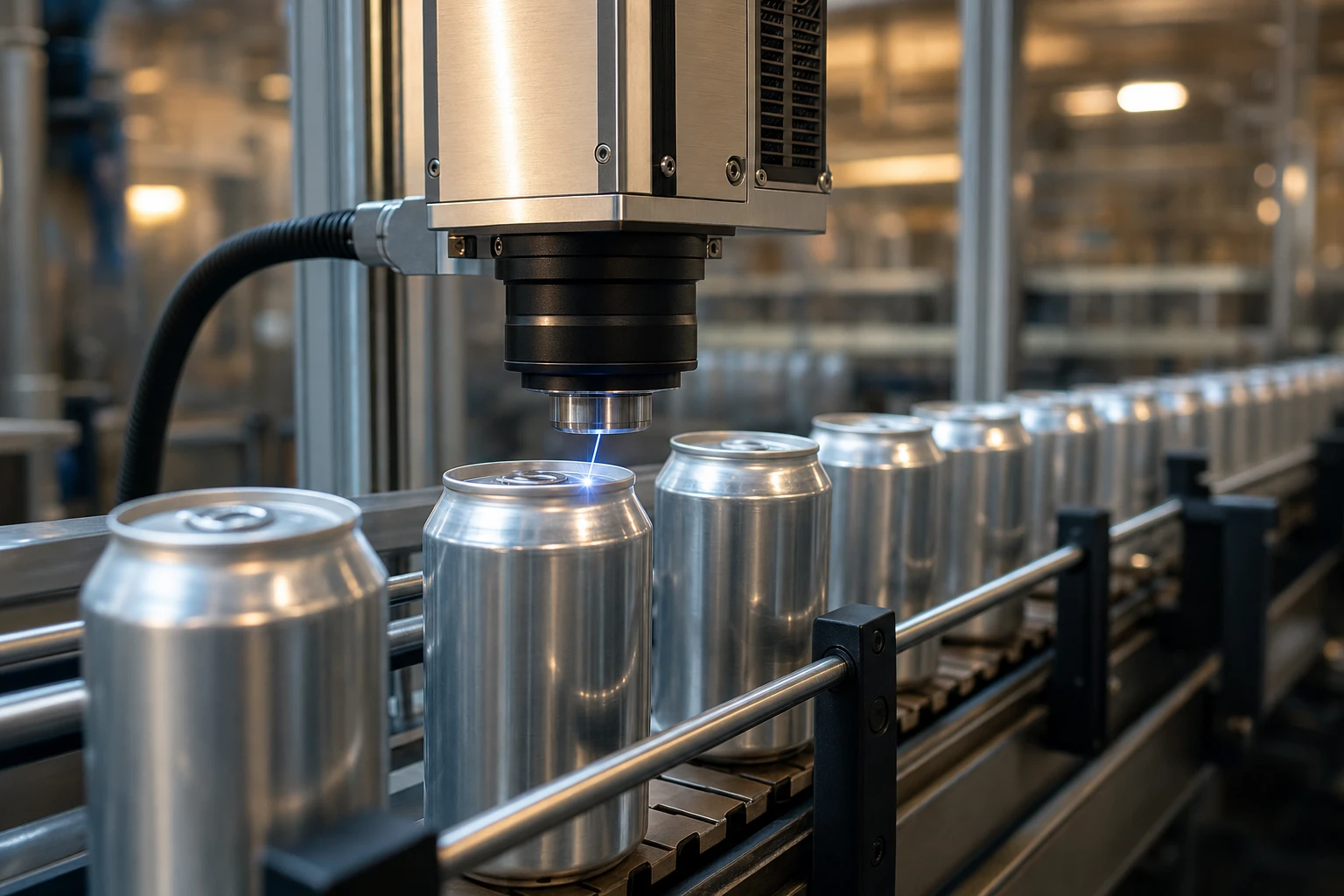
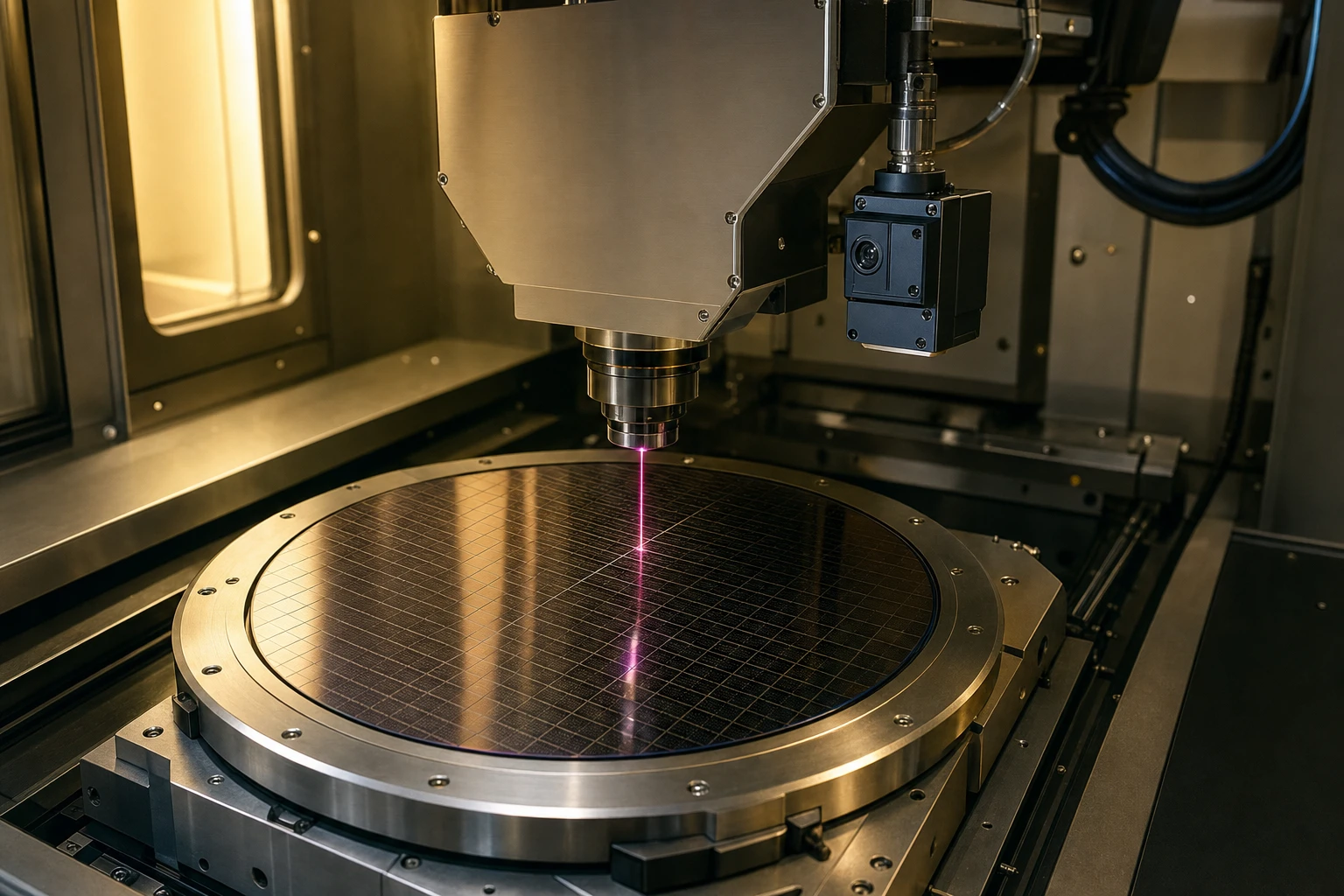
I talk to industrial automation managers and manufacturing engineers every single week, and I’m honestly shocked by a recurring theme I keep seeing on factory floors. People are dropping half a million bucks on cutting-edge AI vision large models, setting up massive edge-computing GPU clusters, and then… they feed that brilliant AI brain with images from a cheap, $50 off-the-shelf optical sensor.
That is insane. It’s like putting cheap bicycle tires on a Ferrari and wondering why you cant win a race on the track.
If you want your machine vision system to actually catch micro-defects at high speeds without shutting down your whole production line with false alarms, you need to invest in custom photodetectors. I’m going to say it right now, and I know some hardware catalog vendors will hate me for this: standard, mass-produced sensors are mostly total garbage when paired with modern AI vision algorithms for high-precision industrial tasks. They just are.
In this post, I want to talk about why custom photodetectors are no longer just a fancy luxury for aerospace companies, but a hard, non-negotiable requirement for modern industrial automation. We’ll look at the actual math, some real-world screw-ups I’ve witnessed firsthand, and how custom photodetectors can actually save you money.
The Dirty Secret of AI Vision Large Models
We hear alot about AI vision large models lately. Everyone is hyped about them. These transformer-based architectures and deep learning neural networks can detect anomalies that older, rule-based machine vision systems would completely miss. They are smart. But here is the massive catch that the software guys never tell you during their slick PowerPoint presentations: AI is incredibly data-hungry, and it is brutally unforgiving of bad data.
In the old days of simple machine vision, if a pixel was a little noisy, a simple threshold filter in the software might just smooth it out. “If pixel is slightly grey, make it white.” Boom, done.
Today, an AI model looks at that noisy pixel and tries to find a complex pattern in it. If your standard detector has high dark current (which is just electrical noise when there is no light present), the AI’s attention mechanisms will literally focus on the noise instead of the actual physical defect on your product.
This means you burn through expensive GPU compute power trying to process optical garbage. Garbage in, garbage out.
When you make the switch to custom photodetectors, you are fundamentally cleaning up the raw optical signal before the AI even has to touch it. Custom photodetectors are physically tuned to the exact wavelength, bandwidth, and noise profile of your specific industrial environment. You are solving the problem at the physics level, rather than trying to patch it up with software code.
Why Your Setup is Starving for Better Data
Let’s talk about the actual reality of a factory floor. It is not a pristine, climate-controlled laboratory. There is heavy mechanical vibration, wild temperature swings, airborne dust, and weird ambient lighting coming from skylights or welding arcs.
Standard detectors are built by big conglomerates to be “good enough” for 80% of generic applications. Because of this, they have a very broad, generic spectral response. But what if you are a manufacturer inspecting thin-film solar wafers and your algorithm only cares about a very specific near-infrared (NIR) wavelength? A generic detector will pick up all the background visible light in the factory, completely destroying your signal-to-noise ratio (SNR).
With custom photodetectors, we completely flip the script. We can apply highly specific optical bandpass filters directly onto the silicon chip. We can adjust the active area of the sensor so you aren’t capturing “dead space” that only contributes noise. We can optimize the internal capacitance for the exact high-speed switching rate of your conveyor belt. Custom photodetectors adapt to your machine, rather than forcing your machine to adapt to a generic sensor.
The Formula That Actually Matters (No Sugarcoating)
I promised I wouldn’t use too much formal jargon or turn this into a university lecture, but we have to look at one basic equation to understand why custom photodetectors win. It’s called Responsivity. It’s basically a measure of how well your detector converts incoming light into usable electrical current.
R = I_p / P
Where:
- R = Responsivity (measured in Amps per Watt, A/W)
- I_p = Photocurrent generated by the sensor (Amps)
- P = Incident optical power hitting the sensor (Watts)
If your standard off-the-shelf sensor has a low ‘R’ value at the specific laser wavelength your machine uses, your AI system gets a very weak electrical signal. To compensate for this weak signal, your engineers have to pump up the electronic gain on the amplifier. But guess what? Amplifying a weak signal also amplifies all the background noise. It’s a vicious cycle that ruins image clarity.
Custom photodetectors fix this at the root hardware level. We engineer the silicon doping and the anti-reflective coatings so you get the absolute maximum Responsivity (R) for your specific optical Power (P). The result is a loud, clear signal that needs minimal amplification.
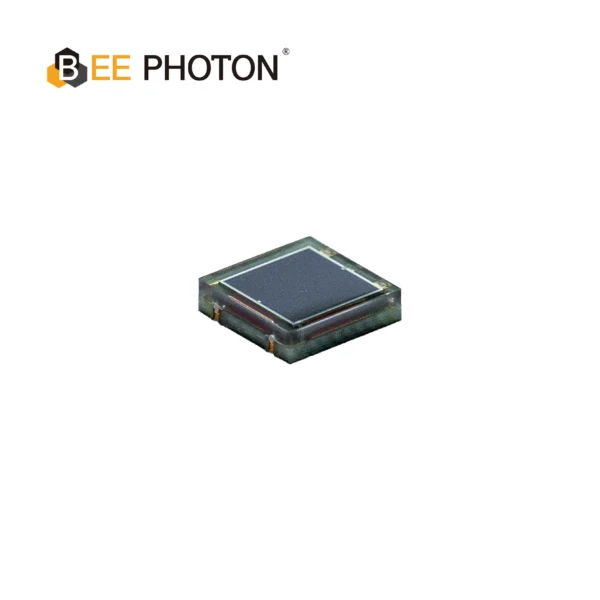
Si PIN Photodiode with NIR sensitivity enchanced (350-1100nm) PDCC34-501
Bee Photon offers a High Stability PIN Photodiode for precise industrial sensing. This NIR enhanced photodiode ensures reliable measurements from 350-1100nm. A top choice for a high stability photodiode.
Custom Photodetectors vs Off-The-Shelf (The Reality Check)
I like to use simple comparison tables because huge paragraphs of spec sheets just make my eyes glaze over. Here is a brutally honest breakdown based on what me and my engineering team see out in the field every day.
| Feature | The “Standard” Catalog Sensor | Custom Photodetectors Engineered for You |
|---|---|---|
| Active Area Size | Fixed sizes. Usually too big (captures stray noise) or too small (misses the beam). | Tailored exactly to your optical beam spot, drastically reducing excess noise. |
| Spectral Response | Very broad. Picks up factory floor glare and ambient light easily. | Finely tuned. Only “sees” the exact wavelengths your AI algorithm cares about. |
| Physical Packaging | Standard TO cans or SMDs that rarely fit seamlessly into tight robotics. | Custom PCB layouts, flexible substrates, or bespoke ceramic mounts to fit weird spaces. |
| Dark Current (Noise) | Average at room temp. Gets terrible when factory machines heat up. | Deeply optimized for your specific operating temperatures and thermal limits. |
| The True Cost | Cheap upfront (maybe $50). Costs millions in false-rejects and downtime over a year. | Higher upfront NRE. Pays for itself in the first week of clean, uninterrupted production. |
When you lay it out like that, why wouldn’t you use custom photodetectors? The global market for custom photodetectors is booming right now purely because industrial automation guys are tired of losing sleep over false positives.
Let’s Talk About Si PIN Photodiodes
If you are working in machine vision, you probably deal with incredibly fast-moving objects. Assembly lines and sorting conveyor belts don’t slow down just so your camera can take a nice, clear picture.
This is exactly where Si PIN photodiodes absolutely dominate the landscape. Unlike regular standard PN diodes, a PIN diode has a special undoped “intrinsic” layer sandwiched right between the P and N semiconductor layers.
Why should a software or systems engineer care about that? Because that little intrinsic layer creates a much larger depletion region inside the silicon. In plain English: it makes the detector insanely fast and highly responsive to light. Crucially, it drops the capacitance way, way down.
Capacitance (C) inside a detector is the ultimate enemy of speed. The basic physics formula is roughly C = (Permittivity * Area) / Depletion Width. By physically increasing that depletion width with an intrinsic layer, the capacitance drops, and your system bandwidth shoots through the roof.
When we design custom photodetectors utilizing our Si PIN technology, we can actually tweak that intrinsic layer thickness during the manufacturing process. Need crazy high speed for a bullet-train speed packaging line? We thicken the layer. Need better absorption for slightly longer wavelengths? We adjust the doping accordingly. You simply cant do that with a generic catalog part.
Real World Battle Scars: Where Custom Saved the Day
I want to share a few stories from the trenches. I have to keep the specific company names anonymous because heavy NDAs are standard in this industry, but the technical specs and the pain points are 100% real.
Case Study 1: The EV Battery Foil Nightmare
A major automotive tier-1 supplier was trying to inspect raw copper foils used in electric vehicle batteries. These metallic foils are rolling down the line at stupidly high speeds. They deployed a state-of-the-art AI vision large model designed to detect microscopic surface scratches and dents.
They initially used standard, very expensive, off-the-shelf industrial line-scan cameras. The result? An absolutely disastrous 12% false positive rate. The AI algorithm was constantly flagging perfectly good copper foil as defective because the high-speed motion, combined with the reflective factory lighting, was causing slight blurring and shot noise on the generic sensors.
They called us in in a panic. We threw out their standard optical front-end entirely. Instead, we designed bespoke custom photodetectors based on our specialized Si PIN photodiodes. We matched the detector’s active area precisely to the width of their laser inspection line, added a narrow bandpass filter coating directly deposited on the silicon to block ambient glare, and optimized the bias voltage to drop the response time down to sub-nanoseconds.
The AI false positive rate plummeted from 12% to 0.4% literally overnight. The custom photodetectors paid for themselves in three days of saved copper scrap.
Case Study 2: Glass Sorting in High-Temp Hell
Another client of ours does heavy industrial glass recycling. They use automated machine vision to separate clear glass shards from tinted glass shards as they fly off a chute. The main problem? The optical sensors sit right next to a massive, roaring furnace.
Their standard sensors were suffering from massive dark current due to the intense ambient heat. As a rule of thumb, for every 10 degrees Celsius the temperature goes up, a photodiode’s dark current roughly doubles. Their shiny new AI was essentially getting blinded by thermal noise. It couldn’t tell the difference between a dark piece of glass and a thermal artifact.
We built them custom photodetectors with specialized, thermally conductive ceramic packaging to pull heat away from the chip. We also tweaked the silicon doping profile to be highly resistant to thermal noise generation. The AI system went from being a glorified random number generator back to a high-precision sorting machine.
Case Study 3: Semiconductor Wafer Inspection
In the semiconductor world, you are looking for defects that are measured in nanometers, not millimeters. A client was using a complex AI setup to inspect silicon wafers for microscopic dust particles before the lithography stage.
Off-the-shelf sensors had too much “cross-talk” between the pixel elements, meaning light hitting one part of the sensor was bleeding into adjacent areas, blurring the microscopic image. The AI couldn’t resolve the edges of the dust particles.
We developed an array of custom photodetectors with deep physical trench isolation between the active areas. This physically prevented photons from bleeding over. We also integrated a custom transimpedance amplifier (TIA) right on the same substrate as the custom photodetectors to ensure the signal traveled the shortest possible distance before being digitized. The AI model’s detection accuracy jumped by over 40%, saving the client from processing ruined wafers.

Si PIN Photodiode with low dark current (350-1060nm) PDCC100-001
Looking for a custom Si PIN photodiode? Bee Photon provides OEM solutions with low dark current and a 350-1060nm range. We partner with B2B clients to develop photodiodes tailored to your specific needs.
Deep Dive: The Noise Gremlins Standard Sensors Ignore
Let’s geek out for just a second on why custom photodetectors consistently out-perform the off-the-shelf stuff. When your AI machine vision system takes an image, it is constantly fighting a war against three main types of electrical and optical noise. If you don’t use custom photodetectors, these “noise gremlins” will ruin your data.
- Shot Noise: This is the random, statistical fluctuation of photons hitting the sensor. It’s basic quantum physics, so you cant entirely escape it. The formula is roughly i_n = sqrt(2 * q * I * B), where q is the electron charge, I is average current, and B is the bandwidth. Custom photodetectors minimize this noise by tightly controlling the electrical bandwidth (B) to exactly what your system needs, and not a single Hertz more.
- Johnson Noise (Thermal noise): This noise comes from the inherent shunt resistance of the detector material itself. Custom photodetectors are specifically engineered with much higher shunt resistance materials tailored for your specific operating temperatures, effectively keeping this noise floor as low as physically possible.
- 1/f Noise (Flicker noise): This is a total killer at low frequencies. Catalog sensors often struggle here. By controlling the purity of the silicon and the quality of the surface passivation during manufacturing, our custom photodetectors drastically reduce flicker noise.
When you buy a standard catalog part, the manufacturer had to balance all these noises for a “general” average use case. When we build custom photodetectors, we look at your specific pain point. If you have a high-temp factory, we crush the Johnson noise. If you have a low-light laser setup, we focus entirely on maximizing responsivity to overcome shot noise. That is the true, hidden power of custom photodetectors.
Custom Photodetectors and the Edge Computing Revolution
Another massive trend happening in industrial automation right now is edge computing. Instead of sending all the heavy camera data to a central, remote server for processing, the AI vision large models are running right there on the machine, right next to the conveyor belt. This requires insanely low latency. Every microsecond counts.
Standard sensors often require complex, bulky external amplification circuits on separate boards that add precious microseconds or even milliseconds of delay. With custom photodetectors, we can often integrate the transimpedance amplifier (TIA) right next to the photodiode on a customized substrate.
This minimizes parasitic capacitance from long wires. Custom photodetectors with integrated TIAs deliver a clean, heavily amplified signal directly to your edge AI processor with virtually zero lag. Less delay means you can run your conveyor belts faster, leading to higher factory throughput. It is a massive competitive advantage. Custom photodetectors literally make your whole manufacturing line run faster.
How to Spec Custom Photodetectors for Your Project
If you’re reading this far and thinking, “Okay, maybe I actually do need custom photodetectors for my new line,” here is a quick cheat sheet on what parameters you need to figure out before you pick up the phone to call a manufacturer.
- Exact Wavelength of Interest (lambda): What exact light source or laser are you using? Please don’t just say “red laser.” Give me the exact nanometers (e.g., 650nm or 905nm). We will peak the custom photodetectors exactly at that wavelength for maximum efficiency.
- Bandwidth and Speed Requirements: How fast is your object moving? We need to know the rise time (tr) your software requires. The engineering formula is roughly Bandwidth = 0.35 / tr. Tell us how fast you need to go, and we will build custom photodetectors to match it.
- Active Area Dimensions: In the world of photonics, bigger is definately not better. A massive active area means massive capacitance, which equals a slower sensor and more background noise. We want the active area of your custom photodetectors to be exactly the size of your optical spot, plus just a tiny margin for mechanical alignment.
- Environmental Hazards: Is your factory hot? Is there ionizing radiation? Are there heavy mechanical vibrations from nearby stamping presses? Let us know so we can ruggedize the packaging.
Why You Should Partner With BeePhoton
Look, there are a few places online where you can click “Add to Cart” and get some optical components shipped to you. But if you want a strategic partner who actually understands the complex intersection of AI machine vision, edge computing, and raw semiconductor photonics, you need to talk to us at BeePhoton.
We don’t just sell you a piece of silicon in a bag and wish you good luck figuring it out. We act as a direct extension of your hardware engineering team. We look at your AI model’s specific data requirements, we look at your factory floor’s physical constraints, and we engineer custom photodetectors that perfectly bridge the gap between the two.
Our brand BeePhoton was built on solving the weird, messy, impossible problems that the big catalog distributors wont touch because it doesn’t fit into their neat little boxes. We do the bespoke design, the rapid prototyping, and the high-volume precision manufacturing of custom photodetectors all under one roof.
Let’s Wrap This Up
The world of industrial automation is changing fast. The days of simple “dark/light” threshold sensing are over. AI vision large models are taking over the factory floor, and they demand absolute perfection from their optical hardware inputs.
Stop crippling your expensive software team’s hard work with cheap, inadequate hardware. The massive industry shift toward custom photodetectors isn’t a passing fad, it’s the natural evolution of machine vision technology. Get ahead of it now, or watch your competitors get faster, leaner, and more accurate while you struggle with scrap piles and false positives.

Si PIN Photodiode with low dark current (350-1060nm) PDCD10-001
Achieve accurate results with our Wide Spectral Response Photodiode. This Si PIN photodiode (350-1060nm) features exceptional sensitivity and low dark current, perfect for analytical instruments. Its resin-coated DIP package ensures durability for all your spectrophotometry and analytical measurement needs.
FAQs about Custom Photodetectors in Industrial Automation
Q1: Aren’t custom photodetectors insanely expensive and slow to develop?
Honestly, not anymore. Ten or fifteen years ago, yes, the NRE (Non-Recurring Engineering) costs were massive. But today, at BeePhoton, our prototyping and simulation process is so streamlined that the cost difference is surprisingly minimal. Plus, when you factor in the money you save on reduced false-rejects and downtime in your AI system, custom photodetectors usually pay for themselves in the first month. It’s a strategic investment, not a sunk expense.
Q2: How long does it actually take to get a working prototype for custom photodetectors?
It depends on how crazy your specific requirements are, but typically we can get first-run, functional prototypes of custom photodetectors into your engineers’ hands in a matter of a few weeks, not several months. We know industrial automation upgrade projects move fast, and we keep our internal supply chain incredibly tight to match that pace.
Q3: Can custom photodetectors really improve the performance of an AI vision large model that much?
Definately. Think of the AI algorithm like a master chef in a kitchen. If you give a master chef rotten, low-quality ingredients (noisy, blurry optical data), the final meal will still be terrible. Custom photodetectors provide pristine, high-SNR, high-definition data. This means the AI spends its valuable compute cycles analyzing the actual product for defects, not filtering out background noise. It dramatically lowers system latency and skyrockets your accuracy.
Q4: Do you only manufacture Si PIN photodiodes, or can you do other materials?
While our high-speed Si PIN photodiodes are the absolute workhorse for most visible and near-IR machine vision tasks, we are not limited to silicon. We can absolutely engineer custom photodetectors using other semiconductor materials if your specific application requires it (like InGaAs for Short-Wave Infrared or SWIR applications). Just ask us what you need.
Look, if you’re tired of fighting your current sensors and want to see what your expensive AI vision system can actually do when it’s fed the right data, let’s have a quick chat. You don’t have to commit to anything upfront. Just tell us what part of your line is failing or generating false positives, and we’ll tell you straight up if custom photodetectors can fix it.
Shoot us an email right now at info@photo-detector.com or head over to our Contact Us page to request a custom quote, get some technical specs, or just bounce some wild ideas off our engineering team. Let’s stop wasting good software on bad hardware and build something that actually works.