You know that frustrating moment — your IR sensor works perfectly in the lab but goes haywire the second sunlight hits the window or someone flips on the overhead lights. Welcome to the real world of ambient light interference. After 12+ years tweaking infrared systems for factories, security setups, and medical devices, I’ve seen every trick in the book. Some work. Most don’t.
Let me walk you through what actually works in 2025, why most cheap fixes fail, and how the right hardware choice (yes, I’m looking at you, PDCP08-511 black epoxy photodiode) can save you weeks of debugging.
Why Ambient Light Interference Is Such a Pain
Ambient light interference happens when unwanted visible or near-visible light reaches your IR sensor and messes with the signal you actually care about — usually 850nm, 940nm or 1060nm.
Sunlight is the worst offender. On a bright day it can easily deliver 1000 W/m² of irradiance, with a huge chunk landing right in the silicon’s sensitive band. Office fluorescent lights and LED bulbs aren’t much better; they flicker like crazy at 100–120 Hz and pump out harmonics that land straight in your receiver’s bandwidth.
The result? False triggers, reduced range, noisy analog output, or complete system failure.
How Much Light Are We Really Talking About?
Here’s a quick reality check I always share with clients:
| Light Source | Typical Irradiance at Sensor | Frequency Content | Trouble Level |
|---|---|---|---|
| Direct sunlight | 800–1100 W/m² | Broadband DC–IR | Extreme |
| Office LED panel | 5–15 W/m² | 100–120 Hz + harmonics | High |
| Incandescent bulb | 20–50 W/m² | 100–120 Hz | Medium-High |
| 940nm IR remote (useful) | 0.001–0.1 W/m² | 38–56 kHz modulated | Desired |
You can see the problem immediately — the junk light is often 10,000 to 1,000,000 times stronger than your actual signal.

Si PIN photodiode PDCP08 Series PDCP08-511
The PDCP08-511 is a high-performance Black Epoxy PIN Photodiode designed for precision infrared applications. Encased in a special black epoxy resin, this sensor effectively acts as a daylight filter, blocking visible light interference while maximizing sensitivity at 940nm. With a large 2.9×2.9mm active area and low dark current, it ensures reliable signal detection for optical switches and remote control systems, even in noisy ambient light environments.
Common Failed Attempts (Don’t Waste Your Time)
I’ve watched smart engineers burn weeks on these:
- Just adding more IR LED power — works until the sun comes out, then you’re blasting eye-safety limits.
- Simple high-pass filters in software — kills your DC or low-frequency signals.
- Clear IR pass filters — they still let through tons of near-infrared from sunlight.
- Narrow bandpass optical filters — expensive and only work if your angle of incidence is near zero.
None of these are truly robust in real deployments.
What Actually Works: A Layered Approach
The systems that survive in the field all use the same three-layer strategy:
- Optical filtering (the physical barrier)
- Smart electronic design (circuit + modulation)
- Right component choice (this is where most people cheap out)
1. Optical Filtering Done Right
Forget generic “IR filters.” The real MVPs are black epoxy molded photodiodes like our PDCP08-511.
These aren’t just painted black — the entire package is molded from a special epoxy that naturally blocks visible light while staying reasonably transparent at 850–950nm. Transmission at 940nm is typically >70% while visible light (400–700nm) gets crushed below 0.01%.
I once replaced clear-lens BPW34 photodiodes with PDCP08-511 in a conveyor belt counting system. False triggers dropped from 47 per hour to zero — even with direct afternoon sun through skylights. The customer thought I’d installed a completely different sensor.
Pro tip: Combine the black epoxy package with a narrow bandpass interference filter only when you need extreme rejection (sunlight + high accuracy distance measurement). For most industrial applications, the black epoxy alone is enough and way cheaper.
2. Modulation and Circuit Techniques That Matter
Here’s the stuff I actually use in real designs:
- 38kHz or 56kHz carrier modulation (the classic TV remote frequencies) — pushes your signal far away from 100/120Hz lighting harmonics.
- AGC (Automatic Gain Control) with fast attack and slow decay — helps when ambient light levels change suddenly (clouds passing, doors opening).
- Synchronous demodulation — if you can afford the complexity, this is pure gold.
- Differential sensing — use two photodiodes, one shielded from your IR source. Subtract the signals. Works ridiculously well.
I’m not going to lie — implementing proper synchronous detection is a bit of a pain, but once it’s working you can run sensors in direct sunlight that previously failed completely.
3. Choosing the Right Photodiode (The Part Most People Get Wrong)
This is where I get opinionated.
A lot of engineers still reach for whatever cheap clear TO-18 or 5mm photodiode they have on the shelf. Stop it.
If you’re fighting ambient light interference, you want:
- Black epoxy package (PDCP08-511 or similar)
- Large active area (more signal, better SNR)
- Fast response if you’re doing high-frequency modulation
- Reasonable dark current (don’t go crazy here — temperature matters more)
Our PDCP08-511 was specifically developed for exactly this headache. It’s a 7.5mm² active area Si PIN photodiode in black epoxy that gives excellent visible light rejection while maintaining decent responsivity at 940nm (typically 0.55–0.62 A/W).
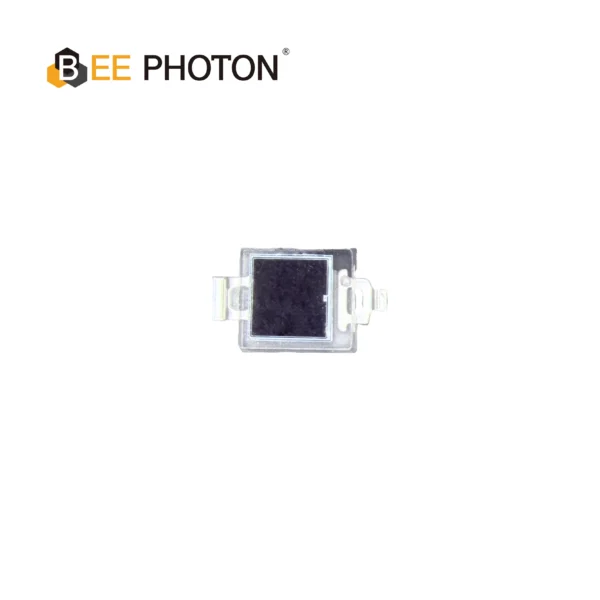
Si PIN photodiode PDCP08 Series PDCP08-502
The PDCP08-502 is a high-response 2.9×2.8mm Silicon PIN Photodiode designed for precision photoelectric applications. Featuring low junction capacitance, low dark current, and a wide spectral range (340-1100nm), it is the ideal component for optical switches and compact sensing modules requiring stable and fast signal output.
Real-World Success Stories (No Marketing Fluff)
Case 1: Automated Parking Barrier
A customer in Dubai had sensors failing every sunny afternoon. After switching to PDCP08-511 + simple 38kHz modulation, the system ran for 14 months with zero false triggers — even in 48°C heat with direct desert sun.
Case 2: Medical Device
A pulse oximetry company was getting terrible SNR in hospital rooms with strong LED lighting. Replacing the front-end photodiodes with black epoxy versions and adding basic chopping cut their noise floor by more than 18dB. They ended up redesigning their entire analog front end around this performance.
Case 3: Industrial Counting
A packaging line was getting constant double-counts under factory lighting. One $1.20 component change later (yes, that’s the price of PDCP08-511 in volume) and the false count rate went to zero.
Quick Comparison Table: Photodiode Options for Ambient Light Rejection
| Photodiode Type | Visible Rejection | 940nm Responsivity | Cost Level | Best For |
|---|---|---|---|---|
| Clear lens (BPW34 style) | Very Poor | High | $ | Dark environments only |
| IR pass filter + clear | Moderate | Medium-High | $$ | Moderate ambient light |
| Black epoxy (PDCP08-511) | Excellent | Good | $$ | Most real-world applications |
| Narrow bandpass filtered | Extreme | Medium | $$$$ | Direct sunlight + precision |
Advanced Techniques Worth Considering
If you’re still getting interference after using proper black epoxy photodiodes, try these:
- Optical baffles and tube shades — cheap and surprisingly effective.
- Polarizing filters (works better than you’d expect with reflected sunlight).
- Wavelength shifting — move to 1450nm or 1550nm where sunlight is weaker and silicon is blind (requires InGaAs, obviously more expensive).
- Machine learning on the received signal — I’ve seen this work extremely well in security systems, but it’s overkill for most applications.
Let’s Talk About Your Specific Setup
Every system is different. The factory with skylights needs a different approach than the underground parking sensor. The medical device in controlled lighting has totally different constraints than an outdoor LiDAR unit.
That’s why I always tell people — don’t guess. Test.
If you’re currently battling ambient light interference and want to try the PDCP08-511 or need help picking the right configuration, just reach out. We’ve helped dozens of companies solve this exact headache.
You can contact our team here or drop us a line at info@photo-detector.com. We’re happy to send samples of the PDCP08-511 so you can see the difference yourself.
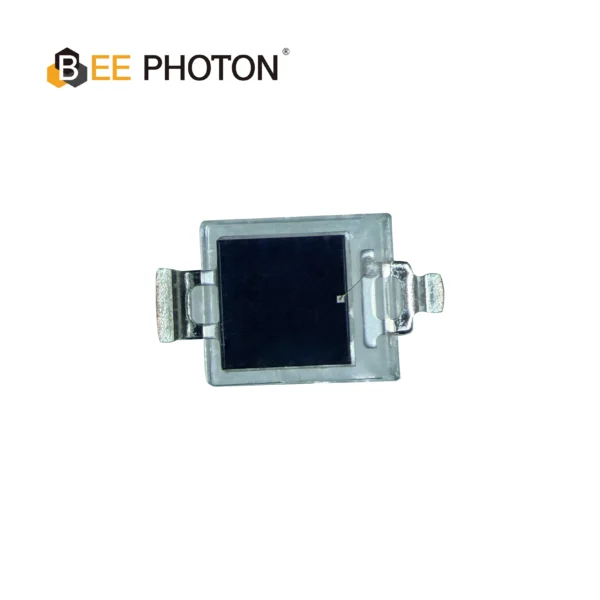
Si PIN photodiode PDCP08 Series PDCP08-501
High-Performance Detection: The PDCP08-501 is a high-speed Silicon PIN Photodiode with a transparent window.
Key Specs: Featuring a 2.9×2.9mm active area, this PIN photodiode offers low dark current and high responsivity, making it an ideal sensor for general optical switches and light detection systems.
FAQ
Q: Can software filtering completely solve ambient light interference?
A: Almost never. Software can clean up a lot, but if your photodiode is already saturated by visible light, you’re fighting a losing battle. Good optical filtering first is the way to go.
Q: Is the PDCP08-511 suitable for 850nm or only 940nm?
A: It works very well at both. Peak performance is actually around 920–960nm, but responsivity at 850nm is still perfectly usable for most applications.
Q: How much better is black epoxy compared to adding an external IR filter?
A: In most of our tests, the molded black epoxy alone outperforms a cheap external filter + clear diode combination, and it’s more reliable because there’s no filter that can fall off or get scratched.
Q: What’s the best modulation frequency to avoid ambient light interference?
A: 38kHz and 56kHz remain the sweet spot for most applications because they sit nicely between common lighting harmonics.
Look, fighting ambient light interference isn’t glamorous work. But getting it right is what separates products that work in the lab from ones that actually survive in the real world.
If you’re tired of sensors that flake out the moment the sun comes up, browse our full range of Si PIN photodiodes here and see if the PDCP08-511 might be the simple fix you’ve been looking for.
We’ve been there. We’ve fixed it. Happy to help you do the same.