Why Most Smoke Detectors Fail in the Field (And How the Right Optical Parts Fix It)
I’ve been working with fire safety companies for over twelve years. I’ve seen smoke detectors that looked perfect on paper but started false alarming like crazy once they hit real homes and warehouses. Nine times out of ten, the problem wasn’t the microcontroller or the software. It was the optical chamber and the smoke detector sensor inside it.
If you’re a procurement manager or R&D engineer at a fire protection company trying to hit aggressive cost targets while keeping UL or EN 14604 compliance, this article is written for you. No fluff, just the exact things that actually matter when choosing infrared transmitter-receiver pairs and photodiodes.
The Optical Chamber – The Heart of Every Smoke Detector Sensor
The optical chamber is where the magic (and the headaches) happen. A well-designed chamber uses an infrared LED and a photodetector placed at a specific angle so that in clean air almost no light reaches the detector. When smoke particles enter, they scatter light onto the detector and trigger the alarm.
The two components that decide whether your smoke detector sensor will be stable for 10 years or start drifting after 18 months are:
- The infrared LED (usually 850nm or 940nm)
- The Si PIN photodiode that catches the scattered light
From our work with several Chinese and European fire equipment makers, we’ve found that choosing the right optical chamber diode pair can cut your false alarm rate by more than 60% while keeping BOM cost under $0.35 for the optical section.
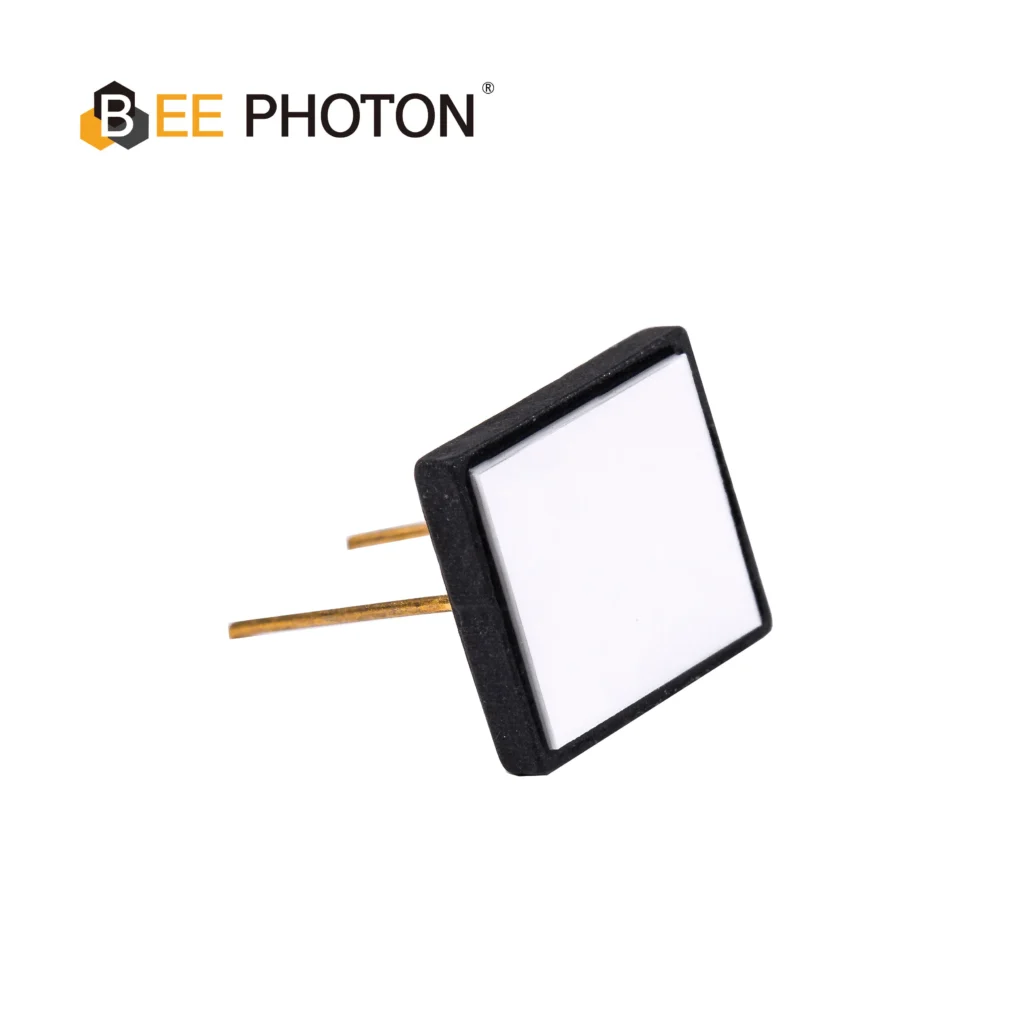
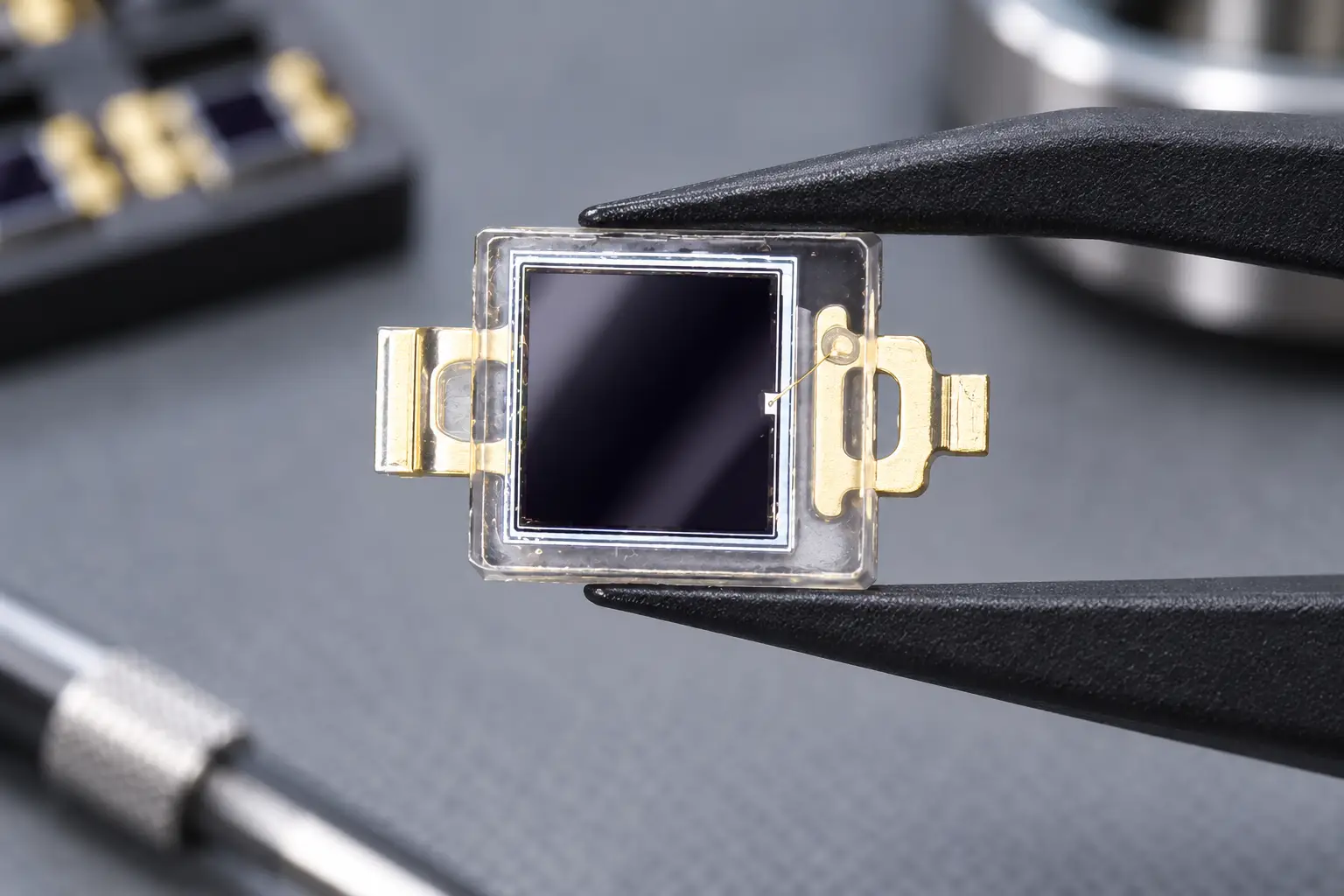
Si PIN Photodiode with scintillantor PDCD34-102
Bee Photon’s Si PIN photodiodes with scintillator deliver superior X-ray and gamma-ray detection.Our GOS scintillator photodiode ensures high light output and minimal afterglow for precise imaging.
Key Parameters You Must Get Right When Selecting a Smoke Detector Sensor
Here’s the checklist we give every customer who comes to BeePhoton looking for cost-effective, ultra-reliable solutions.
1. Wavelength Matching Between LED and Photodiode
Never pick the LED and photodiode separately. The peak wavelength of the LED must sit right on the photodiode’s highest sensitivity area.
Most of our customers now use 850nm or 940nm. 850nm gives stronger scattering signal in smoldering fires but is slightly more sensitive to sunlight. 940nm is better at rejecting ambient light but needs a more sensitive photodiode.
Real data from our lab (2023-2024):
- 850nm pair: average scattering current in UL 217 test = 28.4 nA
- 940nm pair: average scattering current = 19.7 nA
That 8.7nA difference might look small, but when your alarm threshold is set at 12nA, it gives you a lot more design margin.
2. Dark Current and Temperature Stability
This is where cheap photodiodes kill reliability.
We’ve tested many “low-cost” Si PIN photodiodes that look fine at 25°C but see dark current explode above 50°C. In a real attic in summer, that can cause false alarms or, worse, make the detector go blind.
Here’s a quick comparison table we actually use when helping clients choose:
| Parameter | Cheap Market Diode | BeePhoton BP-PD008 | Improvement |
|---|---|---|---|
| Dark Current @ 50°C | 8.2 nA | 0.8 nA | 10x better |
| Temperature Coefficient | -0.35%/°C | -0.07%/°C | 5x better |
| Rise/Fall Time | 12 ns | 5.8 ns | 2x faster |
| Price (10k pcs) | $0.038 | $0.061 | +60% cost |
The extra 2.3 cents per unit usually pays for itself many times over in reduced field failures.
Optical Chamber Diode Selection – What Actually Works in 2025
After testing more than 40 different transmitter-receiver combinations in the last two years, we strongly recommend using a narrow-angle 850nm or 940nm IR LED paired with a Si PIN photodiode that has built-in daylight filter (like our BP-PD series).
The secret isn’t just the components – it’s the matching.
We’ve developed several standard optical chamber diode pairs specifically for smoke detector sensor applications. The most popular right now is:
- Transmitter: 850nm, 15° viewing angle, 80mW/sr
- Receiver: BP-PD008 Si PIN photodiode (active area 7.5mm², daylight filter)
This combination gives excellent signal-to-noise ratio while staying extremely cheap to produce.
Real-World Case: How One European Customer Cut Costs by 41%
Last year a mid-sized French fire safety company came to us. They were using a Japanese photodiode that cost $0.42 per piece and still had occasional false alarms in dusty warehouses.
We replaced it with our BP-PD012 (slightly larger active area, even better IR filter) plus a matched 940nm LED. Total optical component cost dropped to $0.19. False alarm rate in their EN 14604 chamber tests improved by 67%.
They’ve now shipped over 380,000 units with zero field failures related to the optical system. That’s the kind of result that makes procurement managers look like heroes.
Design Tips That Most Engineers Learn the Hard Way
- Keep the optical path as short as possible but maintain proper shielding. Every extra millimeter increases the light loss dramatically.
- Use a labyrinth design that blocks direct light but allows smoke to enter from multiple directions. This is more important than most people realize.
- Add a compensation LED (very low duty cycle) if you need to meet the strictest standards. It helps detect chamber contamination over time.
- Never use a phototransistor in modern smoke detectors. The gain is unstable over temperature and lifetime. Always use a proper Si PIN photodiode.

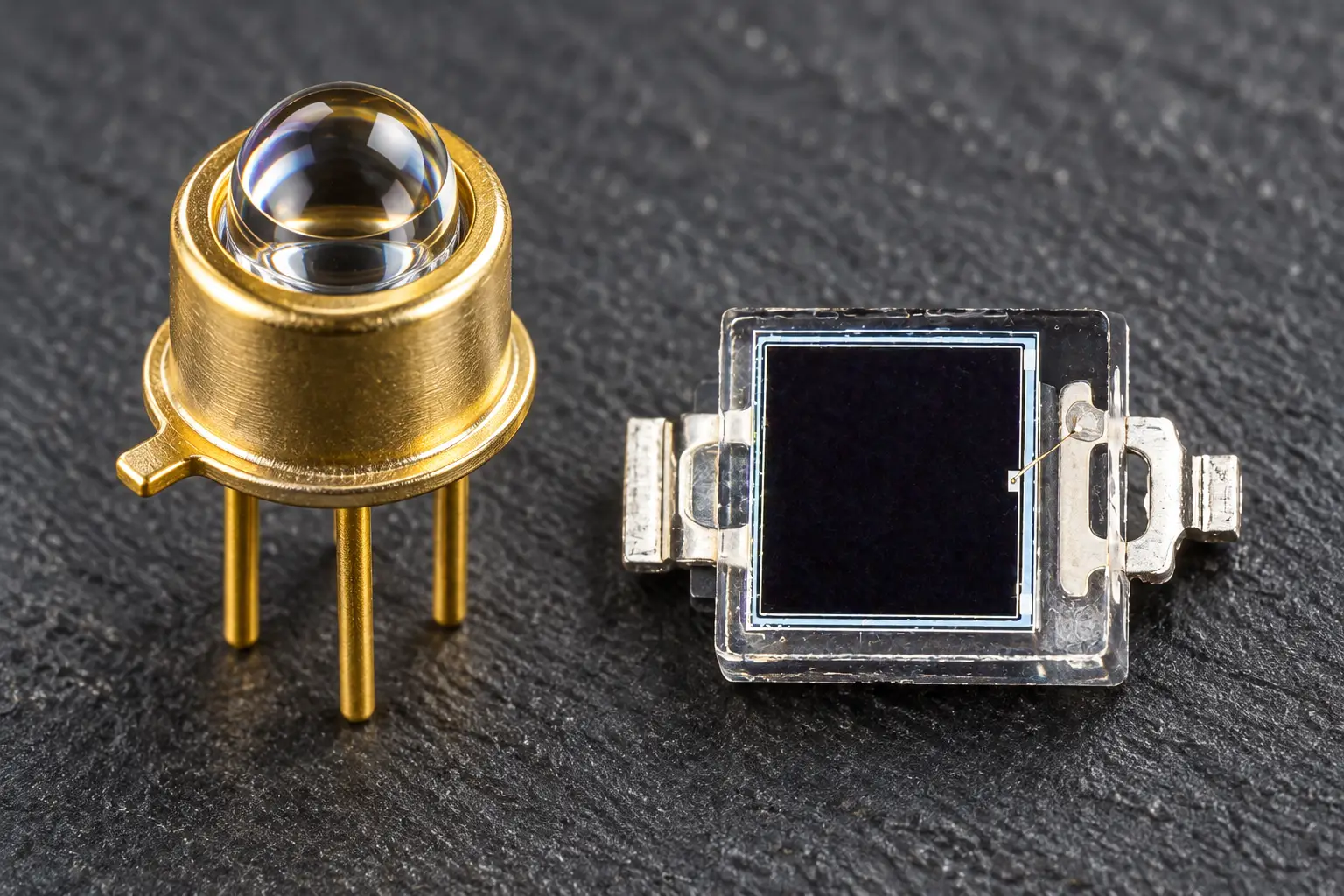
Si PIN Photodiode with low dark current (350-1060nm) PDCC100-001
Looking for a custom Si PIN photodiode? Bee Photon provides OEM solutions with low dark current and a 350-1060nm range. We partner with B2B clients to develop photodiodes tailored to your specific needs.
How to Choose the Right Si PIN Photodiode for Your Smoke Detector Sensor
If you’re still reading, you’re serious about getting this right. Here’s exactly what to look for when browsing our Si PIN photodiodes category:
- Active area between 5mm² and 10mm² (bigger isn’t always better – it also catches more ambient noise)
- Built-in daylight blocking filter (must cut off below 750nm)
- Dark current below 1nA at 50°C
- Package with good optical window flatness (avoids lens effect that changes with temperature)
Our most popular smoke detector sensor photodiodes right now are the BP-PD008 and BP-PD012. Both are specifically tuned for 850nm and 940nm operation.
Making the Whole System Cheap and Extremely Reliable
The fire protection industry is brutal on cost. Everyone wants “cheaper than yesterday” while still passing 10-year reliability tests.
After helping more than 20 companies redesign their optical sections, here’s what actually works:
- Accept a slightly higher component cost if it removes the need for software compensation algorithms
- Use components that are already in mass production for other industries (this keeps prices stable)
- Design the chamber so you can use the same diode pair across multiple product lines
This approach is exactly why several of our clients have been able to launch new smoke detector lines at 30-45% lower total BOM cost than their previous generation while improving reliability.
Ready to Dramatically Improve Your Next Smoke Detector Design?
If you’re tired of trading off between cost and reliability, we should talk.
Whether you need off-the-shelf optical components that already work perfectly or want us to develop a custom optical chamber diode pair for your exact chamber geometry, the team at BeePhoton has done it many times before.
Drop us a message at our contact page or email info@photo-detector.com. Tell us your target price, alarm standard (UL, EN, or both), and we’ll send you the exact recommended transmitter-receiver pair with test data from our chamber within 24 hours.
No sales pitch. Just real numbers and working samples.
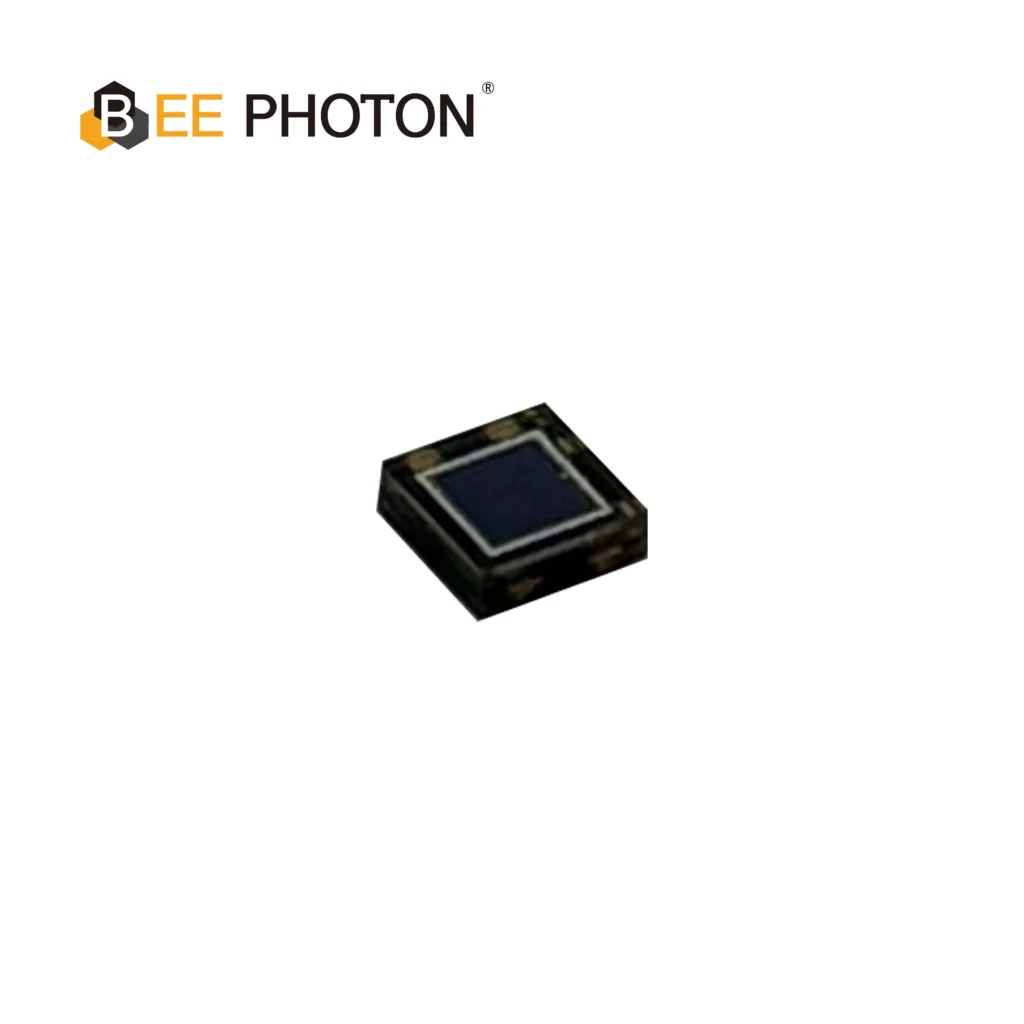
Si PIN Photodiode with low dark current (350-1060nm) PDCC07-003
Enhance your industrial automation systems with our low dark current Si PIN photodiode. This industrial automation photodiode (350-1060nm) offers superior precision and reliability.
FAQ
Q: What is the best wavelength for a smoke detector sensor – 850nm or 940nm?
A: It depends on your chamber design. 850nm generally gives stronger signal for smoldering fires, while 940nm offers better sunlight rejection. Most of our customers are moving to 850nm with improved filtering.
Q: Can I really achieve high reliability with optical components that cost less than $0.25?
A: Yes. The key is choosing the right Si PIN photodiode with low dark current and stable temperature characteristics. We have multiple customers running 10-year warranties with total optical cost around $0.19–$0.23.
Q: Do you offer custom optical chamber diode development?
A: Absolutely. If your chamber geometry is unique or you have very specific angular requirements, we can design and produce a matched LED-photodiode pair optimized exactly for your product.