
If you’ve ever opened a fresh reel of SMD photodiodes only to watch them blow up like popcorn during reflow, you’re not alone. I’ve seen this exact problem kill entire production batches for SMT engineers who thought “they’re just photodiodes, how bad can it be?”
After 12 years working with high-volume optical sensor lines, I can tell you this: preventing moisture damage in SMD photodiodes is less about luck and more about understanding a few critical behaviors that most datasheets only hint at.
Let’s talk real stuff that actually works on the production floor.
Why SMD Photodiodes Hate Moisture More Than You Think
Unlike regular resistors or capacitors, photodiodes have a large exposed die area or very thin plastic molding. That makes them extremely good at sucking water vapor out of the air. Once that moisture gets trapped inside the package, the rapid temperature jump in reflow (often 260°C peak) turns the water into steam. The pressure has nowhere to go, so it either cracks the package or delaminates the die attach.
This is exactly what the Moisture Sensitivity Level (MSL) rating is trying to warn you about.
Most Si PIN photodiodes from major suppliers sit at MSL 3 or MSL 4. That means they can only sit on the factory floor for 168 hours (MSL 3) or 72 hours (MSL 4) before they need baking again. In real production, those numbers are optimistic.
Understanding MSL Levels for Photodiodes – The Practical Table
| MSL Level | Floor Life (≤30°C / 60% RH) | Safe Exposure Before Baking | Typical Reflow Cycles Allowed |
|---|---|---|---|
| MSL 2 | 1 year | Very safe | 3+ |
| MSL 2a | 4 weeks | Good | 3 |
| MSL 3 | 168 hours | Most common for photodiodes | 3 |
| MSL 4 | 72 hours | High risk | 3 |
| MSL 5 | 48 hours | Very risky | 2–3 |
I’ve personally seen MSL 4 photodiodes start showing voiding and die cracking after only 50 hours at 28°C/65%RH in a poorly controlled SMT workshop in Southeast Asia. The spec said “No dew condensation,” but reality didn’t care.
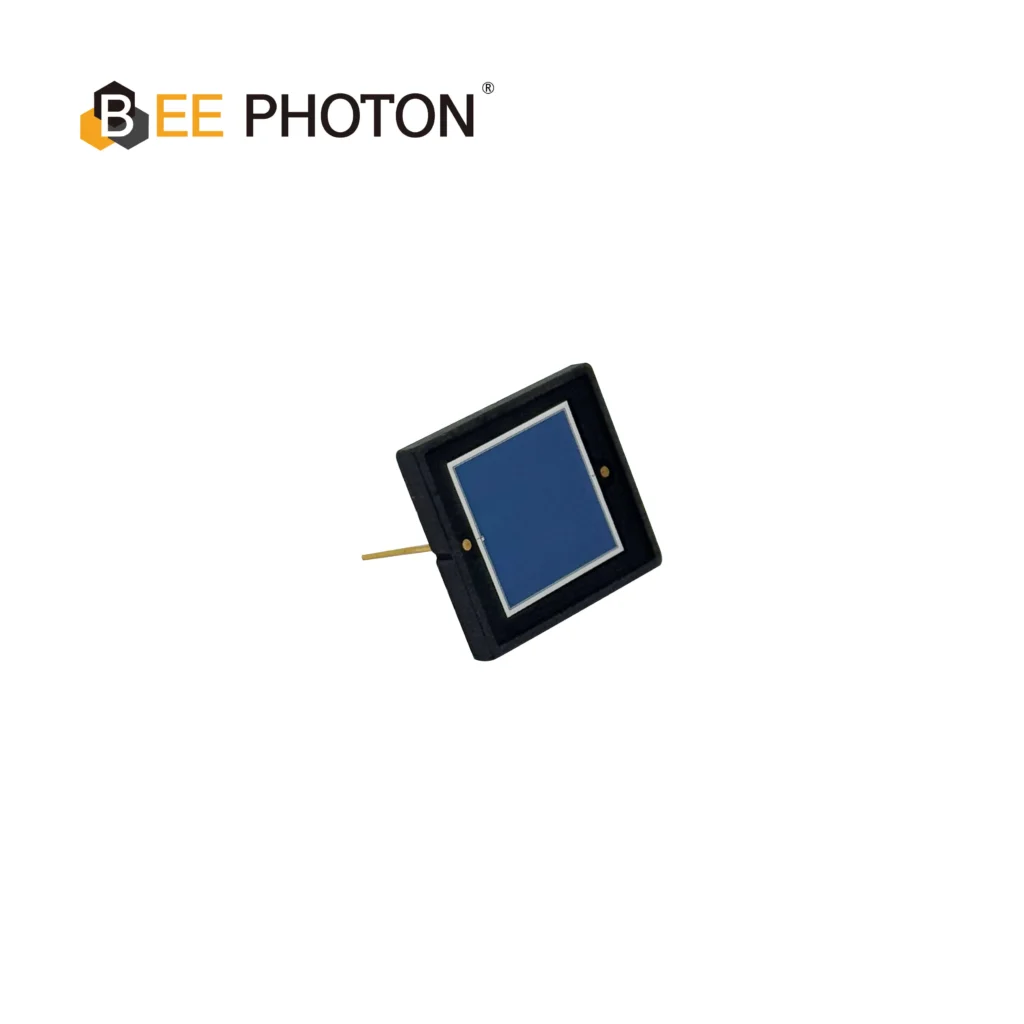
Si PIN Photodiode with low dark current (350-1060nm) PDCD100-101
Upgrade your devices with our Si PIN Photodiode for Optical Measurement. It delivers high accuracy across a 350-1060nm range with minimal dark current. Ideal for various industrial sensing and measurement applications, this high-performance sensor guarantees precision and repeatability.
Real-World Signs Your Photodiodes Are Already Wet
- Popcorn sounds during reflow (yes, you can actually hear it)
- Visible cracks on the top of the package under 10x magnification
- Sudden increase in dark current after soldering
- Voids visible in X-ray inspection under the die
- Delamination between mold compound and lead frame
If you’re seeing any of these, stop everything and start baking.
The Right Way to Bake SMD Photodiodes (What Actually Works)
Here’s the part most people get wrong.
The majority of photodiode datasheets recommend 125°C for 24 hours. Sounds simple, right? But temperature uniformity in the oven matters more than you think.
From my own experiments:
- Use a convection oven with good air circulation
- Place reels in a single layer, not stacked
- Keep reels in their original moisture barrier bags (opened) during baking
- Never exceed 130°C — some plastic packages start softening above that
Pro tip: After baking, let the reels cool down slowly inside the oven with the door slightly open. Rapid cooling can pull moisture right back in.
Best Practices to Prevent Moisture Damage in SMD Photodiodes
1. Control Your Factory Humidity Like Your Life Depends On It
Keep your SMT line below 40% RH if possible. I know that’s hard in tropical countries, but it’s the single biggest lever you have. We once dropped defect rates from 1800 ppm to 47 ppm just by installing better dehumidifiers and sealing the windows.
2. Strict FIFO (First In, First Out) Discipline
Label every opened reel with date and time. Train your operators that “if it’s been open more than 3 days, it goes back to baking.” No exceptions.
3. Use Nitrogen Reflow When Possible
Lower oxygen also means lower risk of oxidation, but more importantly, nitrogen reflow profiles can sometimes be tuned with slightly slower ramp rates, giving trapped moisture a better chance to escape without exploding the package.
4. Choose Lower MSL Parts When Available
At BeePhoton, we’ve been pushing our Si PIN photodiodes toward MSL 2 and MSL 3 through improved molding compounds. If you’re designing a new product, check the Si PIN photodiodes category — some of our newer models are genuinely more moisture resistant than older designs.

Si PIN Photodiode with low dark current (350-1060nm) PDCC07-101
Optimize your optical communication systems with the PDCC07-101, a high-performance Si PIN for Data Transmission engineered for precision and reliability. This COB-packaged photodiode features a large Φ3.0mm photosensitive area and a peak sensitivity at 800nm, delivering a fast rise time of 0.18µs and an ultra-low dark current of 2.5pA. Designed to cover a broad spectral range from 350nm to 1060nm, the PDCC07-101 is the ideal Si PIN for Data Transmission solution for ensuring stable, high-speed signal processing in demanding industrial environments.
Case Study: How One Automotive Client Fixed Their Popcorning Nightmare
A customer making LiDAR modules was losing almost 12% of their photodiodes to cracking. Their floor humidity averaged 68%. After implementing a strict bake schedule (125°C/23h) every 48 hours for opened reels plus better humidity control, their failure rate dropped to 0.3% within six weeks.
They now bake every Friday afternoon as standard procedure. Simple habit change, massive result.
Choosing the Right Photodiodes for Humid Production Environments
Not all photodiodes are created equal when it comes to moisture resistance. Look for:
- Thicker mold compound over the die
- Better die-attach epoxy with lower moisture absorption
- MSL rating clearly stated with “Level 3” or better
- Manufacturers who actually test MSL per J-STD-020 instead of just copying the number
If you want to see current options that are performing well in humid SMT lines, check our Si PIN photodiodes.
Don’t Just Follow the Spec Sheet Blindly
Here’s my controversial take: many engineers treat the Moisture Sensitivity Level as gospel. In reality, it’s a starting point. Your actual factory conditions, reflow profile, and package size all change the equation.
I’ve seen MSL 3 parts survive 400 hours in one factory and fail after 80 hours in another with the exact same part number. The difference was always humidity control and baking discipline.
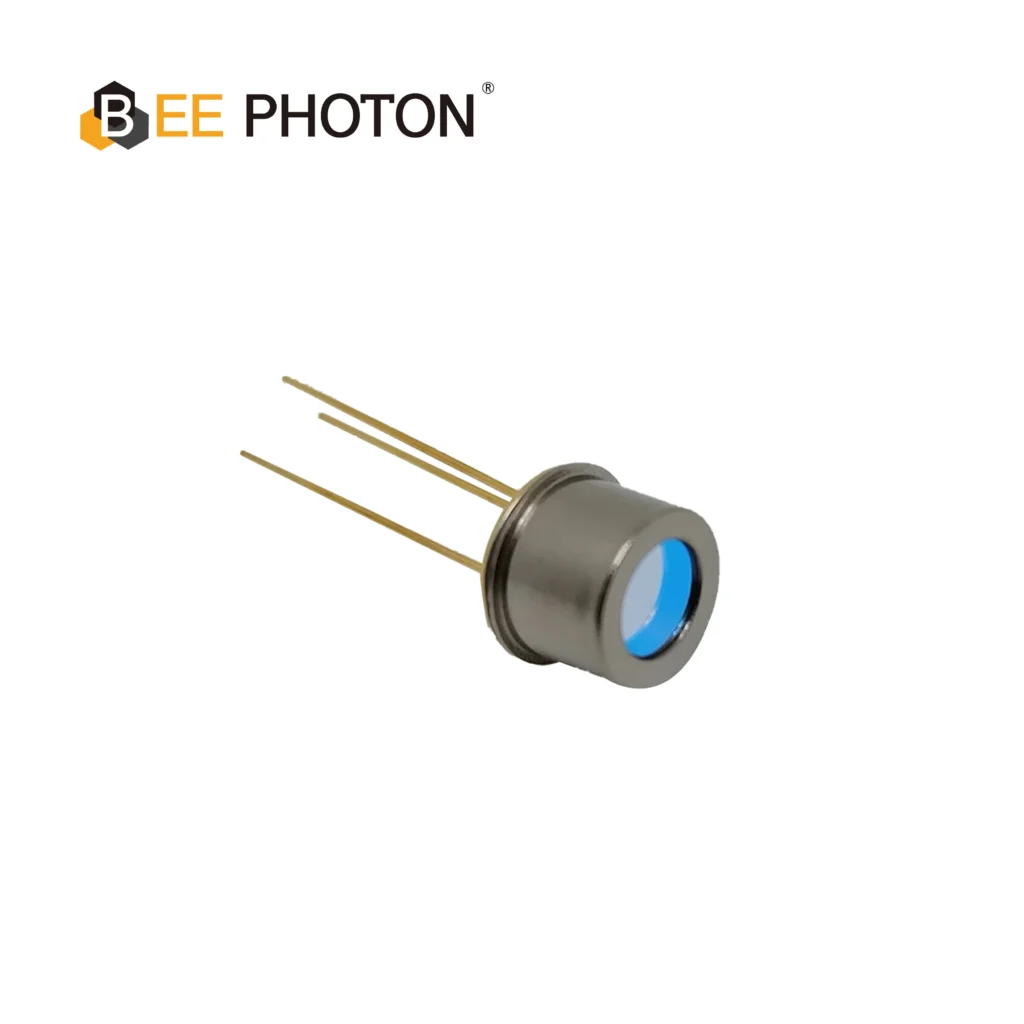
Si PIN Photodiode with low dark current (350-1060nm) PDCT07-001
Achieve high-precision results with our wide spectral range Si PIN photodiode, ideal for spectrometry and analytical instruments. Its ultra-low dark current and high linearity ensure accurate light detection. This photodiode offers a wide spectral response for diverse applications.
FAQ
Q: How long can I really keep opened SMD photodiodes before baking?
A: Forget the 168-hour MSL 3 number if your humidity is above 50%. In real workshops, I recommend baking every 72 hours maximum once the bag is opened. Better safe than dealing with X-ray inspection and scrap.
Q: Is baking at 125°C for 24 hours enough for MSL 4 photodiodes?
A: Usually yes, but only if they’ve been exposed for less than 10 days. If they’ve been sitting out for weeks, you may need to extend to 48 hours or use a vacuum bake. Always check for package discoloration after baking.
Q: Can I use tape-and-reel photodiodes that have been in the feeder for 5 days?
A: Technically no. Practically, many companies do it and get away with it — until they don’t. If you see any sign of increased dark current or leakage after reflow, that reel was too wet.
Look, preventing moisture damage in SMD photodiodes isn’t rocket science, but it does require discipline and respect for how these sensitive optical parts behave.
If you’re tired of throwing away expensive photodiodes or chasing ghost failures in your SMT line, the fastest way forward is usually a combination of better humidity control, strict baking schedules, and choosing components that are actually designed for real-world production stress.
Need help picking the right photodiodes for your process? Or want us to review your current reflow profile and MSL handling procedure?
Just reach out to our team or drop us an email at info@photo-detector.com. We’ve helped dozens of production engineers solve exactly this problem — we’re happy to help you too.


