
Haben Sie jemals eine späte Nacht im Labor verbracht, wie einen Oszilloskop anstarrend und sich fragend, warum Ihr photoelektrischer Sensor Impulse verliert? Sie haben den Empfängerverstärker auf sein absolutes Maximum hochgedreht, Ihre Softwarefilter optimiert, und dennoch bricht eine dünne Schicht Fabrikstaub oder eine leichte Fehlanordnung in der Produktionslinie die Verbindung. Es ist ein klassisches Problem in der B2B-Sensorherstellung. Die meisten Ingenieure beschuldigen sofort den Empfängerkreis oder die Software. Aber um ganz offen zu sein: Der eigentliche Flaschenhals ist fast immer die Lichtquelle. Die Aufrüstung Ihrer optischen Sensorlinie mit einer hochwertigen hochstrahlende IR-LED ist der einfachste und kosteneffektivste Weg, ein robustes Produkt zu schaffen, das tatsächlich auf der Fabrikboden überlebt.
Let’s face it, standard emitters simply lack the raw optical punch required for harsh industrial settings. When you are designing sensors for high-speed packaging, automated sorting, or safety barriers, you cannot afford weak signals. Swapping your cheap light sources for a dedicated hochstrahlende IR-LED can turn a finicky, temperamental design into an industrial-grade champion. Let’s walk through the actual physics, the dirty secrets of the semiconductor industry, and how to design a circuit that squeezes every last drop of performance out of these emitters.
Das Optische Kern: Was macht eine hochstrahlende IR LED aus?
When purchasing managers look at a datasheet, they almost always make the same rookie mistake. They compare “total radiant flux” (measured in milliwatts) and choose the cheapest option that meets their raw power spec. They assume that if two LEDs both spit out 50mW of total optical power, they will perform identically in the field. This is completely wrong, and understanding why is key to seeing the value of a hochstrahlende IR-LED.
Eine Standard-IR LED ist im Grunde eine Glühlampe. Sie wirft ihr Licht in einem weiten, faulen Bogen – oft zwischen 60 und 120 Grad. Das ist großartig, wenn Sie einen Raum mit Infrarotlicht für eine Überwachungskamera fluten wollen, aber es ist eine Katastrophe für einen präzisen optischen Sensor. Das meiste Licht geht verloren, reflektiert an umgebender Maschinen und erzeugt optisches Rauschen.
Im Gegensatz dazu hochstrahlende IR-LED wirkt wie ein taktischer Scheinwerfer. Er packt dieselbe 50 mW optische Energie in einen sehr engen räumlichen Winkel. Statt den gesamten Fluss zu messen, fokussieren sich optische Ingenieure auf die Strahlungsintensität, die in Milliwatt pro Steradian (mW/sr) gemessen wird.
Indem das Licht in einen engen, hochgerichteten Kegel konzentriert wird, hochstrahlende IR-LED stellt sicher, dass die maximale Anzahl von Photonen tatsächlich Ihre Empfängers-Photodiode trifft. Das bedeutet, Sie erhalten ein unglaublich starkes Signal am Empfänger, ohne den gesamten Systemleistungsbedarf erhöhen zu müssen. Wenn Sie Ihre Schwerstaub-, Ölnebel- oder Langstrecken-Sensoren durchdringen wollen, benötigen Sie einen Hochleistungs-Emitter.
850nm NIR LED vs 940nm: Die industrielle Realität im B2B-Bereich
If you browse B2B sensor catalogs, you will find a never-ending debate between using 850nm and 940nm wavelengths. Let’s share a highly controversial viewpoint: for indoor industrial sensors, 940nm is highly overrated. Many manufacturers use 940nm simply because it is “completely invisible” to the human eye, which makes it popular for consumer electronics or covert security. But for B2B sensor manufacturing, choosing 940nm often destroys your optical link budget.
Hier ist der Grund. Standard-Silizium-Photodioden und Phototransistoren – die Art, die Sie tatsächlich verwenden, um erschwingliche Empfänger zu bauen – haben eine spektrale Empfindlichkeitskurve, die bei etwa 850nm ihren Höhepunkt erreicht. Bei 850nm hat eine Standard-Silizium-PIN-Photodiode typischerweise eine Empfindlichkeit von etwa 0,55 Ampere pro Watt (A/W). Wenn Sie auf 940nm heruntergehen, fällt diese Empfindlichkeit auf etwa 0,35 A/W.
Kombinieren Sie nun diesen Rückgang der Empfängerempfindlichkeit mit einem schwachen, weitwinkligen Emitter, wird Ihre Sensorreichweite halbiert. Durch den Wechsel auf eine 850nm hochstrahlende IR-LED, richten Sie die Ausgabe Ihres Emitters perfekt auf die Spitzenquanteneffizienz Ihres Siliziumdetektors aus. Diese Kombination bietet Ihnen einen massiven Boost im Signal-Rausch-Verhältnis (SNR) sofort am Anfang. Sie werden am ersten Tag den Unterschied in der Leistung definitiv spüren.
Außerdem hat 850nm Licht ein sehr schwaches, mattes Rötlich, wenn Sie direkt in den Emitter in einem dunklen Raum schauen. Einige Compliance-Rechtsanwälte werden nervös darüber, aber in industriellen Umgebungen kümmert sich niemand darum. Die massive Leistungsverbesserung einer 850nm hochstrahlende IR-LED überwiegt leicht jede geringfügige ästhetische Vorliebe für totale Unsichtbarkeit.

NIR-LED E850-25-001-L20
Der E850-25-001-L20 ist ein Hochleistungs 855nm NIR-LED entwickelt für anspruchsvolle industrielle Anwendungen. Hergestellt von Bee Photon, ist dieses Infrarotstrahler hat einen engen Abstrahlwinkel von 20 Grad und liefert eine hohe Strahlungsintensität von 25 mW/sr, die für Präzisionsmessungen geeignet ist. Das robuste Design sorgt für hohe Zuverlässigkeit und gleichbleibende Leistung über einen weiten Betriebstemperaturbereich.
Die Insider Secrets der B2B-Sensorfertigung
Let’s talk about some industry secrets that LED manufacturers do not want you to know. If you are sourcing components for a high-volume B2B sensor manufacturing run, you will quickly realize that not all datasheets are created equal.
Viele kostengünstige Lieferanten schreiben ihre Spezifikationen basierend auf unrealistischen Laborbedingungen. Zum Beispiel könnten sie eine hohe Strahlungsintensität behaupten, aber wenn Sie die kleinen Druckbuchstaben lesen, wurde diese Messung mit einem 10-Mikrosekunden-Puls bei einem 0.1%-Verhältnis unter Flüssigstickstoffkühlung durchgeführt. Wenn Sie versuchen, dieselbe LED in einer realen Fabrik bei 50 Grad Celsius zu betreiben, wird ihre Ausgangsleistung innerhalb von Minuten um die Hälfte sinken.
Wenn Sie eine hochstrahlende IR-LED von einer renommierten Marke wie BeePhoton, kaufen, zahlen Sie für thermische Stabilität und Verpackungsgüte. Zuverlässige Lieferanten testen ihre Emitter unter kontinuierlichen Nutzungsszenarien und stellen detaillierte thermische Derating-Kurven bereit.
Ein weiterer Branchensecret ist das Sortieren von Chips. Wenn LEDs auf einem Siliziumwafer hergestellt werden, performen die Chips in der Mitte des Wafer immer besser als diejenigen an den Rändern. Premium-Lieferanten sortieren ihre Chips eng, sodass Sie beim Kauf einer hochstrahlende IR-LED, konsistente Ausgangsleistung von Charge zu Charge erhalten. Billige Lieferanten mischen verschiedene Sorten zusammen, was bedeutet, dass Ihre Produktionslinie mit schwankenden Sensorbereichskalibrierungsproblemen von Woche zu Woche kämpfen wird.
Technische Mathematik: Berechnung des realen Link-Budgets
Let’s write out some of the actual math you need to design your system. Don’t worry, we won’t use complex LaTeX code that ruins your layout; we will keep it simple and readable.
To calculate how much optical power actually hits your detector, you need to find the solid angle (Omega) of your emitter’s beam.
Die Formel für den Raumwinkel eines Lichtkegels lautet:
Solid Angle (Omega) = 2 * pi * (1 – cos(theta / 2))
Wo:
- pi ist ungefähr 3.1416
- theta ist die volle Breite bei halber Maximum (FWHM)-Strahlwinkel Ihrer LED
Let’s say you have a standard LED with a 30-degree beam angle, and you are upgrading to a hochstrahlende IR-LED mit einem engen 18-Grad-Strahlwinkel, wie dem BeePhoton E850-180-201L4.
Let’s calculate the solid angle for the standard 30-degree LED:
Omega_standard = 2 * 3.1416 * (1 – cos(30 / 2))
Omega_standard = 6.2832 * (1 – cos(15))
Omega_standard = 6.2832 * (1 – 0.9659)
Omega_standard = 6.2832 * 0.0341 = 0.2143 Steradian
Berechnen wir nun den Raumwinkel für unsere 18 Grad hochstrahlende IR-LED:
Omega_high_radiance = 2 * 3.1416 * (1 – cos(18 / 2))
Omega_high_radiance = 6.2832 * (1 – cos(9))
Omega_high_radiance = 6.2832 * (1 – 0.9877)
Omega_high_radiance = 6.2832 * 0.0123 = 0.0773 Steradian
Wenn beide LEDs mit einem Strom betrieben werden, der eine Gesamstrahlungsleistung von 40 mW erzeugt, sehen wir, wie viel Strahlungsintensität (I) wir erhalten.
Die grundlegende Formel lautet:
Strahlungsintensität (I) = Strahlungsleistung / Raumwinkel
Für die Standard-LED:
I_standard = 40 mW / 0.2143 sr = 186.6 mW/sr
Für die hochstrahlende IR-LED:
I_high_radiance = 40 mW / 0.0773 sr = 517.4 mW/sr
Durch das Upgrade auf die engere hochstrahlende IR-LED, erhöht sich Ihre Spitzenoptikintensität im Zentrum des Strahls um fast das Dreifache, obwohl Sie exakt die gleiche Menge an elektrischem Strom verwenden. Das ist die Magie des optischen Designs.
Treiberschaltungen: Ein Hochleistungs-IR-LED an ihre Grenzen bringen
Sie können einfach nicht einen hochstrahlende IR-LED an einen digitalen Ausgangspin eines Mikrocontrollers anschließen und erwarten, dass es funktioniert. Diese Hochleistungsemitter erfordern eine robuste analoge Treibstufe, um hohe Spitzenströme sicher zu handhaben.
Um einen hochfrequenz pulsierenden Treiberkreis zu entwerfen, sollten Sie einen N-Kanal-MOSFET als Low-Side-Schalter verwenden. Hier ist eine schrittweise Anleitung, wie Sie diesen Kreis auf Ihrer PCB aufbauen:
- Schließen Sie die positive Versorgungsschiene (V_drive, normalerweise 5 V oder 12 V) an einen hochwertigen keramischen Entkopplungskondensator (10 µF parallel mit 100 nF) an, der so nahe wie möglich am LED-Anode platziert wird. Dies verhindert ein Absinken der Spannung während Hochstromimpulse.
- Schließen Sie den LED-Anode an die Versorgungsschiene an.
- Schließen Sie den LED-Kathode an einen niederinduktiven Strombegrenzungswiderstand (R_limit) an, um den Spitzenstrom zu begrenzen.
- Schließen Sie die andere Seite von R_limit an den Drain-Pin Ihres N-Kanal-MOSFETs an.
- Schließen Sie den Source-Pin des MOSFETs direkt an eine feste Erdungsfläche an.
- Schließen Sie die PWM-Ihreres Mikrocontrollers über einen kleinen 47-Ohm-Widerstand an den Gate des MOSFETs an, um hochfrequente Schwingungen zu unterdrücken.
Durch das Pulsieren Ihres hochstrahlende IR-LED Mit einem niedrigen Tastverhältnis (beispielsweise ein 10-Mikrosekunden-Impuls alle 1 Millisekunde, was einem 1%-Tastverhältnis entspricht), können Sie den Spitzenstrom auf 1 A oder mehr erhöhen, ohne dass der Chip überhitzt. Dies Ihrem Sensor einen massiven Lichtausstoß, der mühelos durch Schichten von Schmutz und Öl auf einer Fabrikkonveyorband dringen kann.
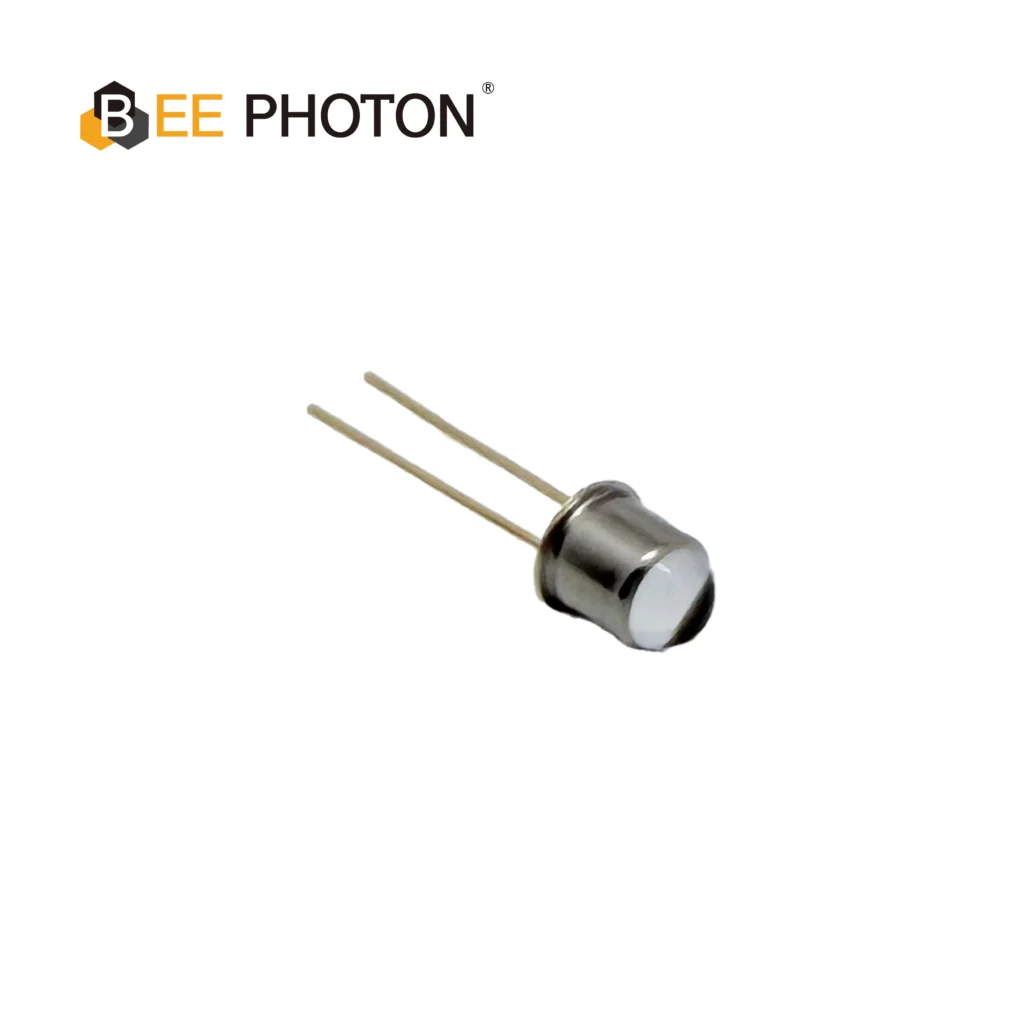
NIR-LED E850-180-201L4
Die E850-180-201L4 ist eine leistungsstarke 850nm NIR-LED für die industrielle Präzisionsmessung entwickelt. Hergestellt von Bienen-Photon, Dieser Infrarot-Strahler ist auf hohe Leuchtkraft und außergewöhnliche Stabilität ausgelegt und damit die ideale Lichtquelle für anspruchsvolle Automatisierungsumgebungen.
Umgang mit thermischem Durchgang und Schwächen im Gehäuse
Lassen Sie uns eine weitere kritische ingenieurstechnische Herausforderung ansprechen: das Thermalmanagement. Obwohl ein hochstrahlende IR-LED sehr effizient ist, wird ein signifikanter Teil seiner elektrischen Energie immer noch als Wärme verschwendet.
Wenn Sie Ihre PCB nicht richtig entwerfen, wird der Emitter unter thermischem Durchgang leiden. Wenn sich das Halbleitermaterial erhitzt, fällt seine Vorwärtsabnahme ab, was dazu führt, dass es mehr Strom zieht, wenn es mit einer konstanten Spannung betrieben wird. Mehr Strom bedeutet mehr Wärme, was einen Teufelskreis erzeugt, der schnell Ihren hochstrahlende IR-LED.
Zur Vermeidung dieses Problems sollten Sie Ihren hochstrahlende IR-LED immer mit einem Stromregelkreis oder einem streng gesteuerten Strombegrenzungswiderstand betreiben.
Außerdem müssen Sie sehr auf Ihr PCB-Layout achten. Standard FR4-Glas-Epoxy-PCBs sind schlechte Wärmeleiter. Beim Layouten Ihres Boards müssen Sie große Kupfergussflächen um den Kathodenpin der LED platzieren, da dies üblicherweise der Hauptthermopfad aus dem Chip ist. Vernähen Sie diesen Kupferguss mit mehreren thermischen Via-Löchern mit einer internen Erdungsfläche.
Eine hohe Qualität hochstrahlende IR-LED was kühl gehalten wird, wird seine Peak-Wellenlänge und optische Leistung über Jahrzehnte hinweg beibehalten und Ihrem Unternehmen Tausende von Dollar an Garantieansprüchen und Feldersatzkosten sparen.
Das E850-180-201L4 Deep Dive: Ein echtes Upgrade für optische Sensoren
Schauen wir uns ein konkretes Beispiel eines Emitters an, der speziell entwickelt wurde, um diese industriellen Herausforderungen zu lösen: den BeePhoton E850-180-201L4.
Dieser bestimmte hochstrahlende IR-LED wurde von Grund auf für hochzuverlässige B2B-Anwendungen entwickelt. Er verfügt über eine integrierte optische Dome-Linse, die das Licht in einen engen, symmetrischen 18-Strahl bündelt. Dies eliminiert die Notwendigkeit teurer externer Kunststofflinsen auf Ihrem Sensorgehäuse, die oft gelb werden und im Laufe der Zeit abgebaut werden, wenn sie strengen Fabriklichtern und Reinigungsmitteln ausgesetzt sind.
Wir haben kürzlich gesehen, wie ein B2B-Hersteller seine optische Sensorlinie mit dem E850-180-201L4 aufgerüstet hat. hochstrahlende IR-LED. Sie bauten Sicherheitslichtvorhänge für schwere Stanzpressen. Ihr altes Design verwendete generische, weitwinklige 850-nm-Emitter und hatte ständig Probleme mit Fehlern, die durch mechanische Vibrationsen verursacht wurden, die die Sende- und Empfangsleisten leicht ausrichteten.
Durch den Wechsel zu dem E850-180-201L4 hochstrahlende IR-LED, konnten sie einen hochkonzentrierten Strahl über eine Strecke von 10 Metern projizieren. Das intensive, fokussierte Licht bedeutete, dass selbst wenn die Montageschienen um ein paar Grad vibrierten, die Empfänger-Photodiode immer noch genug optisches Signal erhielt, um sich zu verriegeln. Die Aufrüstung rettete ihre Produktlinie vor einer kostspieligen Rückrufaktion und stellte das Vertrauen ihrer Kunden wieder her.
Vergleich der realen Leistung
Um Ihnen bei der Auswahl des richtigen Emitters für Ihre B2B-Sensorherstellungsbedürfnisse zu helfen, schauen wir uns an, wie ein Premium- hochstrahlende IR-LED , mit anderen gängigen optischen Lichtquellen auf dem Markt verglichen wird.
| Leistungsmetrik | Standard-850-nm-LED | Premium-Hochstrahlungs-IR-LED (z. B. E850-180-201L4) | Generische 940-nm-LED | Hochleistungsflutlicht-LED |
|---|---|---|---|---|
| Peak-Wellenlänge | 850nm | 850nm | 940nm | 850nm |
| Typischer Abstrahlwinkel | 60 – 120 Grad | 15 – 20 Grad | 45 – 60 Grad | 120 Grad |
| Strahlungsintensität | ~15 mW/Sr | >150 mW/sr (bei 100 mA) | ~10 mW/Sr | ~40 mW/Sr |
| Silizium-PD-Abgleich | Ausgezeichnet (~0.55 A/W) | Perfekt (~0.58 A/W) | Schlecht (~0.35 A/W) | Ausgezeichnet |
| Thermischer Widerstand | >150 K/W | <45 K/W (Sehr niedrig) | >180 K/W | <15 K/W |
| Relative Stückkosten | Niedrig ($) | Mittel ($$) | Niedrig ($) | Hoch ($$$) |
Wie Sie sehen können, bietet eine spezialisierte hochstrahlende IR-LED eine unglaubliche Verstärkung der Strahlungsintensität ohne den enormen Wärmefußabdruck und die hohen Kosten einer massiven Hochleistungsflutlicht-LED. Sie ist der Goldilocks-Bereich für präzise optische Schalter, Sicherheitslichtschranken und Hochgeschwindigkeits-B2B-Sensoranwendungen.
Praktische Fehlerbehebung: Ausrichtung Ihrer Hochleistungs-IR-LED
Nachdem Sie sich für eine hochstrahlende IR-LED, entschieden haben, können Sie auf einige klassische Integrationsherausforderungen stoßen. Hier ist, wie Sie diese wie ein erfahrener Profi auf Ihrer Produktionslinie beheben.
Zuerst betrachten wir die mechanische Ausrichtung. Weil ein hochstrahlende IR-LED so einen engen Strahl wirft, müssen die Toleranten Ihrer Montagelinie perfekt sein. Wenn Ihr Kunststoffgehäuse leicht verformt ist, könnte der Strahl bei größeren Entfernungen die Empfängers-Photodiode komplett verfehlen. Um dies zu beheben, empfehlen wir, einfache Ausrichtungslaschen direkt in die Kunststoffspritzgussformen Ihres Sensors zu integrieren, um die LED und den Empfänger in perfekter Ausrichtung zu fixieren.
Zweitens achten Sie auf Sättigung des Empfängers. Wenn ein Zielobjekt sehr nah an den Sensor kommt, kann die immense optische Leistung des hochstrahlende IR-LED die Photodiode überfluten und den Verstärkerstromkreis des Empfängers übersteuern. Dies kann den Sensor “blind” für Objekte machen, die zu nah sind. Dies können Sie einfach in der Software lösen, indem Sie eine variable Taktfrequenz verwenden – das heißt, Sie reduzieren den LED-Strom, wenn Sie erkennen, dass das Ziel in der Nähe ist.
Drittens behalten Sie die optische Kreuzkopplung im Auge. Da die Ausgabe eines hochstrahlende IR-LED ist so stark, dass jedes Licht, das ins Gehäuse des Sensors eindringt, falsche Auslöser verursachen kann. Verwenden Sie immer eine physische, undurchsichtige schwarze Kunststoffbarriere, um die Emitterhöhle von der Empfängerkühlung auf Ihrer PCB zu isolieren.
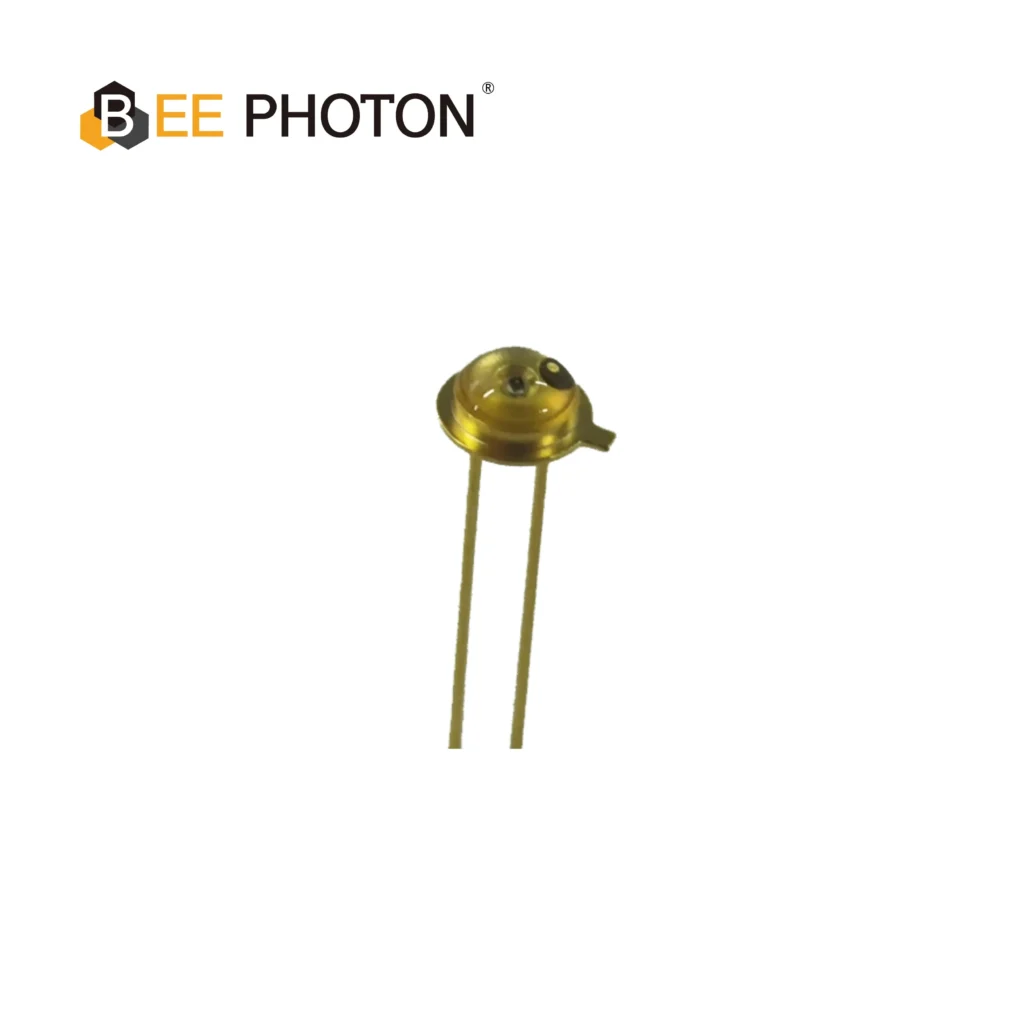
Lichtquelle LED-Serie E850-30-101
Die E850-30-101 ist ein hochstabiler 850nm-Infrarotstrahler im robusten 3mm-Dual-Inline-Package-LED-Format für einfache Leiterplattenmontage und überragende Haltbarkeit. Mit einem schmalen Abstrahlwinkel von 20° und einer Strahlungsintensität von 30 mW liefert diese Dual In-line Package LED eine präzise und helle Leistung und ist damit die ideale Lichtquelle für optische Schalter, industrielle Sensorik und anspruchsvolle Automatisierungsanwendungen.
FAQ: Kritische Ingenieursfragen zu Hochleistungs-IR-LED-Emittern
Kann ich meine vorhandene LED direkt durch eine IR-LED mit hoher Strahldichte ersetzen?
Ja, in den meisten Fällen können Sie eine hochstrahlende IR-LED direkt auf Ihren vorhandenen Leiterplatten-Footprint setzen, insbesondere wenn Sie Standardgehäuse für die Oberflächen- oder Durchsteckmontage verwenden. Um jedoch die Vorteile Ihrer neuen hochstrahlende IR-LED, sollten Sie Ihren aktuellen Strombegrenzungswiderstand überprüfen. Sie möchten möglicherweise den Widerstand verringern, um die neue LED mit ihrem optimalen Spitzenstrom zu betreiben, oder die Verstärkung Ihres Empfängers anpassen, um eine Sättigung zu vermeiden.
Warum ist eine 850-nm-Infrarot-LED mit hoher Strahlstärke für die industrielle Automatisierung besser geeignet als eine 940-nm-Option?
Der Hauptgrund liegt in der Empfängerleistung. Standard-Siliziumsensoren sind wesentlich empfindlicher für Licht mit 850 nm als für Licht mit 940 nm. Wenn man eine 850-nm-Quelle hochstrahlende IR-LED mit einer Silizium-PIN-Fotodiode kombiniert, erhält man ein deutlich höheres Signal-Rausch-Verhältnis. Dies ermöglicht einen zuverlässigen Betrieb Ihres Sensors über größere Entfernungen und in wesentlich schmutzigeren Umgebungen, als es ein 940-nm-System jemals könnte.
Wie wirkt sich die Temperaturdrift über Jahre des Gebrauchs hinweg auf eine IR-LED mit hoher Strahldichte aus?
Wenn eine LED altert und sich erwärmt, verschiebt sich ihre Peak-Wellenlänge langsam nach oben (üblicherweise um etwa 0,25 nm pro Grad Celsius), und ihre optische Gesamtleistung nimmt allmählich ab. Eine Premium-Ausführung jedoch hochstrahlende IR-LED ist mit hochwertigem Packaging und einem geringen Wärmewiderstand konzipiert, um diese Degradation zu minimieren. Wenn Sie die Sperrschichttemperatur durch eine fachgerechte PCB-Kupferkühlung niedrig halten, wird Ihr Emitter über mehr als 100.000 Betriebsstunden hinweg problemlos eine stabile Leistung beibehalten.
Bereit zum Upgrade? Lassen Sie es uns erledigen.
Wenn Sie müde sind, mit schwachen optischen Signalen, Feldfehlern und beschwerenden Kunden zu tun zu haben, ist es Zeit, Maßnahmen zu ergreifen. Die Aktualisierung Ihrer Sensorlinie mit einer Hochleistungs- hochstrahlende IR-LED ist der schnellste Weg, Ihr Produkt vom Labormuster in eine robuste, industrietaugliche Lösung zu verwandeln.
Unter BeePhoton, haben wir Jahre damit verbracht, Hochleistungs-optische Komponenten zu entwickeln, die in den härtesten industriellen Umgebungen gedeihen. Ob Sie maßgeschneiderte Photodetektoren oder modernste Infrarotlichtquellen benötigen, unser Team hat die praktische Erfahrung, um Ihnen zum Erfolg zu verhelfen.
Wir ermutigen Sie, unseren umfassenden LED-Lichtquellenkatalog durchzusehen, um den perfekten Emitter für Ihr Projekt zu finden. Wenn Sie eine bestimmte technische Herausforderung haben oder eine kundenspezifische Verpackung benötigen, besuchen Sie bitte unsere Kontaktseite und kontaktieren Sie unser Ingenieerteam direkt. Sie können auch eine E-Mail an info@photo-detector.com senden, um Muster anzufordern, ein Angebot zu erhalten oder eine detaillierte Überprüfung Ihrer aktuellen Schaltung durchzuführen. Lassen Sie uns zusammenarbeiten, um heute eine schnellere, stärkere und zuverlässigere Sensorlinie zu bauen.


