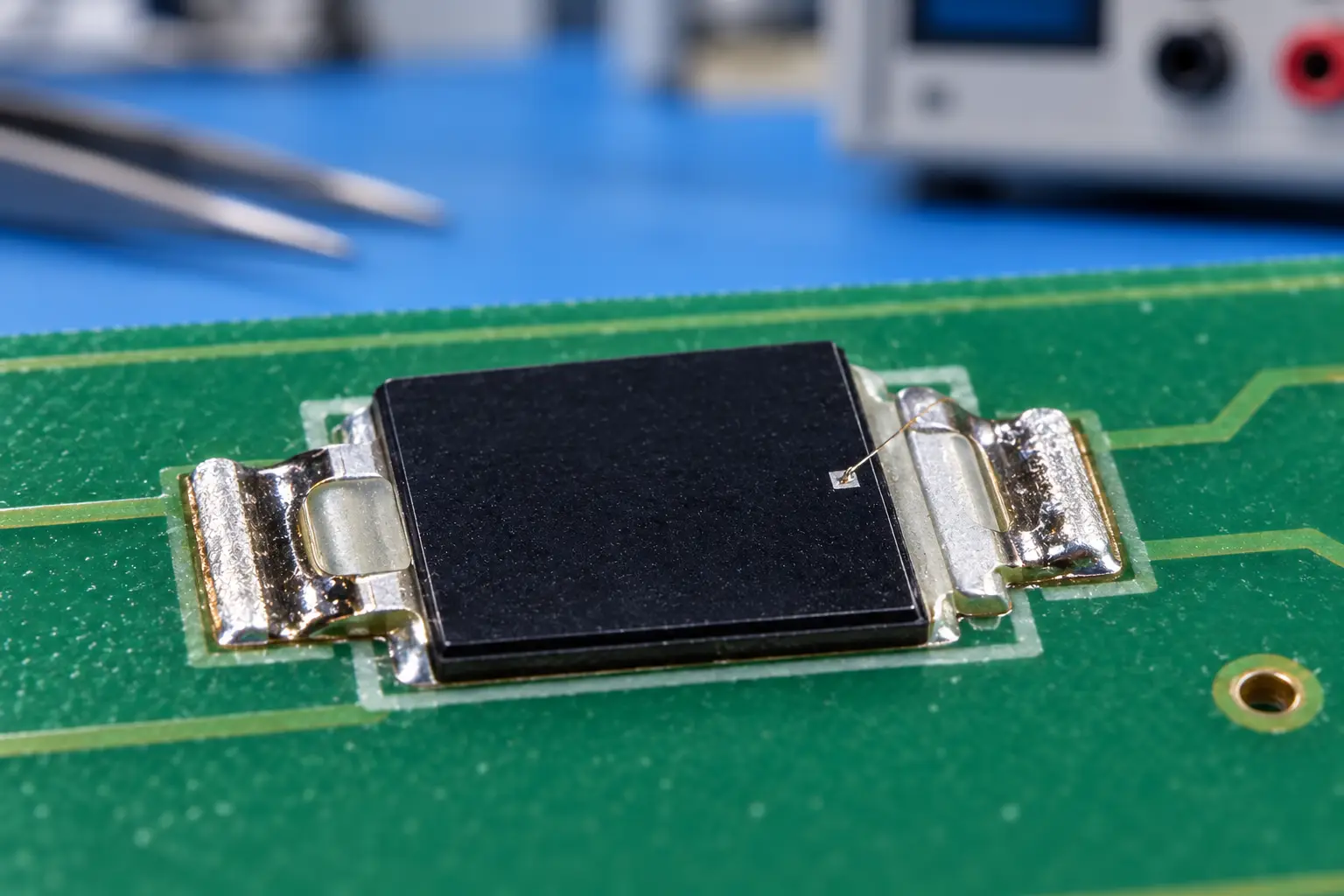
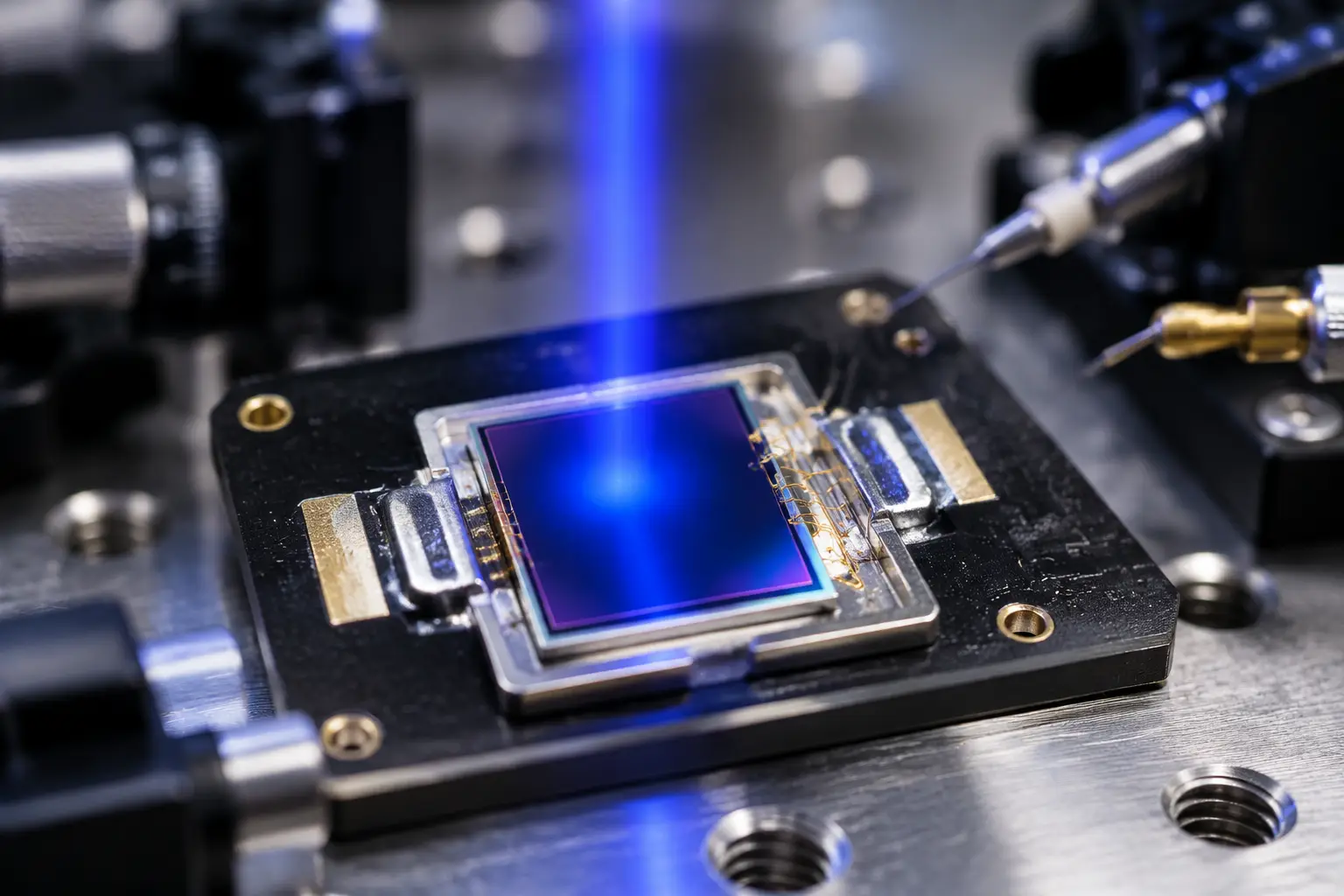
If you’re building a system that needs to see both visible light and near-infrared at the same time, you’ve probably stared at spec sheets until your eyes hurt. The good news? A well-designed silicon photodiode can actually handle most of that 340–1100nm range pretty damn well. Not perfectly — but often good enough to save you a ton of money and complexity.
I’ve spent the last twelve years helping companies pick the right detectors for everything from medical devices to industrial sorting machines. The question I hear most often is: “Can we really use plain old silicon for both visible and NIR?” The short answer is yes — with some important caveats. Let me walk you through what actually matters in real life.
Why Silicon Still Dominates Broad Spectrum Applications
Silicon isn’t flashy. It’s not InGaAs. It won’t win any awards for exotic material science. But here’s the thing — for 340-1100nm, silicon photodiode technology has been refined for decades, making it ridiculously cheap, reliable, and surprisingly capable.
According to industry shipment data from Yole Développement, silicon photodetectors still account for over 65% of the entire photodiode market in 2023. That’s not an accident. When your application sits in the visible-to-NIR sweet spot, silicon is usually the smartest starting point.
The typical responsivity curve of a standard Si PIN photodiode shows solid performance from about 400nm all the way to 1100nm, with a nice peak around 900-1000nm. That’s actually perfect for many real-world needs.
Understanding the Spectral Response of Silicon Photodiodes
Let me give you the actual numbers instead of vague marketing talk.
A good quality silicon photodiode typically offers:
- 340–400nm: Rising response (UV-enhanced versions perform better here)
- 400–700nm: Excellent visible response (peak QE often >85%)
- 700–900nm: Very strong NIR performance
- 900–1100nm: Declining but still usable response
The cutoff around 1100nm is dictated by silicon’s bandgap energy of 1.12 eV. Beyond that, photons simply don’t have enough energy to create electron-hole pairs. That’s physics, not opinion.
Here’s a quick comparison table of typical responsivity (A/W) for standard vs enhanced silicon photodiodes:
| Wavelength (nm) | Standard Si (A/W) | UV/IR Enhanced Si (A/W) | InGaAs (for reference) |
|---|---|---|---|
| 350 | 0.05 | 0.18 | N/A |
| 500 | 0.28 | 0.32 | N/A |
| 850 | 0.62 | 0.65 | 0.6 |
| 950 | 0.55 | 0.58 | 0.9 |
| 1050 | 0.25 | 0.32 | 1.1 |
| 1100 | 0.08 | 0.12 | 1.15 |
(Data compiled from multiple manufacturer datasheets including Hamamatsu, OSI Optoelectronics, and our own testing at BeePhoton.)

Si PIN Photodiode with low dark current (350-1060nm) PDCC07-101
Optimize your optical communication systems with the PDCC07-101, a high-performance Si PIN for Data Transmission engineered for precision and reliability. This COB-packaged photodiode features a large Φ3.0mm photosensitive area and a peak sensitivity at 800nm, delivering a fast rise time of 0.18µs and an ultra-low dark current of 2.5pA. Designed to cover a broad spectral range from 350nm to 1060nm, the PDCC07-101 is the ideal Si PIN for Data Transmission solution for ensuring stable, high-speed signal processing in demanding industrial environments.
The Magic of Si PIN Photodiodes for Broad Spectrum Work
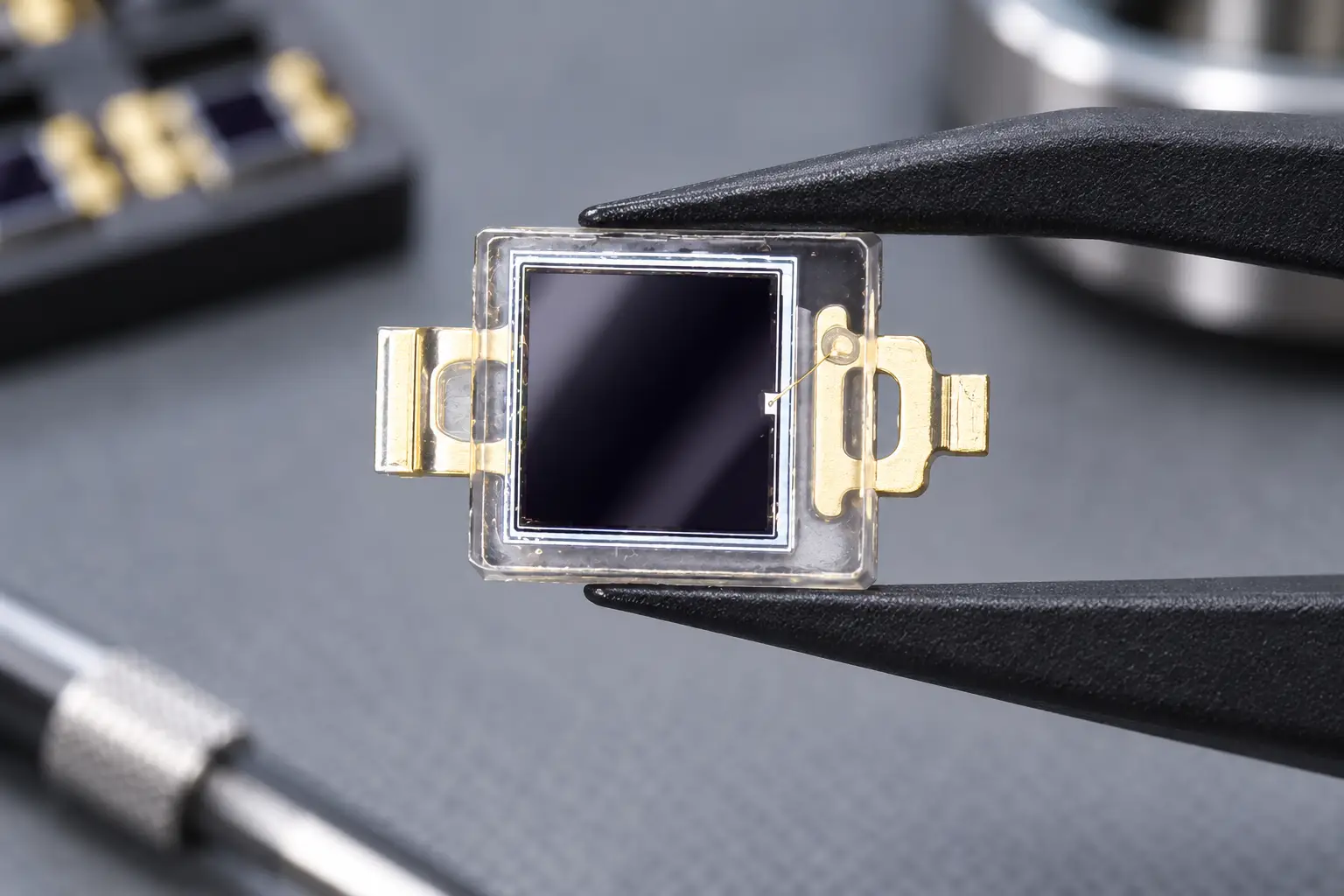
If you’re serious about covering both visible and NIR effectively, Si PIN photodiodes are usually the way to go. The intrinsic layer gives you faster response times and better linearity compared to simple PN junctions.
In one project we worked on with a medical imaging startup, they needed to simultaneously monitor tissue oxygenation (using 760nm and 850nm) while also tracking visible markers. A carefully chosen 5mm² Si PIN photodiode with enhanced NIR coating gave them QE above 75% at both wavelengths — all for under $8 per unit at volume. Try doing that with InGaAs and watch your BOM explode.
The key parameters I always look at when selecting a broad spectrum detector based on silicon are:
- Active area – Bigger isn’t always better. Capacitance goes up with area, killing your speed.
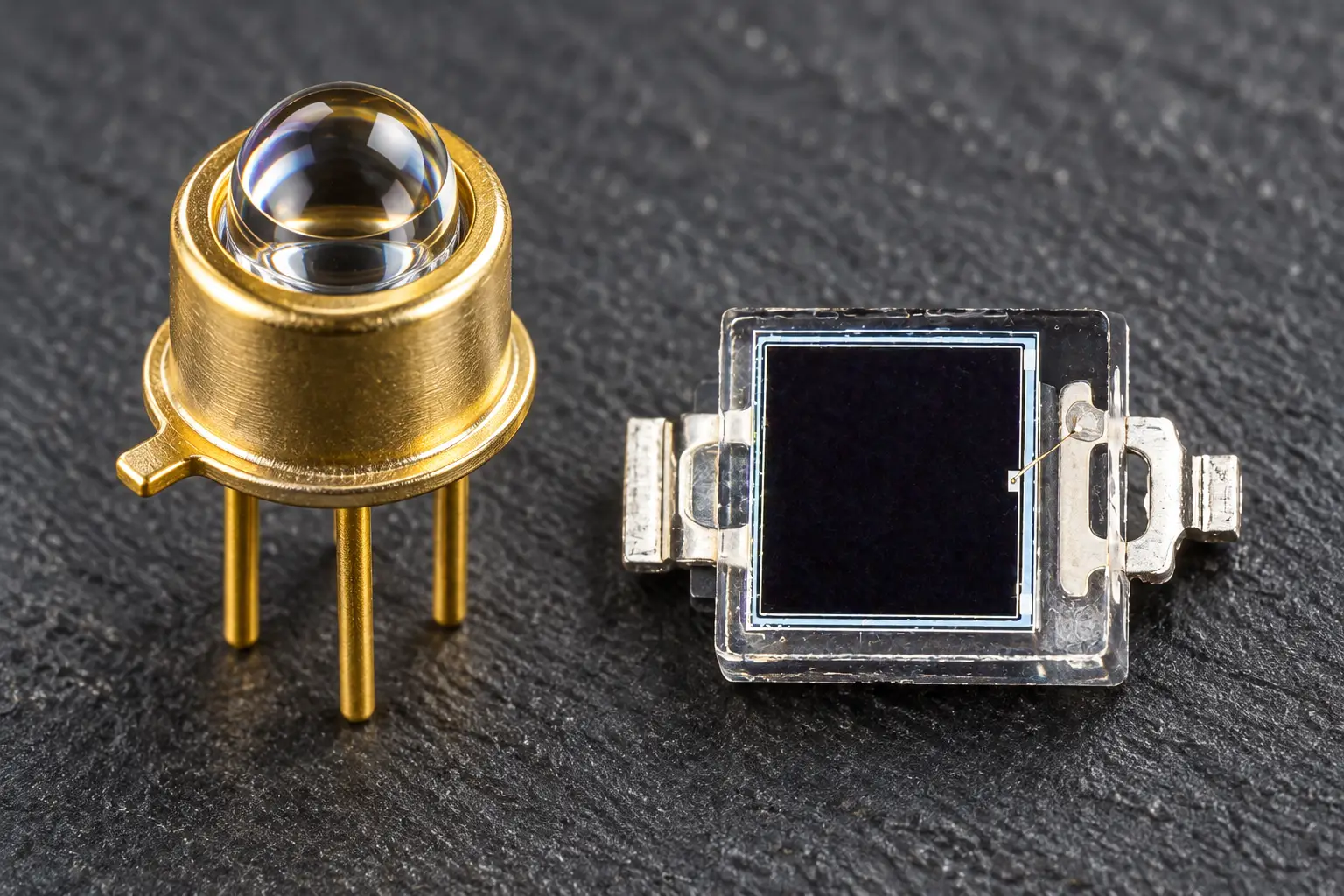
- Packaging – Clear epoxy, TO-can, or SMD? Each affects your final response.
- Coating – Some manufacturers offer special broadband AR coatings that genuinely improve 340-1100nm performance.
- Dark current – Critical if you’re doing low-light measurements.
Real-World Performance: Where Silicon Wins and Loses
Here’s something most marketing pages won’t tell you: standard silicon photodiodes actually perform better in the 850-1000nm region than many people realize. The often-quoted “poor NIR response” of silicon is only true if you’re comparing it to InGaAs at 1550nm. For 940nm remote control or 850nm LiDAR-type applications, silicon is excellent.
I remember one industrial client who was dead set on using expensive InGaAs arrays for their plastic sorting machine. After we showed them that a custom Si PIN array with proper filtering could achieve 92% sorting accuracy versus 94% for InGaAs — at 1/6th the cost — they switched. That decision saved them roughly $340,000 in the first year.
But I’m not here to sell you silicon as a universal solution. There are legitimate cases where silicon falls short:
- When you need true response beyond 1100nm
- When your signal is extremely weak at the NIR edge
- When you need nanosecond rise times at 1050nm+
Design Tips for 340-1100nm Silicon Photodiode Systems
If you’re designing a broad spectrum detector system right now, here are the practical things that actually move the needle:
Filter Strategy: Don’t just slap on a visible bandpass. Consider dual-band filters or even no filter if your signal processing can handle it. Sometimes the raw silicon response is exactly what you want.
Temperature Compensation: Silicon’s response shifts with temperature, especially in the NIR tail. A good circuit design includes either active compensation or calibration lookup tables.
Amplifier Choice: For broadband applications, the op-amp or transimpedance amplifier needs to handle both high-speed visible pulses and slower NIR signals. This is trickier than it sounds.
** stray Light Management:** Because silicon responds so well across this entire range, your biggest enemy is often unwanted ambient light. Proper baffling and shielding matter more than you’d think.

Si PIN Photodiode with low dark current (350-1060nm) PDCT34-101
Discover exceptional performance with our high linearity Si PIN photodiode, designed for X-RAY and laser detection. This photodiode combines low dark current and high stability in a robust TO package. Rely on our Si PIN photodiode for critical detection tasks.
When to Consider Moving Beyond Silicon
Look, I’m a huge fan of silicon, but I’m not blind to its limits. If your application requires reliable detection above 1100nm or needs to discriminate very precisely between 1300nm and 1550nm signals, then InGaAs or other materials make sense.
But for the vast majority of applications in the 340-1100nm window — fluorescence detection, optical sensors, color measurement combined with NIR spectroscopy, safety systems, medical wearables — a quality silicon photodiode remains the champion.
Choosing the Right Si PIN Photodiode for Your Project
At BeePhoton, we’ve tested hundreds of different silicon detectors over the years. The ones that consistently perform best for broad spectrum work tend to have these characteristics:
- Moderate active areas (1-9mm²)
- Specialized broadband antireflection coatings
- Low capacitance packaging
- Good visible rejection when needed (IR-enhanced versions)
If you’re currently struggling with your detector choice, check out our Si PIN photodiodes category. We’ve specifically curated options that work well across the visible-to-NIR boundary.
Making the Decision
The truth is, choosing between different detector technologies isn’t about finding the “best” one. It’s about finding the one that gives you enough performance at the right price point with acceptable risk.
For most applications sitting comfortably in the 340-1100nm range, silicon isn’t just “good enough” — it’s often the optimal choice. The technology is mature, the supply chain is robust, the pricing is reasonable, and the performance is predictable.
And honestly? There’s something satisfying about using a material as common as silicon to solve what looks like a complex optical problem.
Ready to explore whether silicon is right for your specific application? Drop us a message on our contact page or email me directly at info@photo-detector.com. Tell us your wavelength requirements, speed needs, and power levels. We’ll give you an honest assessment — even if that means recommending something other than our own silicon photodiodes.
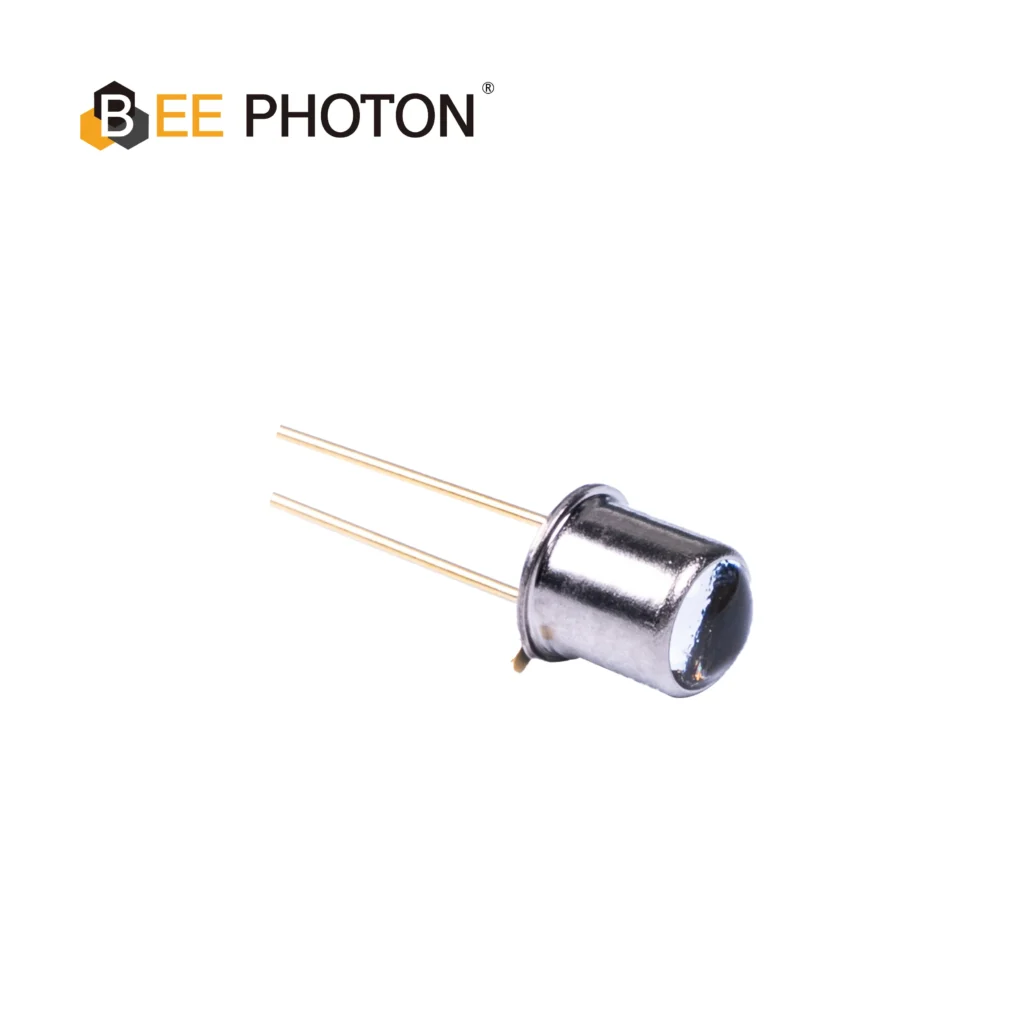
Si PIN Photodiode with low dark current (350-1060nm) PDCT01-202
Our high stability silicon PIN photodiode delivers consistent and reliable performance for analytical and optical measurement equipment. Benefit from its wide spectral range (350-1060nm) and ultra-low dark current. Trust this silicon PIN photodiode for your precision needs.
FAQ
Q: Can a single silicon photodiode really work effectively from 340nm all the way to 1100nm?
A: Yes, but with varying efficiency. You’ll get excellent performance in the visible range and very good response up to about 1000nm. Between 1000-1100nm the response drops off, but remains usable for many applications. UV-enhanced or IR-enhanced versions can help balance the response curve.
Q: How does the cost of silicon photodiodes compare to InGaAs for broad spectrum detection?
A: Silicon photodiodes typically cost 5-20x less than comparable InGaAs detectors. For high-volume applications, the difference can be massive. The real question isn’t usually “can silicon do it?” but “is the performance trade-off worth the cost savings?”
Q: What makes Si PIN photodiodes better than standard silicon photodiodes for visible-IR applications?
A: The PIN structure provides lower capacitance, faster response times, and better linearity, especially under varying light conditions. For applications that need both decent speed and broad spectral response, Si PIN photodiodes are usually the sweet spot.