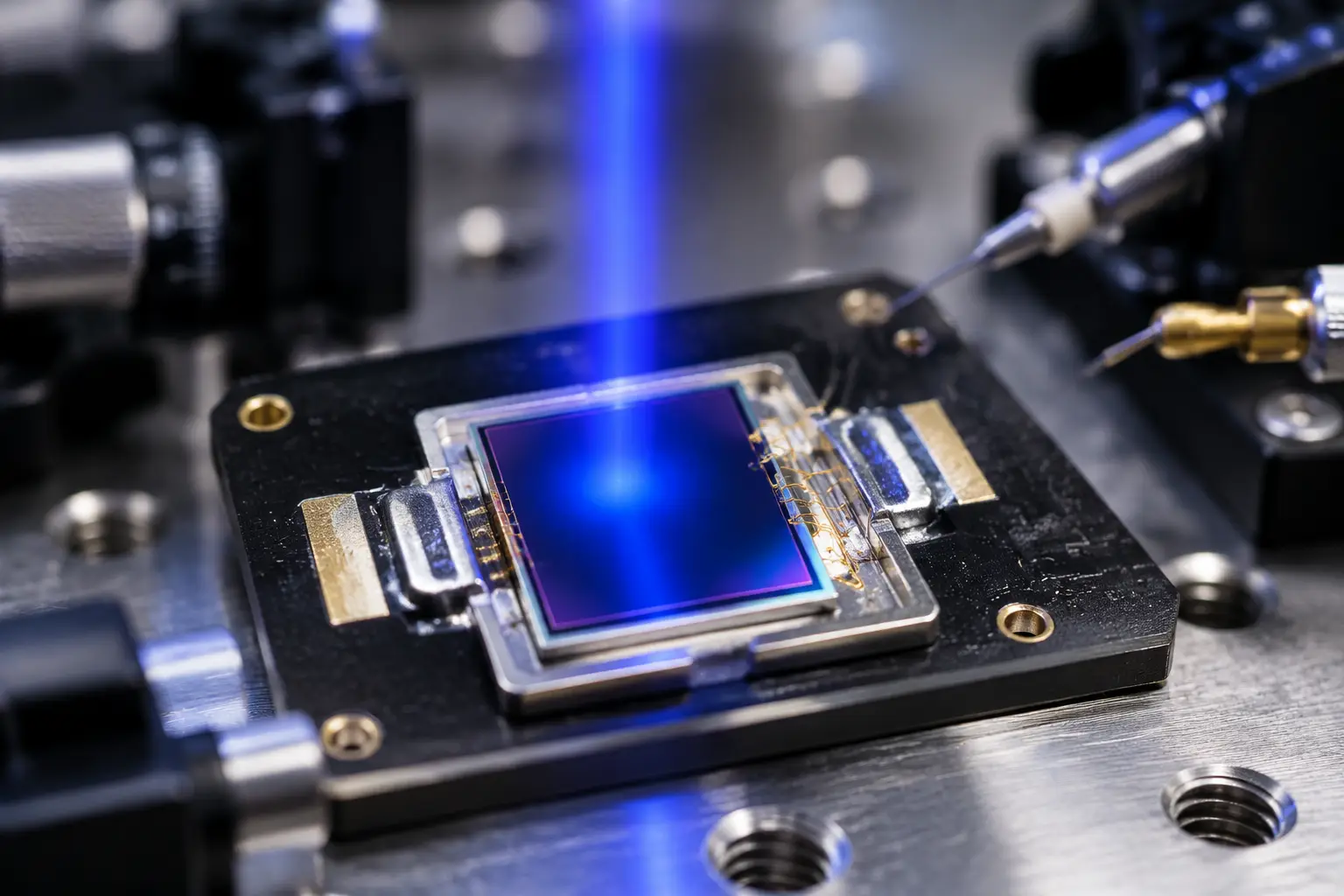
If you’re building servo control systems for robots or industrial motors, you already know a mediocre optical encoder sensor can ruin everything. One day your motor runs smooth, the next it’s jittery, overshooting, or just plain noisy at high speeds. After years working with hardware teams at robotics factories and automation plants, I’ve learned the hard way what actually matters when choosing and implementing an optical encoder sensor.
This isn’t theory. It’s what we’ve seen working on real servo drives day in, day out. Let’s talk about the real requirements, the mistakes I keep seeing, and how the right motor control photodiode can make or break your system.
How an Optical Encoder Sensor Actually Works in Motor Control
An optical encoder sensor is pretty simple on paper. You’ve got a code disk with tiny lines or slots, an LED or laser shining through (or reflecting), and a photodetector picking up the light pulses. Those pulses turn into position, speed, and direction data for your servo loop.
But here’s where it gets real. In a closed-loop servo system, your optical encoder sensor isn’t just giving feedback — it is the feedback. The entire PID loop depends on how clean, how fast, and how accurate those signals are.
I’ve seen teams spend months tuning their control algorithms when the real problem was a cheap optical encoder sensor putting out dirty signals. The controller was fighting noise instead of controlling motion.
Critical Optical Sensing Requirements for Modern Servo Systems
Resolution: You Probably Need More Than You Think
Most people start by asking “how many lines per revolution?” That’s important, but not the whole story.
For today’s robotics and industrial motor applications, we typically see these real-world requirements:
| Application Type | Minimum Resolution | Typical Target | Max Speed |
|---|---|---|---|
| Collaborative Robots | 16-bit | 20-bit | 6000 RPM |
| CNC Servo Spindles | 18-bit | 22-bit | 12,000 RPM |
| Precision Positioning | 20-bit | 24-bit | 2000 RPM |
| AGV Drive Motors | 15-bit | 18-bit | 4000 RPM |
These aren’t made-up numbers. They come from actual projects we’ve supported over the past few years.
The formula that actually matters is pretty straightforward:
Angular resolution (degrees) = 360 / 2^n where n is your bit depth after interpolation.
But resolution without accuracy is marketing nonsense. A 24-bit optical encoder sensor that drifts 0.1 degrees in heat is worse than a solid 18-bit unit that stays stable.
Signal Speed and Bandwidth
Your motor control photodiode needs to be fast. Really fast.
Rise times below 50ns are now common requirements for high-performance systems. Why? Because at 10,000 RPM with a 20,000 line encoder, you’re looking at pulse frequencies north of 3MHz. The photodetector must handle that without distortion.
We’ve measured systems where slow photodiodes created phase shift that caused the servo loop to oscillate at high speeds. The engineers blamed the motor. It was the optical encoder sensor all along.
Environmental Requirements That Actually Matter
Here’s something most spec sheets won’t tell you straight.
Temperature matters more than you think. A typical Si PIN photodiode’s dark current doubles every 10°C. In a factory environment that swings from 10°C at night to 45°C during production, that’s a massive change in your zero point.
Vibration? We’ve seen optical encoder sensors lose count accuracy when mounted on stamping presses running at 60Hz. The disk was literally shaking.
Dust and oil — yeah, that’s obvious, but I still see people using open-frame designs in dirty environments. Don’t.

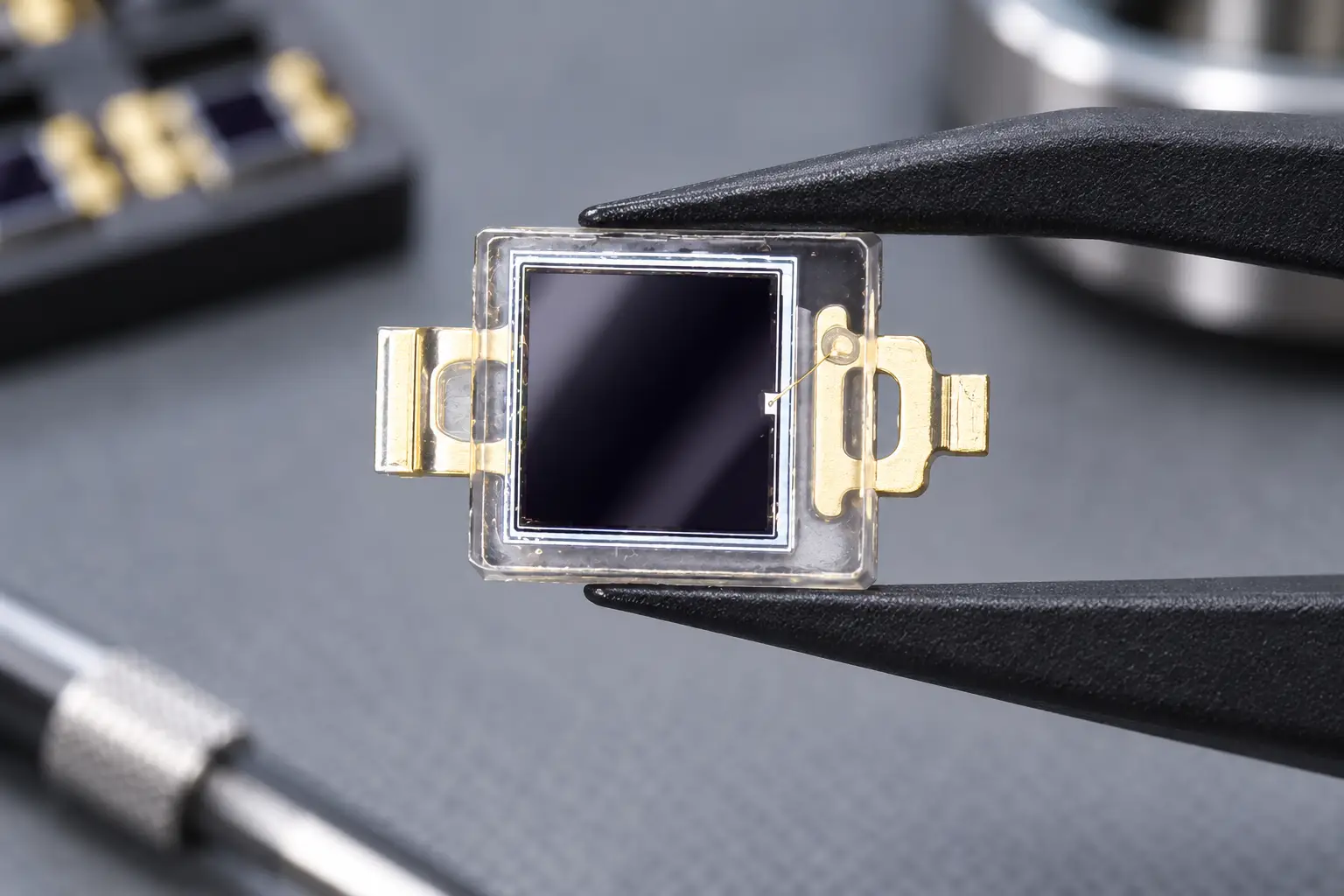
Si PIN Photodiode with NIR sensitivity enchanced (350-1100nm) PDCC100-501
Achieve uniform results with our High Consistency Si PIN Diode for medical devices. This COB photodiode provides dependable NIR sensitivity for health monitoring. Trust our High Consistency Si PIN Diode.
Why Your Choice of Motor Control Photodiode Makes All the Difference
This is where I get a bit opinionated.
Too many engineers treat the photodiode as an afterthought. “As long as it detects light, it’s fine.” Wrong.
The motor control photodiode is the heart of your optical encoder sensor. Everything flows from here.
We strongly recommend Si PIN photodiodes for most industrial and robotics applications. Here’s why:
- Excellent responsivity in the 600-900nm range (perfect for common LED wavelengths)
- Low capacitance (critical for speed)
- Good temperature stability when properly biased
- Reasonable cost compared to avalanche photodiodes
Our friends at BeePhoton have some particularly nice Si PIN photodiodes that we’ve used successfully in several demanding applications. The low dark current versions especially shine in precision work.
Real Talk: A Couple of Anonymous Cases From the Field
Last year we helped a collaborative robot manufacturer who was struggling with position repeatability. Their optical encoder sensor met all the specs on paper, but in practice the arm would drift 0.3mm after 30 minutes of continuous operation.
After digging in, we found the photodiodes had excessive junction capacitance causing sluggish response at higher temperatures. We swapped them for faster Si PIN photodiodes from BeePhoton. The drift dropped to 0.05mm. They stopped losing competitions to competitors because their robots became noticeably more precise.
Another case involved a high-speed packaging machine running 24/7. The original optical encoder sensor kept losing counts during rapid acceleration. The root cause? The photodiodes couldn’t handle the combination of high frequency and vibration. Replacing just the detector elements (not the entire encoder) solved it completely.
These aren’t cherry-picked wins. This stuff happens when you get the optical sensing requirements right.

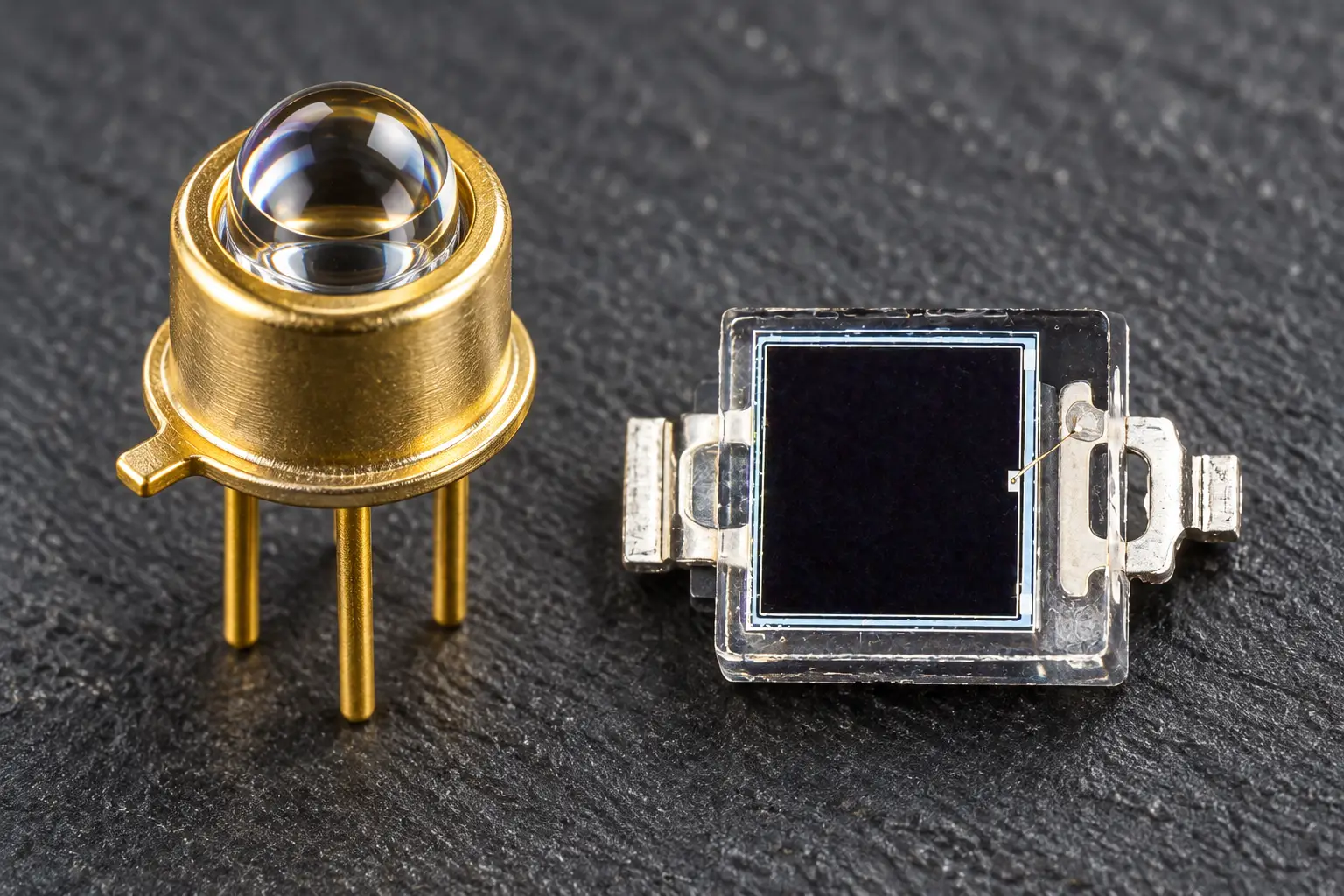
Si PIN Photodiode with low dark current (350-1060nm) PDCC07-101
Optimize your optical communication systems with the PDCC07-101, a high-performance Si PIN for Data Transmission engineered for precision and reliability. This COB-packaged photodiode features a large Φ3.0mm photosensitive area and a peak sensitivity at 800nm, delivering a fast rise time of 0.18µs and an ultra-low dark current of 2.5pA. Designed to cover a broad spectral range from 350nm to 1060nm, the PDCC07-101 is the ideal Si PIN for Data Transmission solution for ensuring stable, high-speed signal processing in demanding industrial environments.
Building a Better Optical Encoder Sensor: Practical Design Tips
Let’s get specific about what actually works:
1. Quadrature decoding with index channel
Never trust a single channel optical encoder sensor in serious motor control. You need A, B, and Z (index) channels minimum.
2. Proper signal conditioning
Those raw photodiode currents need careful amplification. We’ve had best results with transimpedance amps placed as close as physically possible to the photodiodes. Every millimeter of trace adds inductance and noise.
3. Temperature compensation
Either use active compensation in firmware or choose photodiodes with inherently low temperature coefficients. We prefer the latter when possible.
4. Mechanical design matters
The alignment between the code disk, light source, and your motor control photodiode array must stay stable. We’ve seen 0.1mm misalignment cause massive accuracy loss.
Here’s a quick requirements checklist we give to all our robotics customers:
- Rise/fall time < 50ns
- Dark current < 1nA at 25°C (preferably < 0.5nA)
- Junction capacitance < 15pF
- Operating temperature range with <10% signal variation
- SNR > 60dB under worst-case conditions
Common Mistakes That Kill Optical Encoder Sensor Performance
I see the same errors repeatedly:
- Using photodiodes with too much capacitance “because they were cheaper”
- Poor PCB layout creating ground loops between the encoder and controller
- Inadequate shielding — especially in environments with VFDs and other electrical noise
- Forgetting that interpolation algorithms need clean edges, not rounded ones
The last one is sneaky. Many high-resolution optical encoder sensors rely on interpolating between lines. If your motor control photodiode output has slow edges, your interpolation falls apart.
Future Trends Worth Watching
We’re seeing increasing demand for optical encoder sensors that can handle 30,000+ RPM while maintaining 22-bit resolution. This is pushing photodetector technology hard.
There’s also growing interest in absolute encoders that maintain position even after power loss. The optical sensing requirements here are even stricter because you need multiple tracks read simultaneously with perfect synchronization.
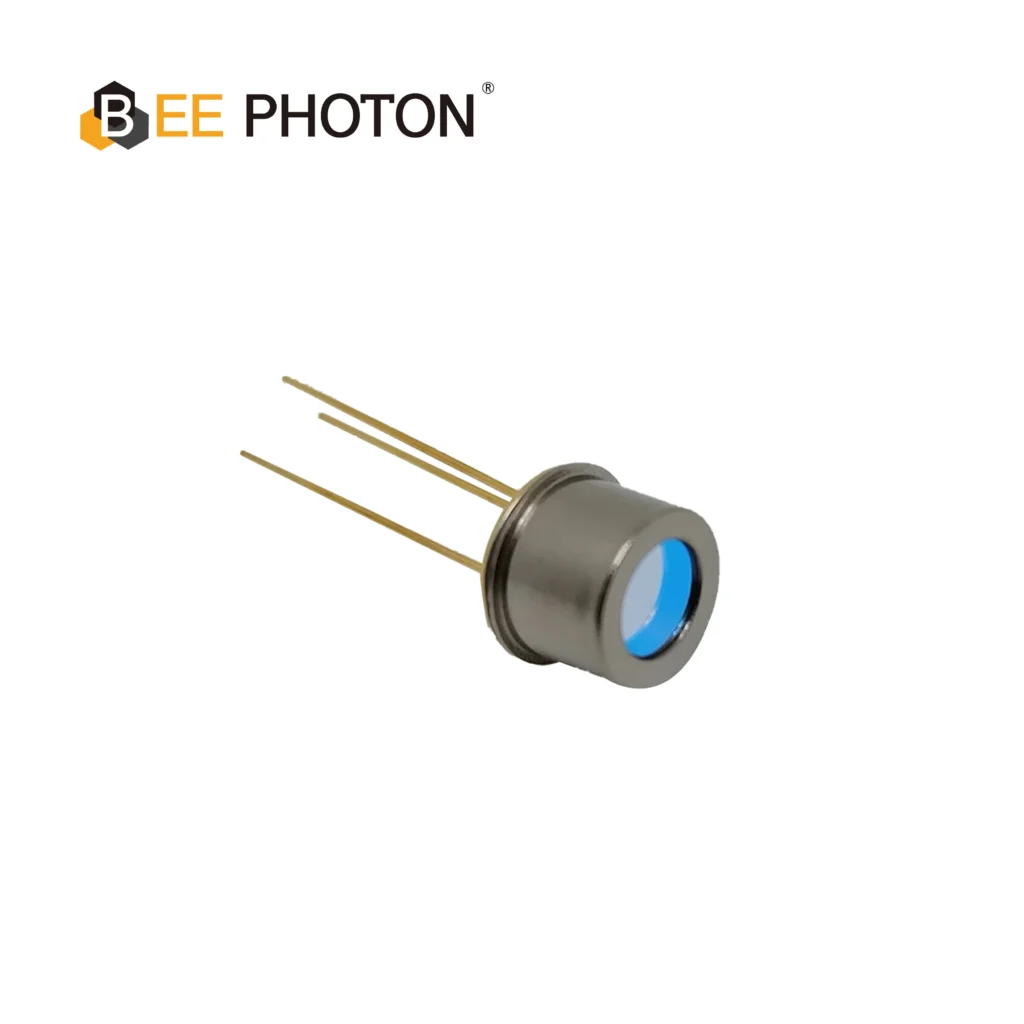
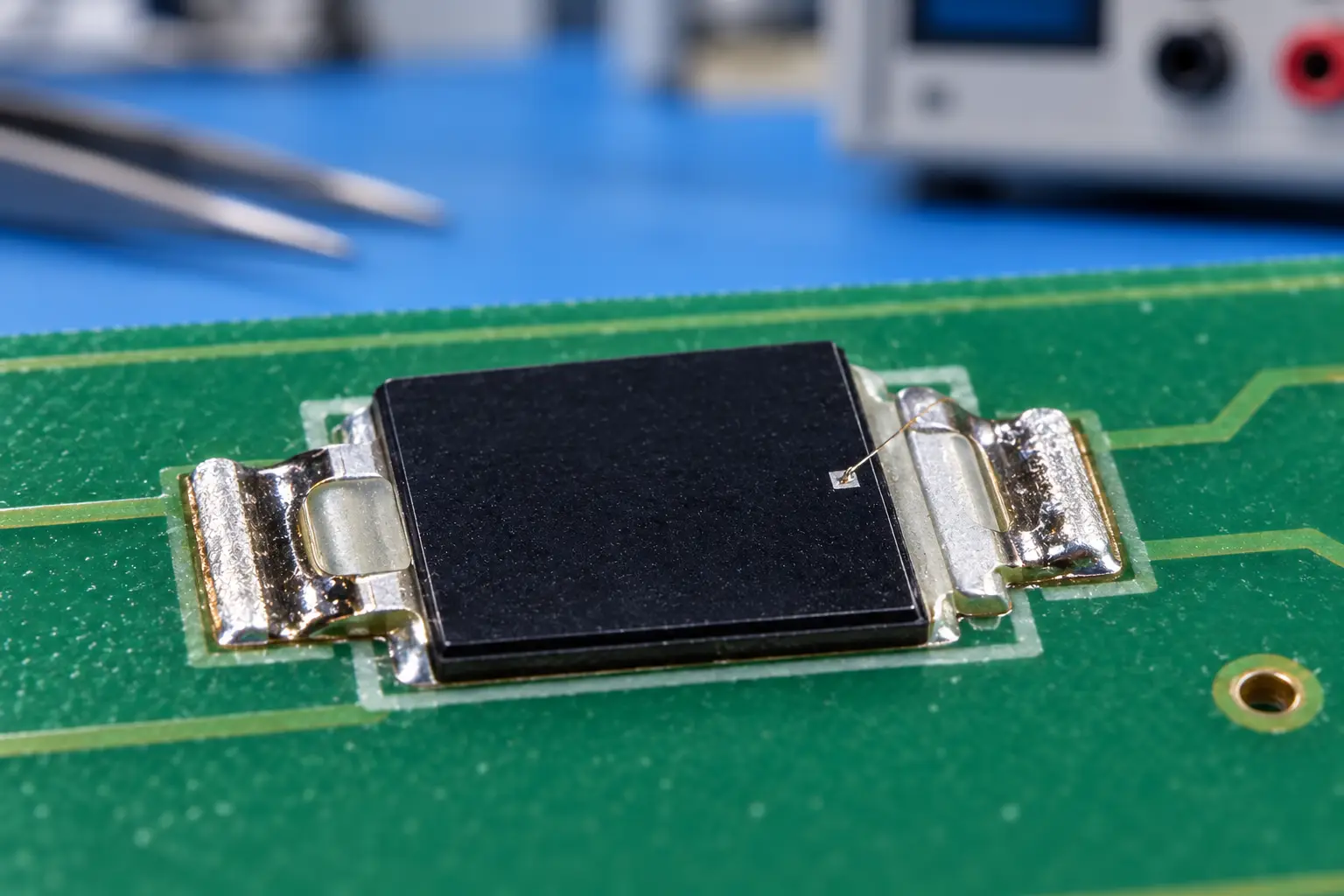
Si PIN Photodiode with low dark current (350-1060nm) PDCT07-001
Achieve high-precision results with our wide spectral range Si PIN photodiode, ideal for spectrometry and analytical instruments. Its ultra-low dark current and high linearity ensure accurate light detection. This photodiode offers a wide spectral response for diverse applications.
Frequently Asked Questions
What is the most important requirement when choosing an optical encoder sensor for servo motor control?
Speed and signal cleanliness beat raw resolution in most real applications. A slightly lower resolution encoder with fast, low-noise photodiodes will outperform a high-resolution one with sluggish response every single time.
Can I use the same photodiode for both incremental and absolute optical encoder sensors?
Usually not. Absolute encoders often need arrays of photodiodes reading multiple tracks at once. The capacitance and matching requirements are different. This is one area where talking to specialists like the team at BeePhoton can save you months of headaches.
How do I know if my current optical encoder sensor is limiting system performance?
Look at your following error during high-speed moves and your position noise when stationary. If you see unexpected jitter or the servo loop needs crazy-high gains to maintain position, your optical encoder sensor (and particularly the motor control photodiode) is probably the culprit.
Look, designing high-performance servo systems is hard enough without fighting your feedback device. Getting the optical encoder sensor requirements right from the beginning saves enormous amounts of debugging time later.
If you’re working on a new robotics project or upgrading existing industrial motor controls, we’d love to talk. Whether you need advice on photodetector selection or are looking for high-performance Si PIN photodiodes that actually deliver in real industrial environments, the team at BeePhoton knows this stuff cold.
Drop us a line at our contact page or shoot an email to info@photo-detector.com. Tell us what you’re building. We’ve helped enough teams to usually spot the gotchas before they become expensive mistakes.
The difference between a servo system that “works” and one that dominates the competition often comes down to the quality of the optical sensing. Don’t leave that part to chance.