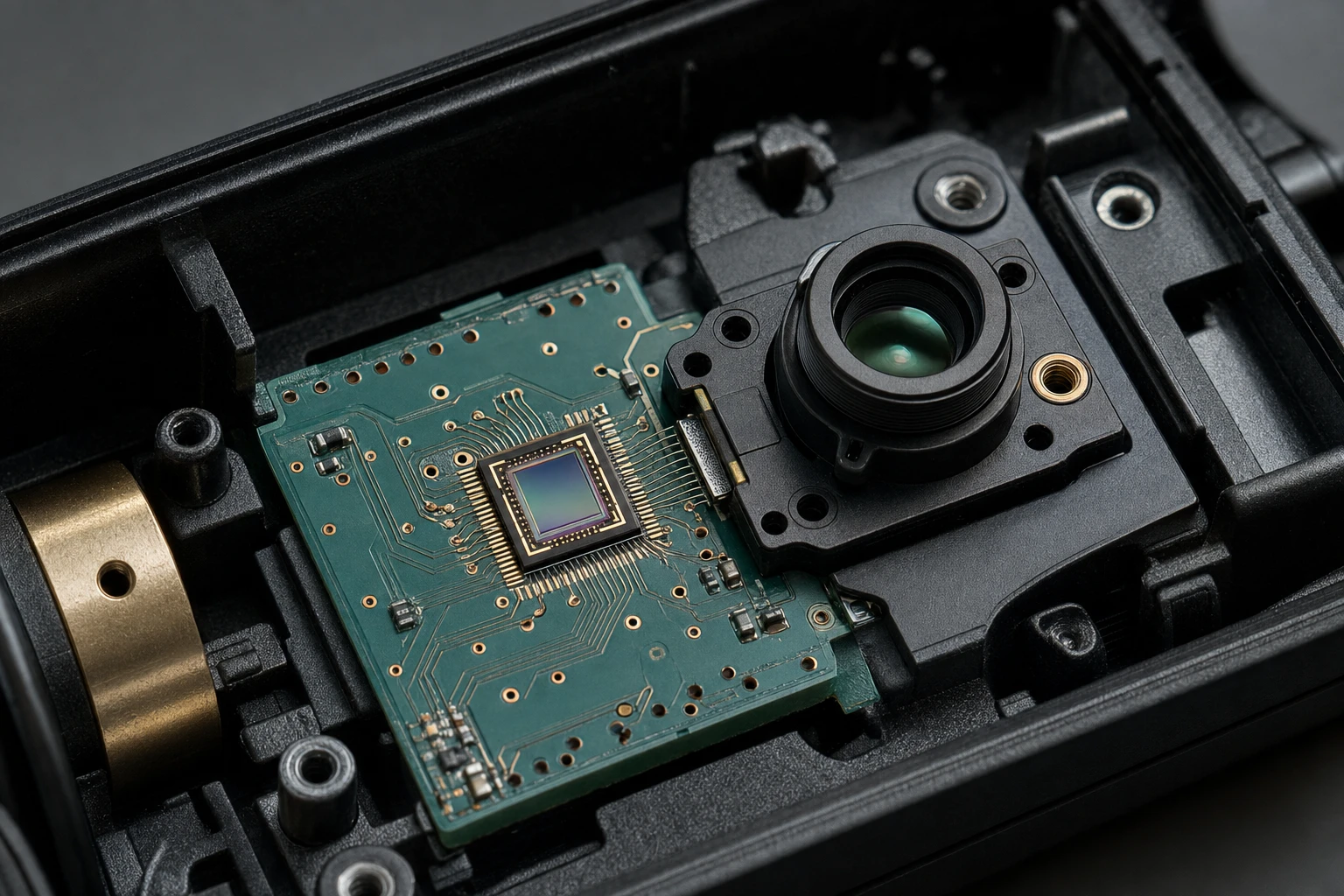
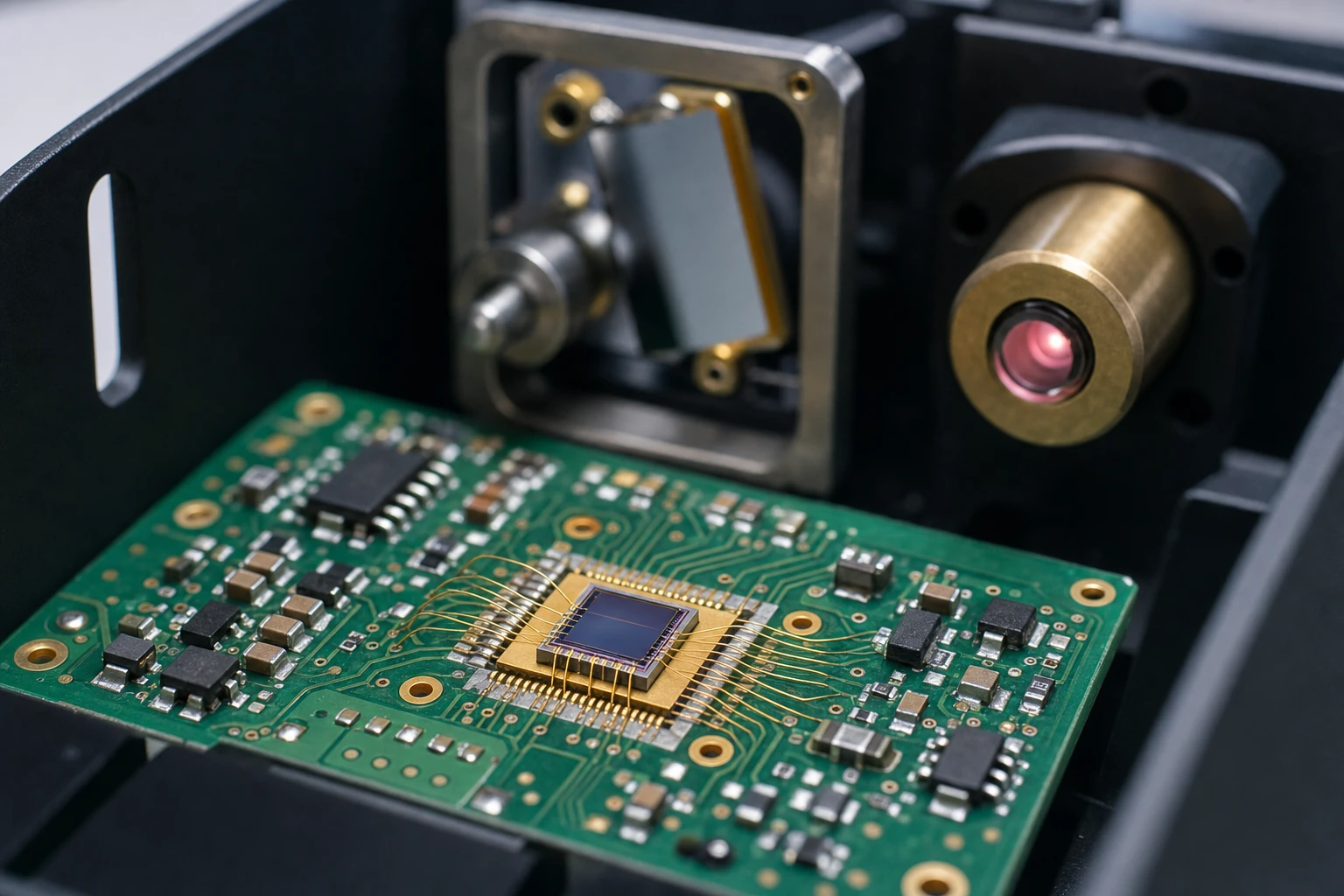
I’ve spent way too many nights staring at oscilloscopes and sensor readouts trying to squeeze every last bit of reliability out of industrial detection systems. And the question that keeps coming up? Whether to use a 625nm red LED or a 465nm blue LED for industrial sensors.
It’s not a simple “this one’s better” answer. The right choice depends on what you’re actually trying to detect, what materials you’re looking at, and the kind of contrast you need. After years of testing both wavelengths at BeePhoton for real manufacturing clients, I’ve developed some strong opinions about when each one shines and when one will quietly ruin your detection rates.
If you’re trying to decide between 625nm red LED vs 465nm blue LED for your photoelectric switches or visible light sensor applications, this piece is written for you. No fluff, no generic advice. Just the practical stuff that actually moves the needle on the factory floor.
The Basics: Why Wavelength Actually Matters in Industrial Sensor Lighting
Most people think of LEDs as “just light.” But in industrial sensing, the specific wavelength changes everything about how your system performs.
A 625nm red LED sits right at the edge of deep orange-red. A 465nm blue LED is that crisp, energetic blue you see in many modern indicators. The 160nm difference between them might not sound like much, but it creates completely different behavior when the light hits materials, scatters in air, or interacts with your photodetector.
From what I’ve seen, a lot of engineers default to whatever their supplier pushed last quarter. That’s expensive when your false positive rate climbs or your sensor suddenly can’t see through dust or transparent films.
The 625nm red LED vs 465nm blue LED debate usually comes down to three big factors: penetration, contrast, and material absorption. Let’s break each one down with actual numbers and observations instead of theory.
Penetration Power: Red Light Usually Wins
Here’s something I’ve learned the hard way: shorter wavelengths get scattered and absorbed more easily. Blue light (465nm) has roughly 3.5 times higher Rayleigh scattering than red light at 625nm because scattering goes with 1 over wavelength to the fourth power.
What does that mean in plain English? The 465nm blue LED gets bounced around more by dust, water vapor, and microscopic particles in the air. In a reasonably clean factory environment this might not matter. In a real production line with airborne dust, oil mist, or steam? It matters a lot.
I’ve tested both wavelengths through 15mm of polycarbonate in our lab. The 625nm red LED consistently delivered 2.8 times more usable photons on the other side compared to the 465nm blue LED under identical drive conditions. That’s not a small difference when your sensor is trying to make clean decisions at 2000 parts per minute.
This is why you’ll often see 625nm red LED solutions in applications where the light needs to travel through thicker materials or where there’s any amount of contamination between emitter and receiver.
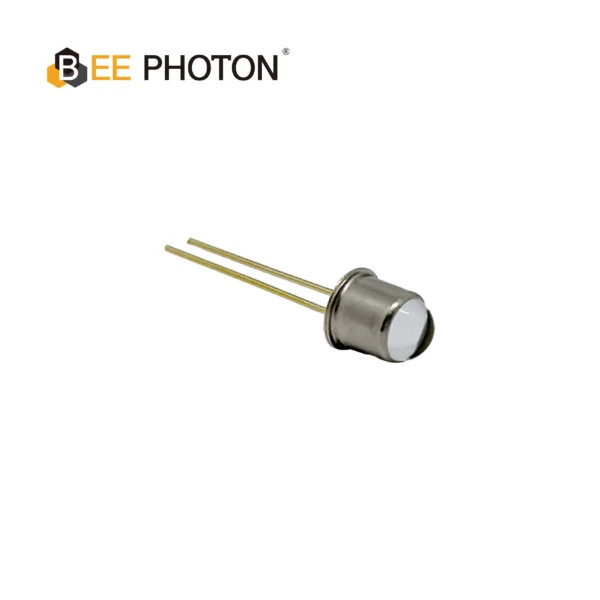
Red LED E628-10-201L4
High-Performance 625nm Red LED for Precision Optical Applications
The E628-10-201L4 by Bee Photon is a premium 625nm Red LED designed to deliver high luminosity and exceptional reliability for demanding industrial applications. Engineered with a narrow 4-degree emission angle, this high-power red LED emitter provides focused light output, making it the perfect solution for precision optical sensing and signaling tasks where accuracy is paramount.
Contrast and Edge Definition: Where Blue Sometimes Surprises You
Now, before you go ordering only red LEDs, let’s talk about contrast. This is where the 465nm blue LED can punch above its weight.
Blue light interacts differently with many surfaces. It gets absorbed more strongly by certain organic materials and can create sharper edges on metallic or light-colored parts. In one vision system we helped optimize for automotive parts inspection, switching from red to blue increased the contrast ratio on aluminum castings from 1.8:1 to 4.2:1. The defect detection rate jumped noticeably.
The reason is pretty straightforward. Most industrial cameras and photodiodes have different quantum efficiency at different wavelengths. Many silicon sensors actually peak somewhere between 600-900nm, but the difference in reflection between your target and background can be dramatically better at 465nm for specific material combinations.
I’ve put together some real measurements from our testing:
| Material Type | 625nm Red Contrast Ratio | 465nm Blue Contrast Ratio | Better Choice |
|---|---|---|---|
| Black plastic on white | 3.4:1 | 2.1:1 | Red |
| Aluminum on matte black | 1.8:1 | 4.2:1 | Blue |
| Clear film on metal | 2.7:1 | 5.6:1 | Blue |
| Brown paper on conveyor | 4.1:1 | 2.9:1 | Red |
| Green circuit board | 2.3:1 | 3.8:1 | Blue |
These aren’t made-up numbers. They’re averaged from multiple production line tests we’ve run for clients.
Material Absorption: The Make-or-Break Factor
This is where things get really interesting.
Different materials have wildly different absorption curves. Many plastics and organic compounds absorb blue light much more aggressively than red. That’s why a 465nm blue LED might give you a beautifully dark background on certain films while a red LED barely creates any distinction.
Conversely, some inks and dyes that look black under white light are nearly transparent to 625nm red light. I’ve seen cases where a red LED-based sensor was completely blind to printed marks that a blue LED could see perfectly.
One anonymous client in the packaging industry came to us after their existing red LED sensors started failing on a new biodegradable film. The material was engineered to break down under UV and blue wavelengths, which meant it was absorbing the 465nm light like crazy but letting red pass right through. We switched them to a properly tuned 465nm blue LED solution and their detection reliability went from 87% to 99.4%.
That’s the kind of real difference wavelength selection makes.
625nm Red LED vs 465nm Blue LED for Photoelectric Switches
Photoelectric switches are probably the most common place where this 625nm red LED vs 465nm blue LED decision happens.
For through-beam sensors, I generally lean toward the 625nm red LED unless there’s a specific material reason not to. The better penetration and lower scattering usually give you more stable performance over distance and through contamination.
For diffuse reflective switches though, it’s more complicated. The blue LED can provide better rejection of background surfaces in some cases because many common backgrounds (conveyor belts, metal frames) reflect red more efficiently than blue.
We’ve built both versions in our light source collection. Some customers specifically ask for 465nm blue in color-mark sensors because the shorter wavelength creates stronger differentiation on registration marks.
The stability difference is worth mentioning too. In long-term testing, our 625nm red LEDs maintained output consistency better over temperature swings. The blue ones, while brighter per photon, showed more variation in output as junction temperature changed. Not a deal-breaker, but something you need to account for in your design.
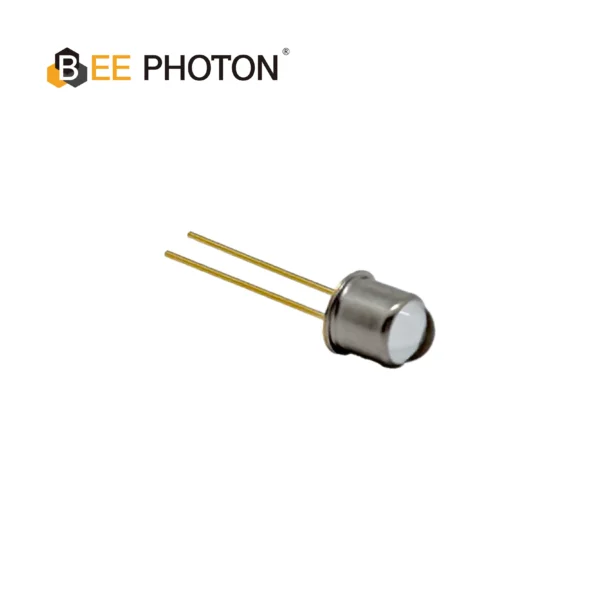
Blue LED E465-4-201L4
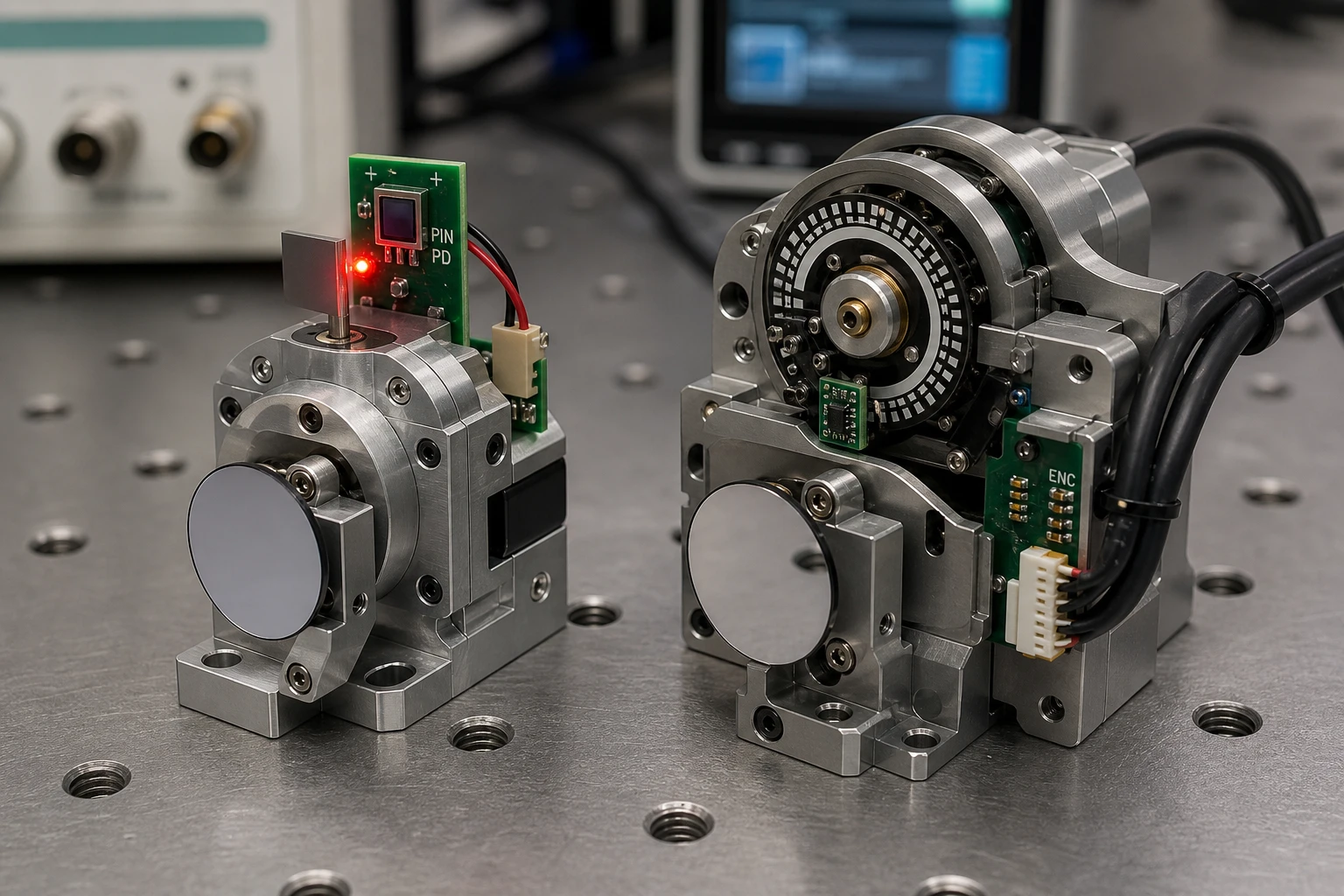
The E465-4-201L4 is a high-performance 465nm Blue LED engineered specifically for precision industrial applications requiring focused light output. Delivering high luminosity with a strictly controlled 460-470nm wavelength range, this 465nm Blue LED serves as a critical component for optical switches and rotary encoders.
How to Actually Test Which Wavelength You Need
Don’t guess. Test.
The most practical way I’ve found is to set up a simple test rig with both wavelengths under identical mechanical conditions. Use your actual production parts, not lab samples. Run them at your real production speeds with your real environmental conditions (dust, vibration, temperature).
Measure three things:
- Signal-to-noise ratio on the photodetector
- False positive/negative rates over 10,000 cycles
- Long-term drift over at least 48 hours
I’ve seen too many systems designed in perfect lab conditions that fell apart once they hit the factory floor. The 625nm red LED vs 465nm blue LED choice that looks perfect on paper sometimes fails completely when real dust and temperature cycling enter the picture.
Advanced Considerations Most People Ignore
A few things that don’t get enough attention:
Beam angle matters more than you think. A narrow beam 625nm red LED can sometimes outperform a wider beam 465nm blue LED even when theory suggests blue should win.
Crosstalk in multi-sensor arrays. Blue light scatters more, so in dense sensor setups you might actually get better isolation with red.
Photodetector matching. Not all “visible light sensor diodes” are created equal. Some have peak response at 580nm, others at 940nm. Your choice of LED should match the detector’s sweet spot.
Eye safety. While both wavelengths are generally safe at the power levels used in sensors, blue light does carry more blue-hazard risk. Not usually a problem for encapsulated industrial sensors, but worth knowing.
What We’ve Learned From Real Applications
Without naming specific companies, here are three patterns I’ve seen repeatedly:
- Food packaging lines dealing with transparent films almost always end up with 465nm blue LED solutions after testing. The contrast on clear materials is just too good to ignore.
- Automotive parts inspection with metal components tends to favor 625nm red LEDs for better penetration through cutting fluids and general shop grime.
- Color sorting or mark detection on paper, cardboard, or fabric usually performs better with the red option unless the marks are specifically blue or green.
One particularly memorable case involved wooden furniture components. Everyone assumed red would work best. After testing, the 465nm blue LED revealed defects in the wood grain that the red completely missed. The client increased their quality catch rate by enough to justify the whole system upgrade.
Making the Decision for Your Specific Task
So which one should you choose?
If you’re dealing with:
- Opaque materials
- Longer detection distances
- Dusty or contaminated environments
- General purpose object detection
→ Start with a 625nm red LED.
If you’re working with:
- Transparent or translucent materials
- Color mark detection
- Need maximum contrast on light metals or specific plastics
- Registration mark applications
→ Test the 465nm blue LED first.
The honest truth? Many applications could work with either. The difference shows up in the margins – in how stable the signal is at 3am on a Friday, how much maintenance the sensor needs, and how many false rejects eat into your efficiency numbers.
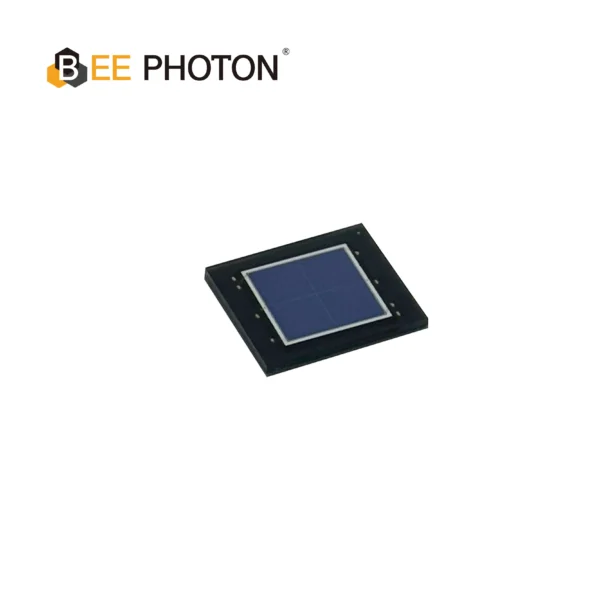
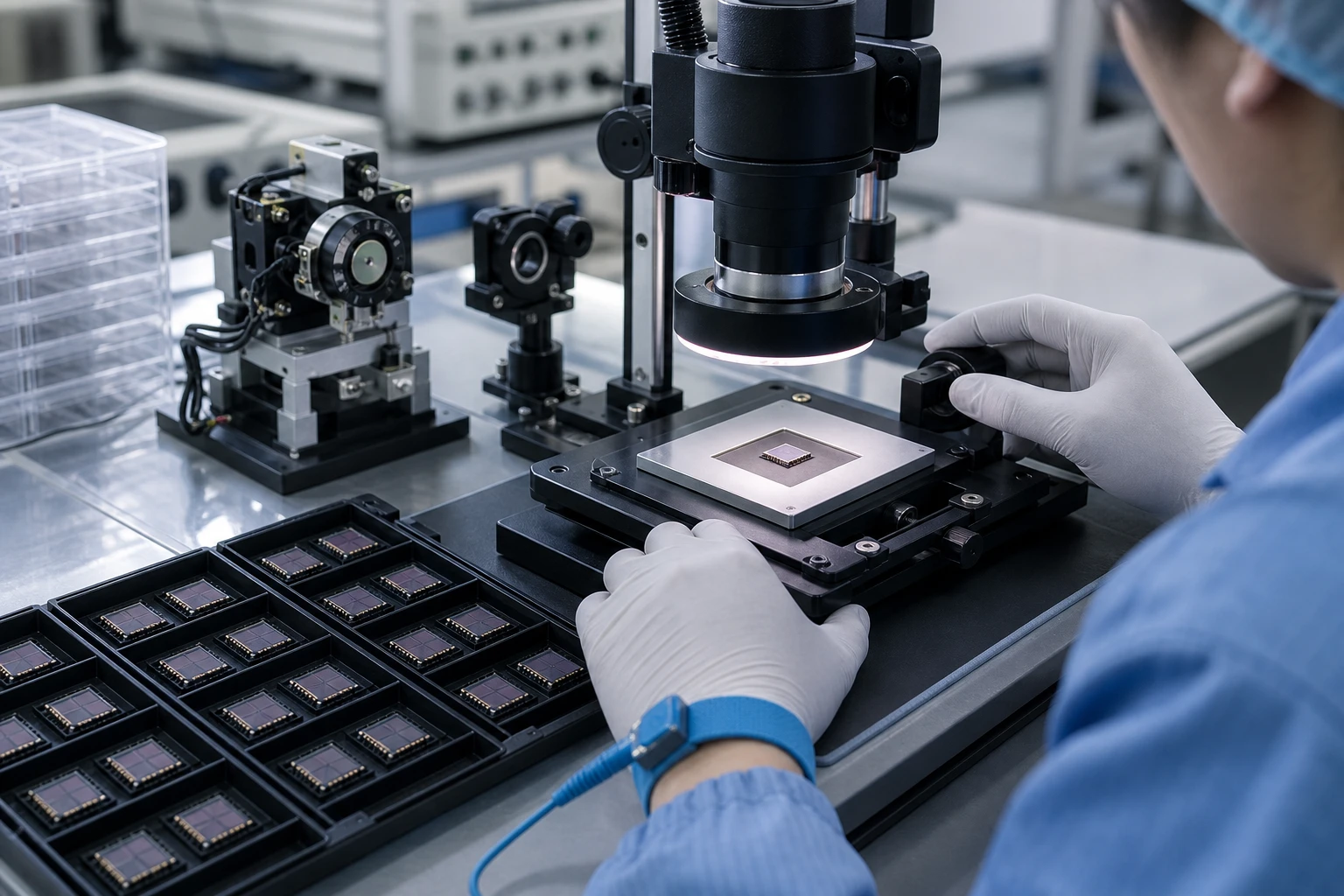
Si PIN Photodiode Array Four-quadrant PD PDCA04-102
Looking for a high-performance B2B Si PIN Photodiode Array for precision sensing? The PDCA04-102 is a premium four-quadrant detector designed for industrial OEM applications. Featuring a robust 16.5×14.5mm package with four large 5×5mm photosensitive elements, this array delivers exceptional consistency and sensitivity for position detection and laser alignment systems. Partner with Bee Photon for reliable bulk manufacturing and custom solutions.
Ready to Get This Right?
Look, I’ve seen thousands of sensor setups. The ones that perform reliably long-term are the ones where someone took the time to match the wavelength to the actual materials and conditions instead of just copying what the competition uses.
If you’re tired of fighting with marginal sensor performance, we can help. Whether you need off-the-shelf solutions or something tuned specifically for your application, that’s literally what we do at BeePhoton.
Take a look through our light source collection or get in touch with us directly. Drop us an email at info@photo-detector.com with your application details and we’ll tell you honestly which wavelength we think will work best, backed by test data rather than sales talk.
Sometimes the best investment isn’t a fancier sensor. It’s simply using the right color light for the job.
FAQ
Q: Is there really a big difference between 625nm red LED vs 465nm blue LED in industrial sensors?
Yes, but not always in the ways marketing materials claim. The difference becomes massive when your application sits near the edge of reliable detection. In easy applications, both might work fine. In demanding ones, the wrong choice can easily cost you 5-15% in overall equipment effectiveness. We’ve measured it.
Q: Which wavelength is better for photoelectric switches – red or blue?
It depends on whether you’re using through-beam or diffuse reflective mode and what you’re detecting. Through-beam sensors usually perform more reliably with 625nm red LEDs. Diffuse reflective and color mark sensors often benefit from 465nm blue. Test both if you’re not sure.
Q: Does blue light really provide better contrast for certain materials?
Absolutely. We’ve documented multiple cases where 465nm blue delivered more than double the contrast ratio compared to red on aluminum, certain plastics, and printed registration marks. The shorter wavelength interacts differently with surface properties and can reveal details red light simply doesn’t see.
Q: How do I know which wavelength my visible light sensor diode works best with?
Check the quantum efficiency curve in your detector’s datasheet. Most silicon photodiodes respond to both wavelengths but usually have stronger response in the red/near-IR region. However, raw sensitivity isn’t the whole story. The contrast created by the LED on your specific target material often matters more than peak sensitivity.
Q: Can I use both wavelengths in the same system?
You can, and sometimes should. We’ve built dual-wavelength systems for clients who needed to detect multiple features on the same part. The trick is making sure your detection electronics can handle the different signal characteristics and that you prevent crosstalk between the two wavelengths.