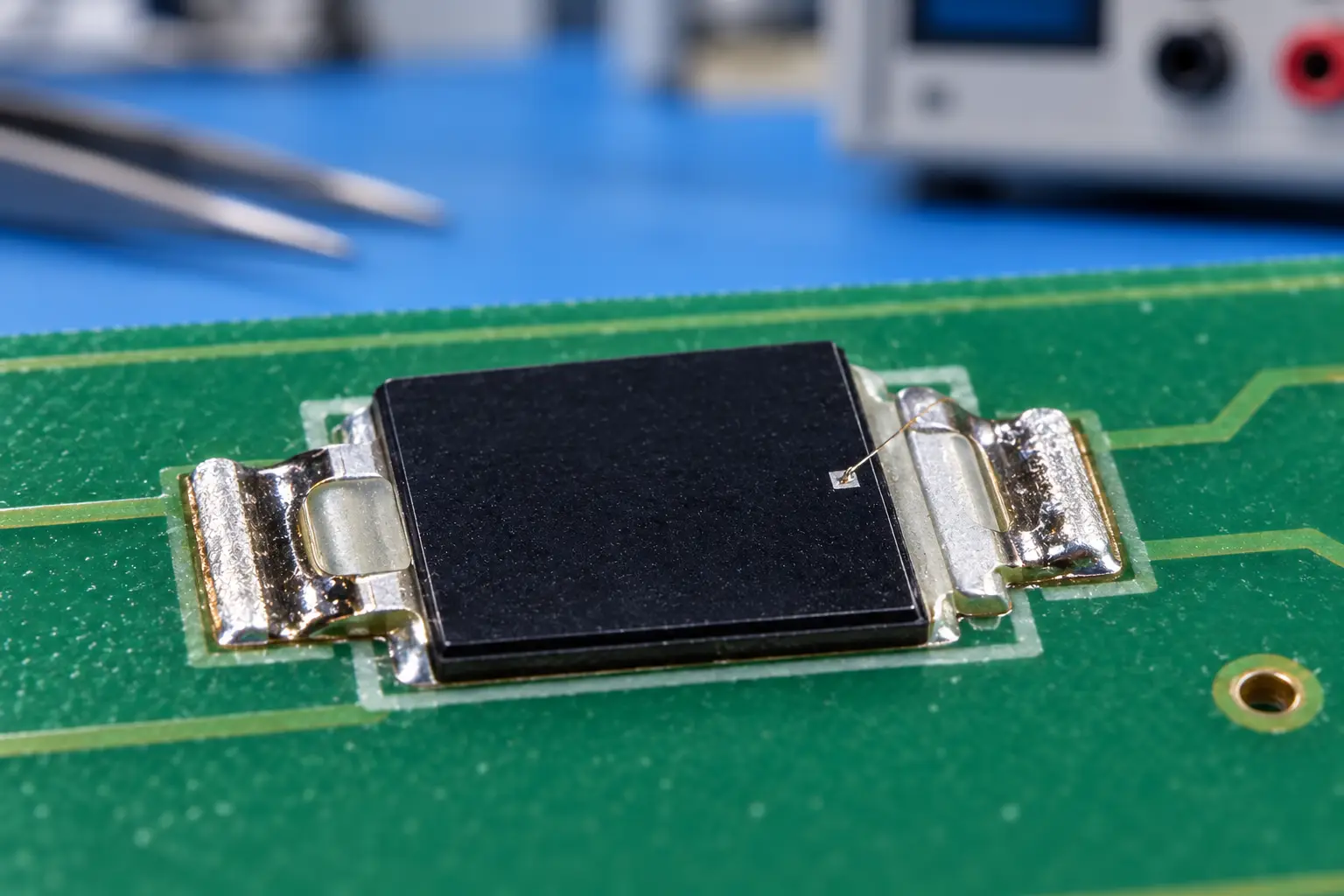
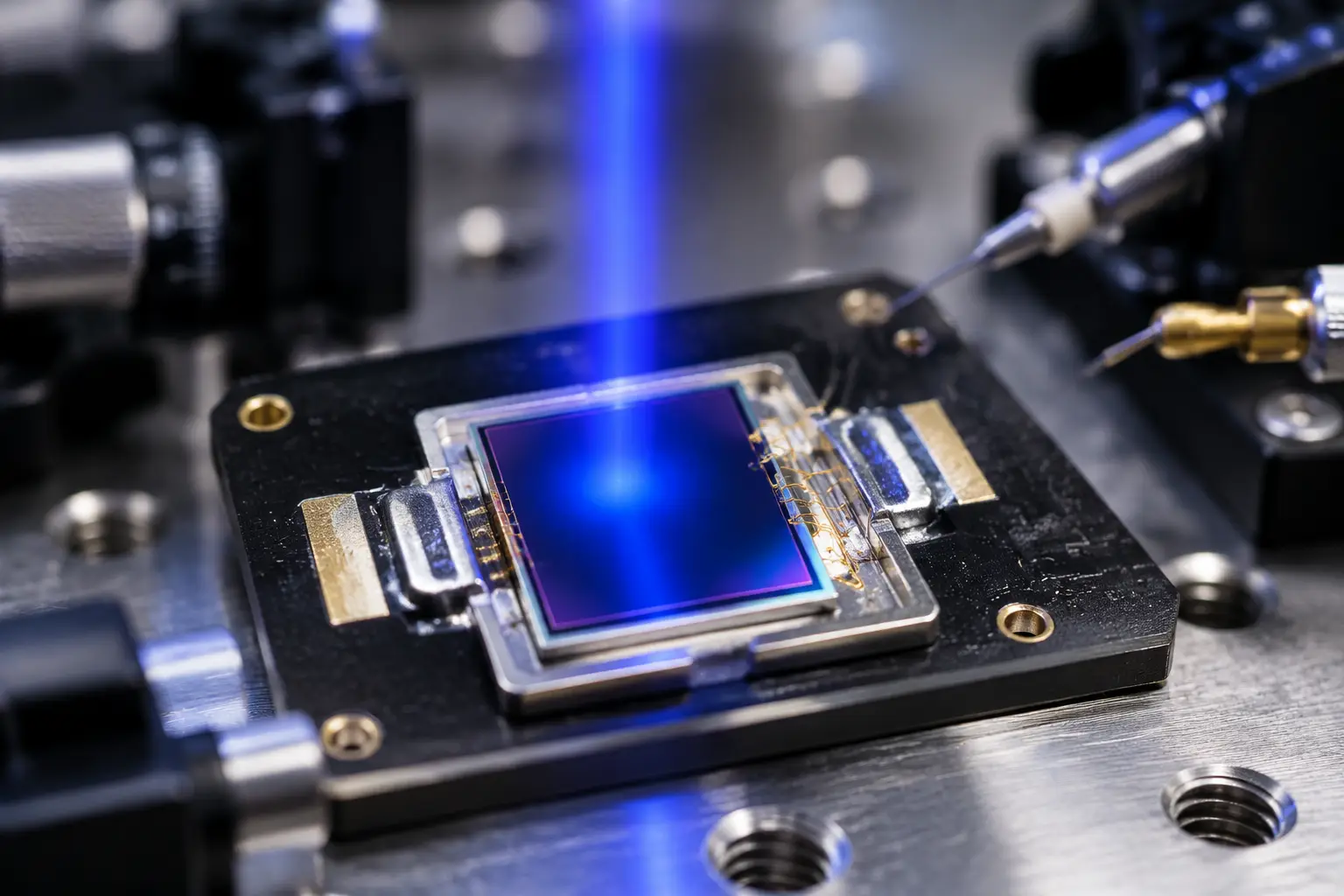
Every single year, the same slide deck comes down from corporate. The goal: cut Bill of Materials (BOM) costs by 5% to 10%. If you are a procurement director or a B2B hardware sourcing engineer, you probably dread this meeting. Slashing costs on easy stuff like resistors, connectors, or plastic enclosures is one thing. But doing it on high-performance optical sensors is a whole different ball game. If you buy a cheap, subpar sensor, your scanner’s precision drifts, your clients get mad, and your entire factory assembly line grinds to a halt.
So, how do you find a cost effective silicon photodiode that actually stands up to real industrial abuse? This is the million-dollar question. You can easily get a cheap part from an untrustworthy factory, but you cannot afford field failures. Sourcing a cost effective silicon photodiode requires balancing technical specs with cost efficiency. Ultimately, finding a high-quality cost effective silicon photodiode means looking at how the chip is processed and packaged rather than just buying from the biggest brand names in the catalog. To be totally blunt, many tier-1 brands overcharge you for their logo, not the silicon itself. By learning how to spot a high-quality alternative, you can hit your cost targets without losing sleep over quality.
Why Big Brand Silicon is Mostly Marketing Hype
Let’s be honest for a second. Why do we keep buying from major American or European brand names that charge three to five times the actual manufacturing cost? Mostly, it is peace of mind. We tell ourselves that we pay for reliability, but the truth is a bit different. A lot of that premium goes straight into their massive marketing campaigns and bloated distributor networks. When you start searching for a cost effective silicon photodiode, you realize that silicon is silicon. The basic physics do not change based on the logo stamped on the box.
If you can find a factory-direct alternative, you can bypass the distributor markup completely. But wait, how do you ensure that this cheaper chip won’t die after six months? You look at wafer-level testing and cleanroom conditions. A truly cost effective silicon photodiode is built in an ISO-certified cleanroom where quality is controlled from the raw wafer stage to the final dicing. When you compare a big-brand chip with a high-performance cost effective silicon photodiode from an agile manufacturer, the technical parameters are often identical. By sourcing a cost effective silicon photodiode from a direct factory, you cut out the middlemen. This makes a cost effective silicon photodiode the smartest way to hit those 10% BOM reduction targets without throwing your product’s reliability out the window. Plus, working directly with a manufacturer gives you direct access to the engineers who designed the chip, which is way better than trying to get support from a massive distributor who doesn’t know a photodiode from a phototransistor.
The Physics of Photodiodes: Real Specs, No Fluff
Let’s break down the technical side without making your eyes glaze over. To know if a cost effective silicon photodiode will work in your layout, you need to understand three core parameters: responsivity, dark current, and capacitance.
Responsivity (How Much Signal You Get)
This tells you how much electrical current the chip generates for a given amount of light.
- Formula:
Responsivity (R) = Ip / P
Here, Ip is the photocurrent in Amps, and P is the incident optical power in Watts. If your target wavelength is 940nm, you need a chip optimized for that specific band. If you choose a generic chip, you lose sensitivity, and your system has to work harder. We often see engineers complain about poor responsivty when they didn’t match the light source wavelength to the peak sensitivity of the diode.
Dark Current (The Silent Noise Enemy)
This is the background noise of your detector—the current that flows even when there is zero light hitting the sensor.
- Formula:
Id = Is * [exp(qV / (k * T)) - 1]
In this formula, Id is the dark current, Is is the saturation current, q is the electron charge, V is the reverse bias voltage, k is Boltzmann’s constant, and T is the absolute temperature. If you run your system hot, dark current climbs fast. A well-designed, cost effective silicon photodiode must maintain ultra-low dark current even at higher operating temperatures. If the dark current climbs too high, your signal-to-noise ratio drops, and your system starts suffering from position jitter.
Junction Capacitance (The Speed Limit)
If you want a fast response time, you need low capacitance.
- Formula:
Cj = (epsilon * A) / d
Where epsilon is the permittivity of silicon, A is the active area, and d is the depletion width. In many high-speed systems, finding a cost effective silicon photodiode with low capacitance is tricky because smaller chips have less active area. However, choosing a specialized cost effective silicon photodiode allows you to get the perfect balance of size and speed. When you optimize the doping profile, a cost effective silicon photodiode can deliver fast rise times at a fraction of the cost.

Si PIN photodiodes for Galvo PDC-C2929
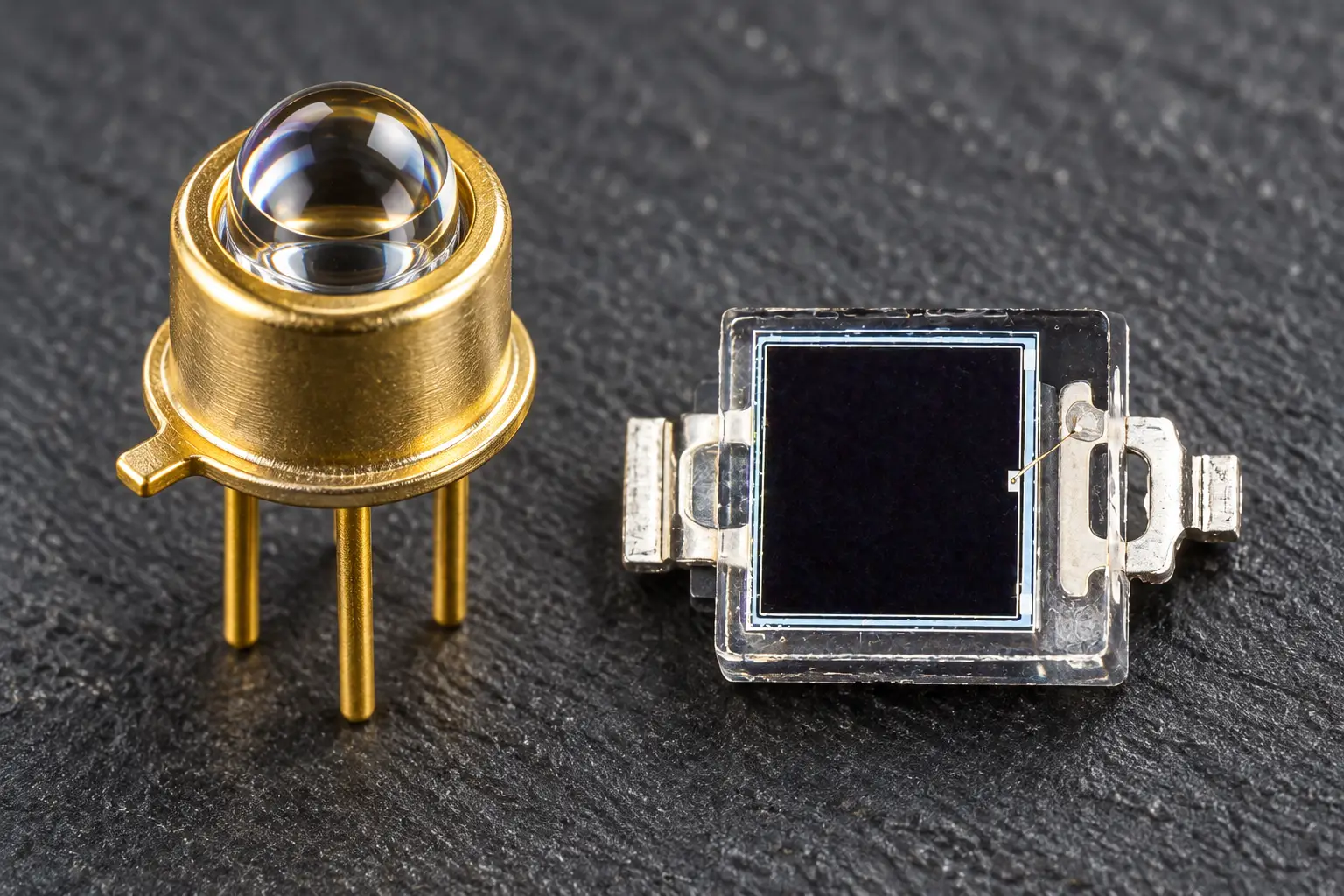
The PDC-C2929 is a budget-friendly 920nm silicon PIN photodiode chip. This 920nm silicon PIN photodiode offers stable, cost-effective scanner position tracking.
Industrial Applications and Sourcing Channels
Where do these chips actually go? In B2B industrial environments, we are mostly looking at galvanometer (galvo) laser scanners, optical encoders, and automated manufacturing lines. These machines run 24/7 in hot, dusty workshops. You cannot just use any cheap sensor. You need something that won’t drift when the machine heats up to 60 degrees C.
This is where a budget active area silicon diode comes into play. If your application only needs a small active window, why pay for a massive slab of silicon? By specifying a budget active area silicon diode, you keep material costs low from the start.
But how do you buy these at a commercial scale? If you are a procurement manager, you are probably looking for a cheap photodiode chip wholesale supplier who can guarantee consistent batches. When dealing with high-volume production, you might buy a commercial scale photodetector die directly on a wafer tape. This allows your automated wire-bonding machines to pick and place the dies directly onto your custom PCB.
To succeed with this, you need a high-quality, cost effective silicon photodiode vendor who understands raw die shipping. If they package the dies poorly, moisture will destroy them before they even reach your assembly line. Sourcing a cost effective silicon photodiode in raw die form requires a partner who handles wafer dicing with extreme precision. We’ve seen companies try to save money by purchasing a raw cost effective silicon photodiode from unverified brokers, only to find that half the dies had micro-cracks on the edges. Those cracks expand under thermal stress, causing total failure. Therefore, buying a cost effective silicon photodiode directly from a custom manufacturer is much safer than dealing with shady brokers. A reliable cost effective silicon photodiode will have clean, polished dicing edges that prevent mechanical stress propagation. Plus, when you buy a cost effective silicon photodiode in bulk, you get better technical support than any catalog distributor could ever offer.
Evaluating Direct Product Alternatives
Let’s get into the concrete options. Instead of buying high-priced Japanese or European brands, many B2B buyers are looking at custom alternatives. For example, BeePhoton designs and manufactures chips specifically for high-durability industrial systems. They have an in-house cleanroom factory, meaning they control the entire supply chain from wafer design to testing. This allows them to supply a top-tier chip at a fraction of the market rate.
Let’s look at three specific products that can act as a cost effective silicon photodiode replacement in your current designs:
1. The 940nm PIN Photodiode Chip (PDC-C2928-NIR-B)
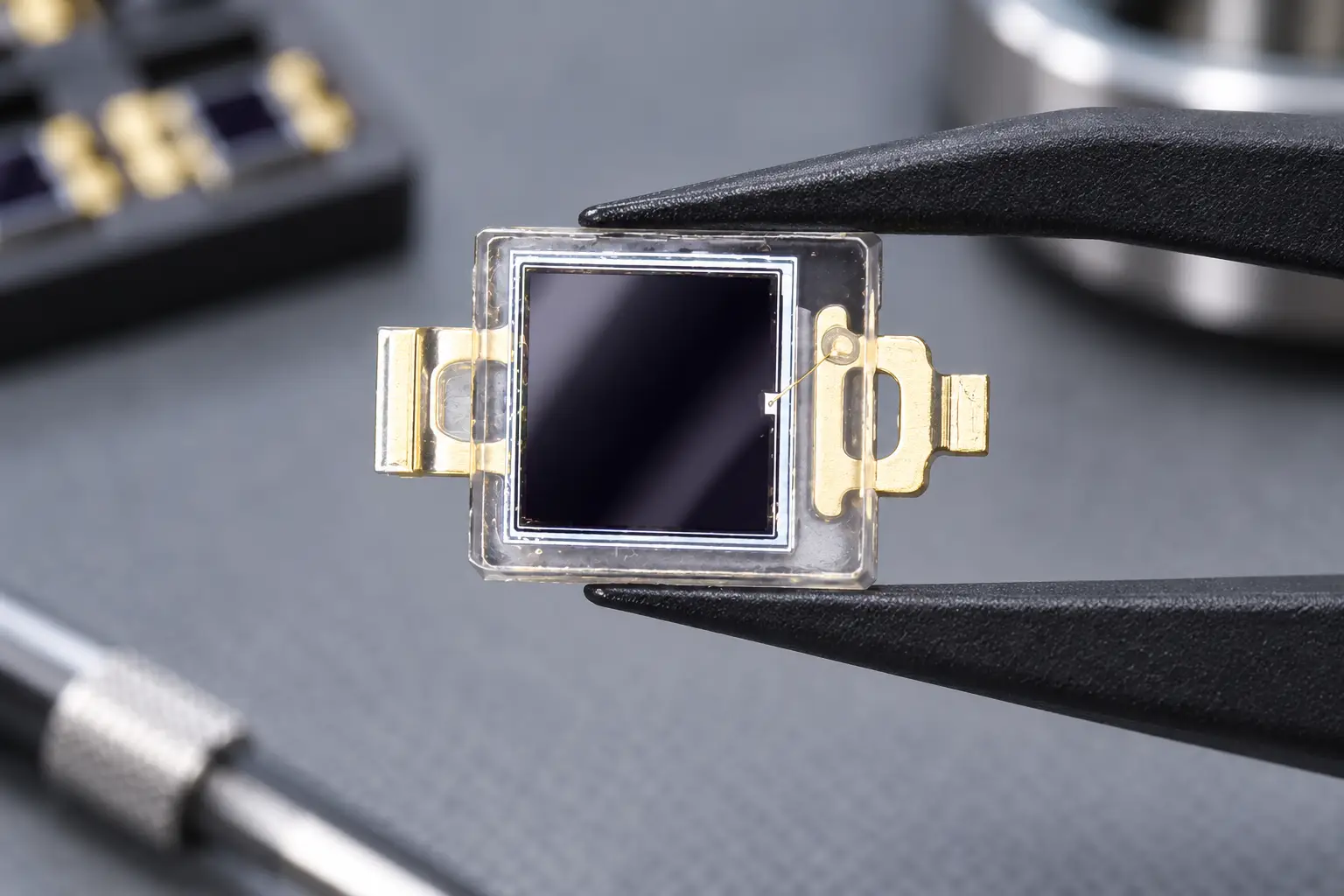
If your galvo scanner operates with infrared laser feedback, you should look at the PDC-C2928-NIR-B PIN photodiode chip. This chip features a square active area of 2.9mm x 2.8mm and is specifically optimized for 940nm systems. It has an ultra-low dark current of just 5 pA at 10mV bias, which is incredible for keeping your signals clean. When seeking a cost effective silicon photodiode that doesn’t compromise on noise floor, this is the gold standard. It is a highly robust cost effective silicon photodiode that handles temperatures up to 100 degrees C without breaking a sweat. If you need to upgrade a high-end laser marking scanner, this chip is designed to slot right in.
2. The 920nm Silicon PIN Photodiode (PDC-C2929)
For systems optimized around 920nm wavelengths, the PDC-C2929 silicon PIN photodiode is an amazing fit. It features a slightly larger active area of 2.9mm x 2.9mm but keeps the junction capacitance around 70 pF. This makes it a highly cost effective silicon photodiode alternative for cost-sensitive galvo markers. Why pay premium prices for standard catalog parts when this specialized, cost effective silicon photodiode offers identical stability? It is a perfect example of a high-performance, cost effective silicon photodiode built for high-speed position tracking.
3. The Segmented PIN Photodiode Chip (PDC-2C3432-NIR-B)
For closed-loop galvos that require precise differential position tracking, you cannot use a single active area chip. You need a segmented sensor. The PDC-2C3432-NIR-B segmented PIN photodiode chip features a 2-segment fan shape design. This dual-channel segmented PIN photodiode chip gives you precise angular feedback with minimal cross-talk. Finding a cost effective silicon photodiode with a segmented design is usually hard because major brands charge a fortune for multi-channel silicon. This segmented cost effective silicon photodiode solves that problem, allowing you to achieve sub-micron accuracy without blowing your budget.
By matching these parts to your exact system requirements, you can easily find a cost effective silicon photodiode that drops right into your existing design.

Si PIN photodiodes for Galvo PDC-2C3432-NIR-B
The PDC-2C3432-NIR-B is a specialized segmented PIN photodiode chip engineered for precise differential position feedback in high-speed galvanometer scanners. Integrating this dual-channel segmented PIN photodiode chip allows systems to obtain accurate angular tracking with minimal signal noise.
Performance Comparison Table
To make your decision easier, let’s compare these options side-by-side. It is helpful to see how each cost effective silicon photodiode stacks up in terms of physical dimensions, peak wavelengths, and noise characteristics. Finding the right cost effective silicon photodiode depends entirely on whether you need peak sensitivity at 940nm, 920nm, or require differential tracking.
Below is a comparison table that highlights why these parts represent a highly cost effective silicon photodiode choice for your BOM:
| Parameter / Product Model | PDC-C2928-NIR-B | PDC-C2929 | PDC-2C3432-NIR-B |
|---|---|---|---|
| Photosensitive Area Shape | Square | Square | 2-Segment Fan Shape |
| Active Area Size (mm) | 2.9 x 2.8 | 2.9 x 2.9 | Dual Segmented |
| Peak Wavelength | 940 nm | 920 nm | 940 nm |
| Dark Current (Typ.) | 5 pA (VR=10mV) | Low Noise | Low Noise Differential |
| Junction Capacitance | 125 pF (VR=0V) | 70 pF (VR=0V) | Low Cross-talk |
| Rise Time (RL=1k Ohm) | 0.27 microseconds | Ultra-fast | Specialized Feedback |
| BOM Cost Level | Mid-range Savings | Maximum Budget | High-Performance Budget |
As you can see, each model offers a unique trade-off. This comparison shows that choosing a cost effective silicon photodiode does not mean you have to settle for weak performance or cut corners on your product specifications.
Case Study: Reaching the 10% BOM Savings Target
Let’s look at a real-world scenario. A European manufacturer of high-speed galvo scanner heads was facing intense pressure. Their corporate office demanded an 8% reduction in overall manufacturing costs for the new fiscal year. The largest cost driver in their sensor feedback loop was a premium photodiode chip sourced from a well-known German brand. They had used that chip for a decade, and the engineers were incredibly resistant to change.
The engineering team was terrified of switching. They believed a cheaper chip would cause signal drift and jitter, ruining their scanners’ precision. However, the procurement team insisted on testing a cost effective silicon photodiode alternative from a direct-manufacturing factory. They were sick of paying a premium for distributor margins and long lead times.
They selected a customized version of the PDC-C2928-NIR-B as their testing target. They set up a parallel test rig and ran the chips side-by-side for 1,000 hours under thermal cycling from -20 to +80 degrees C. They checked the noise floor, transimpetance amplifier gain, and response speed. The results were surprising. The cost effective silicon photodiode showed a temperature coefficient of dark current that was almost identical to the German part. Jitter remained well within the sub-micron limits.
By switching to this cost effective silicon photodiode, the company achieved an immediate 14% savings on their sensor BOM. Over the past 18 months of commercial shipping, they have reported zero field failures. This case proves that sourcing a cost effective silicon photodiode is not a gamble if you qualify the manufacturer properly. It shows that you can meet your B2B cost reduction goals without hurting your brand’s reputation for durability.
Step-by-Step B2B Qualification Playbook
If you are ready to make the switch, do not just take the vendor’s word for it. You need a rigorous qualification process to ensure your new cost effective silicon photodiode is truly industrial-grade. Here is the playbook we recommend to our B2B clients:
- Step 1: Check the Wafer Quality and Edge Dicing
Ask for high-resolution microscope photos of the dies. If you are buying acheap photodiode chip wholesalelot, look at the dicing edges. Clean edges mean no micro-cracks. A high-quality, cost effective silicon photodiode will have flawless boundaries. This prevents stress-induced failure under temperature shifts. - Step 2: Run a High-Temperature Burn-In Test
Place 50 sample chips in an oven at 85 degrees C with a 10V reverse bias. Run them for 168 hours (one week). Measure the dark current before and after. If the dark current of your cost effective silicon photodiode spikes by more than 20%, the passivation layer is weak. Reject the batch. A reliable manufacturer will have no problem providing their own HAST (Highly Accelerated Stress Test) data. - Step 3: Measure Spectral Drift Over Temperature
In laser applications, thermal drift is a silent killer. Test your cost effective silicon photodiode at 25 degrees C, 50 degrees C, and 75 degrees C. Check if the peak sensitivity shifts away from your target wavelength (e.g., 940nm). Excellent chips will show negligible drift, keeping your galvo loops tight and stable. - Step 4: Mechanical Shock & Vibration Test
Mount the sensors onto your standard PCB and run them through random vibration testing (MIL-STD-883 is a good benchmark). This ensures that the wire bonds on your cost effective silicon photodiode are mechanically secure. If the bonding pad metallurgy is weak, the wires will pop off under vibration. A truly ruggedized chip will show zero degradation after hours of shaking.
By following this strict checklist, you can prove to your engineering team that the alternative part is just as rugged as the big-brand legacy component.

Si PIN photodiodes for Galvo PDC-C2928-NIR-B
Optimize scanning with our 940nm PIN photodiode chip, PDC-C2928-NIR-B. This 940nm PIN photodiode chip ensures precise galvo position sensing and low noise.
FAQ: Sourcing Silicon Photodiodes Safely
Can a cost effective silicon photodiode really match the lifespan of tier-1 brands?
Absolutely. Lifespan is determined by wafer passivation, cleanroom standards, and wire-bond quality. If the factory uses advanced automated testing and is ISO 9001 certified, a cost effective silicon photodiode will easily last over 100,000 operating hours. The actual silicon crystal does not wear out; failures are almost always due to contamination or packaging issues, which top-tier alternative factories control just as strictly.
What is the main risk of buying a cheap photodiode chip wholesale deal?
The main risk is batch-to-batch inconsistency. Shady brokers often sell mixed bins from different wafer runs. To avoid this, you should buy your cost effective silicon photodiode directly from an integrated manufacturer like BeePhoton. They track wafer lots and provide full traceability, ensuring that every chip in your 10,000-unit order performs exactly like the qualified samples.
How do we customize a budget active area silicon diode for our custom housing?
If your mechanical housing requires a non-standard shape, you can work with a factory to adjust the dicing size of your commercial scale photodetector die. A direct manufacturer can adjust the silicon dimensions without redesigning the entire wafer mask, giving you a custom, cost effective silicon photodiode without the massive NRE (non-recurring engineering) fees usually charged by catalog giants.
Why does reverse bias voltage matter when using a cost effective silicon photodiode?
Reverse bias voltage expands the depletion region, which slashes junction capacitance and speeds up the rise time. However, it also slightly increases dark current. When you run a cost effective silicon photodiode under bias, you need to find the sweet spot where the response is fast enough for your galvo speed, but the background noise doesn’t drown out your signal. A reverse bias of 5V to 10V is typically ideal for these industrial chips.
Ready to Cut Your Sensor BOM Costs Safely?
Facing a brutal 10% BOM reduction target this quarter? You do not have to put your product’s reliability on the line by buying low-quality, generic parts off the street.
High-performance scan heads and optical detectors require rock-solid analog signals. By sourcing a premium, cost effective silicon photodiode from an established, factory-direct specialist, you can satisfy your financial targets while maintaining pristine, jitter-free performance.
Imagine shipping your next batch of products knowing you slashed sensor costs by double digits, while your engineering team reports zero drift and zero failures in field testing. That is the peace of mind a qualified, cost effective silicon photodiode brings to your manufacturing flow.
Do not let bloated distributor markups eat into your profit margins. Contact the technical team at BeePhoton today. Drop them an email at info@photo-detector.com or head over to their Contact Us page to request custom samples and get a commercial wholesale quote.